
Understanding the Fawn Trauma Response: Reclaiming Safety Without Self-Abandonment

Medically reviewed by Carolina Estevez, Psy.D Updated Date: January 27, 2026
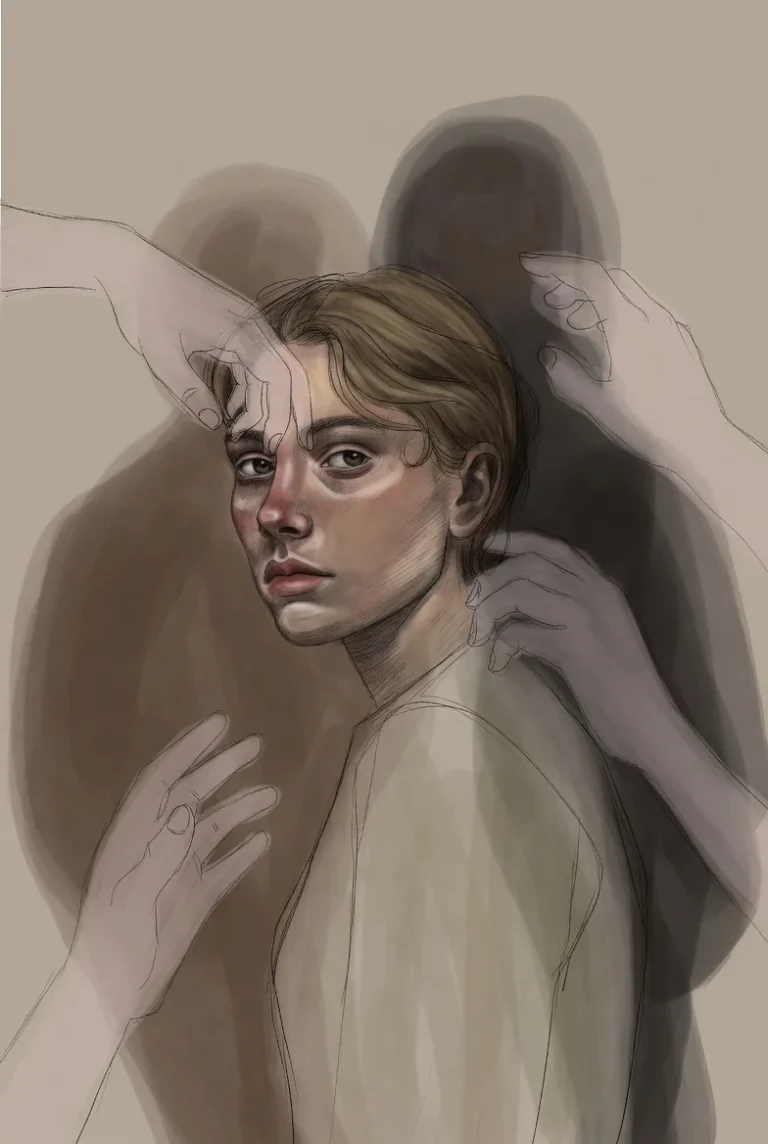
In the landscape of mental health, most people are familiar with the concepts of “Fight” or “Flight.” We understand the instinct to confront a threat or run away from it. However, in recent years, psychologists and trauma survivors have begun to shed light on a much more subtle, socialized survival mechanism: the fawn trauma response.
Understanding the Fawn Trauma Response
When we talk about survival, we often think of physical exertion. But for many who grew up in unpredictable or high-conflict environments, survival wasn’t about running or fighting—it was about appeasing. What is fawn trauma response? At its core, fawning is the act of becoming whoever you need to be to stay safe in the presence of a threat.
The fawn trauma response’s meaning is deeply rooted in the concept of people-pleasing as a defensive shield. While society often praises “niceness,” “selflessness,” and “harmony-seeking,” when these traits are born from trauma, they represent a state of chronic self-abandonment. What does fawn trauma response mean in daily life? It means losing your “self” to preserve a relationship or avoid conflict.
This article is designed for those who feel they have lost their voice, for the chronic people-pleasers who feel exhausted by their own kindness, and for professionals seeking a deeper understanding of this fourth trauma response. By the end of this guide, you will understand the mechanics of the fawn trauma response and, more importantly, how to begin the journey toward healing.
You may be interested to know about signs of codependency. Here is our full guide about signs of codependency.
What Is the Fawn Trauma Response?
To truly grasp what a codependent relationship or a fawning dynamic, we must look at the fawn trauma response definition. Originally coined by therapist Pete Walker, the fawn response is a “4F” survival strategy used by individuals to avoid conflict and establish a sense of safety by being useful to, or merging with, the needs, wishes, and demands of others.
The Origins of the Term
Pete Walker identified the fawn response while working with survivors of complex post-traumatic stress disorder (C-PTSD). He noticed that while some survivors reacted to triggers with anger (Fight) or avoidance (Flight), a significant portion reacted by “pleasing and appeasing.” In this context, what does fawn mean as a trauma response? It means the individual has learned that their best chance of survival is to become a mirror of their abuser’s or caregiver’s desires.
Fawning vs. Kindness
It is essential to distinguish between genuine kindness and a fawning response.
- Kindness is a choice made from a place of abundance and safety. It has boundaries and can be withdrawn if the other person is disrespectful.
- Fawning is a compulsion driven by fear. It is the inability to say “no,” even when your own needs are being trampled.
A Survival Strategy
Why does the body choose to fawn? When a child cannot fight back (because they are too small) and cannot run away (because they have nowhere to go), the nervous system looks for a middle ground. If the child can anticipate the parent’s mood and accommodate their needs perfectly, the parent might not get angry. Thus, fawning becomes the ultimate survival strategy for those trapped in inescapable, high-stress environments.
Fight, Flight, Freeze, Fawn: Trauma Responses Explained
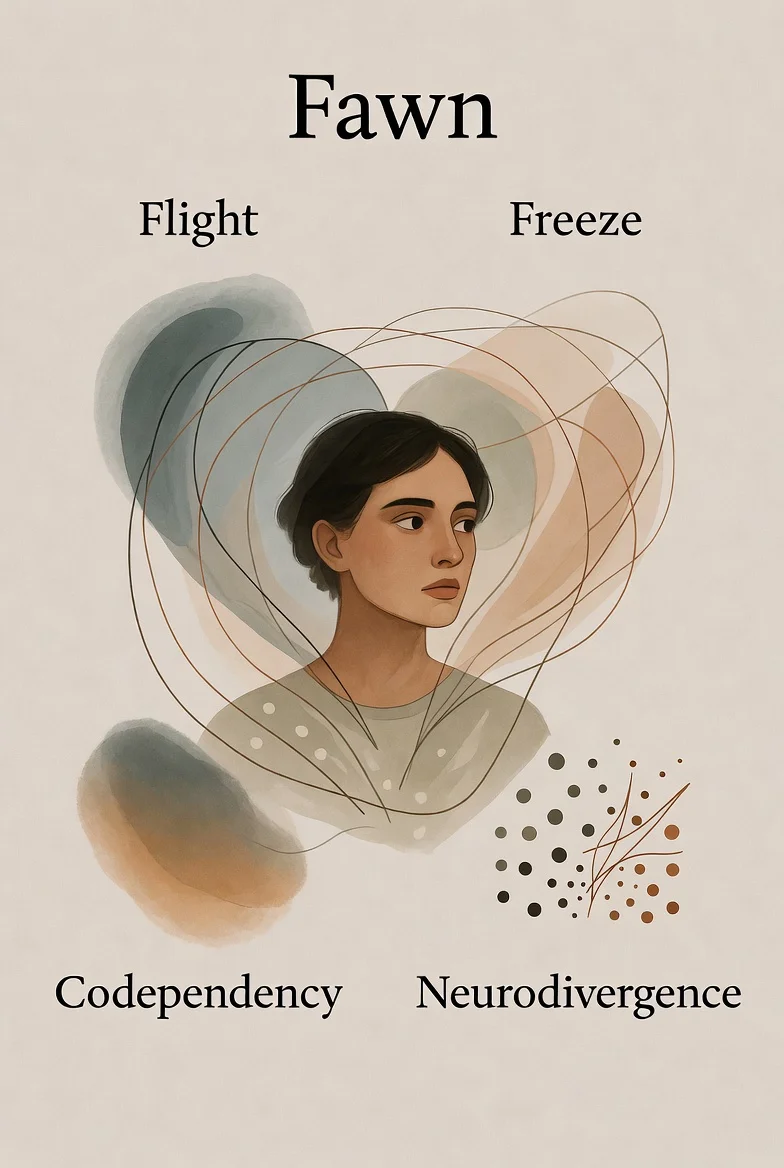
To understand what the fawn response is in fight or flight, we must look at the broader hierarchy of the nervous system. The Autonomic Nervous System (ANS) is responsible for keeping us alive. When we perceive a threat, the ANS triggers one of four responses.
The Trauma Response Hierarchy
- Fight: The mobilization of energy to confront the threat. Symptoms include irritability, anger, and tight muscles.
- Flight: The mobilization of energy to escape the threat. Symptoms include anxiety, restlessness, and a need to stay busy.
- Freeze: When the threat is so great that mobilization is impossible, the body shuts down. Symptoms include numbness, dissociation, and feeling “stuck.”
- Fawn: A social mobilization. Instead of fighting or fleeing, you attempt to negotiate safety through social compliance.
The Sympathetic vs. Parasympathetic Dynamic
While fight or flight are “active” sympathetic nervous system responses, Fawn is a complex hybrid. It requires the high energy of the sympathetic system to “perform” for others, but it often overlaps with the “Freeze” response because the individual is fundamentally disconnected from their own true feelings.
Why Default to Fawn?
People often default to the fawn response when their childhood trauma involved “attachment-based” threats. If your survival depends on a person who is also the source of your fear, you cannot fight them or run from them without losing your life support. Therefore, fawning becomes the most “logical” biological choice.
What Causes the Fawn Trauma Response?
Understanding what causes fawn trauma response requires a look back into early childhood and attachment styles. This response is rarely the result of a single event; it is usually the result of “relational trauma”—the kind that happens within the context of a primary relationship.
Childhood Emotional Neglect (CEN)
If a child grows up in a home where their emotions are ignored, they learn that their feelings are unimportant. To get attention or care, they must perform. Over time, this performance hardens into a fawn response.
Unpredictable Caregivers
When a caregiver is “Jekyll and Hyde”—loving one moment and explosive the next—the child becomes a master of “reading the room.” They develop a hyper-attunement to the caregiver’s tone of voice, facial expressions, and footsteps. This hyper-attunement is the foundation of fawning.
Chronic Invalidation
If a child is told “You’re too sensitive” or “Stop crying or I’ll give you something to cry about,” they learn that expressing their true self is dangerous. The fawn response allows them to bury their “dangerous” true self and present a “safe” false self to the world.
What Does the Fawn Trauma Response Look Like?

To identify this pattern in yourself, it helps to see fawn trauma response examples. It is not always as obvious as groveling; it often looks like being the “perfect” person.
Common Behavioral Examples
- Over-Apologizing: Saying “I’m sorry” for things that aren’t your fault, or even for just existing in a room.
- Difficulty Saying No: Feeling a physical pang of dread or guilt at the thought of declining a request.
- Conflict Avoidance: “Peace at any price.” You will agree with someone even if you disagree, just to keep the atmosphere calm.
- Emotional Self-Abandonment: You lose track of your own feelings, hunger, or tiredness because you are so focused on whether the other person is okay.
- Hyper-Attunement: You know exactly what someone else is feeling before they even speak, and you immediately begin trying to “fix” their mood.
The “Chameleon” Effect
People in a fawn state are often described as chameleons. They change their personality, their likes/dislikes, and even their tone of voice depending on who they are with. This isn’t being “fake”—it is a subconscious attempt to minimize the chance of being disliked or attacked.
Fawn Trauma Response in Adulthood
The fawn trauma response’s meaning takes on new dimensions as we age. What served us in childhood as a survival tool becomes a major obstacle in adult life.
Romantic Relationships
In adulthood, the fawner often finds themselves in “one-sided” relationships. Because they are so good at accommodating others, they frequently attract individuals with high-control needs or narcissistic traits. The fawner provides the “supply” of endless validation, while their own needs go entirely unmet.
Workplace Dynamics
In the office, the fawn response looks like the “worker bee” who cannot say no to extra projects. They are often the most liked but the most burnt-out. They may feel resentful that others are promoted while they are stuck doing everyone else’s work, but their fear of conflict prevents them from asking for a raise or setting boundaries.
Burnout and Resentment
The tragedy of the fawn response in adulthood is the “Resentment Loop.” Because you never express your needs, they are never met. This leads to a quiet, boiling resentment that can eventually manifest as physical illness, chronic fatigue, or sudden, explosive emotional breakdowns when the “mask” finally cracks.
Fawn Trauma Response, Codependency & Neurodivergence
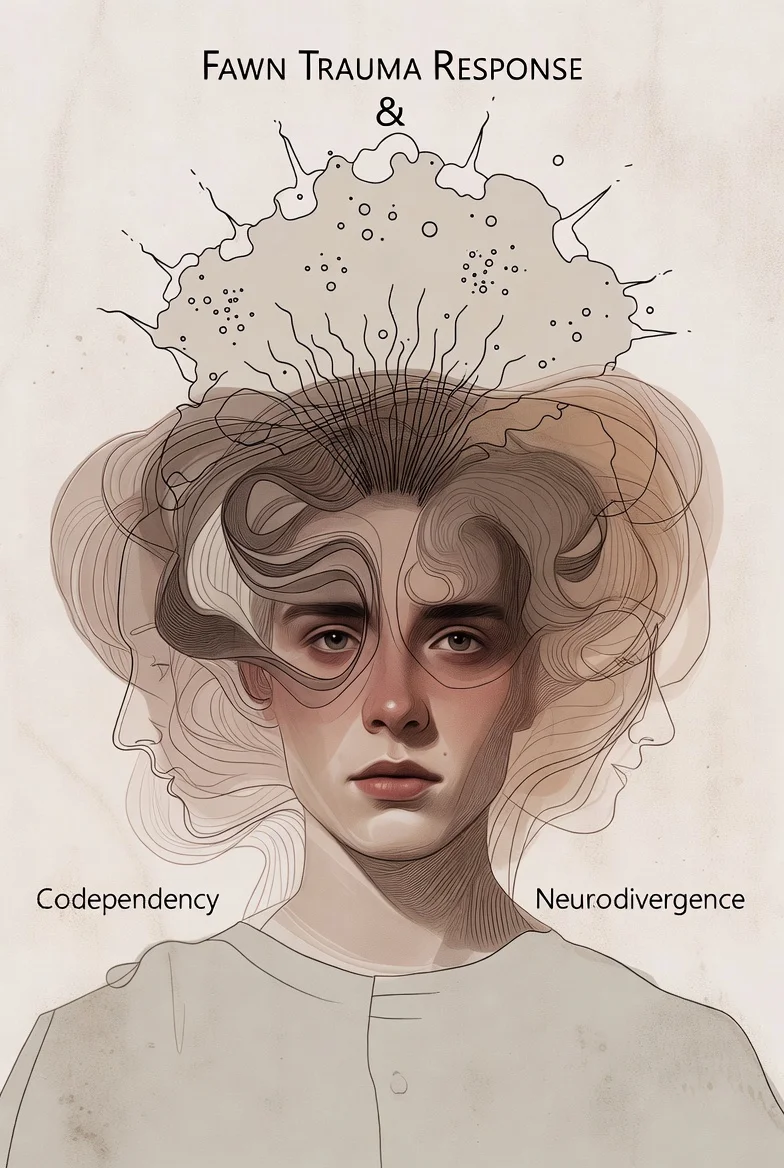
One of the most frequent points of confusion in modern psychology is the overlap between trauma responses and neurodivergent traits. When we look at what is the fawn response in codependency trauma, we see a pattern of “merging” with others to feel safe. However, this looks different through the lens of ADHD or Autism.
Overlap vs. Causation
Many individuals with ADHD or Autism report chronic fawning. This is often a result of masking—the process of suppressing neurodivergent traits to fit into a neurotypical world.
- Fawning in Autism: For an autistic person, fawning might be a learned response to “social failure” or sensory overwhelm. If the world feels loud and confusing, being “perfectly agreeable” reduces the social friction.
- Fawning in ADHD: Those with ADHD often struggle with “Rejection Sensitive Dysphoria” (RSD). The pain of perceived rejection is so intense that fawning becomes a preemptive strike to ensure everyone stays happy with them.
Mislabeling Fawn Behavior
It is vital for therapists and individuals to distinguish between a trauma-based fawn response and a neurodivergent coping mechanism. While both require compassion, the healing path for trauma involves nervous system regulation, while the path for neurodivergence involves self-accommodation and unmasking.
Fawn Trauma Response Test & Self-Assessment
While only a licensed professional can provide a clinical diagnosis of C-PTSD or a specific trauma disorder, an informal fawn response test can help you identify patterns of self-abandonment. Reflect on the following questions:
- Do you find yourself agreeing with people even when you strongly disagree, just to keep the peace?
- Do you feel a sense of “identity confusion” when you are alone, unsure of what you actually like or believe?
- Is “I’m sorry” your most frequently used phrase, even when you haven’t done anything wrong?
- Do you feel responsible for the emotional state of the people around you?
- Do you have an extreme “radar” for other people’s micro-expressions or shifts in tone?
- Does the idea of setting a boundary feel like an act of aggression rather than an act of self-care?
Behavioral Patterns Checklist
If you find yourself checking most of these boxes, you may be operating from a chronic fawn state. This isn’t a personality flaw; it is a highly evolved survival system that is simply “over-calibrated” for your current, safer environment.
How to Heal the Fawn Trauma Response
If you are wondering how to heal fawn trauma response, the first step is recognizing that you cannot “think” your way out of a biological survival state. Healing must be “bottom-up”—starting with the body—rather than just “top-down” (talk therapy).
Nervous System Regulation
Because fawning is a state of high-alert social engagement, healing requires teaching your body that it is safe to not be useful. This involves grounding techniques that pull you out of the “performative” state and back into your physical self.
Somatic Therapy
Traditional talk therapy can sometimes lead to more fawning (where the patient tries to be the “perfect patient” for the therapist). Somatic Experiencing or EMDR allows you to process the trapped survival energy in the body without needing to “perform” a narrative. It helps you reconnect with the “gut feelings” you suppressed as a child.
Boundary Work and the “Discomfort Threshold”
Healing involves “exposure therapy” to conflict. This doesn’t mean starting a fight; it means practicing small “No’s.”
- Step 1: Say no to something low-stakes (e.g., “No, I don’t want to go to that restaurant”).
- Step 2: Observe the “fawn panic” in your body—the racing heart or the urge to take it back.
- Step 3: Breathe through the discomfort until the nervous system realizes that the world didn’t end because you set a boundary.
Practical Steps to Stop Fawning in Daily Life
Learning how to stop fawning in trauma cycles requires having a “toolkit” of responses ready before the panic sets in. When your brain is in survival mode, it cannot access complex language, so “scripts” are essential.
Scripts for Saying No
- “I can’t commit to that right now, but thank you for asking.”
- “I need some time to think about that; I’ll get back to you.” (This buys you time to check in with your actual needs).
- “I’m not comfortable with that.”
Rebuilding Self-Trust
The fawner has a “broken” internal compass. To fix it, you must start making small decisions based solely on your own preference. What do you want to wear? What music do you want to listen to? These small acts of self-determination rebuild the “self” that was abandoned in childhood.
Fawn Trauma Response in Children
Recognizing a fawn trauma response in children is crucial for early intervention. Unlike “Fight” children who are often labeled as “troublemakers,” “Fawn” children are often labeled as “little angels” or “highly mature for their age.”
Early Signs in Children
- Being overly helpful to adults to the point of anxiety.
- Taking on a “parental” role with siblings or even their own parents.
- Extreme distress over making a mistake or getting a “bad” grade.
- An inability to express anger or frustration, always appearing “happy” or “fine.”
Parenting Approaches
If you notice a child fawning, the goal is to validate their right to have “negative” emotions. Encourage them to disagree with you. Celebrate their boundaries. Show them that your love is not conditional on their “usefulness” or their ability to stay quiet and small.
Common Myths About the Fawn Trauma Response
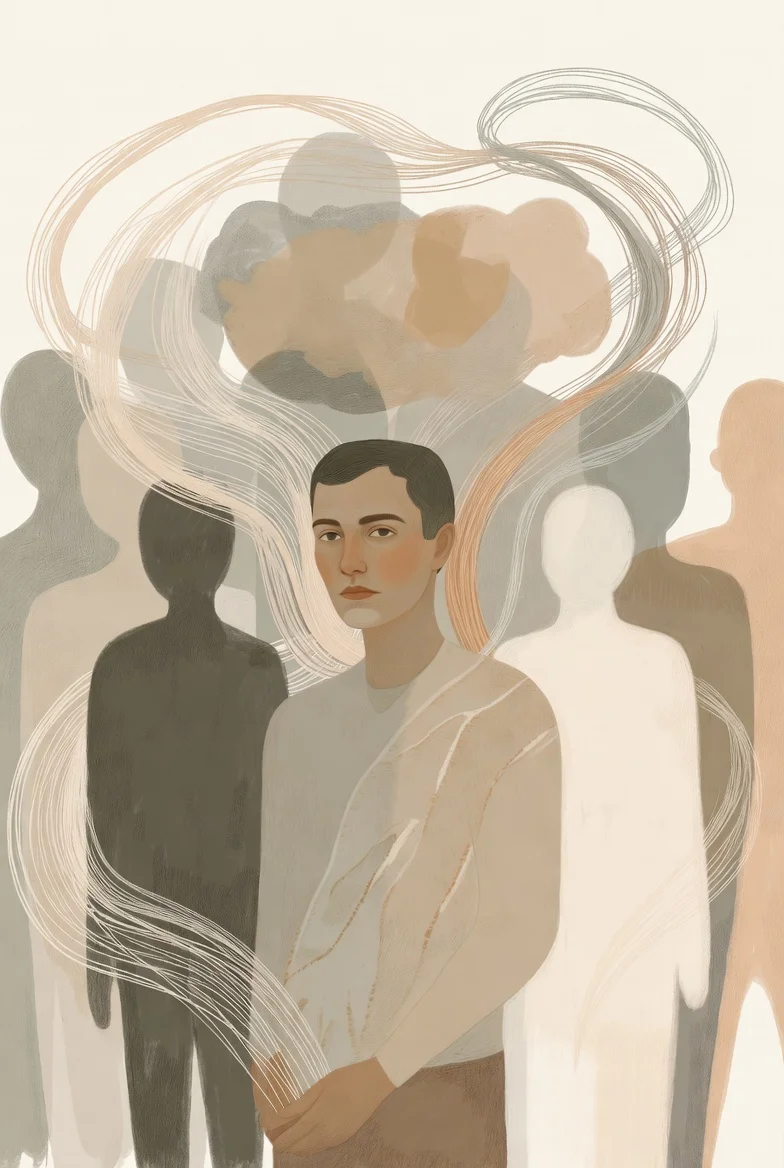
Because fawning is often rewarded by society, the fawn trauma response’s meaning is frequently distorted. Clearing these myths is essential for removing the shame that survivors often carry.
Myth 1: “It’s just being a nice person.”
Niceness is a social grace; fawning is a survival mandate. If your kindness disappears the moment you feel safe enough to say “no,” it was likely a fawn response. Fawning is characterized by a lack of choice. You are not being “nice” because you want to; you are being “nice” because you are afraid of what happens if you aren’t.
Myth 2: “Fawning means you are weak.”
In reality, the fawn response is an incredibly sophisticated and “strong” survival mechanism. It requires immense cognitive effort to constantly track another person’s emotional state while suppressing your own. It is a testament to your resilience and your brain’s ability to adapt to an impossible situation.
Myth 3: “You can just choose to stop.”
Because this is a nervous system response, it is not a “choice” made by the logical brain. You cannot simply decide to stop fawning any more than you can decide to stop your heart from racing when you’re scared. Healing requires rewiring the body’s sense of safety, not just “trying harder.”
Frequently Asked Questions
What are four signs of fawn behavior?
The four most recognizable signs include:
- Loss of Identity: You struggle to know your own preferences or opinions.
- Conflict Phobia: You experience intense physical anxiety at the prospect of someone being displeased with you.
- Hyper-Vigilance: You are “addicted” to reading the moods and micro-expressions of others.
- Self-Silencing: You stay quiet or agree with others to avoid being “seen” as a problem.
What trauma causes the fawn response?
Fawning is typically caused by relational or developmental trauma. This includes growing up with narcissistic, volatile, or emotionally neglectful parents. It is also common in survivors of domestic abuse or long-term workplace bullying, where “fighting” or “fleeing” was not a viable option.
Is fawning an autistic trait?
Fawning is not an inherent trait of autism, but many autistic individuals utilize a “fawn” response as a way to navigate a world that is often hostile to neurodivergent behaviors. This is a form of trauma-induced masking used to avoid social rejection or sensory-based punishment.
How is fawning different from freeze?
While both are “low-mobilization” states, Freeze is an internal shutdown where the person becomes numb or dissociated. Fawn is an externalized “social mobilization.” In Freeze, you disappear from the world; in Fawn, you “disappear” into the needs of another person while remaining socially active.
Can you have more than one trauma response?
Absolutely. Most people have a “primary” and “secondary” response. For example, you might Fawn initially to keep the peace, but if the threat continues, you might “snap” into a Fight response or collapse into a Freeze state.
Conclusion
The journey of healing the fawn trauma response is not about becoming “mean” or “aggressive.” It is about reclaiming your right to exist as a separate, autonomous human being. For years, your fawning was the shield that kept you safe; it served its purpose, and you can thank it for helping you survive.
However, as you move into a safer chapter of your life, you can begin to lay that shield down. How to heal fawn trauma response starts with the radical act of believing that your needs are just as valid as the needs of the people around you. Every time you state a boundary, every time you express a “negative” emotion, and every time you choose your own comfort over someone else’s convenience, you are reclaiming a piece of the soul you once had to hide.
Healing is a slow process of building “self-trust.” It is the process of teaching your nervous system that you are no longer a helpless child in a dangerous house—you are an adult with the agency to choose your company, protect your peace, and speak your truth.
Authoritative References
1. Pete Walker, M.A. – The 4Fs: A Trauma Typing Guide
2. National Institute for the Clinical Application of Behavioral Medicine (NICABM) – The Fawn Response
3. Psychology Today – Understanding the Fawn Response
4. Medical News Today – What is the Fawn Response?
5. The Meadows – The Fawn Response and Complex PTSD

Related Posts


Subscribe to Our Newsletter
Get mental health tips, updates, and resources delivered to your inbox.
MORE from Author
Read More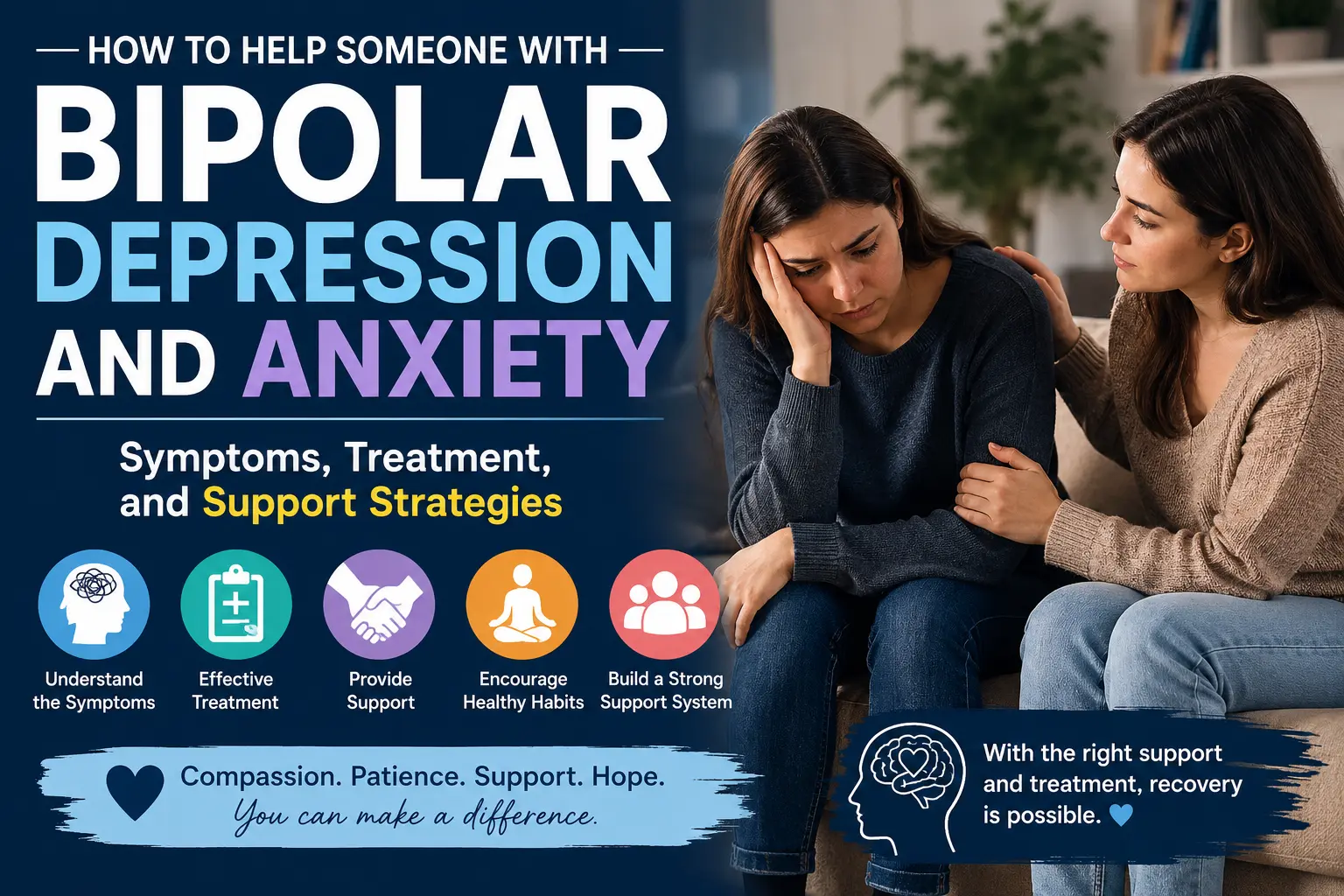 Watching someone you care about struggle with bipolar depression and anxiety can be heartbreaking. You may notice that they withdraw…
 In my practice as a clinical psychologist, I often observe that the difference between a patient who crumbles under pressure…
 We all have "up" days and "down" days. Perhaps you feel energized after a promotion or sluggish on a rainy…
 To define bipolar disorder accurately, we must look at it as a chronic mood dysregulation condition. In psychology and medicine,…
Are you looking for a Therapist?
Connect with qualified mental health professionals who understand
bipolar disorder, mood changes, and emotional challenges.
Private • Supportive • Confidential