
How to Help Someone With Bipolar Depression and Anxiety: Symptoms, Treatment, and Support Strategies

Medically reviewed by Laura Athey Updated Date: March 28, 2026

Watching a friend or family member struggle with bipolar disorder feels overwhelming. You might see them fly high during mania, only to crash into a dark, anxious depression later. It is a complex cycle. To provide the best help, we first need to understand the biology behind these shifts.
Bipolar depression and anxiety often travel together. In fact, research suggests that over 50% of people with bipolar disorder will experience a co-occurring anxiety disorder at some point. This combination makes the “lows” feel even heavier. When you are supporting a bipolar person, knowing the difference between a standard “bad mood” and a clinical episode is the first step toward effective care.
What Is Bipolar Depression?
Most people associate bipolar disorder with the “highs” of mania. However, the depressive phase is often more frequent and debilitating. So, what does a depressive episode look like in bipolar disorder? Unlike “unipolar” depression (Major Depressive Disorder), bipolar depression occurs within a cycle of mood instability.
We generally categorize the condition into two main types:
- Bipolar I: Defined by at least one full manic episode. Depression often follows, but the “highs” are severe.
- Bipolar II: Characterized by “hypomania” (a less severe high) and intense, long-lasting depressive episodes.
Manic depression and anxiety (an older term for bipolar) are deeply linked. In a depressive state, the brain’s “reward center” slows down. This makes it nearly impossible for the person to feel pleasure. They aren’t just “sad”; they are biologically stuck in a state of low energy.
Bipolar Anxiety Depression Explained
When we talk about bipolar anxiety depression, we are describing a “mixed” or co-morbid state. Anxiety isn’t just a symptom here; it is often a secondary diagnosis like Generalized Anxiety Disorder (GAD) or Panic Disorder.
Why does this happen? The same neurotransmitters—like norepinephrine and serotonin—that regulate mood also control your “fight or flight” response. When these systems misfire, a person might feel the crushing weight of depression while simultaneously feeling the “electric” panic of anxiety.
This often leads to bipolar panic attacks, where the person feels a sudden, intense fear of losing control. If you are helping someone with bipolar disorder, recognize that their anxiety isn’t a choice. It is a physiological storm that makes recovery feel even further away.
What Does a Bipolar Depressive Episode Look Like?
If you are dealing with a bipolar person, you might notice changes long before they do. Chronic depression and anxiety manifest in specific ways that disrupt daily life. Recognizing these early “red flags” allows for faster intervention.
Common Behavioral and Physical Signs:
- Social Withdrawal: They stop answering texts or cancel all plans suddenly.
- Hypersomnia: They may sleep 10–12 hours a day but still feel exhausted.
- Psychomotor Retardation: Their speech and physical movements become visibly slower.
- Anxious Distress: Constant pacing, hand-wringing, or obsessive worrying about minor tasks.
- Executive Dysfunction: Finding it impossible to shower, do dishes, or make simple decisions.
Clinical Insight: A depressive episode in bipolar disorder often includes “atypical” features. This means the person might eat more and sleep more, which is the opposite of many unipolar depression cases.
How Long Does a Bipolar Depressive Episode Last?
One of the most common questions I get is: How long does a bipolar depressive episode last? There is no single answer, but clinical data gives us a window.
Without intervention, a major depressive episode can last anywhere from three to twelve months. However, with a solid treatment plan, many patients see significant “lifting” of the cloud within 4 to 8 weeks.
| Feature | With Professional Treatment | Without Treatment |
| Average Duration | 4–12 Weeks | 6–12 Months |
| Risk of Relapse | Lower (with maintenance) | Very High |
| Symptom Severity | Managed/Manageable | Potentially Worsening |
| Daily Function | Partial to Full Recovery | Severe Impairment |
The goal of supporting someone with bipolar disorder is to bridge the gap between the onset of symptoms and the start of treatment. The earlier they see a doctor, the shorter the episode typically lasts.
How to Get Out of a Bipolar Depressive Episode (Safely)

When a loved one is at their lowest, they often ask how to get out of a bipolar depressive episode as fast as possible. While there are no “instant” cures, certain evidence-based steps can accelerate the process.
1. Medication Calibration
The first step is always a consultation with a psychiatrist. Bipolar brains require different chemistry than unipolar ones. If they take a standard antidepressant without a mood stabilizer, it could trigger a manic “switch.”
2. Circadian Rhythm Stabilization
The bipolar brain is highly sensitive to light and sleep. Helping your loved one wake up and go to bed at the same time every day—even if they don’t feel like it—is a powerful biological “reset” button.
3. Behavioral Activation
Don’t suggest they “go for a 5-mile run.” Instead, suggest they sit on the porch for five minutes. Small, achievable goals help rebuild the brain’s dopamine pathways.
4. Anxiety Reduction
For those experiencing bipolar anxiety depression, grounding exercises can help. This might include the “5-4-3-2-1” technique to bring them back to the present moment during a panic spike.
Best Treatment for Bipolar Depression
Finding the best treatment for bipolar depression is a process of precision. Because this condition involves both “poles” of mood, doctors must be careful not to swing the patient too far in either direction. Unlike standard depression, we focus on stabilization rather than just “boosting” mood.
Medications
Psychiatrists typically use three main classes of drugs to manage this condition. Each serves a specific purpose in the neurochemical puzzle.
- Mood Stabilizers: Lithium remains the gold standard for preventing both highs and lows. It has a unique neuroprotective effect. Lamotrigine is another favorite, specifically for its ability to “lift” the depressive side without causing mania.
- Atypical Antipsychotics: Drugs like Quetiapine (Seroquel) and Lurasidone (Latuda) are FDA-approved specifically for bipolar depression. They work quickly to stabilize dopamine and serotonin.
- The Antidepressant Risk: You might wonder why a doctor wouldn’t just prescribe Prozac. In bipolar disorder, antidepressants can cause “rapid cycling” or trigger a manic episode. They are rarely used alone.
Treating Anxiety in Bipolar Disorder
Managing anxiety and bipolar medication requires a delicate touch. When bipolar panic attacks strike, the instinct is to reach for a quick fix. However, we have to look at the long-term picture.
- SSRIs with Caution: Doctors may use certain SSRIs, but only if the patient is already on a strong mood stabilizer.
- Benzodiazepines: These are “rescue” meds for panic. While effective, they carry a risk of dependency. They are usually a short-term bridge, not a permanent solution.
- Beta-Blockers: Propranolol can help with the physical symptoms of anxiety—like a racing heart—without affecting brain chemistry directly.
Supporting Someone With Bipolar Disorder
Supporting a bipolar person is a marathon, not a sprint. You want to help, but you aren’t sure where the line is between “helper” and “enabler.” Helping people with bipolar disorder starts with understanding that you are part of their “treatment team,” but you are not the lead clinician.
What Actually Helps
- Validate, Don’t Fix: If they say they feel hopeless, don’t argue with them. Say, “I can see you’re in a lot of pain, and I’m here with you.” Validation lowers their physiological stress.
- Encourage Routine: Help them keep a “social rhythm.” This means eating and sleeping at the same time. Routine is a stabilizer for the bipolar brain.
- Create a Crisis Plan: When they are feeling well, sit down together. Ask, “When you get depressed, what do you need from me?” Write it down. This removes the guesswork during an episode.
What to Avoid
- Don’t Minimize: Phrases like “just think positive” or “everyone gets sad” are deeply hurtful. It ignores the biological reality of their struggle.
- Avoid the “Therapist” Trap: You cannot be their only source of support. If you try to manage their entire illness, you will burn out.
- Don’t Argue with the Illness: During an episode, their brain may tell them lies. You cannot “logic” someone out of a chemical depression. Stay calm and stay present instead.
Dealing With a Bipolar Person in Daily Life
Dealing with a bipolar person requires high emotional intelligence. You must learn to separate the person from the symptoms. When they are irritable or distant, it is often the bipolar anxiety depression talking, not your loved one.
Communication Tips:
- Use “I” Statements: Instead of saying “You’re being difficult,” try “I feel worried when I see you’re not eating.”
- Active Listening: Sometimes, the best way of helping someone with bipolar disorder is just sitting in the silence with them. You don’t always need a solution.
- Boundaries Are Kindness: You must have limits. It is okay to say, “I love you, but I cannot stay on the phone for four hours tonight. I need to sleep so I can be there for you tomorrow.”
Coping With a Bipolar Family Member
When the person lives under your roof, the stakes are higher. Coping with bipolar family member challenges often involves the entire household.
- Watch for Caregiver Burnout: You cannot pour from an empty cup. If you are exhausted, your ability to provide support will vanish. Join a support group like NAMI (National Alliance on Mental Illness).
- Family Therapy: This isn’t just for the person with the diagnosis. It helps the whole family learn a “new language” for communicating during mood shifts.
- Protect the Children: If there are kids in the house, explain the situation in age-appropriate ways. “Daddy’s brain is a little sick right now, but he’s working with a doctor to get better.”
Professional Help for Depression and Anxiety

If you are looking for a psychiatrist depression anxiety specialist, you are taking the most important step. Helping people with bipolar disorder always involves a professional diagnosis.
Psychiatrist vs. Therapist
While both are vital, they play different roles in diagnosing anxiety and depression.
- The Psychiatrist: An MD who focuses on the biology. They manage the anxiety and bipolar medication and monitor for side effects.
- The Therapist: Usually a psychologist or LCSW. They provide “talk therapy” like CBT (Cognitive Behavioral Therapy) or DBT (Dialectical Behavior Therapy). These help the person manage the thoughts that come with the mood swings.
Finding an anxiety depression therapist near me who understands bipolar disorder is key. Look for someone who specializes in “Mood Disorders” specifically, rather than general counseling.
In this third segment, we shift our focus toward lifestyle integration, the nuances of the diagnostic process, and how adjunctive therapies can support a medical foundation.
Complementary & Adjunctive Therapies
While medication is the cornerstone of treatment, many people ask about meditation for depression and anxiety or other natural approaches. As a physician, I categorize these based on the strength of clinical evidence. These should always be used with—not instead of—traditional care.
Strong Evidence: The “Basics” That Work
- Aerobic Exercise: Regular movement helps regulate neurotransmitters. It is particularly effective for the “sluggish” feeling of bipolar depression.
- Sleep Hygiene: Because the bipolar brain is sensitive to light, using “dark therapy” (staying in a dark room at night) can actually help stabilize mood.
Mixed Evidence: Helpful for Some
- Meditation and Mindfulness: Research shows that Mindfulness-Based Cognitive Therapy (MBCT) can reduce the frequency of depressive episodes. However, during a severe bipolar panic attack, some people find meditation difficult or even overstimulating.
- Omega-3 Fatty Acids: Some meta-analyses suggest that high-dose EPA (a type of fish oil) can improve depressive symptoms in bipolar patients.
Insufficient Evidence: Use with Caution
- Acupuncture and Depression Anxiety: While acupuncture and depression anxiety are often discussed together, the clinical data for bipolar disorder specifically is limited. It may help with general stress, but it won’t prevent a mood cycle.
Self-Tests, Screening & Diagnostic Context
Is it just stress, or is it something more? When dealing with people bipolar disorder, it is common to wonder if a “self-test” can provide answers. While an online depression and anxiety test can be a helpful starting point, it is never a final diagnosis.
Signs of Bipolar Disorder: When to Take a Self-Test?
If you notice that your “mood swings” follow a pattern—weeks of low energy followed by days of high energy and decreased need for sleep—it is time to investigate. A self-test like the Mood Disorder Questionnaire (MDQ) can help you organize your thoughts before seeing a doctor.
What Disorders Are in Axis 1?
You may occasionally hear the term “Axis 1.” What Disorders Are in Axis 1? In older versions of the DSM (the “bible” of psychiatry), doctors divided diagnoses into different categories.
- Axis 1: Included clinical syndromes like Bipolar Disorder, MDD, and Anxiety Disorders.
- Current Status: The modern DSM-5 has moved away from this “Axis” system to a more unified approach.
The goal of diagnosing anxiety and depression today is to look at the whole person over time. A psychiatrist depression anxiety specialist won’t just look at how you feel today; they will look at your entire history to ensure they don’t miss a previous manic “high.”
Social Needs, Support Systems, and Recovery
Recovery is about more than just brain chemistry. It is about building a life that supports stability. When we look at the social determinants of health, we ask: What Are Some Examples of Social Needs? For someone with bipolar disorder, these needs are the “safety net” that prevents a relapse.
- Stable Housing: A safe, quiet place to live is essential for sleep.
- Predictable Employment: High-stress jobs with night shifts are often triggers for bipolar anxiety depression.
- Peer Support: Connecting with others who have the same diagnosis reduces the shame and isolation often felt when coping with bipolar family member.
Social support acts as a “buffer.” When a person has a strong community, they are more likely to stay on their medication and recognize early warning signs of a shift.
When to Seek Urgent or Emergency Help
Helping someone with bipolar disorder involves knowing when the situation has moved beyond “support” and into “emergency.”
Seek immediate help or go to the nearest ER if:
- Suicidal Ideation: They are talking about death, giving away belongings, or have a specific plan.
- Psychosis: They are seeing or hearing things that aren’t there, or they have “delusions” (beliefs that aren’t based in reality).
- Severe Functional Decline: They have stopped eating, drinking water, or are unable to care for basic hygiene for several days.
Emergency Contacts (US):
- National Suicide & Crisis Lifeline: Call or text 988.
- Crisis Text Line: Text “HOME” to 741741.
In this final section, we address common roadblocks, provide the FAQ schema for search optimization, and conclude with the clinical references that ground this guide in medical science.
Frequently Asked Questions (FAQ)
Can someone with bipolar depression also have anxiety?
Yes, this is incredibly common. Clinical data shows that roughly 50% to 70% of individuals with bipolar disorder meet the criteria for at least one anxiety disorder. When both occur, it often leads to more severe depressive episodes and a higher risk of bipolar panic attacks. Treating both simultaneously is essential for long-term stability.
Can you help someone who refuses treatment?
This is one of the hardest parts of supporting a bipolar person. You cannot force an adult to seek help unless they are a danger to themselves or others. However, you can use “LEAP” (Listen, Empathize, Agree, Partner) communication. Focus on the symptoms they do want to fix, like “not sleeping” or “feeling anxious,” rather than the diagnosis itself.
Is bipolar depression lifelong?
Bipolar disorder is a chronic, manageable condition. While there is no “cure” that makes it disappear forever, many people live full, vibrant lives with the right treatment. The goal of helping people with bipolar disorder is to move from “crisis management” to “maintenance,” where episodes become rare and less intense.
Does meditation help bipolar anxiety?
Meditation can be a helpful secondary tool. It helps lower the baseline of stress and improves emotional regulation. However, during a peak manic or deep depressive state, the brain may be too overstimulated for traditional meditation. In those cases, “grounding” exercises or light physical movement may be more effective.
A Final Note from the Doctor
Supporting someone with bipolar disorder is an act of profound compassion. It requires you to be a researcher, a cheerleader, and a guardian of your own boundaries. Remember, you are not responsible for the “cure.” You are there to provide a safe harbor while they work with professionals to navigate the storm.
If you are coping with bipolar family member issues today, please take a moment for yourself. Your health matters just as much as theirs. Recovery is possible, and it often starts with the very first conversation you have about seeking help.
Authoritative Clinical References
- National Institute of Mental Health (NIMH) – Bipolar Disorder
- Substance Abuse and Mental Health Services Administration (SAMHSA)
- National Center for Biotechnology Information (NCBI) – PubMed Central
- Mayo Clinic – Bipolar Disorder: Diagnosis & Treatment
- National Alliance on Mental Illness (NAMI) – Supporting a Loved One

Related Posts





Subscribe to Our Newsletter
Get mental health tips, updates, and resources delivered to your inbox.
MORE from Author
Read More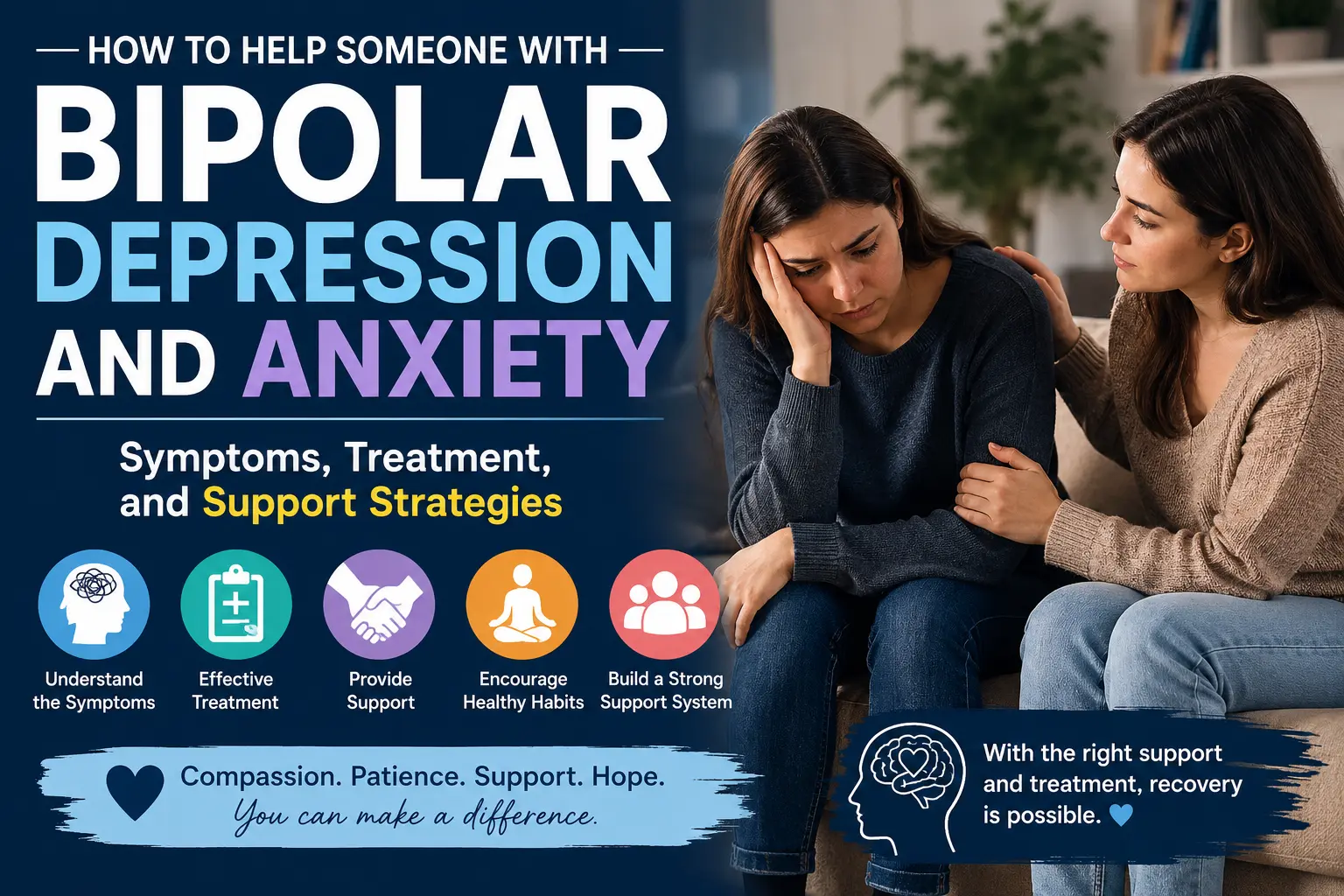 Watching someone you care about struggle with bipolar depression and anxiety can be heartbreaking. You may notice that they withdraw…
 In my practice as a clinical psychologist, I often observe that the difference between a patient who crumbles under pressure…
 We all have "up" days and "down" days. Perhaps you feel energized after a promotion or sluggish on a rainy…
 To define bipolar disorder accurately, we must look at it as a chronic mood dysregulation condition. In psychology and medicine,…
Are you looking for a Therapist?
Connect with qualified mental health professionals who understand
bipolar disorder, mood changes, and emotional challenges.
Private • Supportive • Confidential