
Attachment and Adult Relationships: Understanding Attachment Styles, Psychology, and Healing Patterns in Adulthood

Medically reviewed by Laura Athey Updated Date: April 15, 2026

Have you ever wondered why you react with intense panic when a partner takes too long to text back? Or perhaps why you feel a sudden, suffocating urge to retreat when someone gets “too close”? These reactions are rarely about the text message or the person themselves; they are the echoes of your earliest experiences. In the study of attachment and adult relationship psychology, we recognize that our first bonds with caregivers act as a “blueprinting” process for how we give and receive love decades later.
Understanding attachment and adult relationship dynamics is not about dwelling on the past or blaming parents. Instead, it is about identifying the unconscious scripts we follow when our “attachment system”—the biological alarm in our brain that seeks safety in others—is activated. These patterns are not permanent personality flaws; they are adaptations. They were once survival strategies that helped us navigate our early environments.
In this comprehensive guide, we will explore adult attachment theory, break down the four primary styles, clarify the difference between “styles” and “disorders,” and provide a roadmap for moving toward a more secure, fulfilling way of relating to others.
In my clinical work, I often see what I call the ‘Anxious-Avoidant Trap.’ This is a magnetic but exhausting dance where an Anxious partner pursues intimacy to soothe their fear, which triggers the Avoidant partner’s fear of being smothered, causing them to withdraw. This withdrawal further panics the Anxious partner, and the cycle continues.
The breakthrough happens when both partners realize the ‘enemy’ isn’t their partner—it’s the cycle. When we name the attachment fear (‘I’m feeling disconnected and I’m scared,’ or ‘I’m feeling overwhelmed and I need 20 minutes of quiet’), we take the power back from our childhood scripts and place it into our adult hands.
Adult Attachment Theory Explained
The foundation of adult attachment theory began with the work of John Bowlby and Mary Ainsworth, who observed that infants possess an innate drive to stay close to caregivers for survival. However, in the late 1980s, researchers Cindy Hazan and Phillip Shaver realized that these same dynamics apply to adult attachment, stress, and romantic relationships.
In adulthood, our romantic partners become our primary “attachment figures.” They are the “secure base” from which we explore the world and the “safe haven” we return to when we are threatened. When we perceive a threat to that bond—such as a conflict, a period of distance, or an emotional withdrawal—our attachment system “fires.” Depending on our history, we will either move toward our partner for reassurance, pull away to protect ourselves, or fluctuate between the two.
What Are the 4 Attachment Styles for Adults?
When clinicians discuss the different attachment styles in adults, we generally categorize them into four distinct quadrants based on two axes: Anxiety (fear of rejection) and Avoidance (discomfort with intimacy).
i.Secure Attachment
This is the goal of adult intimacy based on attachments. Secure individuals generally had caregivers who were consistent, responsive, and emotionally available.
- Beliefs: “I am worthy of love, and others are generally reliable.”
- Behavior: Comfortable with intimacy and independence. They communicate needs directly and manage conflict without excessive fear.
ii. Anxious-Preoccupied Attachment
Characterized by high anxiety and low avoidance. These individuals often had inconsistent caregiving—sometimes warm, sometimes intrusive or absent.
- Beliefs: “I need others to feel okay, but I’m afraid they will leave me.”
- Behavior: Hyper-vigilant to “cues” of distance. They may seek constant reassurance and feel “needy” or “clingy” under stress.
iii. Dismissive-Avoidant Attachment
Characterized by low anxiety (on the surface) and high avoidance. These individuals often had caregivers who were emotionally distant or discouraged the expression of feelings.
- Beliefs: “I am better off on my own; intimacy is a trap.”
- Behavior: They value self-reliance above all else. Under stress, they “deactivate” by pulling away, shut down emotionally, or focus on their partner’s flaws to create distance.
iv. Fearful-Avoidant (Disorganized) Attachment
Characterized by both high anxiety and high avoidance. This style often stems from childhood environments where the caregiver was a source of fear (trauma or neglect).
- Beliefs: “I want to be close, but I’m terrified of being hurt.”
- Behavior: A “push-pull” dynamic. They may pursue intimacy intensely but then retreat abruptly when they feel vulnerable.
Featured Snippet Target: What are the 4 attachment styles for adults? The four attachment styles in adults are Secure, Anxious-Preoccupied, Dismissive-Avoidant, and Fearful-Avoidant (Disorganized). These styles determine how individuals regulate emotions and respond to stress within romantic relationships.
The Three Insecure Attachment Styles
In your research, you may encounter references to what are the three insecure attachment styles. This simply refers to the subset of the four-style model that excludes “Secure.”
The three insecure styles are Anxious, Dismissive-Avoidant, and Fearful-Avoidant. It is helpful to view these not as “bad” styles, but as different ways of managing the fear of abandonment or engulfment. If you find yourself in these categories, you are not alone; roughly 40-50% of the population identifies with an insecure attachment pattern at some point in their lives.
Adult Attachment Styles Chart
To visualize how these styles interact, we use the adult attachment styles chart, which plots individuals on a spectrum of two biological needs: the need for autonomy and the need for connection.
Self-Assessment Cues:
- Low Anxiety/Low Avoidance: You feel comfortable sharing your feelings and don’t worry about being alone. (Secure)
- High Anxiety/Low Avoidance: You worry your partner doesn’t love you as much as you love them. (Anxious)
- Low Anxiety/High Avoidance: You feel “bored” or “stifled” when a relationship gets serious. (Dismissive-Avoidant)
- High Anxiety/High Avoidance: You feel like you’re waiting for the “other shoe to drop” in a happy relationship. (Fearful-Avoidant)
Secure Attachment Style in Romantic Relationships

A secure attachment style in romantic relationships acts as a buffer against life’s stressors. Securely attached adults aren’t “perfect,” nor are their relationships free of conflict. However, their adult intimacy based on attachments is characterized by “effective dependency”—the ability to rely on another while maintaining a solid sense of self.
- Conflict Repair: Secure adults focus on the problem, not the person. They are more likely to apologize and seek a resolution rather than winning an argument.
- Emotional Availability: They can sit with their partner’s pain without trying to “fix” it or running away from it.
- Boundaries: They can say “no” without guilt and hear “no” without feeling rejected.
In this section, we take a closer look at the internal world of the insecure attachment styles and explore the “signs” that indicate a person may be struggling with deep-seated attachment patterns.
Anxious Attachment Style in Adult Relationships
Individuals with an anxious attachment style in relationships are often described as having a “sensitive” attachment system. They are finely tuned to their partner’s moods, gestures, and tone of voice. While this makes them highly empathetic, it also makes them prone to attachment anxiety in adults.
- Hyperactivation: When an anxious person feels a threat to the relationship (like a partner being quiet or distant), their brain enters a state of hyperactivation. They cannot “turn off” the need for connection until they receive a clear signal of safety.
- Protest Behavior: To get that reassurance, they may engage in protest behavior—excessive calling, “testing” the partner by acting out, or becoming overly accommodating to avoid being left.
- The Emotional Toll: Over time, this creates a cycle of exhaustion. The anxious partner feels they are always “working” for the relationship, while the other partner may feel perpetually scrutinized.
Avoidant & Fearful-Avoidant Attachment
If the anxious style is defined by “turning up the volume” on emotions, the avoidant style is defined by “turning the volume down.”
Dismissive-Avoidant
These individuals use deactivation strategies. When a relationship becomes too intimate, the brain signals “danger.” They may suddenly notice their partner’s chewing is annoying, start working long hours, or reminisce about an “idealized” ex to create emotional space. This is a primary cause of attachment difficulties in adults—the closer the partner gets, the further the avoidant person pushes.
Fearful-Avoidant (Disorganized)
The fearful avoidant attachment is the most complex. Because these individuals often experienced trauma, they view others as both the source of comfort and the source of fear.
- The Push-Pull: They may fall in love quickly and intensely, but the moment the relationship feels “real,” they experience a visceral sense of panic.
- Dissociation: Under high stress, they may “zone out” or have trouble remembering what was said during a conflict, a hallmark of disorganized attachment problems in adults.
Signs of Attachment Issues in Adults
Recognizing the signs of attachment issues in adults is the first step toward change. It’s important to remember that these are not moral failings; they are survival mechanisms that haven’t been updated for your current life.
- Relationship Cycling: A pattern of “on-again, off-again” relationships or a history of short-lived, intense romances.
- Inability to Rely on Others: A fierce, almost aggressive “independence” that prevents true intimacy.
- Constant Monitoring: Feeling the need to check a partner’s social media or phone to feel “safe.”
- Fear of Engulfment: Feeling like your identity is being “swallowed” by the other person as soon as you commit.
- Chronic Distrust: Assuming the other person has a “hidden agenda” or will eventually hurt you.
How Attachment Styles Affect Adult Relationships
So, how do attachment styles affect adults in the long term? They act as the “lens” through which we interpret every interaction.
- Perception of Intent: A secure person sees a partner’s missed call as “they must be busy.” An anxious person sees it as “they don’t love me.” An avoidant person sees it as “good, I have some space.”
- Conflict Resolution: Adult attachment styles in relationships dictate how we fight. Insecure styles tend to escalate (anxious) or stonewall (avoidant), whereas secure styles focus on “repair.”
- Sexual Intimacy: Attachment affects the bedroom. Avoidant individuals may use sex as a way to maintain distance or perform, while anxious individuals may use it to secure a sense of closeness and safety.
Attachment Issues vs. Attachment Disorders in Adults
This is a critical section for SEO and clinical safety. There is significant misinformation online confusing “attachment styles” with “attachment disorders.”
Reactive Attachment Disorder (RAD)
Terms like radical attachment disorder in adults or reactive disorder in adults are often misused. In clinical psychology, Reactive Attachment Disorder (RAD) and Disinhibited Social Engagement Disorder (DSED) are diagnoses given to children who have suffered extreme neglect or institutionalization.
Why the Distinction Matters
- Styles vs. Disorders: Most people searching for anxious attachment disorder in adults or insecure attachment disorder in adults are actually experiencing an insecure style, not a clinical disorder.
- Symptoms: A severe attachment disorder in adults would involve an almost total inability to form any social bonds, high levels of aggression, and a lack of empathy. This is very different from “feeling clingy” in a marriage.
- Labeling: Calling an anxious style a “disorder” or an “attachment syndrome in adults” can lead to unnecessary shame. Patterns can be healed; disorders are much more deep-seated and require specialized, intensive intervention.
Attachment Tests & Self-Assessment Tools
Many people begin their journey by taking an attachment styles test. While online quizzes can be a helpful starting point, it is important to understand their limitations.
- Research-Based Tools: In a clinical setting, we use the Experiences in Close Relationships-Revised (ECR-R) or the Adult Attachment Interview (AAI). These are sophisticated instruments that measure your internal working models of intimacy.
- The Problem with Online Quizzes: A simple attachment disorder in adults test found on social media often fails to account for the “partner effect.” Your attachment style can fluctuate depending on who you are dating; a secure person might become anxious when dating a highly avoidant partner.
- Use as a Compass, Not a Label: Testing is most useful when it serves as a conversation starter in therapy or a tool for self-reflection, rather than a fixed diagnosis.
Healing Attachment Difficulties in Adults
The most empowering discovery in modern psychology is that attachment styles are “plastic”—they can change. Learning how to overcome attachment issues in relationships is a process of developing “Earned Secure Attachment.”
Evidence-Based Approaches
- Emotionally Focused Therapy (EFT): This is the gold standard for couples. It focuses on identifying the “cycle” and helping partners express their underlying attachment fears.
- Schema Therapy: This helps adults identify the “early maladaptive schemas” (like Abandonment or Mistrust) that drive their relationship behaviors.
- Self-Regulation Skills: For those with attachment difficulties in adults, learning to soothe one’s own nervous system is vital. This involves “window of tolerance” work—staying present even when the urge to flee or cling is high.
Attachment, Stress, and Emotional Regulation
There is a direct link between adult attachment, stress, and romantic relationships. When your attachment system is triggered, your body undergoes a physiological “hijacking.”
- The Amygdala Hijack: In an anxious or fearful person, a partner’s frown can trigger the same “fight-or-flight” response as a physical threat.
- Conflict Escalation: Stress reveals our defaults. Under pressure, an anxious person’s heart rate spikes and they pursue (hyper-arousal), while an avoidant person’s heart rate may actually drop as they “shut down” or “freeze” (hypo-arousal).
- The Goal: Healing involves widening your capacity to handle emotional “heat” without reverting to your childhood deactivation or hyperactivation strategies.
Attachment in Adulthood: Growth Is Possible
It is vital to remember that attachment and adult relationship patterns are adaptations, not life sentences. As we age, our life experiences—be they a long-term secure marriage or a transformative therapeutic relationship—can shift us toward security. Attachment and adult relationship in adulthood is about the long game; it is the gradual process of proving to your nervous system that you are safe, that you are worthy, and that others can be trusted.
Clearing Up “Attachment” Keyword Confusion
Because “attachment” is a broad term used in medicine, law, and construction, it is easy for search engines to provide irrelevant results. Here are a few factual clarifications to ensure you are in the right place:
- Appendix vs. Attachment: In medicine, the appendix is a physical organ; an “attachment” in psychology is an emotional bond.
- Body Attachment Charge: This is a legal term (a warrant for arrest for failing to appear in court) and has nothing to do with relationship psychology.
- Attached vs. Detached Garages: This refers to home construction (whether a garage shares a wall with the house).
- Parasitism in Coral Reefs: While “attachment” occurs in biological parasitism (where one organism lives on another), adult attachment theory describes a reciprocal, healthy bond between humans.
FAQ Section
Can attachment styles change in adults?
Yes. Through therapy, consistent secure relationships, and self-awareness, an individual can move from an insecure style to “Earned Security.”
Is anxious attachment a mental illness?
No. Anxious attachment is a relational style and a method of stress regulation. It is not a diagnosable mental disorder like depression or schizophrenia.
How do I become more securely attached?
The path involves three steps: identifying your triggers, learning to communicate your needs directly (rather than using protest behaviors), and choosing partners who are emotionally available.
Should my partner and I have the same attachment style?
Not necessarily. While two secure individuals find it easiest, an “Anxious-Avoidant” pair can thrive if both partners are committed to understanding their cycles and practicing “earned security” together.
Conclusion: Understanding Attachment Is a Relationship Skill
In the journey of attachment and adult relationship health, awareness is the catalyst for choice. When you understand your attachment style, you stop being a passenger in your past. You begin to see that your “neediness” is simply a request for safety, and your “distancing” is simply a request for protection.
By naming these patterns and working to heal them, you don’t just improve your relationships—you reclaim your emotional freedom. Intimacy is not about finding someone who never triggers you; it’s about finding a way to stay connected when you are triggered.
Authoritative Clinical & Research References
- The Gottman Institute — How Attachment Theory Impacts Your Relationship
- American Psychological Association (APA)
- Psychology Today — The Basics of Attachment Theory
- International Centre for Excellence in Emotionally Focused Therapy (ICEEFT) — What is EFT?


Subscribe to Our Newsletter
Get mental health tips, updates, and resources delivered to your inbox.
MORE from Author
Read More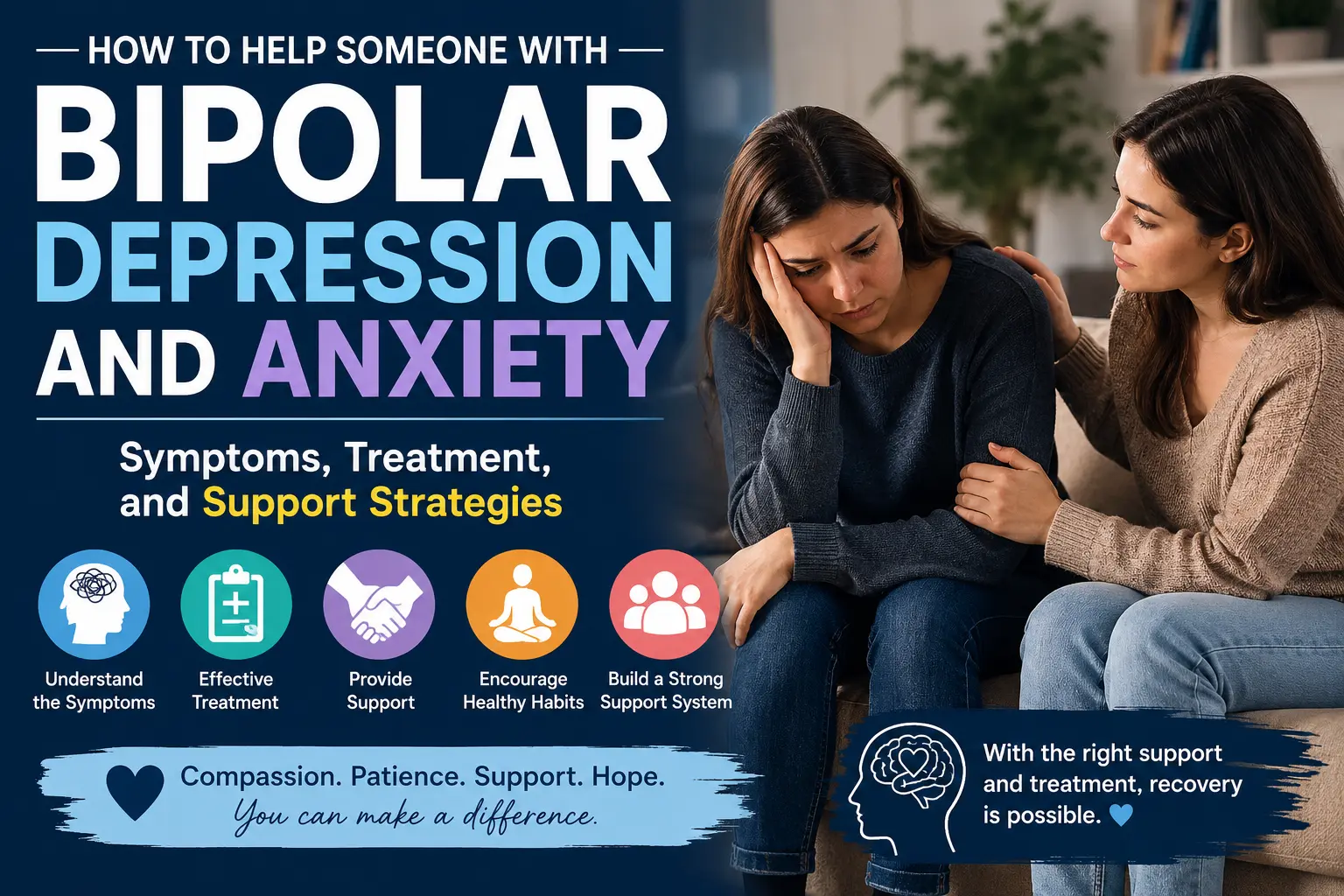 Watching someone you care about struggle with bipolar depression and anxiety can be heartbreaking. You may notice that they withdraw…
 In my practice as a clinical psychologist, I often observe that the difference between a patient who crumbles under pressure…
 We all have "up" days and "down" days. Perhaps you feel energized after a promotion or sluggish on a rainy…
 To define bipolar disorder accurately, we must look at it as a chronic mood dysregulation condition. In psychology and medicine,…
Are you looking for a Therapist?
Connect with qualified mental health professionals who understand
bipolar disorder, mood changes, and emotional challenges.
Private • Supportive • Confidential