
Autistic Burnout: Symptoms, Causes, Recovery, and How to Heal

Medically reviewed by Laura Athey Updated Date: February 28, 2026
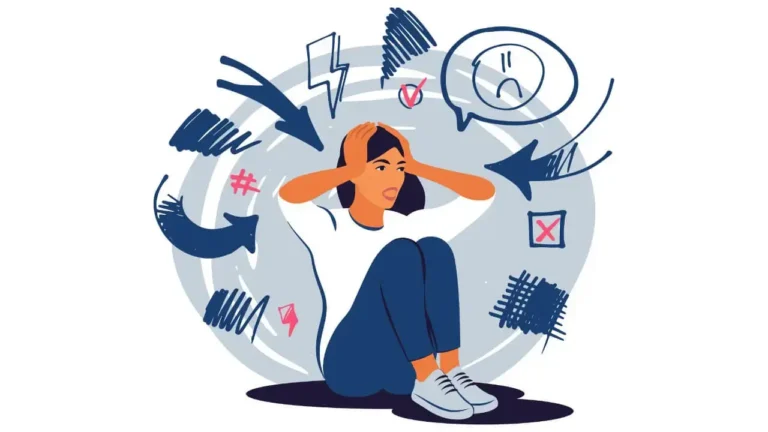
Autistic burnout is a debilitating state of physical and mental exhaustion, often accompanied by a significant loss of skills and a reduced tolerance for sensory input. Unlike standard professional burnout or clinical depression, this phenomenon is rooted in the unique neurological load of navigating a world designed for neurotypical standards.
For many autistic adults, particularly those who are late-diagnosed, burnout is the result of years of “masking”—the exhausting process of camouflaging autistic traits to fit into social or workplace environments. This article provides a comprehensive exploration of the biological and psychological mechanisms behind this collapse.
By understanding the specific symptoms, identifying the root causes, and implementing neurodiversity-affirming recovery strategies, individuals can move away from the shame of “failure” and toward a sustainable path of healing. Whether you are experiencing this firsthand or supporting a loved one, this guide offers the clarity needed to navigate the complexities of autistic burnout.
I have personally understood that for many neurodivergent adults, burnout is the “tipping point” where the mask finally shatters. Unlike standard professional burnout or clinical depression, this state is rooted in the unique neurological load of navigating neurotypical standards. By understanding the specific symptoms, identifying root causes, and implementing neurodiversity-affirming recovery strategies, we can move away from the shame of “failure” and toward a sustainable path of healing.
Why Am I So Exhausted and Losing Skills?
Have you ever reached a point where your brain feels like a hard drive that has run out of space? You might find that tasks you previously handled with ease—maintaining a conversation, managing a grocery list, or tolerating the hum of a refrigerator—now feel physically painful or impossible. This is the hallmark of autistic burnout, a state that leaves many feeling as though they are “losing” their ability to function.
For many, autistic burnout in adults is a terrifying experience because it often lacks a formal medical label, leading to deep confusion. You might have been told you are simply “depressed” or “stressed,” yet traditional advice like “get more exercise” or “socialize more” only makes the exhaustion worse. It is vital to normalize this experience: you are not broken, and you are not suddenly becoming “more autistic.” You are experiencing a systemic neurological shutdown.
In this guide, we will dive deep into what autistic burnout is, examining how it differs from neurotypical burnout and depression. We will outline the observable signs, the stages of the burnout cycle, and most importantly, how to facilitate a recovery that respects your sensory and cognitive boundaries. Understanding this state is the first step in reclaiming your well-being.
What Is Autistic Burnout?
To solve a problem, one must first name it. The autistic burnout definition describes a syndrome characterized by chronic exhaustion, loss of functional skills, and reduced tolerance to stimuli. While it has only recently gained traction in academic literature, the term was coined by the autistic community to describe a specific type of collapse that occurs when the demands of life exceed an individual’s internal resources.
Essentially, what is an autistic burnout? It is a state of “neurological bankruptcy.” When an autistic person spends years or decades overextending their cognitive energy to meet neurotypical expectations—often referred to as “masking”—the nervous system eventually reaches a breaking point where it can no longer maintain the facade or the function.
How Autistic Burnout Is Different From Stress
It is a common mistake to equate this state with general stress. While everyone experiences stress, autistic burnout is a chronic mismatch between an individual’s environment and their neurological capacity.
- Lived Experience vs. External Pressure: Standard stress is often situational (e.g., a big project at work). Burnout is the result of the perpetual effort of existing in a world not built for you.
- The Cost of Resilience: It is not a lack of resilience. In fact, most people in burnout have been too resilient for too long.
- Biological Shutdown: Unlike stress, which often triggers “fight or flight,” burnout is a state of “freeze” or “collapse.” It is a biological imperative to stop all non-essential activity to prevent further damage to the nervous system.
What Does Autistic Burnout Feel Like?
The internal experience of what autistic burnout feels like is often described as a total systemic failure. It is visceral and all-encompassing.
Extreme Exhaustion: This is not a “sleepy” tired. It is a bone-deep, cellular fatigue that sleep does not touch.
Loss of Executive Function: Tasks that require planning (like showering or cooking) feel like trying to climb Mount Everest.
Sensory Overwhelm: Your “sensory filter” disappears. The sound of a ticking clock can feel like a hammer, and the texture of clothes can become unbearable.
Emotional Shutdown: You may feel numb or “flat,” or you may find yourself crying or having meltdowns over things that previously wouldn’t have bothered you.
Reduced Masking Capacity: You physically cannot force yourself to make eye contact or perform social niceties anymore. The “mask” has shattered because there is no energy left to hold it up.
What Does Autistic Burnout Look Like?
While the internal struggle is immense, there are clear observable signs of autistic burnout that friends, family, or the individuals themselves might notice.
- Increased Withdrawal: Total isolation, not out of a desire to be lonely, but out of a need for sensory safety.
- Frequent Meltdowns or Shutdowns: A noticeable increase in emotional outbursts or periods of “stonewalling” and non-responsiveness.
- Skill Regression: This is one of the most prominent autistic burnout symptoms. A person may suddenly struggle with speaking (becoming semi-verbal), driving, or basic hygiene.
- Increased Stimming: A return to or increase in self-stimulatory behaviors (like rocking, flapping, or humming) as the body tries to regulate its frayed nerves.
- Reduced Communication: Shorter emails, fewer texts, and a general “dropping off” from social obligations.
Symptoms of Autistic Burnout
To understand the full scope, we must break down the symptoms of autistic burnout into emotional, cognitive, physical, and behavioral categories.
Emotional and Cognitive Symptoms
- Brain Fog: A persistent inability to focus or remember basic details.
- Loss of Motivation: Even for special interests that used to provide immense joy.
- Increased Irritability: A “short fuse” caused by a perpetually overloaded nervous system.
- Suicidal Ideation: Often stemming from a feeling of “hopelessness” about ever being able to function “normally” again.
Physical and Sensory Symptoms
- Chronic Pain and Illness: Frequent headaches, digestive issues, and a weakened immune system.
- Heightened Sensory Sensitivity: Becoming hyper-aware of environmental triggers.
- Physical Heaviness: The sensation that limbs are made of lead.
Behavioral Symptoms
- Avoidance: Intense “demand avoidance” even for things the person wants to do.
- Executive Dysfunction: An inability to initiate or complete sequences of tasks.
- Social Fragmentation: Losing the ability to track conversations or understand social cues that were previously mastered.
Autistic Burnout in Adults vs. Children
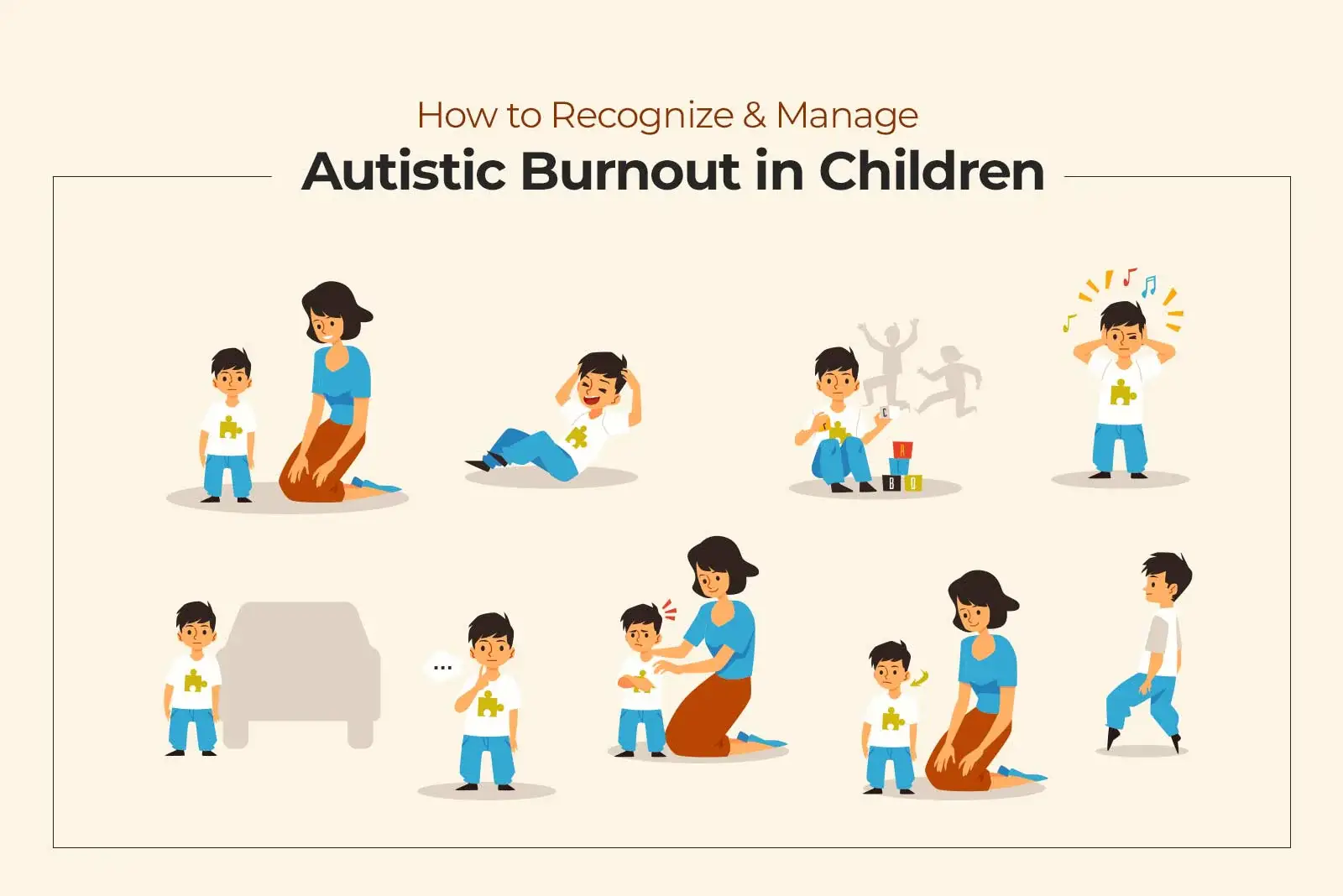
While the core mechanism remains the same, the external presentation of burnout varies significantly depending on age and life stage.
Autistic Burnout in Adults
For many, autistic burnout in adults is the cumulative result of decades of “camouflaging.” Adults are often expected to maintain full-time employment, manage households, and navigate complex social hierarchies. The pressure to appear “neurotypical” in professional settings is a primary driver of exhaustion. In late-diagnosed adults, burnout is often the catalyst that leads to a diagnosis; they simply reach a point where they can no longer maintain the “mask” that allowed them to pass as neurotypical for years.
Autistic Burnout in Children
In contrast, autistic burnout in children is frequently mislabeled as “behavioral issues” or “oppositional defiance.” A child in burnout may experience sudden “school refusal,” a sharp decline in academic performance, or a loss of milestones (such as toilet training or previously mastered speech). I’ve realized that school environments—with their high sensory input, rigid social expectations, and lack of downtime—are often the primary cause of burnout in younger neurodivergent individuals.
What Causes Autistic Burnout?
The question of what causes autistic burnout is rarely answered by a single event. Instead, it is the result of a “cumulative load”—the weight of living in a world not built for your brain.
- Chronic Masking: The constant mental effort required to suppress stimming, force eye contact, and script conversations is the most significant drain on an autistic person’s energy.
- Sensory Overload: Living in high-stimulus environments (offices, shopping centers, loud cities) keeps the nervous system in a state of perpetual “high alert.”
- Executive Function Demands: Modern life requires constant planning, switching, and organizing. For an autistic brain, these tasks consume significantly more “battery power” than for a neurotypical brain.
- Life Transitions: Events like moving house, starting a new job, or losing a loved one disrupt the routines that provide safety, often acting as the final trigger for autistic burnout.
- Social Pressure: The expectation to perform socially without adequate “recovery time” leads to a depletion of internal resources.
Do life stressors cause autistic burnout? Yes, but specifically because they deplete the cognitive “spoons” required to manage the fundamental challenges of autism.
The Stages and Cycle of Autistic Burnout
Burnout is not a sudden drop; it is a cycle that often goes unnoticed until the final collapse. Understanding the stages of autistic burnout can help in early intervention.
- The Overcompensation Phase: The individual notices they are struggling and tries to “work harder.” They increase their masking efforts and push through fatigue, further draining their reserves.
- The Chronic Exhaustion Phase: The “battery” is low. The person begins to feel irritable, foggy, and physically tired, but may still attempt to meet external demands.
- The Skill Loss Phase: The brain begins to “triage.” It shuts down complex functions (like social scripting or executive planning) to save energy for basic survival.
- The Withdrawal/Collapse Phase: Total retreat. The individual cannot leave bed, cannot speak, or cannot tolerate any sensory input. This is the peak of the autistic burnout cycle.
- The Slow Thaw: With radical rest, capacity very slowly begins to return, though the person may remain “more sensitive” for a long period.
Autistic Burnout vs. Depression
Misdiagnosis is one of the greatest hurdles to recovery. It is common for autistic burnout vs. depression to be confused by clinicians, yet they require vastly different treatments.
- Mood vs. Capacity: Depression is a mood disorder often characterized by a lack of interest (anhedonia). In burnout, the person usually wants to engage in their interests but lacks the physical capacity to do so.
- Sensory Reactions: Depression typically involves a “dulling” of the senses. Burnout involves an increase in sensory sensitivity.
- Treatment Response: Depression may respond to “behavioral activation” (getting out and doing things). For someone in burnout, behavioral activation is often harmful and deepens the collapse. Antidepressants alone rarely solve burnout because the root cause is neurological depletion, not just chemical imbalance.
Autistic Burnout vs. Regular Burnout
When comparing autistic burnout vs. regular burnout, the primary difference is the nature of the load.
- The Masking Factor: While a neurotypical person burns out from “too much work,” an autistic person burns out from the effort of pretending to be someone else.
- Sensory Processing: Regular burnout is rarely tied to the physical environment. Autistic burnout is almost always exacerbated by sensory stressors.
- Recovery Timelines: A neurotypical person might feel better after a two-week vacation. For an autistic person, recovery often takes months or years because it requires a fundamental change in how they interact with the world.
ADHD Burnout vs. Autistic Burnout
For those who are “AuDHD” (Autistic and ADHD), the experience is a specific type of neurodivergent burnout.
- ADHD Burnout: Often characterized by “task paralysis” and dopamine depletion. It feels like being a car that wants to go but has no fuel.
- Autistic Burnout: Feels like a car whose engine has overheated and seized.
- The Conflict: I’ve realized that AuDHD burnout involves a brain that craves novelty (ADHD) but a nervous system that is too sensitive to handle it (Autism). This creates a “stuck” feeling where you are bored but overwhelmed simultaneously.
Do Autistic People Lose Skills During Burnout?
A frequent and frightening experience during this state is the sudden inability to perform tasks that were once routine. The question, “Do autistic people lose skills during burnout?” is met with a resounding yes within the neurodivergent community. This is often referred to as “regression,” though it is more accurately described as a neurological triage.
- Temporary vs. Permanent: For most, skill loss is temporary. The brain simply lacks the energy to power “higher-order” functions like social scripting, complex planning, or verbal speech.
- Executive Function Erosion: You may find you can no longer drive, cook for yourself, or manage your personal hygiene.
- Speech and Communication: Many verbal autistic adults become semi-verbal or completely non-speaking during burnout, as the cognitive cost of translating thoughts into speech becomes too high.
- Why Skills Return: Once the “threat” of the environment is removed and the nervous system is allowed to rest, the brain eventually reallocates energy to these skills.
How Long Does Autistic Burnout Last?
The most high-intent query for those suffering is how long does autistic burnout last? Unlike a standard weekend of rest, this is a long-term recovery process.
- Weeks vs. Months vs. Years: I’ve realized that the duration is almost always proportional to the amount of time the person spent “pushing through” the warning signs. If you have been masking for 20 years, how long can autistic burnout last? It may take several years of lifestyle changes to fully recover.
- The Danger of Rushing: Attempting to return to “normal” productivity too soon often triggers a relapse into the autistic burnout cycle, making the next collapse even deeper.
- Individual Variability: How long it takes to recover from autistic burnout depends heavily on whether the individual can change their environment (e.g., leaving a toxic job or getting social support).
How Is Autistic Burnout Diagnosed?
Because “Autistic Burnout” is not yet a formal diagnosis in the DSM-5 or ICD-11, many people wonder, “How is autistic burnout diagnosed?”
- Self-Identification: Currently, most people identify their state through community resources and lived experience.
- Clinical Awareness: While awareness is growing, many clinicians still misdiagnose this as “Treatment-Resistant Depression.”
- Differential Diagnosis: A neurodiversity-affirming clinician will look at your history of masking, sensory sensitivities, and whether traditional depression treatments (like behavioral activation) have failed or made you worse.
How to Recover From Autistic Burnout
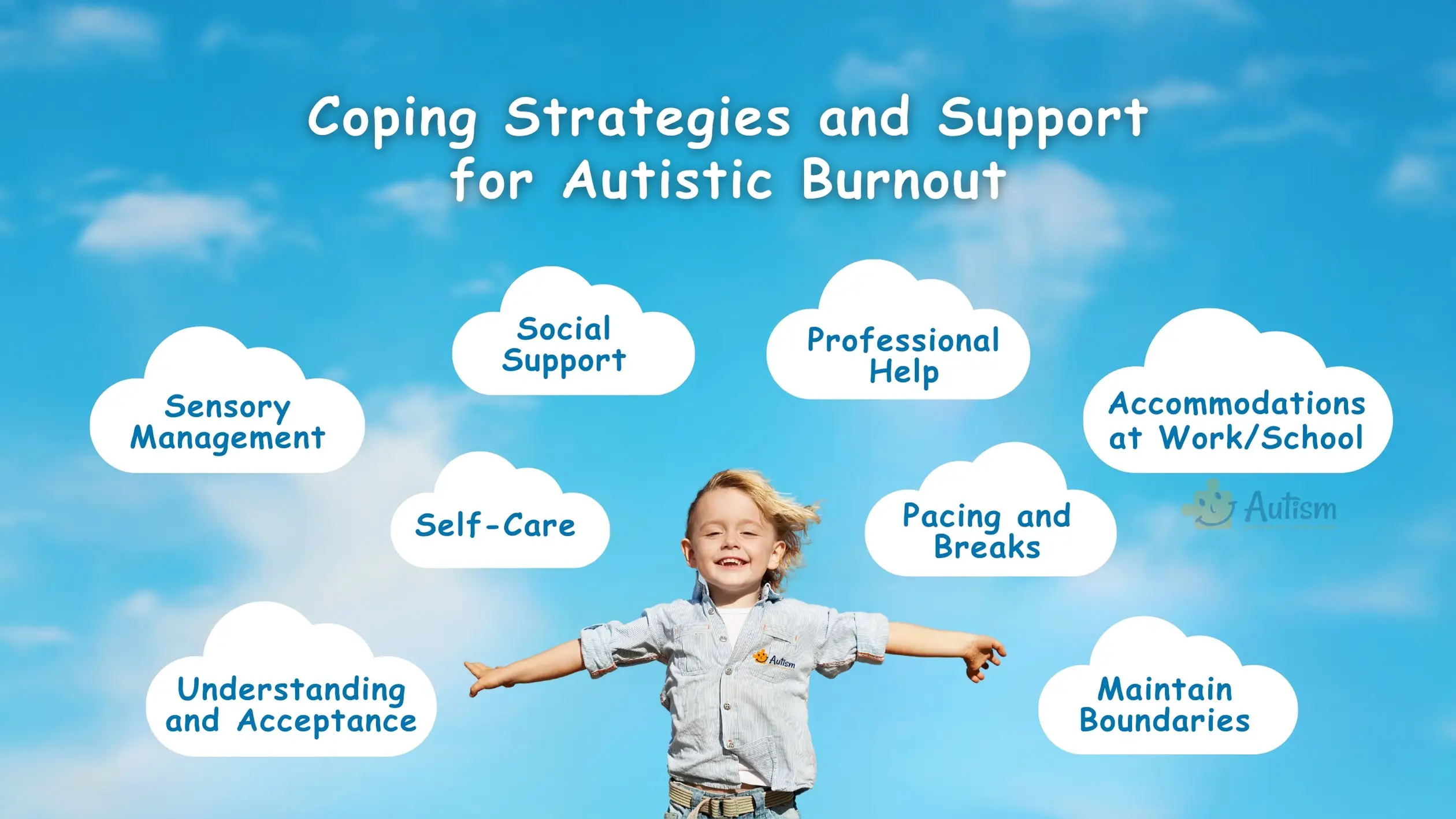
This is the most critical section for anyone currently in collapse. If you want to know how to get out of autistic burnout, you must move away from the “push through” mentality and toward radical self-accommodation.
Reduce Demands Immediately
The primary goal of autistic burnout recovery is to lower the “load” on your nervous system.
- Drop the Non-Essentials: Cancel social plans, order groceries, and lower your standards for house cleaning.
- Workplace Accommodations: If possible, take medical leave or request to work from home with reduced hours. This is an essential step in managing autistic burnout.
Create a Sensory Sanctuary
Since your sensory system is “raw,” you must protect it.
- Control Your Environment: Use blackout curtains, noise-canceling headphones, and weighted blankets.
- Comfort First: Wear only the softest clothes and eat “safe” foods that don’t require complex preparation.
Rest Without Guilt
How to deal with autistic burnout requires unlearning the shame of “unproductivity.” Rest for an autistic person often looks like:
- Engaging in “monotropism” (focusing deeply on one special interest for hours).
- Spending time in complete silence.
- Stimming freely without trying to hide it.
The Bipolar Intersection: Mood Cycles and Systemic Collapse
When the intense sympathetic arousal of a manic episode becomes unsustainable, the brain pulls the emergency brake to prevent systemic failure, leading to the leaden paralysis and emotional numbness typical of autistic burnout. I’ve realized that distinguishing between a chemical depressive shift and a protective neurological shutdown is vital for recovery. By incorporating somatic safety cues alongside traditional bipolar management, individuals can bridge the gap between these heavy collapses and a state of regulated, vibrant stability.
Treatment & Support Options for Autistic Burnout
Knowing how to treat autistic burnout involves finding professionals who understand neurodivergent biology.
- Occupational Therapy (OT): A neuro-affirming OT can help you build a “sensory diet” to calm your nervous system.
- Affirming Therapy: Look for therapists who do not use ABA or CBT to “correct” your behavior, but who focus on how to treat autistic burnout in adults through unmasking and boundary setting.
- Medical Support: Sometimes, addressing underlying issues like vitamin deficiencies (B12/D) or sleep apnea can help provide the baseline energy needed for recovery.
How to Help Someone With Autistic Burnout
If a loved one is in crisis, knowing how to help someone with autistic burnout can make a life-saving difference.
- Remove Decision Fatigue: Don’t ask “What do you want for dinner?” Instead, say “I’m putting a safe meal on the counter for you.”
- Accept Non-Verbal Communication: Allow them to communicate via text or apps even when they are in the same room.
- Validate the Need for Isolation: Don’t take their withdrawal personally. Understand that their brain is literally “offline.”
Frequently Asked Questions
How do you know if you have autistic burnout?
Recognizing the onset of burnout requires a high degree of “interoception”—the ability to sense what is happening inside your body. I have personally understood that for many, the first sign is a persistent “drop” in functional capacity that does not improve with standard rest. You may notice that your “social battery” is permanently depleted, and tasks that were previously automatic, such as maintaining eye contact or filtering out background noise, now feel physically painful. Unlike a “bad week,” this state persists for weeks or months and is almost always accompanied by a significant increase in sensory hypersensitivity and a total inability to maintain your usual “mask.”
What is autistic burnout?
At its core, autistic burnout is a state of systemic neurological exhaustion. I’ve realized through my work at Reflection Psychological Services that it is essentially a biological “bankruptcy.” It occurs when there is a chronic mismatch between an autistic person’s internal resources and the external demands of their environment. When the brain spends years over-functioning to compensate for sensory processing differences and social expectations, the nervous system eventually hits a breaking point. It is not a mental illness, but a physiological survival response—a way for the body to force a “shutdown” to prevent further systemic damage.
What causes autistic burnout?
The causes are often cumulative rather than acute. I have personally understood that the primary driver is chronic masking—the exhausting process of camouflaging autistic traits to fit into a neurotypical world. Other major triggers include:
- Sensory Overload: Living or working in high-stimulus environments without adequate “sensory downtime.”
- Executive Function Demands: The constant “juggling” required by modern life (emails, appointments, household management).
- Major Life Transitions: Changes that disrupt the routines and predictability that provide neurological safety.
What are the stages of autistic burnout?
I’ve realized that burnout typically follows a predictable Autistic Burnout Cycle. It begins with Over-Masking, where the individual senses a struggle and tries to “work harder” to compensate. This leads to Chronic Exhaustion, characterized by irritability and brain fog. If the load isn’t reduced, it progresses to Skill Regression, where the brain “shuts off” non-essential functions to conserve energy. This culminates in a Total Shutdown—a state of immobilization and withdrawal. The final stage is a Very Slow Recovery, which can only begin once the individual feels safe, and the environmental demands are radically lowered.
How long does autistic burnout typically last?
The duration of burnout is highly individual and depends heavily on how long the person spent ignoring the initial warning signs. I have personally understood that while an acute episode might lift after a few months of radical rest, chronic burnout resulting from decades of undiagnosed masking can take several years to resolve. Recovery is not about “fixing” the autism; it is about rebuilding a life that respects your sensory boundaries and energy limits. Pushing through the fatigue only restarts the cycle, whereas honoring the need for rest facilitates a more sustainable return to function.
Conclusion
If you are in burnout, please hear this: Your body is not failing you; it is trying to save you. Autistic burnout is a biological signal that the current way of living is not sustainable for your unique brain. By prioritizing autistic burnout recovery through rest, unmasking, and sensory safety, you are not being “lazy”—you are performing the essential work of healing. You are enough, even when you are at your lowest capacity.
Authoritative References
1. Academic Research: AASPIRE (The Academic-Autistic Spectrum Partnership in Research and Education)
2. National Autistic Society (UK)
3. Dr. Devon Price (Author of “Unmasking Autism”)
4. PsychCentral: Neurodiversity-Affirming Clinical Insights
5. Dr. Laura Athey-Lloyd, Psy.D. – Clinical Authority

Related Posts






Subscribe to Our Newsletter
Get mental health tips, updates, and resources delivered to your inbox.
MORE from Author
Read More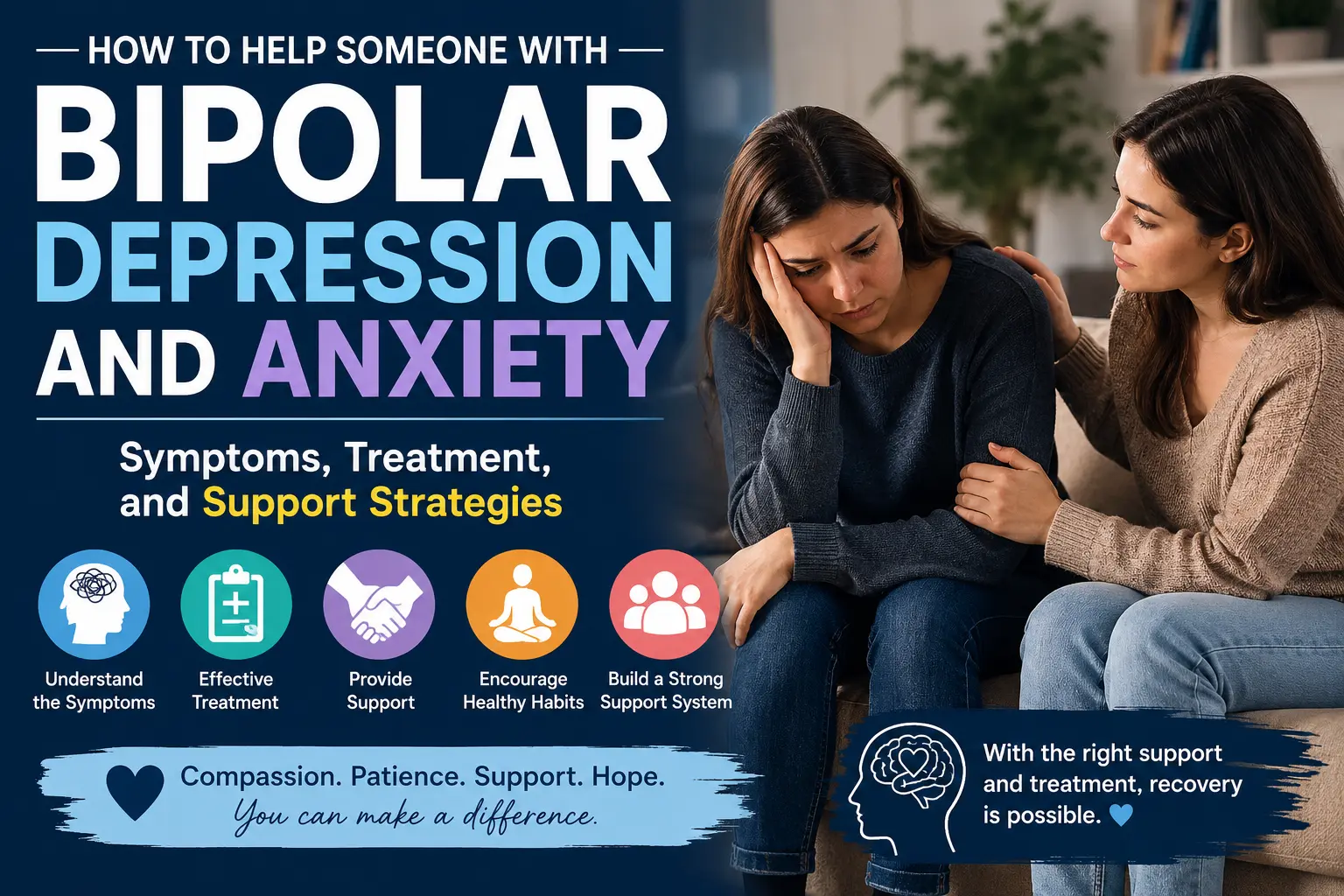 Watching someone you care about struggle with bipolar depression and anxiety can be heartbreaking. You may notice that they withdraw…
 In my practice as a clinical psychologist, I often observe that the difference between a patient who crumbles under pressure…
 We all have "up" days and "down" days. Perhaps you feel energized after a promotion or sluggish on a rainy…
 To define bipolar disorder accurately, we must look at it as a chronic mood dysregulation condition. In psychology and medicine,…
Are you looking for a Therapist?
Connect with qualified mental health professionals who understand
bipolar disorder, mood changes, and emotional challenges.
Private • Supportive • Confidential