
Emotional Dysregulation Signs in Relationships, Reclaiming Control

Medically reviewed by Laura Athey Updated Date: April 15, 2026

In my clinical practice, I often meet high-functioning adults who describe their emotional lives as a series of “weather events” they are powerless to predict or stop.
They might be sitting in a boardroom or at the dinner table when a minor critique or a small scheduling change hits them like a tidal wave. Suddenly, they are submerged in a level of rage, despair, or panic that feels entirely disproportionate to the moment. Emotional Dysregulation Signs in Relationships.
When this happens, patients frequently ask me, “Why can’t I just ‘get over it’ like everyone else?” The answer rarely lies in a lack of willpower. Instead, it points to a complex neurobiological state known as “Emotional dysregulation“.
What Emotional Dysregulation Signs in Relationships?
The emotional dysregulation definition refers to an inability to manage and respond to emotional experiences flexibly.
While every human being experiences emotional “highs and lows,” an individual with a regulated nervous system can generally use executive function to modulate their response, eventually returning to a stable baseline.
In contrast, for someone struggling with dysregulation, the emotional “volume” is stuck at maximum, and the “off switch” feels broken.
This is not just “being sensitive.” It is a systemic difficulty in the brain’s ability to dial back an emotional response once it has been triggered.
In the landscape of adult mental health, recognizing this pattern is the first step toward neuroplasticity—the brain’s remarkable ability to reorganize itself and learn new, more stable ways of responding to the world.
Signs and Symptoms of Emotional Dysregulation

Recognizing signs requires looking past the emotion itself and focusing on the intensity and duration of the reaction. Many adults spend years believing they simply have a “hot temper” or are “too dramatic,” when in reality, they are navigating a dysregulated nervous system.
Common Symptoms in Daily Life
- Rapid Mood Changes: Moving from extreme joy to deep irritability within minutes without a clear external cause.
- Impulsivity: Making rash decisions, such as quitting a job or ending a relationship, during an emotional spike.
- Heightened Sensitivity: Feeling deeply wounded by minor perceived slights or constructive feedback.
- Relational Conflict: Frequent “blow-ups” with partners or friends that lead to a cycle of shame and apology.
- Sensory Overload: Feeling physically “assaulted” by noise, light, or touch when already emotionally taxed.
Relationship-Specific Patterns
I often observe that mood swings are a primary Emotional Dysregulation Signs in Relationships in romantic partnerships. If dysregulation persists in a relationship, it often leads to a “push-pull” dynamic.
One partner may become “emotionally flooded”—a state where the heart rate spikes and the “thinking brain” goes offline—leading to screaming or, conversely, a total emotional withdrawal (stonewalling).
The Neurodivergent Connection
It is important to ask: Is emotional dysregulation a symptom of autism or ADHD? In my practice, the answer is frequently yes. For autistic individuals, dysregulation is often tied to sensory processing and a need for predictability.
For those with ADHD, it is often a breakdown in “top-down” regulation—the brain simply lacks the inhibitory “brakes” to stop an emotion once it starts.
Causes and Contributing Factors
To truly understand what causes emotional dysregulation, we must look at the “Main Topic” of our inquiry: the biological and psychological architecture of the human brain. This is where we move beyond “behavior” and into the “why.”
The Amygdala vs. The Prefrontal Cortex
At the heart of emotional regulation is a delicate dance between two brain regions: the amygdala and the prefrontal cortex.
The amygdala is your brain’s “smoke detector.” Its job is to sense danger and trigger the “fight-or-flight” response. In a regulated brain, the prefrontal cortex—the seat of executive function—receives the alarm, assesses the situation, and says, “Wait, that wasn’t a bear; it was just a rude email.” “Let’s stand down.”
In adults with emotional dysregulation, ADHD, or trauma histories, this communication line is frayed. The amygdala is hyper-reactive (sounding the alarm for “burnt toast” as if it were a house fire), and the prefrontal cortex is underactive (unable to send the “all-clear” signal).
This is what we call a “limbic hijack.” You are biologically incapable of “thinking” your way out of the feeling because the thinking part of your brain has been temporarily bypassed by the survival center.
The Role of Trauma and Attachment
Neuroplasticity teaches us that our nervous systems are sculpted by our early environments. If an individual grew up in an “invalidating environment”—where their emotions were ignored, punished, or met with volatility—their brain never learned the “rhythm” of self-soothing.
Chronic stress in childhood can lead to a permanently “tuned” nervous system that stays in a state of high alert, making dysregulation an almost inevitable adaptation for survival.
Chronic Stress and Allostatic Load
In adulthood, “allostatic load”—the cumulative wear and tear on the body and brain due to chronic stress—can cause a previously regulated person to become dysregulated. When you are juggling financial pressure, career demands, and health issues, your “buffer” for emotional processing thins.
This is why you might find yourself sobbing over a broken dish when you were able to handle much larger crises just a year ago.
A nuance that many patients overlook is the relationship between circadian rhythms and emotional “brakes.” I once worked with a patient, “Mark,” who struggled with explosive irritability. We discovered that on nights he slept less than six hours, his “demand capacity” vanished.
From a psychological perspective, sleep deprivation “uncouples” the amygdala from the prefrontal cortex. Without REM sleep, your brain loses its ability to differentiate between a minor inconvenience and a major threat.
I often tell my patients the following: You cannot regulate a brain that is biologically depleted. Improving sleep hygiene isn’t just about “rest”; it’s about giving your prefrontal cortex the fuel it needs to keep your emotions in check.
Emotional Regulation Strategies: Practical Skills for Adults
The most frequent question I receive from those exhausted by their own volatility is, “How do I actually fix this?” The answer is not found in “suppressing” emotions—which usually leads to a later, more explosive outburst—but in building a more robust executive function to manage the emotional surge.
Retraining the brain’s “braking system” requires both cognitive and physiological intervention.
Non-Medication Strategies for Self-Regulation
In my practice, I prioritize skills-based therapy that leverages neuroplasticity. By consistently practicing new ways of responding, we can physically strengthen the neural pathways in the prefrontal cortex.
- Dialectical Behavior Therapy (DBT) Skills: This is the gold standard for regulating emotions as an adult. It focuses on “distress tolerance”—learning to sit with a painful feeling without acting on it—and “emotion regulation” skills, such as identifying the “function” of an emotion before responding to it.
- Cognitive Behavioral Therapy (CBT): We work to identify “cognitive distortions” that fuel dysregulation. If your thought is “They haven’t texted back because they hate me,” Your anxiety will spike. CBT helps you reframe this to “They are likely busy,” which lowers the emotional volume.
- The “90-Second Rule”: Neuroanatomist Jill Bolte Taylor notes that the chemical surge of an emotion lasts roughly 90 seconds. If you can breathe through those 90 seconds without speaking or acting, the physical intensity will drop.
Relationship-Focused Techniques
To manage emotional dysregulation in a partnership, you must move from “reaction” to “response.”
- The “Safety Stop”: Agree with your partner that either of you can call a 20-minute timeout when emotions become “flooded.”
- Healthy Communication: Use “I” statements to express vulnerability rather than “you” statements that trigger defensiveness.
- Grounding Exercises: When you feel a “hijack” coming on, use the 5-4-3-2-1 technique (naming 5 things you see, 4 you can touch, etc.) to force your brain back into the present moment.
Treatment Options and Medication
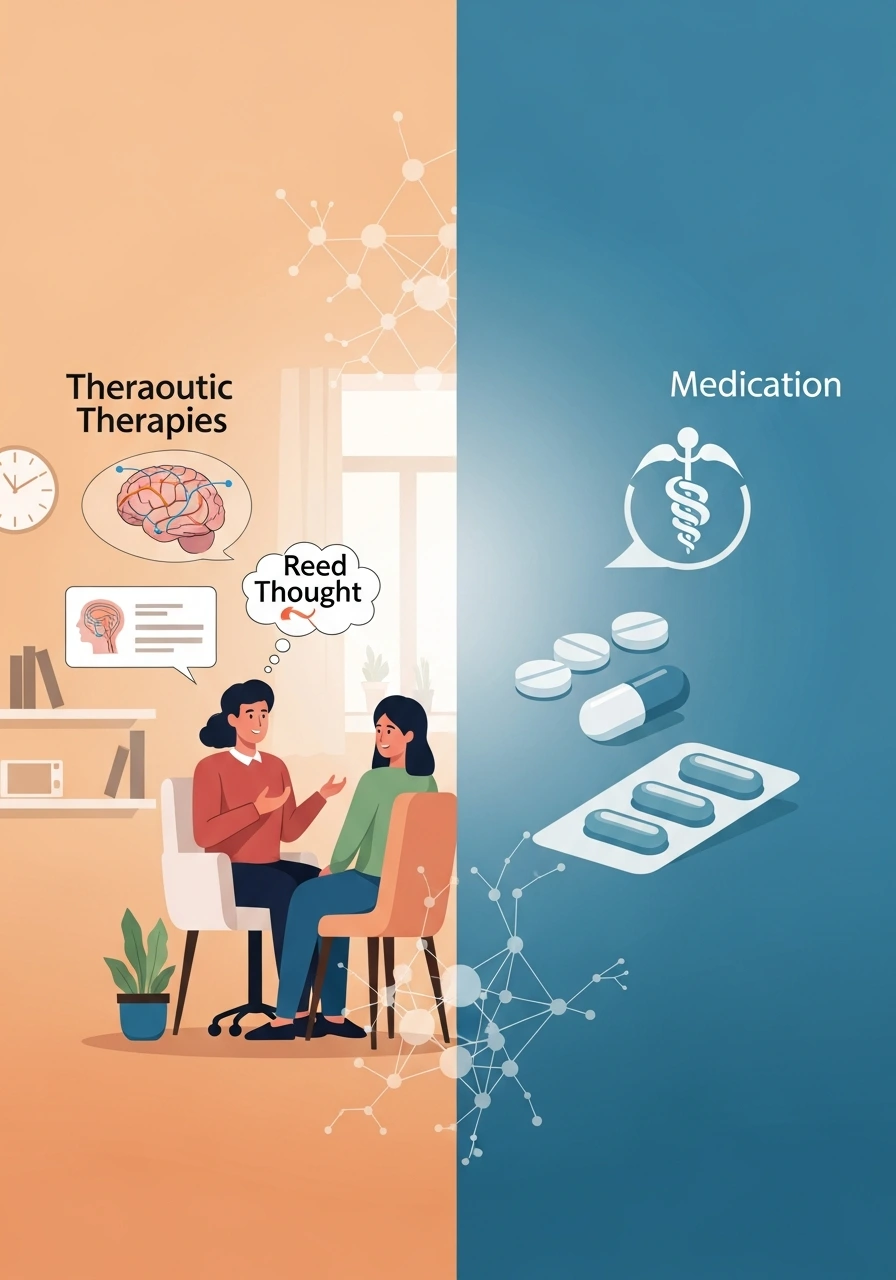
While therapy provides the “how-to,” the best medication for emotional dysregulation can provide the biological “floor” for your stability. I often coordinate with psychiatrists to determine if a patient’s baseline stress is too high for therapy to take hold.
| Medication Category | Common Usage | Impact on Regulation |
| SSRIs/SNRIs | Anxiety and Depression | Helps smooth out the “spikes” of irritability and sadness. |
| Mood Stabilizers | Bipolar Disorder/BPD | Prevents the extreme “peaks and valleys” of mood cycling. |
| ADHD Stimulants | ADHD | Strengthens focus and impulse control, reducing “reactive” outbursts. |
| Alpha-Agonists | Rejection Sensitivity | Targets the physical “jolt” of emotional pain (e.g., Guanfacine). |
Relationship and Life Impact
What happens if emotion dysregulation persists in a relationship? Left unmanaged, it creates a “trauma bond” dynamic where partners are constantly walking on eggshells. The dysregulated partner feels intense shame, while the other partner feels emotionally exhausted or “burned out.”
Signs of Relational Erosion
- Conflict Escalation: Minor disagreements regularly turn into “scorched earth” arguments.
- Emotional Withdrawal: One partner “shuts down” to avoid the other’s volatility.
- Lost Trust: The unpredictable nature of the outbursts makes it impossible to build a sense of long-term safety.
In my experience, understanding emotional vulnerability is the antidote. Vulnerability is the strength to say, “I am feeling very overwhelmed right now, and I need a moment,” rather than lashing out. It allows your partner to be an ally in your regulation rather than the target of your distress.
Frequently Asked Questions
How do you manage emotional dysregulation?
Management starts with physiological “resets” like deep breathing or cold water on the face, followed by cognitive tools like reframing and mindfulness to lower the emotional intensity.
What are the emotional dysregulation signs in Relationships in adults?
Primary signs include “zero-to-sixty” anger, rapid mood shifts, impulsive decision-making during emotional peaks, and difficulty “letting go” of minor slights.
Is emotional dysregulation a symptom of ADHD or autism?
Yes. In ADHD, it is often related to impulse control. In autism, it is frequently linked to sensory overstimulation or difficulty with transitions and social demands.
How to regulate emotions as an adult?
Regulation is a daily practice of monitoring your “window of tolerance,” maintaining a stable biological baseline (sleep and nutrition), and using therapeutic skills to pause before reacting.
Conclusion
Emotional dysregulation is a biological mismatch between an overactive alarm system and a struggling braking system. It is not a character flaw, and it is not a life sentence.
By identifying your triggers, understanding the role of your amygdala, and implementing evidence-based treatment options, you can move from a life of “reaction” to a life of “response.”
Neuroplasticity ensures that you can rebuild your inner stability. With the right tools and professional support, you can reclaim the peace you deserve and build Emotional Dysregulation Signs in relationships.
Authoritative References
- National Institute of Mental Health (NIMH)
- American Psychological Association (APA)
- The PDA Society (UK)
- CHADD (ADHD and Emotion Regulation)

Related Posts






Subscribe to Our Newsletter
Get mental health tips, updates, and resources delivered to your inbox.
MORE from Author
Read More Watching someone you care about struggle with bipolar depression and anxiety can be heartbreaking. You may notice that they withdraw…
 In my practice as a clinical psychologist, I often observe that the difference between a patient who crumbles under pressure…
 We all have "up" days and "down" days. Perhaps you feel energized after a promotion or sluggish on a rainy…
 To define bipolar disorder accurately, we must look at it as a chronic mood dysregulation condition. In psychology and medicine,…
Are you looking for a Therapist?
Connect with qualified mental health professionals who understand
bipolar disorder, mood changes, and emotional challenges.
Private • Supportive • Confidential