
How Do I Deal With A Partner With Quiet BPD Who Has Totally Pushed Me Away? Relationship Dynamics, Emotional Spikes

Medically reviewed by Laura Athey Updated Date: April 23, 2026

In my clinical practice, I often sit with partners who feel as though they are navigating a beautiful but unpredictable storm.
How do I deal with a partner with quiet Bpd who has totally pushed me away? It can be one of the most profound, emotionally rich, and simultaneously exhausting experiences of a person’s life.
The intensity of a relationship with someone with BPD is often rooted in their incredible capacity for empathy and connection. However, this is frequently shadowed by a neurobiological sensitivity to rejection that can turn a calm evening into a high-stakes crisis in seconds.
Understanding these dynamics isn’t about assigning blame; it is about recognizing how trauma-informed brains process love and threat. My goal is to help you move from a place of bewildered confusion to one of grounded, clinical understanding.
What Is It Like Dating Someone With BPD?
When you begin dating someone with BPD, you may initially feel like the center of their universe. This phase, often called “idealization,” involves an intense, intoxicating level of closeness that feels like a rare soul-level connection.
However, because the BPD brain is hyper-vigilant, this closeness eventually triggers a profound fear of loss. The “honeymoon” period often gives way to a cycle of intense closeness followed by sudden, sharp emotional withdrawal or conflict.
This happens because the individual’s nervous system begins to view the intimacy as a threat—the more they love you, the more power you have to destroy them by leaving. This results in a “push-pull” dynamic that can leave partners feeling dizzy and emotionally depleted.
BPD in Relationships

In my work with couples with BPD symptoms, I see patterns that are remarkably consistent across different lives. BPD in relationships examples often center on seemingly minor events that trigger catastrophic internal reactions.
For instance, a partner being fifteen minutes late for dinner isn’t just a scheduling hiccup; to the BPD brain, it can feel like a definitive sign that the partner no longer cares. This “black-and-white” thinking erases all previous evidence of love.
I recall a couple I worked with—let’s call them Sarah and Mark. Mark had BPD, and during one session, Sarah mentioned she wanted to spend a Saturday with her sister. Mark’s face immediately fell, and he became completely non-communicative.
To Mark, Sarah’s request wasn’t about family time; it was a rejection of him. Through therapeutic intervention, we worked on “mentalizing”—helping Mark realize that Sarah’s needs existed independently of her feelings for him, which eventually lowered the stakes of their daily interactions.
Why Do Partner Arguments Escalate in BPD Relationships?
A primary challenge in these dynamics is the speed at which BPD and partner arguments escalate. In a typical argument, most people stay within a “window of tolerance,” where they can still listen and reason despite being upset.
In BPD, the emotional regulator—the prefrontal cortex—effectively goes offline during conflict. The amygdala takes full control, initiating a fight, flight, or freeze response that makes logical communication nearly impossible.
This is why an argument about chores can suddenly escalate into a conversation about breaking up. How do I deal with a partner with quiet BPD who has totally pushed me away?
Emotional Spikes in BPD
To support a partner, you must understand what emotional spikes with BPD actually look like at a neurological level. These aren’t just “mood swings”; they are rapid, high-amplitude shifts in emotional baseline.
An emotional spike can be triggered by a tone of voice, a brief text, or even a facial expression that looks “off.” Once the spike occurs, the individual feels a surge of cortisol and adrenaline that can take hours, or even days, to fully subside.
During these spikes, the person may lash out (the “fight” response) or shut down completely (the “freeze” response). Understanding that this is a biological event—not a conscious choice—is the first step toward successful de-escalation and long-term stability.
Can BPD Change a Relationship?
Many people ask me, ” Can BPD change a relationship permanently for the worse? The answer is nuanced. While the disorder certainly introduces unique stressors, it does not have to be a death sentence for intimacy.
In fact, many couples find that navigating BPD together forces them to develop communication skills that far exceed those of “typical” couples. It requires a level of radical honesty and emotional intelligence that can deepen a bond.
However, change requires two things: the partner with BPD must be actively engaged in treatment (like DBT), and the other partner must maintain strong personal boundaries. Without these, the relationship can become a cycle of caretaking and resentment.
How to Deal With BPD in a Relationship
Learning how to deal with BPD in a relationship is largely about mastering the art of validation without necessarily agreeing with the person’s distorted reality. This is a delicate balance that takes significant practice and patience.
When your partner is in a “split” or an emotional spike, your first task is to validate the feeling, not the fact. For example, saying “I can see that you are feeling incredibly hurt and scared right now” is much more effective than trying to prove you aren’t leaving.
You must also learn how to deal with BPD by setting firm, loving boundaries. A boundary might be “I want to hear what you have to say, but I cannot continue this conversation while you are shouting at me.” I’m going for a walk, and we can talk in thirty minutes.”
I often remind my patients that “biology is not destiny.” I pay close attention to my patients’ sleep hygiene because sleep deprivation is the fastest way to shrink the “window of tolerance.”
For a person with BPD, one night of poor sleep can make it biologically impossible for their prefrontal cortex to manage an emotional spike the next day. If your partner is struggling, check their sleep—it’s often the first line of defense in emotional regulation.
What If My Partner Has Borderline Personality Disorder?
If you are currently thinking, ” What if my partner has borderline personality disorder? You may be feeling a mix of relief and terror. Relief because there is a name for the chaos and terror because of the stigma surrounding the diagnosis.
It is important to move toward understanding instead of just labeling. Your partner is likely a person who feels emotions with an intensity that most people will never experience—this “emotional third-degree burn” makes life painful, but it also makes them capable of deep love.
A question that often emerges in this situation is: “how do i deal with a partner with quiet bpd who has totally pushed me away?” The answer begins with recognizing that their withdrawal is usually a protective response rather than a reflection of your worth.
Seeking support for yourself is just as important as your partner seeking therapy. You are absorbing a high level of emotional energy, and you need a space to process your own feelings of overwhelm, guilt, and confusion without judgment.
Many people still find themselves asking, “how do i deal with a partner with quiet bpd who has totally pushed me away?” In these moments, focusing on consistent boundaries and calm communication helps prevent further escalation while still leaving room for reconnection.
Even after understanding the dynamics, you may continue to wonder, “how do i deal with a partner with quiet bpd who has totally pushed me away?” The most sustainable approach is to balance empathy with self-protection, allowing space for their emotional regulation while maintaining your
BPD vs Covert Narcissism in Relationships
One of the most frequent points of confusion I see, often discussed in BPD vs covert narcissism Reddit threads, is the overlap between these two conditions. In a relationship, both can involve withdrawal and emotional intensity, but the intent is different.
A common question that arises from this confusion is: “how do i deal with a partner with quiet bpd who has totally pushed me away?
” Understanding the underlying intent behind the behavior can help you respond with more clarity, patience, and emotional balance rather than reacting purely to the surface behavior.
In a quiet BPD and covert narcissist relationship, the BPD individual withdraws because they feel unworthy and are protecting themselves from you. The covert narcissist withdraws to punish you and regain control over the narrative.
| Trait | BPD / Quiet BPD | Covert Narcissism |
| Primary Driver | Intense fear of abandonment | Need for admiration/Defense against shame |
| Empathy | High (often hyper-attuned) | Selective or performative |
| Conflict Style | Reactive and panicked | Manipulative or blame-shifting |
| Remorse | Deep, often crushing guilt | Minimal; blame is usually externalized |
Understanding covert narcissism vs. BPD is crucial because the treatment and communication strategies are vastly different. While validation helps BPD, it can inadvertently “feed” the defensive cycle of a covert narcissist.
How to Tell If Someone Has BPD or Narcissistic Traits

One of the most vital tasks for partners is learning how to tell the difference between BPD and covert narcissism. While the outward behaviors might look like a “push-pull” cycle, the internal “why” is what determines the health of the relationship.
To help my clients, I developed a behavioral checklist focused on three pillars: empathy, accountability, and the “aftermath” of an argument. If you are wondering how to tell if someone is BPD or a narcissist, look closely at these patterns over time.
A question that often comes up alongside this is: “how do i deal with a partner with quiet bpd who has totally pushed me away?” Understanding the diagnosis can help you respond with more clarity rather than confusion.
Many partners continue to ask, “how do i deal with a partner with quiet bpd who has totally pushed me away?” The answer often lies in recognizing whether the person shows empathy and genuine remorse after conflict.
Ultimately, when evaluating these patterns, you may still find yourself asking, “how do i deal with a partner with quiet bpd who has totally pushed me away?” Observing long-term behavior—especially accountability and emotional repair—will guide both your understanding and your next steps.
The Empathy Response
How do I deal with a partner with quiet BPD who has totally pushed me away? They may accidentally hurt you during an emotional spike, but once they regulate, they are often devastated by the pain they caused you.
A covert narcissist, however, shows selective empathy. They might seem empathetic when it supports their image as a “good person,” but that empathy evaporates the moment your needs conflict with their own or make them feel criticized.
Accountability and Repair
In a relationship with someone with BPD, repair is possible because they often feel deep remorse. They are usually willing to own their mistakes, sometimes even over-apologizing due to toxic shame and a fear that you will leave.
Conversely, a covert narcissist struggles with genuine accountability. Their “apologies” often include caveats like “I’m sorry, but you made me do it.” They prefer blame-shifting to avoid the intolerable feeling of being “wrong.”
A question that naturally arises in this context is: “how do i deal with a partner with quiet bpd who has totally pushed me away?” When this happens, it is important to recognize that their withdrawal is typically rooted in fear and emotional overwhelm rather than indifference.
Many partners find themselves repeatedly asking, “how do i deal with a partner with quiet bpd who has totally pushed me away?” The key is to respond with steady reassurance while avoiding pressure, allowing them the space to regulate without feeling abandoned.
Ultimately, when facing this painful dynamic, the question remains, “how do i deal with a partner with quiet bpd who has totally pushed me away?”
The answer lies in balancing compassion with boundaries, offering support without losing your own emotional stability, and understanding that reconnection often happens when safety—not pressure—is felt.
Reaction to Your Independence
If you decide to spend time away from a BPD partner, their reaction is driven by fear: “Do they still love me?” If you do the same with a covert narcissist, their reaction is driven by control: “How dare they prioritize something else over me?”
Is BPD Worse Than Narcissism?
I am frequently asked, “Is BPD worse than narcissism?” From a clinical perspective, I find this question unhelpful because it focuses on a hierarchy of “badness” rather than a path toward healing.
Both conditions cause immense suffering, but BPD is often characterized by a higher degree of “ego-dystonic” pain—meaning the person hates their symptoms and wants to change. This often makes the prognosis for BPD much more positive.
Narcissism is often “ego-syntonic,” where the person views their defenses as necessary or even superior qualities. While BPD may feel more explosive in the short term, it is often more responsive to the hard work of psychotherapy.
A related concern I often hear from partners is: “how do i deal with a partner with quiet bpd who has totally pushed me away?” In these situations, it is essential to understand that this withdrawal is rarely about a lack of love.
It is more often a defensive reaction driven by overwhelming fear, shame, or emotional flooding. Responding with calm reassurance, maintaining healthy boundaries, and avoiding pressure can help create the conditions for reconnection, while also protecting your own emotional well-being.
At the same time, many partners continue to ask, “how do i deal with a partner with quiet bpd who has totally pushed me away?” The answer remains grounded in consistency and patience.
You cannot force them out of withdrawal, but you can create a safe emotional environment they feel able to return to. Balancing empathy with self-respect is key, ensuring that while you support them, you are not neglecting your own mental health.
Frequently Asked Questions
Managing Sudden Emotional Distance?
When a partner with BPD withdraws, it is usually a sign of “quiet BPD,” internalizing a fear. Giving them a clear timeline—”I’ll be in the other room, come find me when you’re ready”—provides the security they need to return.
Effectiveness of DBT for Couples?
Dialectical Behavior Therapy is not just for the individual; many couples find that learning “interpersonal effectiveness” skills together creates a common language. This reduces the frequency of “limbic hijacking” during normal household disagreements.
Distinguishing Trauma from Personality?
Many symptoms of BPD are actually adaptations to early childhood trauma. When a person feels safe and their nervous system is regulated, many of the “personality” traits that cause conflict actually begin to soften and disappear.
Protecting Your Own Mental Health?
Dating someone with intense emotional needs requires you to have a “support team” of your own. You cannot be your partner’s only source of stability; maintaining your own hobbies and friendships is a requirement, not a luxury.
Long-Term Relationship Success?
Can a BPD relationship work? Yes, but it requires radical transparency and a commitment to treatment. When both partners understand the “why” behind the emotional spikes, they can work together against the disorder rather than against each other.
Conclusion
Dating someone with BPD is a journey that requires a rare combination of iron-clad boundaries and soft-hearted compassion. How do I deal with a partner with quiet BPD who has totally pushed me away? You can navigate the relationship with clarity.
Remember, a diagnosis is just a map—it is not the person. While the challenges are real, so is the potential for a bond that is more resilient and authentic than most. If you find yourself overwhelmed, reach out for professional support to help you maintain your own grounding while you support the person you love.
Authoritative References
- Interpersonal Functioning in Borderline Personality Disorder: A Review.
- Borderline Personality Disorder and the Course of Interpersonal Relationships
- Differentiating Vulnerable Narcissism from Borderline Personality Disorder
- The Impact of Borderline Personality Disorder on Partners and Family Members
- Emotion Regulation and Interpersonal Problems in Borderline Personality Disorder

Related Posts






Subscribe to Our Newsletter
Get mental health tips, updates, and resources delivered to your inbox.
MORE from Author
Read More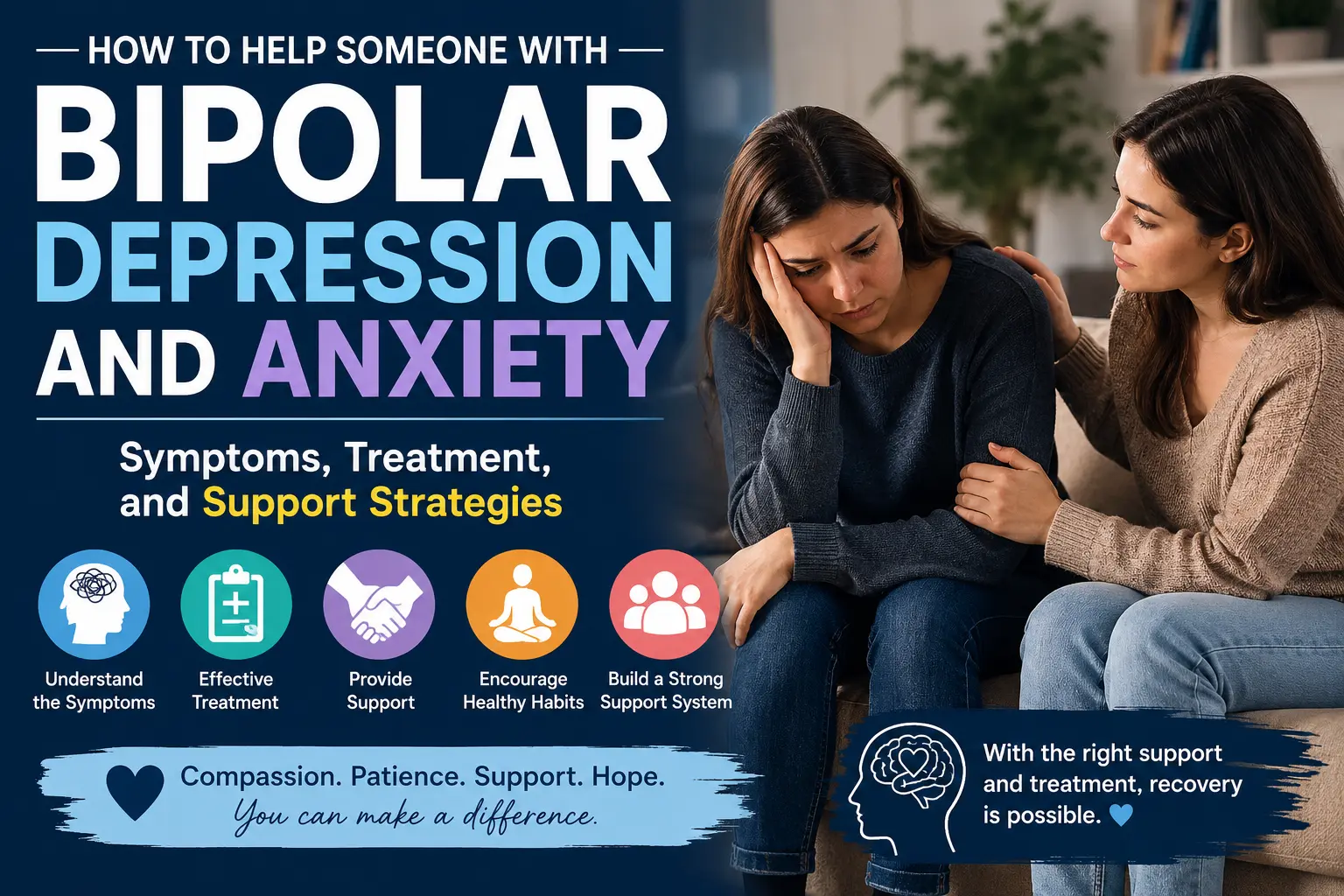 Watching someone you care about struggle with bipolar depression and anxiety can be heartbreaking. You may notice that they withdraw…
 In my practice as a clinical psychologist, I often observe that the difference between a patient who crumbles under pressure…
 We all have "up" days and "down" days. Perhaps you feel energized after a promotion or sluggish on a rainy…
 To define bipolar disorder accurately, we must look at it as a chronic mood dysregulation condition. In psychology and medicine,…
Are you looking for a Therapist?
Connect with qualified mental health professionals who understand
bipolar disorder, mood changes, and emotional challenges.
Private • Supportive • Confidential