
ADHD Overstimulation: Symptoms, Sensory Overload, Meltdowns, and How to Calm Your Brain

Medically reviewed by Laura Athey Updated Date: March 29, 2026
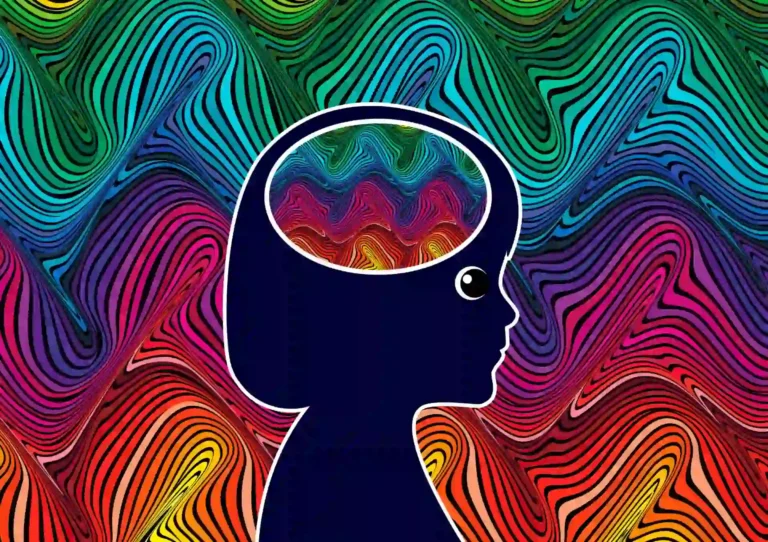
Living with ADHD often feels like having a web browser open with 50 tabs—and 5 of them are playing music, but you can’t find where the sound is coming from. In my clinical practice, one of the most frequent sources of distress I see in patients isn’t just the inability to focus; it is the physical and emotional exhaustion of ADHD overstimulation.
Patients often come to me thinking they are “just irritable” or “failing at coping.” They describe snapping at their partner because the TV is too loud, or needing to lie in a dark room after a trip to the grocery store. They rarely realize that this isn’t a character flaw—it is a physiological response. Their brain’s filtering mechanism has simply stopped working.
This guide will unpack exactly what ADHD overstimulation feels like, why it happens, and how to reclaim your calm when your sensory system goes offline.
What Is ADHD Overstimulation?
To understand what ADHD overstimulation is, we have to look at the brain’s executive functions.
Technically, this is a failure of sensory gating. A neurotypical brain automatically filters out “irrelevant” data—the hum of the fridge, the tag on your shirt, the background chatter in a cafe. The ADHD brain, however, has a “leaky filter.” It attempts to process everything at once with equal priority.
Does ADHD cause overstimulation?
Yes. While “overstimulation” is not a standalone diagnosis in the DSM-5, it is a well-documented consequence of the ADHD nervous system. It is closely tied to executive dysfunction and dopamine regulation. When the brain is low on dopamine, it struggles to regulate attention. Ironically, this can lead to seeking stimulation (to get dopamine) until the brain suddenly hits a tipping point and becomes overwhelmed.
Is overstimulation a sign of ADHD?
It is a very common sign. If you find yourself physically enraged by chewing sounds (misophonia) or unable to think because the lights are too bright, you are experiencing the friction of a brain that cannot filter its environment.
What Does ADHD Overstimulation Feel Like?
If you asked a hundred of my patients what ADHD overstimulation feels like, you would get a hundred different metaphors, but the core theme is intensity.
The Internal Experience
Internally, feeling overstimulated with ADHD often starts as a subtle “buzzing” anxiety.
- The “Loud” Brain: Thoughts begin to race so fast they overlap. It feels like static noise preventing you from grabbing a single coherent idea.
- Sensory Amplification: Suddenly, normal stimuli become painful. A partner’s touch feels like sandpaper. The sun feels aggressively bright. The sound of a fork hitting a plate causes a physical flinch.
- Sudden Exhaustion: It’s not a sleepy kind of tired; it’s a “battery dead” shutdown where thinking feels like wading through concrete.
The External Signs
Externally, loved ones might notice:
- Irritability: Snapping at people for “small” things (like asking a simple question).
- Restlessness: Pacing, fidgeting, or an inability to sit still (stimming).
- Withdrawal: The “thousand-yard stare.” The person stops responding or leaves the room abruptly.
- Emotional Outbursts: Sudden crying or anger that seems disproportionate to the situation.
ADHD Overstimulation Symptoms
Recognizing the symptoms of overstimulation in ADHD early is the best way to prevent a full meltdown. These symptoms generally fall into three categories: emotional, cognitive, and physical.
Emotional Symptoms
- ADHD Overstimulation Anger: This is often the first sign. It is a defense mechanism—the brain trying to fight off the incoming stimuli. It feels like “rage” but is actually “overload.”
- Anxiety: A sudden spike in panic or dread without a clear trigger.
- Mood Swings: Going from happy to “I can’t do this anymore” in seconds.
Cognitive Symptoms
- Brain Fog: You stare at a computer screen, and the words stop making sense.
- Decision Paralysis: Being asked “What do you want for dinner?” feels like an impossible exam question.
- Racing Thoughts: The inability to prioritize thoughts; everything feels urgent and loud.
Physical Symptoms
- ADHD Overstimulation Headache: A tension headache, usually behind the eyes or at the base of the neck, caused by squinting against light or tensing muscles.
- Muscle Tension: Shoulders rising to ears, clenched jaw.
- Fatigue: A sudden wave of heaviness.
Do People with ADHD Tend to Sweat More?
This is a common question I get. Yes, many adults with ADHD report excessive sweating, especially during overstimulation. This is because overstimulation triggers the body’s “Fight or Flight” (sympathetic nervous system) response.
The body perceives the sensory overload as a physical threat, dumping adrenaline and cortisol into the system, which increases heart rate and causes sweating—even if you are just sitting in a loud chair.
ADHD Overstimulation Meltdown vs Shutdown
When the brain can no longer handle the input, it forces a reset. This usually manifests as either a meltdown or a shutdown.
ADHD Overstimulation Meltdown
An ADHD overstimulation meltdown is an externalizing response. It is an explosion of energy.
- What it looks like: Yelling, crying uncontrollably, slamming doors, or aggressive venting.
- The feeling: It feels like a volcano erupting. The pressure inside becomes so great that it must come out physically. Afterward, there is usually immense shame and exhaustion.
ADHD Overstimulation Shutdown
An ADHD overstimulation shutdown is an internalizing response. It is an implosion.
- What it looks like: Going completely silent, staring into space, dissociation (feeling detached from your body), or curling up in bed.
- The feeling: It feels like a computer screen going black. The brain simply refuses to process any more data. You might hear people talking to you, but you cannot form the words to answer.
Both are involuntary physiological responses to ADHD sensory overwhelm. They are not “tantrums”; they are system failures.
What Causes ADHD Overstimulation?
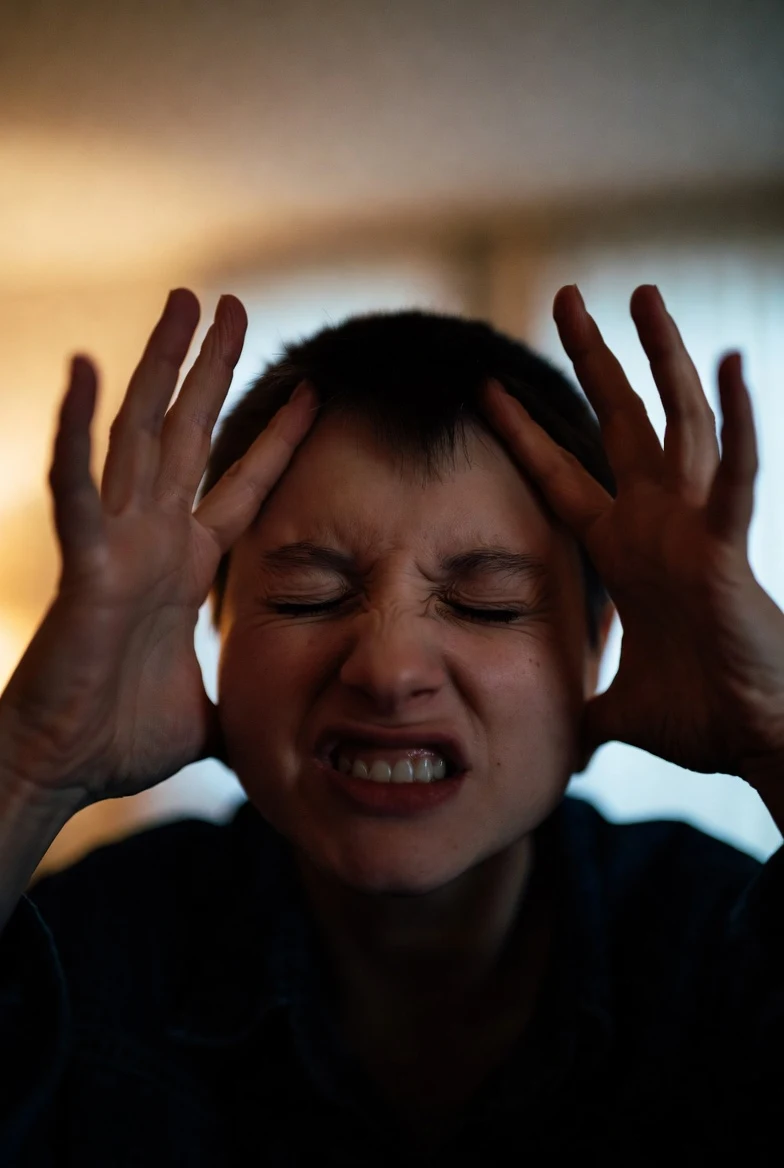
Identifying what causes ADHD overstimulation is the first step in management. While triggers are individual, they usually stem from a mismatch between the brain’s capacity and the environment’s demands.
Sensory Overload
This is the most direct cause. Too much noise, conflicting sounds (TV + conversation), flickering lights, strong smells, or uncomfortable clothing textures can rapidly deplete the brain’s energy.
Social Demands (Masking)
For many of my adult patients, masking—the effort to appear “normal” and attentive—is a massive drain. Maintaining eye contact, filtering impulsive thoughts, and decoding social cues requires immense executive effort. After a day of masking at work, a person may come home already at the brink of overstimulation.
Multitasking and Task Switching
The ADHD brain struggles to shift gears. Rapidly switching between tasks (answering emails, checking phone, cooking dinner) forces the brain to expend energy it doesn’t have. This “cognitive switching cost” accumulates until the brain crashes.
The “Understimulation to Overstimulation” Cycle
This is a paradox. An ADHD brain that is bored (understimulated) will seek stimulation—scrolling TikTok, eating sugar, creating drama. It seeks dopamine until it accidentally tips over into overstimulation. The crash follows the binge.
ADHD Overstimulation vs Autism Overstimulation
Since ADHD and Autism Spectrum Disorder (ASD) frequently co-occur (are comorbid), it can be hard to tell them apart. However, the mechanism of ADHD overstimulation vs autism overstimulation has distinct nuances.
Comparison Table: ADHD vs. Autism Overstimulation
| Feature | ADHD Overstimulation | Autism Overstimulation |
| Primary Trigger | Filtering Failure: Difficulty prioritizing input (e.g., “I can’t ignore the clock ticking while trying to work”). | Sensory Sensitivity: Intense response to specific stimuli (e.g., “The frequency of that light hurts”). |
| Social Aspect | Overwhelm comes from the effort of focusing/masking impulsivity. | Overwhelm often comes from decoding social cues and non-verbal communication. |
| Routine | Overstimulation often comes from boredom or chaotic multitasking. | Overstimulation often comes from disruption to routine or unpredictability. |
| Recovery | Often resolves with a “dopamine reset” (sleep, quiet, or a new interest). | May require prolonged sensory deprivation and return to “safe” routines/stims. |
| Focus | “Everything is distracting me.” | “This one thing is unbearable.” |
Can ADHD cause sensory overload?
Absolutely. While Autism is more famously associated with sensory issues, ADHD sensory overload is a core part of the lived experience for millions.
ADHD Overstimulation in Adults
While we often associate tantrums with children, ADHD overstimulation in adults is just as prevalent—it just looks different. Adults have learned to internalize the chaos, which often leads to burnout.
The Workplace Crash
In professional settings, adult ADHD overstimulation symptoms often manifest as “3 PM burnout.” After hours of masking, filtering office noise, and code-switching between tasks, the brain’s executive fuel is empty.
- Sign: Staring at an email for 20 minutes without comprehending it.
- Sign: Irritability during late-afternoon meetings.
Parenting and “Touched Out”
For parents with ADHD, the constant sensory input of children—crying, climbing, asking questions—can lead to being “touched out.” This is a form of tactile overstimulation where physical contact feels physically repulsive or painful. It’s not a lack of love; it’s a sensory capacity issue.
Decision Fatigue
Adult life requires thousands of micro-decisions (what to eat, wear, buy). The ADHD brain weighs every option with equal intensity. By dinner time, decision fatigue sets in, and being asked “What do you want to eat?” can trigger a disproportionate rage or shutdown.
ADHD Overstimulation in Relationships
ADHD overstimulation in relationships is a major source of conflict. When an ADHD partner is overstimulated, their “window of tolerance” for emotional connection closes.
- The Snapping Point: A partner asking a simple question (“Did you take out the trash?”) is met with aggression. The ADHD partner isn’t angry about the trash; they are angry at the interruption to their fragile focus.
- Misinterpreted Withdrawal: When the ADHD partner shuts down to recover, the non-ADHD partner often feels rejected or ignored.
- Conflict Escalation: During arguments, the raised voices and emotional intensity can rapidly overstimulate the ADHD brain, leading to a meltdown (yelling) or shutdown (stonewalling) that stops productive resolution.
How to Calm ADHD Overstimulation
Knowing how to calm ADHD overstimulation is a survival skill. We can divide strategies into immediate “rescue” tools and long-term prevention.
Immediate Regulation Tools (The “Rescue” Kit)
When you feel the crash coming:
- Reduce Sensory Input: Put on noise-canceling headphones immediately. Turn off overhead lights (fluorescents are notoriously draining for ADHD brains).
- The Cold Water Reset: Splash ice-cold water on your face or hold an ice cube. This triggers the Mammalian Dive Reflex, which physically slows your heart rate and forces the parasympathetic nervous system (rest and digest) to kick in.
- Deep Pressure: Use a weighted blanket or squeeze a pillow tight. Proprioceptive input helps ground the nervous system.
- The 5-4-3-2-1 Grounding Technique: Acknowledge 5 things you see, 4 you can touch, 3 you hear, 2 you smell, and 1 you taste. This pulls the brain out of the “storm” and back into the body.
- Movement Break: Sometimes, you need to “shake out” the excess energy. A 5-minute walk or jumping jacks can help metabolize the adrenaline.
Preventative Strategies
- Scheduled Downtime: Don’t wait until you crash. Schedule 15 minutes of “zero output” time (no phone, no talking) every afternoon.
- Noise Control: Use loop earplugs in grocery stores or busy environments to lower the decibel level without blocking speech.
- Task Batching: Group similar tasks (e.g., all emails at once) to reduce the “switching cost” that drains energy.
DHD Overstimulation Treatment
ADHD overstimulation treatment focuses on treating the underlying executive dysfunction.
Medication
- Stimulants (Methylphenidate, Amphetamines): Paradoxically, stimulants often calm the ADHD brain. By increasing dopamine and norepinephrine, they improve the brain’s ability to filter sensory input. The “noise” of the world becomes manageable because the brain can prioritize what to focus on.
- Non-Stimulants (Atomoxetine, Guanfacine): Guanfacine (Intuniv) specifically targets the alpha-2 receptors in the prefrontal cortex and is often prescribed to help with emotional regulation and sensory sensitivity.
Therapy
- Occupational Therapy (OT): An OT can help design a “sensory diet”—a personalized plan of sensory inputs (like swinging, heavy work, or tactile play) to keep the nervous system regulated.
- CBT (Cognitive Behavioral Therapy): Helps identify the early signs of overstimulation so you can intervene before a meltdown occurs.
Service Animal Tasks for ADHD Overstimulation

Psychiatric Service Dogs (PSDs) are increasingly used for ADHD. To qualify under the ADA, the dog must be trained to perform specific tasks that mitigate a disability.
Service animal tasks to help with ADHD overstimulation include:
- Deep Pressure Therapy (DPT): The dog uses its body weight (lying across the handler’s lap or chest) to provide calming pressure during a meltdown.
- Interruption: The dog nudges or paws the handler when it detects signs of agitation (shaking leg, rising heart rate), snapping them out of hyperfocus or an anxiety spiral.
- Crowd Control (Blocking): The dog stands behind or around the handler in crowded spaces to create a buffer zone, reducing sensory claustrophobia.
- Guiding to Safety: In a severe shutdown where the handler dissociates, the dog can lead them to a quiet place or an exit.
ADHD Self-Testing & Online Assessments — What to Know
If you relate to these symptoms, you might be searching for “Do I Have ADHD?” or taking free online ADHD assessments.
The Truth About Online Tests:
- Screening vs. Diagnosis: Online quizzes (like the ASRS v1.1) are screening tools. They can tell you if your symptoms match the pattern of ADHD, but they cannot diagnose you. They cannot rule out anxiety, thyroid issues, or trauma, which mimic ADHD.
- Red Flags: Avoid sites that promise a diagnosis in 5 minutes for a fee without a video consultation with a licensed provider.
- What to Do: If a self-test indicates a high likelihood, print the results and take them to a psychiatrist or neuropsychologist. A formal evaluation takes hours, not minutes, and looks at your entire history.
What Is the 24 Hour Rule for ADHD?
The 24-hour rule for ADHD is a behavioral strategy, not a clinical diagnosis. It is a simple but powerful impulse control tool: “Wait 24 hours before acting on a new idea, purchase, or commitment.”
- Why it works: ADHD brains are prone to impulsive dopamine-seeking. You might feel an urgent need to buy a $500 hobby kit or sign up for a marathon right now.
- The Result: By waiting 24 hours, the dopamine rush fades. You can then make a rational decision with your “cool” brain rather than your “hot” emotional brain. This prevents financial regret and overcommitment burnout.
Frequently Asked Questions
What does ADHD overstimulation feel like?
It feels like a physical assault on the senses. The brain feels “loud” or “full,” normal sounds become painful, and thinking feels like wading through mud. It often leads to sudden irritability or a need to withdraw.
What causes overstimulation in people with ADHD?
It is caused by a failure of “sensory gating.” The ADHD brain cannot filter out irrelevant stimuli (background noise, lights, textures), leading to a data backlog that crashes the system. Stress, hunger, and masking social behaviors worsen it.
Can ADHD cause sensory overload?
Yes. Sensory processing issues are a core, though unofficial, symptom of ADHD. The inability to regulate attention extends to the inability to regulate sensory input.
How does overstimulation affect autism & ADHD?
In Autism, overstimulation is often triggered by specific sensory sensitivities or social confusion. In ADHD, it is often triggered by the volume of stimuli and the effort of filtering/focusing. Both can lead to meltdowns.
What is ADHD sensory overwhelm?
It is the state where the brain’s processing capacity is exceeded by sensory input. It triggers the fight-or-flight response, causing anxiety, anger, or shutdown.
Is overstimulation a sign of ADHD?
Yes, frequent overstimulation is a strong indicator of the executive dysfunction seen in ADHD.
Do people with ADHD sweat more?
Many do, due to a hyperactive sympathetic nervous system (fight or flight) that is frequently triggered by stress and overstimulation.
What is the 24-hour rule for ADHD?
It is a strategy to prevent impulsivity: wait 24 hours before making any non-essential purchase or commitment to let the immediate dopamine urge pass.
Conclusion
ADHD overstimulation is not a sign of weakness; it is a sign of a high-performance engine that is overheating. The world is designed for neurotypical brains that filter automatically. Your brain takes it all in—every sound, every emotion, every detail.
The goal of treatment—whether through medication, therapy, or lifestyle changes like the 24-hour rule—isn’t to numb you. It is to give you a better cooling system. By recognizing your triggers, validating your need for quiet, and using tools like deep pressure or cold water, you can move from a state of constant survival to a state of thriving. You don’t have to just “tough it out.” You deserve to feel calm in your own skin.
References:
- National Institute of Mental Health (NIMH)
- CHADD (Children and Adults with Attention-Deficit/Hyperactivity Disorder)
- ADDitude Magazine (Medical Review Board)
- ADA.gov (U.S. Department of Justice)
- National Library of Medicine (PubMed)

Related Posts





Subscribe to Our Newsletter
Get mental health tips, updates, and resources delivered to your inbox.
MORE from Author
Read More Watching someone you care about struggle with bipolar depression and anxiety can be heartbreaking. You may notice that they withdraw…
 In my practice as a clinical psychologist, I often observe that the difference between a patient who crumbles under pressure…
 We all have "up" days and "down" days. Perhaps you feel energized after a promotion or sluggish on a rainy…
 To define bipolar disorder accurately, we must look at it as a chronic mood dysregulation condition. In psychology and medicine,…
Are you looking for a Therapist?
Connect with qualified mental health professionals who understand
bipolar disorder, mood changes, and emotional challenges.
Private • Supportive • Confidential