
Bipolar Eyes: What They Really Mean, How Mania Affects the Eyes, and What Science Says
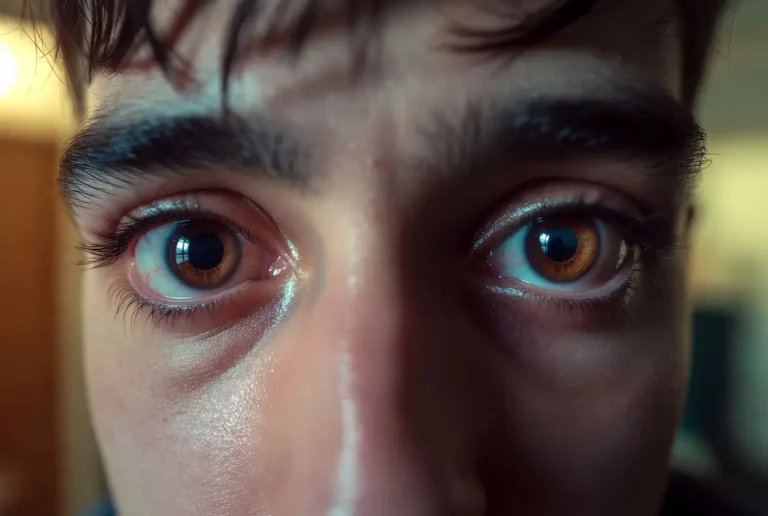
The term “bipolar eyes” has exploded in popularity across social media platforms like TikTok, Reddit, and Instagram. Often accompanied by startling “before and after” photos, the concept suggests that you can detect a person’s mood state—specifically mania or hypomania—simply by looking at their eyes. But is there any medical truth to this viral phenomenon, or is it merely a byproduct of our desire to find visible markers for invisible illnesses?
Understanding bipolar eyes’ meaning requires a careful balance between acknowledging the lived experiences of those with the disorder and sticking to clinical reality. While bipolar disorder primarily affects mood, energy, and cognition, the physiological changes that occur during a manic or depressive episode can indeed manifest in a person’s facial expressions and ocular behavior.
In this comprehensive guide, we will explore what bipolar eyes are, the science behind pupil dilation during mania, the “bipolar stare,” and why visual evidence is often more complicated than a simple photograph suggests.
What Are “Bipolar Eyes”?
If you search for what bipolar eyes, you won’t find the term in the DSM-5 (Diagnostic and Statistical Manual of Mental Disorders). It is not a clinical diagnosis or a formal medical symptom. Instead, “bipolar eyes” is a colloquial term used by the mental health community and their loved ones to describe perceived changes in the gaze, pupil size, and “intensity” of a person’s eyes during different mood states.
Defining the Concept
The bipolar eyes meaning generally refers to a specific look associated with mania or hypomania. It is often described as a “sparkle,” a “wildness,” or an “intense, predatory stare.” Conversely, during depressive episodes, the eyes are often described as “dead,” “flat,” or “vacant.”
Can You See Bipolar Disorder in Someone’s Eyes?
One of the most frequent questions asked by concerned family members is: Can you see bipolar in your eyes? The answer is nuanced: you can see the effects of a mood episode, but you cannot see the disorder itself.
Observable vs. Assumed
When comparing bipolar eyes vs normal eyes, the differences are usually not in the structure of the eye, but in the expression and pupil response. During a manic episode, a person may experience a “flight of ideas” and intense euphoria, which translates to a wide-eyed, hyper-vigilant look. However, someone who is simply excited, caffeinated, or sleep-deprived might exhibit similar visual traits.
The Role of Confirmation Bias
Confirmation bias plays a massive role in the “bipolar eyes” phenomenon. If a loved one knows someone has bipolar disorder and observes them acting erratically, they are more likely to “see” a change in their eyes that confirms their suspicion of mania. While there is often a physical basis for this, it is not a foolproof diagnostic tool.
What Do Bipolar Eyes Look Like During Mania?
When people talk about manic eyes, they are usually referring to a constellation of physical and behavioral changes. What do bipolar eyes look like during a high? While everyone is different, several “manic” traits are frequently reported by clinicians and patients.
Intense Eye Contact
During mania, social inhibitions often drop. This can result in prolonged, unblinking, and piercing eye contact. To an observer, this feels “intense” or even confrontational. The person in a manic state is often processing information at a rapid rate, and their gaze reflects that heightened focus.
The Widened or “Fixed” Stare
Manic bipolar eyes are often characterized by a wider-than-normal palpebral fissure (the opening between the eyelids). This occurs because the sympathetic nervous system is in “fight or flight” mode, causing the eyelids to retract slightly. This gives the appearance of a “fixed” or “startled” stare, even when there is no immediate threat or surprise.
Changes in Blinking Patterns
Research into manic eyes bipolar manifestations suggests that blinking rates may change. Some individuals in a manic state blink significantly less frequently due to hyper-focus, while others may exhibit rapid, fluttery blinking due to agitation and racing thoughts.
Dilated Pupils and Bipolar Disorder
Perhaps the most scientifically grounded aspect of this topic is the occurrence of dilated bipolar eyes. Many people notice that during a manic episode, a person’s pupils appear large, even in well-lit rooms.
Sympathetic Nervous System Activation
Why do bipolar people’s eyes dilate? The answer lies in the autonomic nervous system. Mania is a state of physiological hyper-arousal. This triggers the release of adrenaline and norepinephrine, which naturally cause the pupils to dilate (mydriasis) to allow more light in—part of the ancestral “fight or flight” response.
The Role of Dopamine
Dopamine is the neurotransmitter most closely associated with the “reward” and “euphoria” of mania. High levels of dopamine are also known to influence pupil size. When someone is in a “manic glow,” their brain is essentially bathing in chemicals that promote pupil expansion.
Medication vs. Mood Effects
It is important to distinguish between mood-induced dilation and dilated pupils in bipolar eyes before and after medication. Many psychiatric drugs, particularly certain antidepressants or antipsychotics, can cause pupillary changes as a side effect. Therefore, a “dilated look” might be a result of the treatment rather than the episode itself.
Bipolar Eyes Before and After a Manic Episode
The internet is full of bipolar eyes before and after montages. These usually show a person with “normal” eyes on the left and “wide, dark, or sparkling” eyes on the right.
Subjective Reports and Viral Trends
While a manic episode’s bipolar eyes before and after photo can be striking, they are scientifically unreliable. Mood isn’t the only thing that changes in these photos.
- Lighting: Manic individuals often have dilated pupils, which pick up more light and “glint” more in photos.
- Sleep Deprivation: After days without sleep, the eyes may become bloodshot or the surrounding skin may darken, making the iris appear more prominent.
- Muscle Tension: The facial muscles are often tighter during mania, altering the shape of the eye area.
Manic vs. Bipolar Eyes Before and After
When looking at manic vs bipolar eyes before and after images, we are often seeing the physical toll of the episode—exhaustion, dehydration, and high cortisol levels—rather than a mystical “color change” or “soul shift.”
Bipolar Eyes vs Normal Eyes
To clarify the differences, we can look at how bipolar eyes vs normal eyes are perceived during a manic state.
| Feature | “Normal” / Baseline Eyes | Manic Bipolar Eyes |
| Pupil Size | Responsive to light levels. | Often dilated regardless of light. |
| Blink Rate | Average (15-20 times per minute). | Significantly increased or decreased. |
| Eye Contact | Socially regulated/intermittent. | Intense, prolonged, or piercing. |
| Gaze | Relaxed and mobile. | Fixed, “darting,” or hyper-vigilant. |
| Expression | Matches situational context. | Wide-eyed, “electric,” or euphoric. |
Hypomania, Dysphoric Mania, and Eye Changes
Not all mania is euphoric. Hypomanic eyes may appear similar to manic eyes, but are often less “wild.” The person may just look incredibly alert or “caffeinated.”
Dysphoric Mania Eyes
Dysphoric mania eyes (or mixed state eyes) present a different challenge. A mixed state involves the energy of mania with the dark mood of depression. In these cases, dysphoric mania bipolar eyes might look agitated, tearful, and darting. Instead of a “sparkle,” there may be a look of profound distress combined with the wide-eyed arousal of the nervous system.
Do Bipolar People’s Eyes Change Color?
A common myth found in online forums is the question: Do bipolar people’s eyes change color?
Debunking the Myth
There is no scientific evidence that bipolar disorder can change the pigment of the human iris. Your eye color is determined by genetics and the amount of melanin in your iris.
The Illusion of Color Change
Why do so many people swear they see a change?
- Pupil Dilation: When the pupil is huge, the colored part of the iris is squeezed into a thin ring. This can make the eye appear darker (as the black pupil dominates) or more “intense.”
- Contrast: Redness in the white of the eye (sclera) from lack of sleep can make blue or green eyes appear more vivid by contrast.
- Lighting: People in manic episodes may have different activity patterns, being outdoors more or in brightly lit environments, which affects how iris color is perceived.
The “Bipolar Stare” Explained
One of the most frequently discussed phenomena in patient communities is the so-called bipolar stare. But what is a bipolar stare? It is often described by loved ones as a gaze that seems to “look through” people rather than at them.
Eye Contact Intensity During Mania
During a manic episode, the brain’s “social braking” system—largely governed by the prefrontal cortex—becomes less active, while the emotional centers become hyperactive. This leads to eye contact that violates standard social norms. A person may hold a gaze for ten or fifteen seconds without blinking, which the receiver perceives as a bipolar stare.
Misinterpretation vs. Reality
To the observer, this stare can feel predatory, aggressive, or unnervingly “empty.” However, for the individual experiencing mania, they are often simply absorbing an overwhelming amount of sensory input. They aren’t trying to be intimidating; their brain is simply “wide open” to the environment.
Cultural Perception of Staring
It is also important to consider that the perception of “bipolar eyes” is filtered through cultural lenses. In some cultures, intense eye contact is a sign of honesty; in others, it is an act of aggression. Because mania amplifies intensity, it often pushes these cultural boundaries to their limits.
Bipolar Eyes vs. BPD “Manic Eyes”
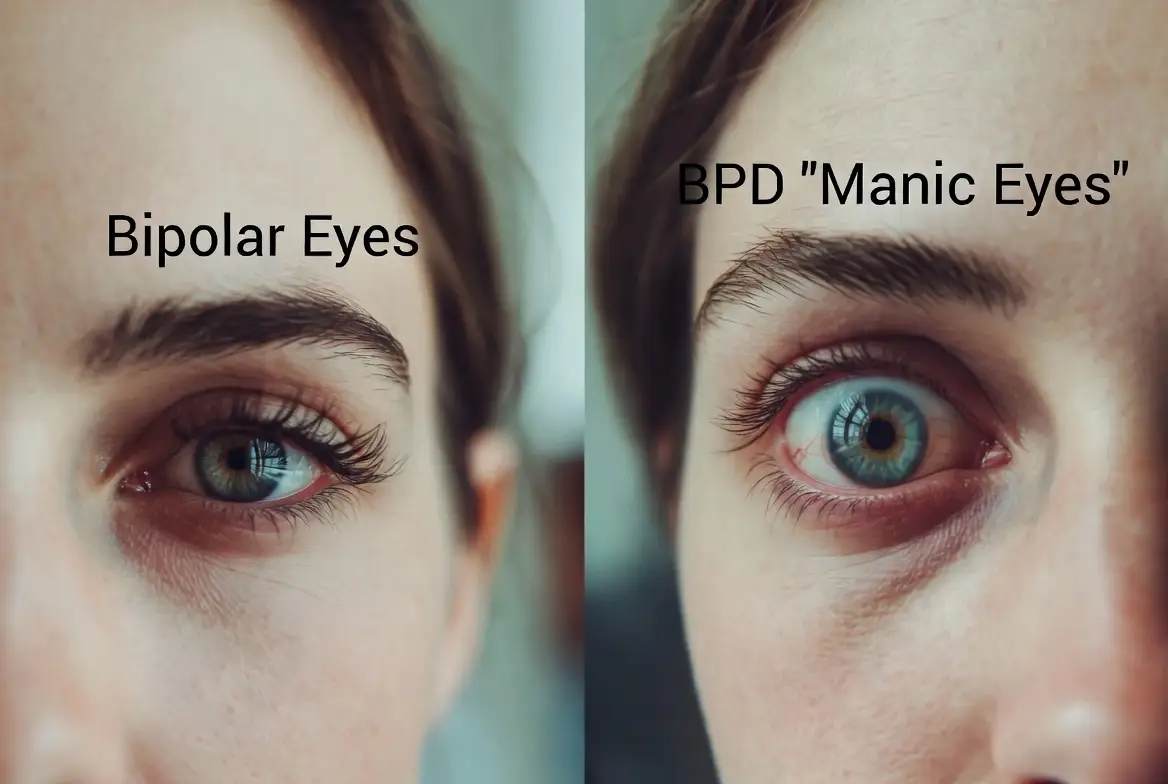
As the term “manic eyes” goes viral, it is often incorrectly applied to Borderline Personality Disorder (BPD). It is vital to clarify the difference between BPD manic eyes and true bipolar mania.
BPD Does Not Cause Mania
Clinically, BPD does not cause mania. BPD involves “emotional dysregulation,” which can lead to intense “euphoria” or “rage,” but these episodes usually last minutes or hours and are triggered by interpersonal events. True bipolar mania lasts days or weeks and is a biological “state shift.”
Why the Term Spreads Online
On social media, people often use “manic” as a synonym for “very emotional.” When someone with BPD is experiencing an intense emotional high, their eyes may look dilated and bright due to adrenaline, leading to the label of BPD manic eyes. While the look might be similar, the underlying cause—emotional reactivity vs. a sustained biological mood episode—is fundamentally different.
Bipolar Eyes in Adults vs. Teens
The presentation of bipolar eyes in adults is often more “classic” because the personality and facial structure are fully formed. However, in teenagers, these visual cues are much harder to interpret.
Developmental Considerations
Teens already undergo massive hormonal shifts that affect pupil size, sleep patterns, and emotional expression. This makes it difficult to tell if a teen’s “wild-eyed” look is a symptom of bipolar eyes in teens or simply the result of typical adolescent development and the “angst” of puberty.
Why Teens Are Misread
Teenagers are often more prone to “acting out” their emotions facially. A teen with bipolar disorder may exhibit more “mixed” or “irritable” eye expressions than the “euphoric” stare seen in older adults, leading to frequent misdiagnosis as ODD (Oppositional Defiant Disorder) or ADHD.
Bipolar Eyes on Reddit & Social Media
If you search for bipolar eyes reddit, you will find thousands of threads where people post bipolar eyes pictures and ask for feedback. This has created a “digital folklore” surrounding the disorder.
Viral Misinformation
The danger of bipolar eye images on social media is that they simplify a complex medical condition into a “look.” This leads to:
- Self-Diagnosis: People see a “sparkle” in their eyes and assume they are manic.
- Stigmatization: People avoid someone because they have “crazy manic eyes.”
Ethical Concerns
Labeling a photo as “manic” without the individual’s clinical history is ethically problematic. Many photos labeled as having manic eyes are actually photos of people who are simply high on caffeine, using substances, or experiencing a brief moment of intense joy.
Does Bipolar Disorder Affect Appearance Beyond the Eyes?
While the eyes get the most attention, the question remains: Does bipolar disorder affect your appearance? The answer is yes, but usually as a secondary effect of behavior.
- Sleep Deprivation: This is the most visible factor. Dark circles, puffy eyes, and sallow skin are hallmarks of the “no-sleep” phase of mania.
- Grooming and Hygiene: In mania, someone might dress in flamboyant, mismatched, or highly revealing clothes. In depression, they may go weeks without bathing or brushing their hair.
- Weight Fluctuations: Bipolar medications and mood-driven eating habits can cause significant weight changes over short periods.
What Does High-Functioning Bipolar Look Like?
For many, high-functioning bipolar looks completely “normal.” These individuals have learned to “mask” their symptoms. Their “bipolar eyes” may only be visible to their most intimate partners in the privacy of their home.
What Causes “Bipolar Eyes”?
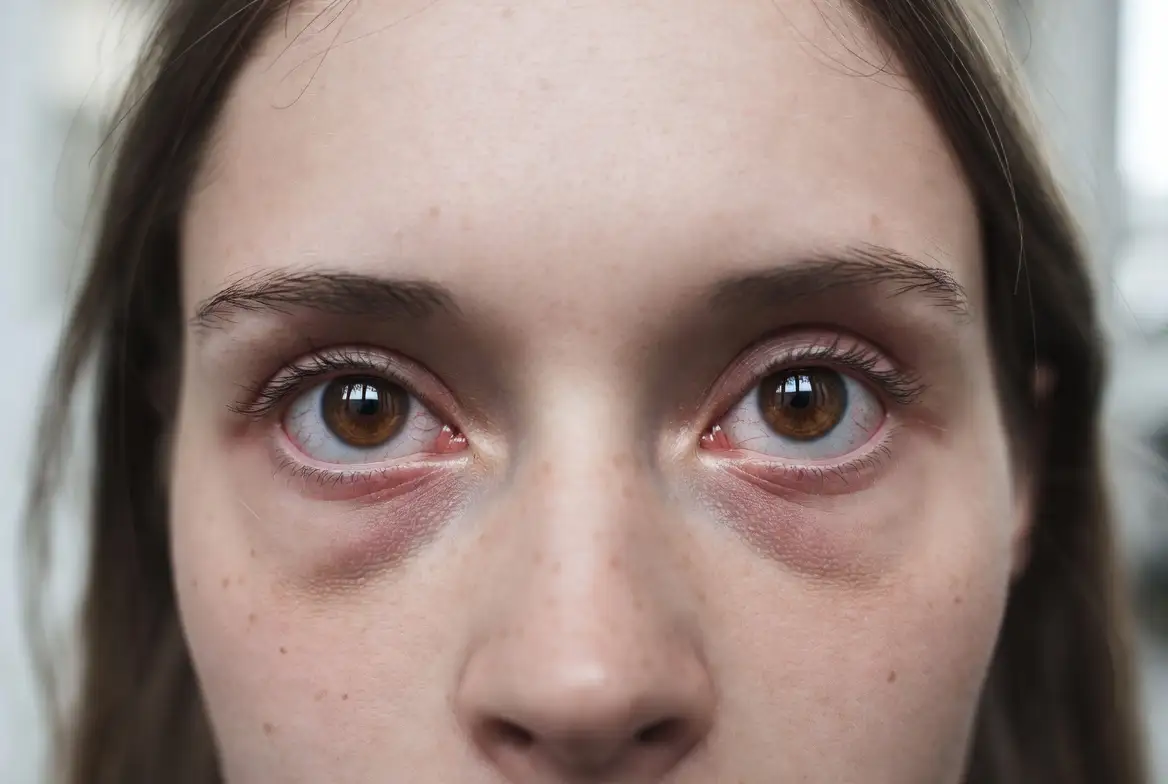
To understand what causes bipolar eyes, we must look at the intersection of the brain and the body. How does bipolar disorder affect the eyes? It does so through three main pathways:
- Nervous System Arousal: As mentioned, the “fight or flight” system (sympathetic) pulls the eyelids back and dilates the pupils.
- Neurotransmitter Surges: Excess dopamine and norepinephrine change the way we process visual information, often making colors seem “brighter” to the person in mania, which in turn causes them to widen their eyes to “take it all in.”
- The Orbicularis Oculi Muscle: This muscle controls the closing of the eyelids. During mania, involuntary tension in the facial muscles can create that “fixed” look.
Are There Different Types of “Bipolar Eyes”?
The term isn’t limited to mania. There are several different types of bipolar eyes depending on the “pole” of the disorder the person is currently inhabiting.
- Mania-Associated: Wide, dilated, sparkling, and intense.
- Hypomanic: Highly alert, “vibrant,” and engaged.
- Depressive: Downcast gaze, lack of “luster,” slow movement of the eyes, and frequent looking away.
- Mixed/Dysphoric: Agitated, darting, red-rimmed from crying, or expressing a “trapped” look.
How Are Bipolar Eyes Diagnosed?
A common search query is: How are bipolar eyes diagnosed? The clear, clinical answer is: They aren’t.
There is no eye exam, retinal scan, or photographic analysis that can diagnose bipolar disorder. Diagnosis relies strictly on a psychiatric evaluation of:
- Mood History: At least one episode of mania or hypomania.
- Duration: Symptoms must last for a specific number of days.
- Functioning: How the mood affects work, social life, and safety.
If a doctor looks at your eyes, they are checking for physical signs of drug use or neurological issues, not “diagnosing” your bipolar disorder based on a stare.
How Are Bipolar Eyes Treated?
Since “bipolar eyes” are a symptom of a mood state, how are bipolar eyes treated? You treat the underlying episode.
- Medication Stabilization: Using mood stabilizers (like Lithium) or antipsychotics (like Quetiapine) to bring the nervous system back to baseline. Once the “revving” stops, the pupils constrict, and the stare relaxes.
- Sleep Regulation: Often, the “manic look” disappears after the person gets 8–10 hours of restorative sleep.
- Psychotherapy: Learning to recognize when your eyes are becoming “intense” can be an early warning sign (prodromal symptom) that allows a patient to contact their doctor before a full-blown episode occurs.
Eye Problems and Bipolar Medication
Finally, we must address bipolar eye problems that result from treatment.
- Lithium: Can occasionally cause blurred vision or “nystagmus” (involuntary eye jumping).
- Antipsychotics: Can cause “dry eye” or blurred vision.
- Anticonvulsants (like Lamotrigine): In rare cases, these can cause double vision. If you experience a sudden change in vision while taking these meds, it is a medical issue, not a “mood” issue.
Frequently Asked Questions
Can you see bipolar disorder in someone’s eyes?
You can see the signs of high nervous system arousal (like dilated pupils and a fixed stare), but these are not exclusive to bipolar disorder.
What do bipolar manic eyes look like?
They often look wide, intense, and unblinking, with noticeably dilated pupils and an “electric” or “euphoric” expression.
Why do pupils dilate during mania?
Because mania activates the sympathetic nervous system (“fight or flight”), releasing chemicals like adrenaline that naturally expand the pupils.
Is the bipolar stare real?
Yes, but it is a behavioral result of hyper-focus and reduced social inhibition during mania, not a permanent physical trait.
Do bipolar eyes change color?
No. This is a myth. Lighting, pupil size, and contrast may make eyes appear different, but the physical pigment does not change.
Conclusion
The concept of bipolar eyes serves as a fascinating example of how lived experience meets internet culture. While there is a grain of truth—mania does change our physiology and, by extension, our eyes—we must be careful not to use “the look” as a way to stigmatize or simplify a complex brain disorder.
If you or a loved one is noticing changes in your gaze, pupil size, or “intensity,” use it as a signal to check in on your mental health, but leave the diagnosis to the professionals. Bipolar disorder is a journey of the mind, and while the eyes may offer a glimpse into that journey, they never tell the whole story.
Authoritative References
1. National Institutes of Health (NIH) – The Autonomic Nervous System and Pupil Dilation
2. American Psychiatric Association (APA) –Understanding Bipolar Disorder
3. National Library of Medicine (NLM) –Eye Tracking and Psychiatric Disorders
4. PsychCentral – The Physiological Effects of Mania
5. Johns Hopkins Medicine – Bipolar Disorder Symptoms and Appearance
Related Posts



Subscribe to Our Newsletter
Get mental health tips, updates, and resources delivered to your inbox.
MORE from Author
Read More In my practice as a clinical psychologist, I often observe that the difference between a patient who crumbles under pressure…
- We all have "up" days and "down" days. Perhaps you feel energized after a promotion or sluggish on a rainy…

 To define bipolar disorder accurately, we must look at it as a chronic mood dysregulation condition. In psychology and medicine,…
 To answer whether bipolar fits the bill, we first have to define what a neurodivergent person actually is. The term…
Are you looking for a Therapist?
Connect with qualified mental health professionals who understand
bipolar disorder, mood changes, and emotional challenges.
Private • Supportive • Confidential