
Social Anxiety vs Autism: Key Differences, Overlap, and Treatment Pathways

Medically reviewed by Laura Athey Updated Date: March 16, 2026
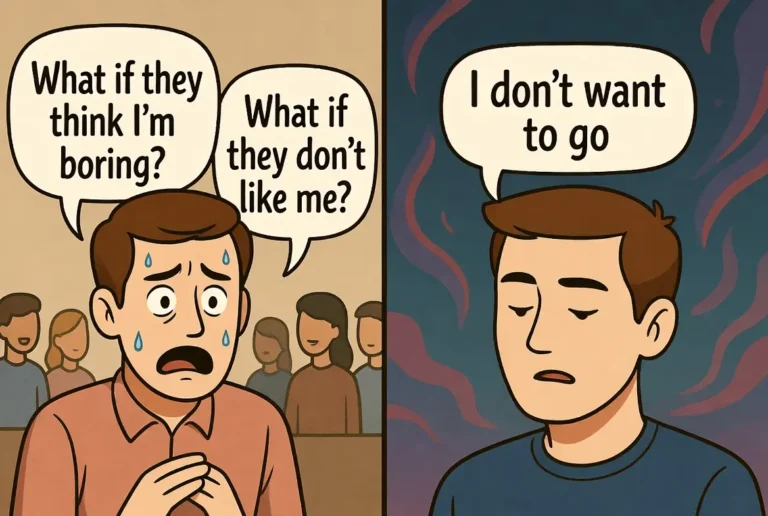
“Am I autistic or just socially awkward?” This question has become a focal point of discussion in mental health circles, especially as our collective understanding of neurodivergence expands. At first glance, social anxiety vs autism might seem easy to distinguish, but in practice, the lines are often blurred. Both can involve a hesitation to speak in groups, a tendency to avoid eye contact, and a profound sense of exhaustion after a day of social interaction.
The confusion often arises because when anxiety looks like autism, we are seeing the outward behavior—silence, withdrawal, or awkwardness—rather than the internal “why.” For a person with social anxiety disorder, the silence is fueled by a crushing fear of being judged. For an autistic person, the silence might be due to a difficulty in processing rapid verbal cues or a lack of intuitive understanding of social “rules.”
Gaining neurodivergent insights into autism and anxiety is not just about slapping on a label; it’s about understanding the fundamental wiring of your brain. Whether you are wondering how do I know if it’s anxiety or autism for yourself, a child, or a loved one, this guide provides a science-based, compassionate framework to untangle the two. While this article offers deep clarity, please remember it is for informational purposes and not a substitute for a clinical diagnosis.
What Is Social Anxiety Disorder?
To understand the comparison, we must first define the baseline of social anxiety disorder. According to the DSM-5, social anxiety is a mental health condition characterized by an intense, persistent fear of being watched and judged by others.
Core Symptoms and Fears
The hallmark of what is social anxiety is the fear of negative evaluation. The person isn’t necessarily lacking the “tools” to socialize; rather, their anxiety inhibits their ability to use them. Social anxiety symptoms often include:
- Physical reactions: Blushing, sweating, trembling, or nausea when in social settings.
- Cognitive distortion: Persistent “post-event rumination” (replaying a conversation over and over to find mistakes you made).
- Avoidance: Turning down invitations or leaving early to escape the perceived threat of judgment.
In cases of severe social anxiety, the person may become almost entirely housebound. In social anxiety in teenagers, this often manifests as a refusal to speak in class or a complete withdrawal from peer groups, which is frequently where the first misidentifications of autism occur.
What Is Autism Spectrum Disorder?
Unlike social anxiety, which is a mental health condition that can develop at any time, autism is a neurodevelopmental condition. This means it is present from birth and affects how the brain is wired to process information, sensory input, and social communication.
The Autistic Experience
Autism is defined by differences in two main areas: social communication and restrictive/repetitive behaviors.
- Social Communication Disorder Symptoms: Difficulty reading non-verbal cues (tone of voice, sarcasm, facial expressions), taking things literally, or struggling with the “unwritten rules” of conversation.
- Sensory Processing & Routines: A need for sameness, intense special interests, and sensory sensitivities (finding certain lights too bright or sounds too loud).
Many people ask, why do people with autism have anxiety? The answer is often environmental. When the world is too loud, too bright, and follows social rules that don’t make sense to you, anxiety becomes a logical byproduct. Therefore, the question isn’t just “which one do I have?” but rather, do autistic people have anxiety as a secondary result of their neurodivergence?
Core Differences: Social Anxiety vs Autism
The most effective way to distinguish social anxiety vs autism symptoms is to look at the “Motivation vs. Mechanism” behind social behavior.
Comparison Table: At a Glance
| Feature | Social Anxiety Disorder | Autism Spectrum Disorder |
| Primary Driver | Fear of being judged or embarrassed. | Difference in processing social cues/sensory input. |
| Eye Contact | Avoided because it feels “too revealing” or scary. | Avoided because it is sensory-overwhelming or doesn’t feel natural. |
| Social Motivation | Often high (wants friends), but inhibited by fear. | Variable; may prefer solitude or “parallel play” (being near others without talking). |
| Consistency | Anxiety may fluctuate based on the “audience.” | Challenges are usually consistent across all environments. |
| Sensory Issues | Rare (unless related to physical symptoms of panic). | Very common (sensitivity to light, sound, texture). |
Eye Contact: Social Anxiety vs Autism
In eye contact social anxiety vs autism, the distinction is subtle. A person with social anxiety knows how and when to make eye contact but finds it terrifying. An autistic person may not intuitively know the “timing” of eye contact or may find that looking into someone’s eyes makes it impossible to listen to the words they are saying.
Masking vs. Fear-Based Avoidance
Autistic people often use “masking”—consciously mimicking social behaviors to fit in. While this looks like social anxiety, it is a cognitive effort to bridge a communication gap.
In severe social anxiety vs autism, the socially anxious person avoids the party because they are afraid of a “performance failure,” while the autistic person might avoid it because the music is too loud and the small talk is exhausting.
The ‘Golden Thread’ of differentiation is often found in solitude. When a socially anxious person is completely alone, their anxiety usually evaporates because the ‘threat’ (the observer) is gone. However, an autistic person remains autistic even when alone.
They will still have sensory sensitivities, they will still engage in repetitive behaviors (stimming), and they will still have intense special interests. If your ‘symptoms’ vanish the moment you lock your bedroom door, you are likely dealing with anxiety. If your fundamental way of processing the world stays the same, you are likely looking at neurodivergence.”
Overlap & Co-Occurrence: Can You Have Both?

It is not a case of “either/or.” In fact, do social anxiety and autism co-occur? Frequently. Research suggests that up to 50% of autistic adults also meet the criteria for social anxiety disorder.
The Cycle of Diagnostic Overshadowing
Diagnostic overshadowing occurs when a clinician sees the most “obvious” condition and misses the other.
- An autistic person struggles with a social interaction.
- They are mocked or bullied (a common experience).
- They develop a legitimate fear of future interactions.
- Social anxiety disorder in autism develops as a secondary layer.
When you have both autism and social anxiety, the treatment must be specialized. Standard “exposure therapy” for anxiety can actually be traumatizing for an autistic person if the “exposure” is a sensory-overwhelming environment they cannot biologically process.
Special Focus: Social Anxiety vs Autism in Women
The discussion of social anxiety vs autism in women is currently reshaping clinical diagnostics. Historically, girls and women were rarely diagnosed with autism because they are often “socially motivated” and highly skilled at masking.
The “Female Phenotype”
In female autism vs social anxiety reddit threads, a common theme emerges: many women were treated for social anxiety for decades, only to realize in their 30s or 40s that they were autistic.
- Masking: Autistic women often mimic the social behaviors of popular peers. This “social camouflaging” makes them look “just shy” or “anxious” rather than autistic.
- Internalized Anxiety: Because they are working so hard to “perform” neurotypicality, they experience massive internal burnout, which is frequently mislabeled as Generalized Anxiety Disorder or Social Phobia.
If you are looking at social anxiety vs autism in women reddit discussions, you will see that the “Aha!” moment usually comes when these women realize that their “anxiety” is actually sensory and cognitive exhaustion from trying to exist in a neurotypical world.
In this next section, we look at the developmental roots of these conditions and how to distinguish them from other personality traits and neurodivergent overlaps like ADHD and introversion.
Social Anxiety vs Autism in Toddlers & Children
Distinguishing between social anxiety vs autism in toddlers is a primary concern for parents and early childhood educators. While a “shy” child may cling to a parent’s leg in a new environment, the underlying developmental markers differ significantly.
- Developmental Red Flags: In toddlers, autism is characterized by a delay or difference in joint attention (e.g., a child not pointing at an airplane to show a parent) and a lack of “social smiling.”
- Shyness vs. Neurodevelopment: A child with social anxiety usually understands social hierarchy and cues but is paralyzed by fear. An autistic child may not be afraid at all; they may simply be more interested in the wheels of a toy car than in playing with a peer.
- Social Stories Autism: Educators often use “social stories” to help autistic children navigate transitions. If a child responds well to these “rules of play” but still feels a “racing heart” or “stomach ache” before school, they may be experiencing both.
Autism vs Social Anxiety vs Introversion vs ADHD
The modern diagnostic landscape is rarely a vacuum. To find clarity, we must separate social awkwardness vs autism from other common traits.
Introversion ≠ Anxiety ≠ Autism
- Introversion: A personality trait where a person feels recharged by solitude. They have the social skills, but they prefer not to use them constantly. They do not feel “fear” (anxiety) or “processing confusion” (autism).
- Social Anxiety: A person wants to be social but is blocked by fear.
- Autism: A person may or may not want to be social, but is blocked by a communication barrier.
The ADHD Factor
The overlap of adhd and social anxiety vs autism is particularly tricky. People with ADHD often experience Rejection Sensitive Dysphoria (RSD)—an extreme emotional pain linked to perceived rejection. This can create a “learned” social anxiety.
- How to tell: ADHD is driven by impulsivity and distractibility; Autism is driven by a need for routine and sensory consistency. Both can result in “social awkwardness,” but for different neurological reasons.
Self-Assessment & Screening Tools (Non-Diagnostic)
If you are currently searching for a social anxiety vs autism test or a social anxiety or autism quiz, it is important to understand what these tools can and cannot do.
Common screening tools include:
- The AQ-10 (Autism Spectrum Quotient): A brief 10-question screen for autistic traits in adults.
- The LSAS (Liebowitz Social Anxiety Scale): The gold standard for measuring the severity of social phobia.
The Disclaimer: These quizzes often overlap. For example, an autistic person might score high on a social anxiety quiz because they avoid eye contact—but their reason (sensory) is different from the reason the quiz assumes (fear). Use a social anxiety vs autism quiz as a conversation starter for your doctor, not as a final answer.
Treatment Paths: Social Anxiety vs Autism
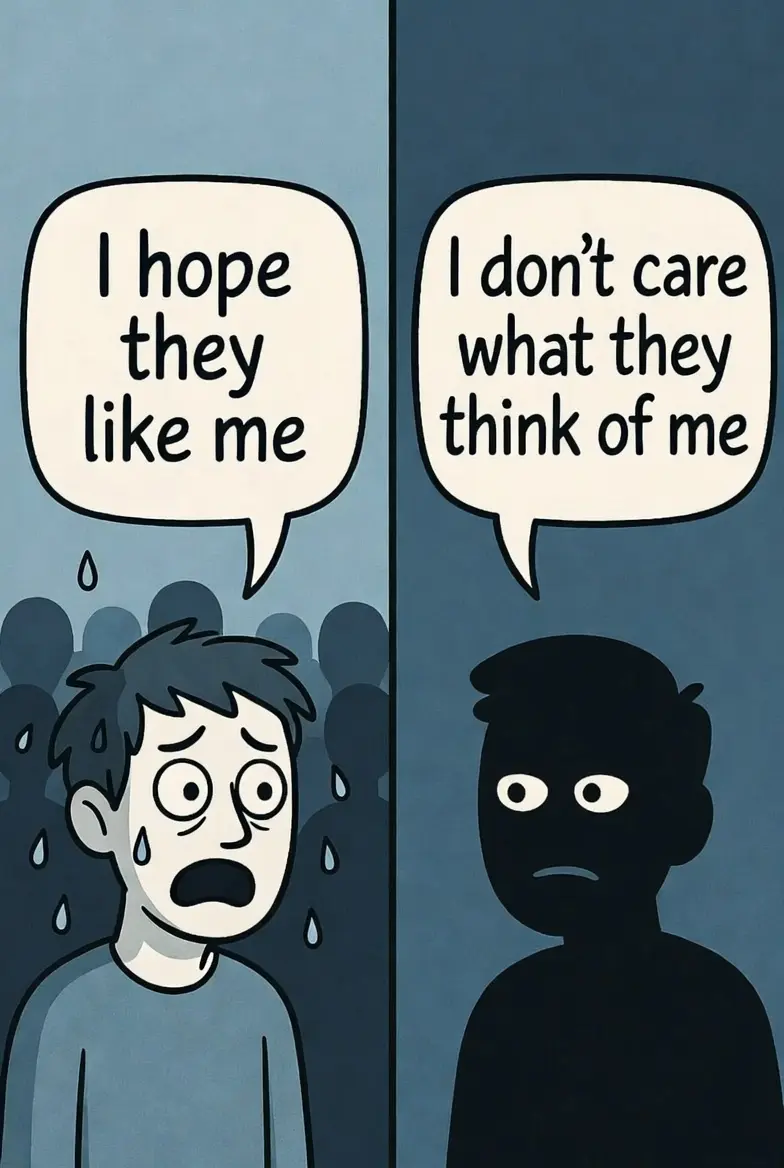
The most important reason to distinguish these two is that the “cure” for one can be the “poison” for the other.
A. Social Anxiety Treatment: Breaking the Fear
If you seek social anxiety disorder help, the goal is usually de-sensitization.
- Cognitive Behavioral Therapy (CBT): Identifying “cognitive distortions” (e.g., “Everyone thinks I’m a loser”) and challenging them with logic.
- Exposure Therapy: Gradually facing social fears in a controlled way to prove to the brain that the “threat” isn’t real.
- Medication: The best medication for social anxiety typically includes SSRIs or SNRIs, which help lower the physiological “baseline” of fear.
B. Autism Support: Building Capacity & Accommodations
You do not “treat” autism; you support the autistic person. Social anxiety autism treatment for neurodivergent people looks very different:
- Skill-Based Learning: Instead of “facing fears,” the focus is on learning the “mechanics” of social interaction as if it were a second language.
- Sensory Regulation: Reducing the environmental “static” (noise-canceling headphones, dimmed lights) so the person has the energy to socialize.
- Acceptance: Moving away from “trying to look normal” and toward “unmasking.”
Medication vs Therapy for Social Anxiety (Evidence-Based)
When deciding between medication vs therapy social anxiety, the data suggests that a combination is often the most effective for severe social anxiety treatment.
- Are you taking the right medication for your social anxiety? Some people find that “Propranolol” (a beta-blocker) helps with physical symptoms like shaking, while others need long-term SSRIs to manage the “rumination” (racing thoughts).
- Online CBT for Social Anxiety: Digital therapy has proven highly effective for those whose anxiety is so severe that they cannot yet visit a social anxiety therapist in person.
Lived Experience: Reddit, Real Stories & Misdiagnosis
The social anxiety vs autism reddit community is full of people who were told for years to “just put yourself out there” (anxiety advice), which led to massive autistic burnout.
The “Am I autistic or just socially awkward?” debate on autism anxiety reddit often concludes with a shared realization: anxiety is often the symptom, while autism is the root. If “exposure therapy” has never worked for you, it may be because you aren’t “afraid” of people—you are simply exhausted by the effort required to process them.
Why Social Connection Matters (Human Needs Perspective)
Regardless of whether the barrier is anxiety or neurodivergence, humans are inherently social creatures. Even for those who find socializing draining, social needs remain a biological imperative for long-term health.
What are some examples of social needs?
- Belonging: The feeling of being part of a group or community.
- Safety: Knowing there are people to support you in a crisis.
- Recognition: Being seen and valued for your unique traits.
Why do people need to socialize? Socialization regulates our nervous system. For a socially anxious person, fulfilling these needs feels high-risk but high-reward. For an autistic person, social needs are often met differently—perhaps through “info-dumping” about a special interest or engaging in “parallel play.” Understanding your label helps you meet these needs in a way that doesn’t lead to burnout.
When to Seek Professional Help & What Type
Knowing when to transition from “internet research” to social anxiety disorder help is crucial. You should seek a social anxiety therapist or a neurodevelopmental specialist if:
- Your social withdrawal is preventing you from holding a job or attending school.
- You feel a persistent sense of “wrongness” or “alienation” that causes deep distress.
- You are using substances to “numb” yourself enough to interact with others.
If you suspect autism, look for a clinician who uses the neuro-affirming model. If you suspect social anxiety, look for someone specializing in Exposure and Response Prevention (ERP) or Acceptance and Commitment Therapy (ACT).
FAQs
What is the difference between social anxiety and autism?
The primary difference is the “why.” Social anxiety is a fear-based mental health condition centered on the fear of judgment. Autism is a neurodevelopmental condition centered on differences in how the brain processes social and sensory information.
Do people with autism experience social anxiety?
Yes. It is highly common. Because autistic people often face social rejection or bullying, they frequently develop social anxiety as a secondary “protective” response.
Can anxiety look like autism?
Yes. In a state of “freeze,” an anxious person may become non-verbal, avoid eye contact, and appear “flat” or “robotic,” which can mimic autistic traits to an untrained observer.
Am I autistic or just shy as an adult?
“Shyness” is a personality trait that usually lessens as you get to know people. Autism is a consistent neurological pattern that includes sensory sensitivities and a need for routine, which “shyness” does not.
Conclusion: Understanding Yourself Without Labels
Navigating the landscape of social anxiety vs autism is ultimately a journey of self-advocacy. While a formal diagnosis can provide a helpful “manual” for your brain, the ultimate goal is understanding autism and anxiety well enough to build a life that works for you.
Whether you are an autistic person learning to accommodate your sensory needs or a socially anxious person learning to challenge your fears, the path forward is built on self-compassion. You are not “socially awkward” by choice; you are a human being navigating a complex social world with a unique set of tools. Labels may help define the map, but you are the one who decides where to go next.
Authoritative Clinical & Research References
- National Institute of Mental Health (NIMH)
- The National Autistic Society (UK) — Anxiety and Autism
- Social Anxiety Association
- Journal of Autism and Developmental Disorders
- Psychology Today — Am I Autistic or Do I Have Social Anxiety?

Related Posts





Subscribe to Our Newsletter
Get mental health tips, updates, and resources delivered to your inbox.
MORE from Author
Read More Watching someone you care about struggle with bipolar depression and anxiety can be heartbreaking. You may notice that they withdraw…
 In my practice as a clinical psychologist, I often observe that the difference between a patient who crumbles under pressure…
 We all have "up" days and "down" days. Perhaps you feel energized after a promotion or sluggish on a rainy…
 To define bipolar disorder accurately, we must look at it as a chronic mood dysregulation condition. In psychology and medicine,…
Are you looking for a Therapist?
Connect with qualified mental health professionals who understand
bipolar disorder, mood changes, and emotional challenges.
Private • Supportive • Confidential