
What Is Petulant BPD? Everything You Need to Know

Medically reviewed by Laura Athey Updated Date: February 9, 2026

The word “petulant” often brings to mind a disgruntled child—someone who pouts, becomes easily irritable, or expresses discontent in a way that feels demanding yet elusive. However, in the clinical world of mental health, what is Petulant BPD describes a deeply painful and complex pattern of behavior that goes far beyond simple moodiness.
If you have ever felt trapped in a cycle of intense resentment, sudden irritability, and a constant fear that the people you love are inevitably going to let you down, you may be experiencing the “petulant” subtype of Borderline Personality Disorder. This guide explores the meaning, symptoms, and treatment pathways for this specific emotional profile, offering clarity for those struggling and support for their loved ones.
Last week I talked with Nelson who came to me with his sleep problem. After long time talking with him, I found some interesting symptoms that was new in Petulant BPD. I think the symptoms are changing in 2026. Here, I will discuss all about the petulant BPD, symptoms, medications, and natural therapy.
What Does “Petulant” Mean in BPD?
To understand petulant BPD meaning, we must look at how anger and disappointment are processed. While some people with BPD turn their pain inward (Quiet BPD) or act out through risky behaviors (Impulsive BPD), the petulant type expresses distress through a mix of externalizing anger and internalizing resentment.
What does petulant mean in BPD? In this context, it refers to:
- Passive-Aggressiveness: Expressing anger indirectly through the “silent treatment,” sarcasm, or intentional stubbornness.
- Emotional Reactivity: Being easily offended by minor comments or perceived slights.
- Defiance: A tendency to push people away when you feel you aren’t getting the specific type of care or attention you believe you deserve.
- Unpredictability: Switching from being deeply loving to being cold and dismissive within a matter of minutes.
Is Petulant BPD an Official Diagnosis?
If you look through the Diagnostic and Statistical Manual of Mental Disorders (DSM-5-TR), you will not find the term “borderline personality disorder petulant type.”
Instead, “Petulant BPD” is one of four subtypes proposed by psychologist Theodore Millon. He believed that while all BPD patients share the same core diagnostic criteria—such as a fear of abandonment and identity disturbance—they “wear” the disorder differently.
BPD explained through this lens is more about “presentation.” Clinicians use these subtypes to help tailor treatment plans, but for insurance and official medical records, you will simply see the diagnosis of Borderline Personality Disorder (301.83).
How Rare Is Petulant BPD?
Because it is a descriptive category rather than an official diagnosis, there are no specific statistics on how rare is petulant BPD. However, BPD itself affects approximately 1.6% to 5.9% of the general U.S. population.
Clinicians often note that petulant traits are incredibly common among those seeking treatment, particularly because the “externalizing” nature of the anger often leads to interpersonal crises that prompt a search for help. It is not necessarily “rarer” than other types; it is simply more visible in relationships and social settings.
What Are the Symptoms of Petulant BPD?
The petulant bpd symptoms revolve around a core struggle: the desire for closeness vs. the fear of rejection. This creates a “tug-of-war” that manifests in several specific ways.
- Extreme Irritability: Feeling “on edge” or easily annoyed by the habits, voices, or presence of others, even those you love.
- Entitlement to Care: A subconscious belief that others should know what you need without you having to ask, followed by anger when those needs aren’t met.
- Splitting: Viewing people as “all good” when they are supportive and “all bad” the moment they set a boundary or make a mistake.
- The Silent Treatment: Using withdrawal as a weapon to punish others for perceived slights.
- Persistent Dissatisfaction: A feeling that life is unfair, that you are being singled out for suffering, or that no one truly understands your pain.
- Fear of Abandonment: Frantic efforts to avoid being left, which paradoxically often results in pushing the person away through angry outbursts.
Petulant BPD Examples (Real-Life Scenarios)
Understanding these traits is easier when seen through petulant BPD examples.
- The Workplace Conflict: A manager gives a petulant BPD employee a minor piece of constructive feedback. The employee perceives this as a total rejection of their worth, becomes sullen, refuses to speak to the manager for three days, and intentionally slows down their work out of spite.
- The Relationship Argument: A partner says they need to stay late at work. The individual with petulant BPD feels a surge of panic (fear of abandonment). Instead of saying “I’m lonely,” they snap, “Go ahead, you obviously care more about your job than me anyway,” and then refuse to answer the partner’s calls for the rest of the night.
- The Social Outing: At a party, a friend spends “too much time” talking to someone else. The individual with petulant BPD becomes visibly moody, sighs loudly, and eventually insists on leaving early, blaming a “headache,” though the real issue is feeling neglected.
What Is a BPD Episode Called?

In the mental health community, people often ask, “what is a BPD episode called?” While Bipolar Disorder has “manic” or “depressive” episodes, BPD is characterized by emotional dysregulation episodes or “flares.”
In petulant BPD, an episode is often a period of high-intensity resentment and anger. It is usually triggered by an interpersonal event (a “trigger”). During this flare, the person’s BPD anger is front and center, often followed by a period of intense shame and “crashing” once the anger subsides.
What Causes Petulant BPD?
The consensus on what causes petulant BPD points to the “Biosocial Theory.” This suggests that BPD is the result of a biological vulnerability meeting an “invalidating environment.”
- The BPD Brain: Research shows that the limbic system (the brain’s emotional center) is hyper-reactive in those with BPD. Meanwhile, the prefrontal cortex (the area that regulates impulses) is often less active during stress.
- Attachment Injury: Many people with the petulant subtype experienced “anxious-preoccupied” attachment in childhood. They may have had a primary caregiver who was inconsistent—sometimes loving, sometimes cold—teaching the child that they had to be “loud” or “moody” to get their needs met.
- Trauma: High rates of childhood emotional neglect or trauma are associated with the development of these defensive, resentful traits.
High-Functioning Petulant BPD
Many people are surprised to learn that high-functioning petulant BPD is a common reality. On the surface, these individuals may appear highly successful, holding down demanding jobs as lawyers, doctors, or executives. They are often described as “perfectionists” or “intense.”
However, high functioning bpd comes with a significant internal cost. Because they “mask” their symptoms in public, their emotional dysregulation is saved almost exclusively for their closest relationships. Behind closed doors, the resentment and irritability boil over. This lead to:
- Burnout: The exhaustion of pretending to be “fine” all day.
- Delayed Diagnosis: Professionals often overlook BPD in high achievers, misdiagnosing them with simple anxiety or depression.
- Isolation: The individual may avoid social circles to prevent their “petulant” side from being seen, leading to a very lonely private life.
Petulant BPD in Relationships
The petulant bpd relationship is often described as a “minefield.” Because the individual is hyper-sensitive to tone, body language, and perceived slights, their partner often feels they are “walking on eggshells.”
The hallmark of this subtype is the Push-Pull Dynamic:
- The Pull: “I need you so much; please don’t ever leave me.”
- The Trigger: The partner does something “wrong”—like taking too long to text back.
- The Push: “You’re just like everyone else. I don’t need you. Get out.”
- The Regret: Once the episode passes, intense shame sets in, leading to frantic efforts to repair the bond.
For a petulant BPD spouse, the challenge is maintaining boundaries. Without clear boundaries, the relationship becomes a cycle of “appeasement” that eventually leads to the partner’s emotional collapse.
Growing Up With a Petulant BPD Mother
The impact of a petulant BPD mother on a child can be profound. Unlike a “neglectful” parent, a petulant mother is often very involved but emotionally inconsistent.
- Parentification: The child learns to monitor the mother’s mood to stay safe, essentially becoming the mother’s “emotional caretaker.”
- The Sullen Atmosphere: The child grows up in a home where “pouting” or the silent treatment is used to control the environment.
- Guilt as a Tool: If the child tries to become independent, the mother may interpret it as abandonment, responding with: “After everything I’ve done for you, you’re leaving me?”
Healing from this dynamic often requires the adult child to undergo their own therapy to unlearn the “hyper-vigilance” developed in childhood.
Petulant BPD vs. Discouraged BPD
It is helpful to compare subtypes to see how anger is processed differently. While petulant BPD is “externalizing” (directed at others), discouraged BPD is “internalizing” (directed at the self).
Comparison Table: Externalizing vs. Internalizing
| Feature | Petulant BPD | Discouraged (Quiet) BPD |
| Primary Anger Target | Others (Spouse, Boss, Friends) | The Self (Internalized shame) |
| Conflict Style | Sullen, defiant, argumentative | Avoidant, submissive, withdrawing |
| Impulsivity | Breaking things, shouting, “splitting” | Self-harm, social isolation, binging |
| Visible Mood | Irritable and demanding | Depressed and “empty” |
Petulant BPD vs. Bipolar vs. ADHD
Misdiagnosis is frequent because petulant bpd symptoms can look like other disorders.
- BPD and Bipolar: In Bipolar disorder, mood shifts are “internal” and last for days or weeks (mania/depression). In petulant BPD, the mood shift is a “reaction” to an event and can change in minutes.
- BPD and ADHD: Both involve emotional impulsivity. However, bpd and adhd differ in motivation; ADHD impulsivity is usually due to lack of focus, while BPD impulsivity is a desperate attempt to regulate a painful emotion.
Petulant BPD Test & Self-Screening

If you are searching for a petulant BPD test, remember that no online quiz can provide a medical diagnosis. However, self-screening is a vital first step in self-awareness.
Self-Reflection Questions:
- Do I often feel that others are intentionally letting me down?
- Do I find myself using the silent treatment to show I am hurt?
- Does my mood shift from “loving” to “resentful” over minor incidents?
- Do I feel like I have to “test” people to see if they truly care about me?
If you answer “yes” to most of these, it is a signal to seek a professional bpd diagnosis.
Petulant BPD on Reddit: Lived Experience
Searching petulant bpd reddit reveals a community of people who feel deeply misunderstood. Many users describe their “petulance” as a protective shield.
- Common Sentiment: “I’m not being mean; I’m just terrified you’re going to leave me, so I’m acting like I don’t care first.”
- The Reality: While the community provides validation, it can sometimes reinforce the “victim” narrative. Clinical growth requires moving past the “everyone is out to get me” mindset and taking ownership of emotional reactions.
Does Petulant BPD Work? (Can People Function?)
The answer to “does petulant bpd work?” is yes—but usually with high levels of interpersonal friction. Many people with this subtype are brilliant and capable. Their “work” is not to fix their intelligence or their personality, but to fix their emotional regulation. With treatment, the “energy” of their petulance can be channeled into healthy assertiveness and passion.
Treatment for Petulant BPD (Evidence-Based)
The gold standard treatment for petulant bpd is Dialectical Behavior Therapy (DBT). DBT was designed to bridge the gap between “I feel” and “I act.”
Skills That Help Petulant BPD the Most
- Distress Tolerance (The TIPP Skill): Learning to physically calm the body (using cold water or intense exercise) so the “petulant” rage doesn’t lead to a blowout.
- Anger Regulation: Identifying the “secondary” nature of anger. For many petulant types, anger is the bodyguard of sadness. Learning to say “I feel lonely” instead of “You’re a jerk” is the key to recovery.
- Interpersonal Effectiveness: Learning how to ask for needs to be met without using manipulation or the silent treatment.
BPD Diagnosis & Clinical Pathway
Getting a bpd diagnosis typically involves an evaluation by a psychiatrist or psychologist.
- The Process: A clinical interview, review of relationship history, and potentially psychological testing (like the MMPI-2).
- Why It Matters: Proper diagnosis opens the door to specialized therapies like DBT or Mentalization-Based Therapy (MBT) that standard “talk therapy” for depression may miss.
Related BPD Traits & Patterns
To fully grasp the disorder, one must look at the 9 traits of bpd. These include bpd splitting (the black-and-white thinking common in petulant types) and the prevalence of symptoms of bpd in females, who are more likely to be diagnosed with this subtype due to societal expectations around how women “should” express anger.
When to Seek Help Immediately
Petulant BPD carries a risk of self-harm and suicidal ideation, particularly during an “abandonment crisis.”
- Crisis Sign: If you are “splitting” so hard that you feel you cannot control your actions.
- Resources: Call or text 988 (the Suicide & Crisis Lifeline in the US) or go to the nearest emergency room.
Key Takeaways
- Petulant BPD is a struggle with resentment and fear, not “bad character.”
- Passive-aggression is a defense mechanism for deep vulnerability.
- Recovery is possible through structured therapy that focuses on radical acceptance and change.
Authoritative References & Resources
- National Institute of Mental Health (NIMH): Borderline Personality Disorder
- American Psychiatric Association (APA): What is Borderline Personality Disorder?
- McLean Hospital: Essential Guide to Borderline Personality Disorder McLean
- National Education Alliance for Borderline Personality Disorder (NEA-BPD)
- Cochrane Library: Psychosocial Interventions for BPD

Related Posts






Subscribe to Our Newsletter
Get mental health tips, updates, and resources delivered to your inbox.
MORE from Author
Read More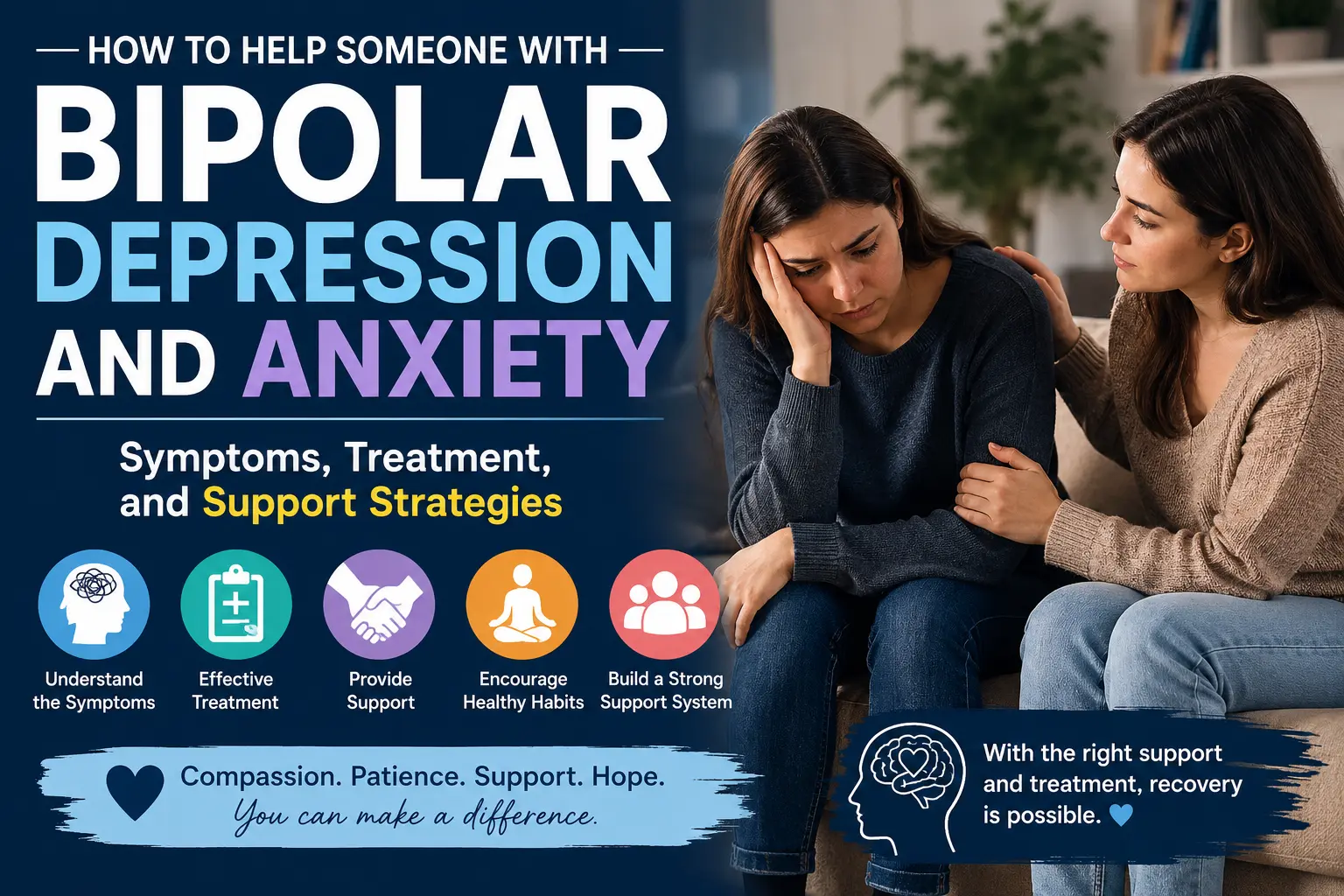 Watching someone you care about struggle with bipolar depression and anxiety can be heartbreaking. You may notice that they withdraw…
 In my practice as a clinical psychologist, I often observe that the difference between a patient who crumbles under pressure…
 We all have "up" days and "down" days. Perhaps you feel energized after a promotion or sluggish on a rainy…
 To define bipolar disorder accurately, we must look at it as a chronic mood dysregulation condition. In psychology and medicine,…
Are you looking for a Therapist?
Connect with qualified mental health professionals who understand
bipolar disorder, mood changes, and emotional challenges.
Private • Supportive • Confidential