
ADHD and Depression: How They Overlap, Why They Co-Occur, and What Treatment Works


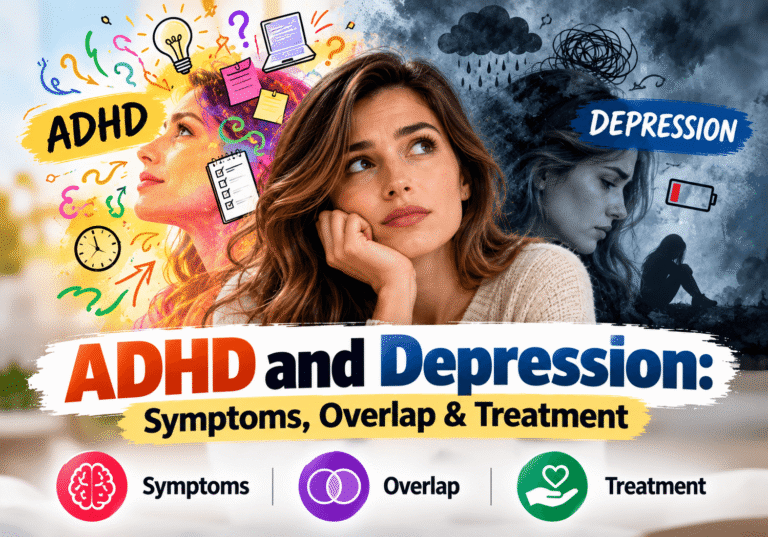
ADHD and depression often occur together, and each makes the other harder to live with. Adults with ADHD are almost three times more likely to have depression than adults without it. Studies estimate that between about 19% and 53% of people with ADHD also have depression. Because the two conditions share symptoms such as poor concentration, low motivation and sleep problems, one is often missed while the other is treated.
This guide explains how ADHD and depression overlap, why they so often appear together, how depression feels different when you have ADHD, and which treatments work. Because this is a bipolar site, it also covers a question many guides skip: when “ADHD plus depression” is actually bipolar disorder, and why that changes the medication plan.
Key takeaways
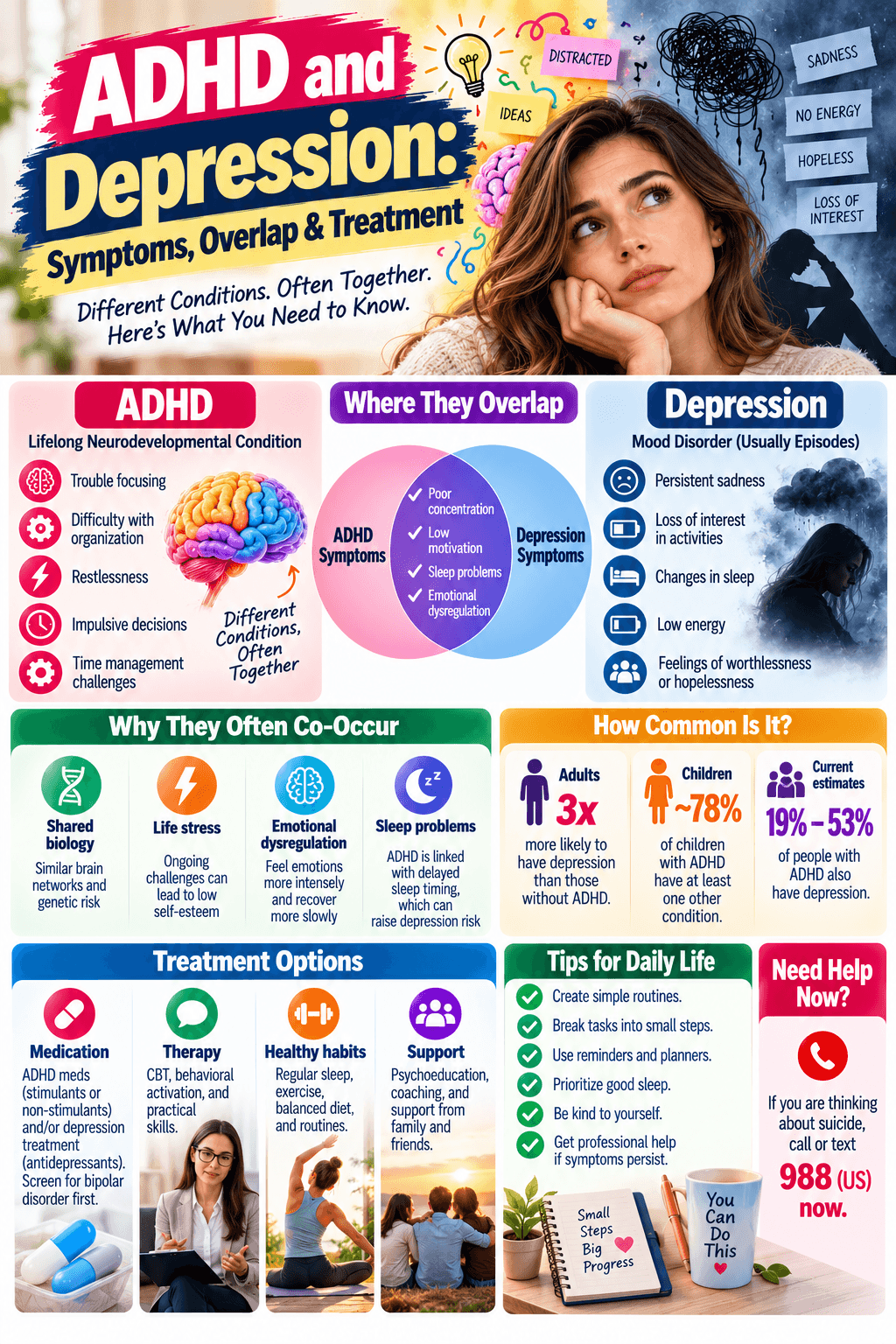
- ADHD is a lifelong neurodevelopmental condition. Depression is a mood disorder that usually comes in episodes. They are different conditions that often occur together.
- Depression in ADHD is often driven by years of stress, setbacks and shame, but it can also be a separate illness that needs its own treatment.
- Telling them apart: ADHD focus problems are lifelong and situational; depression brings a change from your usual self that lasts weeks.
- Treatment usually combines ADHD medication, depression treatment, therapy (CBT, behavioral activation) and practical routines.
- Before starting stimulants or antidepressants, a clinician should screen for bipolar disorder. Both can trigger hypomania or mania.
- If you are thinking about suicide, call or text 988 (US) now.
ADHD and Depression: The Link Explained
Attention-deficit/hyperactivity disorder (ADHD) affects attention, impulse control, activity level and executive function: the brain’s “management system” for planning, starting tasks, managing time and regulating emotion. It begins in childhood, though many adults are diagnosed late. In the US, about 6% of adults (roughly 15.5 million people) report a current ADHD diagnosis, and more than half of them were first diagnosed as adults.
Depression, clinically called major depressive disorder, is a mood disorder. It involves at least two weeks of low mood or loss of interest, plus changes in sleep, energy, appetite, concentration and self-worth.
The ADHD and depression link runs in several directions:
- Shared biology. Both involve brain networks for reward, motivation and emotional control, and dopamine and norepinephrine signaling. They also share some genetic risk.
- Life stress. Unmanaged ADHD often brings missed deadlines, school or work problems, conflict and criticism. Over years this can lead to low self-esteem, hopelessness and demoralization, a recognized pathway into depression.
- Emotional dysregulation. Many people with ADHD feel emotions faster and more intensely, and recover more slowly. This makes low moods harder to shake. See emotional dysregulation.
- Sleep problems. ADHD is strongly linked with delayed sleep timing and poor sleep, both of which raise the risk of depression.
ADHD and depression comorbidity: how common is it?
Comorbidity means two conditions occurring in the same person. ADHD and depression comorbidity is common at every age:
- Adults: adults with ADHD are almost three times more likely to experience depression than adults without ADHD, and estimates of current depression in adult ADHD range from about 18.6% to 53.3%.
- Children: nearly 78% of US children with ADHD have at least one other condition. About 39% have anxiety, and depression becomes increasingly common in the teen years.
- Severity: research suggests that the more severe the ADHD symptoms, the more severe the depressive symptoms tend to be.
ADHD and Depression Symptoms: Where They Overlap
ADHD and depression overlap so much that even experienced clinicians need a careful history to separate them. The table shows how the same complaint can come from different sources.
| Symptom | In ADHD | In depression | When both are present |
|---|---|---|---|
| Poor concentration | Pulled away by outside distractions or boredom; lifelong | Pulled inward by rumination and low energy; new or worse than usual | Heavy “brain fog” and inability to start anything |
| Low motivation | Hard to start tasks that aren’t interesting or urgent | Little interest in anything, including things you used to enjoy | Wanting to act but feeling frozen (“ADHD paralysis”) plus hopelessness |
| Restlessness | Fidgeting, racing thoughts, impatience | Agitation, or the opposite: slowed movement and speech | “Wired but tired” |
| Sleep | Trouble winding down; night-owl body clock | Insomnia or sleeping too much | Late nights, exhausting mornings, daytime crashes |
| Irritability | Quick frustration, impulsive reactions | Persistent irritability, especially in men and teens | Frequent conflict and guilt afterwards |
| Self-esteem | Shaped by repeated setbacks | Worthlessness and excessive guilt | “I’m broken” thinking |
Symptoms that point more to ADHD
- Problems have been there since childhood, even if they were compensated for
- Focus is good, even “hyperfocused”, when something is interesting or urgent
- Mood brightens quickly with novelty, good news or a change of activity
- Chronic lateness, losing things and difficulty with routine admin
Symptoms that point more to depression
- A clear change from your usual self, lasting two weeks or more
- Loss of pleasure even in favorite activities (anhedonia)
- Low mood that good news barely lifts
- Changes in appetite or weight, slowed movement, persistent guilt
- Thoughts of death or suicide
What Is Depression Like for People With ADHD?
Depression in people with ADHD often feels and looks a little different from the textbook picture:
- More irritability and restlessness than visible sadness. Many people describe feeling agitated, bored and stuck rather than tearful.
- A shame spiral. Unfinished tasks pile up, self-criticism grows, and the growing pile makes starting anything harder still.
- Intense reactions to rejection. Many adults with ADHD are highly sensitive to criticism or perceived rejection, sometimes called rejection sensitive dysphoria. It is not a formal diagnosis, but it can deepen low mood quickly. See rejection sensitivity.
- Burnout after masking. Constantly compensating (“acting organized”, over-preparing, hiding struggles) is exhausting and can tip into depression.
- Earlier and more recurrent episodes. Depression alongside ADHD tends to start younger and come back more often, so ongoing treatment and relapse planning matter.
- Higher risk. The combination of impulsivity and depression raises the risk of self-harm and suicide attempts. Safety planning is essential.
People often say the depression feels like “my brain has stopped cooperating altogether”: the usual ADHD struggle to start tasks, plus no energy or hope to push through it. Read more about emotional numbness and depression and feeling alone.
The Connection Between ADHD and Morning Depression
Many people with ADHD say they feel at their worst first thing in the morning: heavy, low, slow and overwhelmed. Several things are going on:
- A delayed body clock. ADHD is strongly associated with an evening chronotype: melatonin release starts later, so falling asleep early is hard. Waking for work or school then cuts sleep short and leaves you groggy and low.
- Medication timing. Mornings are the stretch before ADHD medication has started working, and the hardest executive tasks of the day (getting up, getting ready, leaving on time) all land there.
- Depression’s daily rhythm. Some forms of depression are typically worse in the morning and ease as the day goes on.
- Stress and shame. Rushed, chaotic mornings and lateness can set a negative tone for the whole day.
What helps:
- A fixed wake time, even on weekends
- Bright light soon after waking
- Getting clothes, bag and breakfast ready the night before
- Limiting screens late at night
- Asking your prescriber whether medication timing or formulation could make mornings easier
Persistent early-morning low mood, especially with early waking, is worth raising with a doctor. See bipolar and sleep and how to fall asleep fast.
Anxiety, Depression and ADHD: What Are the Differences?
ADHD, depression and anxiety often occur together, and all three affect concentration and sleep. The key difference is why concentration and sleep suffer.
| ADHD | Depression | Anxiety | |
|---|---|---|---|
| Core problem | Regulating attention, activity and impulses | Low mood and loss of interest or pleasure | Excessive worry, fear and tension |
| Onset and course | Childhood onset; lifelong | Episodes lasting weeks to months | Often chronic; worsens with stress |
| Why focus suffers | Mind drifts to whatever is more stimulating | Slowed thinking, rumination, low energy | Mind occupied by worry and “what ifs” |
| Typical sleep problem | Can’t switch off; late body clock | Early waking, insomnia or oversleeping | Trouble falling asleep due to worry |
| Energy | Variable; high when interested | Low most of the day | Keyed up, tense, then exhausted |
| Physical signs | Fidgeting, restlessness | Fatigue, appetite and weight change | Racing heart, muscle tension, stomach upset |
| Main treatments | ADHD medication, CBT for ADHD, skills and coaching | Antidepressants, CBT, behavioral activation | CBT and exposure, SSRIs/SNRIs |
Having all three is common, and treatment is usually staged so the most impairing problem is addressed first. See ADHD and anxiety, generalized anxiety disorder and anxiety medication.
ADHD, Depression or Bipolar Disorder?
Bipolar disorder can look like ADHD plus depression:
- During hypomania or mania, people are distractible, talkative, restless and impulsive, much like ADHD.
- During bipolar depression, they look like anyone with major depression.
Getting this right matters, because stimulants and antidepressants can trigger hypomania, mania or faster mood cycling in people with bipolar disorder.
Clues that point toward bipolar disorder rather than ADHD with depression:
- Episodes, not a constant state. Bursts of high energy lasting four days or more, with a reduced need for sleep and a mood that is clearly different from your usual self
- Grandiosity and a surge of activity that is out of character, followed by a crash into depression
- A family history of bipolar disorder
- Starting an antidepressant or stimulant and becoming “wired”, sleepless or agitated (see manic switch)
ADHD and bipolar disorder can also occur together. Learn more in signs of hypomania vs normal happiness, bipolar type 2 and what is bipolar depression, or take our bipolar test before your appointment.
Can Untreated ADHD Cause Depression?
Untreated ADHD does not “turn into” depression, but it greatly raises the risk. Years of chronic setbacks, criticism and effort that never seems to pay off can lead to demoralization and learned helplessness, and for many people that becomes clinical depression. Research also finds that adults whose ADHD symptoms continue past childhood are the ones at higher risk.
This does not mean depression in ADHD is “just” a reaction to stress. Some people have two separate conditions, each with its own biology. A good assessment asks which came first, whether low mood lifts when ADHD symptoms are under control, and whether there are depressive episodes that seem unrelated to life circumstances.
ADHD and Depression in Adults, Women, Men and Children
ADHD and depression in adults
Adults often come for help with depression, anxiety or burnout, and the underlying ADHD is spotted later. Signs that adult depression may sit on top of ADHD include:
- A lifelong pattern of disorganization and procrastination
- Difficulty keeping jobs despite ability
- Relationship strain over forgetfulness
- Depression that improves only partly with antidepressants
ADHD and depression in women
Women and girls with ADHD are more often inattentive than hyperactive, more likely to mask their difficulties, and more likely to be diagnosed with anxiety or depression first. Hormonal shifts across the menstrual cycle, pregnancy, the postpartum period and perimenopause can worsen both ADHD symptoms and mood. See premenstrual dysphoric disorder.
ADHD and depression in men
In men, depression often shows up as irritability, anger, risk-taking, overwork, or heavy use of alcohol, cannabis or gaming rather than sadness. Combined with ADHD impulsivity, this can lead to conflict and to depression being overlooked.
ADHD and depression in children and teens
In children and teens, depression often appears as irritability, school refusal, withdrawal or a drop in grades rather than sadness. Teens with ADHD face extra pressure as school demands rise and parental scaffolding falls away. Watch for persistent changes in mood, sleep and friendships, and any talk of self-harm. Treatment should involve the family and the school.
ADHD and Depression Treatment
Treatment works best when both conditions are recognized and addressed in one coordinated plan.
Which comes first: treating ADHD or depression?
- Safety first. If depression is severe, if there are suicidal thoughts, or if basic self-care has broken down, depression is treated first.
- If low mood is mainly a result of ADHD struggles, many clinicians treat the ADHD first and then reassess. As functioning improves, mood often lifts.
- If both are significant, they are treated in parallel, usually one medication change at a time so effects and side effects can be tracked.
- In every case, screen for bipolar disorder before starting stimulants or antidepressants.
What medications are effective for treating depression and ADHD?
No single medication is “best” for ADHD and depression. Choices depend on which condition is more severe, your health history, other medications and past responses. Common options:
| Medication type | Examples | Role in ADHD and depression | Key cautions |
|---|---|---|---|
| Stimulants | Methylphenidate, amphetamine salts, lisdexamfetamine | First-line for ADHD; not antidepressants, but better daily functioning often improves mood | Can worsen anxiety, insomnia and appetite; can trigger mania in bipolar disorder; misuse risk |
| SSRIs | Sertraline, fluoxetine, escitalopram | First-line for depression and anxiety; often combined with a stimulant | Do not treat ADHD itself; may cause emotional blunting; some interact with atomoxetine |
| SNRIs | Venlafaxine, duloxetine | Treat depression and anxiety; some effect on norepinephrine | Blood pressure monitoring; discontinuation symptoms |
| Bupropion | Wellbutrin | FDA-approved for depression; sometimes used off-label for ADHD, with modest evidence | Avoid with seizure disorders or eating disorders; can increase anxiety or insomnia |
| Non-stimulant ADHD medications | Atomoxetine, viloxazine, guanfacine ER, clonidine ER | Options when stimulants aren’t suitable, or with anxiety or substance use concerns | Atomoxetine and viloxazine carry warnings about suicidal thoughts in young people; mood monitoring needed |
Other important points:
- All antidepressants carry an FDA warning about increased suicidal thoughts in people under 25, especially in the first weeks.
- MAOI antidepressants must not be combined with stimulants.
- Always tell your prescriber about every medication and supplement you take.
For more detail, see SSRIs and major depressive disorder medications. If bipolar disorder is part of the picture, a mood stabilizer usually needs to be in place before an antidepressant or stimulant; see the best medication for bipolar depression and anxiety.
Therapy for ADHD and depression
- Cognitive behavioral therapy (CBT) for adult ADHD. It teaches organization, planning and procrastination skills, and challenges the “I’m a failure” beliefs that feed depression. Related skills: cognitive reappraisal and decatastrophizing.
- Behavioral activation. A core depression treatment: you schedule small, rewarding, achievable activities to restart motivation, which suits the ADHD brain’s need for quick wins.
- DBT skills. Emotion regulation and distress tolerance skills help with intense feelings and impulsive reactions. See DBT crisis survival skills.
- ADHD and depression psychoeducation. Learning how both conditions work reduces shame and helps you and your family spot early warning signs.
- ADHD coaching. Practical, goal-focused support with systems and routines. Research is more limited than for therapy, but many people find it useful alongside treatment.
Daily strategies that help both
- Make tasks tiny. “Put five things away”, not “clean the room”. The 5-minute rule (start with five minutes and see) lowers the barrier to starting.
- Body doubling. Working alongside someone else, in person or online, helps you start and stay on task.
- Externalize your brain. Use visible lists, alarms, calendars and one place for keys and wallet.
- Protect sleep. Keep consistent times, cut down on late-night screens, and get morning light.
- Move your body. Regular exercise improves both attention and mood. See this exercise plan.
- Lower the bar on bad days. Simplified meals, paper plates or “good enough” cleaning save energy for recovery. The spoon theory is a helpful way to explain limited energy to others.
- Limit alcohol and cannabis. Both worsen mood, sleep and focus.
How to Help Someone With ADHD and Depression
- Lead with understanding. Avoid “just try harder”. Most people with ADHD and depression are already exhausted from trying.
- Offer structure without pressure: shared routines, gentle reminders and doing tasks side by side.
- Help with the admin of care, such as booking appointments, filling prescriptions and keeping track of follow-ups. Executive dysfunction makes these steps hardest exactly when they matter most.
- Celebrate small wins to counter the constant sense of falling short.
- Know the warning signs of suicide: talking about death, giving things away, sudden calm after deep distress. Ask directly, stay with them, and call 988 if you are worried.
If you or someone you love is in crisis: call or text 988 (Suicide & Crisis Lifeline, US), or go to the nearest emergency department. Outside the US, contact your local emergency number.
Frequently Asked Questions About ADHD and Depression
Is my ADHD causing my depression?
It may be contributing. Untreated ADHD raises the risk of depression through chronic stress, setbacks and low self-esteem. But depression can also be a separate condition, so a clinician should assess both rather than assume one explains everything.
Can ADHD medication help depression?
ADHD medication is not an antidepressant, but when low mood comes mainly from ADHD-related struggles, better focus and functioning often improve mood. If you have a separate depressive disorder, you will usually need depression treatment as well.
Can depression look like ADHD?
Yes. Depression slows thinking and reduces concentration, memory and motivation, which can mimic ADHD. The difference is that depression-related focus problems start with the mood episode, while ADHD symptoms go back to childhood.
Is it ADHD, depression or bipolar disorder?
All three can overlap. Bipolar disorder involves distinct episodes of high energy and reduced need for sleep lasting days or weeks, not the constant, lifelong pattern of ADHD. Ask your clinician to screen for bipolar disorder, especially before starting stimulants or antidepressants.
Do people with ADHD usually have anxiety or depression too?
Very often. Most people with ADHD will have at least one other mental health condition in their lifetime; anxiety and depression are among the most common. Nearly 78% of US children with ADHD have at least one co-occurring condition.
What is “ADHD paralysis” or “ADHD shutdown”?
These informal terms describe freezing when faced with too many tasks, choices or demands. It usually eases once the pressure is reduced or the task is broken down. Depression, by contrast, is a persistent low state lasting weeks, whatever the situation.
The Bottom Line on ADHD and Depression
ADHD and depression are separate conditions that often travel together and feed each other. The good news is that both are treatable. Recognizing ADHD behind long-standing depression, ruling out bipolar disorder, and combining the right medication with therapy and practical routines can break the cycle of overwhelm and low mood. If this guide sounds familiar, take it to your doctor and ask for an assessment of both.
References
- American Psychiatric Association. Diagnostic and Statistical Manual of Mental Disorders, 5th ed., Text Revision (DSM-5-TR). 2022.
- Centers for Disease Control and Prevention. Attention-Deficit/Hyperactivity Disorder Diagnosis, Treatment, and Telehealth Use in Adults — United States, October–November 2023. MMWR. 2024;73(40).
- Danielson ML, et al. ADHD prevalence among U.S. children and adolescents in 2022: diagnosis, severity, co-occurring disorders, and treatment. J Clin Child Adolesc Psychol. 2024. Summary: APSARD.
- Babcock T, Ornstein CS. Comorbidity and its impact in adult patients with attention-deficit/hyperactivity disorder. Postgrad Med. 2009;121(3).
- Katzman MA, Bilkey TS, Chokka PR, Fallu A, Klassen LJ. Adult ADHD and comorbid disorders: clinical implications of a dimensional approach. BMC Psychiatry. 2017;17:302.
- Meinzer MC, Pettit JW, Waxmonsky JG, et al. Does childhood ADHD predict levels of depressive symptoms during emerging adulthood? J Abnorm Child Psychol. 2016;44(4):787–797.
- Attention Deficit Disorder Association. ADHD and Depression: Exploring the Connection.
- National Institute of Mental Health. Attention-Deficit/Hyperactivity Disorder.
Related Posts



Subscribe to Our Newsletter
Get mental health tips, updates, and resources delivered to your inbox.
MORE from Author
Read More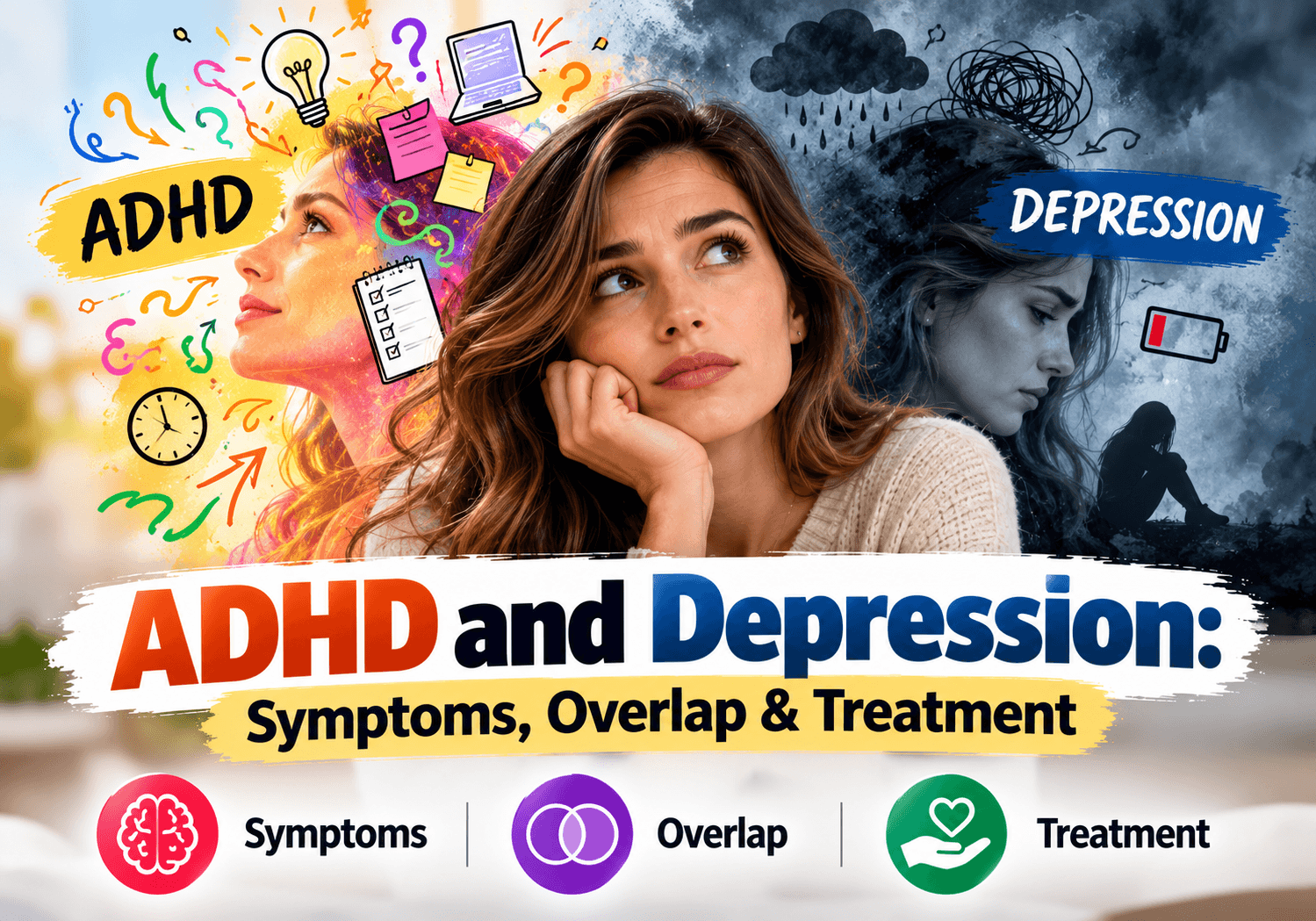 ADHD and depression often occur together, and each makes the other harder to live with. Adults with ADHD are almost…
 We all have "up" days and "down" days. Perhaps you feel energized after a promotion or sluggish on a rainy…
 To define bipolar disorder accurately, we must look at it as a chronic mood dysregulation condition. In psychology and medicine,…
Are you looking for a Therapist?
Connect with qualified mental health professionals who understand
bipolar disorder, mood changes, and emotional challenges.
Private • Supportive • Confidential