
Borderline Personality Disorder Treatments: What Works & What to Expect

Medically reviewed by Laura Athey Updated Date: February 7, 2026

For many years, a diagnosis of borderline personality disorder (BPD) was met with pessimism in the clinical world. It was often unfairly labeled as “untreatable,” leaving patients and their families in a state of perpetual crisis. However, modern psychiatry and psychology have completely transformed this landscape.
Today, we know that BPD is one of the most responsive personality disorders to clinical intervention. With the right borderline personality disorder treatments, the vast majority of patients experience significant symptom reduction, and many achieve long-term remission. This guide explores the evidence-based therapies, the role of medication, and the practical steps toward building a “life worth living.”
What Is Borderline Personality Disorder?
To understand how is borderline personality disorder treated, one must first understand the core of the disorder. Borderline personality is essentially a disorder of the emotional regulation system.
Patients with BPD experience emotions more intensely and for longer periods than the average person. Imagine an emotional “burn victim”; even a slight touch or a minor social slight can feel like a third-degree burn. The borderline disorder is characterized by a pervasive pattern of instability in interpersonal relationships, self-image, and affects.
Borderline personality disorder is a mental health condition marked by intense emotions, unstable relationships, a fragile sense of self, and significant difficulty regulating mood and impulsive behaviors.
Borderline Personality Disorder Symptoms & Traits
The DSM-5-TR outlines nine specific borderline personality disorder traits. To receive a diagnosis, an individual typically meets at least five of these criteria. These borderline personality disorder symptoms are usually categorized into four domains:
- Emotional Dysregulation: Intense episodic unhappiness, irritability, or anxiety; “chronic feelings of emptiness”; and inappropriate, intense anger.
- Impulsivity & Behavioral Issues: Self-damaging impulsivity (spending, sex, substance use, reckless driving) and recurrent suicidal behavior or self-mutilation.
- Interpersonal Dysfunction: Frantic efforts to avoid real or imagined abandonment and a pattern of unstable, “love-hate” relationships (splitting).
- Cognitive Distortions: Transient, stress-related paranoid ideation or severe dissociative symptoms (feeling “out of body”).
What Does a BPD Episode Feel Like?
If you are wondering “what does a BPD episode feel like?”, it is often described as “emotional flooding.” Unlike a depressive episode which may feel heavy and slow, a BPD crisis is usually high-arousal.
- Emotional Flooding: A single spark—like a text message not being returned—can lead to a tidal wave of panic and rage.
- Symptoms of Being Emotionally Unstable: You may feel like you have no “skin” to protect you from the world. One moment you feel euphoric because a friend complimented you; ten minutes later, you feel suicidal because that same friend had to hang up the phone.
- Dissociation: During high stress, many feel “foggy,” as if they are watching themselves from a distance or as if the world around them isn’t real.
What Triggers a Person With Borderline Personality Disorder?
Identifying what triggers a person with borderline personality disorder is a foundational part of treatment. Most triggers are interpersonal in nature.
- Perceived Rejection: A partner being 10 minutes late or a friend canceling plans can be interpreted as “they are leaving me forever.”
- Invalidation: Being told “you’re overreacting” or “it’s not a big deal” can trigger an explosive emotional response because the person feels their reality is being denied.
- Reminders of Trauma: Since many with BPD have a history of childhood trauma, certain tones of voice, smells, or power dynamics can trigger a “fight-or-flight” response.
What Causes Borderline Personality Disorder?

The consensus on what causes borderline personality disorder is the “Biosocial Theory.” It suggests BPD is the result of a biological vulnerability meeting an invalidating environment.
- Genetic Vulnerability: Studies suggest BPD has a heritability rate of about 40%. Some people are simply born with a more sensitive “emotional thermostat.”
- Neurobiology: Brain scans often show an overactive amygdala (the brain’s alarm system) and an underactive prefrontal cortex (the area responsible for logical braking).
- Invalidating Environments: Growing up in an environment where emotions were punished, ignored, or mocked teaches the child that they cannot trust their own feelings, leading to chronic dysregulation.
What Are the 4 Types of Borderline Personality Disorder?
While the DSM doesn’t officially distinguish between subtypes, many clinicians use Theodore Millon’s model to describe the 4 types of borderline personality disorder.
- Discouraged (Quiet) BPD: These individuals act “inward.” Instead of lashing out at others, they struggle with intense self-loathing, isolation, and quiet borderline personality disorder symptoms like “internalized” rage.
- Impulsive BPD: Characterized by high-energy, risk-taking behaviors. They are often the “life of the party” but struggle with dangerous impulsivity.
- Petulant BPD: Marked by extreme irritability, defiance, and a sense of being unloved or misunderstood. They may oscillate between being incredibly clingy and pushing others away.
- Self-Destructive BPD: Defined by a sense of bitterness and self-hatred, often leading to self-harm or intentional sabotage of their own success.
What Is the Most Effective Treatment for Borderline Personality Disorder?
When patients ask, “What is the most effective treatment for borderline personality disorder?”, the answer is unequivocal: Structured Psychotherapy.
The most effective treatment for BPD is specialized psychotherapy. Unlike depression, which is often treated with a “meds-first” approach, BPD is primarily treated with “skills-first” therapy, with Dialectical Behavior Therapy (DBT) being the most researched and validated method.
DBT for Borderline Personality Disorder
DBT for borderline personality disorder was developed by Dr. Marsha Linehan specifically for chronically suicidal patients with BPD. It balances “Acceptance” (I am doing the best I can) with “Change” (I need to do better).
The Four Modules of DBT:
- Mindfulness: Learning to be present without judgment.
- Distress Tolerance: How to get through a crisis without making it worse (e.g., self-soothing, TIPP skills).
- Emotion Regulation: Learning to name emotions and reduce the intensity of “emotional waves.”
- Interpersonal Effectiveness: How to ask for what you need and set boundaries while maintaining self-respect.
A full DBT program typically includes weekly individual therapy, a weekly skills-training group, and phone coaching for “real-world” crises.
Other Evidence-Based Therapies for BPD
While DBT is the most famous, several other borderline personality disorder interventions have shown high efficacy in clinical trials. Different patients respond to different modalities depending on whether their struggles are more behavioral or cognitive.
- Mentalization-Based Therapy (MBT): This treatment focuses on “mentalizing”—the ability to understand your own mental state and the mental states of others. People with BPD often misinterpret others’ intentions (e.g., “They haven’t texted back because they hate me”). MBT helps patients slow down and consider alternative explanations.
- Schema Therapy: This combines elements of CBT, psychoanalysis, and attachment theory. It focuses on “schemas”—deeply ingrained patterns or themes that began in childhood. By identifying “modes” (like the Abandoned Child or the Punitive Parent), patients learn to nurture their Healthy Adult mode.
- Transference-Focused Psychotherapy (TFP): Based on psychodynamic principles, TFP uses the relationship between the patient and therapist to observe and change interpersonal patterns in real-time. It is highly effective for reducing “splitting” (viewing people as all good or all bad).
Medications for Borderline Personality Disorder

It is vital to manage expectations regarding borderline personality disorder treatments medication. Currently, there are no medications specifically FDA-approved to treat BPD itself. However, meds are frequently used “off-label” to manage specific symptom clusters.
Medication Table: Symptom-Targeted Approach
| Symptom Cluster | Medication Class | Common Examples |
| Mood Instability / Anger | Mood Stabilizers | Lamotrigine, Valproate |
| Depression / Anxiety | SSRIs / SNRIs | Sertraline, Venlafaxine |
| Paranoia / Dissociation | Low-dose Antipsychotics | Quetiapine, Aripiprazole |
| Impulsivity / ADHD-comorbidity | Non-stimulant ADHD meds | Atomoxetine |
⚠️ Clinical Warning: Antidepressants alone are often ineffective for BPD-related “emptiness” or “rejection sensitivity.” Medication should always be an adjunct to therapy, not a replacement.
New & Emerging Treatments for BPD
The landscape of new treatments for borderline personality disorder is shifting toward accessibility and neurobiology.
- Digital DBT & Apps: Since full DBT programs can be expensive and have long waitlists, digital platforms offering skills-training modules are becoming evidence-supported bridges to care.
- Neuromodulation: Research into Transcranial Magnetic Stimulation (TMS) for BPD is ongoing. The goal is to stimulate the prefrontal cortex to improve “top-down” regulation of the overactive amygdala.
- Group-Based Systems Training (STEPPS): A 20-week group program that works as an adjunct to traditional therapy, focusing on “emotional intensity disorder” management.
Can Someone With Borderline Personality Disorder Live a Normal Life?
The answer to “can someone with borderline personality disorder live a normal life?” is a resounding yes. In fact, longitudinal studies (like the McLean Study of Adult Development) show that BPD has a better prognosis than many other mental health conditions.
- Remission Rates: Over a 10-year period, nearly 85% of patients with BPD experience a remission of symptoms that lasts at least two years.
- Recovery vs. Remission: While “remission” means symptoms go away, “recovery” means finding a job, finishing school, and having stable relationships. Therapy significantly increases the chances of full functional recovery.
“I Cured My Borderline Personality Disorder” — What Recovery Really Means
You may see people online claiming, “I cured my borderline personality disorder.” While we avoid the word “cure” in clinical settings (as BPD is a personality structure, not a temporary infection), “recovery” is a very real destination.
Recovery looks like:
- Feeling an intense emotion but choosing a DBT skill instead of an impulsive action.
- Navigating a disagreement with a partner without the fear of the relationship ending.
- Maintaining a stable sense of identity even when you are alone.
- Reducing or eliminating self-harming behaviors.
How to Deal With a Person With Borderline Personality Disorder
If you are a family member or partner, learning how to deal with a borderline personality is a delicate balance of empathy and firm boundaries.
- Validate the Emotion, Not the Behavior: You can say, “I see that you are feeling incredibly hurt right now,” without agreeing that their behavior (like shouting) is acceptable.
- Set Clear Boundaries: “I want to talk to you, but I will not stay in the room if I am being called names. I will step away for 20 minutes and come back when we can both be calm.”
- Avoid Power Struggles: During an episode, the BPD brain is in “survival mode.” Logical arguments rarely work until the emotional storm has passed.
Borderline Personality Disorder Treatment Plan (PDF)
A professional treatment plan for borderline personality disorder pdf usually acts as a “contract” between the patient and therapist. It typically includes:
- Target Behaviors: A list of behaviors to decrease (e.g., self-harm, substance use).
- Skill Goals: Specific DBT or CBT skills to practice weekly.
- Crisis Plan: A step-by-step guide of who to call and what to do when suicidal urges arise.
- Medication Schedule: Clear instructions on any adjunctive prescriptions.
Finding BPD Treatment Near You
Searching for “borderline personality disorder treatments near me” can be overwhelming. Because BPD requires specialized care, a general therapist may not always be enough.
- Look for “DBT-Linehan Board Certified” clinicians if you want the highest standard of DBT.
- Residential Treatment: For those in constant crisis, residential treatment programs for borderline personality disorder near me offer 30-to-90-day intensive immersions into skills-building.
- BPD Specialists: Search for providers who specifically list “Personality Disorders” or “Dialectical Behavior Therapy” as their primary focus.
Avoidant Personality Disorder vs. Borderline Personality Disorder
It is common to confuse avoidant personality disorder vs borderline, as both involve significant interpersonal anxiety. However, the motivations are different.
Comparison Table: BPD vs. AVPD
| Feature | Borderline Personality (BPD) | Avoidant Personality (AVPD) |
| Fear | Fear of abandonment. | Fear of criticism/embarrassment. |
| Relationships | Intense, unstable, “push-pull.” | Avoided entirely due to inadequacy. |
| Response to Stress | Anger, impulsivity, self-harm. | Withdrawal and deeper isolation. |
| Self-Image | Fragile or changing. | Consistently “inferior” or “lowly.” |
While a borderline personality disorder test might show high anxiety, an anxious avoidant personality disorder profile is defined more by social inhibition than by emotional volatility.
When to Seek Immediate Help
If you are experiencing a crisis, borderline personality disorder complications like severe self-harm or suicidal intent require immediate action.
- Call or Text 988 (Suicide & Crisis Lifeline) in the US and Canada.
- Go to the nearest ER if you feel you cannot keep yourself safe for the next hour.
- BPD-Specific Crisis: Use your “Distress Tolerance” skills (like putting your face in ice water or intense exercise) to lower your heart rate before making any permanent decisions.
Authoritative References & Resources
- National Institute of Mental Health (NIMH): Borderline Personality Disorder
- American Psychiatric Association (APA): What is Borderline Personality Disorder?
- The Lancet: Borderline Personality Disorder (Seminar)
- McLean Hospital: Borderline Personality Disorder Treatment and Care
- Cochrane Library: Pharmacological Interventions for BPD

Related Posts






Subscribe to Our Newsletter
Get mental health tips, updates, and resources delivered to your inbox.
MORE from Author
Read More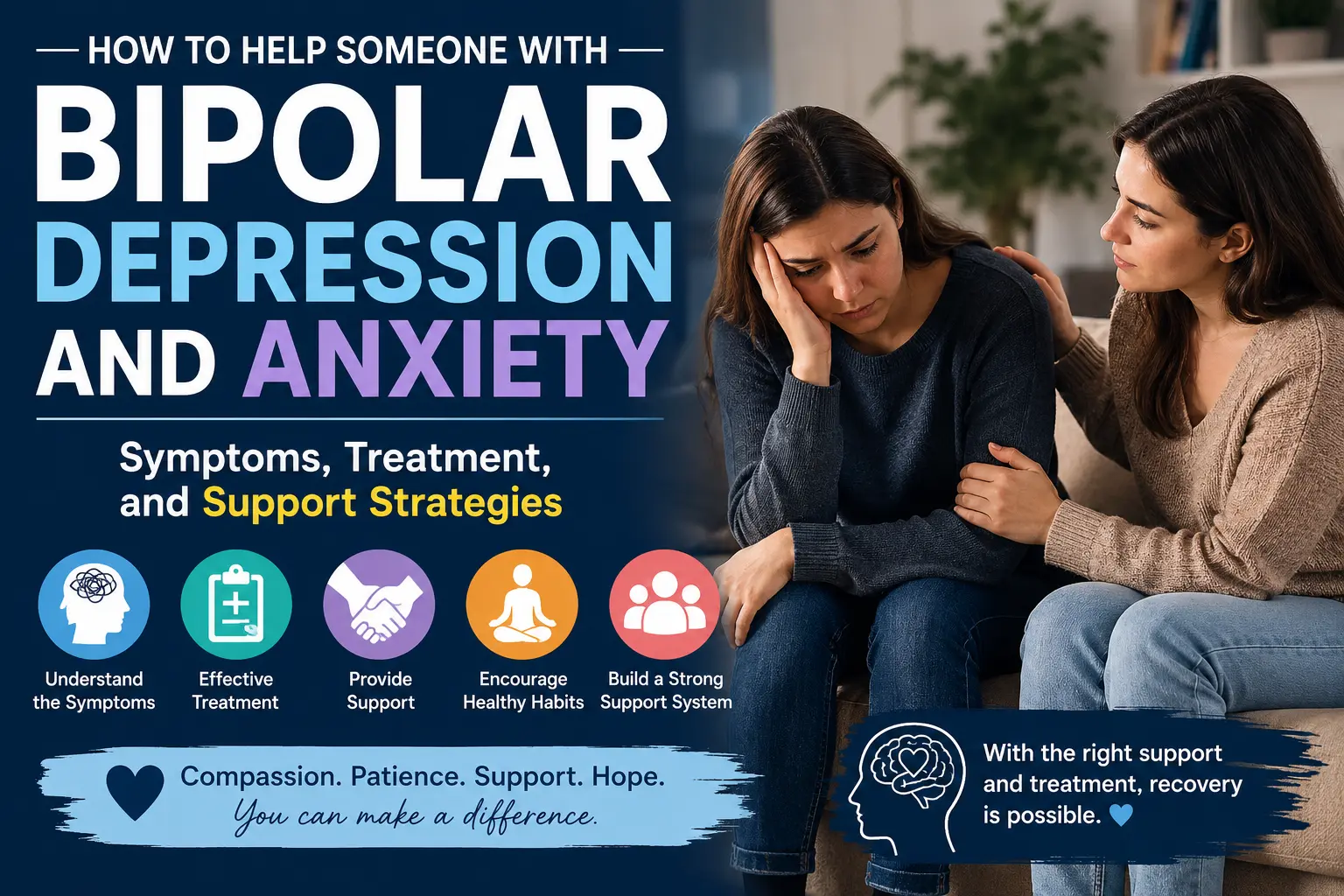 Watching someone you care about struggle with bipolar depression and anxiety can be heartbreaking. You may notice that they withdraw…
 In my practice as a clinical psychologist, I often observe that the difference between a patient who crumbles under pressure…
 We all have "up" days and "down" days. Perhaps you feel energized after a promotion or sluggish on a rainy…
 To define bipolar disorder accurately, we must look at it as a chronic mood dysregulation condition. In psychology and medicine,…
Are you looking for a Therapist?
Connect with qualified mental health professionals who understand
bipolar disorder, mood changes, and emotional challenges.
Private • Supportive • Confidential