
How Long Does Emotional Numbness Last? Understanding, Coping, and Recovery.

You look at a sunset that used to move you to tears, or you receive news that should be devastating, and yet, you feel as though you are observing the world through a thick pane of glass.
There is no spike of joy, no pang of sorrow—just a vast, quiet “nothing.” In my practice, I often observe that patients find this state more terrifying than actual sadness. They tell me, “Dr. Laura, I’d rather be miserable than feel like a ghost in my own life.”How Long Does Emotional Numbness Last
This experience, clinically referred to as emotional numbness or emotional blunting, is one of the most common yet misunderstood symptoms in mental health. It is a protective “power down” of the nervous system, a biologically muffled blanket thrown over your internal world.
Whether you are navigating the aftermath of a crisis or finding yourself in a state of chronic apathy, understanding the emotional numbness’s meaning is the first step toward reconnecting with your humanity.
What Is Emotional Numbness?
To define emotional numbness, we must first distinguish it from healthy emotional regulation. Regulation is the ability to manage intense feelings; numbness is the reduced ability to feel them at all. It is a state of affective detachment where the “volume” of your emotional life has been turned down to zero.
In adults, this often feels like a “robotic” existence—going through the motions of work and home without the internal “spark” of motivation.
In children, however, it may present differently. A child experiencing emotional numbness might appear overly compliant or “hollowed out,” losing interest in play or appearing indifferent to both praise and discipline.
The Neurological View
At its core, how emotional numbness works involves a complex interplay between the brain’s “brakes” and “accelerators.” When we are overwhelmed, the prefrontal cortex (the logic center) can overactivate to suppress the amygdala (the alarm center).
While this prevents us from being flooded by pain, it also inadvertently mutes our capacity for joy. Many describe it as watching life through a foggy window; you can see the shapes of events happening, but you cannot feel the “temperature” of the moment.
How Emotional Numbness Works in the Brain
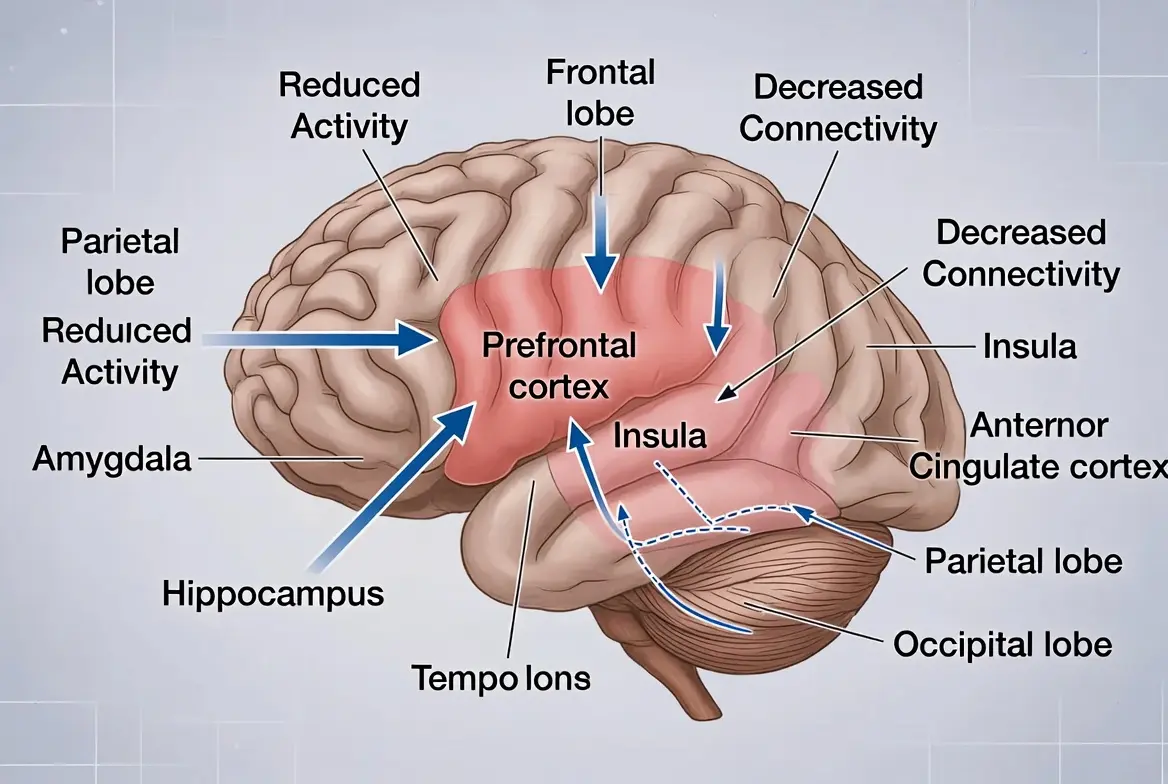
Emotional processing is not a single switch but a sophisticated circuit. Under normal conditions, our brain processes external stimuli and assigns them an “emotional value.” However, during periods of prolonged stress or acute trauma, the brain’s neurochemistry shifts.
Prolonged exposure to cortisol—the body’s primary stress hormone—can actually lead to “blunted affect.” Research from the National Institute of Mental Health (NIMH) suggests that chronic stress can temporarily impair the neural pathways responsible for reward and emotional resonance.
Essentially, the brain enters a state of “hypoarousal.” It decides that the cost of processing high-intensity emotions is too metabolically expensive, so it initiates a shutdown. This is not a failure of character; it is a biological survival strategy designed to protect the organism from system failure.
Causes of Emotional Numbness
Understanding the “why” behind the biology is essential for recovery. In my practice, I have found that emotional numbness rarely arrives without a precursor; it is almost always the “smoke” indicating an underlying fire.
a. Trauma and PTSD: The Survival Shield
Can trauma make you emotionally numb? It is, in fact, one of the most common diagnostic criteria for PTSD. When a person experiences a “too much, too fast, too soon” event, the brain may utilize dissociation as a shield. If you cannot flee the danger physically, your brain “flees” emotionally.
b. Depression and Anxiety: The Anhedonia Loop
While we often associate depression with crying, many patients experience anhedonia—the total loss of the ability to feel pleasure. Similarly, chronic anxiety can lead to a “freeze” response. After months of “Fight or Flight” hyper-vigilance, the nervous system eventually crashes into a state of numbness to prevent total exhaustion.
c. Childhood Emotional Neglect (CEN)
This is a nuanced cause that I frequently uncover in adult patients. If you grew up in a home where your emotions were ignored, shamed, or invisible, you may have learned that “feeling” was a wasted effort. This early developmental impact can result in a baseline of detachment that feels “normal” until the lack of connection causes distress in adulthood.
d. Medication and Neurological Factors
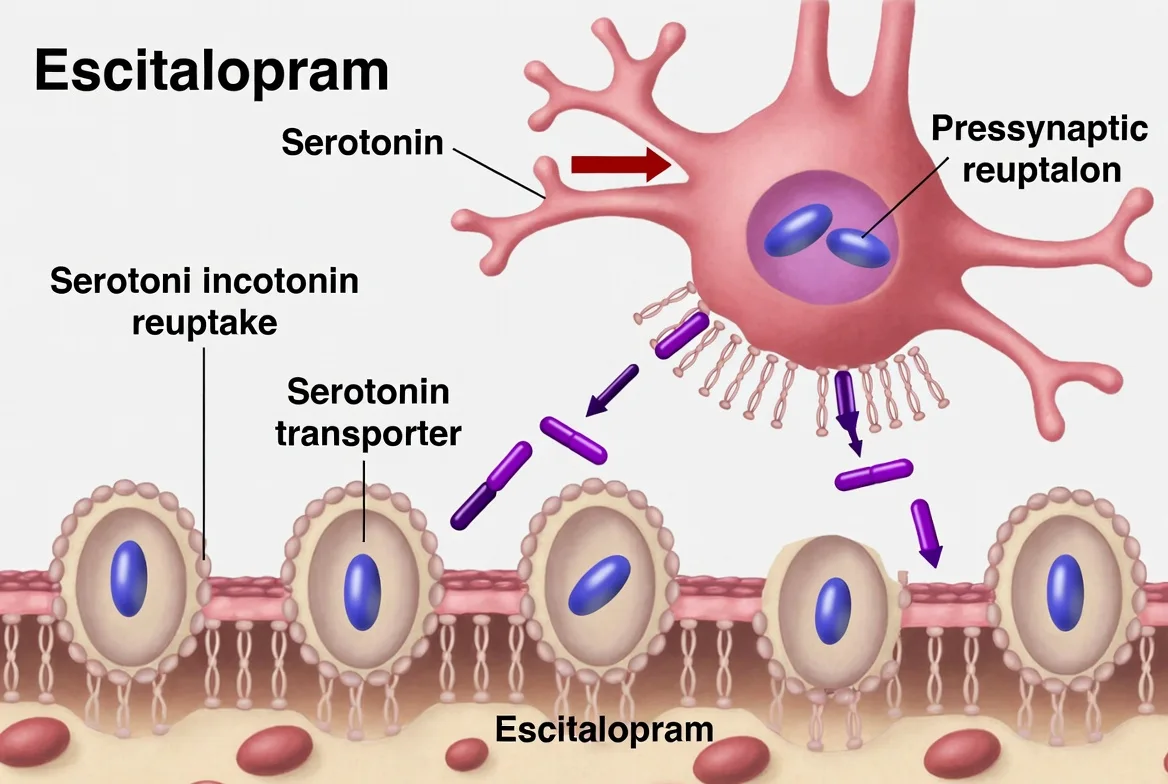
It is a clinical reality that certain medications, particularly SSRIs (Selective Serotonin Reuptake Inhibitors), can cause “emotional blunting.” While they raise the “floor” of depression so a patient doesn’t feel suicidal, they can also lower the “ceiling” of joy.
| Factor | Biological Mechanism | Typical Presentation |
| Chronic Stress | Cortisol Overload | Burnout, fatigue, “flat” mood |
| SSRIs | Serotonin Saturation | Inability to cry or feel intense excitement |
| CEN | Developmental Adaption | Feeling “different” or “hollow” since childhood |
| PTSD | Dissociative Defense | Sudden “checking out” during triggers |
I once worked with a patient, “Sarah,” who felt completely “unplugged” from her life. We explored her trauma history and adjusted her therapy, but the numbness persisted until we looked at her circadian rhythms. Sarah was getting five hours of fragmented sleep and had no morning sunlight exposure.
The Clinical Secret: If your brain isn’t receiving the biological signals to “wake up” the nervous system, your emotional range will stay in “power-save mode.” You cannot process deep emotions in therapy if your brain is chemically stuck in a twilight state. Once we stabilized Sarah’s sleep hygiene, her “emotional volume” began to return within weeks.
Symptoms of Emotional Numbness
Identifying emotional numbness symptoms is tricky because you are looking for an absence rather than a presence. In my practice, I evaluate patients across three domains:
Cognitive Symptoms and Memory
A frequent but overlooked symptom is short-term memory loss. When you are emotionally numb, your brain isn’t “tagging” memories with emotional importance. If an event doesn’t feel like anything, the brain is less likely to store it. If you find yourself wondering “when to worry” about memory loss, look at your emotional state first. If you feel “blank,” your memory likely will too.
Behavioral and Social Signs
- Withdrawal: You stop reaching out because social interaction feels like “acting.”
- Lack of Motivation: Without the “push” of desire or the “pull” of joy, simple tasks like grocery shopping feel like climbing Everest.
- Flat Affect: Your voice might become more monotone, and your facial expressions less varied.
Physical Overlap
Many patients report a “leaden” feeling in their limbs or persistent fatigue. This is the physical manifestation of executive function exhaustion. Your brain is working so hard to keep the “brakes” on your emotions that it has little energy left for physical movement.
How Long Does Emotional Numbness Last?
In my practice, the most common question I hear after “Why am I like this?” is, “How long does emotional numbness last?” Patients are often terrified that their “color” has been permanently deleted from their internal hard drive.
The duration of emotional blunting is highly dependent on the underlying trigger. In cases of acute situational stress—such as the immediate weeks following a significant loss—numbness is a functional, temporary “shock absorber” that usually begins to lift as the system integrates the event. However, in cases of chronic PTSD or untreated major depressive disorder, the numbness can persist for months or even years.
It is important to understand whether emotional numbness is permanent. No. Because it is a functional protective state rather than structural brain damage, it is inherently reversible.
However, if the “threat” (be it chronic stress, trauma, or a chemical imbalance) isn’t addressed, the brain will keep the “emergency brake” on indefinitely. Reassurance comes from the fact that once safety is re-established—biologically and psychologically—neuroplasticity allows the emotional circuits to come back online.
How to Treat and Recover From Emotional Numbness

If you feel “unplugged,” you cannot simply “think” your way back into feeling. Recovery requires a multi-sensory approach that addresses the nervous system from the bottom up. In my clinical work, I focus on a three-tiered recovery model:
a. Therapeutic Approaches
- Somatic Experiencing (SE): This is often the cornerstone of how to get out of emotional numbness. Instead of talking about your past, we focus on the “here and now” sensations in your body. We might spend an entire session simply noticing the feeling of your feet on the floor or the temperature of the air. These “micro-sensations” act as a safe invitation for the nervous system to come out of hiding.
- EMDR: For those whose numbness is a “trauma shield,” EMDR helps process the underlying memory so the shield is no longer necessary.
- Cognitive Behavioral Therapy (CBT): We use CBT to address the “meta-emotions”—the fear of the numbness itself. Many patients are stuck because they are “anxious about being numb,” which creates more stress, which reinforces the numbness.
b. Lifestyle Interventions: Rebuilding the Foundation
You cannot “thaw” a nervous system that is biologically depleted. To treat emotional numbness, we must optimize the physical environment:
- Exercise & Sunlight: As I mentioned in the “Clinical Insight” above, sunlight is the primary regulator of your circadian rhythms. 15 minutes of morning light can help reset the neurotransmitters responsible for arousal.
- Safe Social Reconnection: Don’t try to “feel” deep love right away. Start with “low-stakes” social contact—sitting in a coffee shop or texting a friend.
- Creative Outlets: Art, music, and journaling are excellent ways to bypass the “logical” brain. Even if you don’t feel “inspired,” the act of moving a pen or playing a chord can stimulate the brain’s expressive centers.
c. Nutritional and Supplement Support
While supplements are not a “cure,” they can provide the raw materials your brain needs for executive function and emotional processing.
- Vitamin B12 & D: Deficiencies in these are notorious for causing “flat” moods and cognitive fog.
- Omega-3 Fatty Acids: These support the health of the neurons involved in emotional regulation.
- Magnesium: This “anti-stress” mineral helps calm the HPA-axis, making it easier for the system to shift out of a “freeze” state.
Talking About Emotional Numbness
If you are a loved one of someone who is numb, you likely feel rejected. It is vital to remember: they are not withholding their feelings; they currently do not have access to them.
When talking to someone in this state, avoid saying “Just try to be positive” or “Why are you so cold?” Instead, use validating language:
- “I can see that you’re in a ‘shutdown’ mode right now, and I understand your brain is trying to protect you.”
- “I’m here with you, even if you can’t feel much today. You don’t have to perform for me.”
Validation reduces the patient’s shame, which reduces their stress levels, which—ironically—is the fastest way to help the numbness lift.
Frequently Asked Questions
Can emotional numbness cause distress?
Yes. Paradoxically, the inability to feel pain or joy is often more distressing than the pain itself. Patients frequently describe a sense of “soul loss” or deep frustration at being unable to connect with their own lives.
Is it normal to feel emotionally numb?
In the short term, yes. It is a biological survival mechanism. However, if it persists for more than two weeks or interferes with your ability to function, it is a sign that your nervous system needs professional support.
Can trauma make you emotionally numb?
Absolutely. This is often the result of “dorsal vagal shutdown,” where the brain decides that the safest way to survive a traumatic environment is to “play dead” emotionally.
How do I stop feeling emotionally numb?
Recovery involves a combination of somatic therapy (body-based), stabilizing biological factors like sleep and nutrition, and slowly reintroducing sensory inputs through “micro-dosing” small emotional and physical sensations.
How long does emotional numbness last?
It can last from a few days (acute stress) to years (unprocessed trauma or chronic depression). The duration is typically tied to how quickly the underlying sense of safety is restored.
What vitamins help with emotional numbness?
Vitamins B12 and D, magnesium, and omega-3 fatty acids are the primary nutrients that support the neurotransmitter functions required for a healthy emotional range.
Conclusion
In my years of clinical practice, I have learned that emotional numbness is not a sign of a “broken” person, but a sign of a “protected” one. If you are currently living in this quiet, grey space, please understand that your brain has chosen this state as a survival strategy. It is holding the “emergency brake” because it believes the road ahead is too dangerous, too painful, or too exhausting to travel at full speed.
The journey back to feeling is rarely a sudden burst of sunlight; it is a gradual “thaw.” It begins with stabilizing your biological foundations—your circadian rhythms, nutrition, and physical safety—and moves into the courageous work of re-engaging with the world through somatic and therapeutic tools.
Whether your numbness is a shield against childhood trauma, a symptom of depression, or a side effect of medication, your capacity for joy, sorrow, and connection has not been deleted. It is merely dormant.
Be patient with your nervous system. By using the evidence-based strategies we’ve discussed, you are slowly whispering to your brain that the crisis is over. Step by step, the “foggy window” will clear, the colors will return, and you will move from simply existing back into the vibrant, textured experience of being truly alive.
References & Resources
Related Posts



Subscribe to Our Newsletter
Get mental health tips, updates, and resources delivered to your inbox.
MORE from Author
Read More In my practice as a clinical psychologist, I often observe that the difference between a patient who crumbles under pressure…
- We all have "up" days and "down" days. Perhaps you feel energized after a promotion or sluggish on a rainy…


 To define bipolar disorder accurately, we must look at it as a chronic mood dysregulation condition. In psychology and medicine,…
 To answer whether bipolar fits the bill, we first have to define what a neurodivergent person actually is. The term…
Are you looking for a Therapist?
Connect with qualified mental health professionals who understand
bipolar disorder, mood changes, and emotional challenges.
Private • Supportive • Confidential