
Rejection Sensitive Dysphoria ADHD: The Complete Guide to Understanding and Managing Emotional Pain
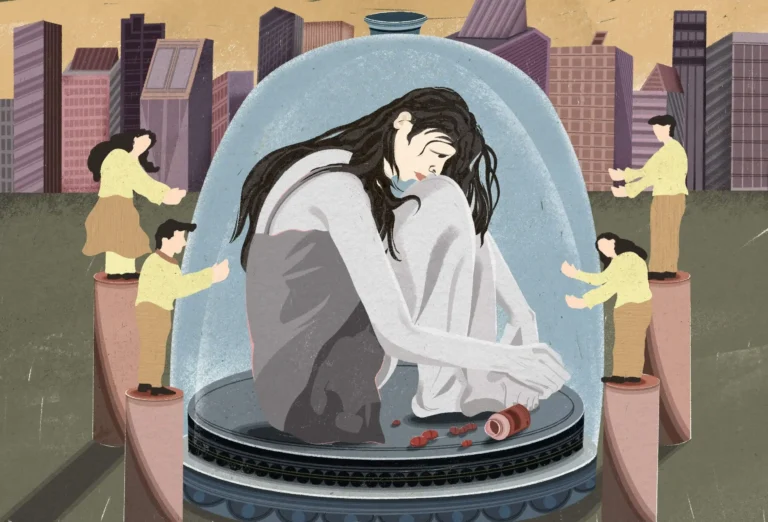
By calling this a “Complete Guide,” we signal a transition from mere symptom checklists to active management. For an individual with ADHD, “Understanding” means learning that their “thin skin” is actually a result of dopamine dysregulation and a hyper-reactive amygdala. “Managing” involves utilizing clinical tools like alpha-agonists, Rejection Sensitive Dysphoria ADHD (Guanfacine), and DBT skills to build “emotional armor.”
In my private practice, I have observed that rejection-sensitive dysphoria adhd women often carry a heavier burden of “social masking.” Society frequently expects girls and women to be the emotional glue of their families and workplaces—the “agreeable” ones. For rejection-sensitive dysphoria adhd females, the cost of a social slip-up feels higher because the stakes of “fitting in” are higher.
Why Rejection Hurts More With ADHD
Have you ever received a minor piece of constructive criticism and felt as though you were physically punched in the gut? Perhaps a friend didn’t text back, and your mind immediately spiraled into the belief that they must secretly hate you. If so, you are likely experiencing rejection-sensitive dysphoria adhd. For many in the neurodivergent community, the “D” in ADHD could easily stand for “Dysregulated Emotions.”
While ADHD is often discussed in terms of focus and hyperactivity, the emotional component is often the heaviest burden to carry. RSD rejection sensitive dysphoria adhd describes an intense, overwhelming emotional pain triggered by the perception—not necessarily the reality—of being rejected, teased, or criticized.
People frequently ask, what is rejection sensitive dysphoria adhd, and why is it so much more intense than standard sadness? It is a biological phenomenon where the brain’s emotional centers “overfire.” This article will provide a deep dive into the symptoms, the neurobiology of the ADHD brain, and the clinical pathways to treatment. We will move beyond the surface to understand why this happens and, more importantly, how you can reclaim your peace of mind.
What Is Rejection Sensitive Dysphoria?
To understand this experience, we must first look at the rejection-sensitive dysphoria definition. The term “dysphoria” comes from the Greek word meaning “unbearable.” Therefore, the meaning isn’t just “sensitivity”; it is a pain that feels impossible to sustain.
Rejection Sensitive Dysphoria (RSD) is an extreme emotional sensitivity and pain triggered by the perception of being rejected or criticized by important people in one’s life. It can also be triggered by a sense of failure—of falling short of one’s own high standards or others’ expectations.
It is important to clarify that RSD is not currently a standalone diagnosis in the DSM-5. Instead, clinicians recognize it as a common manifestation of emotional dysregulation associated with ADHD. Unlike the mood swings of Bipolar Disorder, which can last days or weeks, RSD episodes are usually intense but short-lived. They are “state-dependent,” meaning they are triggered by a specific event and can resolve as quickly as they began, though the psychological “afterburn” of shame may linger.
What Is Rejection Sensitive Dysphoria in ADHD?
When exploring what is rejection sensitive dysphoria in adhd, we must look at how neurobiology amplifies feelings. In a neurotypical brain, the prefrontal cortex acts like a “brake” on the emotional center (the limbic system). However, in the ADHD brain, that brake often fails to engage.
So, what is adhd rejection sensitive dysphoria at a cellular level? It is the result of a nervous system that is perpetually “on guard.” Because people with ADHD often grow up receiving significantly more negative feedback than their peers—some studies suggest up to 20,000 more negative messages by age 10—the brain becomes hyper-vigilant.
When we ask what is rejection sensitive dysphoria with adhd, we are describing a “perfect storm.” You have a brain that struggles to inhibit impulses (executive dysfunction) paired with a nervous system that perceives a social slight as a threat to survival. This is why the pain feels sudden and overwhelming. It isn’t a choice or a “thin skin”; it is a neuro-chemical reaction to perceived exclusion.
How ADHD Ignites Rejection Sensitive Dysphoria
Many patients ask me how adhd ignites rejection-sensitive dysphoria so quickly. The answer lies in the “ignition” of the amygdala. In ADHD, dopamine dysregulation means the brain is constantly seeking “reward” signals. A rejection—even a small one—acts as a massive “anti-reward,” causing a sudden drop in dopamine and an explosion of stress hormones like cortisol.
If you are wondering what causes adhd rejection sensitive dysphoria, consider these three factors:
- Dopamine Dysregulation: The brain’s reward system is out of balance, making social “losses” feel catastrophic.
- Emotional Impulsivity: You feel the full weight of the emotion before the “logical” part of your brain can tell you that the friend was just busy, not angry.
- Trauma Reinforcement: Past experiences of being “too much” or “not enough” create a trauma loop.
Essentially, what causes rejection-sensitive dysphoria is a combination of genetics and environmental conditioning. The ADHD brain is wired to feel deeply, and a lifetime of trying to “fit in” creates a hair-trigger for any sign of social failure.
RSD Symptoms in ADHD
Identifying rejection-sensitive dysphoria adhd symptoms can be life-changing because it gives a name to a lifelong struggle. These symptoms often look different depending on whether they are internalized or externalized.
ADHD rejection sensitive dysphoria symptoms in Adults
- Shame Spirals: A sudden, deep dive into self-loathing after a perceived mistake.
- People-Pleasing: Working overtime to be “perfect” so no one has a reason to criticize you.
- Social Withdrawal: Avoiding new situations or relationships to prevent the possibility of rejection.
- Emotional Shutdown: Becoming “numb” or silent when feeling criticized.
RSD ADHD Symptoms in Children
- Meltdowns: Intense emotional outbursts that seem “disproportionate” to the event.
- Avoidance: Refusing to try new things if they aren’t “perfect” at them immediately.
- School Refusal: Avoiding school due to a fear of being corrected by a teacher.
- Aggression: Sometimes, the pain of rejection is so sharp that it is redirected outward as anger.
In short, rejection-sensitive dysphoria symptoms are the body’s way of trying to protect itself from a pain that feels life-threatening. Whether it is a child crying over a lost game or an adult ruminating over an email, the biological root is the same.
What Does an RSD Meltdown Look Like?
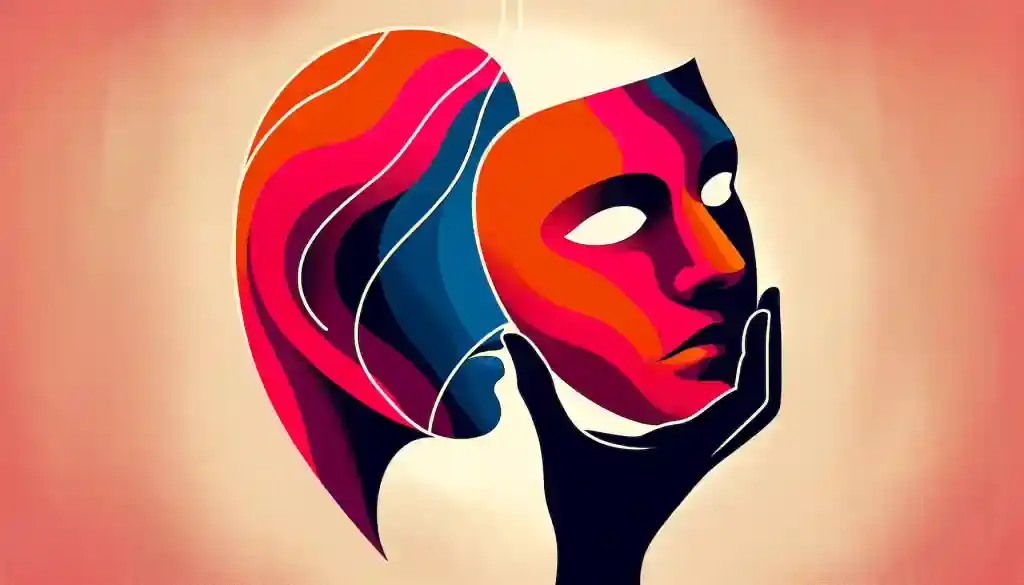
I am often asked, what does an rsd meltdown look like in a professional or social setting? It is rarely just “crying.” Instead, it is a total “system override.” When an RSD trigger hits, the person may lose the ability to speak clearly, feel a hot flash of shame, or feel a physical “heaviness” in their chest.
Consider these rejection-sensitive dysphoria examples:
- Example A: You present a project at work. Your boss says, “Great job, let’s just tweak the fonts.” You immediately feel like a failure and want to quit your job.
- Example B: A partner says they need “some space” tonight. You spend the next four hours convinced they are planning to break up with you.
These are not “overreactions.” They are the brain’s genuine response to a perceived loss of safety. An RSD meltdown is an autonomic nervous system response, much like a panic attack, and it requires the same level of compassion and de-escalation.
Rejection Sensitive Dysphoria in ADHD Women
There is a significant intersection between rejection-sensitive dysphoria adhd women and the societal pressure to be “agreeable.” Because many rejection-sensitive dysphoria adhd females are socialized to be the emotional caretakers of their families, the cost of rejection is even higher.
For Rejection sensitive Dysphoria ADHD women, the experience is often tied to “masking.” You might spend years pretending to be organized and calm, but the “mask” is held up by the fear of being seen as “messy” or “lazy.” This constant fear leads to chronic relationship anxiety and a higher risk of burnout. Late-diagnosed women, in particular, often look back and realize that their “social anxiety” was actually untreated RSD.
ADHD Medication & RSD
Does ADHD medication help with rejection sensitivity? The answer is often a resounding yes, though the type of medication matters. While stimulants like Adderall or Ritalin improve focus and can reduce some emotional impulsivity, they often don’t “touch” the core pain of RSD for many.
Alpha-Agonists: The Gold Standard Clinical experience and case studies show that alpha-agonists—specifically Guanfacine (Intuniv) and Clonidine (Kapvay)—are remarkably effective for RSD.
- How They Work: Originally used for high blood pressure, these medications strengthen the signal-to-noise ratio in the prefrontal cortex. This “plugs the leak” in the emotional braking system.
- The “Emotional Armor”: Patients often report that within days of finding the right dose, they feel they have “emotional armor” on. The trigger still happens, but it no longer “wounds” them.
- Dosage: Guanfacine typically starts at 1mg and can go up to 4-7mg, while Clonidine is used at much lower doses (0.1mg to 0.5mg).
Rejection Sensitive Dysphoria ADHD Treatment
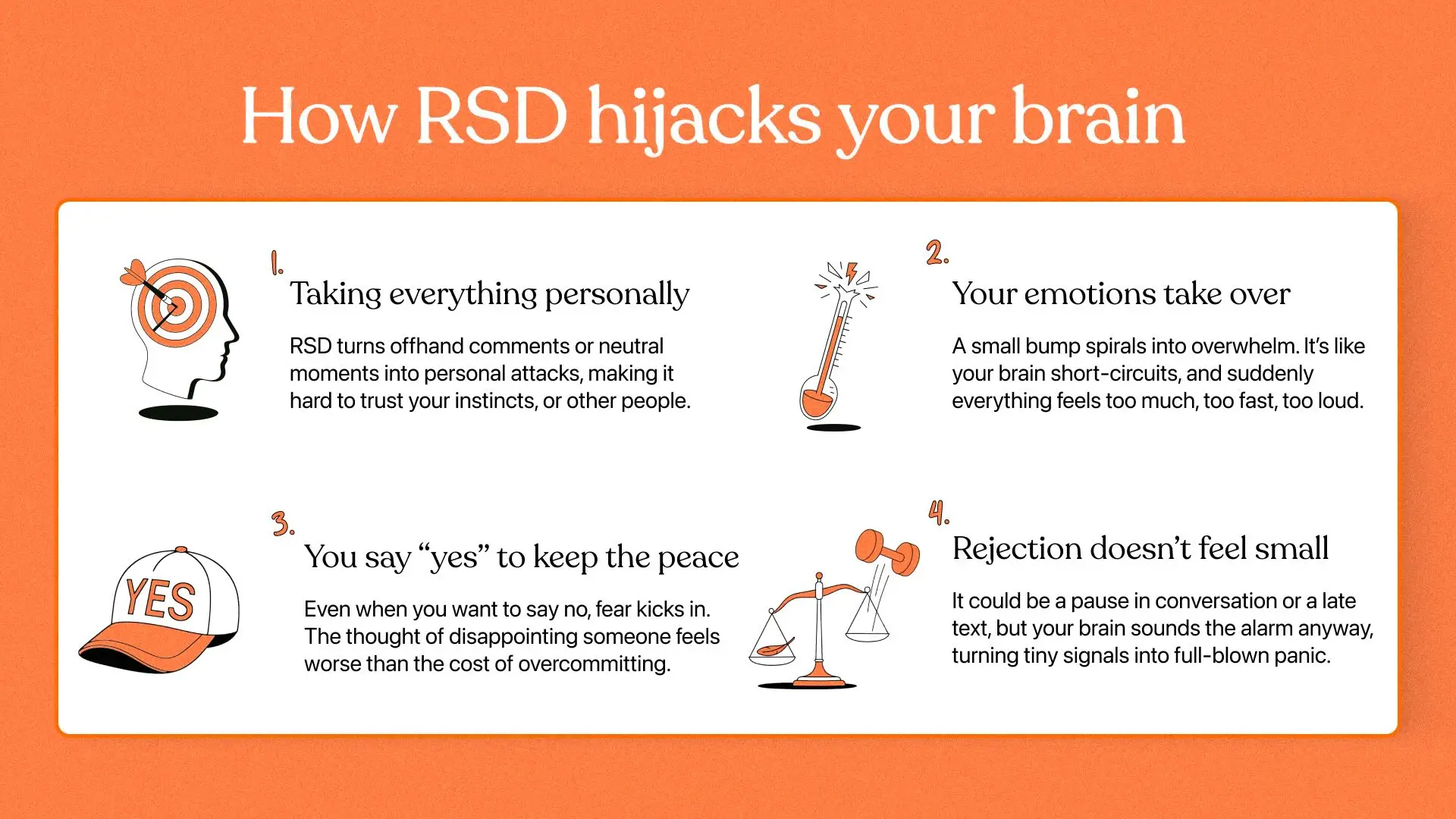
Beyond medication, a multimodal approach is essential. Rejection sensitive Dysphoria ADHD treatment involves rewiring the brain’s automatic “shame response.”
1. Dialectical Behavior Therapy (DBT): The Resilience Blueprint
In my experience as a relational therapist, I often find that DBT is the “gold standard” for managing the high-intensity emotional spikes of RSD. Unlike traditional talk therapy, which can sometimes feel like “intellectualizing” the pain, DBT provides a concrete toolbox.
- Distress Tolerance (The “TIPP” Skill): When an RSD meltdown hits, your body is in a state of physiological crisis. I teach my clients the TIPP skill (Temperature, Intense exercise, Paced breathing, Paired muscle relaxation). Submerging your face in cold water, for instance, triggers the “mammalian dive reflex,” which manually resets your heart rate and pulls you out of a shame spiral.
- Radical Acceptance: This isn’t about liking the feeling of rejection; it’s about acknowledging that the pain exists without fighting it. By saying, “I am currently feeling the physical sensation of RSD,” you move from being in the storm to observing the storm.
2. Internal Family Systems (IFS) and the “Shame Part.”
As I mentioned in my clinical profile, I integrate Internal Family Systems (IFS) into my work. In the context of rejection-sensitive dysphoria adhd treatment, we often discover a “Protector Part” that uses extreme shame to keep you “safe.”
If this part can make you feel small enough, it believes you will stop taking risks and, therefore, stop being rejected. In therapy, we work to “unblend” from this part. We learn to speak to the shame rather than from it. This relational work within oneself is often where the most profound long-term healing occurs.
3. Cognitive Behavioral Therapy (CBT) and the “Three Cs.”
While RSD is biological, the stories we tell ourselves after the trigger can prolong the agony. We use the Three Cs to restructure the cognitive response:
- Catch it: Identify the thought (“Everyone at that party thinks I’m annoying”).
- Check it: Look for evidence. Did anyone actually leave when you spoke? Or is your brain filling in the blanks?
- Change it: Replace it with a neutral, “middle-path” thought (“I felt awkward, but I am allowed to take up space”).
4. ADHD Coaching and Social Scaffolding
Often, the fear of rejection stems from a genuine struggle with social executive function (missing cues or interrupting). ADHD Coaching provides the “Social Scaffolding” to reduce the frequency of actual social friction.
- Scripting: We create scripts for high-stakes situations, like asking for a raise or setting a boundary with a partner. Having a plan reduces the “anticipatory anxiety” that fuels RSD.
- The “Post-Game” Review: Instead of ruminating, we do a structured review of social events. What went well? What was a learning moment? This turns “failure” into “data.”
5. Trauma-Informed Somatic Experiencing
Because RSD feels physical—a “punch in the gut” or “heaviness in the chest”—we must address the body. I guide my clients in Somatic Tracking, where we locate the physical sensation of rejection and breathe through it until the nervous system de-escalates. This prevents the “trauma” of the rejection from becoming stored in the body’s memory.
How to Cope With RSD in ADHD
1. The Biological Pause: Mastering the “Refractory Period.”
When RSD is triggered, your brain enters what psychologists call a “refractory period.” During this window—usually lasting 20 to 60 minutes—the logical part of your brain is essentially offline. You cannot “think” your way out of the pain because your amygdala has hijacked your system.
- The Physical Reset: Instead of trying to argue with your thoughts, focus on your body. I often suggest “Cold Water Therapy.” Splashing ice-cold water on your face or holding an ice cube triggers the mammalian dive reflex, which physically lowers your heart rate and forces the nervous system to shift from “Sympathetic” (fight/flight) to “Parasympathetic” (rest/digest).
2. Sophisticated Labeling: Externalizing the “Part.”
Using the Internal Family Systems (IFS) lens I mentioned earlier, when you say, “This is my RSD talking,” you are performing an act of differentiation.
- The Narrative Shift: Instead of saying “I am a failure,” you say “A part of me feels like a failure right now because of this interaction.” * Why it works: This creates “Self-Leadership.” It acknowledges the pain of the “vulnerable child” part of you without letting that part take the steering wheel of your life. It validates the experience without accepting it as an absolute truth.
3. Radical Reality-Checking: The “Prosecutor vs. Defense” Method
To truly manage rejection sensitivity in ADHD, you must become a forensic investigator of your own thoughts. When you ask, “What evidence do I have?” you are looking for hard data, not “felt truths.”
- Evidence for the Prosecution: “My friend didn’t text back for six hours.”
- Evidence for the Defense: “They are at work. They have a toddler. They often forget their phone in the car. They told me last week they value our friendship.”
- The Verdict: Usually, the verdict is “Inconclusive.” In the absence of proof of rejection, we learn to sit in the “Maybe,” which is far less painful than the “Definitely.”
4. Strengthening the 24-Hour Rule: The “Draft and Delete” Strategy
The 24-hour rule is vital because RSD often triggers “rejection sensitivity dysphoria anger” or extreme self-deprecation.
- The Venting Outlet: If you feel you must respond, write it out in a physical notebook or a “Notes” app that is not connected to your email.
- The Perspective Shift: Almost 100% of my clients find that when they read that draft 24 hours later, they are shocked by how “filtered through pain” it was. They no longer feel the need to send it.
5. Self-Compassion as a Clinical Intervention
Finally, coping requires Radical Self-Compassion. People with ADHD often beat themselves up for being “too sensitive,” which only adds a second layer of shame to the original RSD trigger.
- The Mantra: “My brain is wired to feel this deeply. This pain is a side effect of my neurobiology, not a reflection of my worth.” —
ADHD, RSD & Popular Concepts
You may have heard of the 10-3 rule for ADHD. This is a viral coping strategy designed to help with task paralysis and emotional overwhelm.
- The Rule: You work for 10 minutes on a difficult task and then allow yourself to stop or take a 3-minute break.
- How it helps RSD: Many people with RSD avoid tasks because they fear failing (which triggers rejection). The 10-3 rule lowers the “entry cost” of the task, making failure feel less catastrophic.
Frequently Asked Questions
What is rejection-sensitive dysphoria ADHD?
It is an extreme emotional sensitivity and pain triggered by the perception of being rejected or criticized by others, common in those with ADHD.
Do people with ADHD take rejection badly?
Biologically, yes. The ADHD brain has a harder time regulating the “pain” signals associated with social exclusion, making it feel physically unbearable.
What does an RSD meltdown look like?
It can be an internalized “shame spiral” (depression, withdrawal) or an externalized outburst of anger and defensiveness.
Does ADHD medication help with rejection sensitivity?
Yes. Specifically, alpha-agonists like Guanfacine have been shown to provide significant relief by strengthening emotional regulation in the brain.
Can you have RSD without ADHD?
While rejection sensitivity exists in other conditions like BPD or Social Anxiety, “RSD” as a specific, sudden, and intense phenomenon is most closely linked to the ADHD neurobiology.
Conclusion
Living with rejection-sensitive dysphoria adhd is like walking through a world filled with knives. But with the right “armor”—medication, therapy, and self-compassion—you can navigate it safely. You are not “too sensitive”; your brain is simply a powerful engine with a sensitive steering wheel. By understanding your neurobiology, you can move from surviving your emotions to thriving with them.
Authoritative References
1. Cleveland Clinic: Rejection Sensitive Dysphoria (RSD)
2. National Institutes of Health (NIH): Emotional Dysregulation in ADHD
3. ADDitude Magazine: New Research on RSD and ADHD Treatment
4. CHADD (Children and Adults with Attention-Deficit/Hyperactivity Disorder)
5. Journal of Attention Disorders: Gender Differences in ADHD Symptoms
Related Posts



Subscribe to Our Newsletter
Get mental health tips, updates, and resources delivered to your inbox.
MORE from Author
Read More In my practice as a clinical psychologist, I often observe that the difference between a patient who crumbles under pressure…
- We all have "up" days and "down" days. Perhaps you feel energized after a promotion or sluggish on a rainy…


 To define bipolar disorder accurately, we must look at it as a chronic mood dysregulation condition. In psychology and medicine,…
 To answer whether bipolar fits the bill, we first have to define what a neurodivergent person actually is. The term…
Are you looking for a Therapist?
Connect with qualified mental health professionals who understand
bipolar disorder, mood changes, and emotional challenges.
Private • Supportive • Confidential