
Does Bipolar Get Worse With Age? Progression, Life Expectancy, Treatment, and What Really Happens Over Time

Medically reviewed by Laura Athey Updated Date: February 1, 2026
Receiving a diagnosis of bipolar disorder often triggers a wave of immediate concerns: How do I manage this today? What medications work? However, once the initial shock subsides, a more profound, long-term anxiety often takes root: Does bipolar disorder get worse with age?
This worry is entirely natural. We are conditioned to think of chronic health conditions as either static or degenerative. For those living with the “highs” of mania and the “lows” of depression, the fear that these episodes might become more frequent, more severe, or harder to treat as the decades pass can be overwhelming. This question often spikes during major life transitions—such as entering one’s 30s, facing menopause, or approaching retirement—when shifts in energy and cognitive function are already top of mind.
It is important to begin with a stabilizing truth: while bipolar disorder is a lifelong condition, it is not an inevitable slide into decline. The “course of illness” is highly individual and, most importantly, highly influenced by intervention. This guide explores the medical evidence, the biological mechanisms of aging with bipolar, and the protective factors that allow many people to find more stability in their later years than they ever had in their youth.
Does Bipolar Get Worse With Age?
The direct answer to whether bipolar get worse with age is: It depends significantly on treatment and lifestyle.
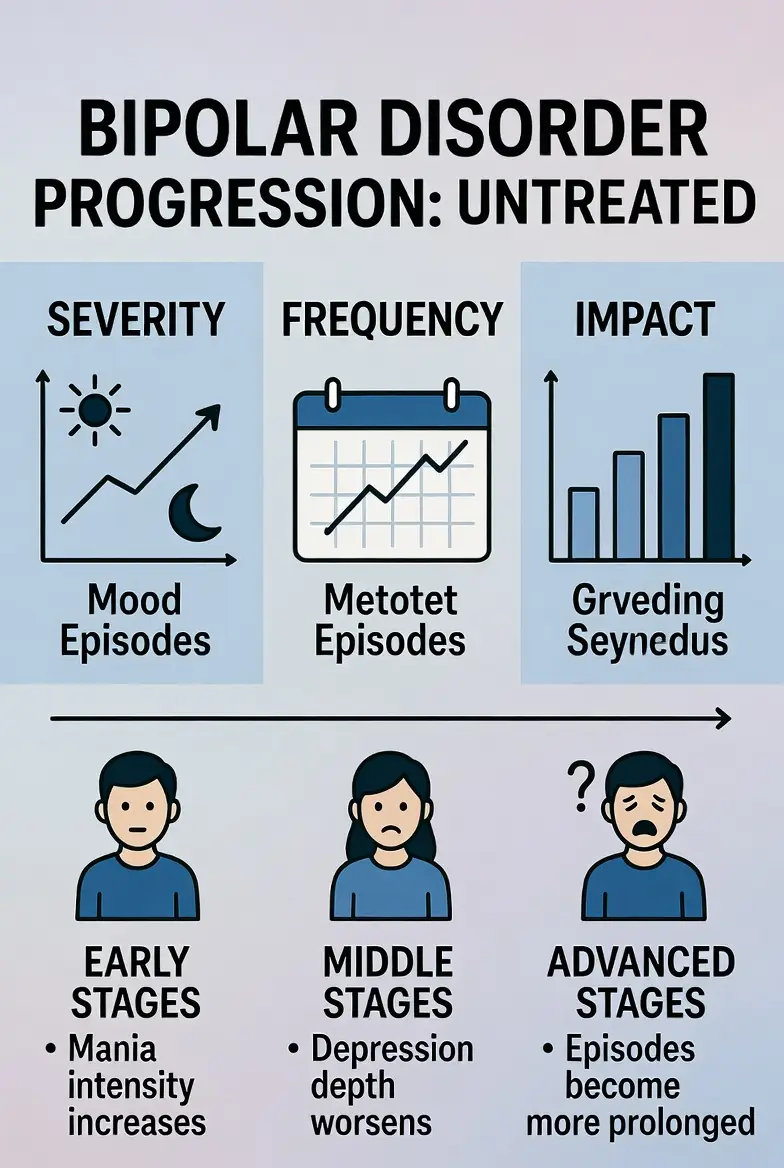
If left untreated, bipolar disorder does have a tendency to become more “organized” and frequent in its cycling—a process often referred to in psychiatry as the “kindling effect.” Without intervention, the brain becomes more sensitive to stress, and the intervals between episodes may shorten.
However, for those wondering if bipolar get worse with age if treated, the outlook is much more optimistic. Clinical data suggest that with consistent medication, therapy, and a structured lifestyle, the disorder can actually “mellow” for many. As individuals age, they often become more adept at recognizing their triggers, adhering to routines, and utilizing coping strategies that weren’t present in their 20s. Bipolar is episodic, not a linear, degenerative disease like Alzheimer’s.
Why People Say Bipolar Gets Worse With Age
There are legitimate biological and psychological reasons why some individuals experience an escalation of symptoms over time. Understanding why bipolar disorder gets worse with age for some requires looking at the “kindling model.”
The Kindling Effect
The “kindling” theory suggests that early episodes of mania or depression are usually triggered by significant life stressors (e.g., a breakup or job loss). However, each episode leaves a chemical “trace” in the brain. Over time, the brain becomes sensitized, and later episodes may trigger spontaneously without an external stressor. This is why early intervention is so critical.
Sleep and Circadian Rhythm Disruption
Bipolar disorder is fundamentally a disorder of the “body clock.” As we age, our sleep architecture naturally changes—we sleep more lightly and wake more often. Since sleep deprivation is the number one trigger for mania, the natural age-related decline in sleep quality can make symptom management more challenging.
Stress Accumulation and Substance Use
Decades of navigating a complex mood disorder can lead to “allostatic load”—the wear and tear on the body and brain from chronic stress. Additionally, if an individual has spent years using alcohol or drugs to self-medicate, the cumulative damage to the nervous system can make bipolar symptoms feel more severe in later life.
Does Bipolar Get Worse With Age Even If Treated?
A common fear among patients is: Does bipolar disorder get worse with age, even if treated? Many people worry that they will eventually develop “treatment resistance,” where the medications that worked in their 30s no longer hold the line in their 50s.
Medication Evolution
While it is true that your body’s metabolism changes with age—affecting how you process lithium, anticonvulsants, or antipsychotics—this does not mean the disorder is getting “stronger.” It simply means the treatment plan must evolve. Older adults may require different dosages or different classes of medication to account for changes in kidney or liver function.
Protective Factors of Long-term Treatment
Treatment is not just about suppressing symptoms; it is about neuroprotection. Consistent use of mood stabilizers (particularly lithium) has been shown to increase gray matter volume and protect the brain from the inflammatory “storms” associated with mood episodes. In this sense, a well-treated person in their 60s may have a more resilient brain than an untreated person in their 20s.
Bipolar 1 vs Bipolar 2: Does One Worsen More With Age?
When examining the progression of the two main types, the “worsening” often looks different.
Bipolar 1 Over Time
For those with bipolar 1, the primary risk as they age is the severity of manic episodes. If untreated, mania can become increasingly disorganized and may include more frequent psychotic features. However, Bipolar 1 patients often receive faster treatment because their symptoms are more “visible” and harder to ignore.
Bipolar 2 Over Time
Conversely, for bipolar 2, the “worsening” is usually measured by the “depression burden.” Research suggests that people with Bipolar 2 may spend more time in depressive or mixed states as they age. Because hypomania is often mistaken for high productivity, Bipolar 2 is frequently misdiagnosed for years, allowing the kindling effect to take hold before proper mood stabilizers are introduced.
| Feature | Bipolar 1 Progression | Bipolar 2 Progression |
| Primary Risk | Escalating Mania/Psychosis | Chronic, treatment-resistant depression |
| Episode Type | Discrete, intense episodes | Lingering, “smoldering” moods |
| Hospitalization | High risk during acute mania | Risk is usually linked to depressive despair |
Does Bipolar Get Worse in Your 20s, 30s, or Later Life?
The average age of bipolar onset is typically between 18 and 25. This stage of life is often when the disorder is most chaotic.
The Turbulent 20s and 30s
Bipolar often feels like it is “getting worse” in your 20s and 30s because this period is marked by high-stress life events: graduating from college, starting careers, and navigating complex romantic relationships. Hormonal shifts and lack of a settled routine exacerbate the underlying biological instability.
Bipolar in Men and Women Over 50
Interestingly, “late-onset” bipolar (first appearing after age 50) is rare and often prompts doctors to look for underlying medical issues, such as vascular changes. For men over 50 who have lived with the condition, symptoms may become more “irritable” rather than purely “manic.” For women, the transition through menopause can be a significant trigger for mood instability, requiring close coordination between a psychiatrist and a gynecologist.
Signs Bipolar Disorder Is Getting Worse
It is essential to distinguish between a temporary “flare-up” and a genuine progression of the illness. Signs bipolar is getting worse usually involve changes in the “pattern” rather than a single bad week.
- Decreased Inter-episode Stability: You find that the periods where you feel “normal” (euthymic) are becoming shorter and shorter.
- Increased Mixed Features: Instead of pure mania or pure depression, you experience “mixed episodes”—the energy and racing thoughts of mania combined with the hopelessness and agitation of depression.
- Loss of Insight: You find it harder to recognize when you are entering an episode, or you become more resistant to feedback from loved ones.
- Cognitive Fog: You notice increasing difficulty with “executive function”—memory, planning, and focus—that persists even when your mood is stable.
What Happens to Untreated Bipolar Disorder Over Time?
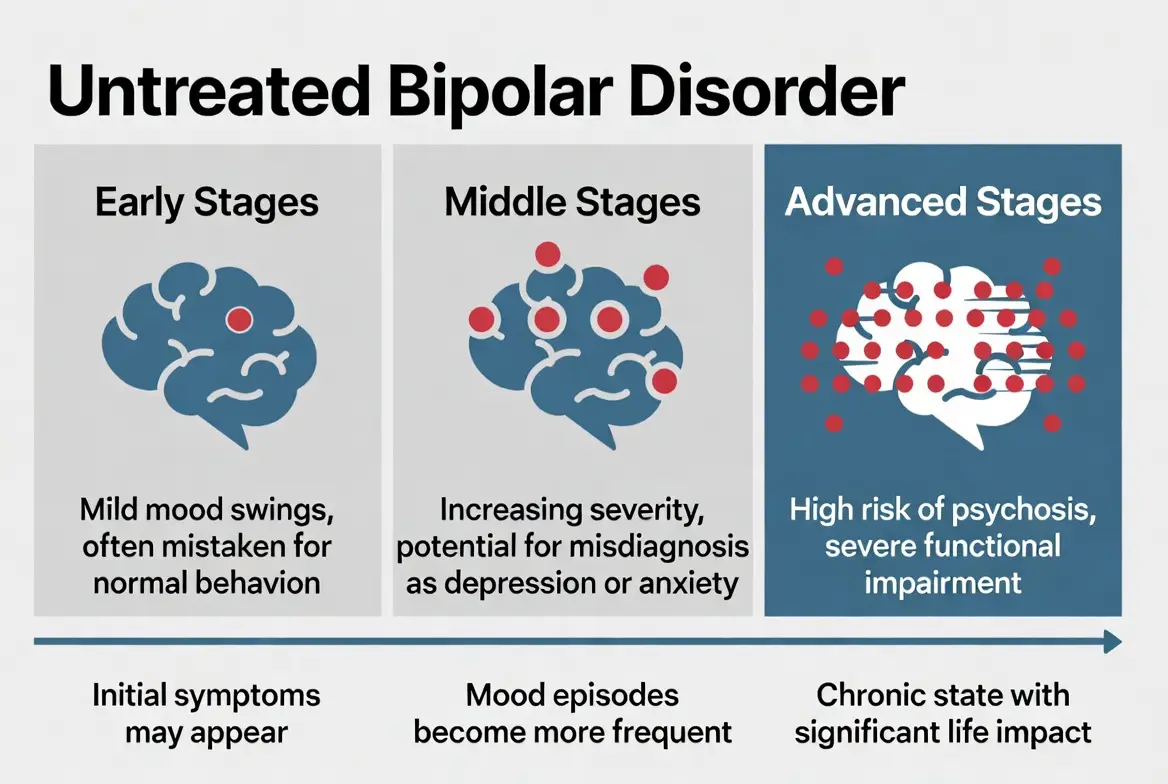
The question of what happens to untreated bipolar people is a sobering one. Because the brain is a “use it or lose it” organ, allowing the brain to repeatedly endure the toxic stress of high-cortisol depression and high-dopamine mania has physical consequences.
Functional Decline
Untreated episodes can lead to “cognitive scarring.” Each untreated manic episode may slightly damage the brain’s ability to regulate itself, leading to a decline in work performance and the ability to maintain social bonds.
Health and Life Expectancy
Untreated bipolar disorder is associated with higher rates of cardiovascular disease, diabetes, and obesity. This is partly due to the physiological stress of the disorder and partly due to “lifestyle drift”—the difficulty of maintaining exercise, diet, and doctor appointments when one’s mood is in constant flux. The life expectancy of untreated bipolar individuals is significantly lower than that of the general population, largely due to these co-occurring health issues and a higher risk of suicide.
Bipolar Life Expectancy: Facts, Charts, and Myths
Addressing the life expectancy of a person with bipolar disorder requires nuance. There is a widely cited statistic that bipolar disorder can shorten a lifespan by 10 to 20 years. However, this is a statistical average, not a personal destiny.
The Gap Explained
The “lifespan gap” is not caused by the brain “wearing out” from bipolar disorder itself. It is caused by:
- Late Diagnosis: Years of untreated symptoms damage the body.
- Comorbidities: High rates of smoking, sedentary behavior, and poor diet during depressive episodes.
- Suicide: Especially in the first few years following diagnosis.
Bipolar Life Expectancy Female vs. Male
Research indicates that women with bipolar disorder may face unique cardiovascular risks, particularly post-menopause. However, because women are statistically more likely to seek therapy and adhere to medication than men, they often mitigate some of the long-term risks associated with the disorder.
Is There an “End Stage” of Bipolar Disorder?
The term end-stage bipolar disorder is often used on internet forums, but it is not a formal medical diagnosis. It is a term used to describe a state where a person has experienced so many episodes that they seem to be in a constant state of “cycling” or have significant cognitive impairment.
Symptoms of “Advanced” Bipolar
When people speak of end-stage bipolar disorder symptoms, they are usually referring to:
- Permanent Cognitive Deficits: Struggles with memory and “executive function” that do not go away between episodes.
- Treatment Refractoriness: Difficulty finding a medication combination that provides total relief.
Crucial Point: Unlike “end-stage” heart or kidney disease, “advanced” bipolar is often reversible or manageable with modern treatments like ECT (Electroconvulsive Therapy), TMS (Transcranial Magnetic Stimulation), or newer medications like ketamine infusions. It is a state of “high severity,” not a terminal phase.
Does Bipolar Ever Go Away or Get Better With Age?
While it is important to be honest about the lifelong nature of the condition, it is equally important to highlight the “stability curve.” Does bipolar go away? No. But does bipolar get better with age? For many people, the answer is a resounding yes.
The Wisdom of Experience
By the time an individual reaches their 50s or 60s, they have often developed a “PhD in their own head.” They have survived dozens of cycles and have learned that the “voice” of depression is a liar and the “energy” of mania is a debt that must be paid.
This psychological resilience—combined with a more settled life (e.g., stable housing, grown children, or a long-term career)—often creates a “buffer” that makes the disorder much less disruptive than it was in youth.
Biological “Mellowing”
There is also a theory that as the brain’s natural dopamine levels gradually decline with age, the “intensity” of manic peaks may lessen. While this isn’t a cure, it can make the highs feel more like “agitation” and less like “destructive impulsivity,” making them easier to manage with lower doses of medication.
Reddit & Online Myths: “Does Bipolar Get Worse With Age?”
If you search does bipolar get worse with age reddit, you will find a mix of heartbreaking stories and hopeful advice. It is important to separate “anecdotal evidence” from “clinical evidence.”
What Reddit Gets Right
The community often accurately describes the “exhaustion” of living with the disorder for decades. Users frequently discuss “post-manic shame” and the difficulty of rebuilding a life in your 40s. These lived experiences are valid and reflect the real-world toll of the illness.
Where Myths Take Over
On forums, you may see claims that “everyone with bipolar eventually gets dementia” or “meds stop working after 20 years.” This is not supported by science. While bipolar disorder is associated with a slightly higher risk of cognitive decline, it is by no means a guarantee. Many people on Reddit who report “getting worse” are often those who are struggling with untreated symptoms or co-occurring issues like alcohol use.
What Aggravates Bipolar Disorder Over Time?
If you are noticing an escalation in symptoms, it is often due to external factors that aggravate bipolar disorder rather than a change in the illness itself.
- Circadian Rhythm Disruptions: Shift work, jet lag, or even staying up late on weekends can “shock” the bipolar brain.
- Hormonal Shifts: Menopause for women and decreasing testosterone for men can alter the baseline of mood stability.
- Inflammation: Chronic physical illnesses (like arthritis or heart disease) increase systemic inflammation, which is closely linked to worsening mood symptoms.
- Isolation: The “social rhythm” of seeing people and having a routine is a powerful stabilizer. Retirement can sometimes be a trigger because it removes that structure.
Lifestyle Factors That Help Stabilize Bipolar Disorder With Age
The goal of long-term management is to create a “boring” brain. Stability thrives on predictability.
The Power of Sleep
How many hours should a bipolar person sleep? Most experts recommend a strict 7 to 9 hours of sleep. More importantly, you should go to bed and wake up at the same time every single day—including weekends. In 2026, we view sleep not just as “rest,” but as the primary biological intervention for mood regulation.
Social Rhythm Therapy
Maintaining a “social rhythm” is one of the best things to calm a bipolar person. This means having consistent times for meals, exercise, and social interaction. This routine acts as an external “pacemaker” for a brain that has trouble regulating its own internal clock.
Old Age & Longevity: Can People With Bipolar Live Long Lives?
The answer is a definitive yes. The oldest person with bipolar disorder is not a single record-holder, but rather thousands of octogenarians and nonagenarians who have navigated the condition since before modern lithium was even discovered.
Successful Aging
“Successful aging” with bipolar disorder involves:
- Strict Metabolic Monitoring: Checking blood sugar, weight, and heart health regularly.
- Cognitive Engagement: Reading, puzzles, and social clubs to maintain “cognitive reserve.”
- Low Alcohol Intake: As the brain ages, it becomes less resilient to the neurotoxic effects of alcohol, which can destabilize mood.
Frequently Asked Questions
Does bipolar disorder get worse with age?
Not necessarily. It is not a degenerative disease. If treated, it often becomes more manageable. If untreated, the “kindling effect” can make episodes more frequent.
Does bipolar disorder get worse if untreated?
Yes. Untreated episodes can “scar” the brain, leading to more frequent cycling and potential cognitive decline over decades.
Can bipolar disorder improve later in life?
Yes. Many people report that their symptoms “mellow” in their 60s and 70s as they gain better coping skills and their biological energy levels stabilize.
Is bipolar progressive like dementia?
No. Dementia involves the permanent death of neurons. Bipolar disorder is an episodic disorder of brain function and regulation. With proper treatment, brain function can remain high throughout life.
Conclusion
The narrative that bipolar disorder gets worse with age is an old one, born from an era when we didn’t have the medications or the therapeutic tools we have today. In 2026, a diagnosis of bipolar disorder is not a sentence to a “fading” life.
Your later years can be your most stable years. By prioritizing sleep, staying connected to your medical team, and respecting the “rhythm” of your body, you can live a long, vibrant, and intellectually sharp life. The “worsening” is not in the cards—it’s in the care.
Authoritative References
- National Institute of Mental Health (NIMH): Bipolar Disorder Throughout the Lifespan
- American Psychiatric Association (APA): Aging and Mental Health Guidelines
- Journal of Clinical Psychiatry: The Kindling Hypothesis and Long-term Outcomes
- Mayo Clinic: Bipolar Disorder: Long-term Prognosis and Lifestyle
- International Society for Bipolar Disorders (ISBD): Global Guidelines for Older Adults with Bipolar Disorder

Related Posts



Subscribe to Our Newsletter
Get mental health tips, updates, and resources delivered to your inbox.
MORE from Author
Read More Watching someone you care about struggle with bipolar depression and anxiety can be heartbreaking. You may notice that they withdraw…
 In my practice as a clinical psychologist, I often observe that the difference between a patient who crumbles under pressure…
 We all have "up" days and "down" days. Perhaps you feel energized after a promotion or sluggish on a rainy…
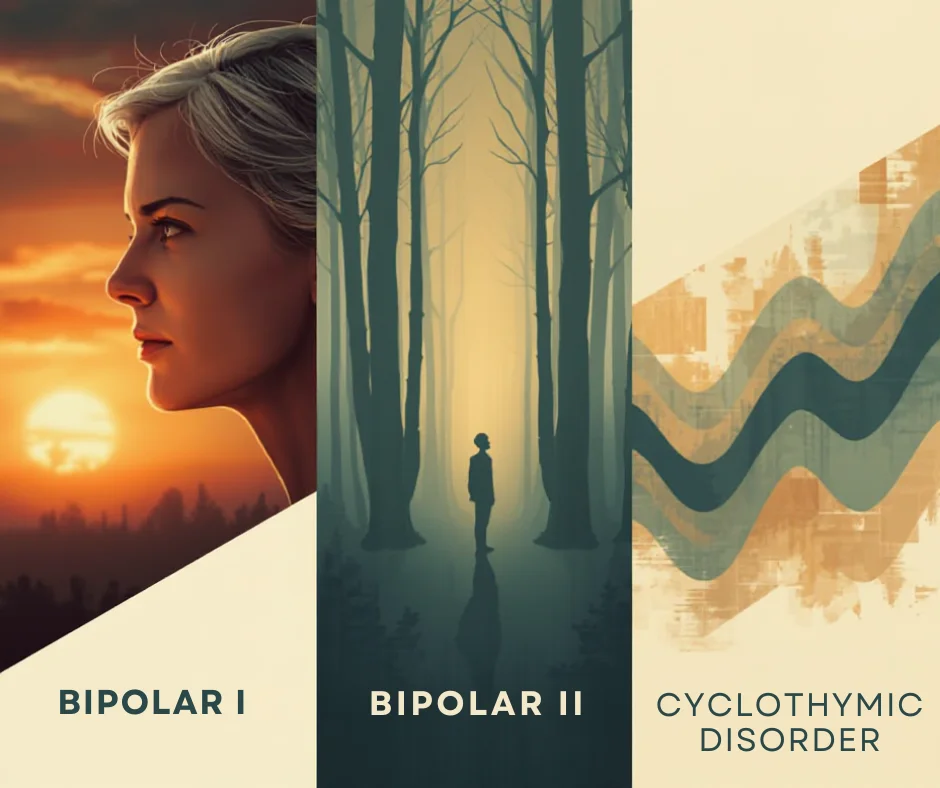 To define bipolar disorder accurately, we must look at it as a chronic mood dysregulation condition. In psychology and medicine,…
Are you looking for a Therapist?
Connect with qualified mental health professionals who understand
bipolar disorder, mood changes, and emotional challenges.
Private • Supportive • Confidential