
Can You Trust a Bipolar Person? Lying, Anger, Relationships & What’s Really Going On

Medically reviewed by Laura Athey Updated Date: February 26, 2026

Trust is the bedrock of any functioning relationship, but when a partner, friend, or family member lives with bipolar disorder, that bedrock can sometimes feel like shifting sand. If you find yourself asking, “Can you trust a bipolar person?”, you aren’t alone. It is a question born out of confusion, hurt, and the desire to understand why someone you care about occasionally acts in ways that seem wildly out of character.
To address this question directly: Yes, you can trust a person with bipolar disorder. However, trust in this context often requires a more nuanced understanding than it does in neurotypical relationships. Bipolar disorder is not a character flaw, nor is it synonymous with dishonesty. It is a chronic neurological condition characterized by significant shifts in mood, energy, and activity levels. These shifts—ranging from the soaring heights of mania to the paralyzing depths of depression—can temporarily impair judgment, memory, and impulse control.
The concern regarding trust usually doesn’t stem from the person’s baseline personality, but rather from the behaviors that emerge during acute episodes. Understanding where the illness ends and the person begins is the first step in building a relationship that is both compassionate and secure. In this guide, we will explore the intersection of bipolar symptoms and interpersonal trust, debunking myths while providing practical strategies for navigating the complexities of the disorder.
Can Bipolar People Be Trusted?
If you are looking for a quick scan of the reality of trust and bipolar disorder, here are the core facts:
- Trust is possible: The vast majority of people with bipolar disorder are deeply honest, empathetic, and reliable individuals when they are at their “baseline” (stable) mood.
- Episodes affect behavior: Trust issues often arise during manic or depressive episodes. During these times, a person may act impulsively or withdraw, which can look like dishonesty or unreliability.
- Right vs. Wrong: Does a bipolar person know right from wrong? Generally, yes. Bipolar disorder is a mood disorder, not a cognitive impairment that erases a person’s moral compass.
- Management is key: Trust is most stable when the person is actively engaged in treatment, including medication and therapy.
Trusting someone with bipolar disorder isn’t about ignoring the illness; it’s about trusting the person’s commitment to managing their health and trusting your own ability to set healthy boundaries.
What Bipolar Disorder Really Is: A Contextual Overview
To understand the problems with bipolar disorder regarding trust, we must first define the condition beyond the stereotypes. Bipolar disorder is a biological brain disorder that affects the neurotransmitters responsible for mood regulation.
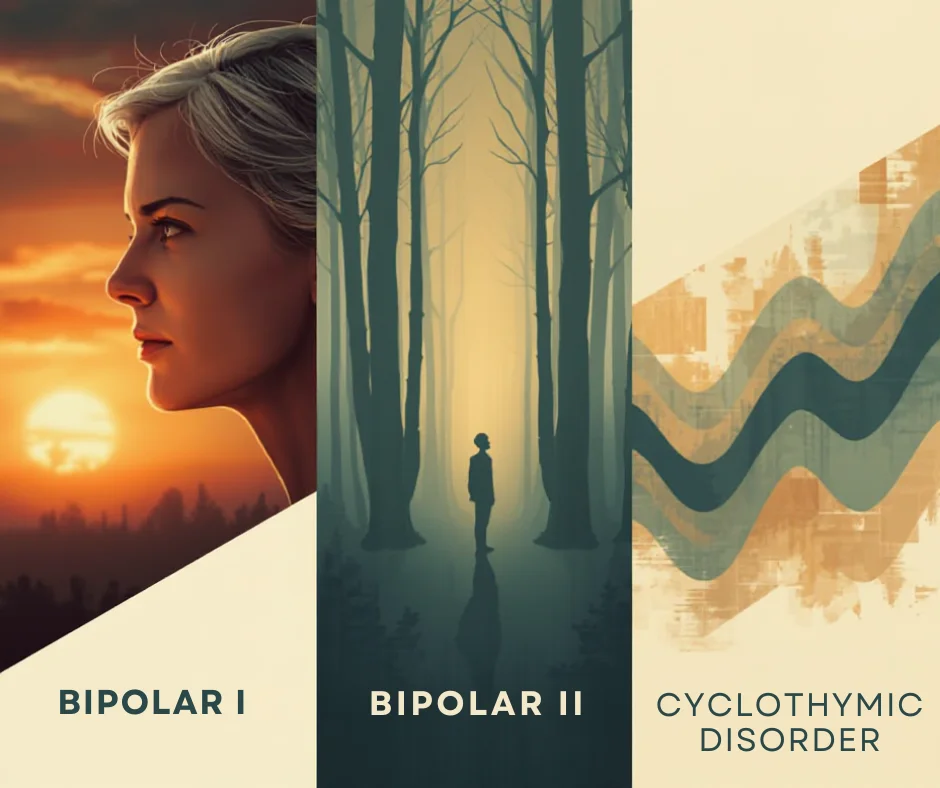
Bipolar I vs. Bipolar II
- Bipolar I: Defined by manic episodes that last at least seven days or are severe enough to require hospitalization. This can include psychosis (losing touch with reality).
- Bipolar II: Characterized by a pattern of depressive episodes and hypomanic episodes (a less severe form of mania). Hypomania can often be “high-functioning,” making it harder to detect.
Living with Bipolar Disorder
Living with bipolar disorder is an exercise in constant self-monitoring. It is a common misconception that people with this diagnosis are “unstable” 100% of the time. In reality, many individuals experience long periods of stability called euthymia. During these periods, bipolar disorder and happiness are not only possible but frequent. A well-managed individual can be a supportive partner, a dedicated employee, and a completely trustworthy confidant.
How a Person With Bipolar Thinks: During vs. Between Episodes
Understanding how a person with bipolar disorder thinks is the “Rosetta Stone” for rebuilding trust. Cognitive patterns shift dramatically depending on the person’s chemical state.
Thinking During Mania/Hypomania
In a manic state, the brain’s “reward system” is overactive, while the “brakes” (the prefrontal cortex) are underactive. A person might think:
- “I have a brilliant idea that cannot fail.”
- “I don’t need to tell my partner about this spending because I’ll make the money back tomorrow.”
- “Rules don’t apply to me right now because I feel invincible.” This isn’t a calculated plan to betray trust; it is a biological failure of impulse control.
Thinking During Depression
During depression, the internal narrative becomes one of shame and survival. A person might think:
- “I can’t answer that text because I’m a burden.”
- “If I tell them I didn’t go to work today, they’ll hate me, so I’ll just stay quiet.”
- “I don’t deserve their trust anyway.” Here, “dishonesty” is often a byproduct of avoidant coping mechanisms fueled by intense self-loathing.
Thinking Between Episodes
Between episodes, a person with bipolar disorder thinks much like anyone else. They are often acutely aware of the damage done during their “up” or “down” periods. This leads to what clinicians call “post-episode shame,” which can actually make a person more inclined to be honest and overcompensate to rebuild what was lost. Can a bipolar person seem normal? Yes, because they are normal; they simply have a condition that causes periodic, extreme fluctuations in their internal weather.
Bipolar and Lying: What’s Actually Happening?
One of the most painful aspects for loved ones is the perception of bipolar and excessive lying. It is vital to distinguish between a “malicious lie” and “symptomatic communication.”
Does a Bipolar Person Lie?
Yes, but the why matters.
- Impulsive Speech: During mania, thoughts move faster than the mouth. A person might make promises they genuinely believe they can keep in that millisecond, only to have the reality change moments later.
- Confabulation: In severe mania or psychosis, the brain may “fill in gaps” with false memories. The person isn’t lying; they are reporting what their distorted brain believes is true.
- The “Shame Shield”: After an episode, the person may omit details about their behavior because the reality is too painful to face.
- Avoidance: In depression, a person might say “I’m fine” or “I’ll be there” when they physically and mentally cannot. This is often a desperate attempt to maintain a facade of “seeming normal.”
Bipolar and manipulation are other frequent labels. True manipulation involves a cold, calculated intent to exploit. In bipolar disorder, “manipulative” behavior is usually a frantic, disorganized attempt to regulate an overwhelming emotion or to avoid an impending “crash.” Labeling it as “lying” often shuts down the communication needed to fix the underlying issue.
Bipolar Disorder and Manipulation: Myth vs. Reality
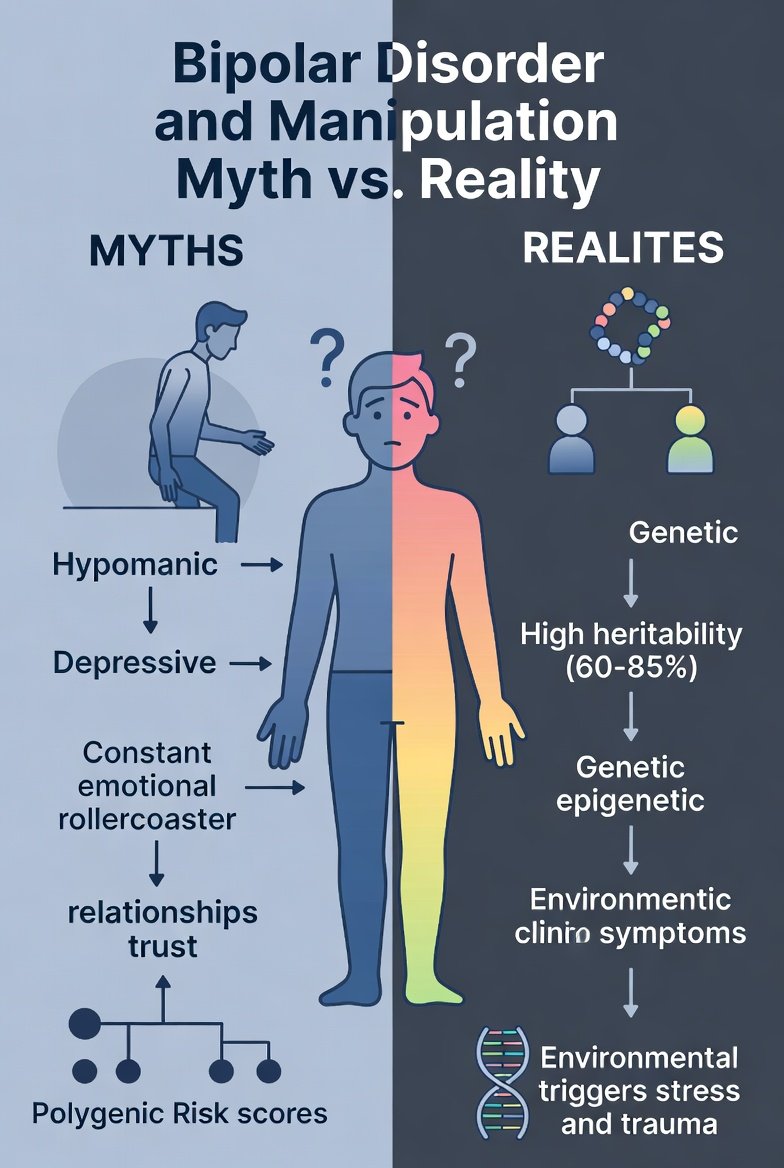
It is a common stigma that bipolar disorder makes someone a master manipulator. However, clinicians often argue that what looks like manipulation is actually emotional dysregulation.
When a person is in an episode, they may use “emotional outbursts” or “guilt-tripping” to get their needs met. The difference is that a manipulator seeks power; a person in a bipolar crisis seeks relief.
Red Flags to Watch For
While bipolar disorder explains a lot, it doesn’t explain everything. If a person is:
- Consistently dishonest even when stable.
- Using their diagnosis as a “get out of jail free” card to avoid accountability.
- Gaslighting you about your own reality. …these may be signs of a toxic personality trait or a different co-occurring disorder (like Narcissistic or Borderline Personality Disorder), rather than symptoms of bipolar disorder alone. Building trust requires recognizing when the illness is the driver and when the person needs to take responsibility for their choices.
Does a Bipolar Person Know Right From Wrong?
A central question in the legal and ethical debate around mental health is: Does a bipolar person know right from wrong? In almost all cases, the answer is yes. Bipolar disorder is not a deficit in morality. However, there is a massive gap between knowing what is right and having the impulse control to act on it.
During mania, a person may know that spending their rent money is “wrong,” but the chemical surge in their brain makes the “reward” of the purchase feel like a life-or-death necessity. It is like trying to drive a car with a stuck accelerator and failed brakes. You know you should stop, you want to stop, but the machine isn’t responding to your input.
Accountability in a bipolar relationship should look like this: Compassion for the struggle, but accountability for the management. You can forgive the symptom, but you must expect the person to commit to a treatment plan that prevents the “machine” from breaking down in the future.
Trust in Relationships With Bipolar Disorder
Building and maintaining trust when living with bipolar disorder requires a “team” mentality. In a standard relationship, trust is often assumed until it is broken. In a bipolar relationship, trust is often something that must be consciously maintained through a series of “safety checks” and transparent communication.
Trust During Stability vs. Episodes
The most important thing to realize is that trust is not a static line; it is a fluctuating graph. When your partner is stable (euthymic), they are likely the person you fell in love with—reliable and honest. When an episode begins, the “trust battery” starts to drain.
- The “Early Warning” System: Trust is built when the person with bipolar disorder can say, “I feel a bit ‘up’ today; can you keep an eye on my spending?”
- Medication Adherence: For many partners, the ultimate test of trust is whether the person takes their medication. Refusing treatment is often where the deepest trust fractures occur.
Repairing the Break
If trust has been broken due to an episode (e.g., infidelity during mania or job loss during depression), it can be repaired. However, repair requires the bipolar person to move past their shame and the partner to move past their resentment. This often requires professional mediation through a therapist who understands mood disorders.
When a Bipolar Person Ignores You
Few things damage trust as quickly as silence. When a bipolar person ignores you, it feels like a personal rejection or a sign of “manipulation.” However, the reality is usually much more internal.
The Depressive Shutdown
In a depressive cycle, the brain undergoes “psychomotor retardation.” Thinking, speaking, and even moving feel like wading through chest-high mud. They aren’t ignoring your text because they don’t care; they are ignoring it because the cognitive energy required to formulate a reply feels physically impossible.
The Manic “Tunnel Vision”
Conversely, in mania, the brain is so hyper-focused on its own racing thoughts or a specific “mission” that everything else—including people—fades into the background. What happens when you ignore a bipolar person as a “punishment”? It often goes unnoticed during mania or deepens the suicidal despair during depression. Stonewalling is rarely an effective tool; instead, clear, low-pressure check-ins are better.
Should You Leave a Bipolar Person Alone?
Knowing whether you should leave a bipolar person alone depends entirely on the “why” behind their behavior.
- Leave them alone when: They are feeling slightly overwhelmed and have specifically asked for 30 minutes of “decompression time” to prevent a meltdown.
- Do NOT leave them alone when: They are in a deep depressive episode and mentioning feelings of worthlessness, or when they are in a manic state and planning to leave the house to engage in high-risk behavior.
Space can be a tool for regulation, but it can also be a vacuum for dangerous thoughts. Always establish a “safety word” or a “quiet signal” during stable times so you know when space is helpful and when it’s a red flag.
How to Deal With Someone Who Is Bipolar and Angry
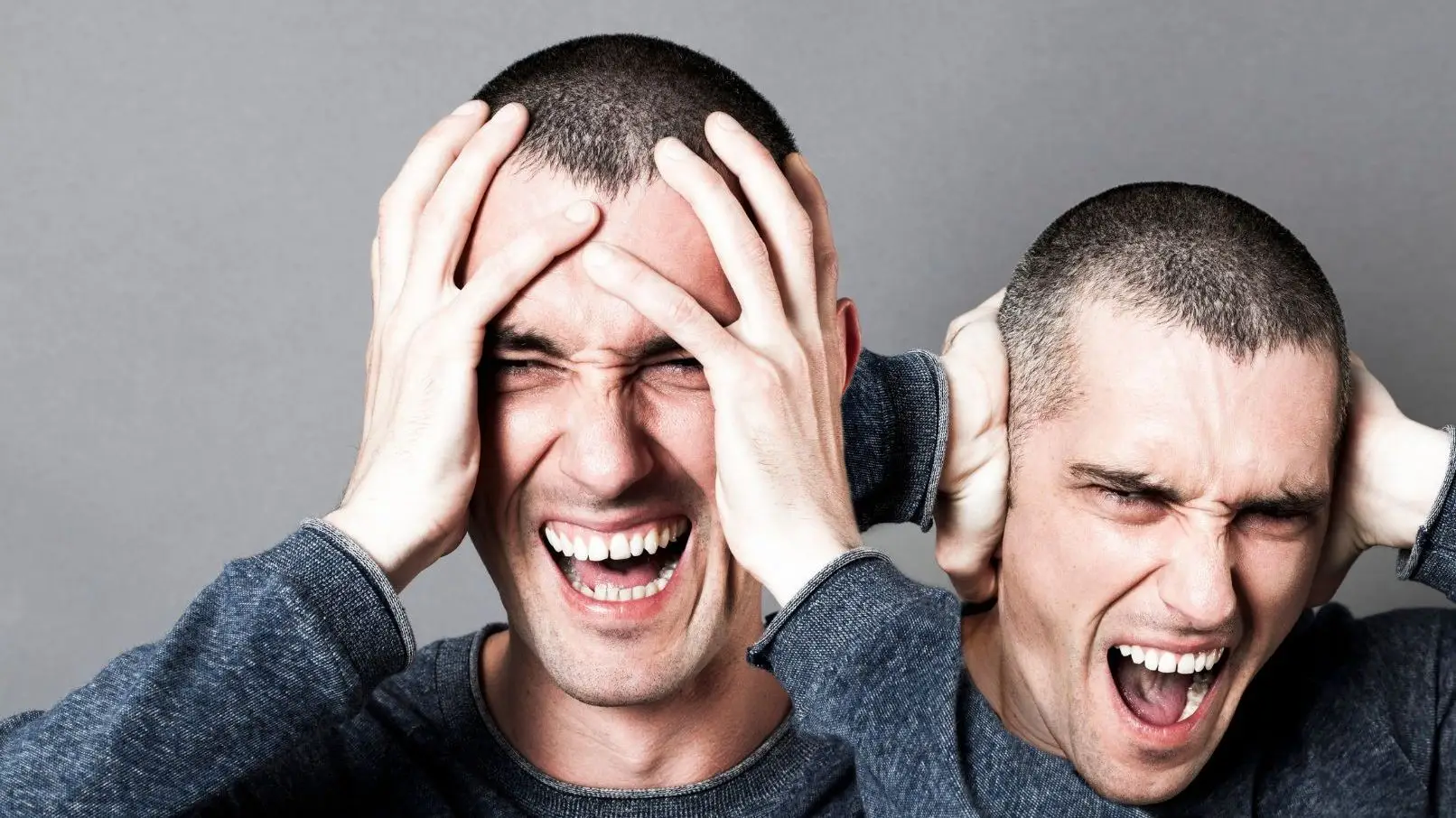
How to deal with someone who is bipolar and angry is perhaps the most requested advice from caregivers. Bipolar “rage” is a specific phenomenon where irritability becomes so intense that it feels like a physical force.
Practical Strategies for the Heat of the Moment
- Lower Your Volume: As they get louder, you should get quieter. This forces their brain to “reach” for your voice, which can occasionally break the cycle of shouting.
- Avoid “Why” Questions: Their “why” is chemical, not logical. Asking “Why are you being like this?” only increases their frustration.
- The “20-Foot” Rule: If they are pacing or agitated, give them physical space. Do not corner them or block doorways.
- Disengage for Safety: If the anger turns into verbal abuse, say: “I want to hear what you have to say, but I cannot listen when I am being yelled at. I’m going for a walk, and we can try again in an hour.”
Arguing With a Bipolar Person: What Helps, What Backfires
Arguing with a bipolar person during an episode is like trying to put out a fire with gasoline. Because their emotional processing is distorted, they cannot “lose” an argument gracefully.
- What Backfires: Bringing up past mistakes, using “you always” language, or trying to use logic to debunk a manic delusion.
- What Helps: Validating the emotion without validating the behavior. “I can see you’re incredibly frustrated right now” is more effective than “You’re making no sense.”
Bipolar Disorder and Happiness: Is It Possible?
After reading about rage and lying, it’s easy to feel hopeless. But the long-term prognosis for bipolar disorder and happiness is actually very high. With the right combination of:
- Lithium or Mood Stabilizers
- Cognitive Behavioral Therapy (CBT)
- Consistent Sleep Patterns
- A Supportive Partner
Most people with bipolar disorder lead fulfilling, creative, and “boring” (in a good way) lives. The illness is a part of their story, but it doesn’t have to be the whole book.
When Trust Issues Aren’t About Bipolar Disorder
It is vital to distinguish between a “symptom” and “abuse.” If your partner is physically harming you, gaslighting you to the point where you doubt your sanity, or repeatedly cheating and blaming it on “mania” without ever seeking help, this is not just bipolar disorder. Mental illness is an explanation, but it is not an excuse for perpetual harm. If the person refuses to get help and the “episodes” have become a permanent way of life, you must prioritize your own safety and mental health.
The Cognitive Science of “Bipolar Memory” and Trust
One of the most significant yet least discussed obstacles to trust is the phenomenon of state-dependent memory. This is a biological reality that often gets mistaken for “gaslighting” or “lying.”
Understanding State-Dependent Memory
When a person is in a manic or depressive episode, their brain encodes information differently. When they return to a stable state, they may literally struggle to recall exactly what they said or did during the peak of the episode.
- The “Blackout” Effect: In severe mania, the brain is moving so fast that it fails to move short-term memories into long-term storage.
- The Perception: To a partner, it looks like the person is lying when they say, “I don’t remember saying that.”
- The Reality: Their brain failed to record the data.
To bridge this gap, many couples find success in using a “joint journal” or recording important conversations during episodes. This provides an objective “third-party” record that allows the person with bipolar disorder to see the reality of their behavior without feeling like they are being attacked by their partner’s “version” of events.
Managing the “Manic Spend”
Financial betrayal is one of the most common reasons people ask whether bipolar people can be trusted. During mania, the brain’s executive function—the part that understands the future consequences of spending—is essentially offline.
Proactive Financial Safety Nets
Trust in finances isn’t built by “hoping” he won’t spend; it’s built by creating systems that make it impossible to do so during an episode.
- Dual-Authorization Accounts: Large transfers require both partners to sign off.
- Low-Limit Credit Cards: Using “buffer” cards with small limits for daily spending.
- The “Cooling Off” Agreement: A written contract stating that any purchase over $100 requires a 24-hour waiting period during which both partners must agree.
By implementing these, you aren’t “controlling” the person; you are protecting the family’s security from the illness. When the person is stable, they will likely thank you for having these guardrails in place.
The “Hypersexuality” Hurdle: Trust and Infidelity
We must address the most difficult trust topic: hypersexuality during mania. For many, this is the ultimate deal-breaker.
Is it Cheating or a Symptom?
From a clinical perspective, manic hypersexuality is an intense, biological drive that can feel as urgent as the need for oxygen. However, from a relational perspective, it is a violation of the monogamy agreement.
- Accountability: Having bipolar disorder does not give someone a “license” to cheat.
- The Difference: In “standard” infidelity, there is often a desire for a new relationship or a dissatisfaction with the current one. In “bipolar infidelity,” it is often a chaotic, impulsive act with no emotional attachment, frequently followed by intense horror and regret once the mania subsides.
Building trust after such an event requires the person with bipolar disorder to admit that their illness makes them high-risk and to agree to radical transparency (such as sharing phone locations or passwords) during times when their mood starts to climb.
The Role of Anosognosia in Trust
A major reason trust breaks down is anosognosia—a physiological condition where a person is genuinely unable to see that they are ill. About 50% of people with bipolar disorder experience this to some degree.
When your partner insists they are “totally fine” while they are clearly spiraling, they aren’t “lying” to you. They are experiencing a brain malfunction that prevents self-awareness. Trusting a person with anosognosia requires trusting the external evidence (sleep logs, bank statements) over their internal reporting.
Frequently Asked Questions
To provide a quick reference for those in the midst of a relationship crisis, here are the most common questions regarding trust, accountability, and the “bipolar mind.”
Can you trust a bipolar person?
Yes, but with a caveat: you must trust the stability of their treatment plan as much as the person. When a person is euthymic (stable), they are as trustworthy as any neurotypical person. However, during active mania or depression, their symptoms can temporarily impair their ability to act on that trustworthiness. Trust is highest when there is a shared commitment to medication, therapy, and routine.
Does a bipolar person lie on purpose?
Rarely for the sake of deception. Most “lies” in bipolar disorder are either impulsive speech (making promises the manic brain thinks it can keep), confabulation (the brain filling in memory gaps during psychosis), or avoidance (hiding symptoms out of intense shame). If the lying persists during stable periods, it may be a character trait rather than a symptom of the disorder.
What is the “Bipolar Discard”?
This is a term often used in online communities to describe when a person in a manic or depressive episode suddenly ends a relationship or “ignores” their partner. While it feels like a cold, calculated betrayal of trust, it is usually a result of emotional dysregulation or a desperate attempt to “reset” their environment to stop the internal pain of an episode.
Does a bipolar person know right from wrong?
Yes. Bipolar disorder does not erase a person’s moral compass. However, it significantly impairs executive function—the ability to stop an impulse even when you know it is wrong. They may feel a profound sense of “wrongness” while simultaneously feeling powerless to stop the biological surge driving their actions.
What triggers “Bipolar Rage”?
Bipolar anger is often triggered by overstimulation, lack of sleep, or perceived boundaries during a manic or hypomanic phase. Because the amygdala (the brain’s emotional center) is hyper-reactive, a small disagreement can feel like a life-or-death threat, leading to an explosive “fight” response.
Conclusion
The question of whether you can trust a bipolar person is deeply personal, and there is no one-size-fits-all answer. Trust is not a gift you give someone out of pity for their illness; it is a bridge built by two people working toward a common goal.
In a healthy bipolar relationship, trust is a living document. It requires the person with the diagnosis to be radically transparent about their “internal weather”—admitting when they feel the first spark of mania or the first shadow of depression. In return, it requires the partner to be a “safe harbor”—someone who can hear those admissions without immediately jumping to judgment or control.
Living with bipolar disorder is a marathon. There will be miles where the pace is easy, and the trust is high, and there will be miles that are uphill and agonizing. But for many couples, navigating these challenges together creates a level of intimacy and resilience that few other relationships ever achieve. Trust is possible—it just looks a little different when it’s built on the solid ground of truth, treatment, and mutual respect.
Authoritative References
1. National Institute of Mental Health (NIMH)
2. National Alliance on Mental Illness (NAMI)
3. Depression and Bipolar Support Alliance (DBSA)
4. Psychology Today –The Bipolar Mind
5. Mayo Clinic –Bipolar Treatment and Relationships


Subscribe to Our Newsletter
Get mental health tips, updates, and resources delivered to your inbox.
MORE from Author
Read More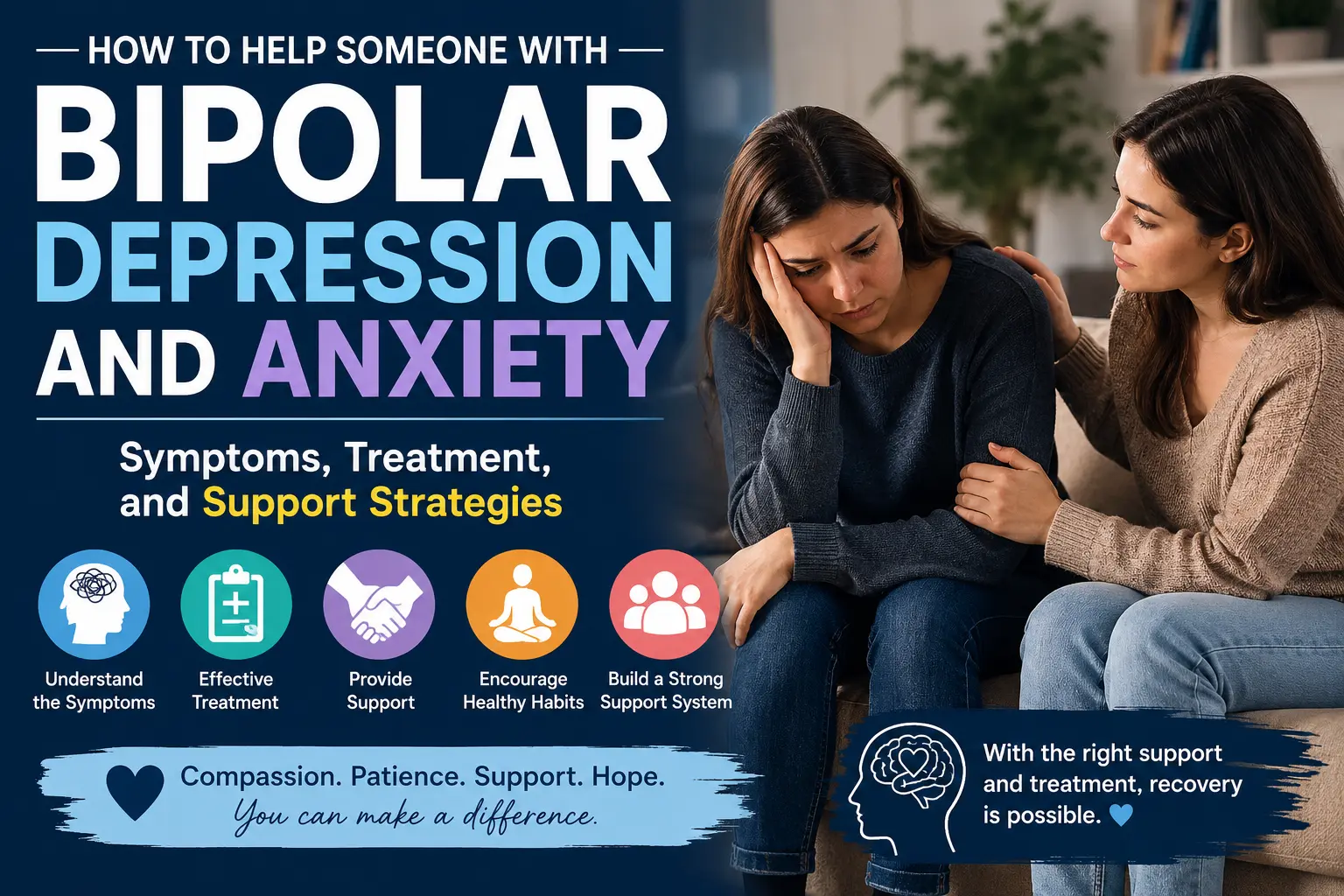 Watching someone you care about struggle with bipolar depression and anxiety can be heartbreaking. You may notice that they withdraw…
 In my practice as a clinical psychologist, I often observe that the difference between a patient who crumbles under pressure…
 We all have "up" days and "down" days. Perhaps you feel energized after a promotion or sluggish on a rainy…
 To define bipolar disorder accurately, we must look at it as a chronic mood dysregulation condition. In psychology and medicine,…
Are you looking for a Therapist?
Connect with qualified mental health professionals who understand
bipolar disorder, mood changes, and emotional challenges.
Private • Supportive • Confidential