
Discouraged Borderline Personality Disorder (Quiet BPD): Symptoms, Causes, Treatment & Real-Life Coping

Medically reviewed by Bipolar Admin Updated Date: February 27, 2026
In my practice, I often meet individuals who feel like “imposters” in the world of mental health. They read about Borderline Personality Disorder (BPD) and see descriptions of “explosive anger” or “impulsivity.” Yet, that doesn’t fit their experience. These patients are the ones living with Discouraged Borderline Personality Disorder.
Commonly known as “Quiet BPD,” this presentation involves a heavy “internalizing” of symptoms. Instead of directing their intense emotions toward others, they turn that fire inward. This leads to a cycle of profound self-loathing and silent suffering.
Most people with this subtype appear high-functioning to the outside world. They hold steady jobs and maintain a stoic exterior. However, underneath that mask, they struggle with a crushing fear of disappointment and rejection. They don’t want to “make a scene,” so they implode rather than explode.
Is “Discouraged BPD” an Official Diagnosis?
Technically, the DSM-5 (Diagnostic and Statistical Manual of Mental Disorders) does not list “Discouraged” as a separate diagnosis. It only lists the nine core criteria for BPD. To receive a diagnosis, you must meet at least five of those criteria.
However, the late psychologist Theodore Millon identified four distinct subtypes of BPD, including the “Discouraged” type. Millon’s model helps clinicians understand why two people with the same diagnosis can act so differently.
Why do we still use these subtype labels? In my clinical experience, it helps patients feel seen. Many people with the quiet type go undiagnosed for years. They are often misdiagnosed with just depression or social anxiety because their BPD symptoms aren’t “loud” enough for standard screening.
How It Differs From Classic BPD
The primary difference lies in the direction of the emotional energy. In “classic” BPD, symptoms are often externalizing. This might look like a heated argument or visible recklessness.
In Discouraged BPD, the symptoms are internalizing. If a friend cancels plans, a person with classic BPD might lash out in anger. A person with the discouraged subtype will likely assume they are boring or unlovable. They won’t say a word to the friend, but they might spend the night in a dark spiral of shame.
The 4 Types of Borderline Personality Disorder
To understand where the discouraged type fits, we should look at Millon’s full framework. Each type reflects a different way of coping with the core BPD instability.
| Subtype | Primary Coping Style | Outward Behavior |
| Discouraged | Internalizing / Withdrawal | Pliant, somber, quiet, self-shaming. |
| Impulsive | Acting Out / Risk-taking | Thrill-seeking, reckless, energetic. |
| Petulant | Passive-Aggressive | Defiant, moody, hard to please. |
| Self-Destructive | Self-Harm / Self-Sabotage | Risky behaviors, inward-facing anger. |
Quiet BPD vs Avoidant Personality Disorder
Distinguishing between these two can be tricky. Both involve social withdrawal and a fear of rejection. However, the attachment dynamics differ.
Those with Avoidant Personality Disorder (AvPD) generally feel “empty” or “less than” others from a distance. Those with Discouraged BPD experience an intense, painful longing for closeness that is constantly interrupted by a fear of abandonment. The BPD internal world is much more volatile, involving rapid shifts in how they view themselves.
Discouraged Borderline Personality Disorder Symptoms
When we discuss the symptoms of the discouraged subtype, we have to look past the surface. This is the most “invisible” form of the disorder.
Core Emotional Patterns
The bedrock of this condition is chronic shame. In my clinical work, I’ve found that patients with this subtype view their emotions as “wrong” or “dangerous.” This leads to:
- Self-Blame: They take responsibility for every social hiccup.
- Fear of Abandonment: This isn’t just a worry; it is a visceral, body-based panic.
- Internalized Anger: They feel the same rage as any other BPD patient, but they direct it at their own character.
11 Hidden Signs of Quiet Borderline Personality Disorder
If you suspect you or a loved one has this subtype, look for these internalized signs:
- People-pleasing to an extreme degree to avoid conflict.
- Social withdrawal when feeling overwhelmed or “too much.”
- Self-harm that is often hidden or non-visible (like bruising or scratching).
- Dissociation—feeling numb or “outside” your body during stress.
- A “chameleon” personality—changing your interests to match others.
- Chronic feelings of emptiness that never quite go away.
- High sensitivity to tone of voice or facial expressions.
- Internalized splitting—seeing yourself as “all bad” while others are “all good.”
- Silent treatment used as a defense mechanism when hurt.
- Obsessive overthinking of past social interactions.
- Frequent “shame spirals” that last for hours or days.
Clinical Insight: The Sleep-Shame Connection
In my practice, I’ve noticed a direct link between circadian rhythms and emotional regulation in BPD. When a patient’s sleep hygiene slips, their “prefrontal cortex”—the brain’s logic center—weakens. This makes them much more vulnerable to a shame spiral. I always tell my patients: “You can’t logic your way out of a crisis if your brain is sleep-deprived.” Fixing sleep is often our first step toward emotional stability.
What a “BPD Spiral” Looks Like
A spiral for a “quiet” individual is often a lonely experience. It usually begins with a trigger, such as a slow text response. This triggers a cognitive distortion (e.g., “They hate me”).
Instead of calling the person, the individual experiences emotional flooding. Their heart races, and their thoughts turn dark. Because they cannot vent this outward, they fall into withdrawal. They may stay in bed for days, convinced that the world is better off without them.
Why Do People With BPD Say Hurtful Things?
Even the discouraged type may occasionally lash out, though it is rarer. When it happens, it is usually a shame-defense response.
When someone feels an intense attachment panic, their “fight or flight” system takes over. They aren’t trying to be mean; they are trying to protect themselves from a perceived threat of rejection. This is often followed by intense guilt, which further fuels the discouraged cycle.
Causes and Risk Factors
Why does one person become “impulsive” while another becomes “discouraged”? The answer lies in a complex mix of nature and nurture.
Attachment Trauma
The way we bond with our primary caregivers creates a “blueprint” for future relationships. Many people with Discouraged BPD grew up with anxious-avoidant attachment. They learned that showing big emotions was “bad” or would drive people away. As a result, they learned to hide their pain to stay “safe.”
Childhood Emotional Invalidation
This is perhaps the biggest factor. If a child is told “You’re too sensitive” or “Stop crying for no reason,” they stop trusting their own feelings. This emotional invalidation forces the child to turn inward. They begin to believe that their internal world is shameful, which is the seed of the discouraged subtype.
Genetic & Neurobiological Factors
BPD is approximately 40% heritable. Beyond genetics, we see differences in neuroplasticity and brain structure. Specifically, the amygdala (the brain’s alarm system) is often hyper-reactive, while the prefrontal cortex (the brake system) is under-active.
Comorbid Conditions
It is rare to find BPD alone. Most of my patients also navigate:
- Depression: The constant self-loathing often leads to Major Depressive Disorder.
- PTSD/C-PTSD: Many have a history of prolonged trauma.
- ADHD: Problems with executive function can make emotional regulation even harder.
How Is Discouraged BPD Diagnosed?
Getting a clear diagnosis is the first step toward reclaiming your life. Because the discouraged type is so internal, you must advocate for yourself during the process.
Who Diagnoses Borderline Personality Disorder?
In the United States, several types of professionals can provide a formal diagnosis. I usually recommend a Clinical Psychologist (PhD/PsyD) or a Board-Certified Psychiatrist (MD).
Psychologists excel at detailed personality testing. Psychiatrists are medical doctors who can rule out physical causes for your symptoms. Licensed Clinical Social Workers (LCSWs) also provide excellent diagnostic support in many community settings.
Are There Lab Tests for BPD?
Currently, there are no blood tests or brain scans that “prove” you have BPD. However, a doctor might order labs to check your thyroid or vitamin levels.
Sometimes, low Vitamin D or B12 can mimic the “heavy” fatigue of discouraged BPD. We call this rule-out testing. It ensures we aren’t treating a physical deficiency with talk therapy alone.
Discouraged Borderline Personality Disorder Test (What to Know)
You might find “BPD quizzes” online. While these are helpful for self-reflection, they are not diagnostic tools.
Clinicians use the SCID-5-PD, which is a structured clinical interview. We also use personality inventories like the MMPI. These tests look for long-term patterns rather than just how you feel today.
Treatment for Discouraged Borderline Personality Disorder
Treatment is not about “fixing” your personality. It is about building a “life worth living,” as DBT founder Marsha Linehan famously said.
Dialectical Behavior Therapy (Gold Standard)
DBT is the most researched treatment for BPD. It teaches four specific skill modules:
- Mindfulness: Learning to stay in the present moment.
- Distress Tolerance: How to survive a crisis without making it worse.
- Emotion Regulation: Understanding and changing your emotional responses.
- Interpersonal Effectiveness: Learning to ask for what you need and set boundaries.
Neurobiologically, DBT helps strengthen the connection between your amygdala and your prefrontal cortex. This is essentially “brain training” that improves your executive function.
Mentalization-Based Therapy (MBT)
This therapy helps you “think about thinking.” People with discouraged BPD often misread others’ intentions. If a partner is quiet, you might think, “They are planning to leave me.” MBT helps you pause and consider other possibilities, like “Maybe they just had a hard day at work.”
Schema Therapy
This approach targets deep-seated “schemas” or life patterns. If you have a “Defectiveness/Shame” schema, you feel inherently broken. Schema therapy uses “limited reparenting” to help you heal those childhood wounds.
Medication for Discouraged BPD
There is currently no FDA-approved medication specifically for BPD. However, we often use medications to manage specific symptoms.
| Medication Category | Common Examples | Target Symptom | Potential Side Effects |
| SSRIs/SNRIs | Prozac, Zoloft | Depression, Anxiety | Nausea, sleep changes, libido loss. |
| Mood Stabilizers | Lamictal, Lithium | Emotional lability | Dizziness, rash (rare), thirst. |
| Antipsychotics | Abilify, Seroquel | Dissociation, paranoia | Drowsiness, weight gain. |
How to Stop a BPD Spiral (Step-by-Step)
If you feel yourself slipping into a “Quiet BPD” implosion, try this TIPP skill from DBT:
- Temperature: Splash ice-cold water on your face. This triggers the “mammalian dive reflex,” which instantly slows your heart rate.
- Intense Exercise: Do jumping jacks for 60 seconds to burn off the “shame energy.”
- Paced Breathing: Breathe in for 4 seconds, hold for 2, and out for 6.
- Paired Muscle Relaxation: Tense and release your muscles one by one.
How to Cope With Discouraged BPD in Daily Life
Relationship Strategies
Communication is the hardest part of the discouraged type. Because you fear being “too much,” you often say nothing.
Try using “I” statements. Instead of disappearing for three days, try texting: “I’m feeling a bit overwhelmed and need some quiet time. I’ll check in tomorrow.” This prevents the “abandonment” cycle for both you and your partner.
Workplace Functioning
Many “quiet” types are perfectionists. This leads to burnout. Practice radical acceptance—the idea that you can’t control everything. Setting small, realistic goals can help prevent the “all-or-nothing” thinking that leads to workplace spirals.
Self-Regulation Tools
In my practice, I suggest keeping a “Sensory Kit.” This might include a weighted blanket, a specific calming scent (like lavender), and a playlist of grounding music. These tools help engage the parasympathetic nervous system to calm your body down.
Does BPD Qualify for Disability?
Yes, but it is a rigorous process. In the United States, the Social Security Administration (SSA) looks at “Functional Impairment.”
Social Security Criteria (US)
You must prove that your BPD prevents you from doing “Substantial Gainful Activity.” This means you cannot work any job, not just your current one.
Documentation Needed
You will need years of records from your psychiatrist and therapist. The SSA looks for evidence of:
- Inability to interact with others appropriately.
- Inability to manage yourself or concentrate.
- Frequent hospitalizations or “higher level of care” requirements.
Case Example: “Elena” (Clinical Composite)
Elena, a 32-year-old librarian, came to me for “treatment-resistant depression.” She was polite, punctual, and highly successful. However, she admitted that every time her boss gave her feedback, she went home and scratched her arms in secret, convinced she was a failure.
Internalized BPD Presentation
Elena didn’t scream or break things. She vanished. If she felt hurt by a friend, she would block them and delete her social media, only to regret it and feel intense shame later. She met 6 of the 9 BPD criteria, but her symptoms were entirely hidden.
Treatment Progress Over 12 Months
We started with twice-weekly DBT. Elena learned to identify her “shame-o-meter.” Instead of scratching, she began using ice packs (Temperature) to calm her nervous system. We worked on neuroplasticity by practicing new ways to talk to herself.
Lessons Learned
After a year, Elena told me: “I used to think I was just a bad person. Now I realize I just have a very sensitive alarm system.” She still feels the “quiet” BPD urges, but she no longer acts on them.
Frequently Asked Questions
Is discouraged BPD the same as quiet BPD?
Yes. These terms describe the same pattern of internalizing emotional pain and directing symptoms inward rather than outward.
What are the 4 types of BPD?
According to Theodore Millon, the four types are Discouraged (Quiet), Impulsive, Petulant, and Self-Destructive. Each represents a different coping style.
Can discouraged BPD be cured?
While “cure” is a strong word, BPD has a high rate of remission. With consistent therapy like DBT, many people no longer meet the diagnostic criteria after a few years.
Is BPD genetic?
Studies suggest a significant genetic component, with heritability rates around 40%. Environmental factors, like childhood trauma, usually trigger the onset.
Can people with BPD have healthy relationships?
Absolutely. With therapy and self-awareness, individuals
Authoritative References
- National Institute of Mental Health (NIMH): Borderline Personality Disorder
- National Alliance on Mental Illness (NAMI): Borderline Personality Disorder Overview
- Mayo Clinic: BPD Diagnosis and Treatment Guidelines
- Substance Abuse and Mental Health Services Administration (SAMHSA): Understanding BPD and Co-occurring Disorders
- American Psychiatric Association (APA): Expert Q&A on Personality Disorders

Related Posts






Subscribe to Our Newsletter
Get mental health tips, updates, and resources delivered to your inbox.
MORE from Author
Read More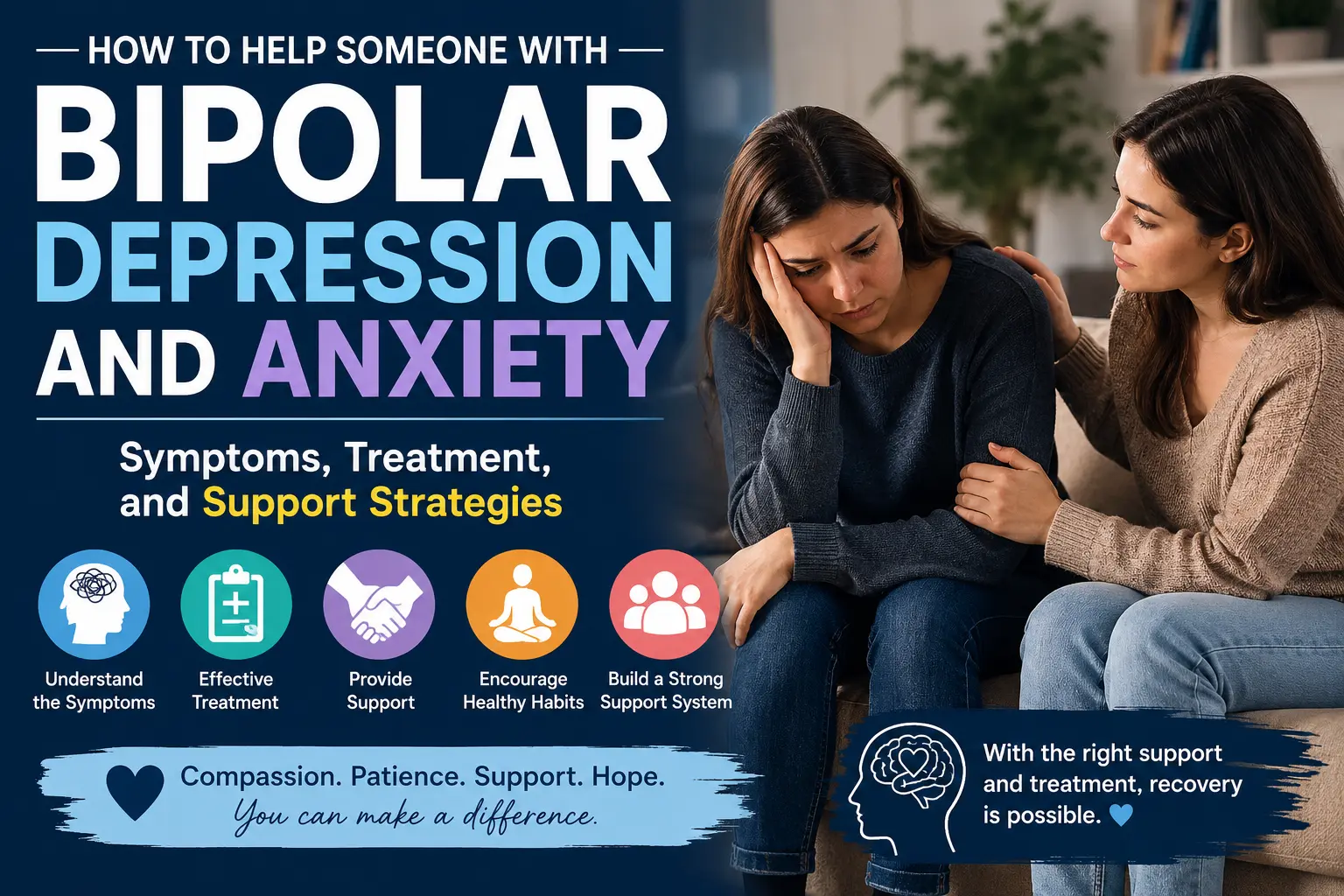 Watching someone you care about struggle with bipolar depression and anxiety can be heartbreaking. You may notice that they withdraw…
 In my practice as a clinical psychologist, I often observe that the difference between a patient who crumbles under pressure…
 We all have "up" days and "down" days. Perhaps you feel energized after a promotion or sluggish on a rainy…
 To define bipolar disorder accurately, we must look at it as a chronic mood dysregulation condition. In psychology and medicine,…
Are you looking for a Therapist?
Connect with qualified mental health professionals who understand
bipolar disorder, mood changes, and emotional challenges.
Private • Supportive • Confidential