
What Is Shifting Perspective In Bipolar: Key Differences, Mood Switching, and Warning Signs

Medically reviewed by Laura Athey Updated Date: March 24, 2026

In my practice as a clinical psychologist specializing in mood disorders, one of the most common hurdles my patients face is diagnostic confusion. When individuals experience profound shifts in their energy and emotional state, they often turn to the internet for answers, only to find a maze of clinical jargon. Clarifying the nuances of bipolar disorder is not just an academic exercise; it is the vital first step toward reclaiming stability. What Is Shifting Perspective In Bipolar?
Many people describe their bipolar mood shifts as feeling like their brain either forcefully “accelerates” without brakes or completely “crashes” into a wall.
It is much more complex than simply feeling happy or sad. To help you or your loved one navigate this landscape, we must deeply understand the clinical distinctions, the biology of mood switching, and the cognitive shifts that define this condition.
The Foundational Context of Bipolar Disorder
Before we can compare subtypes, we must define the core condition. Bipolar disorder is a chronic mood disorder characterized by distinct, episodic fluctuations in mood, energy, and activity levels.
These periods are broken down into episodes of mania or hypomania (the “highs” or accelerated states) and major depression (the “lows” or crashed states). Between these episodes, individuals often experience periods of euthymia, which is a stable, baseline mood.
It is crucial to clarify a widespread societal misconception: bipolar mood swings are not typical, daily emotional reactions. Getting angry in traffic and then feeling happy at lunch is a normal human experience, not a bipolar mood swing.
In bipolar disorder, mood shifts are sustained over days, weeks, or months, and they create significant impairment in a person’s ability to function at work, maintain relationships, and care for their basic needs.
The Core Differences Between Bipolar 1 and Bipolar 2
The distinction between Bipolar I and Bipolar II is one of the most critical diagnostic evaluations I perform. The difference lies primarily in the severity and elevation of the “high” periods, but it also profoundly impacts the treatment trajectory.
Diagnostic Comparison Overview
| Feature | Bipolar I Disorder | Bipolar II Disorder |
| Mania | Requires at least one full manic episode. | Never experiences a full manic episode. |
| Hypomania | May experience hypomanic episodes (not required). | Requires at least one hypomanic episode. |
| Depression | Major depressive episodes are very common but not technically required for diagnosis. | Requires at least one major depressive episode. |
| Psychosis | Psychotic features (delusions/hallucinations) can occur during mania. | Psychosis does not occur during hypomania. |
| Hospitalization Risk | High risk during severe manic episodes due to loss of reality testing. | Lower risk during “highs,” but high risk during severe depressive lows. |
The Clinical and Biological Reality
To understand these differences, we have to look at the brain. During a full manic episode (the hallmark of Bipolar I), the brain is flooded with neurotransmitters, particularly dopamine and norepinephrine.
The prefrontal cortex—the area responsible for Executive Function, logic, and impulse control—is essentially overridden by the brain’s emotional centers.
This results in extreme grandiosity, a nearly non-existent need for sleep, rapid speech, and impulsive, often dangerous behavior.
Mania is a medical emergency because the individual’s connection to reality can be severed, sometimes leading to psychosis. A manic episode must last at least seven days or require hospitalization.
Bipolar II, on the other hand, is defined by hypomania. Hypomania shares the same symptoms as mania (increased energy, decreased need for sleep, fast thoughts), but it is less severe and shorter in duration (lasting at least four days).
During hypomania, Executive Function is impaired but not completely lost; the person remains tethered to reality and does not experience psychosis.
A common, dangerous myth is that Bipolar II is “Bipolar Lite.” In reality, Bipolar II can be intensely debilitating. The requirement of Major Depressive Episodes in Bipolar II means these patients often spend significantly more time in profound, treatment-resistant depression than those with Bipolar I.
Over time, recurrent and untreated episodes in either type can negatively impact Neuroplasticity, making the brain more vulnerable to future episodes and cognitive decline.
I frequently observe the diagnostic trap of Bipolar II in my office. I once worked with a patient—let’s call her Sarah—who had been treated for Major Depressive Disorder for a decade. Antidepressants never quite worked, often making her feel “wired” and anxious.
When I took her history, she mentioned periods where her depression lifted, and she felt “finally cured.” During these weeks, she slept only four hours a night, rearranged her entire house, started three new businesses, and felt incredibly optimistic.
Because society views productivity and happiness as positive, her previous providers missed that this was actually hypomania. Sarah wasn’t just experiencing depression; she was experiencing the crashing lows of Bipolar II following unrecognized hypomanic elevations. By implementing a strict mood-charting intervention, we identified her specific hypomanic switch points.
Transitioning her treatment plan to include a mood stabilizer rather than relying solely on SSRIs fundamentally changed her trajectory, finally bringing her the stability she had sought for ten years.
As a psychologist, the very first thing I assess in a patient with bipolar disorder is their sleep architecture. The bipolar brain has a profound biological vulnerability regarding Circadian Rhythms. Even a single night of lost sleep can act as a biological switch, triggering a hypomanic or manic episode.
I often explain to my patients that strict sleep hygiene is not just a wellness tip; it is a primary medical intervention. Protecting your sleep schedule is the most effective behavioral tool you have to keep your prefrontal cortex online and prevent mood episode switching.
Understanding Bipolar Mood Swings

When we discuss bipolar mood swings, we must differentiate them from emotional dysregulation. Individuals with Borderline Personality Disorder (BPD), for example, experience intense emotional shifts that are highly reactive to interpersonal triggers, often shifting multiple times within a single day.
In contrast, bipolar mood swings are largely autonomous, episodic, and sustained. While severe stress can trigger an episode, the episode then takes on a biological life of its own.
The shift from a euthymic (baseline) state into depression or mania involves profound changes not just in mood, but in vegetative symptoms: appetite drastically changes, psychomotor agitation or retardation sets in, and energy levels fundamentally alter.
Cognitive Shifts During Episodes
It is not just the mood that swings; the actual bipolar thinking process transforms. Patients often report that they feel like different people depending on their episode state.
Cognition During Mania
During full mania, thoughts accelerate to a frightening pace. Patients describe their thoughts as overlapping or racing so fast that they cannot vocalize them.
There is a marked decrease in risk perception; the brain literally fails to simulate negative consequences. Grandiosity takes over, leading to inflated confidence where an individual might believe they have special powers, extreme wealth, or a divine mission.
Cognition During Hypomania
In hypomania, the cognitive shift often feels highly positive initially. Thinking becomes expansive and creative. Problem-solving feels effortless, and optimism is boundless.
Speech becomes rapid and pressured. While this sounds appealing, it is unsustainable and often leads to over-commitment, irritability when others cannot “keep up,” and eventual exhaustion.
Cognition During Depression
When the episode switches to depression, the cognitive gears grind to a halt. This is known as cognitive slowing. The ability to concentrate, make decisions, or process information becomes agonizingly difficult. Thinking turns rigidly inward, characterized by relentless rumination, deep guilt, and a pervasive sense of hopelessness.
The Clinical Reality of “Switching” in Bipolar Disorder
When patients ask me, “What does switching mean in bipolar disorder?”, they are often referring to the frightening unpredictability of their condition. In clinical terms, switching (or mood episode transition) is the abrupt or gradual shift from one distinct mood polarity to the other.
For example, moving directly from a major depressive episode into mania or hypomania, or vice versa.
It is important to understand that a “switch” is a profound neurochemical event. It is not simply a change in attitude. When a bipolar person switches, the brain’s entire metabolic rate shifts. During a depressive episode, brain scans often show reduced blood flow and lowered metabolic activity in the prefrontal cortex.
When a switch into mania occurs, that activity violently accelerates. The transition can happen over a few weeks, or in severe cases, it can occur overnight.
Recognizing Sudden Behavioral Shifts
A sudden shift in behavior in bipolar disorder is often the first visible warning sign that a mood episode transition is occurring. Because bipolar disorder fundamentally alters Executive Function, patients do not just feel different; they act differently.
In my practice, I teach families to look for behavioral markers rather than just asking, “Are you feeling manic?” Sudden behavioral shifts pointing toward mania or hypomania might include:
- Drastic Spending: Draining a savings account on sudden business ideas or luxury items.
- Hyper-Sexuality or Risk-Taking: Engaging in uncharacteristic, impulsive behaviors without regard for physical or emotional safety.
- Decreased Need for Sleep: This is the cardinal sign. The patient sleeps for two hours and wakes up feeling energized and invincible.
- Social Withdrawal (in Depression): Conversely, a switch into depression is often marked by sudden isolation, missing work, and abandoning personal hygiene.
Again, these are not hourly fluctuations. A true behavioral shift in bipolar disorder sustains itself and completely hijacks the individual’s baseline personality.
The Underlying Causes of Bipolar Mood Shifts
What causes bipolar shifts? There is no single switch in the brain; rather, it is a complex interplay of genetic vulnerability and environmental triggers. To understand the “why,” we must look at the biology.
- Biological Factors and Neurotransmitters: Bipolar disorder is heavily rooted in the dysregulation of neurotransmitters like dopamine, serotonin, and noradrenaline. During mania, dopamine transmission is in overdrive, hijacking the brain’s reward center. In depression, these pathways are severely blunted.
- Circadian Rhythm Disruption: As I mentioned earlier, the bipolar brain is uniquely sensitive to light and sleep cycles. Crossing time zones, shift work, or staying up all night can violently disrupt Circadian Rhythms, suppressing melatonin and triggering a manic switch.
- Severe Stress: Major life events—even positive ones like having a baby or getting married—flood the brain with cortisol. For a neurotypical brain, cortisol causes temporary anxiety. For a bipolar brain, chronic cortisol elevation can destabilize neural pathways and trigger an episode.
- Antidepressant-Induced Switching: This is a crucial clinical nuance. If a patient with undiagnosed Bipolar I or II is prescribed a standard SSRI (antidepressant) without a mood stabilizer, the medication can artificially push their serotonin levels too high, catapulting them directly out of depression and into severe mania.
- Substance Use: Alcohol and recreational drugs act as artificial neurotransmitter surges. Stimulants can induce mania, while alcohol (a depressant) can trigger severe depressive crashes.
When to Consider a Self-Test

Many individuals suspect they are struggling with more than just depression, prompting them to look for a bipolar disorder self-test. While online screening tools (like the Mood Disorder Questionnaire, or MDQ) can be helpful first steps, it is imperative to understand that self-tests are screening tools, not diagnostic tools.
You should consider taking a validated self-assessment and bringing the results to a professional if you notice:
- Periods where you feel unusually “wired” or hyper-productive, requiring little to no sleep without feeling tired the next day.
- A history of severe depression that does not respond to traditional antidepressants (or antidepressants make you feel agitated).
- A family history of bipolar disorder or severe psychiatric illness.
Mania, Hypomania, and Depression
To bring clarity to your symptom tracking, here is a clinical breakdown of the episodes based on diagnostic criteria:
Symptoms of Mania (Lasting at least 7 days, or requiring hospitalization):
- Grandiosity or unrealistically inflated self-esteem.
- Decreased need for sleep (feeling rested after 2–3 hours).
- More talkative than usual, or pressure to keep talking.
- Flight of ideas or racing thoughts.
- Distractibility.
- Increase in goal-directed activity (social, work, or sexual).
- Excessive involvement in activities with a high potential for painful consequences (buying sprees, foolish investments).
Symptoms of Hypomania (Lasting at least 4 days):
- Shares the exact same symptom list as mania, but the episode is not severe enough to cause marked impairment in social or occupational functioning, and there are no psychotic features.
Symptoms of Major Depression (Lasting at least 14 days):
- Depressed mood most of the day, nearly every day.
- Markedly diminished interest or pleasure in all activities (anhedonia).
- Significant weight loss or gain.
- Insomnia or hypersomnia (sleeping too much).
- Psychomotor agitation or severe lethargy.
- Fatigue or loss of energy.
- Feelings of worthlessness or excessive guilt.
- Diminished ability to think, concentrate, or make decisions.
When to Seek Professional Help
Bipolar disorder is a chronic, lifelong neurobiological condition. It cannot be managed by willpower, diet, or positive thinking alone. If your mood shifts are impairing your ability to hold a job, damaging your relationships, or causing you to engage in risky behaviors, it is time to seek help.
Most importantly, if you are experiencing suicidal thoughts or if a manic episode has led to a break from reality (psychosis), you must seek emergency psychiatric evaluation immediately.
With the right combination of mood stabilizers, targeted psychotherapy (like Cognitive Behavioral Therapy or Interpersonal and Social Rhythm Therapy), and lifestyle modifications, individuals with Bipolar I and II can live vibrant, stable, and deeply fulfilling lives.
Frequently Asked Questions
Bipolar 1 vs Bipolar 2 Differences
The primary difference lies in the severity of elevated moods. Bipolar I requires at least one full, severe manic episode that significantly impairs functioning or requires hospitalization. Bipolar II requires at least one major depressive episode and at least one hypomanic episode, which is a milder, non-psychotic elevation.
Meaning of Switching in Bipolar
Switching refers to the clinical transition from one distinct mood state to another. For example, a patient may “switch” directly from a deep depressive episode into a manic or hypomanic episode. This is a profound neurochemical shift, not just a passing change in daily emotion.
Triggers for Bipolar Shifts
Bipolar shifts are triggered by a combination of biological vulnerabilities and environmental stressors. The most common triggers include severe sleep deprivation, disrupted circadian rhythms, major life stressors, substance abuse, and sometimes the use of antidepressant medications without an accompanying mood stabilizer.
Sudden Behavioral Shifts Explained
In bipolar disorder, a sudden behavioral shift indicates a mood episode transition. You may notice drastic changes such as suddenly spending large amounts of money, speaking incredibly fast, needing almost no sleep, or abruptly withdrawing from all social contact and obligations.
Warning Signs of Bipolar Disorder
Key warning signs include cyclical periods of severe, treatment-resistant depression alternating with periods of extreme, uncharacteristic energy. If you experience weeks of profound sadness followed by days of needing no sleep while feeling highly productive or irritable, you should seek a professional evaluation.
Bipolar Mood Swings vs Normal Mood Changes
Normal mood changes are brief, reactive to daily events, and do not severely disrupt your life. Bipolar mood swings are episodic, lasting for days or weeks, operate independently of daily stressors, and cause significant impairment to your career, relationships, and Executive Function.
Conclusion
In my practice, the moment a patient finally receives an accurate diagnosis—whether it is Bipolar I or Bipolar II—there is often a complex mixture of grief and profound relief. For years, they may have blamed themselves for their sudden behavioral shifts, viewing their unpredictable energy levels and cyclical crashes in Executive Function as personal moral failings or a lack of willpower.
I always remind my patients: bipolar disorder is a neurobiological condition, not a character flaw. Understanding the specific mechanics of your mood switching and the differences between mania and hypomania is the first, most crucial step in reclaiming your life.
Once we know exactly what we are treating, we can move away from the frustration of mismatched antidepressants and implement targeted, highly effective strategies. By combining medical management with strict behavioral interventions to protect your Circadian Rhythms, we give your brain the biological scaffolding it needs to stabilize.
You do not have to live permanently at the mercy of unpredictable neurochemical tides. With the right therapeutic support, a commitment to routine, and a deep understanding of your own unique warning signs, a beautiful, stable, and highly functional life is entirely within your reach.
Authoritative References:
- American Psychiatric Association (APA)
- National Alliance on Mental Illness (NAMI)
- Depression and Bipolar Support Alliance DBSA
- National Center for Biotechnology Information (NCBI) / PubMed

Related Posts






Subscribe to Our Newsletter
Get mental health tips, updates, and resources delivered to your inbox.
MORE from Author
Read More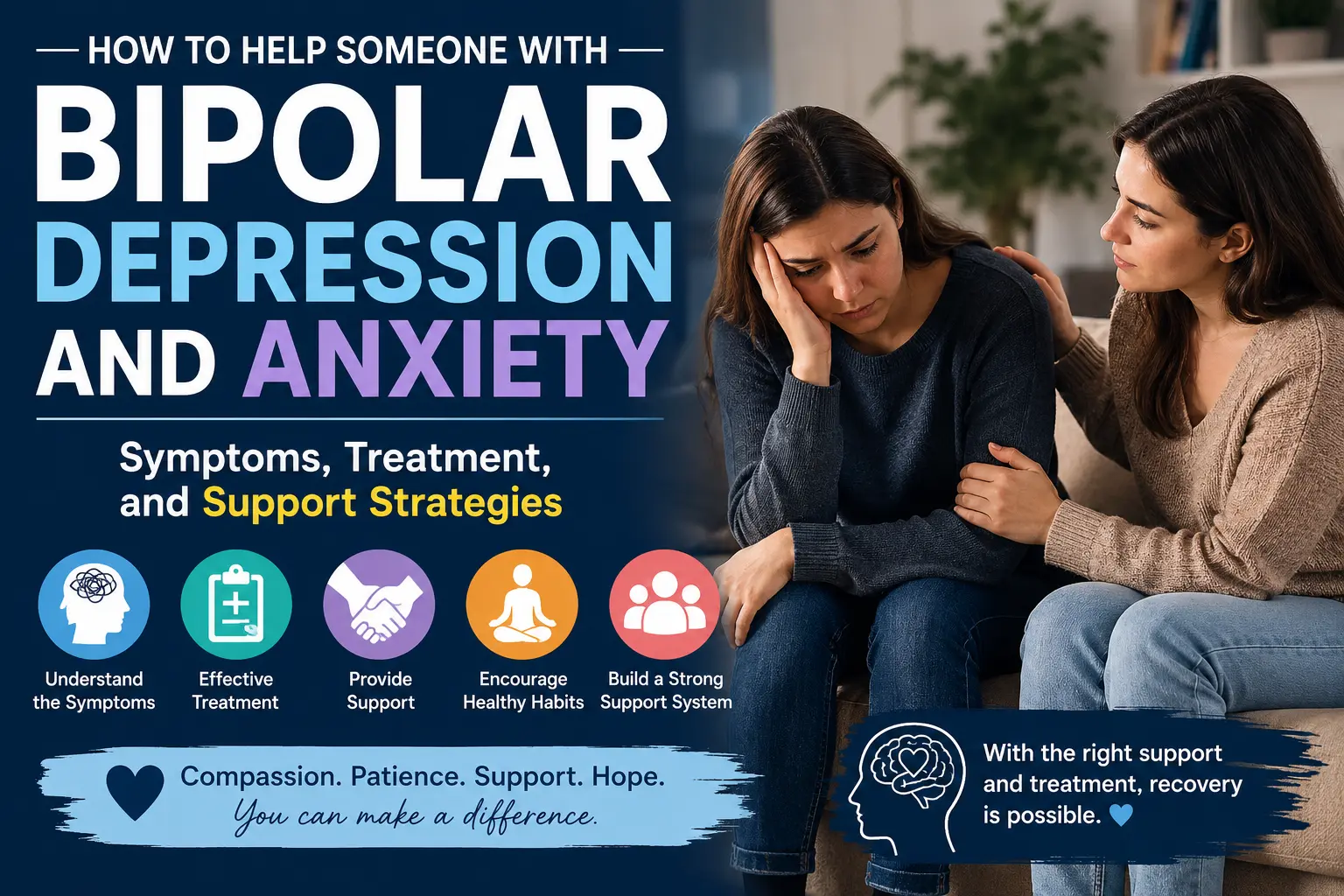 Watching someone you care about struggle with bipolar depression and anxiety can be heartbreaking. You may notice that they withdraw…
 In my practice as a clinical psychologist, I often observe that the difference between a patient who crumbles under pressure…
 We all have "up" days and "down" days. Perhaps you feel energized after a promotion or sluggish on a rainy…
 To define bipolar disorder accurately, we must look at it as a chronic mood dysregulation condition. In psychology and medicine,…
Are you looking for a Therapist?
Connect with qualified mental health professionals who understand
bipolar disorder, mood changes, and emotional challenges.
Private • Supportive • Confidential