
Is generalized Anxiety Disorder a Disability: Understanding Legal, Medical, and Daily Implications

Medically reviewed by Laura Athey Updated Date: April 15, 2026

In my practice as a clinical psychologist, I frequently sit across from high-achieving individuals who are physically and mentally exhausted by the weight of their own thoughts. They often ask, “Dr. Laura, am I just stressed, or is this a real disability?” This question is laden with a mix of fear and a desperate need for validation. Is Generalized Anxiety Disorder a Disability
Is Generalized Anxiety Disorder a Disability far more than occasional “nerves”? It is a chronic medical condition that can, under specific circumstances, be legally recognized as a disability. Whether GAD is considered a disability depends entirely on the lens through which you are looking: medical, legal (under the ADA), or financial (through the SSA).
As a clinician, I’ve observed patients with severe GAD who struggle with basic tasks like commuting or maintaining consistent employment due to the sheer cognitive load of their anxiety. Understanding these distinctions is the first step in accessing the protections and support you may rightfully deserve.
Is Generalized Anxiety Disorder a Disability?
Before we can address its status as a disability, we must define the condition. According to the DSM-5-TR, GAD is characterized by excessive anxiety and worry occurring more days than not for at least six months. This worry is “generalized,” meaning it isn’t tied to a single event but drifts across multiple areas of life—finances, health, family, and work.
The Functional Impact
GAD is a serious medical condition that affects the body and mind. Adults often present with muscle tension, fatigue, and irritability, while children and adolescents may exhibit extreme perfectionism or an intense need for reassurance. In a clinical setting, I evaluate GAD not just by the presence of worry but by how that worry impairs executive function.
When a patient is so preoccupied with “what-if” scenarios that they can no longer prioritize tasks, focus on a screen, or interact socially without debilitating dread, the condition has moved from a “mental illness” to a functional impairment.
GAD as a Medical Condition vs. Disability

There is a significant difference between having a medical diagnosis and being “disabled” in the eyes of the law. Is generalized anxiety disorder a medical condition? Yes, unequivocally.
It is a recognized mental health disorder with specific biological markers, including amygdala hyperactivation and imbalances in neurotransmitters like GABA and serotonin.
Clinical Evidence of Impairment
Whether GAD is a “permanent disability” is a point of clinical nuance. While GAD can be a lifelong vulnerability, it is not always a permanent state of disability. Many patients experience a “waxing and waning” course.
For some, symptoms are mild and manageable with therapy; for others, the condition is so severe that it prevents any meaningful participation in the workforce. In my practice, I distinguish between the two by looking at “functional capacity”—the measurable ability to perform the “Major Life Activities” defined by legal statutes.
Legal Protections: GAD and the ADA
The most common way GAD is recognized as a disability is through the Americans with Disabilities Act (ADA). If you are wondering, “Is generalized anxiety disorder a disability under the ADA?” the answer is yes, provided your symptoms “substantially limit” one or more major life activities.
The Psychology of a “Hidden Disability”
GAD is frequently categorized as a hidden disability. Unlike a physical impairment that is visible to the naked eye, the “paralysis” of GAD happens internally. To understand the “why” behind this legal protection, we have to look at how anxiety hijacks the brain’s executive function.
When the brain is in a state of chronic GAD, the prefrontal cortex—the CEO of the brain—is constantly being interrupted by “alarm signals” from the amygdala. This makes multitasking, memory retention, and social processing physically more difficult.
For a person with GAD, a standard open-office floor plan isn’t just “distracting”; it can be a sensory nightmare that triggers a sympathetic nervous system response, leading to a total “brain fog” or cognitive shutdown.
Reasonable Accommodations in the Workplace
Because the ADA recognizes GAD, employers are often required to provide reasonable accommodations. These are not “special favors” but tools to level the playing field. In my practice, I often help patients draft requests for:
- Flexible Scheduling: To allow for morning anxiety peaks or therapy appointments.
- Quiet Workspaces: To mitigate the sensory overload that spikes cortisol levels.
- Modified Communication: Requests for written instructions rather than verbal ones to help with the “blanking” that occurs during high-stress interactions.
- Remote Work: To remove the “anticipatory anxiety” associated with commuting or office politics.
The goal of the ADA is to recognize that while a patient has a “mental illness,” they are still a capable worker if the environment is adjusted to accommodate their nervous system’s specific needs.
I once treated a patient, “David,” who was facing a performance review because he was “unreliable” in the mornings. He feared he was simply lazy.
The Nuance: In our sessions, we discovered his GAD was causing “initial insomnia,” where his brain stayed in a high-arousal state until 3:00 AM. His lack of circadian rhythm regulation meant his executive function was virtually non-existent at 9:00 AM.
By securing an ADA accommodation for a 10:30 AM start time while we worked on his sleep hygiene and neuroplasticity through CBT, he became one of the top performers in his firm. The accommodation wasn’t just a legal “pass”; it was a clinical necessity that allowed his brain to function.
Social Security Disability & Short-Term Disability

While the ADA protects your job, the Social Security Administration (SSA) manages financial support. Qualifying for a disability check for anxiety is a much more rigorous process than seeking workplace accommodations.
SSA Criteria for GAD
To qualify for SSA benefits, you must demonstrate that your GAD is “severe,” meaning it has lasted or is expected to last for at least 12 months and prevents you from engaging in “Substantial Gainful Activity.” The SSA looks for medical documentation that shows:
- Medical Evidence: Consistent records of GAD symptoms from a psychiatrist or psychologist.
- Functional Limitations: Marked limitations in understanding/remembering information, interacting with others, or concentrating on tasks.
- Treatment History: Evidence that you have tried Is Generalized Anxiety Disorder a Disability and therapy, but symptoms still prevent you from working.
Financial Reality and Disability Ratings
Patients often ask, “How much does mental health disability pay?” This varies significantly by your prior work history and the state you live in, but on average, Social Security Disability Insurance (SSDI) payments range from $800 to $2,500 per month.
For short-term disability for anxiety, many employers offer policies that pay 60-80% of your salary for 3 to 6 months while you undergo intensive treatment or “reset” after a severe flare-up.
Successfully navigating this requires more than just a diagnosis. It requires a “symptom log” and a clinician willing to provide detailed statements about your “residual functional capacity.”
In my experience, the most successful claims are those where the patient has a documented history of both medication management (like SSRIs or SNRIs) and specialized psychotherapy like CBT.
Functional Impacts and Daily Life Considerations
As a psychologist, I often have to remind my patients that “disability” isn’t a binary switch—it is a spectrum. If you are wondering how hard it is to live with GAD, the answer lies in the invisible labor of the condition.
Living with GAD is like running a marathon every day while everyone else is walking; you are doing the same work, but your “internal engine” is burning twice the fuel.
The Hidden Tax on Daily Life
In the context of disability, we look at how anxiety affects major life activities. This includes:
- Parenting: The “what-if” thoughts can lead to over-protection or parental burnout, as the brain treats every minor scrape like a life-threatening emergency.
- Education: For students, GAD can impair executive function, making it nearly impossible to retain information during a lecture when the mind is “rehearsing” social failures.
- Social Settings: The constant “scanning” for social cues or potential judgment is physically exhausting, often leading to social withdrawal, which further fuels depression.
Is generalized anxiety disorder a permanent disability? Not necessarily. While the biological predisposition for a “sensitive alarm system” may be lifelong, our goal in therapy is to shift the disorder from a “disabling” state to a “managed” state.
Through neuroplasticity, we can teach the brain that it is safe, effectively lowering the disability rating of the condition over time.
Treatment and Management in the Context of Disability
The legal and medical recognition of GAD as a disability is often tied to your treatment status. If you are seeking benefits or accommodations, the “system” wants to see that you are actively working to manage the condition.
Evidence-Based Interventions
When we look at generalized anxiety disorder treatments, we typically use a “biopsychosocial” approach:
- Medication: Generalized anxiety disorder medication, such as SSRIs (Sertraline, Lexapro) or SNRIs (Effexor), helps raise the “floor” of your mood, making it easier to engage in daily life.
- Psychotherapy: CBT is the gold standard for GAD. It helps you “drop the rope” in the tug-of-war with your thoughts.
- ADHD Comorbidity: It is worth noting that ADHD and GAD often coexist. In these cases, treating the ADHD can sometimes reduce the anxiety, as the patient feels more in control of their environment and tasks.
How to treat generalized anxiety disorder without medication is a common question. For some, lifestyle interventions like sleep regulation, rigorous exercise, and caffeine elimination can reduce symptoms enough to restore work capacity.
However, in severe disability cases, a combination of medication and therapy is usually the most effective route to recovery.
Common Questions About GAD Disability
Can anxiety be considered a disability?
Yes. Both the ADA and the SSA recognize anxiety disorders as potential disabilities if they are severe enough to limit your ability to work or perform daily life activities.
Is GAD a hidden disability?
Absolutely. Because there are no visible signs like a cast or a wheelchair, GAD is a “hidden” or “invisible” disability. This makes clinical documentation from a psychologist or psychiatrist essential for legal protection.
How do employers verify GAD for ADA accommodations?
Typically, your employer’s HR department will provide a form for your healthcare provider to fill out. As your psychologist, I would document your functional limitations—such as “difficulty with sustained concentration” or “need for a low-stimulus environment”—without necessarily needing to disclose every detail of your therapy sessions.
Can short-term disability apply for GAD flare-ups?
Yes. Many patients use short-term disability to enter an Intensive Outpatient Program (IOP) or to stabilize their medication during a period where their symptoms have become unmanageable at work.
Frequently Asked Questions
Can anxiety be considered a disability?
Yes. Both the ADA and the SSA recognize anxiety disorders as disabilities if they are severe enough to limit major life activities or the ability to work. In my practice, I emphasize that clinical documentation of your “functional capacity” is the key to securing these legal and financial protections.
Is GAD a hidden disability?
Absolutely. Because there are no visible physical markers, GAD is a “hidden” or “invisible” disability. This makes consistent records from a psychologist essential for proving the internal “paralysis” and cognitive load that interferes with your executive function and daily productivity.
How do employers verify GAD for ADA accommodations?
Typically, HR provides a form for your healthcare provider. I document your specific functional limitations—such as “difficulty with sustained concentration”—to justify needs like quiet workspaces or flexible scheduling. You do not need to disclose private therapy details to receive these protections.
Can short-term disability apply for GAD flare-ups?
Yes. Many patients utilize short-term disability to stabilize their nervous system during a severe flare-up or to attend an Intensive Outpatient Program (IOP). This provides a necessary “reset” to manage cortisol levels and restore the executive function needed to return to work effectively.
Conclusion
In my clinical experience, the most empowering moment for a patient is shifting from “What is wrong with me?” to “How do I accommodate my nervous system?” Whether Generalized Anxiety Disorder (GAD) meets the legal threshold of a disability or remains a manageable medical condition, your struggle is valid.
By leveraging ADA accommodations, seeking appropriate SSA support, and engaging in CBT or pharmacotherapy, you can move from a state of functional paralysis back to a life of purpose. You are not your anxiety, and with the right clinical and legal tools, you can reclaim your executive function and your future. Is Generalized Anxiety Disorder a Disability?
References & Resources
- U.S. Equal Employment Opportunity Commission (EEOC): Mental Health Conditions and the ADA
- Social Security Administration (SSA): Disability Evaluation Under Social Security
- American Psychiatric Association: Anxiety Disorders Resources
- Bipolar Lives: Disability and Mental Health Advocacy

Related Posts






Subscribe to Our Newsletter
Get mental health tips, updates, and resources delivered to your inbox.
MORE from Author
Read More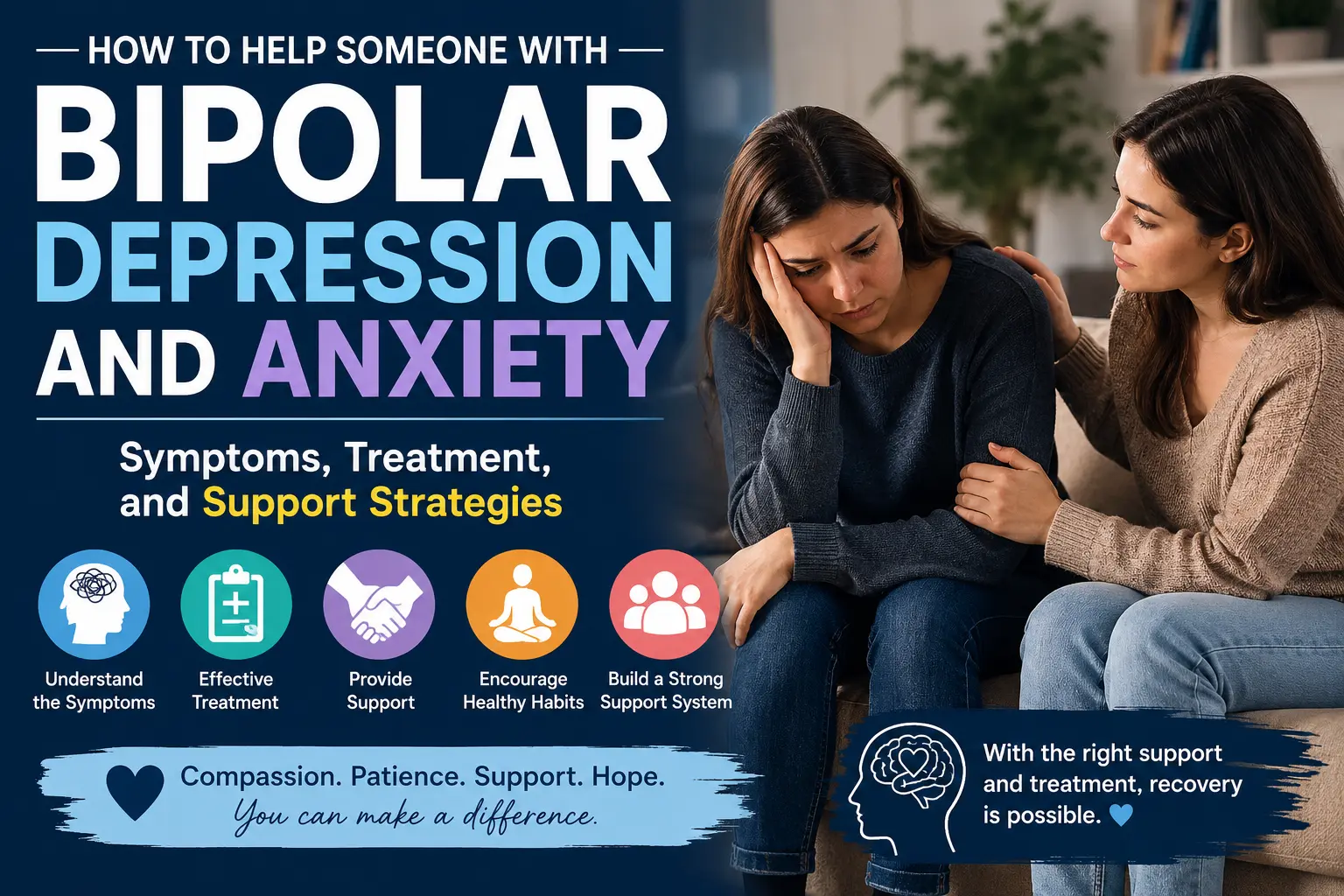 Watching someone you care about struggle with bipolar depression and anxiety can be heartbreaking. You may notice that they withdraw…
 In my practice as a clinical psychologist, I often observe that the difference between a patient who crumbles under pressure…
 We all have "up" days and "down" days. Perhaps you feel energized after a promotion or sluggish on a rainy…
 To define bipolar disorder accurately, we must look at it as a chronic mood dysregulation condition. In psychology and medicine,…
Are you looking for a Therapist?
Connect with qualified mental health professionals who understand
bipolar disorder, mood changes, and emotional challenges.
Private • Supportive • Confidential