
What is Obsessive-Compulsive Disorder (OCD)? Symptoms, Causes, and Treatments

Medically reviewed by Laura Athey Updated Date: April 30, 2026

In my practice as a clinical psychologist, I frequently encounter a profound misunderstanding of what it means to live with obsessive-compulsive disorder (OCD). Our culture often uses “OCD” as a shorthand for being organized or particular about cleanliness, but for those actually diagnosed with the condition, it is anything but a quirky personality trait.
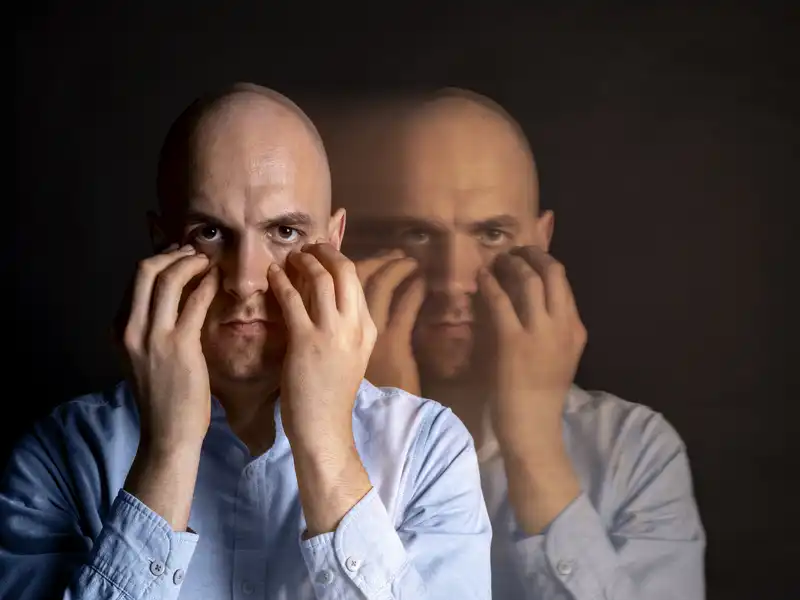
What is obsessive-compulsive disorder (OCD)? It is a chronic, often debilitating mental health disorder characterized by a cycle of obsessions and compulsions. Obsessions are intrusive, unwanted, and distressing thoughts, images, or urges. Compulsions are the repetitive behaviors or mental acts an individual feels driven to perform in an attempt to ease the anxiety caused by the obsession.
Unlike general anxiety, where a person might worry about realistic stressors like finances or health, OCD involves a “glitch” in the brain’s alarm system. The distress is so significant that it often consumes hours of a person’s day, severely impacting their executive function and overall quality of life.
In my clinical practice, patients often describe feeling trapped in these cycles; recognizing these patterns early is the first step toward breaking the loop and reclaiming a sense of agency.
OCD vs. Obsessive-Compulsive Personality Disorder (OCPD)
One of the most frequent points of confusion I see in my office is the distinction between OCD and what is obsessive-compulsive personality disorder (OCPD). While the names are similar, they represent fundamentally different psychological experiences.
The Difference in Perspective: The primary difference between OCD and obsessive-compulsive personality disorder lies in how the person perceives their symptoms.
OCD is typically “ego-dystonic,” meaning the thoughts and behaviors are distressing, unwanted, and inconsistent with the person’s self-image. A person with OCD knows their hand-washing ritual is excessive but feels they cannot stop.
In contrast, OCPD is “ego-syntonic.” Individuals with OCPD view their need for perfectionism, rigidity, and extreme orderliness as correct, desirable, and the “right way to be.”
- OCD Example: Washing hands 50 times to prevent a perceived (and terrifying) contamination threat.
- OCPD Example: Insisting that all files in a shared office be organized by a specific, rigid color-coding system because it is “most efficient,” and becoming angry when others do not comply.
Clarifying this distinction is vital; while OCD is treated with specific behavioral exposures, OCPD often requires a different therapeutic approach focused on interpersonal flexibility and addressing the underlying rigid personality structure.
Symptoms of OCD
When we discuss obsessive-compulsive disorder symptoms, we are looking for a specific interplay between internal distress and external (or mental) rituals. The obsessive-compulsive disorder meaning centers on this functional impairment—the rituals are not done for pleasure but for temporary relief from terror.
Hallmark Symptoms and Manifestations
- Obsessions: These are not just worries; they are intrusive “ego-alien” thoughts. Common examples include fears of harming others, fears of blasphemy, or an overwhelming need for symmetry.
- Compulsions: These are the behaviors used to “neutralize” the obsession. This might include checking locks a specific number of times, mental counting, or seeking constant reassurance from loved ones.
- Avoidance: To prevent the distress, individuals often avoid “triggers.” For example, someone with harm obsessions might avoid holding kitchen knives.
- Functional Impairment: To meet diagnostic criteria, these symptoms must be time-consuming (taking more than an hour a day) or cause significant distress.
In my practice, I often see clients seeking help for the compulsions—the visible part of the iceberg—without realizing they are driven by deeply hidden, intrusive thoughts. A thorough evaluation is necessary to uncover the “why” behind the “do.”
Causes and Risk Factors

Understanding what causes obsessive-compulsive disorder (OCD) requires a “biopsychosocial” lens. It is rarely a single event that triggers OCD, but rather a combination of nature and nurture.
The Biological “Loop”
The current leading theory in neurobiology involves a “glitch” in the cortico-striatal-thalamo-cortical (CSTC) loop. This is the brain’s communication highway between the area that perceives threats, the area that filters information, and the area that initiates movement.
In a neurotypical brain, when you check if the stove is off, the “message” is sent, the task is confirmed, and the “all-clear” signal is given. In an OCD brain, the “all-clear” signal never fires.
The brain remains in a state of high arousal, constantly resending the “danger” signal. This is often linked to serotonin dysfunction, which is why SSRIs are a primary pharmacological intervention.
Genetics and Environment
- Genetics: There is a strong hereditary component. If a first-degree relative has OCD, the risk of developing the disorder increases significantly.
- Neuroplasticity and Learning: OCD can be reinforced through “negative reinforcement.” When a person performs a compulsion and feels a brief drop in anxiety, the brain “learns” that the ritual is the only way to stay safe. This creates a powerful, self-reinforcing neural pathway.
- PANDAS: In children, some cases of OCD are triggered by an autoimmune response to infections like strep throat (Pediatric Autoimmune Neuropsychiatric Disorders Associated with Streptococcal Infections), leading to a sudden onset of symptoms.
A nuance only a practicing psychologist might observe is that OCD is essentially a “disorder of doubt.” It is often called the “doubting disease.”
The Nuance: My patient “Sarah” struggled with extreme contamination fears. She wasn’t just afraid of germs; she was obsessed with the 0.0001% chance that a surface might be dirty. I’ve observed that a patient’s sleep hygiene significantly dictates their ability to tolerate this uncertainty.
When Sarah was sleep-deprived, her executive function—the part of the brain that says “this is ‘good enough’ certainty”—was offline. Her rituals tripled in length on nights she slept fewer than six hours. Addressing her circadian rhythms was actually a prerequisite for her behavioral therapy to be effective.
Types of OCD
While the underlying mechanism is the same, OCD examples usually fall into four main subtypes. Recognizing the specific “theme” of a patient’s OCD is essential for tailoring Exposure and Response Prevention (ERP) therapy.
The Four Common Subtypes
- Contamination and Cleaning: This involves a fear of germs, toxins, or “magical contamination” (like bad luck). The compulsion is typically excessive washing or cleaning.
- Harm and Checking: This involves intrusive thoughts about accidental or intentional harm (e.g., “Did I leave the iron on and burn down the house?”). The compulsion is repetitive checking.
- Symmetry, Ordering, and Counting: This involves intense distress if objects are not “just right” or aligned in a specific way. The person may spend hours arranging items or counting to specific “safe” numbers.
- Intrusive Taboo Thoughts: This is often the most distressing type. It involves unwanted thoughts about sexual, religious, or aggressive themes. Because these thoughts are so contrary to the person’s character, they often feel immense shame and engage in “mental rituals” to prove they are a good person.
OCD behavior can fluctuate between these types over a lifetime. I often see patients whose “theme” shifts from contamination in childhood to harm-checking in adulthood, though the core need for “certainty” remains the same.
Diagnosis and Assessment
To arrive at a formal definition of obsessive-compulsive disorder for a specific patient, we move beyond simple checklists. In my clinical assessments, I am looking for the “functional footprint” of the disorder.
The DSM-5 criteria stipulate that for a diagnosis of OCD, the obsessions or compulsions must be time-consuming (taking up more than one hour per day) or cause clinically significant distress or impairment. We often use the Yale-Brown Obsessive Compulsive Scale (Y-BOCS) to quantify this. This scale helps us understand not just what the rituals are but how much “mental real estate” they occupy.
Is OCD an anxiety disorder? Technically, in the DSM-5, it was moved from the “Anxiety Disorders” category into its own chapter: “Obsessive-Compulsive and Related Disorders.” This was a significant shift because it acknowledged that while anxiety is a major symptom, the underlying neurobiology (the CSTC loop) and the treatment requirements (ERP) are distinct from conditions like generalized anxiety disorder.
Impact on Daily Life
When people ask what an OCD person is like, they often expect to hear about a love for labels and neat desks. In reality, an individual with OCD is often someone who is profoundly exhausted. What it means if you have OCD is that your brain is essentially “stuttering” on a loop of perceived threat.
- Social Isolation: I have worked with many patients who stop attending social events because the “checking” rituals required to leave the house take two hours, making them chronically late and embarrassed.
- Occupational Strain: Imagine trying to write a report when your brain insists you must retype every sentence that contains the letter “s” to prevent a family tragedy. This is a common obsessive-compulsive disorder example of how the condition erodes professional productivity.
- The Psychological Toll: The constant presence of “taboo” intrusive thoughts leads to a secondary layer of depression and shame. Patients often feel they are “losing their mind,” which is why non-stigmatizing, clinical validation is such a vital part of the healing process.
Treatment Options
If you are seeking obsessive-compulsive disorder treatment, it is essential to know that “talk therapy” or traditional supportive therapy is often ineffective for this specific condition. To change the brain’s “wiring,” we must use a very specific behavioral approach.
Exposure and Response Prevention (ERP)
ERP is the gold standard of OCD treatment. It is a subtype of cognitive behavioral therapy (CBT) that targets the cycle of negative reinforcement.
- Exposure: We gradually and systematically expose the patient to the thoughts or images that trigger their anxiety (e.g., touching a “contaminated” doorknob).
- Response Prevention: This is the most critical part. The patient makes a conscious choice not to perform the compulsion (e.g., not washing their hands).
- Why it Works: Over time, the brain experiences habituation. It learns that the anxiety eventually peaks and then fades on its own, without the need for a ritual. This physically rewires the brain via neuroplasticity, weakening the “worry groove” and strengthening the prefrontal cortex’s ability to dismiss false alarms.
Medication: Softening the Alarm
What is the best combination of treatments for obsessive-compulsive disorder? For most moderate to severe cases, it is a combination of ERP and medication.
- SSRIs: Higher doses of medications like Sertraline (Zoloft) or Fluoxetine (Prozac) are often required for OCD compared to depression.
- Clomipramine: A tricyclic antidepressant that, while having more side effects, is incredibly potent for treatment-resistant OCD.
| Medication Class | Example | Role in OCD Treatment |
| SSRI | Sertraline | First-line; reduces the “volume” of intrusive thoughts. |
| Tricyclic | Clomipramine | Often used when SSRIs aren’t fully effective. |
| Antipsychotic | Risperidone | Sometimes used in low doses as an “adjunct” to boost SSRIs. |
Prognosis and Living with OCD

How common is obsessive-compulsive disorder? It affects approximately 1–2% of the global population. Interestingly, while the female-to-male ratio is roughly equal in adulthood, males are more likely to show an earlier onset in childhood.
OCD is generally considered a chronic condition, meaning the biological vulnerability may always be there. However, “chronic” does not mean “unmanageable.” With proper treatment, many of my patients achieve functional remission. They may still have an intrusive thought occasionally, but they now have the “mental muscles” to label it as “just OCD” and move on without performing a ritual.
Frequently Asked Questions
Am I OCD?
This is a common question. If you find yourself performing rituals to “cancel out” bad thoughts, or if you spend more than an hour a day trapped in cycles of checking or cleaning, it is time for a professional evaluation.
What does an OCD episode look like?
An “episode” usually begins with a sudden, “sticky” intrusive thought (e.g., “I might have hit someone with my car”). This is followed by an intense spike in anxiety and a desperate urge to perform a compulsion (e.g., driving back to the scene five times to “check”).
Can I have OCD without the rituals?
Yes. This is sometimes colloquially called “Pure O.” In these cases, the compulsions are mental rituals, such as praying, counting, or mentally “replaying” events to ensure no harm was done.
Conclusion
What is obsessive-compulsive disorder (OCD)? It is a medical condition of the brain’s communication system, not a personality quirk or a lack of willpower. By understanding the symptoms—from contamination fears to taboo thoughts—and the biological causes involving the CSTC loop, we can strip away the shame that so often keeps people from seeking help.
The path to recovery through obsessive-compulsive disorder treatment like ERP is challenging, but it is incredibly effective. You are not your thoughts, and you do not have to be a slave to your rituals.
References & Resources
- International OCD Foundation (IOCDF): Expert Resources and Find a Therapist
- National Institute of Mental Health (NIMH): OCD Statistics and Research
- American Psychiatric Association: Diagnostic Standards for OCD
- Bipolar Lives: Clinical Insights on Mood and Anxiety

Related Posts





Subscribe to Our Newsletter
Get mental health tips, updates, and resources delivered to your inbox.
MORE from Author
Read More Watching someone you care about struggle with bipolar depression and anxiety can be heartbreaking. You may notice that they withdraw…
 In my practice as a clinical psychologist, I often observe that the difference between a patient who crumbles under pressure…
 We all have "up" days and "down" days. Perhaps you feel energized after a promotion or sluggish on a rainy…
 To define bipolar disorder accurately, we must look at it as a chronic mood dysregulation condition. In psychology and medicine,…
Are you looking for a Therapist?
Connect with qualified mental health professionals who understand
bipolar disorder, mood changes, and emotional challenges.
Private • Supportive • Confidential