
Quiet BPD Symptoms: Signs, Traits, and Real-Life Patterns

Medically reviewed by Laura Athey Updated Date: April 23, 2026

Do you ever feel like you are fighting a hidden war? Many individuals appear perfectly calm outside. Because of this, their internal struggles remain completely invisible.
Consequently, quiet BPD symptoms often go unnoticed by family and even therapists. Why do so many people remain undiagnosed for years? Most often, they direct profound emotional pain entirely inward.
Therefore, the outside world sees a successful, stable person. Meanwhile, the individual battles intense self-blame daily. Are you wondering what quiet BPD symptoms are? You are definitely not alone.
In this clinical guide, we will explore these hidden signs together. Furthermore, we will discuss exactly how they show up in real life.
What Is Quiet Borderline Personality Disorder?
In my practice, patients frequently ask me, ” What is borderline personality disorder? It is an internalizing subtype of BPD. Therefore, professionals often call it “discouraged” borderline personality disorder.
The American Psychiatric Association does not list it as a separate diagnosis. However, clinicians widely recognize it based on standard quiet BPD criteria. Instead of outward rage, individuals turn their intense emotions against themselves.
Consequently, they experience severe self-hatred and silent withdrawal. Because they hide their pain, they often seem highly functional. Yet, their psychological suffering is immense.
Core Quiet BPD Symptoms and Traits

We must thoroughly examine the list of BPD symptoms to understand this condition deeply. These quiet BPD symptoms and traits look very different from classic presentations. First of all, profound emotional suppression serves as the primary mechanism.
Biologically, patients chronically activate their sympathetic nervous system. Because they constantly suppress emotions, their amygdala remains hyperactive. Consequently, this continuous biological stress severely impairs executive function in the prefrontal cortex.
Therefore, regulating basic emotions feels neurologically impossible. Another major trait is intense, internalized shame. Instead of lashing out, the individual blames themselves for every single conflict. Thus, quiet BPD symptoms and characteristics heavily feature chronic guilt.
Furthermore, silent emotional withdrawal acts as a massive defense mechanism. When triggered, the person completely shuts down. They mentally disconnect from their environment just to survive the emotional flood. This process relies heavily on psychological dissociation.
Fear of abandonment also drives much of this internal behavior. However, instead of clinging outwardly, they preemptively distance themselves. They genuinely believe they are inherently unlovable. So, they leave relationships before they can be left.
Overthinking interactions constantly drains their mental energy. They analyze every text message and tone of voice. Because their brain always scans for threats, neuroplasticity actually works against them. Their neural pathways become rigidly wired for hyper-vigilance.
In my practice, I frequently notice how poor sleep hygiene exacerbates these core traits. When a patient lacks deep, restorative sleep, their circadian rhythms fracture. This biological disruption drastically lowers their distress tolerance.
Consequently, their internal shame cycles multiply rapidly the very next day.
I recently treated a patient named David. Outwardly, David was an incredibly successful, calm software engineer. But internally, he suffered from crippling self-doubt and emotional exhaustion.
David spent hours agonizing over minor workplace interactions. If a manager gave neutral feedback, David’s brain perceived it as total rejection. He would instantly mentally withdraw from his entire team. He never argued or raised his voice.
Instead, he suffered intense, silent meltdowns alone in his office. He fully believed he was a complete failure. To treat this, we used specific cognitive interventions. By improving his executive function skills, David learned to reality-test his anxious thoughts.
We slowly rewired his brain’s threat-detection system. As a result, his neuroplasticity allowed him to build healthier, resilient neural pathways. This intervention dramatically reduced his hidden daily suffering.
To fully grasp these traits, we must view them as childhood survival skills. A child who learns that expressing anger is dangerous will adapt. They push the anger down to stay physically or emotionally safe. Later in life, this childhood adaptation becomes a rigid personality trait. Thus, the silence is not just a symptom; it is a neurological shield.
What Does Quiet BPD Look Like in Real Life?
People frequently ask, “What does quiet BPD look like on a normal Tuesday? In reality, it looks like a person working incredibly hard to seem “fine.” They might agree to plans they hate just to avoid disappointing someone.
Because they fear conflict, they become extreme, chronic people-pleasers. These quiet BPD signs are subtle but exhausting. For instance, a friend might cancel lunch at the last minute. The person with quiet BPD smiles and says, “No problem at all!”
However, internally, they are completely crushed. They instantly convince themselves the friend secretly hates them. Yet, they never express this hurt. Instead, they isolate themselves in their bedroom for the rest of the weekend.
They appear completely calm but are entirely emotionally overwhelmed. This constant emotional masking requires a massive amount of physical energy. Therefore, chronic physical fatigue and burnout commonly accompany the psychological pain.
Quiet BPD Symptoms vs Classic BPD
Understanding quiet BPD symptoms vs. classic BPD is absolutely crucial for a proper diagnosis. The quiet BPD symptoms differ from classic BPD in that they are primarily in the direction of the emotional energy. Classic BPD explodes outward, while this subtype implodes inward.
Many medical professionals use the term “discouraged quiet BPD” to describe this exact internalizing pattern. Because the distress is completely hidden, classic diagnostic tools sometimes miss it entirely. Let us examine the exact clinical differences in the table below.
| Feature | Discouraged Quiet BPD | Classic BPD |
| Anger Expression | Implosive (intense self-hatred, internal rage) | Explosive (yelling, visible conflict) |
| Abandonment Reaction | Preemptive withdrawal and sudden isolation | Frantic, highly visible efforts to hold on |
| Interpersonal Style | Avoidant, hyper-agreeable, constant masking | Volatile, intense, visibly unstable |
| Self-Harm Patterns | Often hidden, psychological self-sabotage | Frequently visible, acute crisis moments |
Quiet BPD Symptoms in Women vs Men
Historically, clinicians misdiagnosed personality disorders based on gender biases. Therefore, we must closely examine quiet BPD symptoms in women compared to men. Society frequently conditions women to be chronic peacemakers.
Consequently, women learn early on to suppress their anger. They internalize distress to maintain social harmony. Thus, quiet BPD symptoms in women often mimic severe, treatment-resistant depression.
On the other hand, societal norms demand emotional stoicism from men. Men learn that showing emotional vulnerability is unacceptable. As a result, quiet BPD symptoms in men often manifest as extreme workaholism or silent withdrawal.
Men might isolate themselves entirely in their hobbies to escape their internal pain. Because they mask their symptoms so well, doctors frequently miss the underlying borderline traits entirely.
Triggers That Activate Quiet BPD Symptoms
Understanding specific triggers helps you manage your emotional responses effectively. So, what exactly are the main BPD triggers and quiet BPD symptoms? Rejection, even if completely imagined, is the primary catalyst.
According to the National Institute of Mental Health, environmental stress heavily impacts borderline traits. When you perceive rejection, your amygdala instantly hijacks your brain. Consequently, your executive function simply shuts down.
Therefore, you cannot logically process the situation. Another major trigger involves minor relationship conflicts. A slight change in a partner’s tone of voice can trigger intense internal panic.
Furthermore, general life stress heavily activates these symptoms. When you lack sleep or face work deadlines, your biological resilience plummets. Thus, your brain naturally defaults to its oldest survival mechanism: emotional shutdown.
How Quiet BPD Affects Relationships

Managing quiet BPD and romantic relationships feels incredibly draining. You crave deep intimacy more than anything else. Yet, you simultaneously view closeness as highly dangerous.
Because you fear abandonment constantly, you rarely share your true feelings. This creates a massive, invisible wall between you and your partner. So, exactly how does quiet BPD affect interpersonal relationships?
It creates a cycle of intense, silent push-and-pull dynamics. You might suddenly convince yourself that your partner wants to leave you. Instead of asking them, you preemptively pull away to protect your heart.
Quiet BPD Behaviors Chart
Visualizing these patterns often helps patients understand their own reactions better. Therefore, I created this quiet BPD behaviors chart. It contrasts common triggers with typical internalizing responses.
| Triggering Situation | Typical Quiet BPD Reaction |
| A friend forgets to reply to a text. | You instantly assume they hate you and delete their number silently. |
| A boss gives minor constructive feedback. | You experience intense self-hatred and feel like a total failure. |
| You feel overwhelmed with sadness. | You smile, say you are fine, and isolate yourself in your room. |
| Your partner seems slightly distant. | You withdraw all affection to preemptively protect yourself from rejection. |
Can People With Quiet BPD Live Happy Lives?
Patients constantly ask me, “Can people with BPD live happy lives? The answer is an absolute, resounding yes. A personality disorder diagnosis does not mean a lifetime of misery.
Furthermore, patients also wonder, can people with BPD take care of themselves? Yes, they absolutely can. With proper therapy, you can build a beautifully stable, independent life.
Dialectical Behavior Therapy (DBT) is incredibly effective for this condition. It uses neuroplasticity to literally rewire your brain’s emotional responses. Consequently, you learn to regulate your nervous system effectively.
Over time, you develop strong executive function skills. You learn to pause, breathe, and communicate your needs safely. Therefore, lasting recovery and genuine joy are entirely possible.
Frequently Asked Questions
Therapy Options and Success Rates?
Therapy serves as the primary treatment for personality disorders. Dialectical behavior therapy specifically boasts incredibly high success rates for emotional regulation.
Medication and Borderline Traits?
The FDA does not approve specific medications just for BPD. However, doctors frequently prescribe mood stabilizers to target severe co-occurring anxiety effectively.
Aging and Symptom Severity?
Symptoms frequently decrease in intensity as patients naturally age. Brain maturation and accumulated life experience naturally improve baseline emotional regulation skills.
Empathy Levels in Borderline Patients?
Individuals with these traits often possess extremely deep empathy. In fact, they usually absorb the emotions of everyone around them constantly.
Conclusion
Living with this internalized pain can feel incredibly isolating. You might spend all your energy pretending everything is perfectly fine, carefully managing how others perceive you while your inner world feels overwhelming and unseen.
Over time, this constant emotional suppression can lead to deep exhaustion, confusion, and a sense of disconnection from your own needs and identity. However, you do not have to carry this heavy burden alone forever.
Recognizing your quiet BPD symptoms is the bravest first step toward healing. It requires honesty, self-awareness, and the willingness to face patterns that may have developed as a way to protect you in the past.
These patterns are not signs of weakness—they are adaptive responses to emotional pain that can now be gently unlearned with the right support.
By seeking evidence-based therapy, such as Dialectical Behavior Therapy (DBT) or other trauma-informed approaches, you can begin to understand your emotional responses, build distress tolerance, and develop healthier ways to communicate your needs.
Over time, this process helps you reconnect with your authentic self, reduce internal shame, and create more stable and fulfilling relationships.
Healing is not immediate, and progress may feel slow at times, but each small step matters. Learning to express your emotions safely, set boundaries, and tolerate vulnerability will gradually replace the need for silent suffering.
With consistency and support, it becomes possible to experience connection without fear and to trust that your needs are valid and worthy of being heard.
You absolutely deserve to live a life free from constant, silent suffering. A life where you do not have to hide your pain, where your emotions are not something to fear, and where you can feel both safe within yourself and connected to others in a genuine, meaningful way.
Authoritative References
- Gender Patterns and Presentation Differences in Borderline Personality Disorder
- Efficacy of Dialectical Behavior Therapy (DBT) for Borderline Personality Traits
- Emotion Suppression in Borderline Personality Disorder: An Experience Sampling Study
- Rejection Sensitivity and Symptom Severity in Patients with Borderline Personality Disorder: Effects of Childhood Maltreatment and Self-Esteem

Related Posts






Subscribe to Our Newsletter
Get mental health tips, updates, and resources delivered to your inbox.
MORE from Author
Read More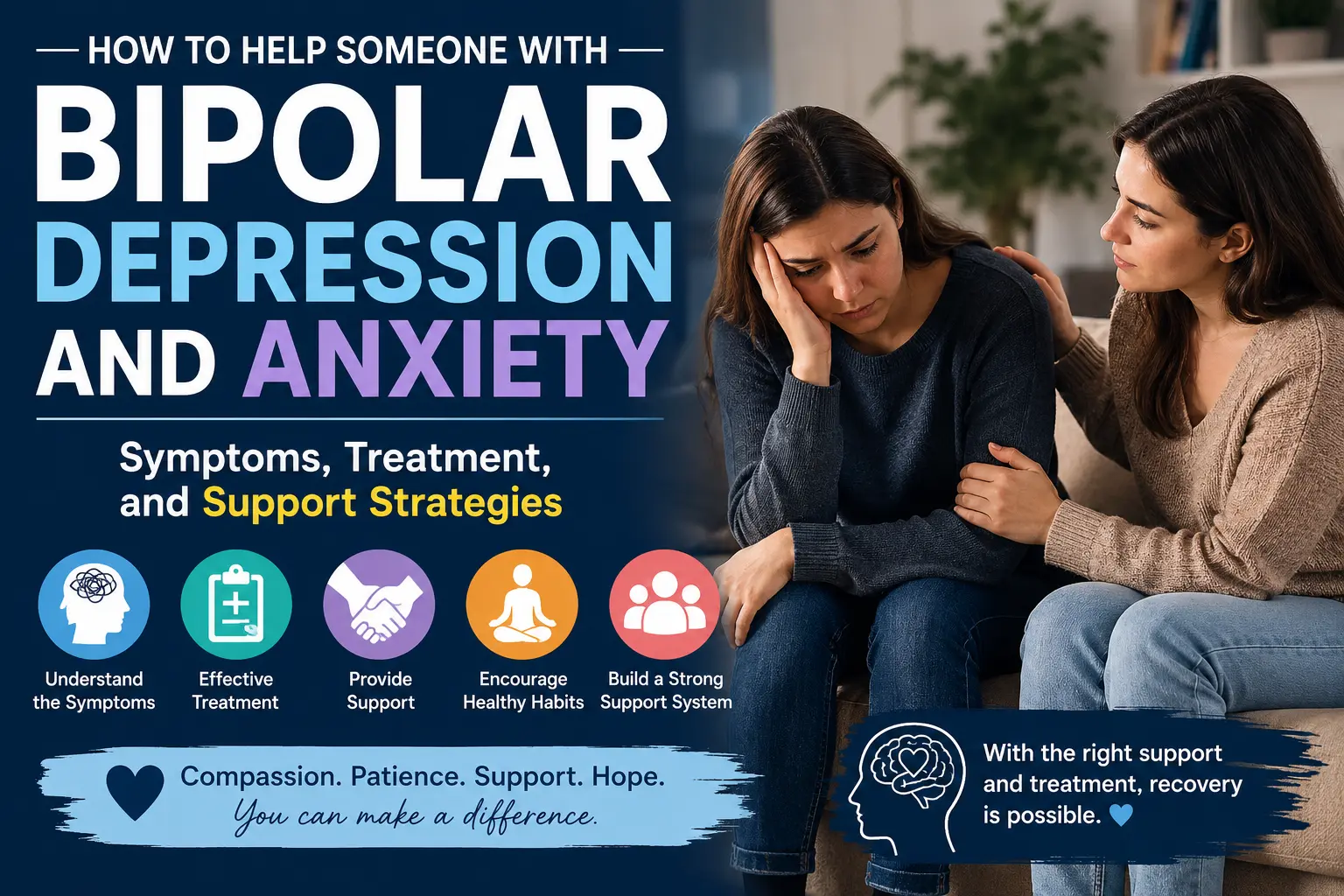 Watching someone you care about struggle with bipolar depression and anxiety can be heartbreaking. You may notice that they withdraw…
 In my practice as a clinical psychologist, I often observe that the difference between a patient who crumbles under pressure…
 We all have "up" days and "down" days. Perhaps you feel energized after a promotion or sluggish on a rainy…
 To define bipolar disorder accurately, we must look at it as a chronic mood dysregulation condition. In psychology and medicine,…
Are you looking for a Therapist?
Connect with qualified mental health professionals who understand
bipolar disorder, mood changes, and emotional challenges.
Private • Supportive • Confidential