
Do I Have Quiet BPD? Signs, Tests, Behaviors, and How to Get Help

Medically reviewed by Laura Athey Updated Date: April 23, 2026

If you find yourself searching do i have quiet bpd you are likely experiencing a profound disconnect. There is often a massive gap between your calm external appearance and your chaotic internal world.
Many individuals begin searching for this question after noticing recurring, exhausting emotional patterns.
These hidden emotional cycles often do not match typical anxiety or major depression explanations. In my practice, I frequently observe high-functioning patients who feel completely overwhelmed by invisible emotional storms.
They ask this question because they are desperately seeking validation for pain that nobody else sees.
To understand why this happens, we must look deeply at the underlying biology and psychology. When a person experiences an emotional trigger, the brain’s fear center—the amygdala—activates instantly.
In individuals with borderline traits, this amygdala response is exceptionally hyperactive and intense.
What Is Quiet Borderline Personality Disorder?
When patients finally find this term, they almost always ask me, “What is a quiet BPD borderline presentation?” It is crucial to understand that it refers to the direction of your emotional expression. A borderline personality disorder quiet type turns all of their intense emotional dysregulation inward.
Instead of outward volatility, they experience implosive emotional episodes marked by intense self-hatred. They might completely withdraw socially, isolate themselves in their rooms, and engage in psychological self-harm.
Because these behaviors are invisible, friends and family often genuinely believe the person is perfectly fine.
Patients often wonder, “Is BPD really quiet, and is it a formal diagnosis?” Officially, it is not listed as a distinct subtype in the DSM-5. The current psychiatric manual groups all borderline traits under one single diagnostic umbrella.
However, mental health professionals and trauma specialists universally recognize it as a highly valid clinical presentation. We use this conceptual framework because treating internalized symptoms requires a very different therapeutic approach.
Validating this specific subtype is essential for helping patients finally feel seen and understood.
Quiet BPD Symptoms and Behaviors

Understanding quiet BPD symptoms requires us to look past the surface of a person’s actions. The quiet borderline personality disorder symptoms are characterized by a profound fear of abandonment, hidden by over-functioning.
These individuals are often the “fixers” in their friend groups, masking their own deep chronic emptiness.
In my practice, I constantly observe how poor sleep hygiene exacerbates internalized symptoms. When a patient’s circadian rhythms are disrupted, their prefrontal cortex loses the energy required to regulate the amygdala.
Consequently, a single night of poor sleep drastically lowers their distress tolerance, often triggering an intense, silent shame spiral the following afternoon.
I recently treated a patient named Emma, a brilliant graphic designer who appeared flawlessly composed. However, Emma suffered from paralyzing quiet BPD behaviors; she would spend hours agonizing over a minor miscommunication.
If a friend took too long to text back, Emma’s brain perceived it as total, permanent abandonment.
Instead of reaching out for reassurance, Emma would completely, silently withdraw from the relationship. She believed she was fundamentally unlovable and was preemptively protecting herself from the inevitable rejection.
In our sessions, we integrated psychodynamic exploration with targeted mindfulness and cognitive-behavioral techniques.
We slowly rebuilt her executive function, allowing her to pause and reality-test her intense internal fears. Over time, her neuroplasticity allowed her to form new, secure pathways, reducing her need to emotionally isolate.
To help visualize this disconnect, I often share a quiet BPD behaviors chart with my patients. It clearly contrasts the external mask with the agonizing internal reality.
| External Behavior | Internal Experience |
| Appears perfectly calm during an argument | Experiencing intense emotional distress and panic |
| Avoids conflict and aggressively people-pleases | Driven by a paralyzing, deep fear of rejection |
| Withdraws emotionally without any explanation | Terrified of abandonment and feeling like a burden |
| Accepts blame immediately for things going wrong | Spiraling in toxic shame and severe self-hatred |
| Overachieves at work or in school | Desperately trying to prove they are worthy of existing |
11 Hidden Signs of Quiet Borderline Personality Disorder
Recognizing these subtle patterns is often the very first step toward accurate self-discovery and healing. Because the distress is hidden, you must look closely at your own internal dialogues.
Here are the 11 hidden signs of quiet borderline personality disorder that I frequently see in clinical practice:
- Silent Emotional Suffering: You experience intense, painful emotional crashes entirely inside your own head.
- Extreme Guilt: You feel an overwhelming sense of guilt for simply having basic human needs.
- Fear of Disappointing Others: You will push yourself to physical exhaustion just to avoid letting someone down.
- Chronic Emptiness: You feel a persistent, physical numbness or a hollow void inside your chest.
- High-Functioning Facade: You maintain a perfect, successful exterior while internally feeling like you are drowning.
- Sudden Isolation: You cut off contact with loved ones when you feel overwhelmed to protect them from yourself.
- Internalized Anger: When someone hurts you, you direct the resulting rage completely at yourself.
- Imposter Syndrome: You constantly feel like a fraud who is tricking everyone into loving you.
- Mind-Reading Anxiety: You automatically assume that a slight change in someone’s tone means they hate you.
- Psychological Self-Harm: You brutally criticize yourself and deny yourself basic comforts as a form of punishment.
- Boundary Collapse: You completely abandon your own personal boundaries to keep the peace in relationships.
Do I Have a Quiet BPD Test or Quiz?
When the emotional pain becomes too heavy, many turn to Google, searching for a “Do I have quiet BPD test?” Taking an online “Do I have quite BPD?” quiz can be a highly validating first step. These tools often help you articulate the hidden feelings you have struggled to explain for years.
However, you must understand the clinical difference between a screening tool and a diagnostic evaluation. A quiet borderline personality disorder test online can highlight symptom patterns and risk indicators. It cannot account for the complex nuances of your personal psychological history.
There is no single borderline personality disorder test accurate enough to diagnose you through a screen. Many internalized symptoms heavily overlap with complex trauma, neurodivergence, or severe clinical depression.
Only a licensed professional can perform a comprehensive differential diagnosis to ensure you get the right help.
If your screening results resonate deeply, I strongly encourage you to bring them to a therapist. We use these self-reported patterns as a collaborative roadmap to begin your formal diagnostic journey safely.
Quiet BPD Symptoms in Women
The diagnostic landscape has historically failed women who internalize their psychological distress.
When examining quiet BPD symptoms in women, we must critically evaluate the impact of cultural socialization. Society aggressively conditions young girls to be accommodating, polite, and completely devoid of visible anger.
Consequently, female patients learn that emotional masking is essential for social survival and acceptance. Instead of directing their intense emotional dysregulation outward, they aim it entirely at themselves.
This intense self-blame frequently results in mental health professionals misdiagnosing them with treatment-resistant depression.
Furthermore, perfectionism becomes a rigid armor used to preemptively ward off any potential rejection. They exhaust their executive function trying to be the flawless partner, daughter, or employee. When they inevitably fall short of perfection, their internal shame spiral is devastating and entirely invisible.
Quiet BPD in Relationships
Navigating intimacy with this condition feels like walking a tightrope while blindfolded. Understanding quiet BPD in relationships requires examining the deep, conflicting desires for connection and safety.
You desperately crave secure intimacy, yet your nervous system interprets closeness as a massive threat.
This dynamic deeply complicates quiet BPD and romantic relationships, creating a silent push-and-pull cycle. You might experience intense fear of abandonment, but instead of clinging, you emotionally isolate.
You preemptively pull away to protect yourself, leaving your partner completely confused by your sudden coldness.
Because you struggle to communicate your needs, silent resentment often builds up over minor miscommunications. You expect your partner to mind-read your distress, and when they fail, you feel profoundly unloved.
Healing these relationship patterns requires actively rewiring your attachment style in a safe therapeutic environment.
What Does Quiet BPD Look Like in Daily Life?
Patients frequently ask me, “What does BPD look like in daily life when it is invisible? The reality is an exhausting cycle of high functioning followed by severe emotional collapses. You might excel during a work presentation, only to spend the evening crying uncontrollably in your car.
Are people with BPD usually quiet? While the stereotype suggests loudness, many suffer in total, agonizing silence. In the workplace, they are often chronic overachievers who physically cannot say no to extra tasks. They use constant busyness to outrun the chronic emptiness echoing inside their chest.
When they finally stop working, their suppressed emotional shutdown cycles begin almost immediately. Their nervous system crashes from prolonged hyperarousal, leading to deep, depressive isolation on weekends. They live a double life: the capable professional publicly, and the terrified child privately.
Can Quiet People Have BPD?

There is a persistent, harmful myth that personality disorders always look dramatic or explosive. So, can quiet people have BPD? Absolutely, and their internal suffering is just as severe as that of those who externalize their pain.
Patients often tentatively ask, ” Is quiet BPD a thing, or am I just making this up? Your internalized symptoms are incredibly real and heavily documented in clinical trauma psychology. Your quiet nature is not a lack of emotion; it is a hyper-containment of overwhelming emotion.
Recognizing that your introversion might actually be an emotional survival strategy is a massive paradigm shift. It allows you to stop judging yourself and start actively treating the root of your exhaustion.
Treatment for Quiet BPD
Discovering you might have this condition is daunting, but identifying it is the first step to recovery. When discussing treatment for quiet BPD, I always emphasize that deep, lasting healing is entirely possible. Standard talk therapy is rarely enough; we must use targeted, evidence-based behavioral interventions.
So, how is quiet borderline personality disorder treated effectively? Dialectical Behavior Therapy (DBT) is the absolute gold standard for rewiring these intense emotional responses. DBT strengthens your brain’s executive function, teaching you concrete skills for distress tolerance and emotional regulation.
We also heavily utilize trauma-informed therapy to address the root childhood attachment wounds. By applying radical acceptance, we dismantle the toxic shame that keeps you trapped in silence.
Frequently Asked Questions
Diagnostic Validity of Internalized Traits?
While not explicitly named as a separate disorder in the DSM-5, clinicians widely treat this presentation. We view it as a clinically significant, inward-facing manifestation of standard borderline diagnostic criteria.
Differentiating From High-Functioning Depression?
Depression typically features a consistent, prolonged low mood and anhedonia lasting for weeks. Internalized borderline traits involve rapid, intense emotional shifts and chronic emptiness triggered by perceived interpersonal rejection.
The Role of Medication in Treatment?
There are no specific medications FDA-approved solely for treating borderline personality traits. However, psychiatrists frequently prescribe mood stabilizers or SSRIs to help manage co-occurring severe anxiety or depression.
Timeline for Therapeutic Recovery?
Healing is non-linear and deeply depends on a patient’s commitment to practicing distress tolerance skills daily. Many patients see significant reductions in their internal emotional volatility within the first year of dedicated DBT.
Navigating Intimacy and Trust?
Building secure romantic attachments is highly challenging but entirely possible with ongoing therapy. It requires active communication, radical honesty about your triggers, and unlearning the instinct to silently pull away.
Conclusion
Asking, “Do I have quiet BPD?” is an incredibly brave step out of the shadows of your own mind. For years, you have likely carried a massive emotional burden entirely alone, masking your pain to protect everyone else and trying to appear strong on the outside while struggling internally.
Please know that your silent suffering is valid, your exhaustion is real, and your condition is highly treatable. You do not have to live the rest of your life trapped behind a flawless, exhausting facade, constantly suppressing your needs and emotions just to maintain a sense of stability.
By reaching out to a trauma-informed professional, you can finally begin to externalize your pain in a safe and structured way, learn healthier coping strategies, and gradually rebuild a more secure sense of self.
With the right support, it is possible to feel understood, develop emotional balance, and reclaim a sense of inner peace that does not rely on constant self-silencing.
Authoritative References
- Emotion Suppression in Borderline Personality Disorder: An Experience Sampling Study
- The Relationship Between Non-Suicidal Self-Injury and the Internalizing and Externalizing Dimensions of Borderline Personality Disorder
- Rejection Sensitivity and Symptom Severity in Patients with Borderline Personality Disorder: Effects of Childhood Maltreatment
- Dialectical Behavior Therapy as Treatment for Borderline Personality Disorder

Related Posts






Subscribe to Our Newsletter
Get mental health tips, updates, and resources delivered to your inbox.
MORE from Author
Read More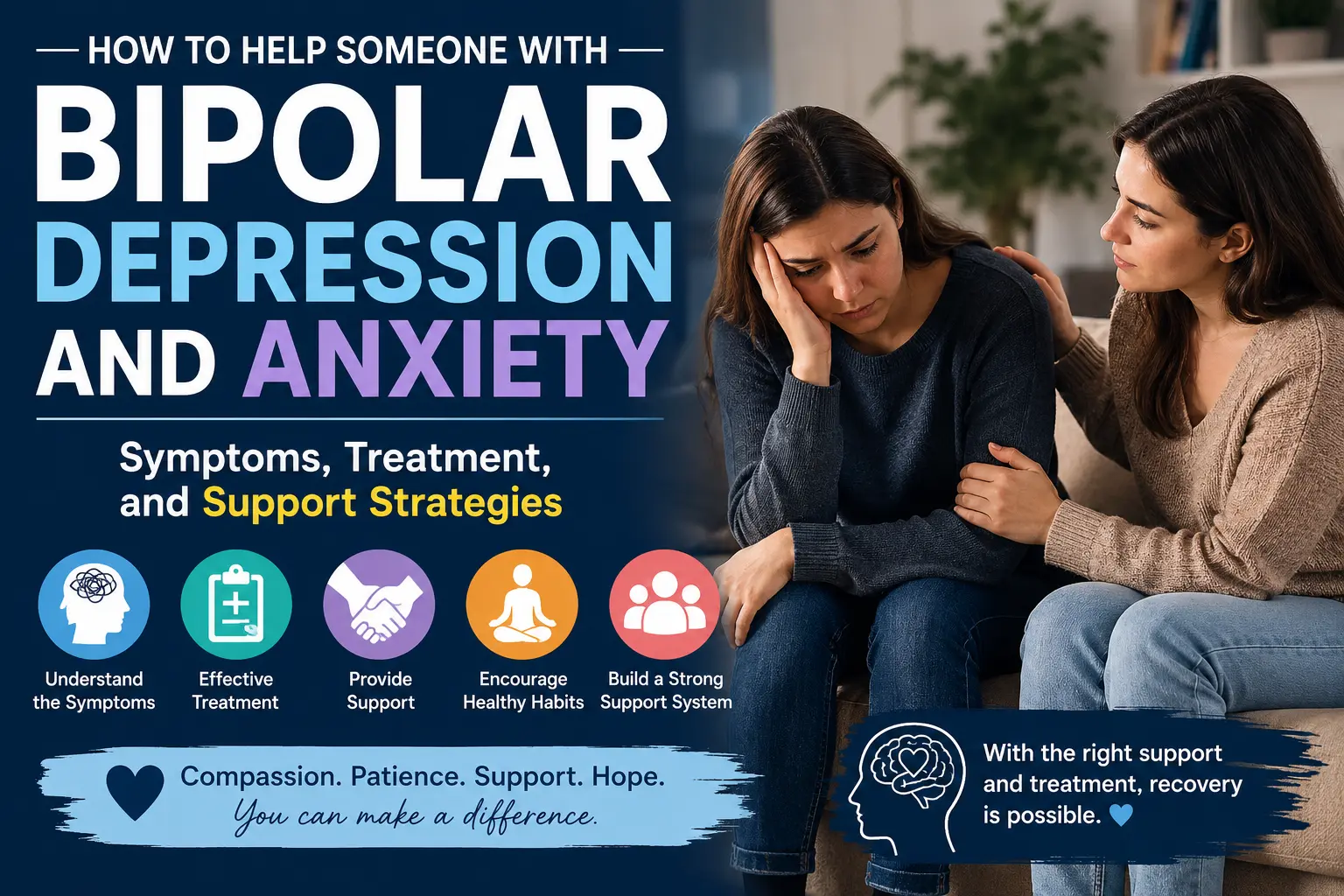 Watching someone you care about struggle with bipolar depression and anxiety can be heartbreaking. You may notice that they withdraw…
 In my practice as a clinical psychologist, I often observe that the difference between a patient who crumbles under pressure…
 We all have "up" days and "down" days. Perhaps you feel energized after a promotion or sluggish on a rainy…
 To define bipolar disorder accurately, we must look at it as a chronic mood dysregulation condition. In psychology and medicine,…
Are you looking for a Therapist?
Connect with qualified mental health professionals who understand
bipolar disorder, mood changes, and emotional challenges.
Private • Supportive • Confidential