
What Causes Quiet BPD? Signs, Feelings, Diagnosis, and Treatment Explained

Medically reviewed by Laura Athey Updated Date: April 21, 2026

In my practice, I frequently meet highly functioning individuals who are fighting a completely invisible emotional war. To the outside world, they appear exceptionally calm, compliant, and successful. Internally, however, they are drowning in a sea of emotional distress, and What Causes Quiet BPD?
Many people underestimate how profoundly sleep hygiene impacts executive function and emotional containment. When my patients with internalized traits experience disrupted circadian rhythms, their prefrontal cortex loses the energy required to mask.
A single night of poor sleep severely compromises their distress tolerance, frequently triggering a sudden, silent shame spiral the very next day.
What Does Quiet BPD Mean?
When patients finally discover the term, they often ask me, “What does quiet BPD mean?” Simply put, it refers to a presentation where borderline traits are directed entirely inward. Instead of lashing out at others with explosive anger, these individuals lash in.
They aggressively suppress their natural emotional reactions to avoid burdening anyone else. This internalization results in intense self-directed anger, silent resentment, and chronic emotional exhaustion.
Because these symptoms are hidden, patients frequently wonder, is quiet BPD real? Officially, it is not listed as a distinct subtype in the DSM-5. The psychiatric manual groups all borderline presentations under one broad diagnostic code.
However, trauma specialists and clinical psychologists widely recognize this pattern as a highly valid, critical clinical presentation.
What Causes Quiet BPD?

Understanding what causes quiet BPD requires looking deeply into the intersection of neurobiology, attachment theory, and childhood environments. As a clinical psychologist specializing in psychodynamic psychotherapy and trauma,
I never look at symptoms in a vacuum. This condition is not a random chemical imbalance; it is a profound adaptation to early emotional survival.
Biologically, individuals with these traits are often born with a highly sensitive autonomic nervous system. Their amygdala—the brain’s threat detection center—is hyper-reactive to perceived social or emotional danger. However, unlike classic presentations, these individuals also develop an overactive prefrontal cortex.
This means their executive function works in overdrive to suppress the amygdala’s intense alarm bells. Through neuroplasticity, their brain becomes rigidly wired to hide distress rather than express it. So, what kind of trauma causes quiet BPD to wire the brain this way?
It almost always stems from chronic emotional neglect or an invalidating childhood environment. These patients did not necessarily experience overt physical abuse, though that can be a factor. More commonly, they grew up in homes where expressing negative emotions was implicitly or explicitly punished.
If crying resulted in being ignored, mocked, or told “you’re too sensitive,” the child learned a critical lesson. They realized that their authentic feelings threatened their attachment to their primary caregivers. To secure the love and physical presence of their parents, they learned to completely erase their own emotional needs.
I once worked with a patient named Maya, a successful nurse who perfectly exemplified this etiology. Maya grew up with a severely depressed mother and an emotionally absent father. She learned by age five that if she had a problem, it would shatter her mother’s fragile mental state.
Maya’s quiet BPD developed as a brilliant childhood survival strategy to keep her family intact. Whenever she felt angry or sad, her brain instantly converted that energy into toxic self-blame to protect her caregivers.
In our sessions, we utilized psychodynamic exploration and somatic tracking to help Maya process these early attachment wounds. By slowly uncoupling “expressing needs” from “being abandoned,” Maya learned to safely externalize her suppressed emotions.
What Triggers Quiet BPD Symptoms?
Identifying what triggers quiet BPD is often challenging because the reactions are entirely internalized. However, the core catalyst is almost always linked to relational insecurities and perceived abandonment.
Even the slightest shift in a partner’s tone of voice can send the nervous system into fight-or-flight.
A delayed text message, constructive criticism at work, or a friend canceling plans are massive triggers. To a neurotypical brain, these are minor inconveniences. To someone with internalized borderline traits, these events feel like concrete proof of their fundamental unlovability.
This perceived rejection frequently triggers a psychological defense mechanism known as quiet BPD splitting. In classic splitting, a person might suddenly view someone else as entirely evil (“I hate you”). In the internalized version, the splitting is directed at the self.
The individual immediately decides, “I am a monster, I am worthless, and they are right to abandon me.” This rapid shift from feeling okay to feeling fundamentally broken is incredibly jarring. It forces the individual to emotionally withdraw entirely to protect others from their perceived toxicity.
Signs of Quiet BPD
Because the distress is aggressively masked, loved ones rarely notice the signs of a quiet BPD crisis. The individual goes to extreme lengths to ensure their external behavior appears socially acceptable.
Recognizing these quiet BPD signs requires looking for the sudden absence of connection rather than an explosion of conflict.
One of the most prominent signs is sudden, unexplained emotional withdrawal. When hurt, instead of initiating a conversation, the person will physically and emotionally isolate themselves. They swallow their feelings, which inevitably ferment into deep, silent resentment.
Another hallmark sign is intense, unrelenting self-criticism over incredibly minor mistakes. They hold themselves to an impossible standard of perfection to preemptively avoid any reason for rejection. To better illustrate this disconnect, I often share this comparative table with my patients.
| External Behavior (The Mask) | Internal Experience (The Reality) |
| Smiling and agreeing during an argument | Experiencing a paralyzing fear of rejection and panic |
| Sudden silence or isolating in another room | Intense emotional flooding and fear of abandonment |
| Apologizing profusely for minor inconveniences | Battling severe self-loathing and feeling like a burden |
| Overworking and extreme people-pleasing | Desperately trying to prove they are worthy of existing |
Feelings of Quiet BPD
To truly understand this condition, we must explore the agonizing feelings of quiet BPD. The internal landscape is characterized by a persistent, heavy emotional exhaustion. Masking intense psychological pain every single day takes a massive physiological toll on the body.
Patients frequently ask me how to deal with BPD emptiness, which is a core symptom. This is not simply feeling bored; it is a painful, physical void in the center of the chest. It feels as though your core identity is missing, leaving a hollow space that nothing can permanently fill.
This emptiness is often accompanied by an overwhelming sense of toxic shame. You do not just feel like you made a mistake; you feel that you are a mistake. Every social interaction is filtered through this lens of shame, convincing you that everyone secretly dislikes you.
Quiet BPD in Relationships
Intimacy requires vulnerability, which is exactly what the nervous system of someone with internalized borderline traits perceives as a mortal threat. Navigating quiet BPD in relationships involves an agonizing push-and-pull dynamic that happens almost entirely in the person’s head.
You desperately crave secure, lasting love, but your brain is rigidly wired to expect sudden abandonment.
This creates a pattern of silent conflict avoidance. Instead of bringing up a legitimate relationship grievance, you swallow it. You fear that if you express any dissatisfaction, your partner will immediately leave you.
However, unexpressed needs do not disappear; they fester into silent resentment and emotional exhaustion.
When triggered by a perceived slight, the fear of abandonment takes over. Yet, instead of clinging or protesting loudly, you utilize emotional withdrawal. You might suddenly become cold, distant, or physically isolated from your partner.
To your partner, this withdrawal seems confusing and unprompted, but to you, it is a desperate attempt to protect yourself before the other person can hurt you.
Why Is BPD Sometimes Quiet?
Patients often struggle to reconcile their diagnosis with the mainstream stereotypes of the disorder. They ask, “Why is BPD so quiet in my case?” The core difference lies entirely in the direction of emotional expression: internalization versus externalization.
Sometimes, a borderline personality disorder develops because the individual possesses highly developed executive functioning in the prefrontal cortex alongside their hyper-reactive amygdala. Their brain has enough cognitive control to forcibly slam the brakes on an outward emotional explosion.
Furthermore, gender conditioning and societal expectations play a massive role. Individuals socialized as women are frequently taught that outward anger is unacceptable.
Therefore, they learn to redirect that intense emotional dysregulation inward, turning it into shame and self-hatred to maintain social harmony and safety.
Quiet BPD Diagnosis
Getting an accurate assessment is often a frustrating journey. Because patients hide their symptoms so effectively, doctors frequently misdiagnose them with treatment-resistant depression or generalized anxiety.
So, is BPD a real diagnosis? While not a standalone DSM-5 code, it is diagnosed under the standard Borderline Personality Disorder criteria.
A thorough, quiet BPD diagnosis requires a highly skilled clinician who knows how to look for internalized criteria. During clinical interviews, we do not just ask if you get into fights; we ask what you do with your anger when you feel it.
We look for the chronic feelings of emptiness, identity disturbance, and stress-related paranoia.
Differential diagnosis is crucial here. As a psychologist, I must carefully distinguish your internalizing patterns from complex PTSD (CPTSD), autism spectrum masking, or bipolar II disorder.
This deep, nuanced evaluation ensures we target the root cause of your emotional exhaustion, rather than just treating surface-level anxiety.
Treatment for Quiet BPD

When patients finally receive clarity, their next question is urgently focused on recovery: What is the treatment for borderline personality disorder? Because the condition is rooted in deep neural pathways and attachment wounds, traditional, unstructured talk therapy is rarely sufficient.
We must actively rewire how the brain processes emotional threats.
Understanding how to treat quiet BPD starts with Dialectical Behavior Therapy (DBT). DBT is the clinical gold standard for emotional dysregulation.
It teaches you concrete distress tolerance skills, allowing you to survive an emotional trigger without immediately defaulting to self-blame or isolation. You learn to utilize your prefrontal cortex to regulate your amygdala consciously.
Beyond DBT, schema therapy and trauma-focused therapy are essential for long-term healing. Schema therapy helps identify and dismantle the deep-rooted core beliefs—such as “I am fundamentally unlovable”—formed in childhood.
By integrating these evidence-based therapies, we help you process the trapped trauma safely, slowly reducing the intense emotional burden you carry every day.
Can People With Quiet BPD Live Happy Lives?
The stigma surrounding personality disorders is often heavier than the symptoms themselves. Patients regularly ask me, terrified, what happens if you live with quiet BPD forever? Are borderlines ever happy?
I want to be absolutely clear: you can absolutely live a deeply fulfilling, peaceful, and happy life. This condition is highly treatable. You are not fundamentally broken; you are simply operating with an overloaded nervous system that needs new operating instructions.
With dedicated therapy, your emotional baseline will stabilize. You will learn to externalize your needs safely, build secure, trusting relationships, and finally experience the joy of living authentically without the exhausting mask.
Frequently Asked Questions
DSM-5 Classification Realities?
The DSM-5 groups all borderline presentations under a single diagnostic category. However, clinical psychologists widely recognize the internalized subtype to tailor treatments for patients who suppress their symptoms rather than act out.
Differentiating Internalized Traits and CPTSD?
While both involve severe trauma responses and emotional dysregulation, they differ in core fears. Internalized borderline traits center heavily around identity instability and abandonment fears, whereas CPTSD primarily involves persistent emotional flashbacks to specific trauma.
Timeline for Therapeutic Improvement?
Recovery is non-linear and deeply relies on active participation in therapies like DBT. Many individuals notice a significant reduction in chronic emptiness and emotional exhaustion within the first year of dedicated, specialized treatment.
Relationship Success and Stability?
Individuals with these internalized traits can maintain beautiful, long-term romantic relationships. It requires learning to communicate internal triggers safely and unlearning the defensive instinct to silently withdraw when feeling vulnerable.
Co-occurring Mental Health Struggles?
This presentation rarely exists in total isolation. Due to the immense stress of chronic emotional masking, patients frequently suffer from co-occurring generalized anxiety, major depression, or restrictive eating disorders.
Conclusion
Understanding what causes quiet BPD is the first crucial step toward dismantling the invisible walls that have trapped you for years. Your chronic emptiness, intense self-blame, and exhaustion are not signs of personal failure; they are the heavy echoes of childhood survival strategies.
You have spent your entire life masking your pain to keep others comfortable, but your healing must now prioritize your own peace.
By engaging in evidence-based treatments like DBT and trauma-informed therapy, you can finally lay down the mask, heal your attachment wounds, and step into a life of genuine emotional freedom.
Authoritative References
- Borderline Personality Disorder and Childhood Trauma: Exploring the Affected Biological Systems and Mechanisms
- An Evidence-Based Integrated Process Framework of Borderline Personality Disorder Clinical Features
- Childhood Trauma and Borderline Personality Disorder Traits: A Discordant Twin Study
- Dialectical Behavior Therapy for Borderline Personality Disorder: A Meta-Analysis Using Mixed-Effects Modeling

Related Posts






Subscribe to Our Newsletter
Get mental health tips, updates, and resources delivered to your inbox.
MORE from Author
Read More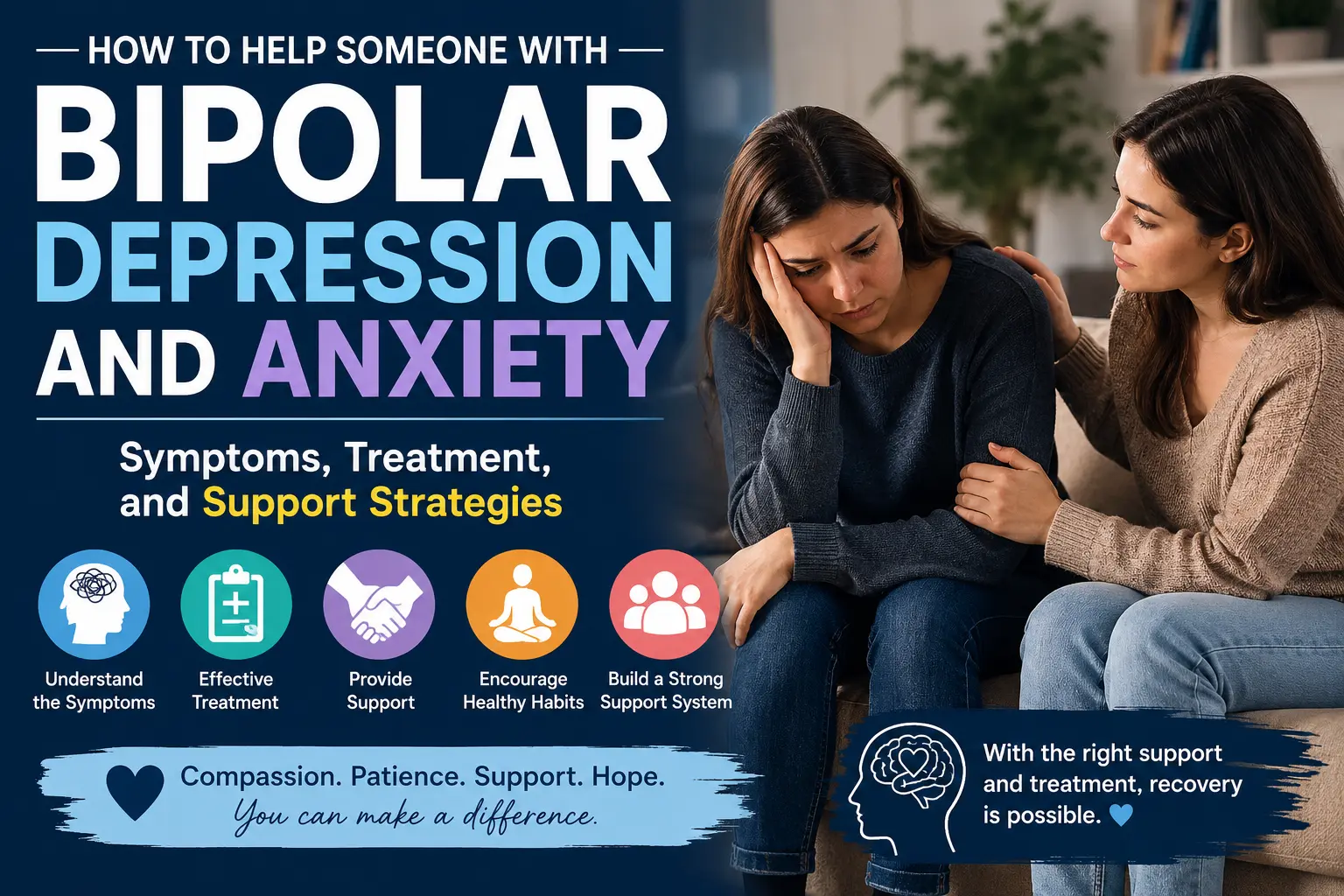 Watching someone you care about struggle with bipolar depression and anxiety can be heartbreaking. You may notice that they withdraw…
 In my practice as a clinical psychologist, I often observe that the difference between a patient who crumbles under pressure…
 We all have "up" days and "down" days. Perhaps you feel energized after a promotion or sluggish on a rainy…
 To define bipolar disorder accurately, we must look at it as a chronic mood dysregulation condition. In psychology and medicine,…
Are you looking for a Therapist?
Connect with qualified mental health professionals who understand
bipolar disorder, mood changes, and emotional challenges.
Private • Supportive • Confidential