
Bipolar Disorder Symptoms At Night: Sleep Disruption and 7 Early Sleep Warning Signs

Medically reviewed by Laura Athey Updated Date: April 15, 2026

Many people searching for the signs of bipolar disorder expect to find sudden, dramatic mood shifts as the first indicator. However, in my practice as a clinical psychologist, I often observe a very different reality. Bipolar Disorder Symptoms At Night
Many people first notice bipolar disorder not through mood changes, but through severe sleep disruption. Patients often report that their sleep patterns changed weeks before their emotional symptoms became obvious.
In clinical settings, sleep disruption is frequently recognized as the earliest biological marker of an impending episode. Recognizing this subtle shift can be the difference between early intervention and a full-blown crisis.
By understanding how your brain’s internal clock interacts with your mood, you can gain profound control over your mental health. Awareness of these early warning signs is your most powerful tool for long-term stability.
What Is Bipolar Disorder?
Before we dive into symptoms, we must establish a clear clinical understanding of the condition. Bipolar disorder is a complex neurobiological condition, not merely a series of “good” and “bad” days.
The disorder is defined by distinct, alternating periods of elevated mood (mania or hypomania) and deep depression. The two most common diagnoses are Bipolar I, featuring severe mania, and Bipolar II, featuring milder hypomania and severe depression.
Treatment for bipolar disorder requires a highly structured, multifaceted approach. It almost always involves a combination of mood-stabilizing medication, targeted psychotherapy, and rigorous lifestyle and sleep regulation.
Bipolar disorder is a mental health condition characterized by alternating episodes of depression and mania or hypomania, often affecting sleep, energy, and behavior.
Could You Have Bipolar Disorder?

When patients ask if they could have bipolar disorder, we look for a cluster of specific behavioral and biological changes. The core symptoms extend far beyond simply feeling happy or sad. Bipolar Disorder Symptoms At Night
Early symptoms frequently include unexplained irritability, sudden energy spikes or drops, and profound sleep changes. You might also notice a sudden increase in goal-directed activity, like starting three new projects at midnight.
Many individuals take a bipolar disorder self-test when they notice these confusing patterns. These self-assessments are incredibly useful for building personal awareness and tracking symptoms.
However, self-awareness tools only help identify patterns; clinical diagnosis requires a thorough evaluation over time. A mental health professional must map your entire symptom history to rule out overlapping conditions like ADHD or trauma.
Early Signs of Bipolar Disorder You Should Never Ignore
The most dangerous misconception about bipolar disorder is that episodes appear out of nowhere. In reality, there is almost always a prodromal phase—a window of subtle early indicators.
One of the most critical early indicators is a noticeably reduced need for sleep without feeling tired the next day. This is frequently accompanied by sudden productivity bursts and heightened emotional sensitivity to minor criticisms.
Particularly in bipolar II, the presentation is often depression-first, meaning the patient suffers from deep lows for years before a hypomanic high is identified. In clinical settings, these early bipolar signs are often tragically mistaken for situational stress or standard career burnout.
Because the hypomanic productivity is often praised by society, the underlying neurochemical storm goes completely unnoticed until the inevitable depressive crash occurs.
Bipolar Disorder and Sleep Problems
When discussing early warning signs, we must dedicate substantial focus to bipolar disorder and sleep disturbance. Sleep disruption is not merely a side effect of bipolar disorder; it is a core, driving symptom of the illness itself.
To understand why, we have to look at the brain’s biological clock, known as our circadian rhythms. In a neurotypical brain, this internal clock regulates the release of melatonin at night and cortisol in the morning, creating a predictable cycle of rest and wakefulness.
In a brain with bipolar disorder, the circadian rhythm is highly fragile and structurally vulnerable to disruption. When this rhythm breaks down, the brain’s executive function—managed by the prefrontal cortex—loses its ability to regulate the limbic system, which controls emotions and arousal.
During a manic phase, the brain is flooded with excitatory neurotransmitters like dopamine and norepinephrine. This chemical bath completely masks the physical sensation of fatigue, leading to a state where the patient genuinely feels they do not need sleep.
Conversely, during a depressive phase, the circadian breakdown results in hypersomnia, or excessive sleeping. The brain’s neuroplasticity is temporarily suppressed by a lack of serotonin and dopamine, causing profound psychomotor retardation and a feeling of leaden exhaustion.
As a psychologist, I constantly monitor what I call a patient’s “sleep window.” Individuals on the bipolar spectrum often have a very narrow window of time during which their brain can successfully transition into sleep.
If they miss this window due to screen time, late-night socializing, or stress, their brain misinterprets the wakefulness as a need to activate the “fight or flight” system, frequently triggering a hypomanic spike by morning.
| Sleep Issue | Bipolar Phase | Impact on Daily Functioning |
| Insomnia/Reduced Need | Mania / Hypomania | Increased, frantic energy; poor decision-making |
| Oversleeping (Hypersomnia) | Depressive Episode | Severe fatigue; inability to meet basic obligations |
| Fragmented Sleep | Mixed State | Extreme irritability; heightened anxiety and confusion |
Why Do People With Bipolar Disorder Stay Up at Night?
Families often ask in frustration, “Why do people with bipolar disorder keep up at night?” It is crucial to understand that they are not choosing to be defiant or difficult.
During an upward mood swing, the individual experiences severe physical hyperarousal. Their brain is generating racing thoughts that feel incredibly urgent, important, and impossible to turn off.
This dopamine-driven alertness forces the nervous system into a state of high activation. The body physically feels as though it is running a marathon, making lying still in bed feel like torture.
Furthermore, we must distinguish between a reduced need for sleep and standard insomnia. An insomniac desperately wants to sleep but cannot, whereas a person in a manic state feels they simply do not need it to function.
Bipolar Mania and Sleep
The relationship between bipolar mania and sleep is the most critical clinical marker we monitor. A dramatically reduced sleep requirement is often the very first definitive sign that a manic episode has begun.
During early mania, a person might sleep only two or three hours a night and wake up feeling entirely refreshed and euphoric. They often display increased productivity despite this massive sleep loss, which reinforces the behavior.
However, this is a dangerous illusion. While the person feels highly capable, their brain is accumulating severe sleep debt, and their executive function is rapidly deteriorating.
Sleep reduction without fatigue is a hallmark early warning sign of mania. If ignored, this sleep loss acts as an accelerant, escalating hypomania into severe mania, complete with impulsivity, paranoia, or even psychosis.
Bipolar Disorder: Sleeping Too Much
While mania is characterized by sleep avoidance, the depressive phase of the disorder presents the exact opposite challenge. Patients searching for reasons behind bipolar sleeping too much are often experiencing a profound symptom known as hypersomnia.
During a bipolar depressive crash, the brain’s neurochemical reserves of dopamine and norepinephrine are entirely depleted. This severe energy depletion mechanism forces the nervous system into a state of involuntary hibernation.
You are not sleeping because you are “lazy”; your brain is executing a protective emotional shutdown. Because neuroplasticity is compromised during depression, the brain slows down all metabolic and cognitive processes, creating a physical sensation of leaden paralysis.
Despite sleeping for twelve to fourteen hours a day, patients wake up feeling completely unrefreshed. This is because the architectural quality of the sleep is remarkably poor, lacking the deep restorative stages required for true cognitive recovery.
Bipolar Sleep Patterns
When we analyze bipolar sleep patterns over time, the variability itself becomes a massive diagnostic clue. In a healthy brain, sleep architecture is generally stable, shifting only slightly with travel or acute stress.
In a bipolar brain, the extreme irregularity of the circadian rhythms creates a distinct, chaotic sleep graph. You might see weeks of heavy hypersomnia followed abruptly by a sudden, severe drop to three hours of sleep per night.
This variability serves as an incredibly accurate early warning system for both clinicians and patients. In my practice, I find that sleep changes often appear days or even weeks before mood symptoms become obvious to the patient or their family.
By aggressively tracking these patterns, we can predict an incoming mood episode and intervene medically before the patient’s executive function is compromised.
Can a Bad Night’s Sleep Trigger a Bipolar Episode?
A frequently asked question is, “Can a bad night’s sleep cause a bipolar episode?” The clinical answer is that sleep deprivation acts as a powerful environmental trigger, not the underlying cause of the disorder itself.
Individuals with bipolar disorder have a deep biological vulnerability to sleep loss. For a neurotypical person, pulling an “all-nighter” results in sluggishness and fatigue the next day.
For a person on the bipolar spectrum, a single night of severe sleep deprivation can shock the limbic system, tricking the brain into a state of hyperarousal. The risk of rapid manic escalation after sleep loss is incredibly high, making rigorous sleep hygiene a non-negotiable medical necessity.
How Bipolar Disorder Affects Daily Life
Understanding how bipolar 2 disorder affects daily life requires looking at the insidious nature of energy unpredictability. Unlike bipolar I, where severe mania is obvious, bipolar II involves a quieter, chronic instability.
Work performance often wildly fluctuates; an individual might be the company’s top performer during a hypomanic month, only to struggle to answer basic emails during a depressive cycle. This inconsistency deeply undermines career progression.
Furthermore, the emotional instability cycles create severe relationship strain. Partners often feel like they are walking on eggshells, unsure which version of their loved one will wake up that morning. Bipolar Disorder Symptoms At Night
What Is It Like Sleeping With Bipolar Disorder?
Sleeping with bipolar disorder is rarely a peaceful experience. During elevated states, nighttime is plagued by relentless racing thoughts and physical restlessness.
Patients describe lying in the dark with a brain that feels like a television rapidly flipping through channels. This leads to disrupted sleep routines, where the individual frequently gets out of bed to pace, clean, or work.
During depressive phases, sleep becomes a heavy, suffocating escape from the emotional overload of waking life, yet it never provides true rest.
What Causes Bipolar Disorder?
Patients often desperately want to know what causes bipolar disorder. Science points to a biopsychosocial model, meaning it is a combination of genetic factors, brain circuit dysfunction, and environmental triggers.
Genetics provides the loaded gun, as having a first-degree relative with the disorder greatly increases your risk. Structurally, the brain exhibits neurochemical imbalances and weakened connectivity between the prefrontal cortex and the emotional limbic system.
When a severe environmental stressor occurs—such as trauma, childbirth, or massive sleep disruption—it pulls the genetic trigger, igniting the cyclical mood episodes.
Treatment for Bipolar Disorder

Effective treatment for bipolar disorder relies on a triad of interventions. First, mood stabilizers are the biological anchor, preventing extreme neurotransmitter fluctuations and protecting the brain’s neuroplasticity.
Second, psychotherapy, specifically Cognitive Behavioral Therapy (CBT) and Dialectical Behavior Therapy (DBT), rebuilds the patient’s coping skills and emotional regulation.
Third, sleep stabilization therapy—such as interpersonal and social rhythm therapy—focuses entirely on strictly managing the daily routine. A highly predictable lifestyle is often the strongest defense against future mood episodes.
How to Support Someone Who Is Bipolar
Learning how to support someone who is bipolar requires patience and clear boundaries. The most effective communication strategies involve validation without endorsing delusional or impulsive thoughts.
During an acute episode, entirely avoid heated confrontation; their logical brain is offline, and arguing will only escalate the neurochemical storm. Instead, focus on consistently encouraging treatment adherence and helping them maintain a dark, quiet environment to promote sleep.
Frequently Asked Questions
Is sleep disturbance a symptom of bipolar disorder?
Yes, sleep disturbance is one of the most prominent core symptoms of bipolar disorder. It serves as both an early warning sign of an impending episode and a driving force that worsens mood instability.
Can bipolar disorder start with Bipolar Disorder Symptoms At Night?
Absolutely. Severe, unexplained changes in sleep patterns—such as a sudden, drastic reduction in the need for sleep—frequently occur weeks before obvious emotional or behavioral symptoms manifest.
How does bipolar 2 affect daily life?
Bipolar II deeply affects daily life through intense energy unpredictability. Individuals often struggle with inconsistent work performance and relationship strain due to cycling between highly productive hypomania and debilitating depression.
Why do bipolar patients sleep too much or too little?
During mania, a flood of dopamine and norepinephrine masks fatigue, causing patients to sleep too little. During depression, depleted neurotransmitters and compromised neuroplasticity force the brain into a state of hypersomnia, or excessive sleeping.
What are the early signs of bipolar disorder?
The earliest signs are usually physiological, including sudden shifts in sleep requirements, unexpected spikes or crashes in physical energy, racing thoughts, and uncharacteristic irritability or sensitivity.
Conclusion
Navigating the early signs of bipolar disorder, particularly the confusing sleep disruptions, can be incredibly isolating. In my practice, I remind patients that their symptoms are physiological events driven by a neurobiological condition, not personal failures.
Your brain’s internal clock is incredibly sensitive, but with the right tools, it can be stabilized.
If you recognize your own struggles in these sleep patterns and mood shifts, please know that stability is entirely possible.
By prioritizing your circadian rhythms, utilizing therapeutic support, and working closely with a psychiatrist, you can stop fighting your brain and start living a grounded, fulfilling life. Bipolar Disorder Symptoms At Night.
Disclaimer
The content provided in this article is for informational and educational purposes only. It is not intended to be a substitute for professional medical advice, diagnosis, or treatment. Always seek the advice of your physician or other qualified mental health provider with any questions you may have regarding a medical condition.
Authoritative References
- Sleep and Circadian Rhythm Disruption in Bipolar Disorder: A Systematic Review
- Early Warning Signs of Relapse in Bipolar Disorder
- The Neurobiology of Bipolar Disorder and Sleep
- Interpersonal and Social Rhythm Therapy (IPSRT) for Bipolar Disorder

Related Posts






Subscribe to Our Newsletter
Get mental health tips, updates, and resources delivered to your inbox.
MORE from Author
Read More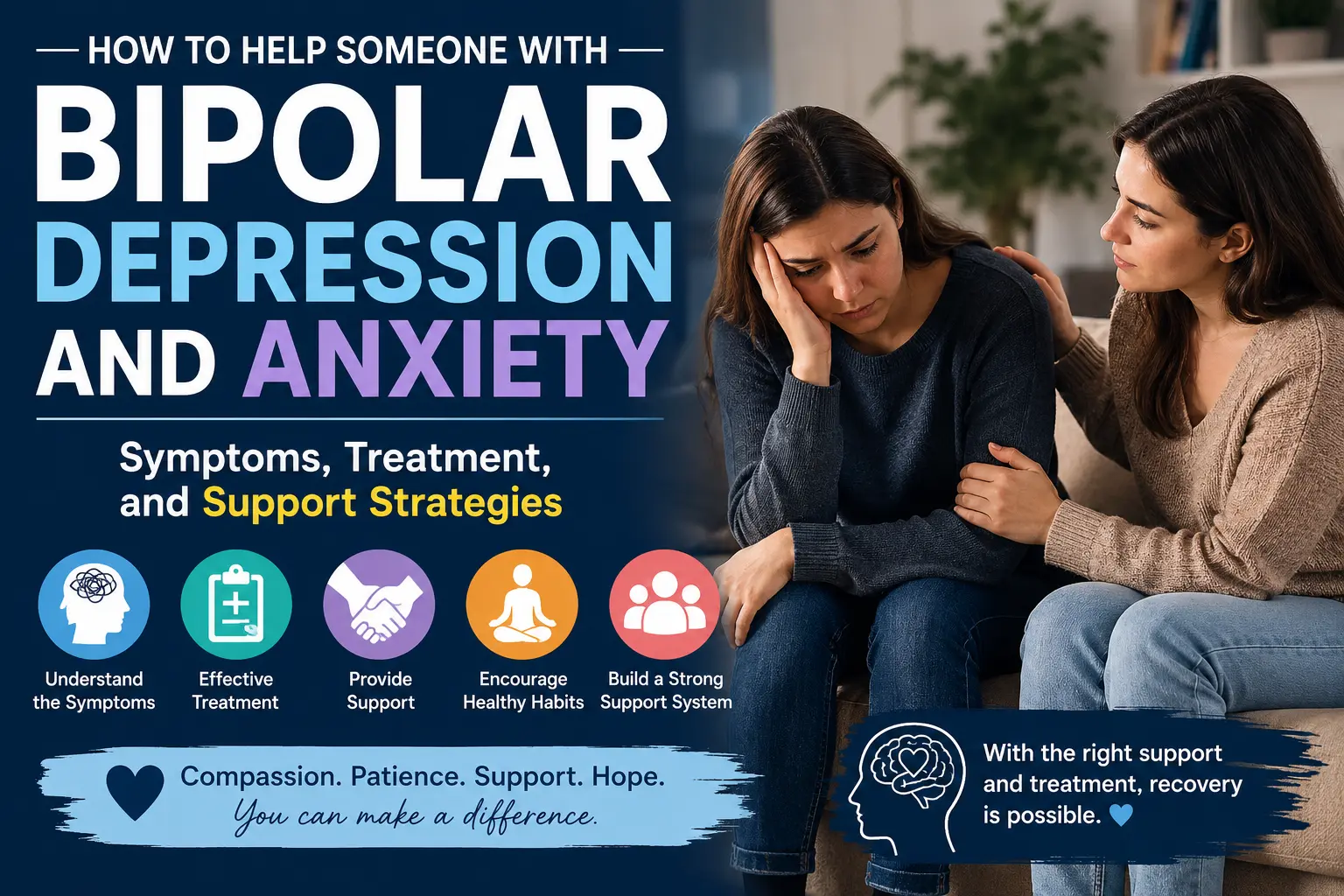 Watching someone you care about struggle with bipolar depression and anxiety can be heartbreaking. You may notice that they withdraw…
 In my practice as a clinical psychologist, I often observe that the difference between a patient who crumbles under pressure…
 We all have "up" days and "down" days. Perhaps you feel energized after a promotion or sluggish on a rainy…
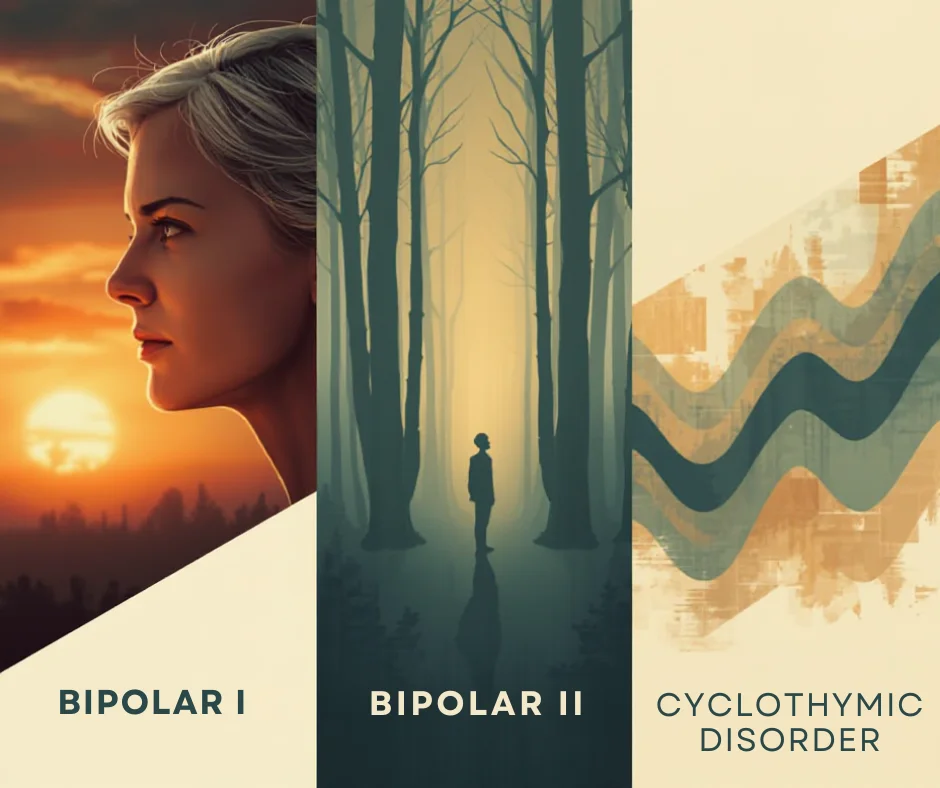 To define bipolar disorder accurately, we must look at it as a chronic mood dysregulation condition. In psychology and medicine,…
Are you looking for a Therapist?
Connect with qualified mental health professionals who understand
bipolar disorder, mood changes, and emotional challenges.
Private • Supportive • Confidential