
Exercise Plan for Bipolar Disorder and Mental Health: A Mood-Friendly Weekly Guide


An exercise plan for bipolar disorder isn’t about six-pack abs or marathon times. It’s about steadier mood, better sleep, protecting your physical health from medication side effects, and building a routine that supports stability. Large studies show exercise reduces depression and anxiety. For people with bipolar disorder, regular movement also helps with weight gain and metabolic problems, which are common with many mood medications.
People with bipolar disorder also need a plan that works on low-energy depressive days, doesn’t get pushed too hard during hypomania, and is safe with medications like lithium. This guide shows you how to build one.
Key takeaways
- Exercise is an effective add-on treatment for depression. Walking, jogging, yoga and strength training all help.
- For bipolar disorder, consistency and routine matter more than intensity.
- Have a “Level 1” version of every workout for low days, even a 10-minute walk.
- Sudden urges to exercise excessively can be an early warning sign of hypomania.
- On lithium, stay well hydrated and take care in heat, because heavy sweating can raise lithium levels.
- Exercise supports treatment; it doesn’t replace medication or therapy.
Why Exercise Matters in Bipolar Disorder and Mental Health
It improves depression and anxiety
- A 2024 BMJ network meta-analysis of 218 trials (14,170 participants) found that walking or jogging, yoga and strength training all reduced depression. More vigorous exercise tended to work better. The authors rated the certainty of the evidence as low, mainly because of study quality.
- A 2023 umbrella review in the British Journal of Sports Medicine found physical activity meaningfully reduced symptoms of depression, anxiety and psychological distress across many populations.
See major depressive disorder and generalized anxiety disorder.
It protects your physical health
People with bipolar disorder have higher rates of obesity, diabetes, high blood pressure and heart disease. A meta-analysis found metabolic syndrome in about 37% of people with bipolar disorder. Some mood stabilizers and antipsychotics add to weight gain. Regular exercise improves blood sugar, blood pressure, cholesterol and weight. See bipolar medications and weight gain.
It supports sleep and routine
Regular daily rhythms (wake time, meals, activity, bedtime) are central to bipolar stability. This is the basis of interpersonal and social rhythm therapy (IPSRT). Daytime exercise at a consistent time helps anchor your body clock and can improve sleep. See bipolar and sleep.
What the bipolar-specific research says
Research on exercise specifically in bipolar disorder is still limited. Reviews suggest it may help depressive symptoms, physical health and quality of life. They also note that exercise patterns can change with mood episodes, and that very intense activity during elevated moods needs care. Exercise works best alongside medication and therapy.
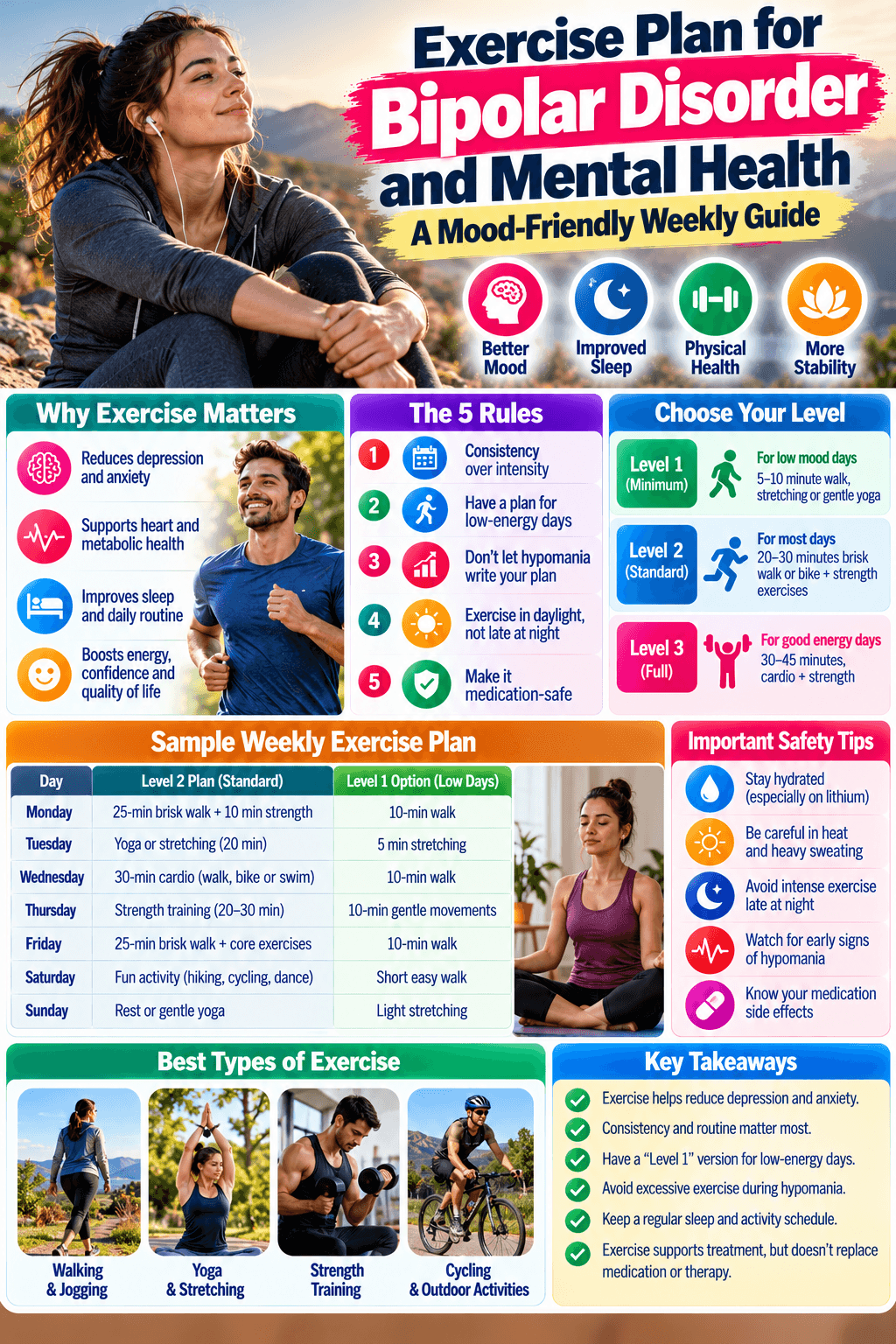
The 5 Rules of a Bipolar-Friendly Exercise Plan
- Consistency over intensity. Moving most days at a similar time beats occasional hard sessions.
- Plan for your worst days. Every workout needs a “Level 1” version you can do when depressed.
- Don’t let hypomania write your plan. Suddenly wanting to train for hours, sign up for a marathon or exercise late at night can be an early warning sign. Keep to the plan, and tell your care team.
- Exercise in daylight, not late at night. Intense evening workouts can delay sleep, and sleep loss can trigger mood episodes.
- Make it medication-safe. Hydrate, watch the heat, and know your medication side effects (see the safety section).
Your Weekly Exercise Plan for Bipolar Disorder and Mental Health
This plan follows general health guidelines: about 150 minutes of moderate activity a week plus 2 days of strength training. It is built in levels so you can match it to your mood and energy.
Choose your level each day
| Level | When to use it | What it looks like |
|---|---|---|
| Level 1: Minimum | Low mood, exhaustion, depressive days | 5–10 minute walk outside, gentle stretching, or 5 minutes of yoga |
| Level 2: Standard | Stable, “normal” days | 20–30 minute brisk walk, bike ride or swim, or 20 minutes of strength exercises |
| Level 3: Full | Good energy, stable mood | 30–45 minutes, mixing cardio and strength |
Rule: if you’re elevated (sleeping less, racing thoughts, unusual energy), stay at Level 2, even if you feel you could do far more.
Sample weekly schedule
| Day | Plan (Level 2) | Level 1 option |
|---|---|---|
| Monday | 25-min brisk walk + 10 min bodyweight strength | 10-min walk |
| Tuesday | Yoga or stretching, 20 min | 5 min stretching |
| Wednesday | 25-min walk, cycle or swim | 10-min walk |
| Thursday | Strength: squats, wall push-ups, rows, glute bridges, plank (2 rounds) | 1 round only |
| Friday | 30-min walk outdoors, ideally in daylight or nature | 10-min walk |
| Saturday | Fun activity: dancing, hiking, sport with a friend, gardening | Short walk with someone |
| Sunday | Rest or gentle walk | Rest |
Simple home strength routine (no gym)
Do 2–3 rounds, resting as needed:
- Chair squats: 8–12 reps
- Wall or knee push-ups: 8–12 reps
- Dumbbell or water-bottle rows: 10 each side
- Glute bridges: 10–15 reps
- Plank or bird-dog: 20–30 seconds
- Step-ups on a stair: 8 each leg
Exercise Plan for Depression Days
When you’re depressed, motivation is low and everything feels heavy. That’s a symptom, not a personal failure. Try:
- Shrink the goal: “put on shoes and walk to the corner” counts.
- Use behavioral activation: act first and let motivation follow. Mood often lifts a little after moving.
- Go outside in daylight. Morning light also helps your body clock.
- Exercise with someone: a friend, a group class or a walking buddy.
- Track only “did I move today?”, not distance or calories.
See what bipolar depression feels like and how to deal with bipolar depression.
Exercise During Hypomania or Mania: What to Watch For
Elevated mood can bring a burst of energy and grand fitness plans. Warning signs include:
- exercising for hours, or several times a day, without tiring
- signing up for extreme challenges on impulse
- exercising late at night instead of sleeping
- ignoring pain or injury
- spending large amounts on gym gear or programs
If you notice these, keep to your usual routine, protect your sleep and contact your care team. See signs of hypomania vs normal happiness and early warning signs of a bipolar episode.
Exercise Plan for Anxiety
Rhythmic, steady exercise such as walking, swimming, cycling and yoga can calm the nervous system and burn off anxious energy. Slow breathing during yoga or stretching adds to the effect. If a fast heartbeat during exercise triggers panic, start gently and build up. Over time, your body learns that a racing heart isn’t dangerous. See stress management techniques.
Exercise and Weight Gain From Bipolar Medications
Many people gain weight on bipolar medications. Exercise on its own rarely reverses medication-related weight gain; diet changes matter more for weight. But exercise improves metabolic health even when the scale doesn’t move much. A combined approach works best:
- Strength training 2–3 times a week to build and keep muscle
- Daily walking and more everyday movement: stairs, standing, chores
- Balanced, high-fiber, high-protein meals. See our bipolar diet guide.
- Regular checks of weight, waist, blood pressure, blood sugar and cholesterol with your doctor
- A medication review if weight gain is significant. Never stop medication on your own.
See does quetiapine cause weight gain? and does Abilify cause weight gain?.
Exercise Safety With Bipolar Medications
| Medication | Exercise safety tips |
|---|---|
| Lithium | Heavy sweating, dehydration and hot weather can raise lithium levels and cause toxicity. Drink fluids before, during and after exercise, avoid exercising in extreme heat, and ask your prescriber about intense training or endurance events. Know the signs of lithium toxicity. |
| Antipsychotics (e.g., quetiapine, olanzapine) | Can affect temperature regulation and cause dizziness on standing. Avoid overheating, stand up slowly and hydrate well. |
| Sedating medications | Exercise when you’re most alert, usually morning or midday. |
| Lamotrigine, valproate | Generally no special exercise limits. Report dizziness or unsteadiness. |
Before starting: check with your doctor if you have heart disease, diabetes, high blood pressure or other medical conditions, or are starting intense exercise. Stop and seek medical help for chest pain, severe breathlessness, fainting, confusion, or vomiting and diarrhea while on lithium.
How to Make an Exercise Plan You’ll Stick With
- Pick activities you enjoy, or at least don’t hate.
- Schedule it at the same time each day, like a medication.
- Start small: 10 minutes is a real start.
- Track movement alongside mood and sleep. Patterns help you and your clinician. See mood tracking apps and the bipolar mood chart.
- Increase gradually: add about 5 minutes or 1 set per week when you’re stable.
- Have a plan B for bad weather, low days and busy days.
- Be kind to yourself. Missed days are normal; just restart.
Popular Fitness Rules, Adapted for Mental Health
- The 2-2-2 rule: 2 days of cardio, 2 of strength, 2 of flexibility or recovery, plus 1 rest day. This is a good beginner structure and fits the weekly plan above.
- The 4-8-12 approach: moderate rep ranges (8–12) are a sensible, joint-friendly way to build strength.
- The 5/3/1 program: an intermediate–advanced lifting program. It isn’t needed for mental health benefits, and very intense programs can be hard to sustain through mood episodes.
When to Talk to Your Care Team
Tell your doctor or therapist if:
- you’ve lost all interest in movement, or can’t get out of bed, which may mean depression is worsening
- you feel driven to exercise excessively or at night, which may be hypomania
- you’re gaining weight quickly on medication
- you feel dizzy, faint or very unwell when exercising
If you are in crisis: call or text 988 (Suicide & Crisis Lifeline, US) or go to the nearest emergency department. Outside the US, contact your local emergency number.
Frequently Asked Questions About an Exercise Plan for Bipolar Disorder
Is exercise good for bipolar disorder?
Yes, as part of treatment. It can improve depressive symptoms, sleep, physical health and quality of life, but it doesn’t replace medication or therapy.
What is the best exercise for bipolar depression?
Whatever you’ll do consistently. Walking, jogging, yoga and strength training have the strongest evidence for depression in general.
Can exercise trigger mania?
Exercise itself isn’t a known cause of mania. But excessive exercise and lost sleep can be part of, or contribute to, an elevated episode. Keep your routine steady and protect your sleep.
How much exercise should I do for mental health?
Aim for about 150 minutes of moderate activity a week plus strength training twice a week, but any amount helps. Start with 10 minutes a day.
Is it safe to exercise on lithium?
Usually, yes. Stay well hydrated, avoid extreme heat and heavy sweating without fluids, and ask your prescriber about intense or endurance exercise.
What time of day should I exercise with bipolar disorder?
Morning or daytime is best. Late-night intense exercise can disrupt sleep, which can trigger mood episodes.
Can exercise help with weight gain from bipolar medication?
It helps metabolic health and can limit weight gain, especially combined with diet changes and regular medical monitoring.
The Bottom Line: Your Exercise Plan for Bipolar Disorder
The best exercise plan for bipolar disorder is simple, steady and flexible:
- daily movement at a regular time
- a Level 1 option for hard days
- a firm limit during elevated moods
- care with hydration and heat on lithium
Over time, regular exercise can lift mood, ease anxiety, improve sleep and protect your heart and metabolism. It is one of the most powerful things you can add to your treatment plan.
References
- Noetel M, Sanders T, Gallardo-Gómez D, et al. Effect of exercise for depression: systematic review and network meta-analysis of randomised controlled trials. BMJ. 2024;384:e075847.
- Singh B, Olds T, Curtis R, et al. Effectiveness of physical activity interventions for improving depression, anxiety and distress: an overview of systematic reviews. British Journal of Sports Medicine. 2023;57(18):1203–1209.
- Thomson D, Turner A, Lauder S, et al. A brief review of exercise, bipolar disorder, and mechanistic pathways. Frontiers in Psychology. 2015;6:147.
- Vancampfort D, Vansteelandt K, Correll CU, et al. Metabolic syndrome and metabolic abnormalities in bipolar disorder: a meta-analysis of prevalence rates and moderators. American Journal of Psychiatry. 2013;170(3):265–274.
- Centers for Disease Control and Prevention. Adult Activity: An Overview.

Subscribe to Our Newsletter
Get mental health tips, updates, and resources delivered to your inbox.
MORE from Author
Read More ADHD and depression often occur together, and each makes the other harder to live with. Adults with ADHD are almost…
 We all have "up" days and "down" days. Perhaps you feel energized after a promotion or sluggish on a rainy…
 To define bipolar disorder accurately, we must look at it as a chronic mood dysregulation condition. In psychology and medicine,…
Are you looking for a Therapist?
Connect with qualified mental health professionals who understand
bipolar disorder, mood changes, and emotional challenges.
Private • Supportive • Confidential