
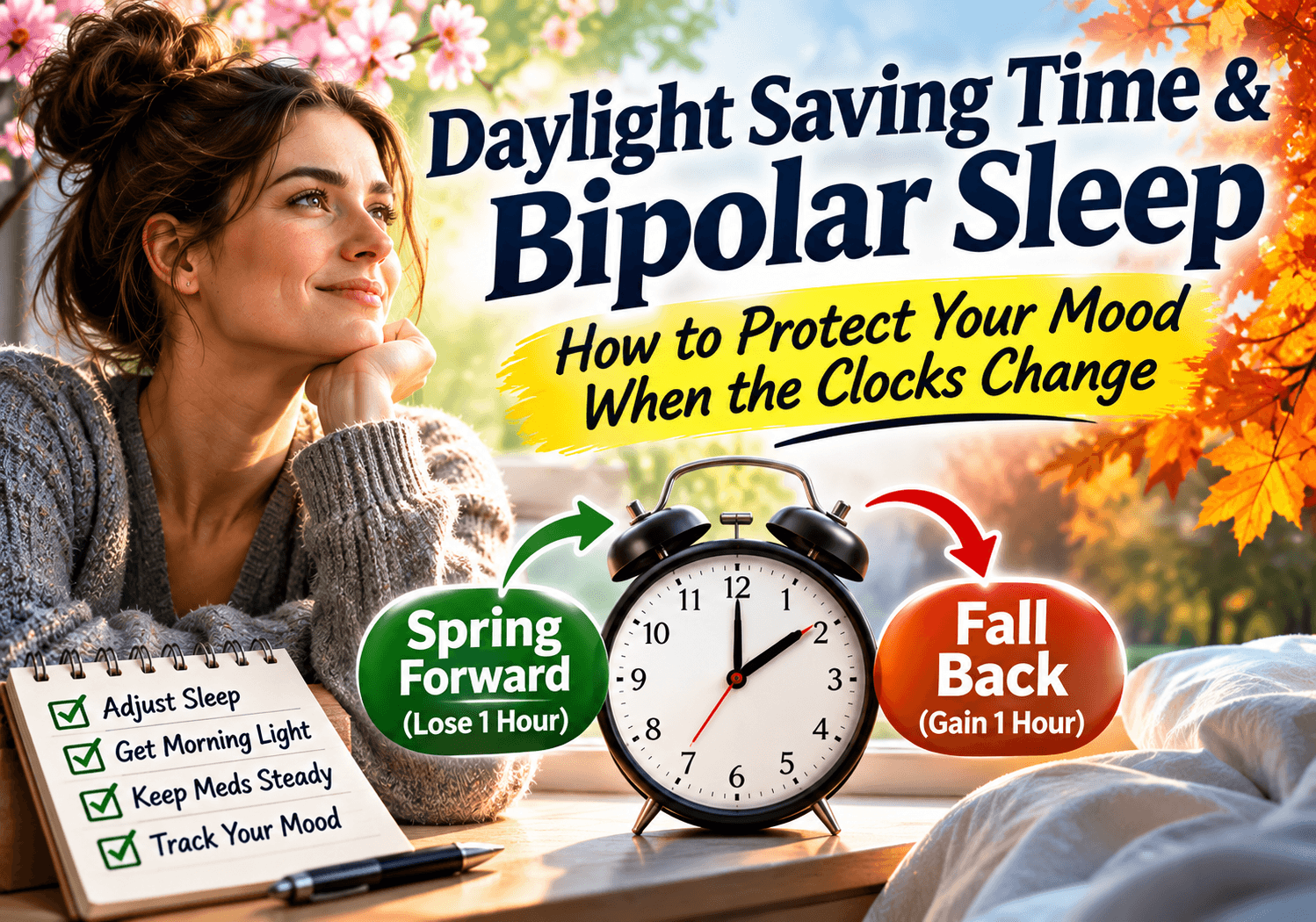
Daylight Saving Time and Bipolar Sleep: How to Protect Your Mood When the Clocks Change

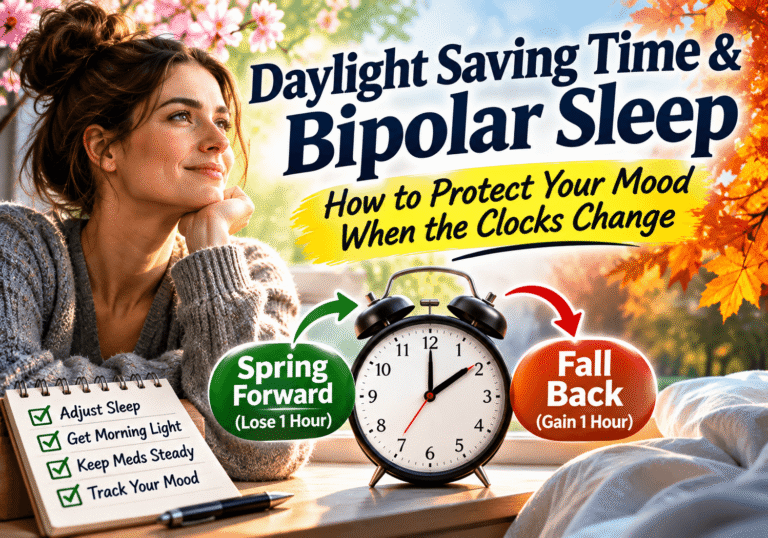
Bipolar daylight saving time questions come up twice a year for good reason. When the clocks change, your sleep, body clock and daily routine all shift at once — and for people with bipolar disorder, sleep and circadian rhythms are closely tied to mood stability. Losing an hour in spring can shorten sleep, which is a known trigger for hypomania and mania in some people. The autumn change brings darker evenings, and research links it to a rise in depressive episodes in the general population.
The good news is that a one-hour shift is predictable. With a little planning — moving your sleep schedule gradually, using light wisely, keeping medication times steady and watching your early warning signs — most people with bipolar disorder can get through the change without a mood episode.
This guide covers:
- what the research actually says about daylight saving time and bipolar disorder
- why spring and autumn affect mood differently
- who is most at risk
- a step-by-step plan for both clock changes, including a printable checklist
- how to time medication
- when to call your care team
Key takeaways
- People with bipolar disorder are unusually sensitive to sleep loss and body-clock changes. Even small disruptions can trigger symptoms in some people.
- Spring forward (losing an hour) mainly raises the risk of short sleep, which can tip some people toward hypomania or mania.
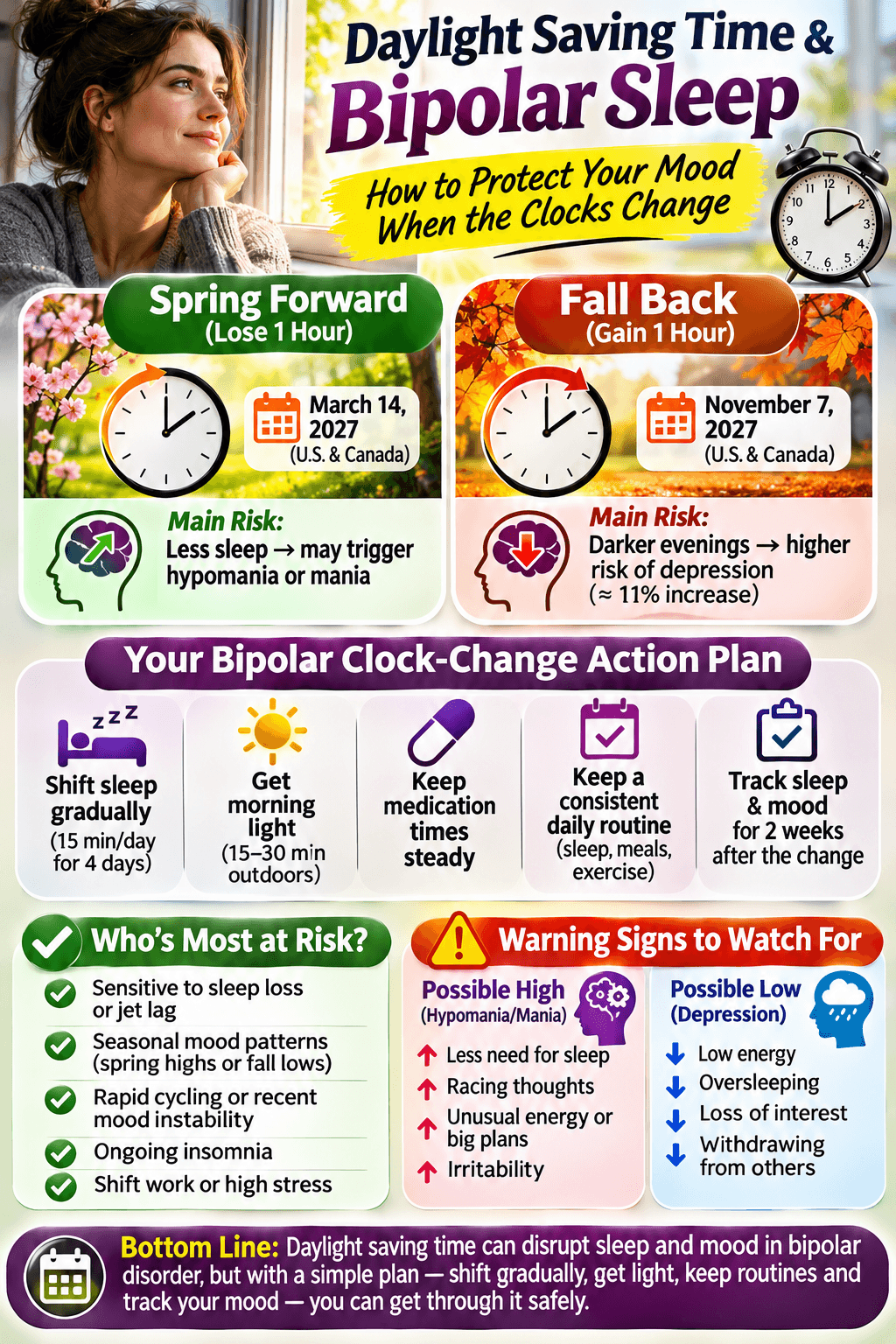
- Fall back (gaining an hour) brings darker evenings. A large Danish study found an 11% rise in depressive episodes in the general population after the autumn change.
- Large hospital studies have not found a clear spike in manic admissions after clock changes. Milder mood shifts may still happen without leading to hospital care.
- Shift your schedule gradually (about 15 minutes a day for 4 days), get morning light, keep medication times steady, and track sleep and mood for two weeks after each change.
If sleep is a constant struggle for you, start with our main guide to bipolar sleep, then come back to this plan.
When Is Daylight Saving Time? (2026–2027 Dates)
| Region | Spring forward (lose 1 hour) | Fall back (gain 1 hour) |
|---|---|---|
| United States and Canada (most areas) | Second Sunday in March — March 14, 2027 | First Sunday in November — November 7, 2027 (2026 change was November 1) |
| UK and European Union | Last Sunday in March — March 28, 2027 | Last Sunday in October — October 31, 2027 |
| Australia (states that observe it) | First Sunday in October | First Sunday in April |
Arizona (except the Navajo Nation) and Hawaii stay on standard time all year in the U.S. Many countries don’t change their clocks at all.
Is daylight saving time ending in the U.S.?
Not yet. On July 14, 2026, the U.S. House of Representatives passed the Sunshine Protection Act, which would make daylight saving time permanent. As of late 2026, however, the bill hadn’t passed the Senate, so it isn’t law. Until federal law changes, most Americans will keep changing their clocks twice a year. Many sleep experts — including the American Academy of Sleep Medicine (AASM) — argue that permanent standard time, not permanent daylight saving time, would better match the body’s natural clock.
Why Daylight Saving Time Matters for Bipolar Disorder
Bipolar disorder is a disorder of rhythms
Bipolar disorder isn’t only about mood. It also involves the body’s circadian system — the internal 24-hour clock that controls sleep, energy, hormones (including melatonin), appetite and body temperature. Research shows that people with bipolar disorder often have:
- Disrupted sleep even between episodes. In one study, about 70% of people with bipolar disorder had clinically significant sleep problems while their mood was stable.
- Sleep changes as an early warning sign. About 77% report sleep disturbance as an early sign of mania.
- Sensitivity to sleep loss. Shortened sleep can trigger manic or hypomanic symptoms in vulnerable people.
- Body clock differences, such as altered melatonin rhythms, and genetic variations in “clock genes” linked to mood regulation.
Learn more in what causes bipolar disorder in the brain and bipolar disorder symptoms at night.
A clock change is a small jet lag
Moving the clock by one hour is like flying across one time zone overnight. Your body clock doesn’t reset immediately. It can take several days to a week to catch up. During that time, you may:
- fall asleep later than you intend
- wake earlier or later than usual
- feel groggy in the morning
- eat and take medication at times that don’t match your internal rhythm
For most people, this is a minor nuisance. For someone with bipolar disorder, it’s a predictable disruption to the very system that keeps mood stable — which is why it’s worth planning for.
The social rhythm connection
Interpersonal and social rhythm therapy (IPSRT), one of the best-supported therapies for bipolar disorder, is built on the idea that regular daily rhythms protect mood. Those rhythms include:
- when you wake up
- when you first talk to another person
- when you eat
- when you exercise
- when you go to bed
Clock changes, holidays, shift work and travel all disrupt these rhythms. See what is the best therapy for bipolar disorder? and our bipolar episode triggers list.
What the Research Says About Daylight Saving Time and Mood
There’s less research on bipolar daylight saving time effects specifically than you might expect. Here’s an honest summary of what we know.
The autumn change and depression
A Danish study published in Epidemiology (Hansen and colleagues) examined 185,419 hospital contacts for depression over 18 years (1995–2012). After the clocks moved back to standard time in autumn, depressive episodes rose by about 11% above the expected level. The increase faded over roughly 10 weeks. There was no similar change after the spring transition.
The researchers suggested the cause was the sudden earlier darkness. Sunset moves an hour earlier overnight, which can feel like a signal of the long winter ahead. The study looked at unipolar depression, not bipolar disorder. But bipolar depression is the most common phase of bipolar disorder, and many people with bipolar disorder have a seasonal pattern with autumn or winter depressions, so the finding is relevant.
The spring change and mania
In theory, the spring change carries the bigger risk of mania because it shortens sleep. Studies of severe episodes, however, haven’t found a clear effect:
- A nationwide Finnish registry study (Lahti and colleagues, 2008) found that daylight saving transitions did not significantly increase hospital-treated manic episodes in the weeks after the change.
- A U.S. study of emergency department visits for mental and behavioral health (2013–2015) saw a short-lived rise in visits just after daylight saving time began. The pattern was inconsistent, and the authors called the findings inconclusive.
A comprehensive 2026 review in Brain Sciences concluded that bipolar-specific evidence is limited. It pointed out that hospital records only capture the most severe episodes and can miss milder hypomania, irritability, mixed symptoms or sleep disruption that don’t lead to admission. The authors still recommended treating clock changes as a predictable stressor for people with bipolar disorder.
The bigger picture: the spring change affects everyone
The spring transition has measurable effects on the general population:
- A study in Current Biology of over 730,000 U.S. crashes found that fatal car crashes rose about 6% in the workweek after the spring change.
- Studies have also linked the spring change to short-term increases in heart attacks, workplace injuries and medical errors, all thought to reflect lost sleep.
These findings show that even a one-hour change matters to the human body. They also support careful planning for anyone whose health depends on stable sleep.
Bottom line: daylight saving time is unlikely to cause a bipolar episode by itself in someone who is otherwise stable. It is, however, one more stressor that can add to others — such as stress, illness, travel, holidays or missed medication — and tip the balance.
Spring Forward vs Fall Back: How Each Change Can Affect Bipolar Disorder
| Spring forward (lose 1 hour) | Fall back (gain 1 hour) | |
|---|---|---|
| Main change | Shorter night; mornings darker, evenings lighter | Extra hour; evenings suddenly darker |
| Sleep effect | Easy to lose sleep for several nights | Waking too early; disrupted routine |
| Light effect | More evening light can delay sleep | Less evening light; shorter “felt” day |
| Main mood risk | Hypomania or mania from sleep loss, especially in people prone to spring and summer highs | Depression, especially in people prone to autumn and winter lows |
| Watch for | Less need for sleep, racing thoughts, extra energy, irritability | Low energy, oversleeping, withdrawal, low mood |
Spring forward: protecting against highs
Spring brings two pressures at once: a lost hour of sleep and rapidly lengthening days. Lighter evenings make it harder to wind down at night. Many people with bipolar disorder already notice that their highs cluster in spring and summer. If you’re one of them, the March or April clock change is a good moment to tighten your routine. See signs of hypomania vs normal happiness.
Fall back: protecting against lows
The “extra hour” sounds like a gift, but many people end up waking an hour early for several days. The sudden dark evenings can bring low energy and social withdrawal. If your depressions tend to start in autumn, plan extra daylight, activity and social contact for the weeks after the change. See what is bipolar depression? and how to deal with bipolar depression.
Who Is Most at Risk During Daylight Saving Time Changes?
You may need a more careful plan if you:
- Have had a mood episode triggered by sleep loss, travel or jet lag before
- Have a seasonal pattern to your episodes (spring or summer highs, autumn or winter lows)
- Have rapid cycling or recent mood instability — see rapid cycling bipolar
- Are recovering from a recent episode or have just changed medication
- Already have insomnia — see bipolar insomnia
- Are a natural “night owl”, who tends to find the spring change hardest
- Work shifts, care for young children or have other sleep disruptions
- Are going through extra stress at the same time — see can stress cause bipolar symptoms?
- Are pregnant or postpartum, when sleep loss carries a higher risk of relapse
- Use alcohol, cannabis or stimulants, which disrupt sleep further
Your Bipolar Daylight Saving Time Plan: Before the Change
The goal is to move your body clock gradually rather than all at once.
1. Shift your sleep schedule in 15-minute steps
For spring forward (four nights before the change):
| Night | Bedtime | Wake time |
|---|---|---|
| Wednesday | 15 minutes earlier | 15 minutes earlier |
| Thursday | 30 minutes earlier | 30 minutes earlier |
| Friday | 45 minutes earlier | 45 minutes earlier |
| Saturday | 60 minutes earlier | 60 minutes earlier |
| Sunday | Your usual time on the new clock | Your usual time on the new clock |
For fall back, do the reverse: go to bed and wake up 15 minutes later each night for four nights. If shifting feels too hard, it’s fine to make just two 30-minute steps.
2. Move other anchors too
Shift meals, exercise and social plans by the same steps. Your body uses all of these as time signals, not just sleep.
3. Plan a calm weekend
Avoid scheduling late nights, parties, red-eye travel or major deadlines around the change. Protect the weekend the clocks move.
4. Review your early warning signs
Remind yourself — and your partner or supporter — what your personal relapse signature looks like. See early warning signs of a bipolar episode and update your bipolar wellness plan.
5. Check your medication timing plan
See the medication section below, and ask your prescriber if you’re unsure.
During and After the Change: Daily Habits That Protect Your Mood
Get morning light — and limit late-evening light
Light is the strongest signal for your body clock:
- Morning daylight moves your clock earlier, which helps with spring forward. Get outside within an hour of waking, even on cloudy days, for 15–30 minutes.
- Bright evening light and screens push your clock later, making sleep harder. Dim the lights and screens for the hour before bed.
For people prone to mania, some research supports reducing blue light in the evening. In a 2016 trial, amber “blue-blocking” glasses added to standard treatment reduced manic symptoms in hospitalized patients. Talk to your clinician before using light therapy lamps. Bright light therapy can help bipolar depression, but it can also trigger hypomania if it’s timed or dosed wrongly.
Keep your wake time fixed
Your wake time anchors your body clock more than your bedtime. Wake at the same time every day for at least two weeks after the change, including weekends, even if you slept badly.
Avoid “catching up” with long naps
If you need a nap, keep it under 30 minutes and before mid-afternoon. Long naps make it harder to adjust.
Be careful with caffeine and alcohol
- Avoid caffeine after midday for the first week.
- Avoid alcohol altogether if you can. It fragments sleep and can destabilize mood. See substance-induced mood disorder.
Keep moving — at the right time
Daytime exercise, especially outdoors in the morning, helps reset your clock and lift your mood. Avoid intense workouts late at night. See our exercise plan for bipolar disorder.
Protect your wind-down routine
Use a consistent 30–60 minute routine before bed, such as:
- dim lights
- a warm shower
- reading
- breathing exercises
See how to fall asleep fast, self-soothing skills and nervous system regulation.
Track sleep and mood for two weeks
Log your bedtime, wake time, hours slept, mood (−5 to +5), energy and any warning signs. A noticeable drop in sleep without tiredness is a red flag. Use our bipolar mood chart or one of these mood tracking apps for bipolar.
Bipolar Medication and Daylight Saving Time
Many people wonder whether they should take their medication by the old time or the new time.
For most bipolar medications, a one-hour shift isn’t significant. Most people simply take their medication at their usual clock time on the new schedule. A few practical points:
- Consistency matters more than the exact hour. Pick the plan and stick to it.
- Evening and sedating medications — such as quetiapine and some sleep aids — are usually taken at the usual bedtime on the new clock. In spring, that may feel “early” for a few nights. That’s usually fine, and it can actually help shift your sleep.
- Lithium blood tests are timed about 12 hours after your last dose. If you have a level check in the week of the clock change, make sure the timing still works on the new clock. See lithium and lithium side effects.
- Reminders and pill apps: most phones update automatically, but check alarms and app schedules on the morning of the change.
- Don’t skip or double up to “fix” the change. If you miss a dose, follow your medication’s instructions or ask a pharmacist.
- If you’re on a strict time-sensitive regimen, ask your prescriber or pharmacist whether to shift gradually.
Never change doses on your own to manage sleep. If sleep becomes a problem, talk to your prescriber about safe options. See sleeping pills, how long does quetiapine take to work for sleep?, bipolar disorder medications and why do people with bipolar stop taking medication?
Printable Bipolar Daylight Saving Time Checklist
One week before
- [ ] Note the date of the clock change in your calendar and phone
- [ ] Review your early warning signs with a trusted person
- [ ] Clear late nights and major deadlines from the change weekend
- [ ] Check medication timing and any blood-test appointments
Four days before
- [ ] Shift bedtime, wake time, meals and exercise by 15 minutes a day
- [ ] Get morning daylight; dim evening light
The weekend of the change
- [ ] Keep wake time fixed on the new clock
- [ ] Take medication at your usual clock time (unless advised otherwise)
- [ ] Avoid alcohol, late caffeine and long naps
Two weeks after
- [ ] Log sleep, mood and energy daily
- [ ] Watch for sleeping less without feeling tired, racing thoughts, irritability, low mood or withdrawal
- [ ] Contact your care team early if warning signs appear
Warning Signs to Watch For After the Clocks Change
Signs of a possible high (hypomania or mania)
- Sleeping less but not feeling tired
- Racing thoughts and faster speech
- Unusual confidence, big plans or new projects
- Irritability or impatience
- More spending, risk-taking or impulsive decisions
Signs of a possible low (bipolar depression)
- Oversleeping or trouble getting up
- Low energy and heaviness
- Loss of interest (anhedonia)
- Withdrawing from people
- Hopelessness or guilt
Signs of mixed features
- Agitation with low mood
- Racing thoughts with despair
- Restless insomnia
See bipolar mixed episode, bipolar symptoms, bipolar mood swings daily pattern and how long do bipolar episodes last?
When to contact your care team
Call your psychiatrist or care team if you notice:
- Two or more nights of much less sleep without tiredness
- Warning signs lasting more than a few days
- Worsening depression
Early action — such as adjusting medication, adding short-term sleep support or increasing check-ins — can stop a small change from becoming a full episode. See bipolar disorder treatment.
If you are in crisis: call or text 988 (Suicide & Crisis Lifeline, US) or go to the nearest emergency department. Outside the US, contact your local emergency number. Seek urgent help for thoughts of suicide, psychosis or several days without sleep.
How Partners and Family Can Help
- Know the dates and help protect the change weekend from late nights and big events.
- Join the routine — shift meals and bedtimes together, and go for morning walks.
- Notice changes gently. Try saying something like “I’ve noticed you’re sleeping less — how are you feeling?” rather than making accusations.
- Follow the agreed plan if warning signs appear.
See why bipolar relationships fail, walking on eggshells and how a person with bipolar thinks.
Beyond Daylight Saving Time: Travel, Seasons and Shift Work
The same principles apply to every disruption of your body clock:
- Jet lag: Traveling east (like spring forward) is usually harder and more likely to shorten sleep. Plan gradual shifts, use light strategically and avoid overnight flights without sleep.
- Seasonal changes: Many people with bipolar disorder notice mood patterns tied to seasons. Track them over a year and plan ahead with your clinician. See does bipolar get worse with age?
- Holidays: Late nights, alcohol, family stress and disrupted routines combine — see our tips on stress management techniques.
- Shift work: Rotating or night shifts can be especially destabilizing. Workplace accommodations may help — see bipolar disability.
Frequently Asked Questions About Bipolar and Daylight Saving Time
Can daylight saving time trigger a bipolar episode?
It can contribute, especially in people sensitive to sleep loss. Losing an hour in spring can shorten sleep, which may trigger hypomania or mania in vulnerable people, while darker autumn evenings are linked to more depression. Large hospital studies haven’t shown a clear spike in severe manic episodes, but milder mood changes are possible, so planning ahead is wise.
Is spring forward or fall back worse for bipolar disorder?
It depends on your pattern. Spring forward is more likely to cause sleep loss, which matters most for people prone to hypomania or mania. Fall back brings sudden dark evenings, and a large Danish study found depressive episodes rose about 11% after the autumn change. Track your own history to see which transition affects you more.
How should I adjust my sleep for daylight saving time with bipolar disorder?
Shift your bedtime and wake time by about 15 minutes a day for four days before the change — earlier in spring, later in autumn — and move meals and exercise too. Keep your wake time fixed afterwards, get morning daylight, dim lights in the evening, avoid long naps and alcohol, and track sleep and mood for two weeks.
Should I take my bipolar medication at the old time or the new time?
For most bipolar medications, a one-hour change doesn’t matter, and people simply take doses at their usual clock time on the new schedule. Consistency matters more than the exact hour. Check phone reminders and lithium blood-test timing, never skip or double doses, and ask your prescriber or pharmacist if your regimen is time-sensitive.
How long does it take to adjust to the time change?
Most people adjust within several days to a week, though it can take longer for night owls, shift workers and people with sleep problems. Gradually shifting your schedule before the change, getting morning light and keeping a fixed wake time all speed up adjustment. Keep tracking your mood for about two weeks, since symptoms can appear after a delay.
Why do people with bipolar disorder struggle with time changes?
Bipolar disorder involves the body’s circadian system, which controls sleep, energy and hormones. Many people with bipolar disorder have disrupted sleep even when well and are sensitive to sleep loss, which can trigger mania. A clock change works like a small jet lag, disrupting sleep and daily routines that help keep mood stable.
Can light therapy help with the autumn time change?
Bright light therapy can help bipolar depression, and morning daylight helps reset your body clock after any time change. However, light therapy can trigger hypomania or mania if used incorrectly, so people with bipolar disorder should only use a light box with guidance from their clinician, usually alongside a mood stabilizer, starting gradually and avoiding evening use.
Will the U.S. end daylight saving time?
As of late 2026, no. The House passed the Sunshine Protection Act in July 2026 to make daylight saving time permanent, but the Senate hadn’t voted on it, so the twice-yearly clock changes continue under current law. Sleep medicine experts generally favor permanent standard time, which they say better matches the body’s natural rhythms.
The Bottom Line on Bipolar and Daylight Saving Time
For people with bipolar disorder, daylight saving time is a small but real stressor on the sleep and circadian systems that help keep mood stable. Spring forward risks sleep loss and highs, while fall back risks darker days and lows. The evidence doesn’t suggest that clock changes alone cause severe episodes, but they can add to other stressors.
The fix is simple and predictable:
- shift your schedule gradually
- anchor your wake time
- use morning light
- keep medication times steady
- avoid alcohol
- track your sleep and mood for two weeks
If warning signs appear, call your care team early — that’s how small wobbles stay small. For more, read our guides to bipolar sleep, bipolar disorder and bipolar disorder treatment.
References
- Hansen BT, Sønderskov KM, Hageman I, Dinesen PT, Østergaard SD. Daylight savings time transitions and the incidence rate of unipolar depressive episodes. Epidemiology. 2017;28(3):346–353.
- Lahti TA, Haukka J, Lönnqvist J, Partonen T. Daylight saving time transitions and hospital treatments due to accidents or manic episodes. BMC Public Health. 2008;8:74.
- Blank L, Khorsandi J, England-Kennedy E, et al. When the clock shifts: a comprehensive review of daylight-saving time (DST), circadian disruption, and neuropsychological risk in chronic mental illness. Brain Sciences. 2026;16(5):522.
- Augusta University researchers. Effects of seasonality and daylight savings time on emergency department visits for mental health disorders. American Journal of Emergency Medicine. 2019.
- Fritz J, VoPham T, Wright KP Jr, Vetter C. A chronobiological evaluation of the acute effects of daylight saving time on traffic accident risk. Current Biology. 2020 (University of Colorado Boulder summary).
- Rishi MA, Ahmed O, Barrantes Perez JH, et al. Daylight saving time: an American Academy of Sleep Medicine position statement. Journal of Clinical Sleep Medicine. 2020.
- Sleep Foundation. Latest updates on daylight saving time legislation. Updated October 2026.
- House Committee on Energy and Commerce. House passes legislation to make daylight saving time permanent. July 14, 2026.
- Harvey AG, Schmidt DA, Scarnà A, Semler CN, Goodwin GM. Sleep-related functioning in euthymic patients with bipolar disorder, patients with insomnia, and subjects without sleep problems. American Journal of Psychiatry. 2005;162(1):50–57.
- Jackson A, Cavanagh J, Scott J. A systematic review of manic and depressive prodromes. Journal of Affective Disorders. 2003;74(3):209–217.
- Henriksen TEG, Skrede S, Fasmer OB, et al. Blue-blocking glasses as additive treatment for mania: a randomized placebo-controlled trial. Bipolar Disorders. 2016;18(3):221–232.
- National Institute of Mental Health. Bipolar Disorder.
Subscribe to Our Newsletter
Get mental health tips, updates, and resources delivered to your inbox.
MORE from Author
Read More Bipolar mania treatment aims to bring a manic episode under control quickly and safely, then prevent the next one. For…
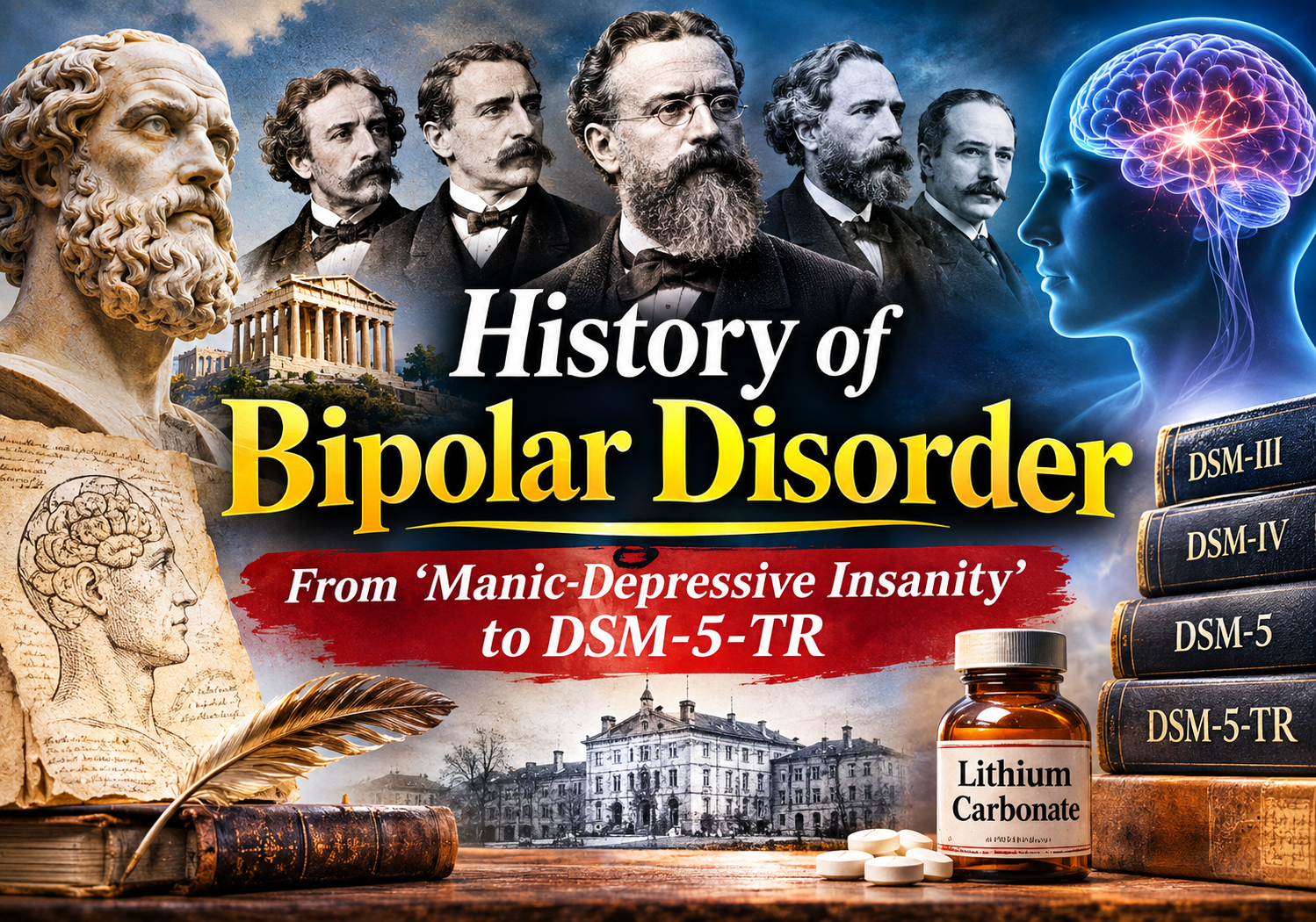 The history of bipolar disorder stretches back about 2,000 years. Ancient Greek physicians described mania and melancholia. Aretaeus of Cappadocia,…
 Bipolar daylight saving time questions come up twice a year for good reason. When the clocks change, your sleep, body…
 Bipolar disorder treatment works best as a combination of medication (usually a mood stabilizer such as lithium, or an atypical…
Are you looking for a Therapist?
Connect with qualified mental health professionals who understand
bipolar disorder, mood changes, and emotional challenges.
Private • Supportive • Confidential