
Mood Tracking Apps for Bipolar

Medically reviewed by Laura Athey Updated Date: March 28, 2026
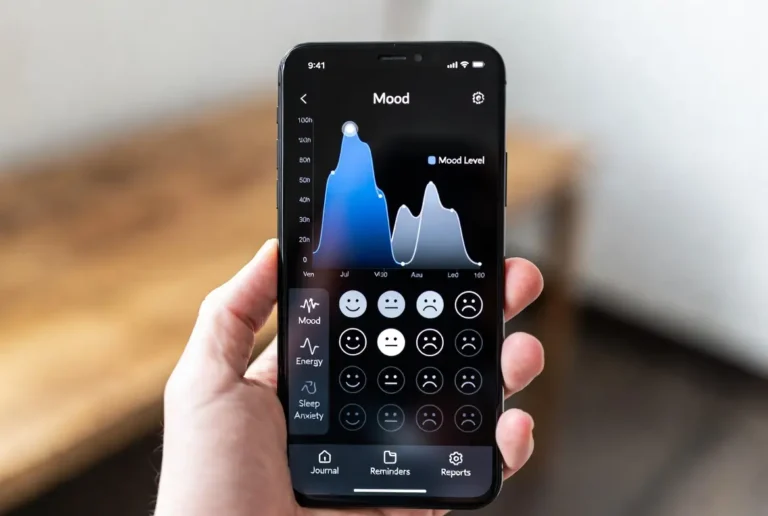
In 2026, mood tracking apps for bipolar disorder have evolved from simple digital diaries into sophisticated clinical companions that provide a lifeline for stability. These specialized tools empower individuals to move beyond reactive management by identifying subtle “red flags”—such as a sudden decrease in sleep or increased irritability—long before a full manic or depressive episode takes hold. By logging daily metrics like medication adherence, energy levels, and the “4 A’s” (Affect, Activity, Attitude, and Attention), users create a high-definition map of their unique biological rhythms.
The true power of a bipolar mood tracker app lies in its ability to bridge the communication gap between patients and providers. Instead of relying on inconsistent retrospective memory during a brief 15-minute appointment, users can present objective, data-driven PDF reports that correlate lifestyle triggers with mood shifts. This collaborative approach allows psychiatrists to fine-tune treatment plans with surgical precision, ultimately reducing relapse rates and fostering a profound sense of personal agency in the journey toward long-term wellness.
Why Mood Tracking Matters for Bipolar Disorder
For individuals with bipolar disorder, self-awareness is the primary tool for maintaining stability. Unlike general “moodiness,” bipolar disorder involves distinct physiological and psychological shifts that can disrupt every facet of life. This is why mood tracking apps for bipolar disorder have become the “gold standard” in modern symptom management.
The Purpose of Digital Monitoring
The goal of using a bipolar mood tracker app is not merely to record that you felt “sad” on Tuesday or “happy” on Friday. Instead, it is about capturing longitudinal data—the trends over weeks and months—that reveal the underlying rhythm of your illness. By logging your symptoms daily, you can:
- Catch the “Red Flags”: Identify early warning signs of mania or depression before they escalate into a crisis.
- Correlate Behaviors: See how lifestyle factors like caffeine, exercise, and social interaction directly impact your “baseline.”
- Optimize Medication: Provide your psychiatrist with objective graphs that show exactly when a medication change worked—and when it didn’t.
A Support Tool, Not a Cure
It is essential to set realistic expectations: a mood tracker is a diagnostic support tool, not a replacement for clinical care. It bridges the gap between your therapy sessions, ensuring that your medical team isn’t relying on your “retrospective memory” (which is often clouded by your current mood state) but rather on a precise, real-time record of your life.
What Is a Mood Tracker? How Digital Charting Works
If you have ever asked, “What is a mood tracker?” think of it as a specialized, data-driven diary. While a traditional journal might focus on narratives and stories, a bipolar mood tracker journal focuses on the metrics that define your health.
How Tracking Works in 2026
Modern apps have moved beyond simple “smiley face” ratings. A high-quality mood tracking chart for bipolar disorder typically monitors several “axes” of health:
- Mood Pole: Are you elevated (hypomanic/manic), depressed, or “euthymic” (stable)?
- Sleep Quantity and Quality: Often the most critical biomarker for bipolar stability. A sudden drop in sleep duration is frequently the most reliable predictor of a manic switch.
- Medication Adherence: A simple “yes/no” or dosage log to ensure your chemistry remains consistent.
- Symptom Severity: Tracking specific feelings like irritability, anxiety, or “racing thoughts.”
Consistency Over Perfection
One of the biggest hurdles is the “perfection trap.” Many users feel that if they miss a day, the tracker is ruined. However, the true value of a bipolar mood tracker journal lies in the broad patterns. Even checking in four times a week provides a far more accurate picture than no data at all.
How to Monitor Bipolar Disorder Effectively
Effective monitoring is about moving from “reactive” (noticing when things are already bad) to “proactive” (noticing when things are starting to shift).
Identifying the First Red Flag
What is the first red flag of bipolar disorder? While it varies, clinical research and patient testimony in 2026 point to sleep disruption as the primary indicator.
- In Mania: You might feel “rested” after only 3 hours of sleep and have an intense urge to start new projects.
- In Depression: You might find yourself sleeping for 10+ hours but still waking up exhausted.
Understanding the 4 A’s of Bipolar Disorder
To monitor your condition like a clinician, you should familiarize yourself with the 4 A’s of bipolar disorder. These are specific domains that often fluctuate during a “mixed state” or a transition between poles:
- Affect: How you present your emotions to others (e.g., being unusually tearful or overly “bright”).
- Activity: Your physical energy. Are you pacing the room, or are you unable to get out of bed?
- Attitude: Your internal self-talk. Do you feel invincible, or are you plagued by excessive guilt?
- Attention: Your cognitive focus. Are your thoughts “racing,” or is your mind “foggy” and slow?
By using an app to log these specific domains, you provide your doctor with a high-definition map of your neurobiology, making it much easier to fine-tune your treatment plan.
What Makes a Good Bipolar Tracker?
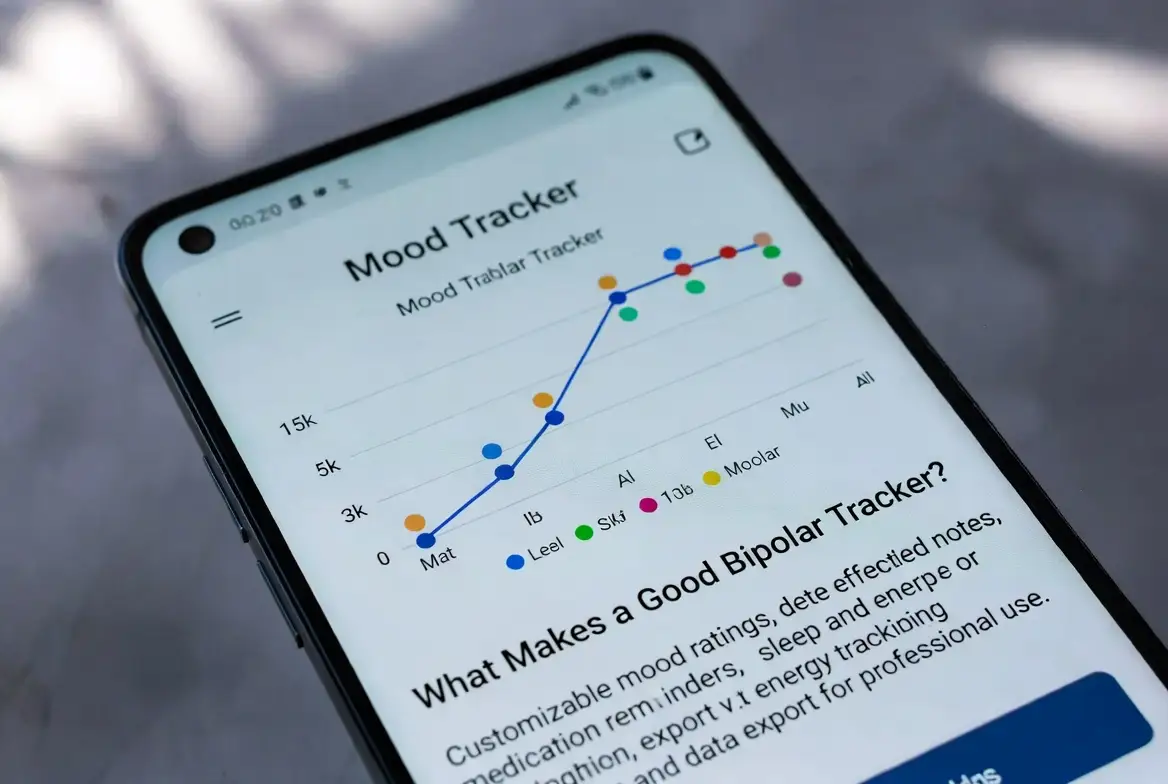
With thousands of “wellness” apps on the market, choosing the best mood tracking apps for bipolar disorder requires a discerning eye. A generic app designed for “happiness tracking” will often fail a bipolar patient because it doesn’t account for the “highs” (mania).
Essential Features for Bipolar Management
When searching for the best bipolar mood tracking app, ensure it meets these four criteria:
- Bipolar-Specific Scales: It must allow you to track “Highs” and “Lows” separately. A simple 1–10 scale is insufficient because you can be at a “10” for two very different reasons: extreme joy or extreme manic agitation.
- Clinician Export Features: The ability to generate a Mood Tracker for a bipolar PDF or CSV file to email to your doctor is non-negotiable for serious management.
- Privacy and Security: Since you are logging sensitive health data, look for apps that offer local storage (on your phone only) or end-to-end encryption.
- Medication Titration Tools: The app should allow you to note when you started a new dose, so you can see the direct effect on your mood chart.
Best Mood Tracking Apps for Bipolar Disorder
The year 2026 has seen a surge in specialized apps. Below, we review the top contenders based on clinical utility, user experience, and privacy.
eMoods Bipolar Mood Tracker
Often cited as the best mood tracker app for clinical accuracy, eMoods was designed by a developer living with the condition. It is straightforward, data-heavy, and highly respected by psychiatrists. It prioritizes local data storage, meaning your sensitive information never leaves your device unless you choose to export it.
Daylio Journal
If you find traditional journaling too time-consuming, Daylio is the best bipolar mood tracker app for “micro-logging.” It uses icons and activities to help you track your day in under 30 seconds. While its base scale is linear, its high level of customization allows users to create specific “tags” for manic or depressive symptoms.
Bearable
Bearable is the “everything” tracker. It is ideal for those who suspect their mood is affected by diet, weather, or chronic pain. It is widely considered one of the best free mood tracking apps for users who love deep-dive analytics, as it can correlate mood with thousands of other variables.
Moodflow
A modern, sleek app that combines mood tracking with “Moodflow” routines—essentially small CBT-based tasks that help you stabilize your day. It is an excellent choice for those who want their tracker to also act as a self-care coach.
eMoods Bipolar Mood Tracker
When discussing the best bipolar mood tracker app, eMoods Bipolar Mood Tracker consistently tops the list for patients and clinicians alike. Unlike general wellness apps that focus solely on “happiness,” eMoods is a clinical-grade tool specifically designed for the complexities of Bipolar I and Bipolar II.
Bipolar-Specific Design
The brilliance of the eMoods bipolar mood tracker app lies in its multi-axial tracking. Most apps force you to pick a single mood for the day. eMoods understands that you can be “depressed” and “irritable” simultaneously.
- Separated Metrics: It allows you to log “Depressed,” “Elevated,” “Irritability,” and “Anxiety” on separate scales. This is crucial for identifying mixed episodes, where high energy meets a low mood.
- Symptom Tracking: It includes specific toggles for psychotic symptoms, such as hallucinations or delusions, which are often left out of standard mental health apps.
Data Export for Psychiatrists
The eMoods bipolar mood tracker is famous for its monthly PDF reports. These aren’t just lists of numbers; they are professionally formatted charts that a psychiatrist can read in seconds.
- Medication Correlation: You can log medication changes (titrations) and see exactly how they correlate with your mood shifts.
- Privacy-First: For many, the “best” feature is that eMoods stores all data locally on your device. There is no cloud storage by default in the “Classic” version, ensuring your sensitive mental health data never leaves your phone.
Best Free Mood Tracking Apps for Bipolar Disorder
Managing a chronic condition can be expensive, which makes finding a mood tracking app free of charge a high priority. Fortunately, many of the top-tier developers offer robust free versions.
Top-Rated Free Options for 2026
- eMoods (Free Version): All core bipolar tracking features—mood, sleep, medication, and PDF exports—are available for free. The “Patron” version is strictly optional and adds custom tracking points.
- Daylio (Free Tier): Daylio is the best free mood tracking app for those who struggle with “journaling fatigue.” You can track moods and activities via icons without ever typing a word. The free version provides excellent monthly charts.
- Bipolar UK App: This is a 100% free bipolar mood tracker app with no hidden costs. Since it is charity-funded, it provides high-quality clinical tracking specifically for the UK healthcare system without advertisements or paywalls.
- Moodflow: This app offers a clean, modern interface and basic tracking for free. It is particularly good for those who want a simple, aesthetic experience without a subscription.
What Is the Best App for Bipolar Disorder and Depression?
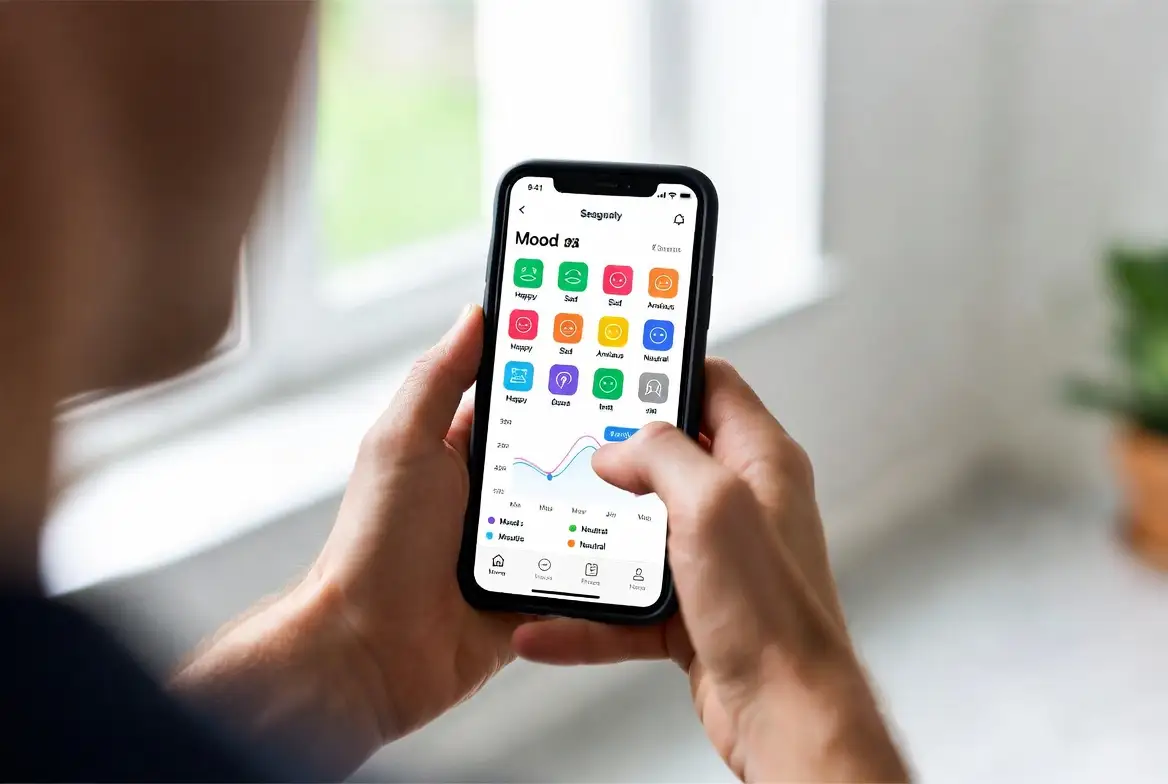
Bipolar disorder is often misdiagnosed as unipolar depression, and many general depression apps are not equipped to track the “up” side of the disorder.
The best app for bipolar disorder & depression is one that handles both ends of the spectrum with equal detail.
- UP! Mood Tracker: This app is a favorite for those who cycle frequently. It focuses on the “stability zone,” helping you see when you are trending toward a depressive crash or a manic spike.
- Moodfit: Moodfit acts like a “gym for your brain.” While it tracks depression well, it also includes tools for cognitive behavioral therapy (CBT), making it an excellent companion for those who suffer from the heavy “cognitive fog” of bipolar depression.
What Is the Best Mood Tracker App for BPD?
It is important to clarify: What is the best mood tracker app for BPD? Borderline Personality Disorder (BPD) requires a different tracking philosophy than bipolar. Bipolar moods are episodic (lasting weeks), while BPD moods are reactive (shifting within minutes or hours).
Key Differences in Tracking Needs
| Feature | Bipolar Disorder Tracking | BPD (Borderline) Tracking |
| Check-in Frequency | Once daily (capturing the day’s peak) | Multiple times daily (capturing reactivity) |
| Primary Metric | Energy, Sleep, and Mood Pole | Emotional Intensity and Interpersonal Triggers |
| Core Goal | Spotting long-term cycles | Managing moment-to-moment dysregulation |
Bearable: For BPD, Bearable is often the top choice because it allows for “customizable check-ins” throughout the day. You can track specific BPD triggers like “fear of abandonment” and see how they fluctuate by the hour.
- Borderline Personality Tracker: Specifically designed for this condition, this app helps users map the rapid “ups and downs” that characterize BPD, often integrated with DBT (Dialectical Behavior Therapy) concepts.
Bipolar UK Mood Tracker Apps and Resources
For users in the United Kingdom, the Bipolar UK Mood Tracker app is a vital, non-profit resource. Developed by the national charity Bipolar UK, it is specifically designed to align with the clinical standards of the NHS. In 2026, the app remains a top recommendation due to its recent updates (v2.0.15+), which introduced more granular tracking features.
Key Features of the Bipolar UK App:
- NHS-Compatible Scale: Many UK psychiatrists use the Bipolar UK Mood Scale (ranging from 0 to 10), where 0–3 represents depression, 4–6 is the “stable” range, and 7–10 indicates hypomania/mania.
- Granular Medication Tracking: The latest update supports decimal medication dosages (e.g., 1.25 mg), which is essential for precise titration under a doctor’s supervision.
- Enhanced Emotional Logging: Users can now select up to 10 emotions per entry, allowing for a much richer “word cloud” that helps identify the nuance between agitation and true mania.
- Privacy-First Model: As a charity-led tool, the developer does not collect your data. Everything is stored locally, making it a highly secure bipolar mood tracker app free from corporate data mining.
Using Mood Tracking Data With Your Doctor
You’ve logged your data for a month—now what? Learning how to monitor bipolar disorder also means learning how to communicate that data effectively during a brief psychiatric appointment.
What Clinicians Look For
Psychiatrists don’t just look at individual data points; they look for the correlations.
- The Sleep-Mood Lead: If your chart shows that your sleep dropped to 4 hours three nights before your mood spiked, your doctor can see the biological trigger.
- Medication Efficacy: If you started a new mood stabilizer on the 10th of the month, did the “swings” become less intense by the 30th?
- Early Warning Signs: Reviewing your data helps you and your doctor identify your unique “signature” of an impending episode.
Sharing Reports Effectively
To make the most of your clinical time:
- Export Early: Use the app’s “Export PDF” feature to email your report to your clinic 24 hours before your appointment.
- Highlight the Deviations: Don’t spend time discussing the stable days. Point directly to the spikes or dips and discuss what was happening in your life at that time.
- Prepare a “Mixed State” Note: If you used an app like eMoods to track irritability alongside depression, point this out, as it may change your medication strategy.
Frequently Asked Questions
What is the best mood tracker app?
For clinical accuracy and bipolar-specific features, eMoods is the gold standard. For ease of use and building habits, Daylio is the most popular choice.
Is bipolar mood tracker a good app?
Yes, eMoods (often called the Bipolar Mood Tracker) is highly effective because it tracks “Elevated” and “Depressed” moods on separate sliders, which is essential for capturing mixed states.
What is the first red flag of bipolar disorder?
Usually, it is a change in sleep. Needing significantly less sleep without feeling tired often signals an impending hypomanic or manic episode.
What are the 4 A’s of bipolar disorder?
The 4 A’s stand for Affect (outward emotion), Activity (energy levels), Attitude (self-image), and Attention (focus). Changes in these four areas are the primary markers of a mood shift.
What is the best mood tracker app for BPD?
Because BPD involves rapid shifts throughout the day, Bearable or the Borderline Personality Tracker are best, as they allow for multiple daily check-ins and trigger tracking.
How often should I track my mood?
Consistency is key. Ideally, log your data once per day at the same time—usually right before bed—to ensure you capture the full day’s perspective.
Conclusion
In the journey of managing bipolar disorder, data is power. Whether you choose the clinical precision of eMoods, the simplicity of Daylio, or the community-backed support of the Bipolar UK Mood Tracker, the “best” app is the one you will actually use.
The transition from “feeling off” to “knowing my patterns” is the most significant step toward stability. By using these tools to identify your triggers and spot red flags early, you move from being a passenger of your moods to being the driver of your own recovery.
Authoritative References
- Bipolar UK.
- National Institute of Mental Health (NIMH).
- eMoods Analytics
- American Psychiatric Association (APA)
- Cochrane Library.

Related Posts






Subscribe to Our Newsletter
Get mental health tips, updates, and resources delivered to your inbox.
MORE from Author
Read More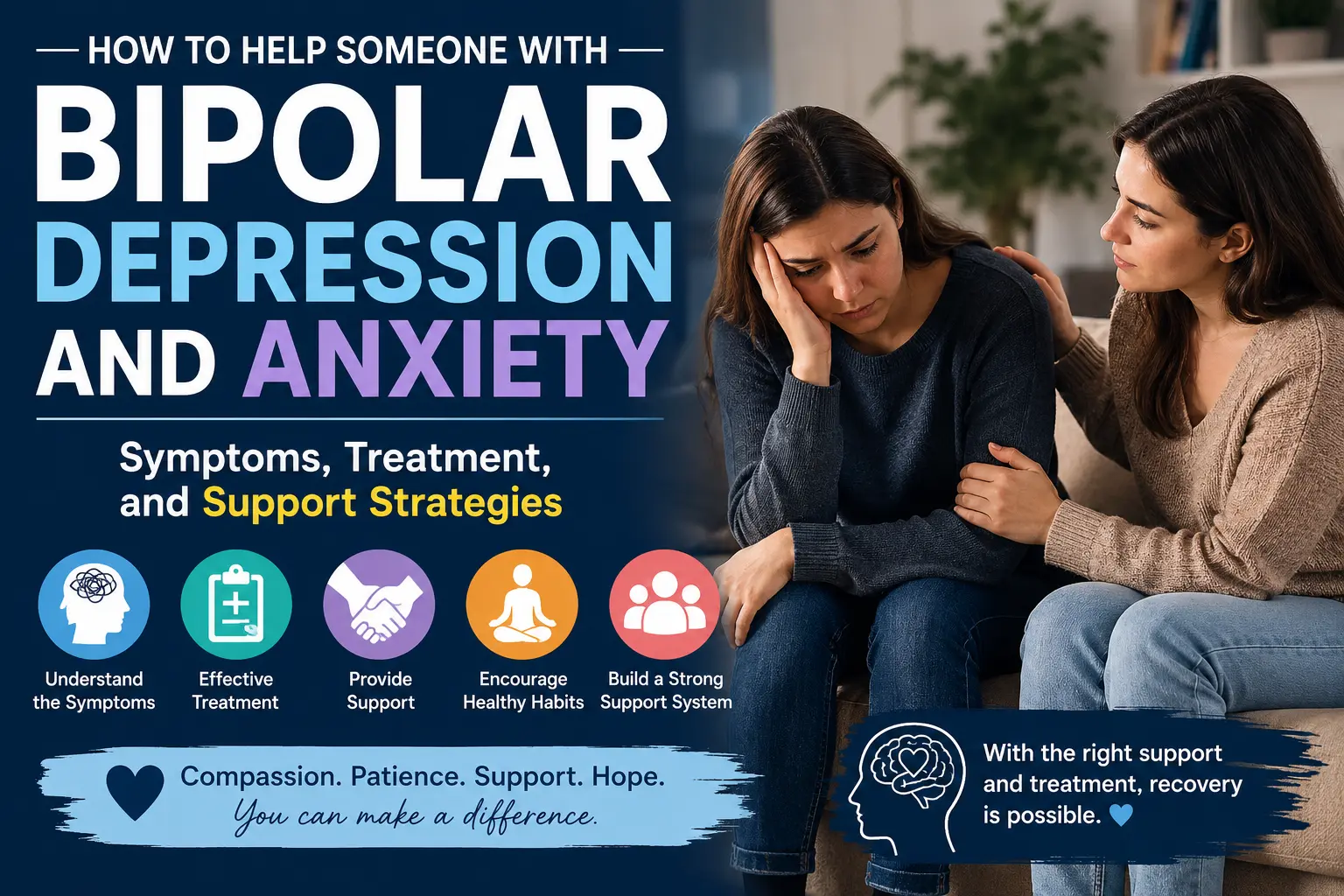 Watching someone you care about struggle with bipolar depression and anxiety can be heartbreaking. You may notice that they withdraw…
 In my practice as a clinical psychologist, I often observe that the difference between a patient who crumbles under pressure…
 We all have "up" days and "down" days. Perhaps you feel energized after a promotion or sluggish on a rainy…
 To define bipolar disorder accurately, we must look at it as a chronic mood dysregulation condition. In psychology and medicine,…
Are you looking for a Therapist?
Connect with qualified mental health professionals who understand
bipolar disorder, mood changes, and emotional challenges.
Private • Supportive • Confidential