
What Is Quetiapine Fumarate? Uses, Dosage, Brand Names & Safety Guide
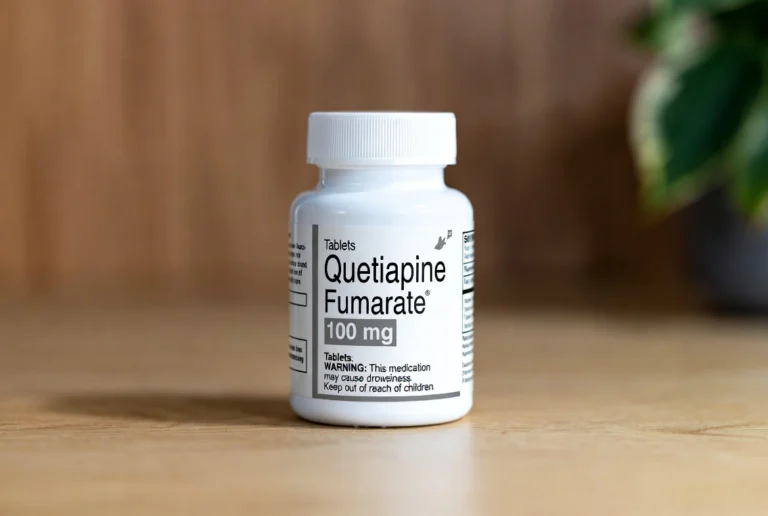
In my practice as a clinical psychologist, I often observe a specific type of anxiety that arises not from a patient’s symptoms, but from the prescription bottle itself. When a patient is handed a script for quetiapine fumarate, they often encounter a wall of clinical jargon.
They see words like “antipsychotic” or “fumarate” and immediately worry about the severity of their diagnosis or the potential for a “zombie-like” existence.
Quetiapine fumarate—widely recognized by its original brand name, Seroquel—is perhaps one of the most versatile and misunderstood medications in modern psychiatry. While its classification may sound intimidating, its utility spans a vast spectrum of mental health needs, from quietening the noise of a manic episode to providing a biological “floor” for someone trapped in the leaden paralysis of bipolar depression.
Understanding what this medication is, why the “fumarate” salt is used, and how it interacts with your unique neurobiology is the first step in moving from apprehension to informed empowerment.
What Is Quetiapine Fumarate?
To understand what quetiapine fumarate is, we must first demystify the name. Quetiapine is the active medicinal molecule, while “fumarate” refers to the salt form of the drug.
In pharmacology, many medications are bonded to a salt to ensure they remain stable in pill form and dissolve at a predictable rate once they enter your system.
What Kind of Drug Is It?
Quetiapine fumarate belongs to a class of medications known as second-generation antipsychotics (SGAs), or “atypical” antipsychotics.
Unlike the first-generation medications developed in the 1950s, atypical antipsychotics like quetiapine were designed to be more targeted, often carrying a lower risk of certain movement-related side effects while offering broader benefits for mood and cognition.
How It Interacts With the Brain
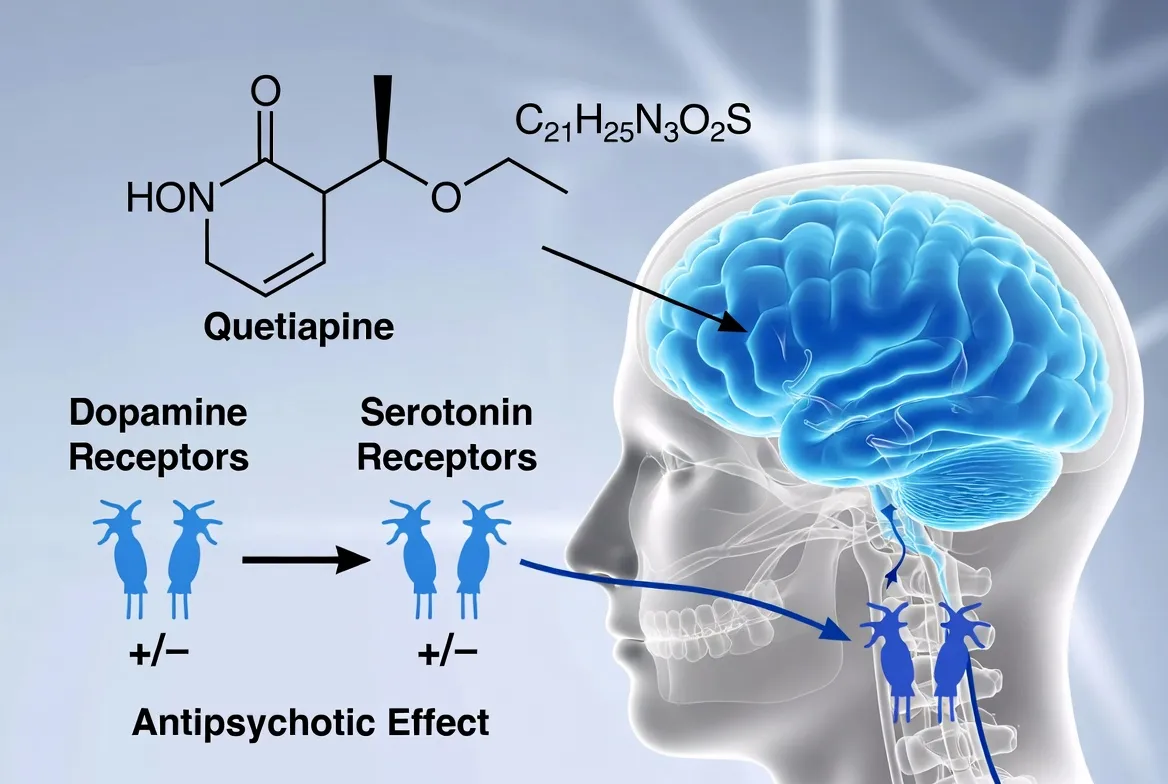
Quetiapine is what we sometimes call a “broad-spectrum” medication because it interacts with several different neurotransmitter systems:
- Dopamine: It modulates dopamine pathways, which helps reduce hallucinations or delusions in conditions like schizophrenia.
- Serotonin: It has a strong affinity for serotonin receptors, which is why it is often more effective for depression and anxiety than older medications.
- Histamine: It acts as a powerful antihistamine, which explains why even very low doses cause significant drowsiness.
Essentially, quetiapine fumarate acts as a “dimmer switch” for an overactive nervous system, helping to regulate the chemical signaling that contributes to mood instability and disorganized thinking. You can read full guide on how quetiapine works in brain, you can read guide on working quetiapine.
What Is Quetiapine Fumarate Used For?
The most common question I hear in my consulting room is, “What is the drug quetiapine fumarate used for if I’m not experiencing psychosis?” Because this medication is so dose-dependent, it is used to treat a wide array of conditions beyond its primary classification.
FDA-Approved Indications
Quetiapine fumarate is officially approved by the FDA for:
- Schizophrenia: Managing both “positive” symptoms (like hallucinations) and “negative” symptoms (like social withdrawal).
- Bipolar Disorder: This includes the treatment of acute manic episodes, bipolar depression, and long-term maintenance to prevent future mood swings.
- Major Depressive Disorder (MDD): It is used as an “adjunct” treatment, meaning it is added to a standard antidepressant when that medication isn’t quite doing enough on its own.
Off-Label Uses in Clinical Practice
In real-world psychiatric settings, quetiapine is often prescribed “off-label” (for uses not specifically FDA-approved) to help with:
- Severe Insomnia: Due to its sedative properties.
- Generalized Anxiety Disorder (GAD): To help slow down ruminative, racing thoughts.
- PTSD: Particularly for managing hypervigilance and sleep disturbances.
In my clinical experience, quetiapine fumarate is often selected when a patient’s profile includes a “triple threat”: mood instability, high-intensity agitation, and profound sleep disruption. By addressing the biological need for sleep while stabilizing the underlying neurochemistry, it can act as a catalyst for other therapeutic interventions to finally take hold.
I once worked with a patient, “Mark,” who struggled with bipolar II. He felt that his brain was like a radio stuck between stations—static-filled and loud. He feared quetiapine would “dull” his creativity.
The Nuance: What Mark discovered was that his executive function—his ability to plan, focus, and regulate emotions—was actually being hindered by his lack of sleep and constant agitation. Once he began a moderate dose, the “static” cleared.
By stabilizing his circadian rhythm through the sedative effect of the medication, he found he had more creative energy during the day because he wasn’t spending all his mental resources just trying to stay calm.
What is Quetiapine Fumarate 25 mg, 50 mg, 100 mg, and 200 mg Used For?
One of the most unique aspects of quetiapine fumarate is its “dose-response” curve. It behaves almost like three different medications depending on the number of milligrams you take. This is why a 25 mg dose for sleep looks very different from a 400 mg dose for schizophrenia.
Low Dose: 12.5 mg – 50 mg
At these levels, quetiapine acts primarily as a potent antihistamine.
- Primary Uses: Severe insomnia, starter titration doses, or acute anxiety.
- Effect: It is highly sedating but has very little “antipsychotic” effect at this range. It helps you fall asleep and stay asleep.
Moderate Dose: 100 mg – 300 mg
At this range, the medication begins to engage the serotonin receptors more significantly.
- Primary Uses: Bipolar depression and as an adjunct for major depressive disorder.
- Effect: This is the “mood-lifting” range. It provides enough of a chemical floor to help patients emerge from the leaden paralysis of depression without being quite as heavy as the higher doses.
High Dose: 400 mg – 800 mg
At high doses, quetiapine fully engages the dopamine D2 receptors.
- Primary Uses: Schizophrenia and Acute Mania.
- Effect: This is where the medication provides its full “antipsychotic” strength, quieting hallucinations and slowing down the dangerous impulsivity of mania.
| Dosage Range | Target Neurotransmitters | Common Indication |
|---|---|---|
| Low (25–50 mg) | Histamine (H1) | Sleep, Anxiety |
| Moderate (100–300 mg) | Serotonin (5-HT2A) | Bipolar Depression, MDD |
| High (400 mg+) | Dopamine (D2) | Schizophrenia, Mania |
It is important to understand that your doctor will likely use a titration process—starting you at a very low dose (like 25 mg) and slowly increasing it. This isn’t because your condition is “getting worse,” but rather to allow your brain’s neuroplasticity to adapt to the medication while minimizing the risk of fainting or extreme dizziness.
Brand Name and Generic Clarifications
A source of frequent confusion is the naming convention. Quetiapine fumarate is the generic name for Seroquel. When you go to the pharmacy, your bottle might say “Quetiapine” or “Seroquel.” Chemically, they are bioequivalent, meaning they contain the same active ingredient and must meet the same rigorous FDA standards for effectiveness.
Seroquel XR vs. IR
You may also hear about Seroquel XR (Extended Release). While standard quetiapine fumarate (immediate release) peaks in your system quickly (making it great for sleep), the XR version releases the medication slowly over 24 hours.
This is often preferred for mood stabilization because it avoids the “peaks and valleys” of the medication in your bloodstream, leading to more consistent symptom control throughout the day.
Is Quetiapine Fumarate a Narcotic or Sleeping Pill?
In my practice, I frequently encounter patients who are hesitant to start this medication because they fear they are being prescribed a narcotic or a highly addictive “downer.” It is vital to clear the air: Quetiapine fumarate is not a narcotic.
It is not an opioid, and it does not have the same potential for abuse or the “euphoric high” associated with controlled substances.
Quetiapine vs. Xanax
Many patients ask, “Is quetiapine fumarate like Xanax?” The answer is a clinical no. Xanax (alprazolam) is a benzodiazepine that works on the GABA system and carries a high risk of physiological dependence. Quetiapine, as an atypical antipsychotic, works on dopamine and serotonin. While it is highly sedating, it does not lead to the same type of “craving” or addiction.
Is It a Sleeping Pill?
While it is often used for its sedative effects, it is not officially classified as a “hypnotic” (like Ambien or Lunesta). The sleepiness you feel is a “side effect” of the medication’s antihistamine properties. In my experience, doctors often choose quetiapine for sleep specifically because it is not a habit-forming narcotic, making it a safer option for patients with a history of substance sensitivity.
Common and Sexual Side Effects
Understanding the “biological price tag” of a medication is essential for long-term adherence. In my years of clinical observation, I have found that patients who are prepared for side effects feel much more in control of their journey.
Common Side Effects
Most side effects are most intense during the initial titration phase:
- Drowsiness: This is the most universal effect, often leading to a “morning hangover” feeling.
- Dry Mouth and Constipation: These occur because the medication impacts the autonomic nervous system.
- Weight Gain: This is perhaps the most significant concern. Quetiapine can increase appetite and alter how your body processes glucose.
Sexual Side Effects
A common worry is: “Will this ruin my sex life?” Quetiapine side effects sexually are generally less frequent than those seen with SSRI antidepressants. However, some patients report:
- Reduced Libido: Often a secondary effect of the general sedation.
- Erectile Dysfunction: Rare, but possible due to its effect on alpha receptors and blood pressure.
- Hormonal Changes: In some cases, quetiapine can increase a hormone called prolactin, which may impact sexual health or menstrual cycles.
Serious Risks to Monitor
We must be vigilant about tardive dyskinesia (TD)—involuntary, repetitive body movements. While the risk is much lower with atypical antipsychotics like quetiapine than with older drugs, this is why I always encourage patients to have regular physical check-ups. Additionally, we monitor for metabolic syndrome, ensuring that the medication isn’t causing a dangerous rise in blood sugar or cholesterol.
Is Quetiapine Fumarate Safe?
Is quetiapine a “dangerous” drug? When used under the guidance of a psychiatrist, it is a highly effective, safe tool. However, it is a “high-alert” medication that requires respect.
The Importance of Monitoring
Safety is maintained through consistent monitoring. In my practice, I work closely with a patient’s prescribing physician to ensure they are tracking the following:
- Weight and Waist Circumference: To catch early signs of metabolic shifts.
- Blood Glucose and Lipids: To prevent the onset of Type 2
- Blood Pressure: To manage the risk of orthostatic hypotension (fainting upon standing).
Frequently Asked Questions
What is quetiapine fumarate 25 mg used for?
The 25 mg dose is primarily used as a starter dose to test tolerance or off-label for severe insomnia and acute anxiety symptoms.
Is quetiapine fumarate the same as Seroquel?
Yes. Quetiapine fumarate is the generic chemical name for the brand-name medication Seroquel.
Is it addictive?
No, quetiapine is not considered addictive or habit-forming. However, you should never stop taking it abruptly, as this can cause withdrawal symptoms like nausea or rebound insomnia.
Can it cause weight gain?
Yes, weight gain is a common side effect. It is important to monitor your diet and maintain regular activity while on this medication.
How long does it take to work?
For sleep, it works within 30–60 minutes. For mood stabilization in depression or mania, it can take 2 to 6 weeks to see the full therapeutic benefit.
Conclusion
Quetiapine fumarate is a sophisticated medication that offers hope to those navigating the often-turbulent waters of bipolar disorder and severe depression. It is not a “magic pill,” nor is it a narcotic “downer”—it is a chemical stabilizer that, when used correctly, can restore the executive function and emotional balance necessary to live a full life.
By working closely with your care team and staying informed about your dosage and metabolic health, you can minimize the risks and maximize the benefits of this versatile treatment.
References & Resources
- National Institute of Mental Health (NIMH): Bipolar Disorder Medications
- National Alliance on Mental Illness (NAMI): Quetiapine (Seroquel) Overview
- FDA.gov: Seroquel Prescribing Information
- Bipolar Lives: Mood Stabilizers and Antipsychotics
Related Posts


Subscribe to Our Newsletter
Get mental health tips, updates, and resources delivered to your inbox.
MORE from Author
Read More In my practice as a clinical psychologist, I often observe that the difference between a patient who crumbles under pressure…
- We all have "up" days and "down" days. Perhaps you feel energized after a promotion or sluggish on a rainy…


 To define bipolar disorder accurately, we must look at it as a chronic mood dysregulation condition. In psychology and medicine,…
 To answer whether bipolar fits the bill, we first have to define what a neurodivergent person actually is. The term…


Are you looking for a Therapist?
Connect with qualified mental health professionals who understand
bipolar disorder, mood changes, and emotional challenges.
Private • Supportive • Confidential