
Bipolar Disorder And ICD 10

Have you noticed that certain codes keep appearing in your medical history? If you have been diagnosed with bipolar disorder, it is associated with certain numerical diagnosis codes used in medical billing.
You might also see that the coding has changed, and this can be confusing. Does this mean that your bipolar symptoms have also evolved, and your psychiatrist neglected to tell you?
Don’t panic or stress. Your mental health disorder hasn’t changed; only the codes used to classify it.
What is ICD-10?
The ICD acronym stands for the International Classification of Diseases, and this is the 10th edition. Previously, there should have been ICD-9 codes in your medical chart. In 2015, the World Health Organization (WHO) finally agreed on the new coding and started using this latest system.
This is why you might see ICD-9 and ICD-10 codes. Nothing has changed regarding your symptoms, only how they are classified.
ICD-10 codes are useful and important for several reasons. Healthcare agencies and providers use them to attempt to simplify your medical records. They are also used to track trends and determine reimbursement by insurance carriers. Furthermore, they are used by healthcare providers to conduct clinical outcomes research.
If you are like most people with bipolar disorder, you need your insurance provider to cover the cost of your treatment. The ICD codes help to ensure that you have the coverage you need to manage and control your symptoms. It also helps insurance companies pay in a timely fashion.
Classifying bipolar disorder with ICD-10 codes also ensures that you are getting the best possible care. It helps to clarify the data your psychiatrist reads in your chart, and this is important if you switch to a new healthcare professional. A reduced risk of a misdiagnosis means that you are more likely to get the right treatment plan for your bipolar disorder.
This is crucial in controlling your manic and depressive episodes.
The main difference between the ICD-9 and ICD-10 systems for bipolar disorder is that the revised system now allows for additional information to be coded into the chart. In other words, ICD-10 is more detailed.
Factors That May Lead to the Development of Bipolar Disorder
When we talk about what “causes” bipolar disorder, the most important thing to understand is that it’s rarely one single event. It isn’t like a broken bone where you can point to one specific fall. Instead, think of it as a “perfect storm” of biological, genetic, and environmental factors coming together.
Here is the breakdown of the primary drivers that researchers currently believe lead to the development of the condition.
1. The Genetic Blueprint
Bipolar disorder is one of the most heritable mental health conditions. If a parent or sibling has it, your risk is significantly higher than the general population.
- Polygenic Nature: There isn’t one “bipolar gene.” Instead, it involves hundreds of small genetic variations that, when combined, create a vulnerability.
- Family History: While genetics aren’t destiny (one identical twin can have it while the other doesn’t), they provide the “biological stage” upon which the disorder can perform.
2. Brain Structure and Chemistry
In a person with bipolar disorder, the brain’s “wiring” and “chemical signaling” function differently.
- Neurotransmitter Imbalance: You’ve likely heard of Dopamine and Serotonin. In bipolar disorder, the brain has trouble regulating these. High dopamine levels are often linked to mania, while low levels are tied to depression.
- The “Brittle” Internal Clock: People with bipolar disorder often have a sensitive circadian rhythm. Their brain’s master clock (the suprachiasmatic nucleus) is easily disrupted by light, travel, or stress.
- Physical Changes: Imaging shows that certain areas, like the prefrontal cortex (which handles decision-making) and the amygdala (which processes emotion), may have different volumes or activity levels compared to those without the disorder.
3. Environmental Triggers (The Stress-Diathesis Model)
Think of genetics as the “loaded gun” and environment as the “trigger.” Many people have the genetic predisposition but never develop the disorder until a specific stressor pushes the system over the edge.
- Childhood Trauma: High levels of early-life stress, abuse, or neglect can permanently alter how the brain’s stress-response system (the HPA axis) handles pressure in adulthood.
- Major Life Changes: It’s not always “bad” stress. Even positive events like starting a new job, getting married, or giving birth (postpartum) can trigger the first episode due to the massive shift in routine and hormones.
- Sleep Deprivation: As we’ve discussed, losing sleep is the most potent environmental trigger. One or two “all-nighters” can be enough to ignite a first manic episode in someone who is vulnerable.
4. Seasonal and Light Sensitivity
The Earth’s natural rhythms play a role. Many people find their episodes are seasonal.
- Spring/Summer Mania: The increase in sunlight can be “over-activating” for a sensitive brain, pushing someone toward mania.
- Winter Depression: The lack of light can cause the system to “shut down” into a depressive state.
ICD-10-CM and ICD-10-PCS for Bipolar Disorder
The United States has divided the coding into two parts. ICD-10-CM is used for diagnostic procedures, and if you need to be hospitalized, it will be reflected with an ICD-10-PCS code. Once again, this makes your medical history easier for health professionals to read and can speed up the response by your insurance carrier.
History of Using ICD-10 Codes
ICD codes have been used to identify diagnoses and inpatient procedures since the late 1970s.
It is a coding system that is used by healthcare providers worldwide. What you might not know is that the current ICD-10 codes are actually 25 years old, and have been used by some counties since the mid 1990’s.
This could be important to know if you were previously being treated for bipolar disorder in another country and have recently moved to the U.S. This will be reflected in your medical chart.
Currently, the WHO is updating these codes and plans to release ICD-11, or the 11th edition, in 2017, though it will probably take a few years before the United States implements the planned new system. Currently, ICD-11 is slated to go live in January 2022.
ICD-10 Codes for Bipolar Disorder
There is a long list of health codes for bipolar disorder, and this is beneficial for you.
Since there are now ICD codes for almost every aspect of this mental health disorder, it is easy for doctors to see which symptoms you have and are being or have been treated for.
The ICD codes for Bipolar Disorder are in the “F” series. While they do include,
- Bipolar Disorder Type 1
- Bipolar 1 Disorder
- Manic-depressive reaction
- Manic-depressive illness
- Manic-depressive psychosis
The 10th edition does not have coding for
- Bipolar disorder with a single episode of mania
- Recurrent major depressive disorder
- Single episode of major depressive disorder
- Bipolar Cyclothymia
It is this lack of ICD codes that has prompted the WHO to release the updated 11th edition.
Some of the specific codes that indicate Bipolar Disorder and your current symptoms at the time of treatment are,
F31.0– current episode of hypomania
F31.1– manic without psychotic features
F31.2– severe mania with psychotic features
F31.3– mild or moderate depressive features
F31.4– severe depression without psychosis
F31.5– severe depression with psychotic features
F31.6– mixed episode
F31.7– Currently in remission
F31.8– Bipolar Type 11
F31.9– Unspecified bipolar disorder
Some sub-codes provide additional information. If you want to learn more about the ICD-10 codes for Bipolar Disorder Type 1 or 2, you can find them online at the International Classification of Diseases, 10th Revision website.
Why Your Insurance Bill Code Matters (It’s More Than Just Paperwork)
You might think the alphanumeric code on your medical bill or discharge papers—like F31.3 or F31.9—is just administrative jargon for the insurance company. But for a patient, understanding your specific ICD code is a powerful tool for advocacy.
The code isn’t just a label; it is the “key” that unlocks specific levels of care, medication coverage, and disability support.
The “Severity Gap” Problem One of the most common issues patients face is a mismatch between how they feel and how they are coded.
- Scenario: You feel overwhelmed, perhaps even unsafe or having dark thoughts.
- The Code: Your paperwork says F31.3 (Bipolar disorder, current episode mild depression).
If your code says “mild” but your reality is “severe,” insurance companies may use that code to deny coverage for intensive treatments like hospitalization, newer brand-name antipsychotics, or TMS (Transcranial Magnetic Stimulation). They might argue that a “mild” condition doesn’t require “severe” intervention.
How to Talk to Your Doctor About Your Code If you feel your diagnosis code doesn’t reflect your current struggle, it is okay to ask for a review. You can say:
“I noticed my paperwork lists my condition as ‘mild’ (F31.3), but my symptoms are preventing me from working and I’m struggling with suicidal ideation. Would it be more accurate to update my specifier to ‘severe’ (F31.4 or F31.5) so my medical record matches the urgency I’m feeling?”
This ensures your medical history—and your access to care—aligns with your actual needs.
The Road to Clarity: Diagnosing Bipolar Disorder
Diagnosing bipolar disorder isn’t as simple as a quick blood test or a brain scan. It’s more like putting together a complex puzzle where the pieces—your history, your moods, and even your family’s past—only make sense when viewed as a whole. Because its symptoms often overlap with depression or anxiety, the process requires patience and honesty.

1. The Clinical Interview: Your Story is the Data
The “gold standard” for diagnosis remains a deep-dive conversation with a psychiatrist or psychologist. They aren’t just looking at how you feel today; they are looking for the arc of your life.
- The Search for Mania: Most people seek help when they are depressed. A clinician’s job is to hunt for the “highs” (mania or hypomania) you might have dismissed as just having a “good week.”
- Family Tree: Bipolar disorder has a strong genetic component. Knowing if a blood relative struggled with similar swings is a massive diagnostic clue.
- Timeline: They will look for patterns. Did that burst of energy last four days? Two weeks? Did it happen after a major life stressor?
2. Ruling Out the “Imposters”
Before confirming bipolar disorder, doctors must rule out physical conditions that can mimic mood swings.
- Lab Work: Expect blood tests to check your thyroid function. An overactive thyroid can look exactly like mania, while an underactive one mirrors deep depression.
- Substance Screening: Alcohol and stimulants can create “artificial” mood cycles. Clinicians need to see what your baseline is without these influences.
3. Standardized Screening Tools
While they aren’t a shortcut to a diagnosis, standardized questionnaires help quantify what you’re experiencing. You might encounter:
- The MDQ (Mood Disorder Questionnaire): A series of “Yes/No” questions designed to spot symptoms of mania.
- The PHQ-9: Used to measure the severity of depressive symptoms.
- Mood Charting: Often, a doctor will ask you to track your sleep and mood for two weeks to see the “rhythm” of your symptoms in real-time.
4. Understanding the Different “Flavors”
A diagnosis will usually fall into one of three primary categories based on the DSM-5-TR criteria:
| Type | Diagnostic Requirement |
| Bipolar I | At least one Manic Episode (severe enough to cause hospital stays or psychosis). |
| Bipolar II | At least one Hypomanic Episode (less severe) and one Major Depressive Episode. |
| Cyclothymia | Two years of shifting between “lows” and “highs” that don’t quite meet full clinical criteria. |
ICD-10 Codes and Bipolar Disorder Treatment
These codes do make it easier for healthcare professionals to provide the right treatment for you.
One glance at your chart will let them know your history, and this will help them make the right diagnosis. If they see that your bipolar disorder symptoms are typically mild, moderate or severe, they have a better chance of creating a treatment plan that will work for you.
The downside to the current coding system is that it does not cover every aspect of this disorder. This can lead to misdiagnosis and medications that do not control the symptoms associated with your bipolar disorder. This is especially true if you have bipolar cyclothymia.
While this current International Classification of Diseases will simplify everything from treatment to billing insurance companies, it still does not cover every aspect of this mental health disorder.
It is still important for you to be proactive in your diagnosis and treatment plan, and not rely completely on the ICD-10 codes in your chart.
See here for more information on Bipolar Treatments.
The “Hidden” Codes: How Specifiers Can Improve Your Treatment
A generic diagnosis of “Bipolar Disorder” often fails to capture the complexity of your daily life. This is where “Clinical Specifiers” come in. These are extra tags added to your main ICD code that describe the flavor and timing of your episodes.
Getting these specific details into your official record isn’t just about accuracy—it can directly affect your wallet and your treatment options.
1. The “Seasonal Pattern” Specifier
Did you know that if your mood swings track closely with the calendar (e.g., depression in November, mania in April), your doctor can add a “with Seasonal Pattern” specifier to your ICD code?
- The Value-Add: If this specifier is officially in your chart, it creates a medical justification for treatments like Bright Light Therapy. Without the specific code indicating seasonality, an insurance provider might reject a claim for a medical-grade light box, calling it “experimental” or “unnecessary.” With the code, it becomes an evidence-based intervention.
2. The “Mixed Features” Specifier
Standard codes assume you are either “up” (manic) or “down” (depressed). But many people experience Mixed Features—feeling wired, agitated, and energetic while simultaneously having negative, depressive thoughts.
- The Value-Add: This is a critical distinction for safety. If your code just says “Depression” (F31.3), a doctor might prescribe a standard antidepressant. In a mixed state, antidepressants can be like throwing gasoline on a fire, increasing agitation and suicide risk. A code that specifies “Mixed Features” acts as a warning sign in your file to approach antidepressants with extreme caution.
3. The “Rapid Cycling” Specifier
If you experience four or more mood episodes in a single year, you fit the criteria for Rapid Cycling.
- The Value-Add: Having this documented can explain why standard treatments stop working quickly. It validates the need for specific mood stabilizers (like Valproate or Lamotrigine) that are often more effective for rapid cyclers than Lithium alone.
The Takeaway: Don’t settle for a generic F31.9 (“Bipolar Disorder, Unspecified”) if you can avoid it. The more specific your code, the more tailored—and approved—your treatment plan can be.

Related Posts






Subscribe to Our Newsletter
Get mental health tips, updates, and resources delivered to your inbox.
MORE from Author
Read More Watching someone you care about struggle with bipolar depression and anxiety can be heartbreaking. You may notice that they withdraw…
 In my practice as a clinical psychologist, I often observe that the difference between a patient who crumbles under pressure…
 We all have "up" days and "down" days. Perhaps you feel energized after a promotion or sluggish on a rainy…
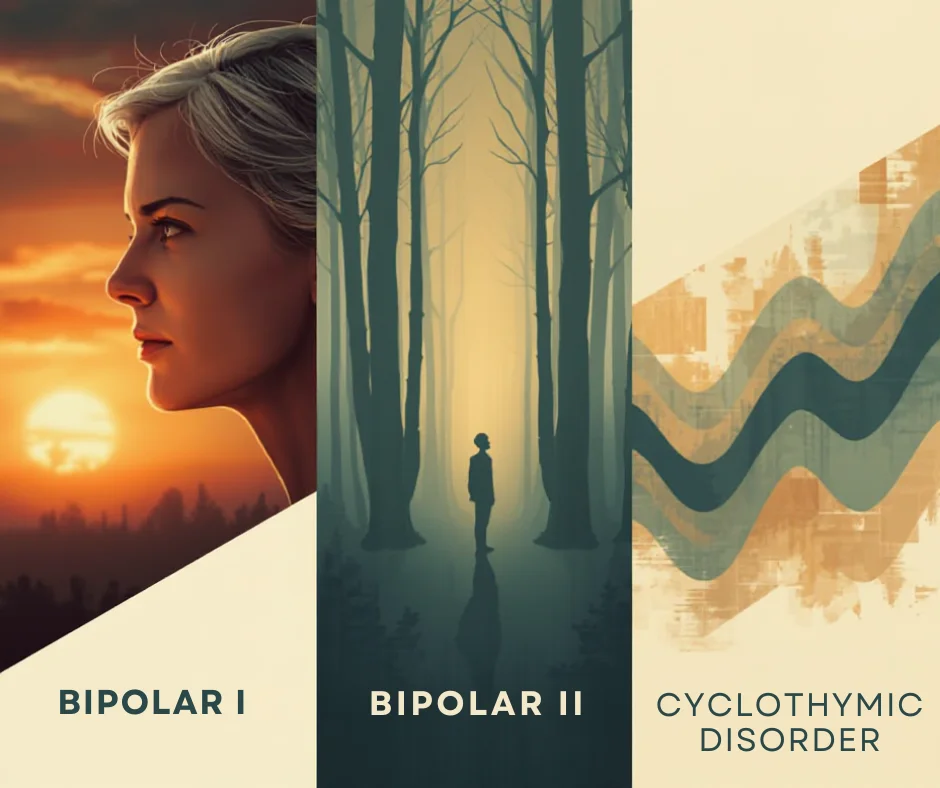 To define bipolar disorder accurately, we must look at it as a chronic mood dysregulation condition. In psychology and medicine,…
Are you looking for a Therapist?
Connect with qualified mental health professionals who understand
bipolar disorder, mood changes, and emotional challenges.
Private • Supportive • Confidential