
Exercise Plan Explained: How to Build the Best Workout Plan for Weight Loss, Strength, and Health

Medically reviewed by Laura Athey Updated Date: May 2, 2026

In the world of health and wellness, there is a profound difference between “working out” and following a structured exercise plan. Working out is often reactive—going to the gym when you feel motivated or taking a random jog when the weather is nice.
An exercise plan (or workout plan), however, is a proactive, strategic roadmap designed to move you from your current physical state to a specific goal, whether that be weight loss, increased strength, or better cardiovascular health.
Why does this distinction matter? For many, especially those managing mental health conditions or physical limitations, “random acts of exercise” can lead to burnout, injury, or frustration when results don’t manifest.
A well-constructed plan provides psychological scaffolding; it reduces decision fatigue and creates a sense of mastery and routine.
Whether you are looking for an exercise plan for beginners or a medically supervised weight loss exercise plan, the goal remains the same: sustainability over intensity.
In this guide, we will break down the science of program design, explore popular fitness “rules,” and provide specialized paths for those with unique medical needs.
I often observe that the biggest obstacle to an exercise plan isn’t physical—it’s the ‘All-or-Nothing’ trap. Patients think if they can’t do an hour of sweat-drenched cardio, the day is a waste. From a psychological perspective, the most successful plan is the one that accounts for your ‘worst’ days.
I recommend having a ‘Level 1’ version of your workout (e.g., a 10-minute walk) for days when mental health or life stress is high. Consistency in movement is far more important for your brain chemistry than the intensity of a single session.
What Is a Good Exercise Plan?
When patients ask, “What is a good exercise plan?“, they are often looking for a specific list of movements. However, a truly effective plan is defined by its adherence to the F.I.T.T. Principle. This is a foundational medical and athletic framework used to ensure an exercise program is balanced and safe.
The F.I.T.T. Components
- Frequency: How often you exercise. For beginners, this might be 3 days a week; for athletes, 5 or 6.
- Intensity: How hard you are working. This is often measured by heart rate or the “Rating of Perceived Exertion” (RPE).
- Time: The duration of each session.
- Type: The specific modality, such as aerobic (cardio), resistance (weights), or flexibility.
Beyond F.I.T.T., a good plan must include Progression. This means that as your body adapts, the plan evolves. If you walk the same mile at the same pace for three years, your body reaches a plateau. A good plan anticipates this, gradually increasing the challenge to maintain health improvements.
Popular Fitness “Rules” Explained (And What Science Says)
If you have spent time in the fitness community, you have likely heard various numerical “rules.” While these sound like magic formulas, they are simply shorthand for different training philosophies.
What is the 5-3-1 Rule?
Created by Jim Wendler, the 5/3/1 method is a strength-based program focused on four core lifts: the press, deadlift, bench press, and squat. It operates on four-week cycles. It is excellent for intermediate to advanced lifters but often too intense for absolute beginners or those with joint issues.
What is the 4-8-12 Rule?
The 4-8-12 rule is a concept often used in “hypertrophy” (muscle building). It suggests performing 4 exercises per muscle group, 8 to 12 reps per set.
Science supports this range as the “sweet spot” for muscle growth, as it provides enough volume to stimulate tissue repair without overtaxing the central nervous system.
What is the 2-2-2 Rule in Gym?
The 2-2-2 rule is a fantastic exercise plan for beginners. It typically involves:
- 2 days of cardio (walking, swimming, cycling).
- 2 days of strength training (bodyweight or light weights).
- 2 days of flexibility or active recovery (yoga or stretching).
- 1 day of total rest. This structure prevents the “too much, too soon” syndrome that causes many beginners to quit within the first month.
How to Make an Exercise Plan (Step-by-Step)
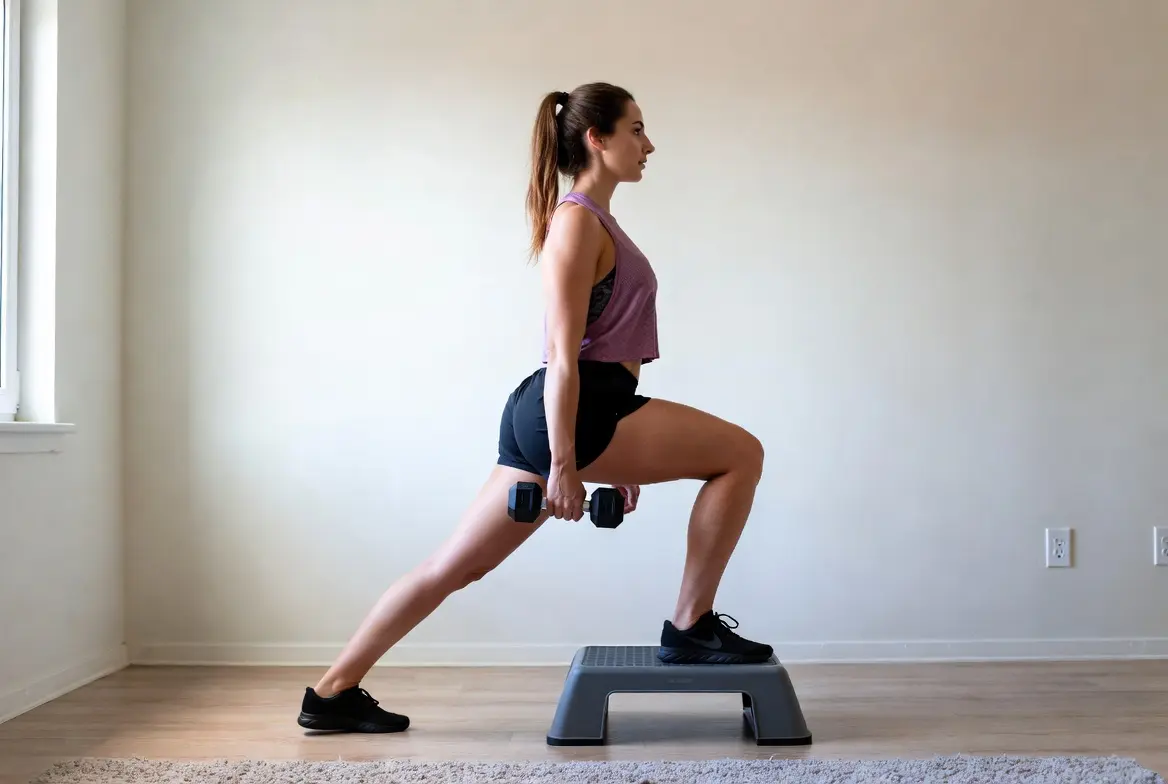
Learning how to create an exercise plan is a skill that empowers you for life. You don’t always need a personal trainer; you need a process.
- Define Your Goal: Be specific. “Get healthy” is vague. “Walk 10,000 steps and do 20 pushups 3 days a week” is a plan.
- Choose Your Modalities: If you hate running, don’t put it in your plan. Choose activities you enjoy—or at least tolerate—to ensure long-term adherence.
- Set a Weekly Schedule: Look at your calendar. When can you realistically commit 30 minutes? Treat these as non-negotiable medical appointments.
- Create a Template: Use an exercise plan template to track your progress. Note the date, the exercise, the duration/reps, and how you felt.
Exercise Plan for Beginners (No Gym Required)
Many people believe that an exercise plan for beginners must start at a commercial gym. In reality, the best way to start is in an environment where you feel safe and unobserved.
Realistic Expectations: In the first 2-4 weeks, you aren’t training for a marathon; you are training your brain to show up. Common Mistakes:
- Over-exercising: Doing 7 days a week immediately.
- Ignoring Pain: Not distinguishing between “muscle burn” and “joint pain.”
- Comparing: Looking at influencers instead of your own previous week’s data.
A beginner workout plan should focus on functional movements: sitting and standing (squats), pushing (modified pushups), and carrying (walking).
Exercise Plan at Home (Bodyweight & Dumbbells)
A home exercise plan is the ultimate solution for busy parents or those with social anxiety. You can achieve elite levels of fitness using only your bodyweight and a single set of dumbbells.
- Bodyweight Workout Plan: Focus on the “Big Five”—Squats, Lunges, Pushups, Planks, and Glute Bridges. These movements engage multiple muscle groups, maximizing calorie burn in minimal time.
- Dumbbell Workout Plan: Adding external resistance is key for bone density. Simple movements like the “Overhead Press” or “Dumbbell Row” can be done in a living room while watching the news.
Exercise Plan for Weight Loss (Evidence-Based)
The best exercise plan for weight loss is often misunderstood. Many believe they must do hours of “fat-burning” cardio. However, science points to a more integrated approach.
Cardio vs. Resistance
While cardio burns more calories during the session, resistance training (lifting weights) builds muscle, which increases your Basal Metabolic Rate (BMR). This means you burn more calories while at rest. A lose weight exercise plan should ideally be a 60/40 split between resistance and cardio.
The Role of NEAT
Non-Exercise Activity Thermogenesis (NEAT) refers to the calories burned doing everything except sleeping, eating, or sports. Walking the dog, cleaning the house, and fidgeting are all part of NEAT.
An exercise plan for weight loss is significantly more effective when paired with a “high-NEAT” lifestyle (e.g., taking the stairs).
Diet and Exercise Plans: An Integrated Approach
A common pitfall is viewing movement and nutrition as separate silos. However, the best diet and exercise plan for weight loss is one where the two systems support each other.
- The Caloric Balance: You cannot “out-run” a poor diet. While exercise is vital for heart health and muscle maintenance, weight loss is primarily driven by a caloric deficit.
- Protein Needs: When following a diet and exercise plan for weight loss, protein is your most important macronutrient. It provides the building blocks for muscle repair and increases satiety (the feeling of fullness).
- Realistic Timelines: Avoid “30-day shred” mentalities. A medically responsible diet and exercise plan aims for 1–2 pounds of fat loss per week to ensure you aren’t losing muscle mass in the process.
Special Population Exercise Plans (Medical-Safe)
Not every exercise plan is one-size-fits-all. Many individuals require modifications based on their biological stage or specific health conditions.
Postpartum Exercise Plan
The focus here is on rehabilitation, not intensity. A postpartum exercise plan should prioritize pelvic floor health and repairing the “Diastasis Recti” (abdominal separation) before returning to high-impact activities like running or jumping.
PCOS Exercise Plan
For those with Polycystic Ovary Syndrome, high-intensity workouts can sometimes spike cortisol levels excessively.
A PCOS exercise plan often yields better results with heavy resistance training and slow, steady-state cardio (like hiking), which helps improve insulin sensitivity without overtaxing the endocrine system.
Osteoporosis Exercise Plan
If you are managing low bone density, your osteoporosis exercise plan must include weight-bearing exercises. Lifting weights or walking creates a “stress” on the bone that signals the body to deposit more minerals, strengthening the skeletal structure.
Exercise Plan for Seniors
The primary goal for older adults is functional longevity. An exercise plan for seniors focuses on balance (to prevent falls), grip strength, and joint mobility.
The “Dr. Now” Exercise Plan
Often searched for by fans of bariatric medicine, a Dr. Now exercise plan (referring to Dr. Younan Nowzaradan) is specifically for those with extreme obesity. These plans usually start with chair-based exercises or walking to protect the joints while the patient follows a strict low-calorie diet.
Aerobic Exercise Plans & VO₂ Max Improvement
Which is the best aerobic exercise plan? The answer depends on your current fitness level. Aerobic exercise is any activity that uses large muscle groups and can be maintained rhythmically.
- Beginners: Focus on “Zone 2” training—this is a pace where you can still hold a conversation. It builds the mitochondrial base of your heart.
- Improving VO₂ Max: Your VO₂ Max is a measure of how efficiently your body uses oxygen. To improve this, you need Interval Training. A how to improve vo2 max exercise plan usually involves 1–2 sessions a week of high-intensity bursts (HIIT) followed by recovery periods.
Muscle Building & Aesthetic Goals
For those whose goal is “toning” or growth, a bodybuilding workout plan or a full body workout plan is required.
- Hypertrophy: To build muscle, you must train close to “mechanical failure.” This means the last two reps of your set should be very difficult to complete with good form.
- Calisthenics Workout Plan: You don’t need a gym for muscle growth. A calisthenics workout plan uses advanced bodyweight movements (like pull-ups, dips, and pistol squats) to create the necessary resistance.
- Frequency: For muscle growth, science suggests hitting each muscle group at least twice a week.
Abs, Core & Everyday Exercise
A common myth is that you can “crunch” your way to a six-pack.
- Spot Reduction Myth: You cannot choose where your body burns fat. An exercise plan to get abs is actually a combination of core strengthening and a weight loss exercise plan to reduce the body fat percentage covering the muscles.
- 7 Exercises to Do Everyday: If you want to maintain basic health with zero equipment, focus on these “functional” moves:
- Planks (Core)
- Squats (Lower Body)
- Lunges (Balance)
- Pushups (Upper Body)
- Bird-Dogs (Spine Health)
- Glute Bridges (Posterior Chain)
- Brisk Walking (Cardiovascular)
Free Exercise Plans, PDFs & Weekly Schedules
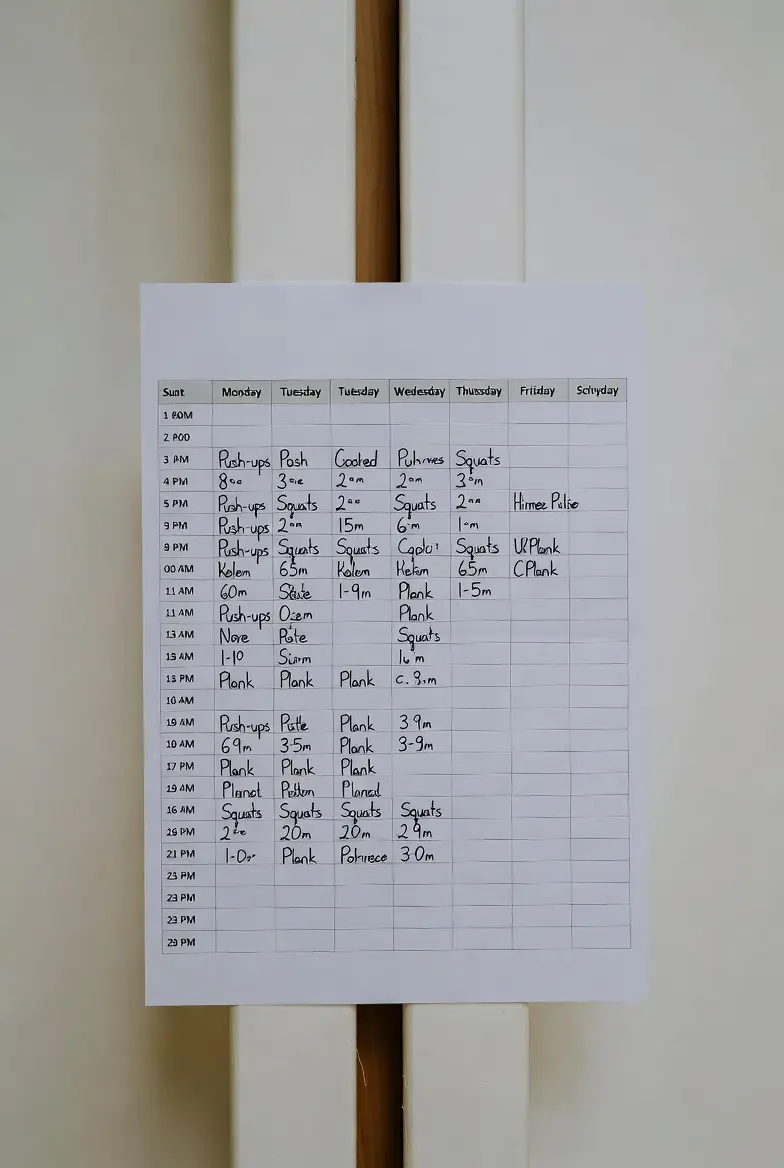
Accessibility is key to consistency. You can find a free exercise plan or an exercise plan pdf online from reputable sources like the YMCA or the NHS.
A Sample Exercise Plan for a Week (Beginner)
- Monday: 20-minute walk + 10 minutes of bodyweight squats/pushups.
- Tuesday: Rest or 15 minutes of light stretching.
- Wednesday: 20-minute walk + 10 minutes of “Core” (planks/bird-dogs).
- Thursday: Rest.
- Friday: 30-minute brisk walk or bike ride.
- Saturday: Full Body Strength (using dumbbells or bodyweight).
- Sunday: Active Recovery (leisurely walk or yoga).
Gym, YMCA & Structured Programs
For many, the structure of a facility is the key to accountability. A YMCA exercise plan or a local gym membership provides access to equipment that is difficult to house at home, such as cable machines and swimming pools.
- Structured Support: Programs like those found at the YMCA often cater to families and seniors, offering “Silver Sneakers” or beginner-led classes.
- Workout Plans for Women: While physiology is largely similar, the best workout plan for women often emphasizes bone density (via heavy lifting) and hormonal cycle synchronization (adjusting intensity based on the menstrual cycle).
- The “Best” Workout Plan: Ultimately, the best plan is the one you enjoy. Whether it is a high-energy “Zumba” class or a solitary “Full Body” lifting session, the environment should reduce, not increase, your stress levels.
Exercise Safety for Medical Conditions
Safety is the foundation of any exercise plan. When dealing with chronic illness, “pushing through the pain” is not only bad advice—it can be dangerous.
Heart Health and Cardiovascular Issues
- Is exercise safe for people with heart failure? Generally, yes, but it must be “Cardiac Rehab” style—low intensity and medically supervised. Exercise helps the heart become more efficient, reducing the workload on the muscle.
- How do you exercise with leaky heart valves? This requires a cardiologist’s clearance. Typically, “isometric” exercises (like heavy lifting where you hold your breath) are discouraged because they cause sudden spikes in blood pressure. Steady-state walking or cycling is usually preferred.
Vestibular and Balance Issues
- What exercises can you do for vertigo? If you suffer from Benign Paroxysmal Positional Vertigo (BPPV), avoid exercises that require rapid head movements or looking up and down (like burpees or certain yoga poses). Ankle circles, seated leg extensions, and stationary biking are safer alternatives that maintain fitness without triggering dizziness.
Clinical Trigger: If you experience chest pain, sudden shortness of breath, or unexplained fainting during an exercise plan, stop immediately and consult a physician.
Passive vs. Active Exercise: Brief Clarification
There is often confusion regarding the differences between passive and active exercise, especially in the context of physical therapy or “bio-hacking” gadgets.
- Active Exercise: You are the engine. Your muscles are contracting to move your limbs. This is the only way to build cardiovascular fitness and muscle mass.
- Passive Exercise: An external force moves your body. This includes massage chairs, vibration plates (to an extent), or a physical therapist moving your arm for you.
- The Verdict: Passive exercise is excellent for circulation and recovery, but it cannot replace an active workout plan for weight loss or strength.
FAQ Section
How many days per week should I exercise?
For general health, the CDC recommends 150 minutes of moderate activity per week. This usually breaks down to 30 minutes, 5 days a week. For weight loss, 4–5 days of a mix of strength and cardio is ideal.
Can I lose weight without exercise?
Yes, weight loss is driven by a caloric deficit. However, without an exercise plan, a significant portion of the weight lost will be muscle tissue rather than fat, which can lower your metabolism and make weight maintenance harder.
What’s the best beginner workout plan?
The “Walking + Bodyweight” approach. Start by walking 20 minutes a day and doing two sets of squats and pushups (on your knees if needed) three times a week.
How long before I see results?
- Neurological (Strength): 1–2 weeks (your brain gets better at using your muscles).
- Energy/Mood: Immediate (due to endorphin release).
- Visual/Weight Loss: 4–8 weeks of consistent adherence.
Conclusion: How to Build an Exercise Plan You’ll Stick With
The most sophisticated exercise plan in the world is worthless if it sits in a PDF on your computer. As we have explored, the secret to physical transformation isn’t intensity—it’s adherence.
Consistency beats perfection every time. Whether you are following a beginner workout plan in your living room or a specialized osteoporosis exercise plan at the gym, the goal is to make movement a natural, non-negotiable part of your identity.
Start where you are, use the medical safeguards discussed, and remember that every step, lift, and stretch is an investment in your future self.
Authoritative Clinical & Research References
- American College of Sports Medicine (ACSM)
- Mayo Clinic — Fitness Basics: How to Build a Workout Routine
- National Institutes of Health (NIH)
- American Heart Association (AHA)
- Harvard Health Publishing

Related Posts






Subscribe to Our Newsletter
Get mental health tips, updates, and resources delivered to your inbox.
MORE from Author
Read More Watching someone you care about struggle with bipolar depression and anxiety can be heartbreaking. You may notice that they withdraw…
 In my practice as a clinical psychologist, I often observe that the difference between a patient who crumbles under pressure…
 We all have "up" days and "down" days. Perhaps you feel energized after a promotion or sluggish on a rainy…
 To define bipolar disorder accurately, we must look at it as a chronic mood dysregulation condition. In psychology and medicine,…
Are you looking for a Therapist?
Connect with qualified mental health professionals who understand
bipolar disorder, mood changes, and emotional challenges.
Private • Supportive • Confidential