
Distinct Anxiety: What It Is, How It Feels, and How It’s Different From Typical Anxiety

Medically reviewed by Laura Athey Updated Date: March 28, 2026
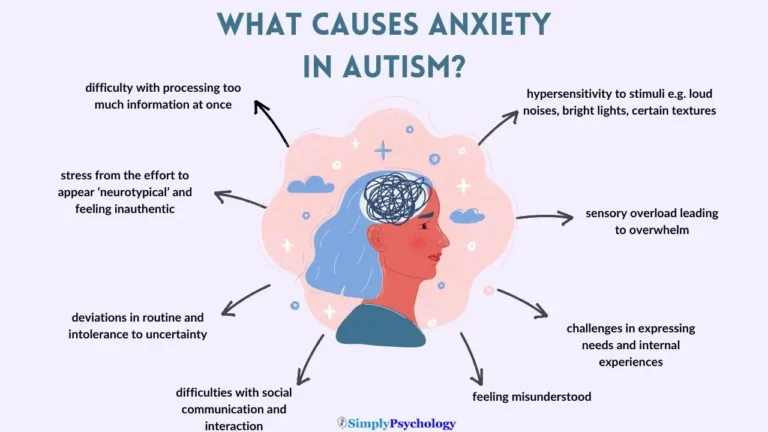
To define distinct anxiety, we must look beyond the psychiatric categories of “worry.” Distinct anxiety is a state of chronic nervous system hyper-arousal caused by a mismatch between an individual’s internal processing speed and external environmental demands. While typical anxiety is often described as a “disorder of thoughts,” distinct anxiety is a disorder of regulation.
In this context, the anxiety is “distinct” because its etiology is neurological rather than purely psychological. It is the result of the brain’s inability to filter, prioritize, or ignore stimuli that a neurotypical brain would naturally discard. This creates a state of sensory and cognitive cumulative load, where the nervous system is perpetually pushed toward its maximum capacity.
In my clinical work at Reflection Psychological Services, I have personally understood that for many neurodivergent adults, the word “anxiety” feels insufficient. Standard clinical definitions of Generalized Anxiety Disorder (GAD) focus on cognitive rumination—the “what-if” thoughts regarding future events. However, for those on the autism spectrum, anxiety often exists as a constant, baseline physiological state. This is distinct anxiety.
“My Anxiety Doesn’t Feel Like Everyone Else’s”
For many neurodivergent individuals, traditional descriptions of anxiety feel like a foreign language. You might have spent years in therapy being told to “challenge your irrational thoughts,” yet found that your heart continues to race even when your mind is quiet.
Perhaps you’ve noticed that your panic doesn’t stem from a fear of judgment, but from the hum of a fluorescent light or the sudden change in a weekend plan.
I have personally understood through my work at Reflection Psychological Services that for the autistic community, anxiety often presents as something entirely different from the standard clinical models. This is what we call distinct anxiety. While it shares the physical sensations of traditional anxiety—racing heart, shallow breath, restlessness—the internal architecture is fundamentally different.
What is distinct anxiety? It is a descriptive concept used to identify anxiety that is inextricably linked to autistic neurology. It isn’t just “anxiety plus autism”; it is a unique physiological state where the triggers are sensory, predictability-based, and cognitive, rather than purely social or situational. In this guide, we will explore why autism’s distinct anxiety requires a different map for healing and why your experience of “feeling unsafe” is a valid neurological response, not a failure of logic.
What Is Distinct Anxiety?
To understand what a distinct anxiety is, we must first look at how we define “typical” anxiety. In most clinical settings, anxiety is viewed through the lens of Generalized Anxiety Disorder (GAD)—a pattern of excessive worry about various topics, often fueled by cognitive distortions.
However, distinct anxiety describes a state where the nervous system is in a state of high alert due to the way it processes the world. It is characterized by:
- Unique Triggers: Triggers that neurotypical people might find negligible (like a change in a grocery store layout).
- Atypical Expression: Anxiety that manifests as physical “shutdown,” irritability, or increased repetitive behaviors (stimming) rather than verbalized “worry.”
- Neurological Pathways: A direct link between sensory input and the amygdala, bypassing the “logical” centers of the brain.
I have personally understood that distinct anxiety is a neurodivergent context. It acknowledges that if your brain is wired to perceive the world with higher intensity and less “filter,” your anxiety is a natural byproduct of that wiring. It is distinct because it is an inherent feature of a specific neurobiology, not an overlaying disorder that needs to be “cured.”
What Is Distinct Anxiety in Autism?
When we discuss what distinct anxiety autism is, we are looking at the intersection of a sensitive nervous system and an unpredictable world. In autism, anxiety is often “built in” because the world is frequently too loud, too bright, and too fast.
The Role of Predictability
Autistic neurology thrives on pattern recognition and predictability. When an environment lacks clear rules or transitions happen without warning, the brain perceives this as a threat to safety. I’ve realized that for my autistic patients, “anxiety” is often actually uncertainty.
Sensory and Cognitive Factors
In a neurotypical brain, the thalamus acts as a gatekeeper, filtering out irrelevant stimuli. In the autistic brain, that gate is often wide open. Autism’s distinct anxiety is frequently the result of “sensory cumulative load”—the point where the brain can no longer process the incoming data and enters a state of high-alert survival.
The Misdiagnosis Trap
Because clinicians often lack training in neurodivergent presentations, autistic people are frequently misdiagnosed with “just anxiety” or Social Anxiety Disorder. I have personally understood that while an autistic person may avoid a party, it isn’t always because they fear being judged; it’s often because they fear the sensory pain of the music and the cognitive exhaustion of decoding subtext. Treating this with standard “exposure therapy” can actually be traumatizing, as it forces the individual to endure genuine neurological pain.
Is Distinct Anxiety Real? What Research and Clinicians Say
A common frustration in the neurodivergent community is that distinct anxiety research is still catching up to lived experience. The DSM-5 (the manual used for diagnoses) currently classifies anxiety and autism as separate entities, often leading to “comorbidity” labels.
Research Limitations
Recent studies are beginning to show that the anxiety profiles of autistic individuals do not map cleanly onto traditional GAD or Social Anxiety models. Researchers have noted that autistic anxiety often lacks the “future-oriented worry” seen in neurotypicals, focusing instead on immediate sensory or environmental dissonance.
The Clinical Gap
I have personally understood that “not formally named” in a manual does not mean “not real.” Many clinicians, myself included, recognize distinct anxiety and autism as a specific clinical profile. We see that the standard treatments for anxiety, like Cognitive Behavioral Therapy (CBT), focused on “challenging thoughts”—frequently fail autistic patients because their anxiety isn’t based on “distorted thoughts.” It is based on a real-time sensory or cognitive overload.
Distinct Anxiety Symptoms
The distinct anxiety symptoms of a neurodivergent person often look more like a physical “glitch” than a psychological “worry.”
- Anticipatory Dread Without Clear Fear: A feeling of impending doom that isn’t attached to a specific event, but rather a general feeling that the environment is “too much.”
- Overwhelm vs. Worry: Instead of “what if X happens,” the feeling is “I cannot handle one more piece of information.”
- Physical Shutdown: Becoming non-verbal, feeling “frozen,” or needing to lie in a dark room.
- Rigidity as a Defense: An intense need to stick to a routine, not because of “perfectionism,” but because routine is the only thing that lowers the internal noise.
- Somatic Symptoms: Intense digestive issues, headaches, or “skin crawling” sensations that occur before the mind even recognizes it is anxious.
I’ve realized that for many of my patients at Reflection Psychological Services, these symptoms are their body’s way of saying, “I am at capacity.”
Distinct Anxiety Symptoms in Autism
When we look specifically at distinct anxiety symptoms of autism, we see behaviors that are often misinterpreted as “difficult” or “oppositional” by the outside world.
Sensory-Triggered Anxiety
This is anxiety as a direct result of sensory pain. If a siren goes off, an autistic person’s nervous system may react with the same intensity as if they were being physically attacked. I have personally understood that this creates a state of hyper-vigilance, where the person is always waiting for the next painful sound or light.
Change-Based Anxiety
The “need for sameness” in autism is often a regulatory strategy. When that sameness is disrupted, autistic distinct anxiety spikes. This isn’t just “dislike of change”; it is a feeling that the world has become fundamentally unsafe because the patterns have broken.
Demand Avoidance
Often labeled as “Pathological Demand Avoidance” (PDA), I view this as a form of distinct anxiety. When a demand is placed on an autistic person, it can feel like a loss of autonomy that triggers a “threat response.” The “avoidance” is actually a survival mechanism to lower an unbearable spike in anxiety.
Social Confusion vs. Social Fear
Standard social anxiety is a fear of being laughed at. Distinct anxiety and autism symptoms in social settings are more about “social exhaustion” and “social confusion.” The anxiety comes from the high-speed processing required to track eye contact, tone, and body language simultaneously.
What Does Autistic Anxiety Feel Like?
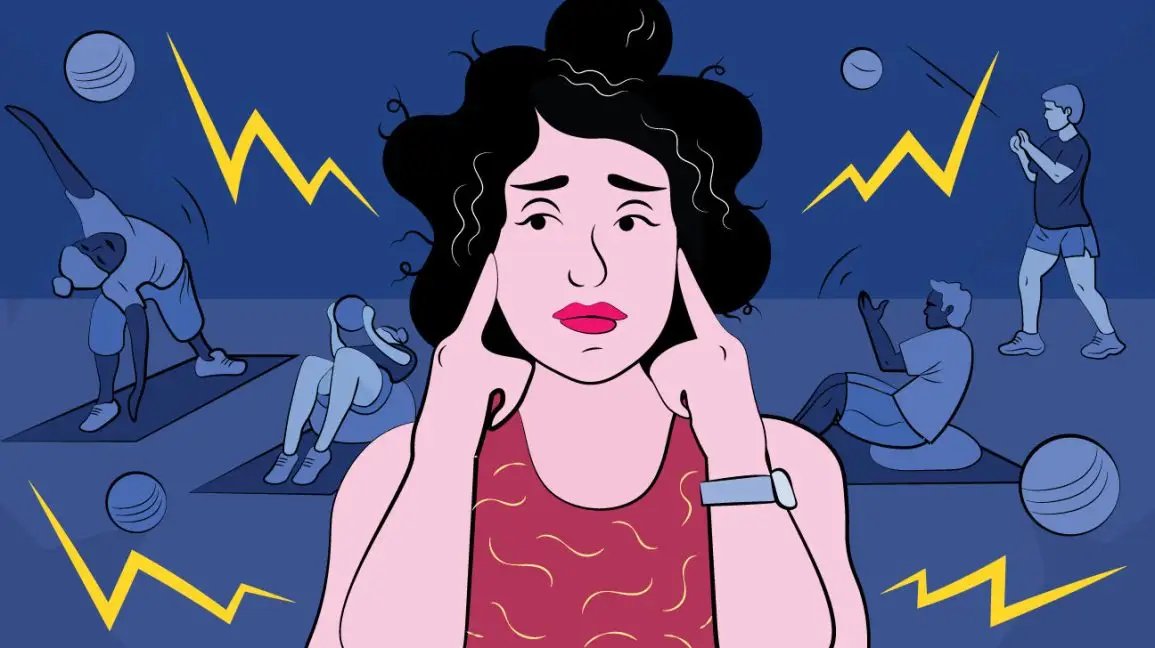
To understand what autistic anxiety is, we must move away from “thoughts” and toward “sensations.”
What does autistic anxiety feel like?
- Anxiety Without Thoughts: Many autistic people describe feeling a “tightness” or “buzzing” in their body while their mind is perfectly calm. This is “body-first” anxiety.
- Feeling Unsafe Without a Why: Because the autistic brain is always scanning for patterns, it can sense “dissonance” in an environment before the conscious mind can name it.
- Nervous System Overload: It feels like being a 110v appliance plugged into a 220v outlet. Everything is too intense, and you feel like you might “blow a fuse” (a meltdown).
- The “Static” Effect: It’s like trying to listen to music through a radio that is only 50% tuned to the station. The constant “white noise” of the world creates a baseline level of anxiety that never truly goes away.
I have personally understood that this baseline anxiety is why many autistic people feel permanently exhausted. They are running a marathon of regulation every single day just to exist in public spaces.
How Is Fear Distinct From Anxiety?
A question that often arises in my work at Reflection Psychological Services is: how is fear distinct from anxiety? For the neurodivergent individual, the line between the two is often blurred because the world feels inherently more threatening.
- Fear: This is an immediate, specific response to a clear threat (e.g., a car swerving into your lane). It is the “fight or flight” system activating for survival.
- Anxiety: This is usually defined as the anticipation of a future threat. It is diffuse and often lacks a clear object.
How is fear distinct from anxiety? In the context of autism, distinct anxiety, the brain often treats “uncertainty” or “sensory pain” as a literal “fear” object. I have personally understood that for an autistic person, walking into a loud, crowded room isn’t just “uncomfortable”—the nervous system processes it with the same physiological intensity as a physical threat. This is why standard anxiety advice often fails; you cannot “reason” your way out of a body that believes it is in physical danger.
Anxiety vs. Autism: Why They’re Often Confused
The overlap between anxiety and autism is one of the most common reasons for late diagnosis in adults. Many people spend years being treated for “treatment-resistant anxiety” before realizing that their anxiety is actually a symptom of an unsupported autistic nervous system.
The difference between anxiety and autism lies in the “why.”
- Social Anxiety: Avoids a party because they are afraid of being judged or criticized.
- Autism: Avoids a party because they don’t know the “rules,” the noise is painful, and they will be exhausted for three days afterward.
I have personally understood that whether I am autistic or anxious is a question that requires looking at my baseline. If you “solve” the anxiety (through medication or therapy) but the sensory sensitivity and social confusion remain, the root is likely autism. Treating the anxiety without acknowledging the autism is like trying to fix the smoke without putting out the fire.
Autistic Anxiety vs. Typical Anxiety Disorders
When comparing autistic anxiety vs. typical GAD, the primary difference is the “entry point.”
| Feature | Typical Anxiety (GAD) | Autistic Distinct Anxiety |
| Primary Trigger | Future “what-if” thoughts | Immediate sensory or predictability issues |
| Internal Experience | Rumination and worry | Body-first overload and shutdown |
| Exposure Therapy | Usually helpful (Habituation) | Often traumatizing (Sensitization) |
| Recovery | Cognitive restructuring | Environmental accommodation |
I’ve realized that for anxiety specific to autism, the nervous system does not “habituate” to triggers. If a noise is painful today, it will likely be painful tomorrow. Typical CBT (Cognitive Behavioral Therapy) often asks patients to “sit with the discomfort,” but I have personally understood that for autistic people, this often leads to sensory trauma rather than healing.
Distinct Anxiety and ADHD
We cannot discuss this without touching upon distinct anxiety and ADHD. Many people identify as “AuDHD”—having both Autism and ADHD. In these cases, the anxiety is often driven by executive dysfunction.
- The ADHD Side: Anxiety about forgetting deadlines, losing keys, or “failing” at adult responsibilities.
- The Autistic Side: Anxiety about the world being too loud or unpredictable.
- The Intersection: I have personally understood that anxiety vs autism adhd creates a “tug-of-war.” The ADHD brain craves novelty, while the Autistic brain craves routine. This constant internal friction creates a baseline of “Distinct Anxiety” that feels like being a car with one foot on the gas and one on the brake.
Distinct Anxiety Treatment

If you are looking for distinct anxiety treatment, the first step is a shift in philosophy. Standard mental health advice usually encourages “pushing through.” In my practice, I advocate for “accommodating through.”
- Regulation Before Exposure: You cannot work on anxiety if your nervous system is in a constant state of “Red Alert.” This means prioritizing sleep, safe foods, and sensory safety.
- Accommodations Over Resilience: I have personally understood that “resilience” is often just a code word for “masking.” True healing comes from changing your environment so that your brain doesn’t have to be in a state of high alert.
- Sensory-Informed Approaches: Using tools like noise-canceling headphones, tinted glasses, or weighted blankets is not “giving in” to the anxiety; it is removing the triggers of the distinct anxiety.
Distinct Anxiety Autism Treatment
When patients ask how to treat distinct anxiety, I emphasize that we are not trying to “cure” the autistic brain, but rather to lower the friction between that brain and the world. Distinct anxiety Autism treatment must be neuro-affirming, meaning it validates the person’s sensory and cognitive reality.
- Somatic and Nervous-System Approaches: Because this anxiety is “body-first,” we use techniques that calm the vagus nerve. This might include deep pressure therapy, cold water immersion, or rhythmic stimming. I have personally understood that calming the body often calms the “alarm” before the mind even needs to get involved.
- Environmental Changes: I’ve realized that the most effective “treatment” for distinct anxiety is often a change in surroundings. This includes using noise-canceling headphones, dimming lights, or working from home to reduce the “sensory tax” of an office.
- Neuro-Affirming Therapy: Unlike traditional CBT, this therapy focuses on unmasking and boundary setting. We work on identifying “autistic needs” rather than trying to make the patient act more “typical.”
- Medication: While I frame this neutrally, sometimes low-dose medications can help lower the “baseline noise” of a hyper-reactive nervous system, making it easier to utilize other regulation tools.
Is Distinct Anxiety One of Them?
It is helpful to clarify what the distinct types of anxiety are as recognized by the DSM-5, compared to this descriptive category. The DSM lists Social Anxiety, GAD, Panic Disorder, and Phobias.
Distinct anxiety is not currently a formal diagnostic category in the manual, but it serves as an “overlay.” It describes how those standard types of anxiety manifest within an autistic person. For example, an autistic person might have “social anxiety,” but it is distinct because it’s rooted in a struggle to read non-verbal cues rather than a fear of social rejection. I have personally understood that naming these experiences is the first step toward specialized support.
Frequently Asked Questions
What is a distinct anxiety?
It is a state of chronic nervous system arousal that is uniquely triggered by neurodivergent traits, such as sensory sensitivities or a high need for predictability. It is “distinct” because it does not follow the typical cognitive patterns of GAD.
What is distinct anxiety in autism?
In autism, this refers to anxiety driven by the mismatch between a sensitive, pattern-seeking brain and a chaotic, sensory-heavy world. It often manifests as “shutdown” or “rigidity” rather than verbalized worry.
How to treat distinct anxiety?
Treatment focuses on environmental accommodation and nervous system regulation rather than just “thought-challenging.” The goal is to reduce the “sensory and cognitive load” on the brain.
What does autistic anxiety feel like?
It feels like a “physical alarm” in the body. It can manifest as a buzzing sensation, a sudden loss of speech, or a feeling of being “unsafe” without a clear psychological reason.
How is fear distinct from anxiety?
Fear is a response to a specific, immediate threat (like a predator). Anxiety is a diffuse, anticipatory state. In autism, the brain often processes “uncertainty” or “sensory overload” with the same biological intensity as a literal fear-object.
Conclusion
If you have spent your life feeling like your anxiety was “broken” or “untreatable,” I want you to know that you were likely just using the wrong map. Autism distinct anxiety is a real, visceral experience that requires a different set of tools—tools centered on safety, sensory comfort, and self-compassion.
At Reflection Psychological Services, I have personally understood that when we stop trying to “fix” the anxiety and start supporting the person, the “alarm” finally begins to quiet. You aren’t “too sensitive”; you are responding logically to a world that is very loud. By understanding the distinct nature of your experience, you can finally move toward a path of healing that respects your unique neurology.
Authoritative References
1. AASPIRE (Academic-Autistic Spectrum Partnership in Research and Education)
2. Dr. Damian Milton: The Double Empathy Problem
3. Journal of Autism and Developmental Disorders (JADD)
4. PsychCentral: Neurodivergent Anxiety Differences
5. Dr. Laura Athey-Lloyd, Psy.D. – Clinical Authority

Related Posts





Subscribe to Our Newsletter
Get mental health tips, updates, and resources delivered to your inbox.
MORE from Author
Read More Watching someone you care about struggle with bipolar depression and anxiety can be heartbreaking. You may notice that they withdraw…
 In my practice as a clinical psychologist, I often observe that the difference between a patient who crumbles under pressure…
 We all have "up" days and "down" days. Perhaps you feel energized after a promotion or sluggish on a rainy…
 To define bipolar disorder accurately, we must look at it as a chronic mood dysregulation condition. In psychology and medicine,…
Are you looking for a Therapist?
Connect with qualified mental health professionals who understand
bipolar disorder, mood changes, and emotional challenges.
Private • Supportive • Confidential