
Is the amygdala part of the limbic system? Understanding Its Role in Emotion, Memory, and Behavior

Medically reviewed by Laura Athey Updated Date: March 27, 2026
In my clinical practice, I often encounter patients who feel “hijacked” by their own emotions. They describe a sudden surge of panic at a grocery store or a flash of uncharacteristic rage during a minor disagreement.
When we sit together to peel back the layers of these experiences, we invariably end up discussing the brain’s “command center” for emotion.
The most frequent question I receive during these sessions is, “Is the amygdala part of the limbic system?” The answer is a definitive yes. The amygdala is not just a part of the limbic system; it is arguably its most famous and functionally critical resident.
The limbic system is a sophisticated network of deep-brain structures that govern our emotional lives, our motivations, and our most primal survival instincts. Understanding how the amygdala fits into this broader “emotional brain” is essential for anyone looking to navigate anxiety, trauma, or mood dysregulation.
If you have ever reacted to a perceived danger—like jumping back from a coiled garden hose that looked like a snake—before your conscious mind could even name the object, you have experienced the amygdala working in concert with the rest of your limbic system. It is the brain’s rapid-response team, prioritizing survival over slow, methodical logic.
Is the Amygdala Part of the Brain’s Limbic System?
To understand that the amygdala is part of the limbic system, we must first define what this system actually is. In the field of neuropsychology, the limbic system is often described as the “Paleomammalian” brain.
It sits physically and evolutionarily between the “reptilian” brainstem (which handles basic life functions like breathing) and the “human” neocortex (which handles complex thought and language).
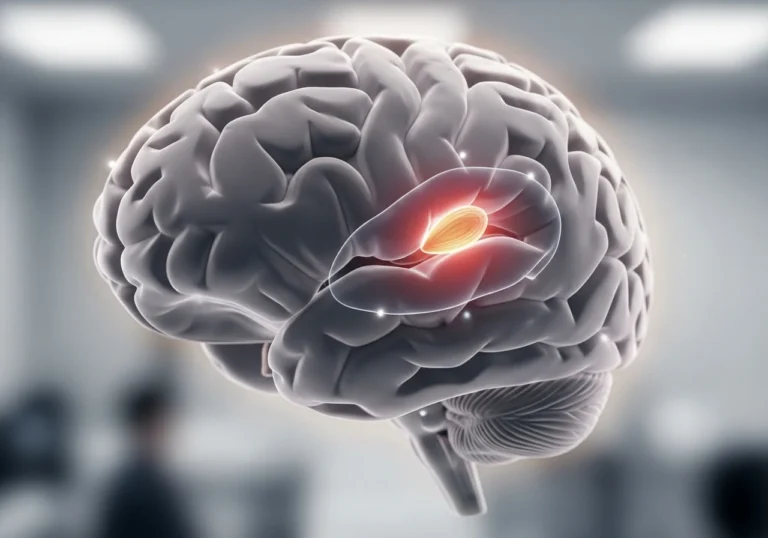
The amygdala is a small, almond-shaped cluster of nuclei located deep within the temporal lobe. Its inclusion in the limbic system is undisputed because of its primary role in processing emotional salience.
While other parts of the brain see a “dog,” the amygdala—working within the limbic network—determines if that dog is a “friendly pet” or a “threat.”
What Is the Limbic System?
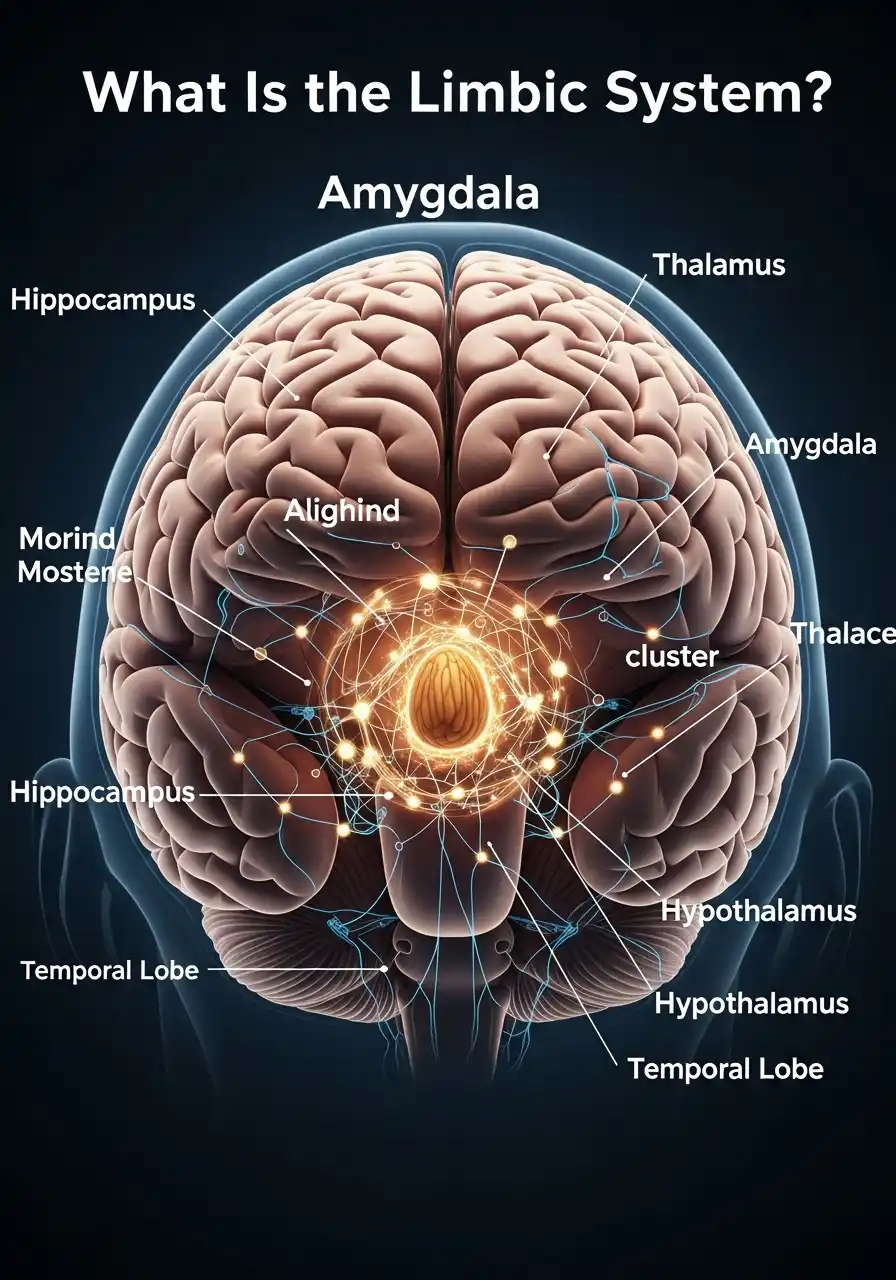
I often tell my patients that the limbic system function is akin to a high-speed internal translator. It takes raw data from the outside world and translates it into a “feeling” that motivates a “behavior.”
Without a functioning limbic system, we would be purely analytical beings, devoid of the desires, fears, and joys that make us human. It is responsible for:
- Emotional Regulation: Determining the intensity of our feelings.
- Motivation: Driving us toward rewards (like food or social connection) and away from pain.
- Memory Consolidation: Deciding which life events are important enough to store long-term.
- Survival Responses: Activating the “Fight-or-Flight” system when danger is detected.
In simple terms, the amygdala system is the alarm bell within this larger emotional factory.
Main Parts of the Limbic System
The limbic system is not a single “organ” but a collaborative circuit. While different neuroanatomists sometimes disagree on the exact boundaries, there are four core structures that I focus on when helping patients understand their executive function and emotional health.
Limbic System Parts and Functions
| Structure | Primary Function | Clinical Relevance |
| Amygdala | Emotional processing, fear detection, and threat assessment. | The source of “hijacks” and acute anxiety responses. |
| Hippocampus | Formation of new memories and spatial navigation. | Vulnerable to chronic stress; essential for learning new coping skills. |
| Hypothalamus | Regulator of the autonomic nervous system and hormones. | The bridge between a “thought” and a physical symptom (e.g., racing heart). |
| Thalamus | A sensory relay station that sends data to the rest of the brain. | Determines what sensory information reaches our emotional centers. |
| Cingulate Gyrus | Coordinates sensory input with emotions and regulates aggressive behavior. | Helps us transition between different emotional states. |
Where Is the Amygdala Located Within the Limbic System?
If you were to look at an amygdala on a brain diagram, you would find it tucked away in the medial temporal lobe. We actually have two of them—one in each hemisphere. They are situated just in front of the hippocampus.
This location is strategic. Being buried deep under the cerebral cortex protects these vital survival structures, but it also means they are somewhat isolated from our rational “thinking brain.”
This physical distance is why it is so difficult to “think” your way out of a panic attack once the amygdala has already sounded the alarm. The signal from the limbic system often travels faster than the rational override from the prefrontal cortex.
Amygdala Function Within the Limbic System
This section explores the core of what the amygdala does and why its biological design is so influential. To understand the amygdala, we must move beyond the simple label of “the fear center.” While fear is its most famous output, the amygdala is actually an evaluator of significance.
Emotional Response and Salience
The primary biological purpose of the amygdala is to assign “weight” to incoming stimuli. Every second, your brain is bombarded with millions of bits of data. Most of it is ignored. The amygdala’s job is to scan that data for anything that might be biologically relevant—a potential mate, a delicious meal, or a predator.
Why does this matter? Because in our modern world, the amygdala can’t always distinguish between a saber-toothed tiger and a critical email from a boss. Both represent a threat to our “survival” (physical or social), and the amygdala responds with the same chemical urgency.
Fear Detection and the “Low Road”
Joseph LeDoux, a prominent neuroscientist, described two pathways for fear: the “High Road” and the “Low Road.”
- The Low Road: Information goes from your eyes/ears to the thalamus and directly to the amygdala. This is a split-second reaction. It’s why you jump when someone says “Boo!”
- The High Road: Information goes from the thalamus to the sensory cortex and then to the amygdala. This is slower but more accurate.
The amygdala is optimized for the low road. From an evolutionary standpoint, it is better to be wrong and jump at a shadow ten times than to be slow and caught by a predator once. This biological bias toward “false positives” is the foundation of most clinical anxiety.
Memory Association
The amygdala works in a tight loop with the hippocampus. While the hippocampus remembers the facts of an event (where you were, what the weather was like), the amygdala remembers the feeling. It “tags” memories with emotional intensity.
This is why you likely don’t remember what you ate for lunch three weeks ago, but you vividly remember the details of a car accident from ten years ago. The amygdala told your brain, “This is important. Store this in the ‘never forget’ file for survival.”
One nuance I frequently share with my patients is the profound impact of circadian rhythms on limbic stability. When we are sleep-deprived, the functional connectivity between the prefrontal cortex (the “brakes”) and the amygdala (the “gas”) is significantly weakened.
I once worked with a patient, “Mark,” who suffered from severe irritability and “explosive” anger. We discovered that his outbursts almost exclusively happened on days when he had fewer than six hours of sleep.
By prioritizing sleep hygiene, we were able to strengthen the neural pathways that allow the rational brain to “talk down” the limbic system. Without rest, your amygdala is essentially a smoke detector with a faulty sensor, going off at the slightest breeze.
Real-Life Examples of Limbic System Activation: The Case of “Sarah”
I recently worked with an anonymized patient, “Sarah,” who struggled with a profound fear of public speaking. Even the thought of a Zoom meeting would trigger a full limbic response: cold sweat, shaking hands, and a “blank” mind.
In our sessions, we mapped out Sarah’s limbic system activation. Her amygdala was perceiving the “threat” of social judgment as a threat to her life.
Her hypothalamus was triggering the physical tremors, and her hippocampus was pulling up memories of a middle-school presentation that went poorly, reinforcing the current fear.
We used a specific therapeutic intervention called “Name It to Tame It.” By encouraging Sarah to narrate the process—literally saying, “My amygdala is sounding the alarm right now because it thinks this meeting is dangerous”—she was able to re-engage her prefrontal cortex.
This “top-down” processing is a form of neuroplasticity. Over time, Sarah learned to bridge the gap between her “Feeling Brain” (the limbic system) and her “Thinking Brain,” eventually reducing her baseline anxiety by nearly 60%.
Which Structures of the Limbic System Are Involved in Memory?
In my practice, I often have to explain that “memory” isn’t a single file folder in the brain; it is a collaborative process between two key neighbors. While the entire limbic system plays a role in our behavioral history, the primary heavy lifters are the hippocampus and the amygdala.
- The Hippocampus (The Librarian): This structure is responsible for declarative memory—the facts, dates, and names. It creates a chronological narrative of our lives.
- The Amygdala (The Emotional Highlighter): As we’ve discussed, the amygdala adds “feeling” to those facts.
Why does this matter? Because when these two work together, you get “flashbulb memories. You might not remember what you wore last Tuesday, but you remember exactly where you were during a major life event.
The amygdala signaled the hippocampus: “This is vital for our survival (or happiness); record every detail.” Conversely, in cases of severe trauma, the amygdala can become so overactive that it actually suppresses the hippocampus, leading to fragmented memories where a patient remembers the feeling of terror but cannot remember the sequence of events.
Is the Hippocampus Part of the Limbic System?
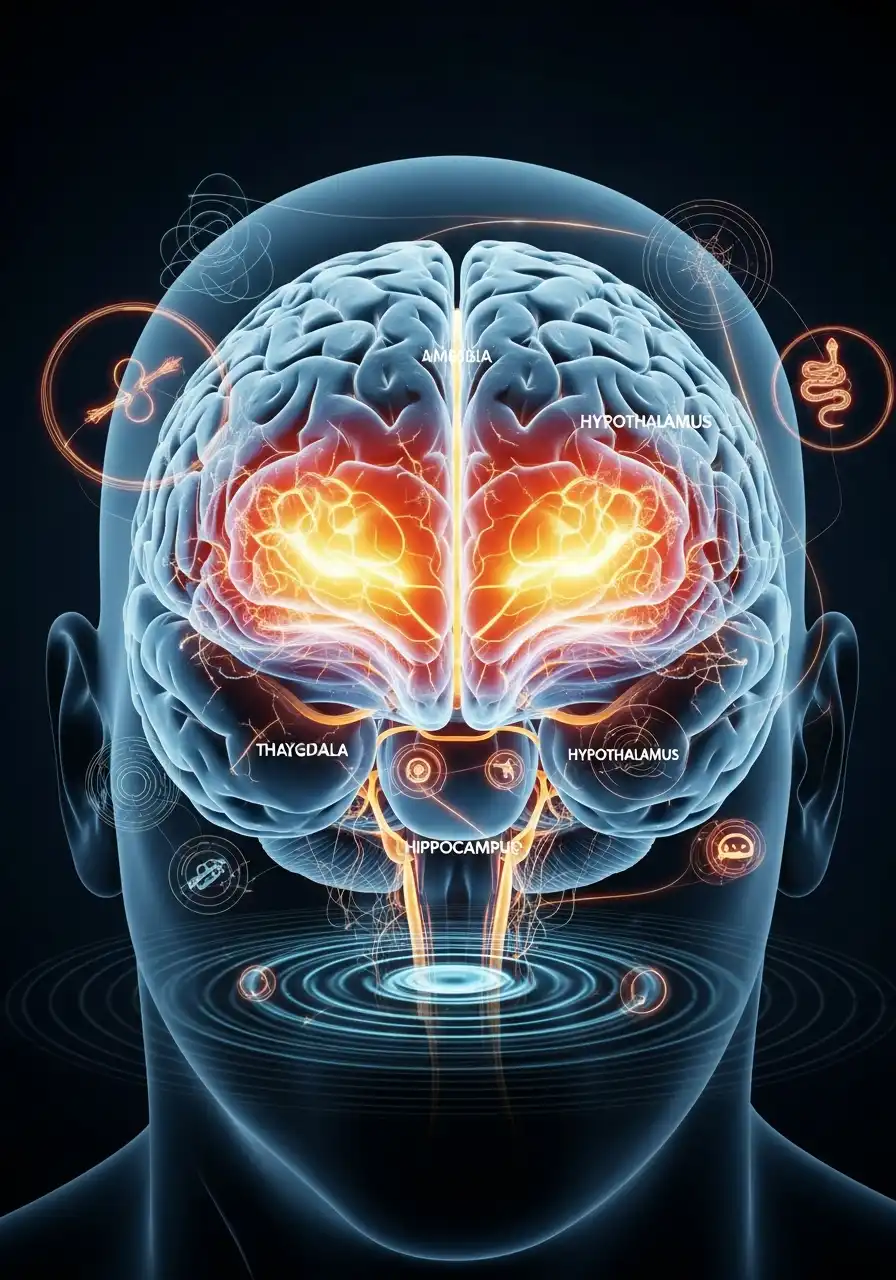
Yes, and it is arguably the most sensitive part. Located in the medial temporal lobe, the hippocampus is essentially the “GPS” and “archive” of the limbic system.
Beyond memory, the hippocampus is crucial for spatial navigation and context. It tells the amygdala: “Yes, there is a loud noise, but we are at a fireworks show, so it is safe.” In patients with chronic PTSD, we often see a physical shrinking of the hippocampus due to prolonged exposure to cortisol (the stress hormone).
This is why trauma survivors often lose the ability to distinguish between a past threat and a present safe environment—the “context” center of their limbic system is struggling to function.
Is the Thalamus Part of the Limbic System?
The thalamus is often called the “Gateway to the Cerebral Cortex,” but its role within the limbic system function is that of a high-speed relay station.
Almost all sensory information (except for smell, which goes directly to the amygdala) passes through the thalamus. It then decides where to send that data. It sends a “quick and dirty” version to the amygdala for immediate survival checks and a “high-definition” version to the cortex for thinking.
If the thalamus is dysregulated, it can “flood” the limbic system with too much sensory data, contributing to the sensory overload often seen in neurodivergence or anxiety disorders.
Is the Basal Ganglia Part of the Limbic System?
This is a point of healthy debate in neuroscience. While the basal ganglia are primarily known for motor control (movement), they are deeply interconnected with the limbic system through the “limbic-motor interface.”
The basal ganglia help translate our emotional desires into physical actions. For example, if your amygdala feels “fear,” the basal ganglia help coordinate the “flight” (running away). While some anatomists categorize them separately, in clinical psychology, we view them as an essential support structure for emotional behavior and habit formation.
Is the Pituitary Gland Part of the Limbic System?
While the pituitary gland is technically part of the endocrine system, it is the “muscle” for the limbic system’s commands. It sits just below the hypothalamus.
When your limbic system perceives a threat, the hypothalamus signals the pituitary gland to release hormones that eventually tell your adrenal glands to pump out adrenaline. This is the HPA axis (Hypothalamic-Pituitary-Adrenal axis). Without this connection, the “feelings” in your limbic system would never translate into the physical energy needed to respond to life’s challenges.
How Can You Calm the Amygdala Naturally?
Because the amygdala is part of the limbic system, you can’t just “talk” it into being calm. You have to use the body’s own biological overrides.
- Paced Breathing: By slowing your exhale, you stimulate the vagus nerve. This sends a signal through the brainstem to the hypothalamus, telling the limbic system, “The body is breathing slowly; therefore, we must be safe.”
- Cold Water Immersion: Splashing ice-cold water on your face triggers the “mammalian dive reflex,” which instantly lowers your heart rate and forces the limbic system to “reset.”
- Mindfulness and Labeling: Research shows that “labeling” an emotion (e.g., “I am feeling a surge of anxiety”) reduces amygdala activity. It forces the prefrontal cortex to look at the limbic system, which naturally dampens its intensity.
Does Dementia Affect the Amygdala?
Yes, unfortunately, neurodegenerative diseases like Alzheimer’s and frontotemporal dementia often begin or progress within the limbic system.
When dementia affects the amygdala, we see significant behavioral changes. A person who was once mild-mannered may become suddenly aggressive or fearful. This is because the amygdala’s ability to accurately “appraise” a situation is failing.
They may perceive a loved one as a stranger (a threat) because the emotional recognition hardware is physically degrading. Understanding this can be incredibly helpful for caregivers, moving the perspective from “they are being difficult” to “their limbic system is misfiring.”
Limbic Irritability: Why Bipolar Mania Feels “Wired and Fired”
While mania is often stereotyped as a state of pure euphoria, many living with Bipolar Disorder experience a much more turbulent reality known as limbic irritability. This occurs when the amygdala becomes hyper-sensitized, moving beyond simple “excitement” into a state of chronic over-arousal.
In this “wired and fired” state, the amygdala’s threshold for triggering a response is significantly lowered, causing the brain to interpret even neutral environmental stimuli as intense or intrusive.
This physiological hyper-reactivity manifests as a profound hypersensitivity to sensory input. A flickering light, a loud television, or even the subtle tone of a partner’s voice can feel like a physical assault on the nervous system.
Because the amygdala is stuck in a high-alert phase, it creates a “feedback loop” with the racing thoughts (flight of ideas) typical of mania. Every new thought triggers an emotional spike, and every emotional spike accelerates the thoughts further.
This is the biological root of the “irritable mania” or “mixed state” profile. Rather than feeling “high,” the individual feels dangerously over-stimulated, impatient, and prone to sudden outbursts.
The amygdala has effectively hijacked the brain’s regulatory systems, leaving the person feeling emotionally “electrified” and unable to find a baseline of calm, regardless of their external surroundings.
Frequently Asked Questions
Is the amygdala part of the limbic system?
Yes, it is a core structure located in the temporal lobe that manages emotional processing and threat detection.
What are the parts of the limbic system?
The primary structures include the amygdala, hippocampus, hypothalamus, thalamus, and cingulate gyrus.
What does the limbic system do?
It is responsible for our “emotional life,” including the formation of memories, the regulation of emotions, and the drive for survival (fight-or-flight).
Is the hippocampus part of the limbic system?
Absolutely. It is the primary structure for memory formation and works closely with the amygdala to tag memories with emotion.
Where is the amygdala located?
It is found deep within the medial temporal lobe, one in each hemisphere of the brain, nestled just in front of the hippocampus.
Conclusion
Understanding that the amygdala is part of the limbic system changes the way we view our mental health. Your brain is not “broken” when you feel anxious; it is simply an ancient survival system doing its job with slightly too much enthusiasm.
By mapping this system and understanding the “why” behind the biology, we move from being victims of our emotions to being informed observers. With the right tools—like sleep, mindfulness, and therapy—you can learn to lead your limbic system rather than being led by it.
Authoritative References
- National Institute of Mental Health (NIMH)
- American Psychological Association (APA)
- Society for Neuroscience
- Harvard Medical School – The Emotional Brain

Related Posts






Subscribe to Our Newsletter
Get mental health tips, updates, and resources delivered to your inbox.
MORE from Author
Read More In my practice as a clinical psychologist, I often observe that the difference between a patient who crumbles under pressure…
 We all have "up" days and "down" days. Perhaps you feel energized after a promotion or sluggish on a rainy…
 To define bipolar disorder accurately, we must look at it as a chronic mood dysregulation condition. In psychology and medicine,…
 To answer whether bipolar fits the bill, we first have to define what a neurodivergent person actually is. The term…
Are you looking for a Therapist?
Connect with qualified mental health professionals who understand
bipolar disorder, mood changes, and emotional challenges.
Private • Supportive • Confidential