
PTSD and Autism: Overlap, Differences, Complex Trauma, and Treatment Explained

Medically reviewed by Laura Athey Updated Date: April 11, 2026
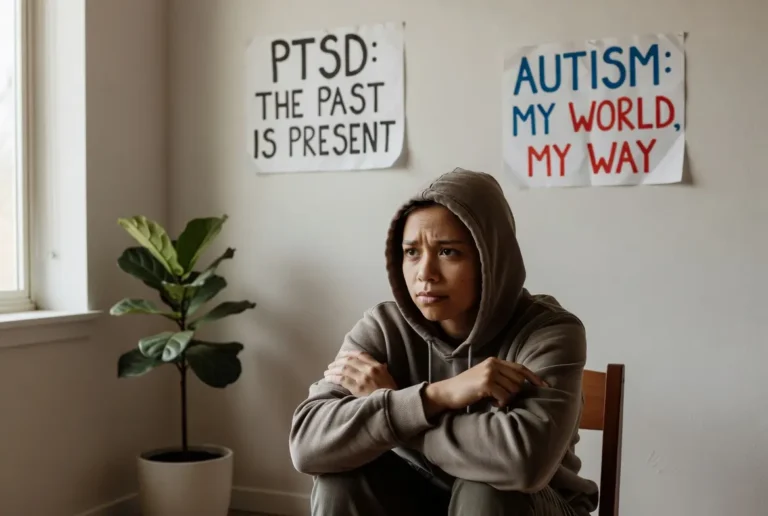
In the evolving landscape of neurodiversity, few topics are as critical—yet as misunderstood—as the link between PTSD and autism. For a long time, clinical practice treated trauma and neurodevelopmental traits as separate entities. Today, we recognize that the PTSD and autism overlap is not just common; it is a fundamental reality for a significant portion of the autistic community.
Many people find themselves at a crossroads, wondering: Can you have PTSD and autism? The answer is a resounding yes. However, the path to a dual diagnosis is often obscured by “diagnostic overshadowing,” where trauma symptoms are dismissed as “just part of being autistic.” As awareness of trauma in autistic adults grows, so does the need to differentiate between a brain that is wired differently and a brain that has been wounded by experience.
This guide provides a deep dive into the overlap between PTSD and autism, the nuances of complex PTSD and autism, and the specific therapeutic pathways—including the role of service dogs and specialized clinical care—that support a neuro-affirming recovery.
Understanding PTSD and Autism Separately
To untangle these two states, we must first define their distinct clinical foundations. While they often occupy the same space in an individual’s life, their “why” is fundamentally different.
What Is PTSD?
According to psychology PTSD standards, Post-Traumatic Stress Disorder is a psychiatric condition triggered by a specific event or series of events. It is a reactive condition.
If you believe you are suffering from these symptoms, seeking a PTSD specialist or a PTSD psychologist is vital. A PTSD psychiatrist near me can help determine if your symptoms meet the DSM-5 criteria, which require a history of trauma exposure followed by specific clusters of intrusive and avoidant symptoms.
What Is Autism Spectrum Disorder?
PTSD and autism spectrum disorder differ because autism is neurodevelopmental. It is a lifelong way of being that is present from birth.
- Social Communication: Differences in how eye contact, small talk, and social “rules” are processed.
- Sensory Processing: Heightened or lowered sensitivity to environmental stimuli.
- Repetitive Behaviors: A need for routine and the use of “stimming” for emotional regulation.
In cases of high-functioning autism and PTSD, the individual may be highly skilled at “masking” their autistic traits, which can make the underlying trauma symptoms even harder for clinicians to identify.
PTSD and Autism Overlap
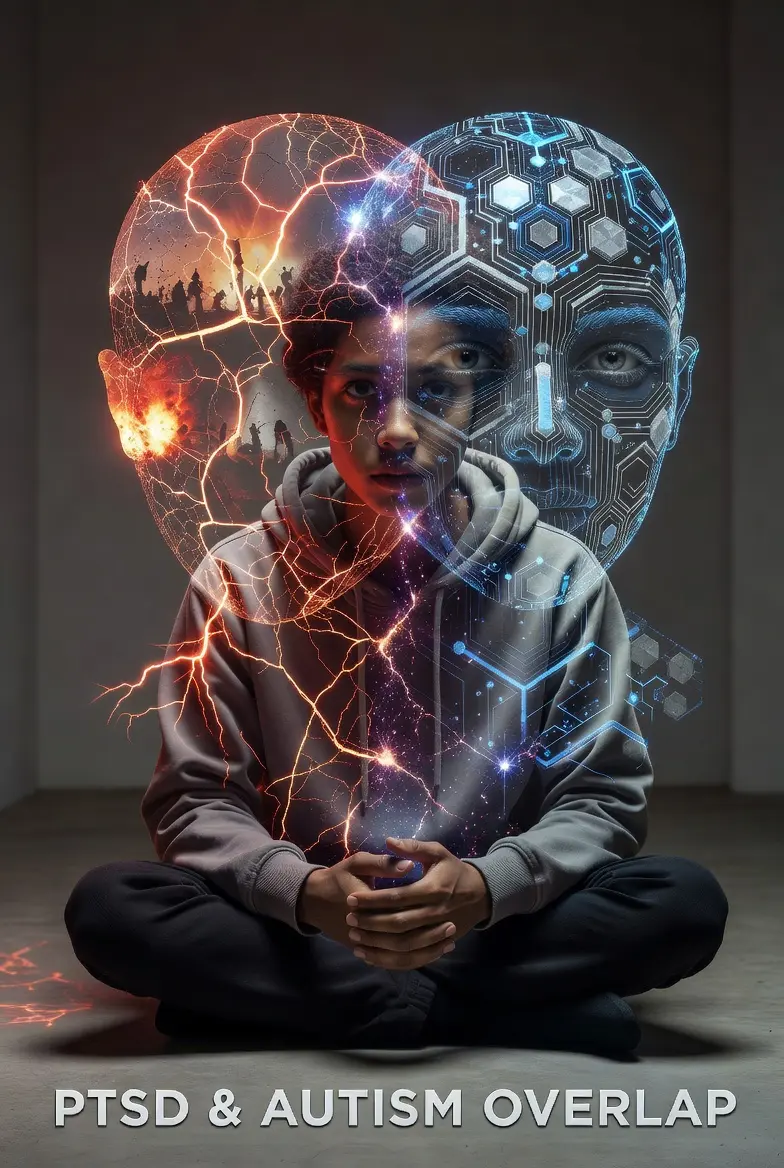
The PTSD and autism overlap occurs because both conditions involve a highly reactive nervous system. This creates significant similarities between PTSD and autism that often lead to misdiagnosis.
Overlapping Traits: A Comparison
When analyzing PTSD and autism symptoms, we see behaviors that look identical but stem from different internal drivers.
| Overlapping Trait | Autism (ASD) | PTSD |
| Hypervigilance | Driven by Sensory Sensitivity (scanning for loud noises/lights). | Driven by Threat Detection (scanning for potential danger). |
| Social Withdrawal | Driven by Social Differences (exhaustion from social rules). | Driven by Avoidance (fear of triggers or distrust of others). |
| Emotional Dysregulation | Meltdowns caused by sensory or cognitive overload. | Triggered Flashbacks caused by trauma reminders. |
| Avoidance | Preferring Routine for predictability and comfort. | Safety Seeking to stay away from trauma-associated stimuli. |
| Executive Dysfunction | Lifelong processing differences. | Trauma-induced “brain fog” or activation. |
Untangling the Threads: The Core Differences Between PTSD and Autism
When trying to understand PTSD and autism, things can get confusing very quickly. On the surface, the two can look remarkably similar. Both can cause extreme sensory sensitivity, social withdrawal, emotional dysregulation, and intense meltdowns.
But if we want to truly understand and support someone navigating both, we have to look past what these behaviors look like and figure out where they actually come from.
The “Baseline” Test: Origin matters
The most fundamental difference between PTSD and autism is the origin. Autism is a neurodevelopmental difference. It is a lifelong pattern that is present from early childhood, woven into how the brain develops. PTSD, on the other hand, is an acquired injury to the nervous system. It has a distinct starting point, beginning specifically after a traumatic event.
One of the most effective ways to differentiate childhood trauma versus autism in adults is to look for the person’s “baseline.”
Let’s look at sensory overload as an example. If an individual has been intensely sensitive to loud noises, bright lights, or certain clothing textures since infancy, that lifelong baseline strongly points toward autism. However, if a person who previously tolerated loud environments suddenly becomes panicked by loud noises specifically after a terrifying event, that sudden shift from their baseline points directly toward PTSD.
The Heartbreak of “The Double Trauma”
When these two conditions overlap, the individual’s experience becomes incredibly complex. In therapeutic spaces, we often see what is known as “The Double Trauma” in autistic adults.
The first layer is the trauma of the event itself—the accident, the abuse, or the severe stress. But the second layer of trauma is often social and medical. It happens when an autistic person reaches out for help, and their perfectly valid, trauma-based distress is entirely dismissed.
Professionals, teachers, or even family members might incorrectly assume their panic, withdrawal, or crying is “just a symptom of their autism.” This dismissal is deeply harmful. It leaves the individual feeling completely unseen, isolating them at the exact moment they need support the most.
A Highly Vulnerable Nervous System
We must also recognize that an autistic nervous system is inherently more vulnerable to trauma. Why? Because for an autistic person, the world is often already a sensorily and socially overwhelming place.
Think of the nervous system like a cup of water. For a neurotypical person, the daily stress of life might fill the cup halfway. But for an autistic person, the cup is often already filled to the brim just by navigating a loud, bright, and unpredictable world. When a traumatic event occurs, that cup immediately overflows into a state of severe trauma.
Healing the Trauma, Honoring the Autism
This brings us to a crucial philosophy for recovery. When treating the overlap of PTSD and autism, the goal is never to “fix” or cure the autism. Autism is a valid and integral part of who the person is.
Instead, the clinical goal is strictly to clear the heavy, exhausting weight of the trauma. We treat the acquired fear so that the individual can finally experience their true neurodivergent self—not through a lens of constant panic, but through a lens of safety and peace.
Complex PTSD and Autism
Traditional PTSD is often linked to a single “shock” event. However, complex PTSD and autism (C-PTSD) is much more prevalent in the neurodivergent community.
What is C-PTSD?
C-PTSD results from prolonged, repeated trauma, often occurring in relationships where there is an imbalance of power. In the complex PTSD and autism overlap, symptoms go beyond flashbacks to include:
- Emotional Flashbacks: Intense feelings of shame or terror without a clear visual memory.
- Identity Disturbances: Feeling “worthless” or “fundamentally broken.”
- Chronic Relational Trauma: Difficulty trusting others due to a lifetime of being bullied or misunderstood.
For many, c-ptsd and autism are intertwined because growing up in a world that doesn’t accommodate your neurodivergence can be a form of chronic, relational trauma in itself.
PTSD in Autistic Adults
Recent research confirms that PTSD in autistic adults occurs at significantly higher rates than in the neurotypical population. Autism and PTSD in adults is a complex profile due to unique risk factors:
- Social Vulnerability: High rates of bullying and social exclusion.
- Medical and Therapy Trauma: History of “compliance-based” therapies that ignored the individual’s autonomy.
- Masking Burnout: The sheer exhaustion of trying to appear neurotypical can lead to a state of chronic stress that mimics PTSD.
Autistic Women and PTSD
Autistic women and PTSD are at particularly high risk. Because women are often diagnosed later in life, they frequently experience:
- Increased Risk of Interpersonal Trauma: Difficulties with social cues can unfortunately be exploited by predatory individuals.
- Late-Diagnosis Trauma: The psychological toll of spent decades wondering “what is wrong with me?” before finally receiving an autism diagnosis.
Clinical Questions
Can Autistic People Have PTSD?
Absolutely. For a long time, there was a misconception that autistic people didn’t “experience” trauma the same way due to differences in social processing. We now know the opposite is true: the autistic nervous system is often more sensitive, meaning a “minor” event for a neurotypical person can be deeply traumatic for an autistic person.
Is PTSD Common in Autistic People?
Research estimates suggest that PTSD in autistic people is significantly more prevalent than in the general population. Some studies indicate that up to 60% of autistic adults have experienced at least one traumatic event that meets the criteria for PTSD.
How Does PTSD Affect Someone With Autism?
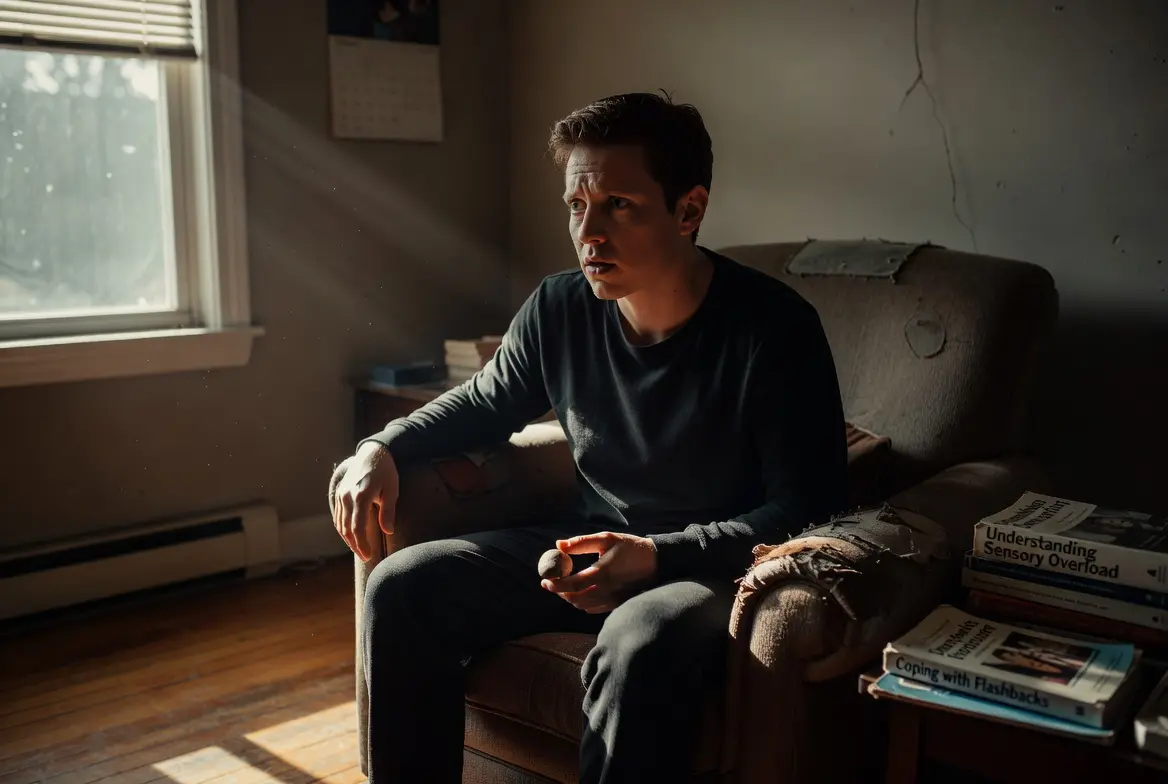
When these conditions co-occur, they create a compounding effect:
- Increased Shutdowns: The person may lose skills they previously had (skill regression).
- Heightened Sensory Sensitivity: PTSD “volume” makes already sensitive autistic hearing or touch unbearable.
- Trust Issues: Social communication differences make it harder to navigate the complex “rules” of rebuilding trust after betrayal.
What Is the 6 Second Rule for Autism?
While not a formal diagnostic tool, the 6 second rule for autism is a self-regulation strategy. It suggests that when an autistic person feels a “trigger” or a “surge” of emotion, they should pause for six seconds. This allows the amygdala (the fear center) to quiet down and the prefrontal cortex (the logic center) to re-engage. It is a vital tool for those managing both PTSD and autism symptoms.
PTSD and Autism Symptoms Together
When you have PTSD and autism, the symptoms often mask one another.
- Flashbacks vs. Shutdowns: An observer might see an autistic person “spacing out” and assume it is a sensory shutdown, when it is actually a dissociative flashback to a traumatic event.
- Hypervigilance + Sensory Sensitivity: This creates a state of “perpetual alarm.” The person isn’t just annoyed by the loud fan; they are physiologically convinced the fan is a signal of danger.
- Avoidance vs. Social Difference: Is the person staying home because they are tired of social rules (Autism), or because they are terrified of running into someone from their past (PTSD)?
Treatment for PTSD and Autism
Can PTSD be treated in autistic people? Yes. However, does being autistic affect the success of PTSD treatments? Traditional “exposure therapy” can sometimes be re-traumatizing for autistic people if it doesn’t account for sensory needs.
PTSD Psychotherapy Options
- Modified EMDR: Eye Movement Desensitization and Reprocessing (EMDR) is highly effective, but it must be adapted to be “sensory-safe.”
- Somatic Experiencing: This focuses on the “body’s memory” of trauma, which is often more accessible for autistic people who struggle with verbalizing emotions (alexithymia).
- Trauma-Focused CBT: Cognitive Behavioral Therapy that respects the “literal” thinking style of autistic patients.
PTSD Residential Treatment & Facilities
In severe cases, PTSD residential treatment may be necessary. When searching for PTSD treatment facilities, it is crucial to find a “dual-diagnosis” or “neuro-affirming” center. A facility that uses harsh “behavioral modification” (common in some autism programs) can be devastating for someone with PTSD.
Service Dog for PTSD and Autism
A service dog for PTSD and autism provides more than just companionship; they are medical equipment for the nervous system.
- Deep Pressure Therapy (DPT): The dog uses its weight to ground the person during a meltdown or flashback.
- Night Terror Interruption: Dogs can wake their handlers during PTSD-related nightmares.
- Social Buffering: The dog acts as a physical barrier in crowds, reducing the “hypervigilance” of both conditions.
Legal & VA Disability Questions
For veterans, the link between PTSD and autism is often relevant in disability claims.
VA PTSD Disability Claims
Many veterans were undiagnosed autistic during their service, and their neurodivergence may have made them more susceptible to combat-related PTSD.
- What Is the Average PTSD Claim Rating From the VA? Ratings typically range from 10% to 100%, depending on social and occupational impairment.
- What Do Different VA PTSD Disability Ratings Mean? A 70% rating often indicates “deficiencies in most areas” (work, school, family), while 100% indicates “total social and occupational impairment.”
- Do You Need an Accredited VA Claims Lawyer? While not required, an accredited VA claims lawyer can be invaluable if your claim is denied or if you are trying to prove that your autism exacerbated your service-connected PTSD.
Awareness & Symbolism
What Color Are Autism Awareness Ribbons?
Historically, the autism awareness ribbon was a multi-colored puzzle piece. However, many in the trauma-informed community now prefer:
- The Rainbow Infinity Symbol: Representing the vastness of neurodiversity.
- The Gold Infinity Symbol: Specifically for autism (based on the chemical symbol for gold, “Au”).
These symbols represent “Acceptance” rather than just “Awareness,” acknowledging that autistic people aren’t “broken puzzles” but people with unique needs.
Frequently Asked Questions
Can autistic people have PTSD?
Yes. Autistic individuals are actually at a higher risk for PTSD due to increased sensitivity to stress and higher rates of social victimization.
Is PTSD common in autistic people?
Very. Recent clinical data suggests that trauma is a pervasive experience for autistic adults, often stemming from bullying, social exclusion, or medical environments.
How does PTSD affect someone with autism?
It often results in a “narrowing” of the world. Sensory issues become more acute, and social communication becomes more guarded and fearful.
What is the difference between PTSD and autism?
Autism is how you were born (neurodevelopmental); PTSD is what happened to you (reactive trauma).
Conclusion: Healing the Neurodivergent Soul
Navigating the world with both PTSD and autism is an act of immense resilience. By recognizing that your “sensitivity” is not a flaw, but a characteristic of your nervous system, you can begin to find treatments that respect both your neurobiology and your history. Recovery isn’t about becoming “normal”—it’s about becoming safe in your own skin.
Authoritative Clinical & Research References
- National Center for PTSD (U.S. Department of Veterans Affairs) — “PTSD and Neurodivergence”
- Journal of Autism and Developmental Disorders — “Trauma-Informed Care for Autistic Adults”
- Autistic Self Advocacy Network (ASAN) — “Trauma and the Autistic Community”
- National Institutes of Health (NIH) — “Differentiating Autism Traits from PTSD Symptoms”

Related Posts


Subscribe to Our Newsletter
Get mental health tips, updates, and resources delivered to your inbox.
MORE from Author
Read More Watching someone you care about struggle with bipolar depression and anxiety can be heartbreaking. You may notice that they withdraw…
 In my practice as a clinical psychologist, I often observe that the difference between a patient who crumbles under pressure…
 We all have "up" days and "down" days. Perhaps you feel energized after a promotion or sluggish on a rainy…
 To define bipolar disorder accurately, we must look at it as a chronic mood dysregulation condition. In psychology and medicine,…
Are you looking for a Therapist?
Connect with qualified mental health professionals who understand
bipolar disorder, mood changes, and emotional challenges.
Private • Supportive • Confidential