
Intimacy vs Isolation: Erikson’s Stage of Young Adulthood Explained

Medically reviewed by Laura Athey Updated Date: April 11, 2026
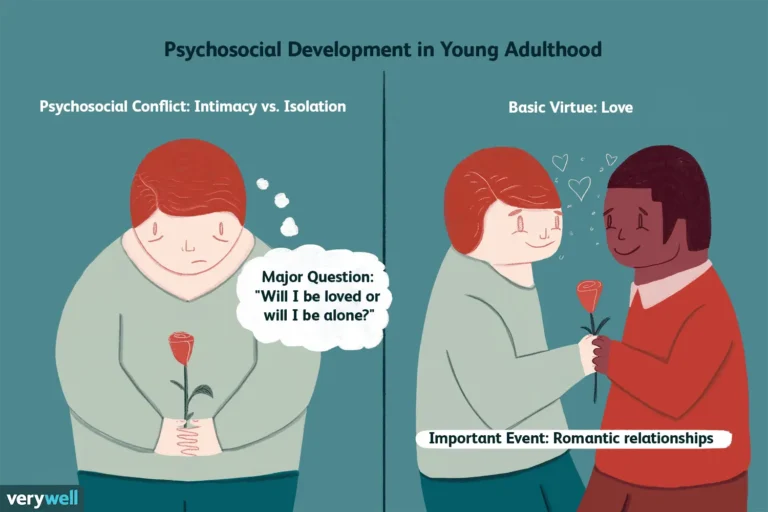
In the grand journey of human development, the transition into young adulthood marks a pivotal shift from discovering who we are to determining with whom we will share our lives. This is the core of intimacy vs isolation, the sixth stage of Erik Erikson’s renowned theory of psychosocial development.
What is intimacy vs isolation? In the simplest terms, it is the period during young adulthood when individuals face the challenge of forming deep, committed relationships with others. What does intimacy vs isolation mean for the average 20- or 30-something today? It means navigating the delicate balance between the desire for connection and the fear of losing oneself in another person.
This intimacy vs isolation psychology definition centers on the ability to fuse your identity with someone else’s without the fear that you will lose your own. Intimacy vs isolation, explained through a modern lens, reveals a stage fraught with the pressures of “hookup culture,” digital dating, and a shifting definition of commitment.
Understanding what intimacy vs isolation is at this stage is essential for anyone seeking to build a life filled with “Love”—the virtue Erikson believed was the ultimate prize of this developmental conflict.
At a Glance: Intimacy vs. Isolation
- Age Range: Approximately 18 to 40 years.
- Core Question: “Shall I share my life with another or live alone?”
- Positive Outcome: The capacity to form lasting, committed, and loving relationships.
- Negative Outcome: Loneliness, social withdrawal, and an inability to connect deeply.
- The Virtue Gained: Love.
Erik Erikson & Psychosocial Development
To understand erik erikson intimacy vs isolation, one must first understand the man behind the theory. Erik Erikson was a developmental psychologist and psychoanalyst who expanded upon Freudian theory by emphasizing the impact of social experience across the entire lifespan. Unlike his predecessors, Erikson believed that personality continues to evolve long after childhood.
Who Was Erik Erikson?
Erikson’s own life was a masterclass in the search for identity. Born in Germany to a Danish mother and an unknown father, he spent much of his youth feeling like an outsider—too Scandinavian for his Jewish community and too Jewish for his peers.
This personal struggle fueled his interest in psychosocial development, a term he coined to describe the interplay between individual psychological needs (psycho) and social demands (social).
His theory remains a cornerstone of modern psychology because it views “crises” not as catastrophes, but as opportunities for growth. In Erikson’s intimacy vs isolation stage, the crisis is the tension between the safety of the self and the vulnerability of the pair.
Erikson’s 8 Stages of Psychosocial Development
Erikson proposed that we pass through eight distinct stages, each characterized by a specific conflict. Successfully resolving one stage provides the psychological “tools” needed for the next.
| Stage | Age | Conflict | Key Virtue |
| 1 | 0–1.5 | Trust vs. Mistrust | Hope |
| 2 | 1.5–3 | Autonomy vs. Shame/Doubt | Will |
| 3 | 3–5 | Initiative vs. Guilt | Purpose |
| 4 | 5–12 | Industry vs. Inferiority | Competency |
| 5 | 12–18 | Identity vs. Role Confusion | Fidelity |
| 6 | 18–40 | Intimacy vs. Isolation | Love |
| 7 | 40–65 | Generativity vs. Stagnation | Care |
| 8 | 65+ | Integrity vs. Despair | Wisdom |
What are Erikson’s 8 stages of psychosocial development? They represent a ladder of maturity. If a person fails to find their “Identity” in Stage 5, they will likely struggle with “Intimacy” in Stage 6, as you cannot truly share yourself with another if you do not yet know who you are.
What Is the Intimacy vs Isolation Stage?
So, what is Erikson’s intimacy vs isolation stage in the context of a person’s life story? This is Stage 6 of Erikson’s theory, coming on the heels of the turbulent adolescent years. By now, the individual has ideally settled the question of “Who am I?” and is now ready to ask, “Who can I be with?”
When Does Intimacy vs Isolation Occur?
Intimacy vs isolation occurs at what stage? It is the first stage of adulthood. While previous stages were heavily influenced by parents and teachers, intimacy vs isolation occurs at what stage of autonomy, where the primary influencers are peers and romantic partners. This is when intimacy vs isolation occurs: typically between the ages of 18 and 40.
The Psychological Task: Deep Relationships
What is the intimacy vs isolation stage really about? It is about the courage to be vulnerable. Erikson defined intimacy as much more than just physical closeness; it is the ability to share your deepest thoughts, fears, and hopes with another person.
Intimacy vs isolation stage success requires a “secure base.” If you are confident in your own skin, you don’t fear that a partner will “consume” you. Conversely, if you remain in a state of role confusion, you may view relationships as a threat to your autonomy, leading to the “isolation” side of the conflict.
Intimacy vs Isolation Age Range
When discussing the intimacy vs isolation age, it is important to note that Erikson’s original timeframe (roughly 18 to 40) is being challenged by modern sociology. Historically, people entered young adulthood in their early 20s by getting married and starting families.
Cultural Shifts in Adulthood
In the 21st century, the Erikson intimacy vs isolation age range is shifting. With the rise of “Emerging Adulthood,” many people are delaying long-term commitment until their late 20s or even 30s. Education, career building, and the search for “Self” often extend the Stage 5 (Identity) phase, pushing the what age is intimacy vs isolation question further down the line.
Regardless of when it starts, the intimacy vs isolation age remains a time of high social expectation. The pressure to “find the one” or “settle down” creates the backdrop for this psychosocial crisis. What is the age range for the intimacy vs isolation stage? While the numbers 18–40 are the clinical standard, the stage is less about a birthday and more about the psychological readiness to commit.
In my clinical practice, I often see “Identity” and “Intimacy” overlapping. Modern young adults are expected to build a personal brand and a career while simultaneously finding a soulmate. This “double-loading” can lead to significant anxiety. I remind my patients that Erikson’s stages are not a race.
You cannot build a bridge (Intimacy) until the land on your side of the river (Identity) is stable. If you find yourself withdrawing into isolation, check the stability of your own identity first.
What Happens in the Intimacy vs Isolation Stage?
The psychological challenge of the intimacy vs isolation stage is rarely a single moment; it is a decade-long process of trial and error. To understand what happens in the intimacy vs isolation stage, we must look at how an individual begins to navigate the “we” instead of just the “me.”
Developing Emotional Maturity
At the heart of this stage is the development of emotional maturity. This involves moving past the self-centeredness of adolescence and learning to prioritize the needs, feelings, and perspectives of others. It requires a level of interpersonal relationships that goes beyond surface-level attraction. True intimacy involves:
- Vulnerability: The willingness to be seen, flaws and all.
- Commitment: The decision to stay through conflict and boredom.
- Reciprocity: The balance of giving and receiving emotional support.
The Career vs. Relationship Balance
One of the primary intimacy vs isolation tasks is the negotiation of time. Young adults are often at the peak of their career-building years. The tension between professional ambition and the time required to nurture a relationship is a hallmark of this stage.
Those who successfully resolve this learn to integrate their partner into their life goals rather than seeing them as an obstacle.
The Fear of Rejection
The greatest barrier to intimacy is the fear of rejection. If an individual enters this stage with a history of insecure attachment or low self-esteem, they may view vulnerability as a dangerous gamble.
This fear often leads to “Intimacy Avoidance,” where a person stays busy, stays “casual,” or stays alone to avoid the potential pain of being turned away.
Intimacy vs Isolation Examples

To see how these theories play out in reality, let’s look at intimacy vs isolation examples across different life scenarios. These intimacy vs isolation with examples illustrate that the outcome isn’t always about marriage; it’s about the quality of connection.
Positive Outcome Examples (Intimacy)
- The Secure Partnership: A couple who can discuss their insecurities without fear of judgment. They support each other’s separate identities while maintaining a strong “union.”
- The “Chosen Family”: For those who are not in romantic relationships, intimacy can be found in deep, platonic friendships where there is a lifelong commitment to care and honesty.
- Secure Attachment: A young adult who can navigate a breakup without losing their sense of self, eventually opening up to a new partner with healthy boundaries.
Negative Outcome Examples (Isolation)
- The “Serial Dater”: An example of intimacy vs isolation, where the person has many relationships but none last longer than a few months. As soon as the relationship requires vulnerability, they leave.
- The Workaholic: Someone who uses their career as a shield. By working 80 hours a week, they have a “valid” excuse for why they don’t have time for a partner or close friends.
- Emotional Withdrawal: A person in a long-term marriage who has stopped sharing their inner world. They live “parallel lives” but are effectively isolated.
Real-Life Case Study: The Fear of “Losing the Self.”
Consider a 28-year-old woman who grew up with an overbearing mother. In her mother-son intimacy relationship (or in this case, daughter), she felt her own needs were always secondary. Now, in her young adulthood, she experiences intimacy avoidance.
Every time a partner gets close, she feels “suffocated” and picks a fight to create distance. Her path to resolving this stage involves realizing that her identity is now strong enough to survive a close connection.
Positive vs. Negative Outcomes
The intimacy vs isolation positive outcome and the intimacy vs isolation negative outcome create the foundation for the rest of a person’s life. Erikson believed that the “virtue” gained from success here is Love.
The Positive Outcome: Love
What is the positive outcome of the intimacy vs isolation stage? It is the ability to sustain “procreative” love. This isn’t just romantic passion; it is the devotion that allows a couple to build a home, raise children (if they choose), and support each other through the next stage of development (Generativity).
The Negative Outcome: Isolation
What is the negative outcome of the intimacy vs isolation stage? The primary risk is a sense of “exclusion.” If a person cannot find intimacy, they may sink into a state of chronic loneliness. The characteristics of isolation in intimacy vs isolation stage include:
- Social Withdrawal: Avoiding parties, dates, or gatherings.
- Cynicism: Believing that “real love doesn’t exist” to protect against disappointment.
- Depression: A lingering sense that one is unlovable or fundamentally “different” from those who find connection.
| Outcome | Psychosocial Result | Long-Term Impact |
| Intimacy | Love & Connection | Secure attachment, emotional resilience, support network. |
| Isolation | Loneliness & Withdrawal | Difficulty in future stages, increased risk of mental health struggles. |
Difference Between Intimacy and Isolation
In intimacy vs isolation psychology, these two states are often seen as a spectrum rather than a binary “pass or fail.”
The AP Psychology Definition
For students looking for the intimacy vs isolation AP Psychology definition, it is the struggle to form close relationships and the capacity for intimate love, or conversely, a sense of social isolation. It emphasizes that the successful resolution is a balance—maintaining enough of a “self” while allowing a “union.”
What is the difference between intimacy and isolation?
- Intimacy is characterized by transparency, trust, and the fusion of identities. It feels expansive and safe.
- Isolation is characterized by “defensiveness,” secrecy, and the protection of the ego at all costs. It feels restrictive and lonely.
Those who master intimacy don’t lose their identity; they expand it. Those who fall into isolation often believe they are protecting their identity, but they are actually preventing it from maturing through the “mirror” of a close relationship.
Why Intimacy vs Isolation Is Important
The psychological challenge of intimacy vs isolation is not merely about finding a romantic partner; it is about the structural integrity of your adult life. Why is this stage considered a “crisis”? Because humans are fundamentally social creatures. The resolution of this stage dictates the quality of your “support system” for the next fifty years.
Impact on Lifelong Relationships
If you successfully achieve emotional intimacy during this window, you develop a template for how to handle conflict, how to forgive, and how to stay present when things get difficult. This template doesn’t just apply to spouses; it applies to deep friendships and professional partnerships.
Without this “Love” virtue, a person may find that their relationships remain transactional and shallow, leading to a sense of emptiness in middle age.
Mental Health and Chronic Loneliness
From a clinical perspective, the importance of intimacy vs isolation cannot be overstated. Chronic isolation is a significant predictor of depression, anxiety, and even physical health issues like cardiovascular disease.
When we are isolated, our nervous system remains in a state of “high alert.” Intimacy, conversely, acts as a biological buffer against stress, providing a “safe harbor” that allows the body and mind to recover from the rigors of adult life.
How to Resolve Intimacy vs Isolation
If you find yourself on the “isolation” side of the scale, it is important to know that these stages are not permanent failures. You can learn how to resolve intimacy vs isolation at any point by addressing the underlying psychological barriers.
Develop Identity First
As Erikson famously noted, you cannot have a “we” without a “me.” If you are struggling to connect, the first step is often to return to Stage 5: Identity vs. Role Confusion. Ask yourself: Do I know my own values? Do I know what I want out of life? When your identity is solid, the “threat” of a relationship—the fear of being swallowed up—diminishes.
Build Emotional Maturity and Regulation
To be an adult in relationships, you must be able to regulate your own emotions. This means not projecting your past traumas onto your current partner. Practical steps include:
- Improving Communication: Learning to use “I” statements instead of “You” accusations.
- Seeking Therapy: Professional counseling can help identify patterns of intimacy avoidance and attachment wounds.
- Practicing Vulnerability: Start small. Share a minor fear or a “silly” hope with a trusted friend to build your “vulnerability muscle.”
A Checklist for Moving Toward Intimacy
- Can I spend time alone without feeling “empty”? (Identity)
- Am I willing to hear feedback without becoming defensive? (Emotional Maturity)
- Do I prioritize deep connection over “breadcrumbing” or casual validation? (Commitment)
- Have I identified my “attachment style” (Secure, Anxious, or Avoidant)?
Scholarly Research & Academic Sources

Modern psychology has taken Erikson’s stages of development, intimacy vs isolation, and tested them against contemporary data. Most intimacy vs isolation scholarly articles now look at this stage through the lens of Attachment Theory.
The Overlap with Attachment Theory
Researchers like Bowlby and Ainsworth found that how we resolve Stage 6 is often a reflection of how we resolved Stage 1 (Trust vs. Mistrust).
If a child learns that their caregivers are reliable, they are much more likely to have the “Secure Attachment” necessary to master intimacy vs isolation in young adulthood. Conversely, “Dismissive-Avoidant” individuals often represent the classic “Isolation” outcome, viewing independence as more important than connection.
Modern Reinterpretations
A common critique in recent isolation vs intimacy pdf documents and studies is the heteronormative and marriage-centric bias of the 1950s. Modern researchers emphasize that “Intimacy” can be achieved through various relationship structures, including polyamory, deep platonic communities, and LGBTQ+ partnerships. The form of the relationship matters less than the depth of the emotional exchange.
Intimacy vs Isolation in Modern Culture
The digital age has fundamentally altered the landscape of this stage. If you browse intimacy vs isolation Reddit threads, you will see thousands of young adults expressing a profound sense of “Loneliness 2.0.”
The “Dating App” Paradox
Social media and dating apps have made it easier to meet people but arguably harder to connect with them. The “Paradox of Choice” leads many to stay in a state of isolation because they are always looking for a “better” version of their current partner. This prevents the “Commitment” phase of Erikson’s stages from ever taking root.
The Fear of Vulnerability in the Digital Age
Online, we present “curated” versions of ourselves. True intimacy requires the “unfiltered” self. Intimacy vs isolation in young adulthood today involves a conscious rejection of the “performative” life in favor of the “authentic” one. As discussed in many intimacy vs isolation Reddit communities, the challenge today is not finding a person, but finding the courage to let that person see who you really are when the “filters” are off.
Who Has Successfully Mastered Intimacy vs Isolation?
So, who has most successfully mastered Erikson’s “intimacy vs. isolation” stage of early adulthood? According to research, it is individuals who possess a “Secure Attachment” style and high “Emotional Intelligence” (EQ).
Characteristics of Mastery
These individuals don’t necessarily have “perfect” relationships. Rather, they have the resilience to navigate conflict. They are comfortable with both “closeness” and “autonomy.” They don’t use their partner to “complete” them; instead, they see their partner as someone to “journey with.” Mastery is evidenced by a long-term history of stable, mutually supportive relationships—be they romantic, familial, or platonic.
Frequently Asked Questions
What is Erikson’s theory of intimacy vs isolation?
It is the sixth stage of psychosocial development, occurring between ages 18 and 40. The primary goal is to form deep, committed, and vulnerable relationships with others. Success in this stage leads to the virtue of “Love,” while failure leads to chronic loneliness and social withdrawal.
What is the difference between intimacy and isolation?
Intimacy is the ability to share your true self with another without the fear of losing your identity. It involves trust, vulnerability, and commitment. Isolation is a defensive state where an individual avoids closeness to protect their ego, often leading to superficial connections or total emotional withdrawal.
What are Erikson’s 8 stages of psychosocial development?
They are: 1. Trust vs. Mistrust, 2. Autonomy vs. Shame, 3. Initiative vs. Guilt, 4. Industry vs. Inferiority, 5. Identity vs. Role Confusion, 6. Intimacy vs. Isolation, 7. Generativity vs. Stagnation, and 8. Integrity vs. Despair.
What is an example of intimacy avoidance?
An example is “ghosting” a partner as soon as the relationship becomes serious, or using work, hobbies, or a “casual only” dating rule to keep others at a distance. This is often a defense mechanism against the vulnerability required for Stage 6.
What is the negative outcome of the intimacy vs isolation stage?
The negative outcome is a sense of exclusion and loneliness. This can manifest as depression, social anxiety, or a cynical view of relationships, which can hinder the individual’s ability to move into the “Generativity” (caring for the next generation) stage of middle age.
What is the positive outcome of the intimacy vs isolation stage?
The positive outcome is the capacity for “Love”—a mutual devotion that survives the antagonisms and differences inherent in a pair of individuals. It results in secure, lasting partnerships and a robust social support network.
What are the characteristics of isolation in the intimacy vs isolation stage?
Characteristics include a fear of commitment, emotional “flatness” in relationships, a tendency to prioritize self-sufficiency to an extreme degree, and a lingering sense of being an “outsider” in social settings.
Conclusion
As we have explored in this comprehensive guide, intimacy vs isolation is not just a romantic milestone; it is a profound psychological pivot. It is the bridge between the self-discovery of youth and the social contribution of middle age. By daring to be vulnerable, we don’t just find a partner; we find a more expansive version of ourselves.
Resolving this stage requires patience and self-compassion. In a world that often prioritizes “likes” over “love” and “transactions” over “transformation,” Erikson’s call to deep connection is more radical and necessary than ever. Whether through a lifelong marriage, a committed domestic partnership, or a network of profound friendships, the goal remains the same: to be seen, to be known, and to be loved.
If you find yourself struggling with the walls of isolation, remember that the door to intimacy is often unlocked from the inside—by first securing your own identity and then having the courage to turn the handle.
Authoritative References
1. The Origin of Psychosocial Theory
2. Longitudinal Research on Erikson’s Stages
3. Attachment Theory and Young Adulthood
4. Modern Critiques of the Psychosocial Stages
5. Clinical Application of Erikson’s Theory

Related Posts


Subscribe to Our Newsletter
Get mental health tips, updates, and resources delivered to your inbox.
MORE from Author
Read More Watching someone you care about struggle with bipolar depression and anxiety can be heartbreaking. You may notice that they withdraw…
 In my practice as a clinical psychologist, I often observe that the difference between a patient who crumbles under pressure…
 We all have "up" days and "down" days. Perhaps you feel energized after a promotion or sluggish on a rainy…
 To define bipolar disorder accurately, we must look at it as a chronic mood dysregulation condition. In psychology and medicine,…
Are you looking for a Therapist?
Connect with qualified mental health professionals who understand
bipolar disorder, mood changes, and emotional challenges.
Private • Supportive • Confidential