
ADHD and BPD: Overlap, Key Differences, Comorbidity, and Treatment Options

Medically reviewed by Laura Athey Updated Date: April 11, 2026
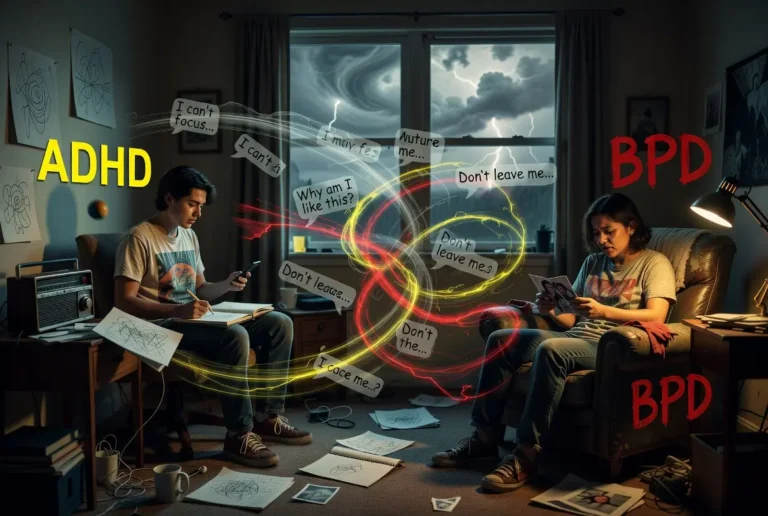
In the modern clinical landscape, the intersection of ADHD and BPD represents one of the most complex diagnostic puzzles. At first glance, Attention-Deficit/Hyperactivity Disorder (ADHD) and Borderline Personality Disorder (BPD) might seem like entirely different worlds. One is a neurodevelopmental disorder rooted in brain wiring from birth; the other is a personality disorder often shaped by emotional trauma and attachment patterns.
However, the question “are ADHD and BPD similar?” is one that thousands of patients and clinicians ask every year. Both conditions are characterized by a profound struggle with emotional regulation and impulsivity. Because they share these “noisy” outward symptoms, the difference between ADHD and BPD can easily become blurred, leading to frequent misdiagnosis—particularly in adults.
What is the difference between ADHD and BPD? While an ADHD brain might jump into a risky situation because it didn’t stop to think, a BPD brain might do the same because it is trying to soothe an unbearable emotional ache. This guide provides a deep dive into the ADHD vs borderline personality disorder debate, exploring how they coexist, how they differ in romantic settings, and what a comprehensive ADHD and BPD treatment plan actually looks like.
What Is ADHD?
To understand the overlap, we must first establish the distinct clinical foundations of each condition. Is there a difference between BPD and ADHD? Yes, and it begins with the “why” behind the behavior.
ADHD Overview: The Regulatory Engine
ADHD is a neurodevelopmental condition primarily affecting the brain’s executive functions. It is a lifelong way of being that impacts how the brain manages dopamine and norepinephrine.
- Executive Dysfunction: Difficulty with planning, organization, and time management.
- Inattention: A struggle to sustain focus on tasks that aren’t inherently stimulating.
- Impulsivity: A “bottom-up” neurological issue where the brain acts before the “brakes” (prefrontal cortex) can engage.
- Emotional Dysregulation: While not a core DSM-5 trait, most ADHDers experience intense “emotional floods” that pass quickly.
What Is BPD?
BPD Overview: The Emotional Radar
BPD is a personality disorder characterized by a pervasive pattern of instability in interpersonal relationships and self-image.
- Fear of Abandonment: An intense, often frantic effort to avoid real or imagined rejection.
- Identity Disturbance: A shifting or fragmented sense of self.
- Relationship Instability: A pattern of “idealization and devaluation” (splitting).
- Chronic Emptiness: A painful, persistent feeling of lack.
- Mood Reactivity: Intense episodic dysphoria, irritability, or anxiety, usually lasting a few hours.
Side-by-Side: The Difference Between BPD and ADHD
| Feature | ADHD | BPD |
| Origin | Neurodevelopmental (from birth/early childhood). | Often trauma-informed (emerging in adolescence/adulthood). |
| Core Issue | Regulation of attention and impulses. | Regulation of emotions and relationships. |
| Impulsivity | Spontaneous, “oops” moments, novelty-seeking. | Emotion-driven, often self-soothing or reactive. |
| Self-Image | Generally stable (though may suffer low self-esteem). | Highly unstable; “who am I?” is a common theme. |
| Rejection | Rejection Sensitive Dysphoria (brief, intense pain). | Fear of Abandonment (pervasive, life-altering dread). |
ADHD and BPD Symptoms Overlap
When looking at the ADHD and BPD overlap, it is easy to see why they are confused. Do ADHD and BPD have similar symptoms? On the surface, yes. Both can look like a life lived in “fast-forward,” characterized by high intensity and frequent crises.
The Overlapping Traits
- Impulsivity: This is the strongest point of contact. Both may overspend, drive recklessly, or engage in substance use.
- Emotional Reactivity: Both can experience 0-to-100 anger or sadness.
- Interpersonal Conflict: ADHD forgetfulness and BPD emotional sensitivity both put a strain on friends and family.
- Executive Dysfunction: BPD emotional “storms” can paralyze a person’s ability to plan, just as ADHD neurological “fog” does.
The Critical Distinction: The Source of the Action
To understand what does ADHD and BPD look like together, you have to look at the motivation.
- ADHD Impulsivity is a neurological inhibition issue. It’s the “butterfly” brain seeing something shiny and moving toward it before the logic center can say “wait.” It is usually not directed at a person.
- BPD Impulsivity is emotion-driven. It is often a reaction to a perceived social threat or an attempt to regulate an internal feeling of emptiness or abandonment. It is almost always interpersonal.
In my practice, the diagnostic ‘aha!’ moment often comes when we look at the timeline of emotional shifts. In ADHD, a person might get incredibly angry because they lost their keys (a frustration with the environment), but five minutes later, they are laughing at a joke.
In BPD, that same anger is usually triggered by a perceived slight from a person (a frustration with an attachment), and it tends to linger, coloring their entire view of that relationship for the rest of the day. When someone has ADHD and BPD together, they get the ‘spark’ of ADHD anger combined with the ‘fuel’ of BPD emotional duration.
It is an exhausting way to live, and it requires treating both the wiring and the trauma.
You may be interested to read our full guide on self-destructive bpd symptoms
ADHD and BPD Comorbidity

One of the most important clinical facts is that these are not mutually exclusive. Are ADHD and BPD a comorbid condition? For many, yes. Can you have ADHD and BPD at the same time? Absolutely.
The Statistics of Comorbidity
Research suggests a significant ADHD and BPD comorbidity rate. Estimates show that 20% to 40% of individuals diagnosed with BPD also meet the full diagnostic criteria for ADHD.
- Shared Risk Factors: Both conditions share links to childhood instability and specific genetic markers related to dopamine regulation.
- Trauma History: While ADHD is not caused by trauma, having undiagnosed ADHD in an unsupportive environment can be a traumatic experience that contributes to the development of BPD traits later in life.
Can BPD cause ADHD?
The answer is no. ADHD is a neurodevelopmental condition present from early childhood. BPD cannot “create” ADHD wiring. However, the chronic stress of BPD can make ADHD symptoms (like inattention and forgetfulness) much worse. Conversely, having ADHD and BPD means the executive dysfunction makes it even harder to use the coping skills needed to manage BPD emotions.
ADHD and BPD in Women
The discussion of ADHD and BPD in women is particularly fraught because of historical gender biases in psychiatry. For decades, women with ADHD were often misdiagnosed with BPD because their “emotionality” was viewed through the lens of personality rather than neurobiology.
ADHD vs BPD in Women: The Masking Factor
Women are often socialized to “mask” their symptoms.
- In ADHD: This looks like extreme perfectionism to hide forgetfulness.
- In BPD: This looks like “Quiet BPD,” where the anger and fear of abandonment are turned inward toward the self rather than outward toward others.
ADHD in women treatment often fails if the clinician misses the underlying BPD trauma. Similarly, BPD therapy may stall if the woman’s ADHD prevents her from organizing her life enough to attend sessions or complete DBT “homework.”
Rejection Sensitivity vs. Abandonment Fear
This is the most nuanced part of ADHD and BPD in women.
- ADHD Rejection Sensitive Dysphoria (RSD) is a sudden, sharp pain caused by the perception of failure or being disliked. It is a sensory-emotional “jolt.”
- BPD Abandonment Fear is a deep-seated belief that people will leave, leading to “clinging” or “pushing away” behaviors to control the outcome.
In this section, we move into the social and practical realities of living with both conditions—specifically how they manifest in men, the intense dynamics of romantic life, and the specific clinical protocols required to manage this dual diagnosis.
ADHD and BPD in Men
While women are often over-diagnosed with BPD, the opposite is true for men. ADHD and BPD in men is frequently missed because the symptoms are often misinterpreted through a lens of “behavioral issues” or “aggression.”
Externalizing Behaviors
In men, the emotional dysregulation of ADHD and BPD often manifests as externalizing behaviors. Instead of the internalized “Quiet BPD” seen in many women, men may exhibit:
- High-Risk Impulsivity: This often includes substance misuse, reckless driving, or physical confrontations.
- Misdiagnosis Patterns: Men with this overlap are often misdiagnosed as having Antisocial Personality Disorder (ASPD) or Intermittent Explosive Disorder.
- Substance Misuse: There is a high overlap here, as men may use substances to quiet the “noise” of ADHD or numb the “pain” of BPD emotional shifts.
ADHD and BPD Romantic Relationships
A romantic relationship with ADHD and BPD can be incredibly intense—characterized by deep passion and profound volatility. Understanding how ADHD and BPD look like together in a partnership is the first step toward stability.
The Emotional Intensity Cycle
In an ADHD and BPD relationship, two different types of “attachment” issues collide.
- The ADHD Partner: May struggle with “out of sight, out of mind” forgetfulness. They might forget an anniversary or fail to text back because they got hyperfocused on a task.
- The BPD Partner: May interpret that ADHD forgetfulness as a sign of impending abandonment. This triggers a “BPD flare,” leading to accusations or emotional withdrawal, which in turn overwhelms the ADHD partner’s emotional regulation.
Reddit Anecdotal Themes
If you browse ADHD and BPD Reddit threads, you will see a recurring theme: the “Golden Period.” The beginning of these relationships is often hyper-intense because the ADHD person’s “hyperfocus” on the new partner matches perfectly with the BPD person’s desire for “idealization.” However, when the ADHD hyperfocus naturally fades (as it does in all ADHD brains), the BPD partner may feel a devastating drop in self-worth.
Relationship Success Strategies
- DBT-Informed Communication: Using “I” statements to separate the ADHD “symptom” (forgetfulness) from the BPD “meaning” (they don’t love me).
- Couples Therapy: Specifically with a therapist who understands neurodivergence and personality disorders.
- Parallel Play: Learning to be in the same room doing different things to respect the ADHD need for space and the BPD need for proximity.
ADHD and BPD Misdiagnosis

The risk of ADHD and BPD misdiagnosis is exceptionally high because clinicians often stop after finding one diagnosis.
- The ADHD Misdiagnosis: A clinician sees a patient who is impulsive and moody and labels them BPD, missing the fact that the person has been inattentive and hyperactive since age five.
- The BPD Misdiagnosis: A clinician sees a patient who can’t keep a job and is impulsive and labels them ADHD, missing the deep-seated fear of rejection and identity disturbance that drives the instability.
Importance of Developmental History: The key to differentiation is childhood. ADHD must be present in childhood; BPD typically (though not always) emerges later in adolescence or young adulthood following a pattern of relational distress.
ADHD and BPD Treatment
Can ADHD and BPD be treated? Yes, but a “one-size-fits-all” approach usually fails. ADHD and BPD treatment must be a dual-track strategy.
A. ADHD Treatment
- ADHD Medication: Stimulants (like Ritalin or Adderall) are the gold standard for ADHD treatment for adults. They help stabilize the prefrontal cortex, which provides the “brakes” needed to use BPD coping skills.
- Inattentive ADHD Treatment: Non-stimulants like Atomoxetine may be used if stimulants increase BPD-related anxiety.
- Neurofeedback ADHD: An emerging natural ADHD treatment that trains the brain to maintain focus, though it should be used as a supplement, not a replacement.
- A Note on “Cures”: There is no ADHD cure, only lifelong management that improves with age and skill.
B. BPD Treatment
- Dialectical Behavior Therapy (DBT): This is the gold standard for BPD. It teaches four key pillars: Mindfulness, Distress Tolerance, Interpersonal Effectiveness, and Emotion Regulation.
- Schema Therapy: Focuses on changing the deep-seated “blueprints” or “schemas” created by early childhood trauma.
- Medication: There is no “BPD medication” per se, but psychiatrists may use mood stabilizers or low-dose antipsychotics to treat specific symptoms like rage or paranoia.
C. Combined Treatment Strategy: The “Staging” Approach
Many experts suggest treating the ADHD first. Why? Because if a person is too impulsive or distracted to remember their therapy appointments or practice their DBT skills, the BPD treatment will not “stick.” What is the best medication for borderline personality disorder and ADHD? Often, it is a combination of an ADHD stimulant and a BPD-targeted mood stabilizer, but this requires expert psychiatric management.
Autism, ADHD, and BPD (The “Triple Diagnosis”)
When you add Autism (ASD) to the mix, the complexity increases. An autism, adhd, and bpd profile often involves:
- Sensory Overload: Which can trigger a “BPD” emotional response.
- Social Communication Gaps: Which make the “BPD” fear of abandonment even more confusing.
- Lifestyle Support: How to improve lifestyle with ASD ADHD and BPD? It requires a low-sensory environment, strict executive function tools (planners/apps), and a trauma-informed therapist.
Frequently Asked Questions
Are BPD and ADHD linked?
While they are separate conditions, they are linked by shared symptoms of impulsivity and emotional dysregulation. Many people with BPD also have underlying ADHD, suggesting a shared vulnerability in the brain’s regulatory centers.
What does BPD with ADHD look like?
What does BPD and ADHD look like together? It often looks like an “amplified” version of both. The person may experience the rapid, shifting focus of ADHD alongside the intense, long-lasting emotional pain of BPD. It manifests as high-intensity living, frequent interpersonal crises, and chronic executive dysfunction.
What is the best medication for borderline personality disorder and ADHD?
There is no single “best” medication, but a common approach is using stimulants (for ADHD focus) in combination with mood stabilizers (for BPD emotional spikes). Always consult a psychiatrist for a personalized plan.
Can BPD cause ADHD?
No. ADHD is a neurodevelopmental disorder present from birth or early childhood. BPD is a personality disorder that typically develops later. BPD cannot “cause” ADHD wiring, but the stress of BPD can exacerbate ADHD symptoms.
Is there a difference between BPD and ADHD?
Yes. ADHD is a problem with the brain’s “executive engine”—attention, organization, and impulse control. BPD is a problem with the brain’s “emotional thermostat”—feelings of self-worth, fear of abandonment, and relationship stability.
Conclusion: From Chaos to Clarity
Navigating ADHD and BPD is undeniably challenging, but a dual diagnosis is not a life sentence. It is a roadmap. By understanding the difference between ADHD and BPD and how they overlap, you can stop fighting yourself and start using the right tools for your specific brain.
Whether you are seeking ADHD treatment for adults or engaging in the transformative work of DBT, the goal is the same: to move from reactive survival to intentional living. You are more than a collection of symptoms; you are a person with a unique neurobiology that simply needs a different set of operating instructions.
Authoritative Clinical & Research References
- National Institute of Mental Health (NIMH)
- CHADD (Children and Adults with ADHD) — “ADHD and Co-occurring Conditions”
- Journal of Clinical Psychiatry
- The American Journal of Psychotherapy

Related Posts






Subscribe to Our Newsletter
Get mental health tips, updates, and resources delivered to your inbox.
MORE from Author
Read More Watching someone you care about struggle with bipolar depression and anxiety can be heartbreaking. You may notice that they withdraw…
 In my practice as a clinical psychologist, I often observe that the difference between a patient who crumbles under pressure…
 We all have "up" days and "down" days. Perhaps you feel energized after a promotion or sluggish on a rainy…
 To define bipolar disorder accurately, we must look at it as a chronic mood dysregulation condition. In psychology and medicine,…
Are you looking for a Therapist?
Connect with qualified mental health professionals who understand
bipolar disorder, mood changes, and emotional challenges.
Private • Supportive • Confidential