
Highly Sensitive Child vs Autism? How to Tell the Difference Between Adults and Children

Medically reviewed by Laura Athey Updated Date: April 7, 2026
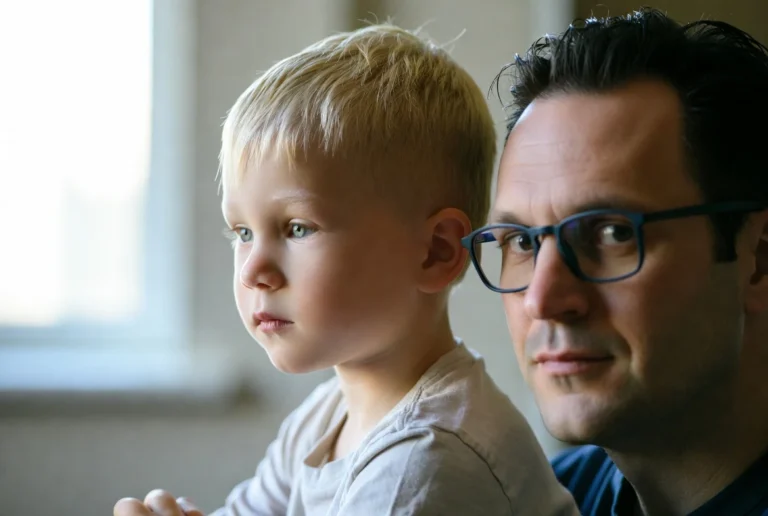
Have you ever felt like the world is just a little too loud, too bright, or too intense for you? You might find yourself wondering if you are a Highly Sensitive Child vs Autism. It is a question I hear frequently in my clinical practice. Many parents also come to me asking, “Is my child struggling with sensory processing, or is there something more going on?”
These labels can feel confusing, especially when social media discussions make the lines seem blurry. Understanding the nuance between a personality trait and a developmental neurotype is life-changing. It helps you find the right tools, the right schooling, and most importantly, peace of mind. In this guide, we will dive deep into the differences, explore the overlap with ADHD, and look at how to get the support your family deserves.
In my fifteen years of private practice, I have frequently encountered clients who spent years feeling “different” without knowing why. Using an integrative approach that draws on Internal Family Systems (IFS) and relational psychodynamic principles, I help individuals peel back the layers of their experience to find the root of their challenges.
What Is a Highly Sensitive Person (HSP)?
The term “Highly Sensitive Person” was first coined by Dr. Elaine Aron. It refers to a personality trait known as Sensory Processing Sensitivity (SPS). If you are an HSP, your brain processes information more deeply than others. You might notice subtle details that others miss, like a slight change in someone’s tone of voice or a faint hum from a refrigerator.
But what does high sensitivity mean in a clinical sense? It means your nervous system is highly tuned to its environment. You likely feel deep empathy and may feel easily overwhelmed by crowded places or violent movies. Crucially, HSP is considered a temperamental trait, not a mental health diagnosis or a developmental disorder.
Are Highly Sensitive People Neurodivergent?
This is a hot topic in the community right now. Many people ask, are highly sensitive people neurodivergent? While the term “neurodivergent” traditionally covers autism, ADHD, and dyslexia, some advocates argue that HSP should be included.
After all, an HSP brain functions differently from a “typical” brain. However, most clinicians still view it as a normal variation of the human experience.
You may be interested to read about full guide on is BPD Neurodivergent?
Can You Be HSP and Not Autistic?
The short answer is yes. You can absolutely be an HSP and not autistic. Many people have a sensitive nervous system without the social communication differences or repetitive behaviors that define autism. While there is a strong link between highly sensitive people and autism, they are distinct paths.
High sensitivity is about processing depth, whereas autism involves specific developmental markers.
What Is Autism? (Especially High-Functioning Autism & Emotional Sensitivity)
Autism Spectrum Disorder (ASD) is a developmental condition that affects how people communicate, interact, and behave. Unlike a personality trait, autism is present from very early childhood and impacts the way the brain is wired for social connection.
Does High Sensitivity Mean Autism?
Not necessarily. While sensory issues are a major part of the autism experience, they aren’t the only part. You might see high-functioning autism, emotional sensitivity,y where an individual feels things very deeply but struggles to express those feelings in traditional ways.
A common myth is that autistic people lack emotion. In fact, many are incredibly sensitive to the “energy” in a room, even if they don’t make eye contact.
So, are autistic people emotionally sensitive? Many are actually hypersensitive. They may experience “hyper-empathy,” where they feel another person’s pain as if it were their own. The difference lies in how that sensitivity is processed and shared with others.
Autism vs Highly Sensitive Person
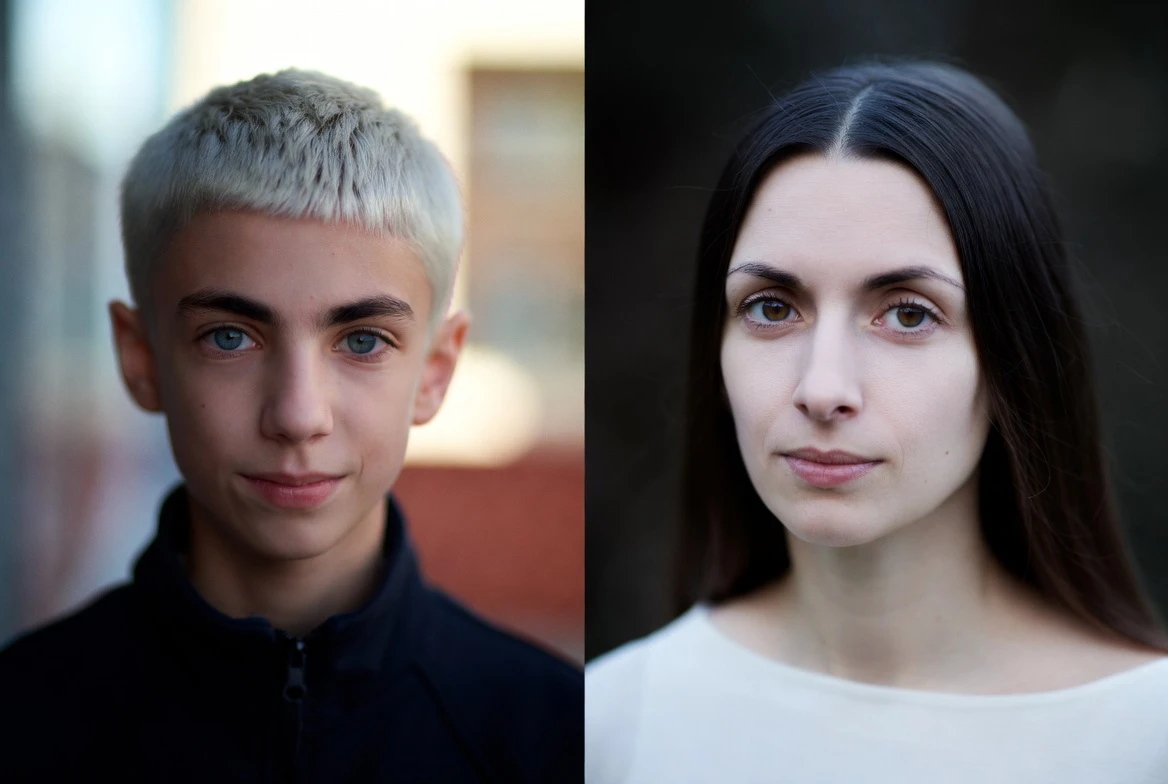
When comparing autism vs highly sensitive person, we have to look past the surface. Both might cover their ears at a loud party, but the underlying reason and the accompanying traits differ significantly.
Social Communication Differences
This is the biggest “tell.” An HSP usually has a strong, intuitive grasp of social cues. They might be shy, but they understand the “unwritten rules” of conversation easily. In autism, there are often developmental differences in social reciprocity.
This might look like difficulty maintaining a back-and-forth conversation or missing non-verbal cues like sarcasm or body language.
Sensory Processing
In highly sensitive vs autistic comparisons, we look at the variety of sensory input. HSPs are typically sensory-avoidant (overwhelmed by input). Autistic individuals often show a mix of sensory-avoidant and sensory-seeking behaviors.
For example, an autistic child might hate the sound of a vacuum but love the intense sensation of spinning or jumping.
Restricted Interests & Repetitive Behaviors
One of the core pillars of an autism diagnosis is the presence of repetitive behaviors or “special interests.” This could be a deep, encyclopedic knowledge of trains or a need to line up toys in a specific order. These traits are generally not present in people who are only HSP.
Comparison Table: HSP vs. Autism
| Feature | HSP | Autism |
| Social Reciprocity | Intact; often very intuitive | May differ; may struggle with cues |
| Sensory Overload | Very common | Very common |
| Special Interests | No (usually broad interests) | Often yes (deep and focused) |
| Communication Differences | No | Often yes (literal thinking) |
| Repetitive Behaviors | Rare | Core diagnostic feature |
Highly Sensitive Person vs ADHD vs Autism
In my interviews with patients, I often find that ADHD enters the conversation. The HSP vs ADHD vs autism debate is complex because many people actually have a “triple overlap.”
ADHD Traits and High Sensitivity
ADHD involves executive dysfunction, impulsivity, and inattention. However, many people with ADHD are also sensory sensitive. In a highly sensitive person vs ADHD, the difference is often the “pace.” An HSP is usually reflective and slow to act. Someone with ADHD might be sensitive but acts impulsively, often leading to a cycle of overstimulation and regret.
ADHD vs Autism
While both involve executive function challenges, the “social why” differs. An ADHD child might interrupt because they are impulsive. An autistic child might interrupt because they don’t realize it is someone else’s turn to speak. In a highly sensitive child vs ADHD scenario, the sensitive child is likely to be the one observing from the sidelines, while the ADHD child is in the middle of the action, even if they feel overwhelmed later.
Is My Child Autistic or Just Sensitive?
This is perhaps the most emotional question I answer. Parents want to know: Is my child autistic or just sensitive? It is important to remember that being “sensitive” is a wonderful trait, but if it is actually autism, getting the right support early is vital.
Signs of a Highly Sensitive Child
A highly sensitive child often notices if a parent is sad before anyone else does. They might refuse to wear “scratchy” clothes or cry during loud movies. They are often described as “old souls.” If your child is highly sensitive, they likely have a rich inner world but do not show delays in speech or social milestones.
Signs of Autism in Children
If you are looking at a highly sensitive child vs autism, look for “joint attention.” Does your child point at a dog and then look at you to make sure you see it too? In autism, this shared social experience might be delayed. You might also notice repetitive play, like spinning the wheels of a car instead of “driving” it.
About Online Quizzes
Many parents find “The highly sensitive child quiz” or an HSP or autism test online. While these can be a starting point, they are not a diagnosis. I have seen many families get “low” scores on an autism quiz because their child is “too social,” only to find out later that the child was simply masking their struggles. Always seek a professional evaluation if you are unsure.
HSP Autism Female Presentation
The HSP autism female experience is a unique area of study. Historically, girls were often missed because they were socialized to be polite and quiet. An autistic girl might be labeled as “just a highly sensitive person” because she works so hard to fit in.
On platforms like Reddit, you will see many women discussing HSP vs autism Reddit threads. They often describe a “lightbulb moment” in their 30s when they realize their “sensitivity” was actually an autistic brain trying to navigate a neurotypical world.
If you find yourself exhausted by social interaction and needing days to recover, it might be worth looking beyond the HSP label.
Are You Missing Out on Free Autism Evaluations? What You Need to Know
Many families avoid seeking help because of the cost. However, you might be wondering, Are You Missing Out on Free Autism Evaluations? In the United States, several pathways provide no-cost testing for children.
- Early Intervention: For children under age 3, every state has a program that provides free developmental screenings.
- Child Find: Under the IDEA Act, school districts are required to evaluate children (ages 3–21) if a disability is suspected, at no cost to the parents.
- Medicaid/Insurance: Many plans cover diagnostic testing for autism as a medical necessity.
Do not let the fear of a “label” stop you from getting an evaluation. A diagnosis is a key that unlocks resources, not a box that limits your child.
What Makes a Daycare Autism Friendly?
If you are a parent of a sensitive or autistic child, choosing a daycare is a big step. You need to know what makes a daycare autism friendly. It isn’t just about having a quiet room; it’s about the staff’s approach to neurodiversity.
Sensory-Friendly Spaces
Look for “quiet corners” where a child can go without being shamed. Lighting should be soft, and there should be “fidgets” or weighted blankets available. An environment that respects sensory boundaries is essential for both HSP and autistic children.
Staff Training
The best daycares use “neurodiversity-affirming” practices. This means they don’t try to “fix” the child but instead adapt the environment to meet the child’s needs. They should use visual schedules so the child knows exactly what is happening next.
Virtual Schools vs Traditional Schools: Which Is Right for Your Child?

Education is not one-size-fits-all. When deciding between Virtual Schools vs Traditional Schools, consider your child’s sensory threshold.
- Traditional Schools: Great for social exposure, but can be a “sensory nightmare” for highly sensitive or autistic students.
- Virtual Schools: These allow for a controlled environment. A sensitive child can learn in pajamas without the noise of a cafeteria. However, they may miss out on guided social interactions.
For many of my patients, a hybrid model or a small “scholastic” environment works best.
Scholastic Education vs. Traditional Education: Which Is Right for Your Child?
In the debate of Scholastic Education vs. Traditional Education, we are looking at structured vs. flexible learning. Traditional education often relies on rigid timing and large groups. Scholastic or alternative models (like Montessori or specialized neuro-affirming schools) often focus on the child’s individual pace.
An autistic learner often thrives with “Interest-Based Learning,” which is more common in alternative scholastic environments. A highly sensitive child might thrive anywhere as long as the emotional climate of the classroom is supportive and kind.
Is It Emotional Sensitivity or a Mood Disorder?
Distinguishing between highly sensitive person or autistic traits and Bipolar Disorder is one of the most critical challenges in adult psychiatry today. In my clinical experience, I often see patients—particularly women—who receive a Bipolar II diagnosis because their “sensory meltdowns” are mistaken for hypomania, and their “autistic burnout” is mislabeled as clinical depression.
While Bipolar Disorder is a mood disorder characterized by distinct cycles of mania and depression, autism and high sensitivity are constant, developmental neurotypes.
If your “mood swings” are actually triggered by sensory overload (like loud offices) or social exhaustion, you may not be experiencing a chemical mood cycle, but rather a neurodivergent response to a stressful environment.
Misdiagnosis can lead to unnecessary medications that don’t address the root cause: a sensitive nervous system. Understanding this overlap is essential for anyone asking, “Am I just sensitive, or is there a deeper neurological reason for my emotional intensity?”
Frequently Asked Questions
Can you be HSP and not autistic?
Yes. High Sensitivity (HSP) is a personality trait involving deep sensory processing. While it shares some traits with autism, many HSPs do not have the social-communication challenges or repetitive behaviors that define autism.
Are highly sensitive people autistic?
Not necessarily. While many autistic people are highly sensitive, not all highly sensitive people meet the clinical criteria for autism. One is a personality trait (HSP), and the other is a developmental neurotype (Autism).
Does high sensitivity mean autism?
No. High sensitivity refers specifically to how the nervous system processes input. Autism is a broader spectrum that includes sensory sensitivity along with specific social, communication, and behavioral patterns.
Are highly sensitive people neurodivergent?
This is currently debated. Many clinicians and advocates consider high sensitivity a form of neurodivergence because the brain processes information differently than the majority of the population.
Are autistic people emotionally sensitive?
Yes, often intensely so. Many autistic individuals experience “hyper-empathy,” feeling the emotions of others very deeply, though they may process or show those emotions differently than neurotypical people.
How do I tell if my child is highly sensitive?
Highly sensitive children often notice subtle changes, have deep empathy, and are easily overwhelmed by loud noises or itchy clothes. They typically reach social and language milestones on time.
What is the difference between autism and a highly sensitive person?
The main difference is social communication and repetitive behaviors. Autistic people have specific developmental differences in these areas, whereas HSPs generally have typical social development but a lower sensory threshold.
Is there an HSP or autism test?
There are many screening quizzes online, but they are not diagnostic. For an official answer, you should seek a comprehensive evaluation from a clinical psychologist or developmental pediatrician.
Should I get a free autism evaluation?
If you have concerns about your child’s development, yes. Early intervention is the most effective way to support a neurodivergent child and provides them with the tools they need to thrive.
Is ADHD the same as high sensitivity?
No, but they often overlap. ADHD is a neurodevelopmental disorder involving executive function, whereas high sensitivity is a temperamental trait involving sensory processing. Many people have both.
Conclusion
Whether you are navigating the world as a highly sensitive person or autistic, or managing the complexities of bipolar disorder, the goal remains the same: radical self-acceptance and the right environment. Understanding the nuances between these conditions is the first step toward reclaiming your energy and mental health.
In the final analysis, being “sensitive” is a gift, but it requires a specific set of tools to prevent it from becoming a burden. If you are a parent wondering, “Is my child autistic or just sensitive?” or an adult looking for clarity on your own path, remember that your neurological makeup is your strength. You do not have to navigate this alone. Seek out neuro-affirming clinicians, explore free autism evaluations if you qualify, and never settle for a one-size-fits-all approach to your mental well-being.
References
- The Highly Sensitive Person – Dr. Elaine Aron
- National Institutes of Health (NIH) – Sensory Processing Sensitivity
- Autism Speaks – Symptoms and Diagnosis
- ADHD & Sensitivity – CHADD Resource Center
- CDC – Early Intervention Information

Related Posts




Subscribe to Our Newsletter
Get mental health tips, updates, and resources delivered to your inbox.
MORE from Author
Read More Watching someone you care about struggle with bipolar depression and anxiety can be heartbreaking. You may notice that they withdraw…
 In my practice as a clinical psychologist, I often observe that the difference between a patient who crumbles under pressure…
 We all have "up" days and "down" days. Perhaps you feel energized after a promotion or sluggish on a rainy…
 To define bipolar disorder accurately, we must look at it as a chronic mood dysregulation condition. In psychology and medicine,…
Are you looking for a Therapist?
Connect with qualified mental health professionals who understand
bipolar disorder, mood changes, and emotional challenges.
Private • Supportive • Confidential