
BPD vs ADHD: Key Differences, Overlap, Testing & Treatment (Adults & Women)

Have you ever wondered why your brain seems to move at 100 miles per hour while your emotions feel like a rollercoaster? You aren’t alone. In my clinical practice, I often meet adults who spent years feeling “broken” because they didn’t fit a standard mold. Maybe you struggle to finish a project, or perhaps a small disagreement with a friend feels like the end of the world.
This confusion often boils down to the debate of bpd vs adhd. While they look similar on the surface, the “why” behind the behavior is very different. Understanding these differences isn’t just about a label; it is about finding the right roadmap for your life. Are you ready to dive into how your brain actually works?
What Is the Difference Between ADHD and BPD?
When we look at the difference between bpd and adhd, we are looking at two different “operating systems.” ADHD is something you are born with; it involves how your brain handles dopamine and stays organized. On the other hand, BPD often emerges in late adolescence and usually ties back to emotional regulation and attachment styles.
The adhd and bpd difference is most visible in how a person interacts with the world. A person with ADHD might forget a dinner date because they got distracted by a new hobby. A person with BPD might skip the dinner because they feel their friend is “pulling away” and want to reject them first.
Comparison Table: ADHD vs BPD at a Glance
| Feature | ADHD (Neurodevelopmental) | BPD (Personality Disorder) |
| Core Issue | Executive dysfunction & attention | Emotional dysregulation & attachment |
| Primary Onset | Early childhood (before age 12) | Adolescence or early adulthood |
| Identity | Generally stable self-image | Chronic feeling of “emptiness” or shifting identity |
| Abandonment | Not a core clinical feature | Intense, frantic fear of being left |
| Impulsivity | Often “spontaneous” or focus-based | Often emotional or self-destructive |
| Treatment | Stimulants & Executive Functioning tools | DBT, MBT, and Schema Therapy |
The DSM-5-TR categorizes ADHD as a neurodevelopmental disorder, while BPD sits in the “Cluster B” personality disorders. This distinction is vital because it changes how we approach therapy and medication.
BPD vs ADHD Symptoms: Digging Deeper
The bpd vs adhd symptoms can be incredibly “sticky.” Clinicians often use the term “phenotypic overlap” to describe how two different conditions look identical to the naked eye. However, if we look closer at the triggers, the truth emerges.
Emotional Dysregulation
In ADHD, emotions move fast. You might feel a flash of anger because the Wi-Fi is slow, but once it’s fixed, the anger vanishes. I call this “fast-burn” emotion. In BPD, emotions are “long-burn.” A mood shift can last for days and is almost always tied to a relationship or a perceived slight.
BPD vs ADHD Anger
Let’s talk about bpd vs adhd anger. An ADHD blow-up is often a result of sensory overload or frustration with a task. It is reactive and impulsive. BPD anger, however, is often “relational.” It happens because the person feels unheard, devalued, or abandoned. It is more about the connection to another person than the task at hand.
Rejection Sensitivity
You may have heard the term Rejection Sensitive Dysphoria (RSD) in ADHD circles. While RSD isn’t a formal DSM diagnosis, it describes an intense pain triggered by failure or criticism. BPD vs adhd rejection sensitivity differs because, in BPD, the rejection feels like an existential threat.
It triggers a frantic effort to keep the person from leaving, whereas, in ADHD, it usually leads to social withdrawal or intense self-criticism.
Quiet BPD vs ADHD
“Quiet BPD” is a subtype where the person turns their emotions inward. Instead of lashing out, they “implode.” This can look like the “Inattentive” type of ADHD because the person appears distracted, withdrawn, or “spacey.”
However, the internal world of someone with Quiet BPD is filled with intense self-hatred, while the ADHD brain is simply struggling to filter out too much information.
BPD vs ADHD in Women (The Great Misdiagnosis)
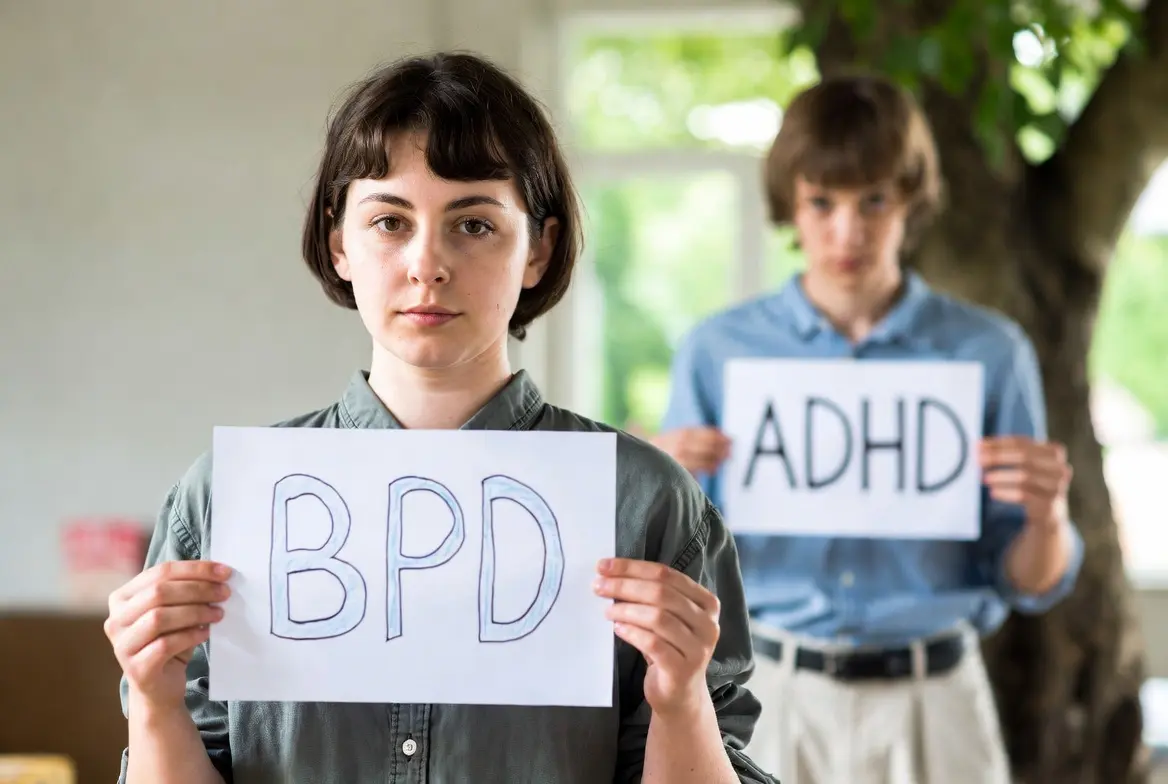
One of the most significant challenges in modern psychiatry is how we treat bpd vs adhd in women. Historically, women who presented with emotional “storms” were automatically labeled with BPD. We now know that many of these women actually have undiagnosed ADHD.
Why Women Are Misdiagnosed
Society often expects women to be organized, calm, and nurturing. When a woman with ADHD cannot meet these expectations, she feels like a failure. This leads to chronic “masking”—the act of hiding symptoms to fit in. Eventually, the mask cracks, leading to emotional meltdowns that look like a personality disorder.
Furthermore, hormonal shifts during the menstrual cycle or menopause can make ADHD symptoms much worse. A woman might feel perfectly fine for two weeks and then feel completely “unstable” for the next two. Because bpd vs adhd women studies were limited for decades, many clinicians missed the ADHD connection.
You may be interested to read our guide on Premenstrual Dysphoric Disorder
The Role of Trauma
It is also essential to recognize that many women with ADHD have experienced “small-t” or “large-T” trauma because they grew up feeling misunderstood. This trauma can create symptoms that mimic BPD. In my clinical experience, when we treat the underlying ADHD with the right medication and tools, the “BPD-like” emotional instability often settles down significantly.
BPD vs ADHD vs Autism: The Neurodivergent Cluster
We cannot talk about bpd vs adhd vs autism without acknowledging that these conditions often hang out together. This is what we call the “neurodivergent umbrella.”
- ADHD focuses on the “how” of doing things (focus, planning).
- Autism focuses on the “how” of processing things (social communication, sensory input).
- BPD focuses on the “how” of feeling things (attachment, identity).
When comparing bpd vs adhd vs bipolar, remember that Bipolar Disorder is episodic. You have weeks of mania followed by weeks of depression. BPD and ADHD are chronic; the symptoms are present most of the time, though they may vary in intensity.
CPTSD vs BPD vs ADHD
Complex Post-Traumatic Stress Disorder (CPTSD) is perhaps the closest “look-alike” to BPD. Both involve emotional flashbacks and relationship struggles. However, CPTSD is always rooted in prolonged trauma, whereas BPD involves a specific type of identity disturbance and abandonment fear that may or may not be tied to a single traumatic event.
Can You Have BPD and ADHD Together?
Many people ask if it is possible to have both. The answer is a resounding yes. In fact, research shows that nearly 30% of adults diagnosed with BPD also meet the criteria for ADHD.
Having bpd and adhd together creates a unique set of challenges. When these two conditions coexist, impulsivity often skyrockets. I once worked with a patient named Alex. Alex struggled with the “inattentive” side of ADHD but had the emotional “storms” of BPD.
Furthermore, having adhd and bpd increases the risk of self-harm and suicidal ideation. This happens because the ADHD brain acts before it thinks. Meanwhile, the BPD heart feels pain more intensely. Therefore, the combination can lead to dangerous, impulsive decisions during an emotional crisis.
Treatment for “comorbid” cases must be careful. We usually treat the most life-threatening symptoms first. Usually, this means starting with DBT for BPD stability. After that, we address the ADHD executive dysfunction.
Medication Questions: What Works for BPD vs ADHD?
Choosing the right adhd medication or BPD support is a delicate process. Because these conditions affect different brain chemicals, a “one size fits all” approach fails.
ADHD Medications
For ADHD, stimulants are the first line of defense. These include medications like Methylphenidate (Ritalin) and Amphetamines (Adderall). They work by increasing dopamine and norepinephrine in the prefrontal cortex.
Consequently, this helps you focus and control impulses. If stimulants cause too much anxiety, we use non-stimulants. Options like Atomoxetine (Strattera) or Guanfacine (Intuniv) are often effective. These provide a steadier, “lower-key” boost to focus.
BPD Medications
It is crucial to understand that there is no FDA-approved medication for BPD. However, psychiatrists often prescribe medications “off-label” to manage specific symptoms.
Mood stabilizers for BPD and ADHD, such as Lamotrigine or Valproate, can help dampen emotional highs and lows. Additionally, SSRIs (antidepressants) can help with co-occurring depression or anxiety. These don’t “fix” the personality disorder, but they make therapy more effective.
Can Adderall Make BPD Worse?
This is a high-stakes question. For some, Adderall provides the focus needed to use therapy skills. However, stimulants can also increase irritability or paranoia in some BPD patients.
If you have both, your doctor must monitor you closely. Can Adderall make BPD worse? Yes, if the dose is too high or if it triggers a manic-like state. Always report any “edgy” feelings to your clinician immediately.
ADHD Treatment & Management in Adults
If you are seeking adhd treatment for adults, you have several evidence-based options. We look at treatment as a “pyramid.”
- Medication: This is usually the foundation for biological regulation.
- Cognitive Behavioral Therapy (CBT): This helps you change negative thought patterns about your productivity.
- ADHD Coaching: This focuses on practical skills like time management and filing.
- Lifestyle Interventions: Never underestimate sleep, exercise, and a high-protein diet.
Innovative ADHD Remedies
Many patients ask about natural adhd treatment or neurofeedback adhd. While neurofeedback shows some promise, the evidence is mixed. It involves training your brainwaves to stay in a “focused” state.
For inattentive adhd treatment, environmental changes are often best. This might mean using “body doubling” (working alongside someone else) or using noise-canceling headphones. If you are looking for an adhd treatment center, ensure they offer a multidisciplinary team.
Free Online ADHD & BPD Tests — Helpful or Harmful?

In the age of TikTok, everyone is taking a bpd vs adhd test online. Are these “Do I have BPD or ADHD” quizzes actually useful?
What Screening Tools Can & Cannot Do
A free quiz is a “screening tool,” not a diagnosis. These tools catch “red flags.” However, they often lead to false positives. For example, trauma can make you score high on an ADHD test, even if you don’t have it.
Red Flags in Online Quizzes
Be wary of any site that claims 99% accuracy. Most free tests aren’t validated by clinical research. They often use binary (Yes/No) scoring that ignores the “spectrum” of these disorders.
When to Seek Professional Evaluation
If your quiz results suggest a problem, don’t panic. Instead, look at your daily functioning. Is your bpd vs adhd struggle causing you to lose jobs? Are your relationships falling apart? If so, it’s time to see a professional for a formal assessment.
ADHD & BPD in Romantic Relationships
Love is complicated when your brain is wired differently. In an adhd and bpd romantic relationship, conflicts often follow a pattern.
The partner with ADHD may “zone out” or forget chores. The partner with BPD might interpret this as a sign that they are no longer loved. This triggers a fear of abandonment. Subsequently, a huge argument erupts over a simple pile of laundry.
Understanding the bpd vs adhd dynamic helps couples stop blaming each other. Once you realize it’s a “brain glitch” and not a “character flaw,” you can work together. Using DBT skills and ADHD checklists can save a marriage from the brink.
Frequently Asked Questions
Is ADHD ever mistaken for BPD?
Yes, frequently. Because both involve emotional impulsivity, many women with ADHD are mislabeled with BPD. A careful history of childhood symptoms is the only way to tell them apart.
Can you have both ADHD and BPD?
Absolutely. About one-third of people with BPD also have ADHD. Treating both simultaneously is the key to long-term stability.
What is the biggest difference between ADHD and BPD?
The biggest difference is the “trigger.” ADHD is usually triggered by boredom or sensory overload. BPD is almost always triggered by relationship issues or the fear of being left.
Is rejection sensitivity ADHD or BPD?
It is both, but it feels different. In ADHD, it’s a sudden, painful “sting” that fades. In BPD, it is a deep, existential dread that can lead to a crisis.
Does stimulant medication worsen BPD?
It can. While stimulants help focus, they can sometimes increase the “emotional intensity” of BPD. Careful titration by a psychiatrist is essential.
How can I tell if it’s bipolar instead?
Bipolar disorder happens in distinct cycles or “episodes” that last days or weeks. BPD and ADHD symptoms are more consistent and happen daily.
Conclusion: Finding Clarity in the Chaos
Navigating the world of bpd vs adhd is a marathon, not a sprint. Whether you are dealing with bpd vs adhd anger or just trying to finish your to-do list, remember that your brain is simply different, not broken. By using the right tools and professional support, you can move from surviving to thriving. You deserve to understand how your mind works so you can finally find peace.
Would you like me to help you create a personalized discussion guide for your next doctor’s visit?
References & High-Quality Sources
Related Posts





Subscribe to Our Newsletter
Get mental health tips, updates, and resources delivered to your inbox.
MORE from Author
Read More In my practice as a clinical psychologist, I often observe that the difference between a patient who crumbles under pressure…
- We all have "up" days and "down" days. Perhaps you feel energized after a promotion or sluggish on a rainy…


 To define bipolar disorder accurately, we must look at it as a chronic mood dysregulation condition. In psychology and medicine,…
 To answer whether bipolar fits the bill, we first have to define what a neurodivergent person actually is. The term…
Are you looking for a Therapist?
Connect with qualified mental health professionals who understand
bipolar disorder, mood changes, and emotional challenges.
Private • Supportive • Confidential