
What is Pathological Demand Avoidance (PDA)? Understanding the PDA Profile of Autism
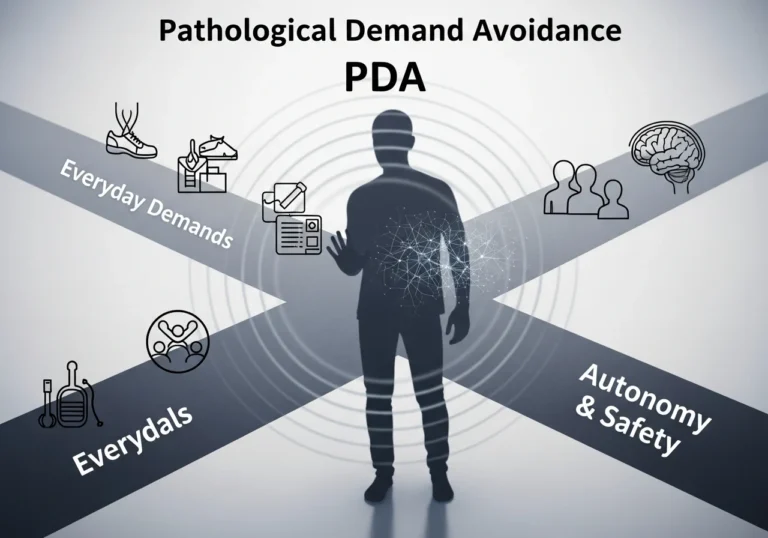
In my practice, I often encounter parents and adults who feel exhausted by a cycle of conflict that doesn’t respond to traditional behavioral interventions.
They describe a child who “shuts down” at the mere suggestion of putting on shoes, or an adult who feels a physical wave of panic when faced with a simple work deadline.
These individuals aren’t being “difficult” or “defiant” in the traditional sense; rather, they are often navigating a complex neurodevelopmental profile known as What is Pathological Demand Avoidance (PDA).
Pathological Demand Avoidance (PDA)—increasingly referred to by neurodivergent advocates as Pervasive Drive for Autonomy—is a profile typically situated within the autism spectrum.
Unlike classic presentations of autism that focus on social-communication deficits or repetitive behaviors, PDA is defined by an overwhelming, anxiety-driven need to avoid the ordinary demands of life.
For a person with PDA, a demand is perceived by the brain not as a request but as a direct threat to their safety and autonomy.
While not yet a standalone diagnosis in the DSM-5, PDA is widely recognized by clinicians and the NHS as a distinct “profile” of autism. It requires a fundamental shift in how we approach support, moving away from “compliance-based” models toward collaborative, low-demand environments.
Key Features and Symptoms of PDA
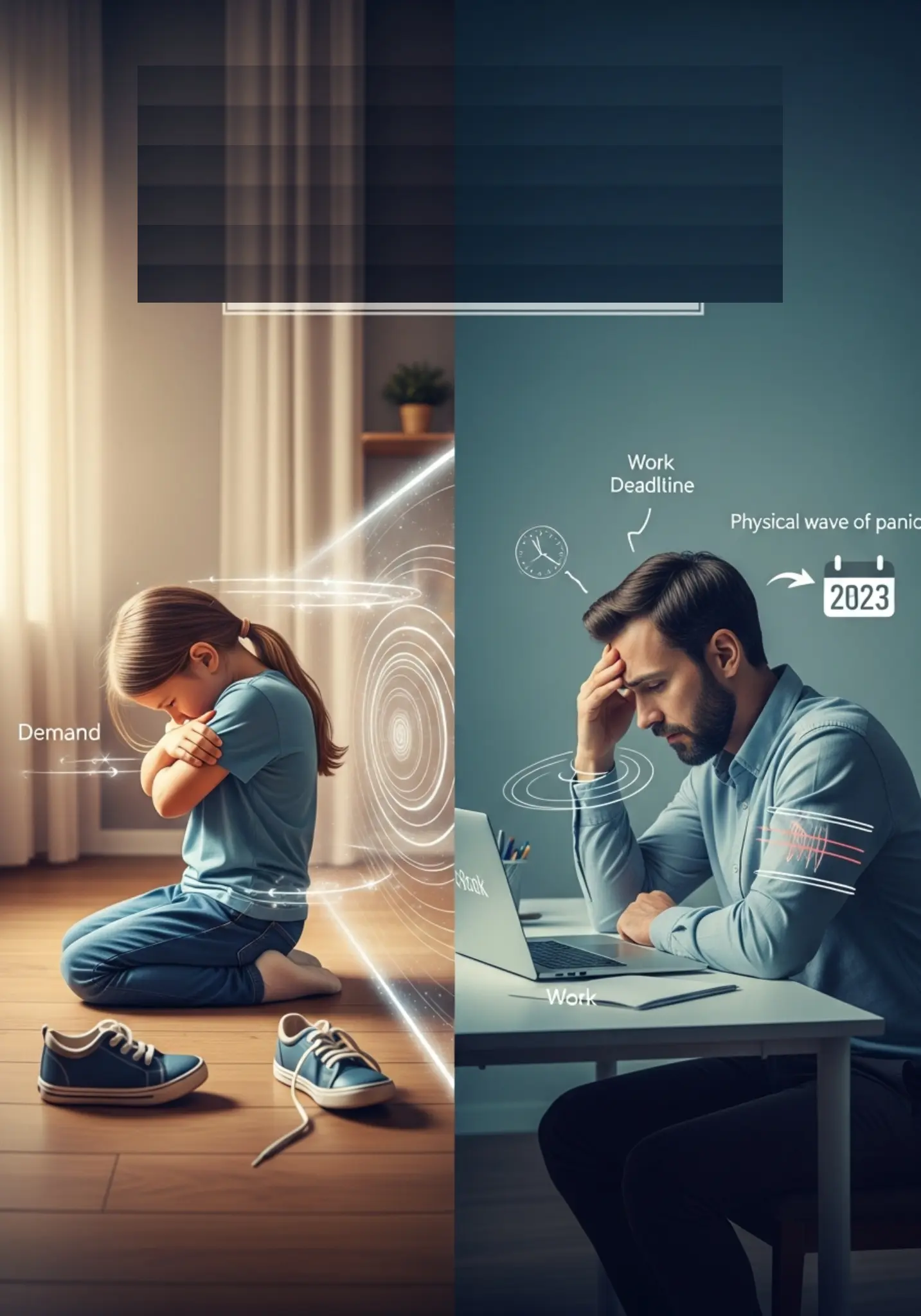
In a clinical setting, identifying PDA requires looking past the surface-level “refusal” and understanding the internal experience of the individual.
The “pathological” element of the name refers to the fact that the avoidance is pervasive, frequently self-limiting, and often interferes with the person’s own goals and well-being.
Symptoms in Children vs. Adults
The presentation of PDA evolves as an individual develops more sophisticated masking techniques or coping mechanisms, but the core drive remains an intolerance of perceived pressure.
| Feature | PDA in Children | PDA in Adults |
| Response to Demands | Explosive meltdowns, “flight” (running away), or extreme distraction/negotiation. | Internalized panic, procrastination, “shutting down,” or job-hopping to avoid oversight. |
| Social Interaction | May appear socially capable but uses “social manipulation” to stay in control of the situation. | High level of social mimicry; often exhausted by the “masking” required to seem compliant. |
| Mood Regulation | Rapid cycling of moods; appears fine one moment and in a full “meltdown” the next. | Chronic high anxiety; prone to “autistic burnout” due to the constant threat-response state. |
| Communication | Avoidance of direct eye contact or direct questions; prefers roleplay or fantasy. | Preference for indirect communication (email/text) to process demands without immediate pressure. |
Key Features and Symptoms of PDA
This section explores the heart of the PDA profile. To understand pathological demand avoidance symptoms, we must move beyond the behavioral “what” and look at the neurological “why.” In my experience, the most helpful way to frame PDA is as an anxiety-driven survival response.
The Amygdala and the Perception of Demand
In the brain of a neurotypical person, a demand like “Please empty the dishwasher” is processed by the executive function centers as a task to be scheduled. I
In the PDA brain, the brain’s alarm system often interprets that same request as a loss of autonomy, which equates to a loss of safety. This triggers an immediate “Fight, Flight, or Freeze” response.
The “avoidance” is not a choice made by the rational mind; it is a biological reflex to escape a perceived threat.
This is why traditional rewards (stickers, money) or punishments often fail; you cannot reward someone out of a panic attack, and punishing a survival response only increases the baseline anxiety, making future avoidance more likely.
The Role of Social Mimicry and Masking
One of the most confusing aspects of PDA for clinicians and educators is that these individuals often possess a high degree of social awareness.
Unlike other autistic profiles where social cues might be missed, a person with PDA often uses social cues as a tool for social manipulation—not out of malice, but as a defense mechanism to divert a demand.
A child might say, “Oh, look at that bird!” or start a complex roleplay to avoid a transition. An adult might use humor or intellectualization to steer a conversation away from an obligation.
This “masking” can be so effective that the individual appears neurotypical to the outside world, leading to profound exhaustion and “meltdowns” only in safe environments (the “coke bottle effect”).
Autonomy as a Biological Necessity
For the PDAer, autonomy is not a preference; it is a requirement for nervous system regulation. Their neuroplasticity is often geared toward high-level problem-solving and creative thinking, provided they feel they are the “author” of their actions.
When that authorship is threatened by a direct command, the system “locks up.” Understanding this shift—from seeing a “naughty child” to seeing a “threatened nervous system”—is the first step in effective clinical intervention.
In my practice, I have found that a patient’s circadian rhythms and sleep hygiene are the “canary in the coal mine” for PDA management. When a PDA individual is sleep-deprived, their “anxiety bucket” is already full before the day begins. This lowers their threshold for demand tolerance significantly.
I once worked with an adult patient, “James,” who was on the verge of losing his job due to “avoidance” of meetings. We discovered that his chronic insomnia was keeping his nervous system in a state of hyper-arousal.
By prioritizing a non-demand-based evening wind-down routine—removing all “shoulds” after 8:00 PM—we lowered his baseline anxiety. With a more regulated nervous system, he found he could navigate “moderate” work demands that previously would have sent him into a frozen state.
Diagnosis and Assessment of PDA
In clinical practice, the diagnostic process for pathological demand avoidance is rarely as simple as a single “blood test” or a 10-minute observation.
Because PDA is a behavioral profile of autism, the assessment must be holistic, taking into account the individual’s developmental history, sensory profile, and—most importantly—their internal anxiety triggers.
Clinical Observation and Caregiver Reports
Most pathological demand avoidance tests currently rely on structured interviews with parents or self-reporting for adults. I often use the Extreme Demand Avoidance Questionnaire (EDA-Q) as a starting point. However, a “checklist” only tells half the story.
When I assess a child, I look for “social masking.” Does the child follow instructions at school but “explode” the moment they hit the front door at home? This “coke bottle effect” (shaken up all day, lid off at home) is a classic indicator.
For adults, we look at a history of “job hopping” or a pattern of avoiding life’s “admin”—taxes, appointments, or bills—not because of laziness, but because the “demand” of the task feels physically painful.
The Diagnostic Challenge
Currently, there is no universally accepted “PDA Test” in the DSM-5. In the UK, the NHS and the National Autistic Society recognize it as an autistic profile. In other regions, a clinician might diagnose “Autism Spectrum Disorder with a PDA profile” or “ODD” (Oppositional Defiant Disorder).
However, misdiagnosing PDA as ODD is a significant clinical error. ODD is often socially driven and responds to boundaries; PDA is anxiety-driven and responds to collaboration.
Examples of PDA in Daily Life
To truly understand this profile, we must look at pathological demand avoidance examples in the “real world.” These scenarios illustrate how a simple request turns into a survival crisis.
The Classroom “Refusal.”
A teacher says, “Open your books to page 42.” Most students comply. A child with PDA may suddenly crawl under their desk, start humming loudly, or begin a complex story about a dragon.
To the teacher, this looks like defiance. To the child, the direct command “Open your books” felt like a loss of safety. They are using social distraction to regain a sense of control.
The Household Negotiation
I once worked with a family where the child would only eat if the food was “discovered” on a plate in the middle of the room rather than served directly. The “demand” of “Sit down and eat your dinner” was too high.
By making the food an “option” rather than a “requirement,” the parents reduced the demand, allowing the child’s nervous system to remain calm enough to eat.
Adult Work Deadlines
An adult with PDA might be an incredibly talented graphic designer but finds themselves paralyzed when a client says, “I need this by Friday.” The “Friday deadline” becomes a massive, looming demand.
They might clean the entire house or research a new hobby instead—not because they don’t want to do the work, but because the pressure of the deadline has triggered a “freeze” response.
PDA and Co-Occurring Conditions: The Complexity of Neurodivergence
Rarely does PDA exist in a vacuum. In my experience, PDA and ADHD are frequently seen together, creating a “double whammy” of executive function challenges and demand avoidance.
| Condition | Overlap with PDA | Key Distinction |
| ADHD | Impulsivity, difficulty with transitions, and “hyperfocus.” | ADHD avoidance is usually due to “boring” tasks; PDA avoidance is due to “pressured” tasks. |
| Anxiety Disorders | High baseline cortisol and “panic” responses. | General anxiety is often about “what if”; PDA anxiety is about “who is in control.” |
| OCD | Need for “sameness” and control over the environment. | OCD involves repetitive rituals to lower anxiety; PDA involves avoiding demands to lower anxiety. |
I often observe that patients with both ADHD and PDA face a unique internal conflict. The ADHD brain craves novelty and dopamine, but the PDA profile fears the “demand” of starting a new task.
This can lead to a state of “functional paralysis,” where the person wants to do something but cannot initiate the action. In these cases, treating the ADHD (sometimes with medication) can actually unmask the PDA, as the person now has the focus to notice all the demands they were previously ignoring.
Management and Treatment Strategies: Moving Beyond Discipline

If you are looking for how to discipline a child with PDA, the answer is you don’t. Traditional discipline (time-outs, loss of privileges) is based on the idea that the behavior is a choice. In PDA, the behavior is a reflex. Instead, we use management and support strategies.
Non-Pharmacologic Approaches: The “Low-Demand” Lifestyle
The most effective pathological demand avoidance treatment is a shift in communication.
- Collaborative Communication: Instead of saying “Put your coat on,” try, “I wonder if it’s going to be cold outside today.” This invites the person to be a partner in the decision rather than a recipient of a command.
- Declarative Language: State facts rather than giving orders. “The bin is full” is much easier for a PDA brain to process than “Take the trash out.”
- Structured Choices: Offer two options that both work for you. “Do you want to brush your teeth in the bathroom or the kitchen?” This preserves the person’s autonomy.
Behavioral Interventions and CBT
Standard CBT (Cognitive Behavioral Therapy) often fails PDAers because the “homework” feels like a demand. However, adapted CBT that focuses on sensory regulation and identifying “threat” triggers can be very successful.
The goal is to help the individual recognize when their amygdala is “hijacking” them and provide them with tools to lower their own heart rate.
Parental Guidance: Avoiding the Power Struggle
For parents, the key is to “pick your battles.” If a child is safe and healthy, does it really matter if they wear pajamas to the grocery store? By lowering the “unnecessary” demands, you save the child’s “emotional energy” for the non-negotiable demands (like safety and medicine).
Frequently Asked Questions
What is pathological demand avoidance?
Pathological Demand Avoidance (PDA) is a specific profile of the autism spectrum characterized by an overwhelming, anxiety-driven need to avoid everyday demands.
In my practice, I explain it as a “threat response” where the brain perceives a simple request as a loss of safety and autonomy, triggering a fight-or-flight reaction.
How to identify symptoms of PDA in children?
Common symptoms include extreme resistance to ordinary requests, using “social manipulation” (like distraction or roleplay) to avoid tasks, rapid mood swings, and a high level of comfort in fantasy worlds.
These children often appear “fine” at school but have significant meltdowns at home, where they feel safe to release their accumulated anxiety.
Can pathological demand avoidance be overcome?
While PDA is an innate neurodevelopmental profile, its disabling effects can be significantly reduced. Through neuroplasticity and a “low-demand” lifestyle, individuals can learn to regulate their nervous systems.
The goal is not to “fix” the avoidance, but to build an environment where the person feels safe enough to engage with the world.
What is the difference between PDA and ODD?
While they may look similar, the “why” is different. Oppositional Defiant Disorder (ODD) is often a behavioral response to authority or social conflict and can be a response to traditional boundaries.
PDA is an anxiety-driven survival mechanism. Applying ODD-style discipline to a PDAer usually results in increased trauma and more severe avoidance.
Are there specific pathological demand avoidance tests?
There is no single “brain scan” for PDA. Diagnosis is clinical and behavioral, often using tools like the Extreme Demand Avoidance Questionnaire (EDA-Q) alongside detailed developmental histories and observations of how the individual responds to perceived pressure.
Is PDA linked to ADHD?
Yes, there is a significant overlap. Many of my patients carry a dual diagnosis of PDA and ADHD. The impulsivity of ADHD combined with the demand avoidance of PDA can make task initiation particularly difficult, requiring a highly specialized, collaborative approach to support.
Conclusion
In my years as a clinical psychologist, I have learned that the greatest hurdle for those with pathological demand avoidance is not the avoidance itself, but the world’s insistence on compliance.
When we view PDA through a clinical lens, we see that it isn’t a “behavior problem”—it is a profound struggle for safety in a world that feels constantly demanding.
By shifting our focus from “making them do it” to “helping them feel safe,” we unlock the incredible potential of the PDA mind. These individuals are often highly creative, original thinkers with a fierce sense of justice and autonomy.
When we utilize low-demand strategies and prioritize the relationship over the task, the “avoidance” naturally softens.
Whether you are a parent, an educator, or an adult navigating your own PDA profile, remember that your worth is not measured by your compliance. With the right support, a regulated nervous system, and a deep understanding of your unique brain wiring, a fulfilling and autonomous life is entirely within reach.
Authoritative References
Related Posts






Subscribe to Our Newsletter
Get mental health tips, updates, and resources delivered to your inbox.
MORE from Author
Read More In my practice as a clinical psychologist, I often observe that the difference between a patient who crumbles under pressure…
- We all have "up" days and "down" days. Perhaps you feel energized after a promotion or sluggish on a rainy…


 To define bipolar disorder accurately, we must look at it as a chronic mood dysregulation condition. In psychology and medicine,…
 To answer whether bipolar fits the bill, we first have to define what a neurodivergent person actually is. The term…


Are you looking for a Therapist?
Connect with qualified mental health professionals who understand
bipolar disorder, mood changes, and emotional challenges.
Private • Supportive • Confidential