
ADHD Motivators: The 4 INCUP Drivers & Why Traditional Motivation Fails

Medically reviewed by Laura Athey Updated Date: April 1, 2026
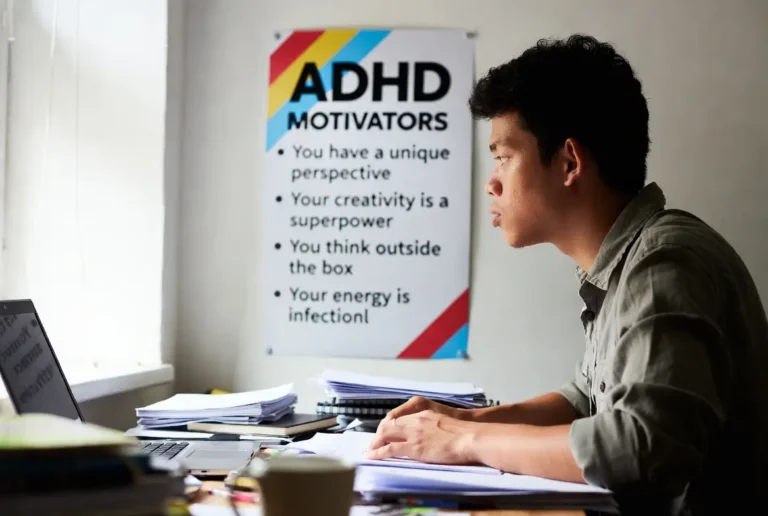
For decades, people with ADHD were told they were “lazy” or “unmotivated.” We now know this is medically incorrect. The ADHD brain has a different interest-based nervous system driven by specific ADHD motivators. While a neurotypical brain can say, “This tax return is important, so I will do it,” an ADHD brain often cannot engage with a task unless it checks one of the internal “INCUP” boxes—regardless of how high the external consequences might be.
In the ADHD brain, the prefrontal cortex—the area responsible for executive functions like planning and sustaining effort—often lacks the consistent dopamine levels needed to “turn on” for mundane tasks. This leads to what clinicians call “executive dysfunction,” where the person knows what to do but cannot bridge the gap between knowing and doing.
What Are the Four Motivators of ADHD? (The INCUP Model)
Most ADHD experts, following the work of Dr. William Dodson, use the INCUP acronym (sometimes referred to as the 4 “INC U” motivators or the 5 “INCUP” motivators) to describe the only things that truly get an ADHD brain moving.
The INCUP Acronym Breakdown
- I – Interest: If a task is inherently fascinating, the ADHD brain will hyperfocus on it for hours. If it is boring, the brain effectively “falls asleep.”
- N – Novelty: Newness triggers a dopamine spike. A new planner, a new workspace, or a new way of doing a chore can provide enough “spark” to initiate action.
- C – Challenge: ADHD brains love a puzzle. If a task is framed as a “mission” or a competition against oneself, it becomes engaging.
- U – Urgency: The “Deadline Effect.” Nothing motivates an ADHD brain like the panic of a deadline in 15 minutes. This creates a surge of cortisol and adrenaline that mimics the effects of dopamine.
- P – Passion: Often added as the fifth motivator, passion relates to deep personal values. When an ADHDer believes in a cause, their internal motivation is significantly higher.
ADHD Motivators Cheat Sheet
| Motivator | Why It Works in ADHD | Practical Example |
| Interest | Natural dopamine source. | Listening to a favorite podcast while folding laundry. |
| Novelty | Brain ignores the “familiar.” | Changing your desk setup to start a new project. |
| Challenge | Activates problem-solving. | Setting a “speed record” for washing the dishes. |
| Urgency | Artificial adrenaline spike. | Waiting until 1 hour before a meeting to prep. |
| Passion | Connects to identity. | Volunteering for a project that helps a friend. |
Interest-Based Nervous System in ADHD
The concept of the interest-based nervous system is the single most important shift in ADHD management.
Why Traditional Systems Fail
Neurotypical brains operate on an importance-based system. They prioritize tasks based on:
- How important they are.
- What the rewards for doing them are.
- What the consequences for not doing them are.
For someone with ADHD, importance is a concept, but not a motivator. Research by Volkow et al. using PET imaging has shown that the reward-recognizing circuits in ADHD brains have fewer receptors. This means the “reward” of finishing a task doesn’t feel as good, and the “consequence” of failing doesn’t feel as threatening until it is imminent.
The Executive Function Connection
Dr. Russell Barkley’s theory of executive function suggests that ADHD is essentially a disorder of “self-regulation of motivation.” Because the ADHD brain cannot hold a future reward in mind clearly enough to work toward it (low working memory), it defaults to seeking immediate stimulation.
The ADHD brain is not a defective brain. It is an interest-based brain. People with ADHD can do anything as long as they are in the ‘Zone’—that state of hyperfocus where the brain is fully engaged. The problem is that the ADHD brain does not come with a ‘switch’ to enter the zone at will.
Instead, it relies on INCUP triggers. My advice to patients is always the same: Stop trying to be neurotypical. Stop trying to do things because they are ‘important.’ Instead, figure out how to make them interesting, urgent, or a challenge.
ADHD Motivators vs. Neurotypical Motivators

Understanding the difference can save years of frustration and shame.
| Neurotypical Motivation | ADHD Motivation |
| Driven by: Importance & Consequences. | Driven by: Interest & Novelty. |
| Time Horizon: Long-term goals. | Time Horizon: The “Now” vs. “Not Now.” |
| Self-Talk: “I should do this.” | Self-Talk: “This looks interesting/scary.” |
| Effect of Deadlines: Causes steady pressure. | Effect of Deadlines: Causes a “power-up” surge. |
| Accountability: External (Boss/Teacher). | Accountability: Internal (Hyperfocus/Passion). |
While neurotypicals can use willpower to push through boredom, the ADHD brain physically requires more stimulation to achieve the same level of focus. This is why “just doing it” is rarely effective advice for someone with ADHD; they must instead “hack” their nervous system to create a state of arousal.
ADHD Motivators List: 15 Practical Examples
How do you apply the INCUP model in real life? Here are 15 evidence-backed “hacks” to stimulate your brain:
- Body Doubling: Working in the presence of someone else (even virtually) creates a soft sense of accountability.
- Gamification: Use apps like Habitica to turn your to-do list into an RPG.
- Visual Timers: Seeing time “disappear” creates a visual sense of urgency.
- Novelty Swap: Change rooms when you get stuck on a task.
- Music for Dopamine: Use 8D audio or “Brown Noise” to occupy the background of your brain.
- The “Pinch”: Create a small, artificial consequence for a friend if you don’t finish a task.
- Public Commitment: Announce your goal on social media or to a partner.
- Micro-Rewards: Reward yourself for the start of a task, not just the end.
- Fidgeting: Use a foot-tapper or a fidget ring to keep your motor system occupied while you think.
- The “10-Minute Sprint”: Set a timer for 10 minutes. You only have to do the task until it beeps.
- Artificial Competition: Try to beat your “personal best” for a routine chore.
- The “Coffee Shop Effect”: The ambient novelty of a café provides just enough “background hum” for focus.
- Task Pairing: Only allow yourself to watch a certain show while you are on the treadmill.
- Pre-Work Stimulation: Do 20 jumping jacks or take a cold shower before a hard task to spike dopamine.
- The “Why” Connection: Spend 1 minute visualizing how this task connects to your passion before starting.
ADHD Motivators: The Role of Urgency
Urgency is the “emergency brake” of the ADHD brain. When a deadline is looming, the brain produces cortisol and adrenaline. These chemicals act as temporary substitutes for dopamine, allowing the prefrontal cortex to finally “lock in.”
The “Deadline Effect”
This is why many ADHDers say, “I do my best work at the last minute.” It’s not that they prefer the stress; it’s that the stress is the only thing providing enough neurochemical fuel to overcome the barrier of “not-interested.”
The Danger of Crisis Cycling: Relying solely on urgency is a recipe for burnout. If you only work when you are in a state of panic, your body is constantly flooded with stress hormones. Over time, this leads to chronic fatigue and health issues. The goal of an ADHD management plan is to use Interest and Novelty more and Urgency less.
What Is the 24-Hour Rule for ADHD?
Procrastination and impulsivity are two sides of the same ADHD coin. The 24-hour rule is a cognitive behavioral strategy designed to manage both.
The 24-Hour Protocol
- For Tasks: If a task takes less than 2 minutes, do it now. If it takes longer, it must be scheduled or completed within the next 24 hours. This prevents the “I’ll do it later” trap where tasks disappear into the “Not Now” void.
- For Impulsivity: Before making a significant purchase or commitment, you must wait 24 hours. This gives the “cooling-off” period needed for the impulsive dopamine hit to fade, allowing your logic to catch up.
How to Motivate Yourself with ADHD (Evidence-Based)

To move from “paralysis” to “action,” follow this 5-step system:
Step 1: Reduce Friction
The harder it is to start, the less likely you are to do it. If you need to exercise, put your shoes by the bed the night before. If you need to write, leave the document open on your screen.
Step 2: Add Artificial Urgency
Use the Pomodoro Technique (25 minutes of work, 5 minutes of rest). The ticking clock creates a “mini-urgency” that is less stressful than a major project deadline.
Step 3: Pair Boring Tasks with Stimulation
This is called “Temptation Bundling.” Only listen to your favorite “Interest” podcast while doing the “Uninteresting” task of cleaning the kitchen.
Step 4: Break Tasks into 10-Minute Sprints
The ADHD brain sees a 4-hour project as an impossible mountain. It sees a 10-minute sprint as a manageable “Novelty” event.
Step 5: External Accountability
ADHD is a disorder of internal self-regulation. Therefore, you must use external scaffolds. Use a coach, a body-double, or an automated app to provide the “Importance” that your brain cannot generate on its own.
ADHD Management – Treatment Overview
While “hacks” are essential, they are most effective when built on a foundation of clinical treatment.
1. Medication (First-Line Treatment)
Stimulants like methylphenidate (Ritalin) and amphetamine (Adderall) work by increasing the availability of dopamine in the synapse. This “levels the playing field,” making it easier for the brain to respond to “importance” and “consequences.”
- Non-stimulants: For those who cannot tolerate stimulants, medications like atomoxetine or guanfacine offer 24-hour symptom coverage.
2. ADHD Therapy
- CBT for ADHD: Focuses on the “executive function” skills—organization, time management, and emotional regulation.
- Coaching: A more practical, action-oriented approach that helps build INCUP-based systems in your daily life.
ADHD in Women – Motivation Differences
ADHD in women often presents differently due to “masking” and hormonal shifts.
- The Shame Cycle: Women are often socialized to be “organized” and “caretakers,” meaning the inability to motivate themselves for housework or planning can lead to intense shame.
- Hormonal Influence: Estrogen levels impact dopamine. Many women find their ADHD motivators fail completely during the week before their period (the luteal phase).
- Internalized Hyperactivity: Instead of running around, women often experience “racing thoughts,” which leads to cognitive exhaustion and faster burnout.
Frequently Asked Questions
What are the 4 C’s of ADHD?
While some use INCUP, others refer to the 4 C’s: Curiosity, Competition, Challenge, and Crisis. They overlap significantly with the INCUP model, all describing ways to stimulate a dopamine-starved brain.
Why do deadlines motivate ADHD?
Deadlines trigger the release of adrenaline and cortisol. These chemicals allow the brain to override the “boredom” signals and engage the focus centers of the brain.
Can ADHD be cured?
No. ADHD is a neurodevelopmental difference in brain wiring. However, with the right ADHD management (medication, coaching, and environmental hacks), it can be highly manageable.
What is inattentive ADHD treatment?
Inattentive ADHD (formerly ADD) is treated with a combination of stimulants to boost alertness and “external scaffolds” like alarms and checklists to support working memory.
Conclusion: Working With Your Brain, Not Against It
The secret to how to motivate yourself with ADHD is to stop using neurotypical tools for an ADHD brain. You wouldn’t try to charge an iPhone with a USB-C cable—it’s the wrong port. Similarly, you cannot “willpower” your way through a lack of dopamine.
Authoritative Clinical & Research References
- Journal of Clinical Medicine — “Dopamine and the Reward System in ADHD”
- CHADD (Children and Adults with ADHD) — “The Interest-Based Nervous System”
- National Institute of Mental Health (NIMH) — “Attention-Deficit/Hyperactivity Disorder”
- The ADHD Evidence Project — “International Consensus Statement on ADHD”
- ADDitude Magazine — “How the ADHD Brain Works”

Related Posts






Subscribe to Our Newsletter
Get mental health tips, updates, and resources delivered to your inbox.
MORE from Author
Read More Watching someone you care about struggle with bipolar depression and anxiety can be heartbreaking. You may notice that they withdraw…
 In my practice as a clinical psychologist, I often observe that the difference between a patient who crumbles under pressure…
 We all have "up" days and "down" days. Perhaps you feel energized after a promotion or sluggish on a rainy…
 To define bipolar disorder accurately, we must look at it as a chronic mood dysregulation condition. In psychology and medicine,…
Are you looking for a Therapist?
Connect with qualified mental health professionals who understand
bipolar disorder, mood changes, and emotional challenges.
Private • Supportive • Confidential