
Generalized Anxiety Disorder (GAD): Symptoms, DSM-5 Criteria, ICD-10 Code, and Treatment Options

Medically reviewed by Laura Athey Updated Date: April 20, 2026

In my practice as a clinical psychologist, I often meet individuals who describe their lives as an endless treadmill of “what-ifs.” They aren’t just worried about a specific upcoming presentation or a medical test; they are worried about the presentation, the drive to the presentation, the possibility of rain during the drive, and whether they left the stove on before they walked out the door.
This is the hallmark of Generalized Anxiety Disorder (GAD). While everyone experiences worry, GAD is a chronic condition where anxiety isn’t just a visitor—it’s a permanent resident. Patients often come to me exhausted, saying, “My mind never shuts off,” or “I feel anxious even when nothing is wrong.”
In clinical terms, we define GAD as excessive, uncontrollable worry that persists for at least six months and significantly interferes with daily functioning. It is not simply “overthinking”; it is a systemic malfunction of the brain’s internal alarm system.
DSM-5 Diagnostic Criteria for Generalized Anxiety Disorder
To move beyond the general feeling of being “stressed,” clinicians use the Generalized Anxiety Disorder DSM-5 criteria (code 300.02) to ensure an accurate diagnosis. The Diagnostic and Statistical Manual of Mental Disorders, Fifth Edition, sets a high bar to differentiate clinical GAD from the normal stresses of modern life.
Primary Diagnostic Benchmarks
The core requirement is excessive anxiety and worry occurring more days than not for at least 6 months. This worry must be about a variety of events or activities (such as work or school performance). Crucially, the individual finds it difficult to control the worry.
Associated Physical and Cognitive Symptoms
In addition to uncontrollable worry, the DSM-5 requires at least three of the following six symptoms (with at least some symptoms present for more days than not over the past 6 months):
- Restlessness or feeling keyed up or on edge.
- Fatigue: Being easily fatigued despite not having high physical activity.
- Difficulty Concentrating: Or the mind “going blank.”
- Irritability: Often noticed by family or co-workers before the patient notices it.
- Muscle Tension: Frequent aches, “armor plating” in the shoulders, or tension headaches.
- Sleep Disturbance: Difficulty falling or staying asleep, or restless, unsatisfying sleep.
Clinically, the duration (6 months) is vital. It helps us differentiate GAD from “adjustment disorder,” which occurs in response to a specific stressor and usually resolves once the stressor passes. Furthermore, the anxiety must cause clinically significant distress or impairment in social, occupational, or other areas of functioning.
ICD-10 Code and Insurance Classification
While the DSM-5 is our diagnostic “Bible” in the US, the generalized anxiety disorder ICD-10 code is what fuels the administrative side of healthcare. For billing, medical records, and insurance claims, the ICD-10 code for generalized anxiety disorder is F41.1.
Understanding the “F41.1” Code
When you see “F41.1” on a billing statement or disability documentation, it specifically denotes Generalized Anxiety Disorder. This is distinct from:
- F41.0: Panic Disorder
- F41.9: Anxiety Disorder, Unspecified
Having a specific “F-code” is essential for insurance reimbursement and for documenting executive function impairments if a patient needs to apply for workplace accommodations or disability.
It provides a universal language between your therapist, your primary care physician, and your insurance provider to ensure you receive the evidence-based care required for this chronic condition.
Symptoms of Generalized Anxiety Disorder

When patients ask, “What does generalized anxiety disorder feel like?” I explain that it is rarely a single sensation. Instead, it is a multi-system experience that recruits the mind, the body, and the emotions into a state of high alert.
Understanding the “Why” behind these generalized anxiety disorder symptoms requires looking at the biology of the nervous system.
Psychological Symptoms: The “What-If” Loop
The primary psychological symptom is persistent worry that feels catastrophic. In GAD, the brain’s “threat detection” center—the amygdala—is hyper-reactive.
- Catastrophic Thinking: This is the tendency to jump to the worst-case scenario. If a spouse is 10 minutes late, the mind doesn’t think “traffic”; it thinks “accident.”
- Anticipatory Anxiety: Patients spend an enormous amount of energy worrying about events that haven’t happened yet. This is an attempt by the brain to “solve” the future to feel safe, but because the future is unpredictable, the solving never ends.
Physical Symptoms: The Body’s Toll
Because the mind believes a threat is imminent, it keeps the body in a state of sympathetic nervous system arousal (fight-or-flight).
- Muscle Tension: This is perhaps the most tell-tale physical sign. The body stays “armored” against an imaginary blow. Over time, this leads to chronic back pain, neck stiffness, and headaches.
- GI Distress: The “gut-brain axis” is highly sensitive to anxiety. Many GAD patients struggle with irritable bowel symptoms, nausea, or a constant “knot” in their stomach.
- Sleep Disturbance: This is often the symptom that finally drives people to my office. The brain refuses to enter deep sleep because it is “on watch” for danger.
Emotional Impact: The Low Hum of Fear
GAD often feels like a “low hum of fear” that never turns off. It creates a state of permanent irritability and feeling “on edge.” This isn’t a personality flaw; it is the result of a tired brain that has used up its cognitive resources trying to manage constant worry.
In my practice, I’ve observed a specific nuance regarding sleep. Patients with GAD often engage in “revenge bedtime procrastination”—staying up late scrolling on their phones because it’s the only time they feel they have “control” over their day.
The Nuance: I worked with a patient, “Elena,” whose anxiety peaked at 3:00 AM. We discovered that her poor sleep hygiene was actually feeding her anxiety. She would keep her phone under her pillow to “check the news” if she woke up.
By implementing a “digital sunset” and a weighted blanket, we regulated her circadian rhythms. Once her body felt physically rested, her brain had more “bandwidth” to use cognitive behavioral tools during the day. You cannot out-think an exhausted nervous system.
The “Big Five” Symptom Summary
If you are looking for a quick way to identify if your worry has crossed into GAD territory, look for these five hallmarks:
- Uncontrollable Worry: Feeling unable to stop the thoughts even when you know they are irrational.
- Muscle Tension: Chronic tightness in the jaw, neck, or shoulders.
- Restlessness: An inability to sit still or feel truly “relaxed.”
- Chronic Fatigue: Feeling drained even after a full night’s sleep.
- Executive Function Strain: Difficulty making decisions because you are paralyzed by the fear of making the “wrong” choice.
Causes and Risk Factors
The question of what causes generalized anxiety disorder is best answered through the biopsychosocial model. GAD is rarely caused by a single event; it is usually a “perfect storm” of various factors.
Genetic and Neurobiological Factors
There is a clear genetic vulnerability to anxiety. If a first-degree relative has GAD, your risk is significantly higher. Neurobiologically, we see differences in the way the prefrontal cortex (the logical part of the brain) communicates with the amygdala (the emotional part).
In GAD, the “logical” brain isn’t effectively “braking” the “emotional” brain’s alarm.
Environmental and Developmental Factors
- Early Childhood Stress: Growing up in an unpredictable environment can “program” the nervous system to remain on high alert.
- Trauma: Previous experiences of helplessness can create a lasting belief that the world is dangerous.
- Chronic Stress: Long-term exposure to work stress or financial instability can eventually wear down the brain’s resilience, leading to neuroplasticity changes that favor anxiety pathways.
How Common is GAD?
If you are wondering how many people have generalized anxiety disorder, the answer is a staggering number. The lifetime prevalence is estimated at 5–6% of the general population.
Prevalence and Onset
- Gender: GAD is twice as common in women as it is in men.
- Peak Onset: While it can happen at any age, it most commonly peaks in late adolescence or early adulthood.
- Is GAD a lifelong condition? Without treatment, GAD tends to be chronic. However, with the right interventions, many people experience significant remission. It doesn’t necessarily “go away” on its own, but it can be effectively managed so it no longer dictates your life.
Is Generalized Anxiety Disorder a Disability?
In my practice, patients often ask, “Is generalized anxiety disorder a disability?” usually while they are struggling to maintain their performance at work or school. The answer is nuanced: clinically, GAD is a health condition; legally, it can be a disability if it causes “substantial limitation” to major life activities.
Functional Impairment and the ADA
Under the Americans with Disabilities Act (ADA) in the United States, GAD can qualify as a disability. This allows for workplace accommodations, such as the following:
- Flexible start times to manage sleep disturbances.
- A quiet workspace to reduce sensory overload and support executive function.
- Written rather than verbal instructions to mitigate “blanking” during high-anxiety meetings.
While GAD can be debilitating, I always emphasize that it does not preclude a successful life. Many high-achieving professionals—surgeons, CEOs, and teachers—manage GAD. The goal is to move from “functional impairment” to “functional management.”
How Is GAD Diagnosed?

If you are wondering, “Do I have generalized anxiety disorder?” it is important to know that a diagnosis is more than a generalized anxiety disorder test you find online. A clinical diagnosis is a process of elimination and verification.
The Diagnostic Process
- Clinical Interview: We look for the “Six Month Rule” and the “Three Symptom Rule” mentioned in the DSM-5 section.
- Screening Tools: We often use the GAD-7 scale, a seven-question validated tool that measures the severity of your anxiety over the last two weeks.
- Medical Rule-Out: Anxiety can mimic physical illness. A doctor should rule out thyroid imbalances (hyperthyroidism), caffeine toxicity, or heart arrhythmias, which can all feel identical to GAD.
Treatment Options for Generalized Anxiety Disorder
When we discuss generalized anxiety disorder treatment, I tell my patients that we are looking for a “multi-pronged” attack. The gold standard—the most effective treatment for generalized anxiety disorder—is typically a combination of psychotherapy and medication.
a. Psychotherapy: Rewiring the Mind
- Cognitive Behavioral Therapy (CBT): This is the front-line psychological treatment. We work on “cognitive reframing”—identifying the “what-if” thoughts and testing them against reality. We also use neuroplasticity to our advantage, creating new, calmer neural pathways through repeated practice.
- Acceptance and Commitment Therapy (ACT): Instead of fighting the anxiety, we learn to “drop the rope” in the tug-of-war. We acknowledge the anxiety is there, but choose to act based on our values anyway.
b. Medication: Stabilizing the Biology
Generalized anxiety disorder medication is not about “numbing” you; it is about lowering the “background noise” so you can use your therapy tools.
- SSRIs and SNRIs: Medications like Sertraline (Zoloft) or Venlafaxine (Effexor) are the first-line choices. They help regulate serotonin and norepinephrine levels over time.
- Buspirone: An anxiolytic specifically designed for the chronic worry of GAD without the sedative effects of other meds.
c. Lifestyle Interventions: Regulating the System
I cannot overstate the importance of “Nervous System Regulation.”
- Caffeine Reduction: Caffeine is “anxiety in a cup” for GAD patients; it mimics the physical symptoms of a panic attack.
- Mindfulness: Not just “meditation,” but the practice of staying in the “now” rather than the “what-if.”
Medication Deep Dive
Patients are often confused because the medications prescribed to help with anxiety for GAD differ from those used for occasional panic.
- Timeline: Unlike a headache pill, GAD medications usually take 2 to 6 weeks to show full effects.
- The Benzodiazepine Question: While drugs like Xanax or Ativan work instantly, they are rarely recommended for long-term GAD because they can lead to tolerance and do not treat the underlying “worry engine.” They are “band-aids,” whereas SSRIs are “repairs.”
Long-Term Management: Can GAD Be Cured?
People often ask, “Does generalized anxiety disorder go away?” I prefer the term “remission” over “cure.” While you may always have a slightly more sensitive “alarm system,” you can learn to become the master of that alarm.
Strategies for Lifelong Peace
- Scheduled Worry Time: I often have patients set a timer for 15 minutes a day to “worry as hard as they can.” When the timer stops, they move on. This contains the anxiety.
- Therapy Booster Sessions: Just like a physical, a “mental health check-up” once or twice a year can prevent a relapse.
- Cognitive Reframing: Continuing to ask yourself, “Is this a productive worry (something I can act on) or an unproductive worry (something outside my control)?”
Frequently Asked Questions
Is GAD a mood disorder?
No. While it often co-occurs with depression, GAD is classified as an anxiety disorder.
What are the 5 main symptoms?
Excessive worry, muscle tension, restlessness, fatigue, and irritability.
When is GAD most common?
It is most common in late adolescence through middle age, though it can affect anyone at any time.
What is the ICD-10 code?
The code for insurance and billing is F41.1.
Conclusion
Generalized anxiety disorder is a heavy burden to carry, but it is a treatable one. By combining the structure of CBT, the biological support of modern medication, and a commitment to nervous system regulation, you can quiet the “low hum” of fear.
Remember, the goal of treatment isn’t to feel anxious again—anxiety is a natural human emotion. The goal is to ensure that anxiety is no longer the one driving the car. You deserve to live a life where your “What-Ifs” are replaced with “I Can.”
References & Resources
- National Institute of Mental Health (NIMH): Anxiety Disorders Overview
- American Psychiatric Association: What are Anxiety Disorders?
- Anxiety & Depression Association of America (ADAA): GAD Resources
- Bipolar Lives: Anxiety and Mood Regulation

Related Posts






Subscribe to Our Newsletter
Get mental health tips, updates, and resources delivered to your inbox.
MORE from Author
Read More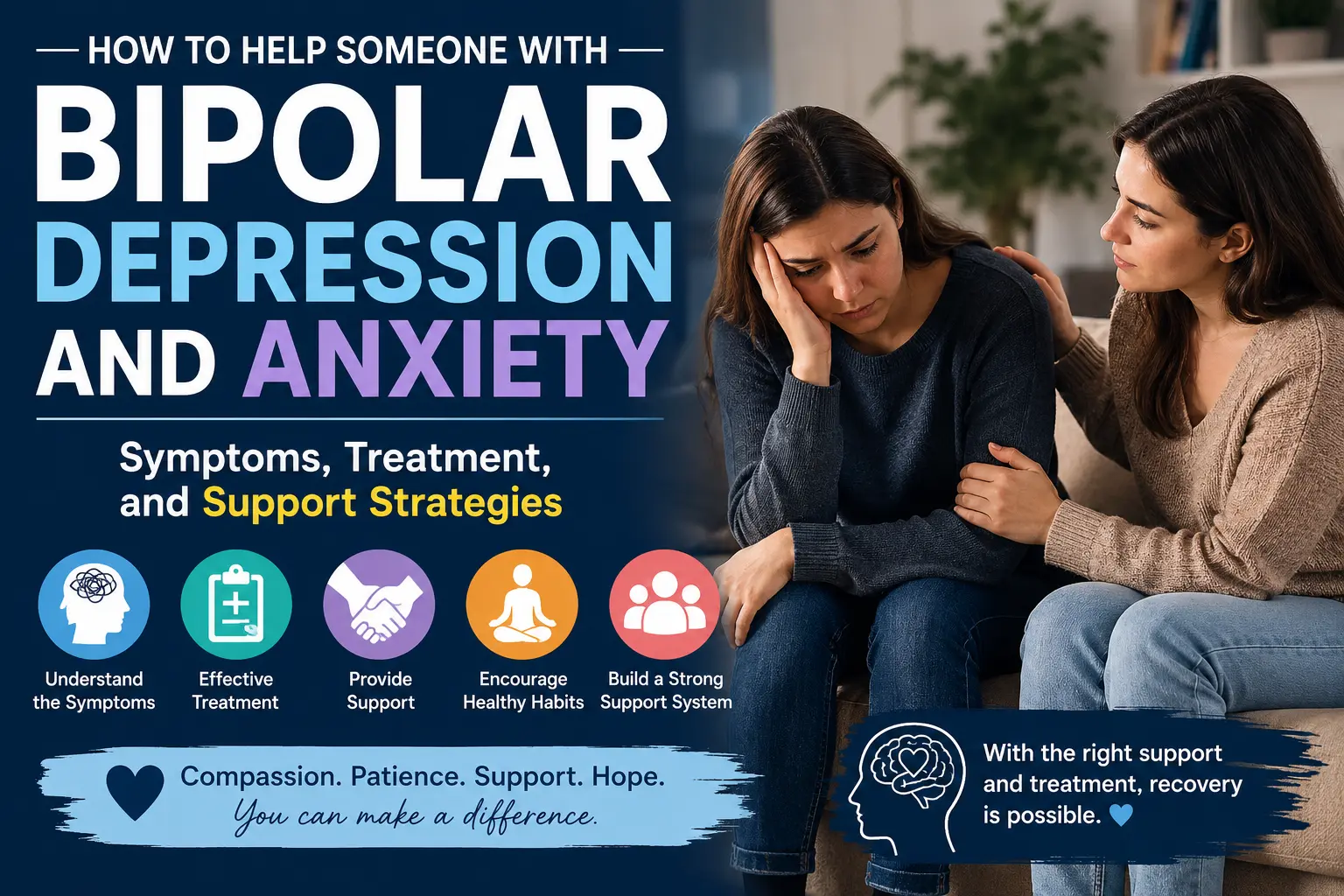 Watching someone you care about struggle with bipolar depression and anxiety can be heartbreaking. You may notice that they withdraw…
 In my practice as a clinical psychologist, I often observe that the difference between a patient who crumbles under pressure…
 We all have "up" days and "down" days. Perhaps you feel energized after a promotion or sluggish on a rainy…
 To define bipolar disorder accurately, we must look at it as a chronic mood dysregulation condition. In psychology and medicine,…
Are you looking for a Therapist?
Connect with qualified mental health professionals who understand
bipolar disorder, mood changes, and emotional challenges.
Private • Supportive • Confidential