
What Is the Amygdala Responsible For? Understanding Its Role in Emotions, Memory, and Survival

Medically reviewed by Laura Athey Updated Date: March 27, 2026
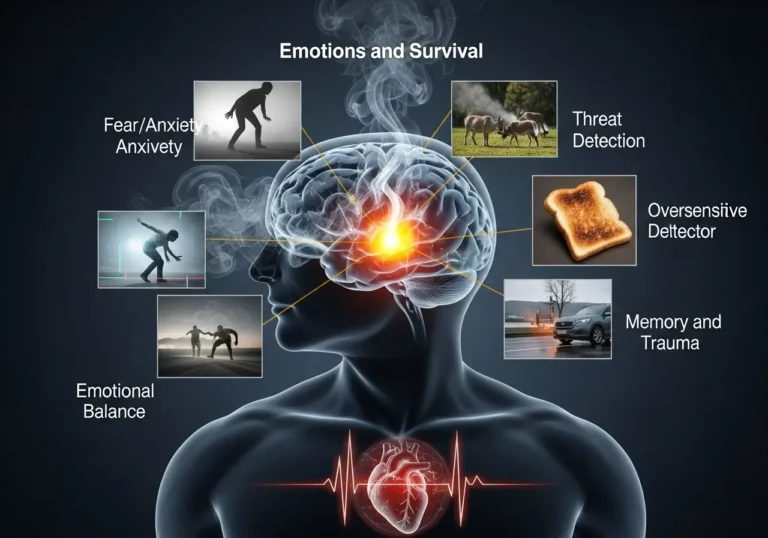
In my practice as a clinical psychologist, I often describe the amygdala as the “smoke detector” of the human brain. It is a small, almond-shaped structure nestled deep within the temporal lobe, and despite its modest size, it wields an incredible amount of power over our daily lives.
Whether you are slamming on your brakes to avoid a collision or feeling your heart race before a major presentation, you are experiencing the lightning-fast processing of the amygdala.
The primary answer to What is the Amygdala Responsible For is survival. It is the command center for our emotional reactions, specifically those related to fear, anxiety, and aggression. It scans our environment for threats long before our conscious, rational mind is even aware that something is wrong.
However, when this smoke detector becomes oversensitive—as I often see in patients struggling with trauma or chronic stress—it can begin to sound the alarm at a “burnt piece of toast” as if the entire house were on fire.
Understanding the mechanics of this structure is not just an academic exercise; it is the first step toward reclaiming emotional balance.
By learning how the amygdala influences our memory, our social interactions, and our stress levels, we can begin to apply the principles of neuroplasticity to calm an overactive system and restore our executive function.
What Is the Amygdala Responsible For in the Brain?
To truly understand what the amygdala is responsible for, we have to look beyond the common misconception that it is merely the brain’s “fear center.” While fear is its specialty, its primary role is actually as the brain’s ultimate “salience detector.”
Its job is to constantly scan our internal and external environments and ask one critical question: Does this matter to my survival? It does not just process fear; it identifies any stimulus that carries intense biological or emotional significance, acting as the vigilant watchman of the mind.
Core Responsibilities of the Amygdala
- Rapid Threat Detection (The “Low Road”): The amygdala processes sensory information milliseconds before our conscious, logical brain (the prefrontal cortex) even knows what is happening. It is constantly on the lookout for dangers—ranging from physical threats (like a speeding car) to complex social threats (like a perceived tone of rejection from a loved one).
- Emotional Processing and Reactivity: It is responsible for assigning a specific “feeling” or emotional weight to our daily experiences. It dictates the intensity of our emotional reactions, serving as the core processor for primal emotions, particularly anxiety, anger, and panic.
- Emotional Memory Tagging: Working directly alongside the hippocampus (the brain’s memory filing cabinet), the amygdala ensures that highly emotional events are “tagged” as critical for survival. This is why you can vividly remember the exact details of a severe panic attack or a traumatic event, while forgetting what you ate for lunch yesterday. The amygdala “burns” these emotional memories into your neural pathways so you can avoid similar dangers in the future.
- Survival Activation (The Stress Cascade): When the amygdala detects a threat, it doesn’t just process the emotion—it takes immediate physical action by triggering the Hypothalamic-Pituitary-Adrenal (HPA) axis.
The Gatekeeper of the Limbic System When we describe the role of the amygdala, we are describing the rapid-response gatekeeper of the limbic system. It serves as the crucial bridge between incoming sensory information and our physiological response.
Consider a classic example: If you see a shadowy figure in a dark alley, your eyes send that data to the brain. Before your logical mind can even process, “Is that a person or just a shadow?”, your amygdala has already sounded the alarm. It instantly signals the hypothalamus (the brain’s dispatcher), which in turn floods your nervous system with adrenaline and cortisol.
This neurochemical cascade is the exact biological “why” behind the cold sweat, rapid heartbeat, shallow breathing, and muscle tension of the stress response. Your amygdala has bypassed your logic and forcefully prepared your body to fight or run, effectively prioritizing your immediate survival over your emotional comfort.
To know about what does Amygdala do, read our full guide on about Amygdala
Where Is the Amygdala Located in the Brain?
Many people are surprised to learn that we don’t just have one amygdala; we actually have two. Where is the amygdala located? One is positioned in each hemisphere of the brain, deep within the medial temporal lobes.
Its name is derived from the Greek word for “almond,” which perfectly describes its shape. Being part of the limbic system, it is situated near other heavy-hitting structures like the hippocampus (responsible for long-term memory) and the hypothalamus (the regulator of our autonomic nervous system).
This “neighborhood” is crucial because it allows the amygdala to quickly link an emotion to a memory or a physical sensation.
What emotions does the amygdala process? Responsible For?
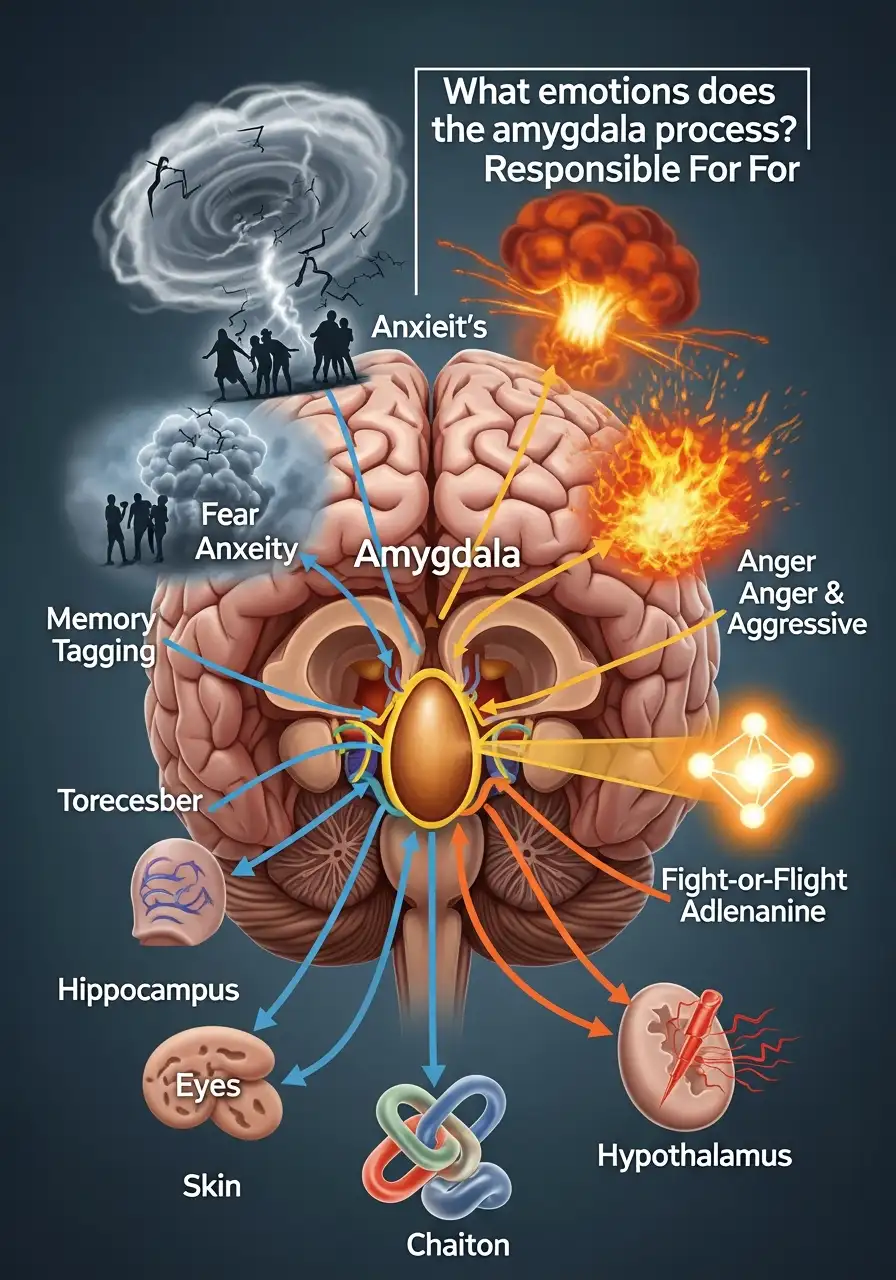
While it is most famous for being the “fear center,” the scope of what emotions the amygdala controls is much broader. It is essentially an emotional processing plant that handles the spectrum of high-intensity feelings.
- Fear and Anxiety: The amygdala is the primary driver of the fear response. It helps us recognize danger and prepares us to avoid it.
- Anger and Aggression: Research shows that stimulation of the amygdala can trigger intense aggressive behavior, while damage to the area can result in a total lack of aggression (placidity).
- Pleasure and Reward: Surprisingly, the amygdala also plays a role in positive emotions. It helps us attach “value” to rewards, such as food or social connection, ensuring we seek out things that help us survive.
In my practice, I often observe that patients don’t just experience “one” emotion; they experience a “limbic soup” where fear and anger are often indistinguishable. The amygdala is responsible for that raw, unfiltered emotional intensity.
What Is the Amygdala Responsible For in Psychology?
In the field of psychology, we view the amygdala as the seat of emotional learning. It is through this structure that we develop “conditioned” responses. For example, if you were once bitten by a dog, your amygdala learned to associate the sight of a dog with the emotion of fear.
This is a key component of trauma-informed care. When a person suffers from PTSD, their amygdala has become hyper-conditioned. It is no longer just “responsible” for fear; it has become stuck in a loop of hypervigilance.
In psychology, we work to strengthen the “top-down” regulation from the prefrontal cortex to the amygdala, helping the brain learn that a current stimulus is not the same as a past threat.
How the Amygdala Affects Memory
One of the most profound aspects of my work involves helping patients understand how the amygdala affects memory.
You may have noticed that you can vividly remember where you were during a major global tragedy or a personal accident, but you can’t remember what you had for lunch three days ago. This is because of “emotional tagging.”
The amygdala’s role in memory is to act as a highlighter. When an event is accompanied by a strong emotion, the amygdala signals the hippocampus to store that memory with extra vividness and durability.
From a biological perspective, this serves a clear purpose: if a certain berry made you sick, or a certain predator attacked you in a specific clearing, your amygdala ensures you never forget those details so you can stay safe in the future.
However, in cases of chronic stress, this “highlighter” works too well, causing traumatic memories to feel as though they are happening in the present moment rather than being safely stored in the past.
A nuance I frequently share with my patients is that the amygdala is highly sensitive to circadian rhythms. When we are sleep-deprived, the functional connectivity between the prefrontal cortex (the “brakes”) and the amygdala (the “gas”) is severely weakened.
I once worked with a patient, “Mark,” who struggled with intense road rage. We discovered that his outbursts almost exclusively happened on nights he slept fewer than six hours.
By improving his sleep hygiene—regulating his light exposure and bedtime—we strengthened his brain’s ability to “talk down” the amygdala. Without adequate sleep, the amygdala remains in a state of hyper-reactivity, making emotional regulation nearly impossible.
Amygdala Structure: How This Small Brain Area Works
The amygdala structure is not a single uniform mass; it is a complex of about 13 nuclei (clusters of neurons). These nuclei are specialized:
- The Basolateral Complex: This area receives sensory input (what you see and hear) and processes it to determine if it is threatening.
- The Central Nucleus: This is the “output” station. It sends signals to the brainstem and hypothalamus to trigger physical reactions like increased heart rate or freezing in place.
This internal communication pathway is what allows the amygdala to react in milliseconds—well before the “thinking brain” can even begin to form a sentence.
Amygdala Hijack: When Emotions Take Control
I recently worked with an anonymized patient, “Sarah,” who suffered from sudden, overwhelming waves of panic during work meetings. Even when the feedback was constructive, she would feel a “hot” surge of shame and the urge to flee the room. This is a classic amygdala hijack.
An amygdala hijack occurs when the amygdala perceives a threat—in Sarah’s case, a perceived social threat to her status—and it effectively “short-circuits” the rest of the brain. It sends a distress signal that bypasses the prefrontal cortex. For several minutes, Sarah’s logical mind was essentially “offline.”
To help her, we used a therapeutic intervention called “Name It to Tame It.” By simply identifying the feeling—“My amygdala is sounding the alarm right now”—Sarah was able to re-engage her prefrontal cortex.
This “top-down” processing helps dampen the amygdala’s electrical activity, allowing the rational brain to take back the wheel.
Right vs. Left Amygdala: Do They Have Different Roles?
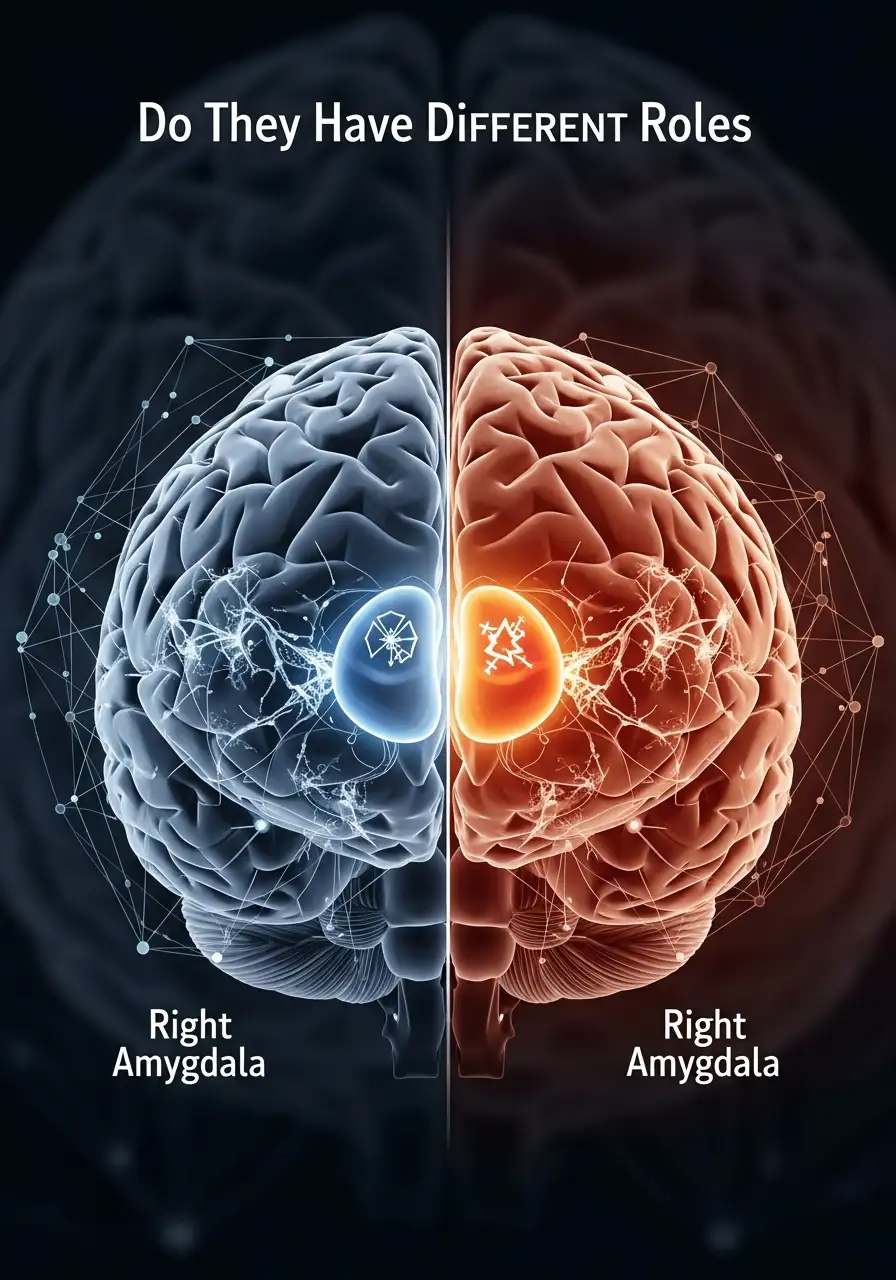
In my practice, I find that patients are often fascinated to learn that their two amygdalae are not identical twins; they operate like a specialized team. While they work in tandem, emerging neuroscience suggests distinct specializations for the right amygdala and the left amygdala.
- The Right Amygdala: This is the “rapid response” unit. It is primarily responsible for the quick, non-conscious detection of negative emotions and threats. It is more closely linked to our initial, “gut-level” fear and the visual processing of scary stimuli.
- The Left Amygdala: This side is more detail-oriented and “evaluative.” It stays active longer and is involved in processing the specific meaning of an emotion. It plays a larger role in how we attach verbal labels to our feelings and how we process rewards.
Understanding this balance is crucial. If the right side is overactive without the left side providing a more nuanced “narrative,” a patient may feel a constant, nameless dread without knowing why.
What Happens If the Amygdala Is Overactive?
When we look at what happens if your amygdala is overactive, we are looking at the biological blueprint for most modern anxiety disorders. In a state of chronic stress, the amygdala can physically grow in volume and become “hyper-sensitized.”
Common effects of an overactive amygdala include:
- Hypervigilance: Constantly scanning the environment for what might go wrong.
- Panic Attacks: The “smoke detector” goes off in full force even when there is no smoke.
- Emotional Dysregulation: Feeling “flooded” by emotions that seem impossible to turn down.
- Persistent Anxiety: A baseline state of “high alert” that never fully resets to “calm.”
This overactivity essentially “muffles” the prefrontal cortex, making it harder to access the executive function needed for problem-solving and rational thought.
What Can Happen If the Amygdala Is Damaged?
On the opposite end of the spectrum, we see the profound impact of what can happen if the amygdala is damaged. While rare, damage from stroke, lesions, or surgery reveals how essential this structure is to our social and physical safety.
One famous clinical example is Klüver-Bucy syndrome, which can occur after bilateral amygdala damage. Symptoms include:
- Fearlessness: An inability to recognize or experience fear, leading to dangerous risk-taking.
- Social Agnosia: Difficulty reading facial expressions, particularly those of fear or untrustworthiness in others.
- Placidity: A total loss of normal aggressive or defensive responses.
While “living without fear” might sound like a superpower, it is actually a significant disability. Without the amygdala’s caution, a person might walk into a dangerous situation or trust a predator simply because their brain can no longer calculate the risk.
Frequently Asked Questions
What emotions does the amygdala control?
The amygdala is primarily responsible for processing high-intensity emotions, most notably fear, anger, and anxiety. It also plays a role in processing positive emotions related to pleasure and reward.
What happens if the amygdala is overactive?
An overactive amygdala can lead to chronic anxiety, hypervigilance, and panic attacks. It keeps the body in a constant state of “fight-or-flight,” even when no physical danger is present.
Where is the amygdala located?
The amygdala is located deep within the temporal lobe of the brain, positioned near the ears. We have two amygdalae, one in each hemisphere.
How does the amygdala affect memory?
It acts as an “emotional highlighter.” Adding emotional significance to an event, it ensures the hippocampus stores that memory more vividly and for a longer duration.
Can you live without an amygdala?
Yes, but your ability to detect danger, read social cues, and experience fear would be severely impaired, making it difficult to navigate the world safely.
Conclusion
The amygdala is a testament to our survival. It is the ancient sentinel that has kept our ancestors alive for millennia. However, in our modern world, we must learn to be the masters of our “smoke detectors” rather than their servants.
By understanding what the amygdala is responsible for, you gain the power to recognize when your brain is sounding a false alarm and the tools to bring yourself back to a place of safety and clarity.
Your emotions are not your enemies; they are simply signals. With patience and practice, you can teach your amygdala that it is finally safe to stand down.
Authoritative References
- National Institute of Mental Health (NIMH)
- National Institutes of Health (NIH) – Brain Basics
- American Psychological Association (APA)
- Harvard Health – Amygdala and Anxiety

Related Posts






Subscribe to Our Newsletter
Get mental health tips, updates, and resources delivered to your inbox.
MORE from Author
Read More Watching someone you care about struggle with bipolar depression and anxiety can be heartbreaking. You may notice that they withdraw…
 In my practice as a clinical psychologist, I often observe that the difference between a patient who crumbles under pressure…
 We all have "up" days and "down" days. Perhaps you feel energized after a promotion or sluggish on a rainy…
 To define bipolar disorder accurately, we must look at it as a chronic mood dysregulation condition. In psychology and medicine,…
Are you looking for a Therapist?
Connect with qualified mental health professionals who understand
bipolar disorder, mood changes, and emotional challenges.
Private • Supportive • Confidential