
What Is Emotion Regulation? Meaning, Psychology, Theory, and Practical Skills

Medically reviewed by Laura Athey Updated Date: March 28, 2026

In my years of clinical practice, one of the most common misconceptions I encounter is the idea that “controlling” emotions means silencing them. Patients often come to me feeling exhausted from trying to shove their anxiety, anger, or sadness into a mental box, only to have it explode later.
This isn’t regulation; it is suppression. And physiologically, it costs the body dearly.
Real emotion regulation is different. It is the ability to monitor, evaluate, and modify our emotional reactions to accomplish our goals. It is the difference between screaming at a partner during a fight and saying, “I am feeling too angry to talk productively right now; I need twenty minutes to cool down.”
Whether you are navigating mood disorders like Bipolar Disorder or simply trying to manage the stress of modern life, understanding what emotional regulation is is the first step toward reclaiming your agency. In this guide, we will break down the science, the theories, and the practical skills used in therapy to master this essential human function.
What Is Emotion Regulation in Psychology?
To understand what emotion regulation is in psychology, we must look beyond the simple idea of “calming down.” It is a complex process involving the nervous system, cognitive appraisal, and behavioral choice.
Definition of Emotion Regulation: Psychologically, emotion regulation refers to the processes by which individuals influence which emotions they have, when they have them, and how they experience and express these emotions.
It involves both distinct conscious strategies (like reframing a thought) and automatic processes (like looking away from something scary).
Regulation vs. Suppression
A key distinction I make with my patients is the difference between regulation and suppression.
- Suppression is pushing the emotion down. It often leads to a “rebound effect,” where the emotion returns with greater intensity later.
- Regulation is processing the emotion. It involves acknowledging the feeling (“I am anxious”), validating it (“It makes sense I am anxious about this exam”), and then choosing how to respond to it.
Emotional Regulation Examples in Daily Life:
- Work Conflict: You receive a critical email from a boss. Instead of replying immediately with a defensive snap (dysregulation), you take a walk, breathe, and draft a professional response an hour later (regulation).
- Parenting Stress: Your toddler throws a tantrum. Instead of yelling (reacting), you recognize your own rising heart rate, take a deep breath, and speak in a calm, firm voice (regulating).
- Social Anxiety: You feel terrified before a party. Instead of staying home (avoidance), you tell yourself, “I can stay for 30 minutes and leave if I need to,” allowing you to attend (reappraisal).
Why Is Emotional Regulation Important?
Why is emotional regulation important? Simply put, it is the foundation of mental health and social functioning. Without it, we are at the mercy of our immediate impulses.
Impact on Mental Health
Chronic dysregulation is a core feature of many mental health conditions, including Borderline Personality Disorder (BPD), Major Depressive Disorder, and Generalized Anxiety Disorder. When we cannot regulate, we often turn to maladaptive coping mechanisms—such as substance use, self-harm, or binge eating—to force the emotions to stop.
Impact on Relationships
Relationships thrive on stability. If a partner or friend never knows which version of you they will get—the calm one or the explosive one—they walk on eggshells. Regulation allows for a consistent, safe connection. In my work with couples, teaching regulation skills is often the turning point where communication finally becomes possible.
Physical Health Outcomes
The body keeps the score. Chronic emotional dysregulation keeps the sympathetic nervous system (fight or flight) activated. Over time, this chronic stress response is linked to cardiovascular disease, compromised immune function, and chronic pain. Learning how to regulate emotions is literally heart-healthy.
Emotion Regulation Theory: How It Works
To truly grasp what emotion regulation theory is, we need to look at the mechanisms behind our reactions. The most widely cited framework in psychology is James Gross’s Process Model of Emotion Regulation.
This model explains that we can intervene at five different points in the “timeline” of an emotion.
The Process Model of Emotion Regulation (Gross)
This model suggests that emotions are not instant; they are a process. We can regulate them at five specific stages:
i. Situation Selection: This happens before the emotion starts. It involves choosing situations that are likely to give rise to desirable emotions.
Example: Knowing that seeing an ex-partner will upset you, so you choose not to go to a specific coffee shop.
ii. Situation Modification: Changing the external situation to alter its emotional impact.
Example: If a dinner conversation becomes heated, you steer the topic to something neutral.
iii. Attentional Deployment: Directing your attention within a situation.
Example: During a painful medical procedure, you focus intently on a poster on the wall rather than the needle (distraction).
iv. Cognitive Change: Changing how you appraise or interpret the situation. This is often called “Reframing.”
Example: Instead of thinking, “He didn’t text back because he hates me,” you think, “He is likely busy at work.”
v. Response Modulation: Influencing the physiological, behavioral, or experiential response after the emotion has already started.
Example: You are already angry, so you use deep breathing exercises to lower your heart rate.
Cognitive Emotion Regulation
Cognitive emotion regulation focuses specifically on the mental strategies we use to manage distress. It is the “thinking” part of coping.
- Reframing: Looking for the silver lining or a different perspective.
- Acceptance: Acknowledging the reality of the situation without judgment.
- Planning: Thinking about steps to handle the negative event.
Adaptive vs. Maladaptive Regulation
Not all regulation is good regulation. We categorize strategies into two buckets:
- Adaptive Emotion Regulation: Strategies that reduce distress in the long term. These include problem-solving, reappraisal, and acceptance.
- Maladaptive Emotion Regulation: Strategies that might offer short-term relief but cause long-term harm. These include:
- Rumination: Repetitively focusing on the causes and consequences of distress without acting.
- Avoidance: Staying away from triggers, which reinforces fear.
- Suppression: Inhibiting the expression of emotion, which increases physiological stress.
What Is Emotion Regulation in DBT?
When discussing what emotion regulation is in DBT (Dialectical Behavior Therapy), we are looking at a very specific, structured approach. DBT was developed by Dr. Marsha Linehan specifically for individuals with high emotional dysregulation (originally for BPD and suicidal behaviors).
In DBT, Emotion Regulation is one of the four distinct skill modules (alongside Mindfulness, Distress Tolerance, and Interpersonal Effectiveness).
The Goals of DBT Emotion Regulation
In my practice, I use DBT skills to help patients achieve three main goals:
- Understand and Name Emotions: You cannot regulate what you cannot identify. We learn the function of emotions (e.g., anger motivates defense; sadness motivates connection).
- Decrease the Frequency of Unwanted Emotions: This involves changing lifestyle factors that make us vulnerable to high emotion (like lack of sleep or poor diet).
- Decrease Emotional Suffering: Learning to “ride the wave” of emotion without getting pulled under.
Key DBT Concepts
- Opposite Action: This is a cornerstone skill. It involves doing the exact opposite of what your emotion is urging you to do.
- Example: If Depression urges you to isolate and stay in bed, the opposite action dictates that you get up, shower, and contact a friend. If Anger urges you to attack, the opposite action dictates that you gently avoid or be kind.
- Check the Facts: We ask, “Does my emotion fit the facts of the situation?” If you feel terror but are sitting in a safe room, the emotion does not fit the facts, and we can work to change it.
- PLEASE Skills: This acronym focuses on biological regulation—treating Physical ILlness, eating balanced meals, avoiding mood-altering drugs, sleeping well, and exercising.
How Emotion Regulation Therapy Works: Therapy isn’t just venting. In a clinical setting, we track your emotional triggers. We might use a “diary card” to note what happened, what emotion you felt, what you did (behavior), and what the outcome was. Over time, we identify patterns. For example, we might see that your anger outbursts almost always happen when you are sleep-deprived. We then target sleep hygiene as a regulation strategy.
What Are Emotion Regulation Skills?

When patients ask, “What are emotion regulation skills?” they are often looking for a toolkit to stop the emotional bleeding. While theory helps us understand why we feel, skills help us change how we react.
Here are the five core strategies I teach in therapy, often referred to as the “Big 5” of regulation:
Emotional Awareness (Naming)
You cannot regulate a nameless feeling. Dan Siegel, a prominent psychiatrist, coined the phrase, “Name it to tame it.”
- The Skill: Pause and label the specific emotion. Instead of “I feel bad,” try “I feel rejected” or “I feel inadequate.”
- Why it works: Labeling an emotion moves activity from the amygdala (emotional center) to the prefrontal cortex (thinking center), literally calming the brain.
Cognitive Reappraisal (Reframing)
This is the gold standard in Cognitive Behavioral Therapy (CBT).
- The Skill: Catch the initial thought (“He hates me”) and offer an alternative interpretation (“He is stressed about the deadline”).
- Why it works: It changes the emotional trajectory before it hits peak intensity.
Mindfulness (Observing)
- The Skill: Assessing your internal state without judgment. “I notice my chest is tight. I notice I have the urge to yell.”
- Why it works: It creates a gap between the stimulus (the trigger) and the response (your action). In that gap lies your freedom to choose.
Opposite Action (Behavioral Change)
- The Skill: Identifying the urge associated with an emotion and doing the exact opposite.
- Example: If Fear tells you to run away from a networking event, the opposite action is to walk in, stand tall, and introduce yourself.
Self-Soothing (Physiological Regulation)
- The Skill: Using sensory input to lower the heart rate.
- Examples: Deep breathing (activating the Vagus nerve), holding an ice cube (temperature shock), or using a weighted blanket.
What Is Emotion Regulation and How Do We Do It?
Knowing the skills is one thing; applying them in the heat of the moment is another. How to regulate emotions involves a step-by-step process often described in trauma-informed care as the 3 R’s of Emotional Regulation (developed by Dr. Bruce Perry):
- Regulate: We must calm the fight/flight response first. You cannot reason with a dysregulated nervous system.
- Relate: We connect with ourselves or others through empathy. “It makes sense that I am upset.”
- Reason: Only then can we solve the problem or learn the lesson.
A Practical 4-Step Protocol for Adults
Step 1: Notice the Shift (The Body Scan) Regulation starts in the body. Do your hands shake? Does your jaw clench? Catch the physical sign early.
- Action: “I notice my stomach is in knots.”
Step 2: Identify the Trigger. What just happened? Was it a tone of voice? A rejected idea? A memory?
- Action: “I felt triggered when my boss interrupted me.”
Step 3: Check the Fact.s Is your reaction proportional to the event? Are you reacting to the now or to the past?
- Action: “Is he disrespecting me, or is he just rushing to the next meeting?”
Step 4: Choose a Response. Intentionally decide on a behavior that aligns with your long-term values, not your short-term mood.
- Action: “I will take three deep breaths, then send a polite follow-up email.”
What Does Lack of Emotional Regulation Look Like?
Emotional dysregulation—the clinical term for a lack of regulation—is often misunderstood as “being dramatic.” In reality, it is a painful inability to return to baseline.
Signs of Maladaptive Regulation:
- Emotional Outbursts: Screaming, throwing things, or crying uncontrollably over minor inconveniences.
- Impulsivity: engaging in risky behaviors (spending, speeding, substance use) to numb feelings.
- Avoidance: refusing to open mail, ghosting friends, or skipping work to avoid anxiety.
- Chronic Rumination: Replaying a conversation for days, unable to “let it go.”
- Emotional Numbing: Dissociating or shutting down completely (the “freeze” response) because feeling is too dangerous.
Short-Term Relief vs. Long-Term Pain: Dysregulation often “works” in the short term. Yelling releases tension. Drinking numbs anxiety. But the long-term cost is damaged relationships, lost jobs, and eroded self-esteem.
What Is Emotion Regulation in Adults?

While children regulate through co-regulation (parents soothing them), emotional regulation in adults is largely a solo responsibility, though it supports our social web.
Workplace Regulation: This is often called “Professionalism.” It involves managing frustration when a project fails or masking boredom during a meeting.
- Example: You feel furious at a coworker. Regulation looks like: venting to a partner at home (safe space) rather than snapping in the Slack channel (unsafe space).
Relationship Regulation: In romantic partnerships, regulation prevents the “Four Horsemen” (criticism, contempt, defensiveness, stonewalling).
- Example: During a fight, saying, “I am flooding right now. Can we pause for 20 minutes?” instead of storming out.
Parenting: Adults must regulate first to co-regulate their children. You cannot calm a screaming child if you are screaming.
- Example: Taking a “timeout” for yourself in the bathroom to breathe before addressing a toddler’s tantrum.
What Is Emotion Regulation Therapy?
What is emotion regulation therapy? It is not a single type of therapy, but a goal within several evidence-based modalities. If self-help strategies aren’t working, these are the therapies I recommend:
- Dialectical Behavior Therapy (DBT): The most effective treatment for severe dysregulation, self-harm, and BPD. It is highly structured and skills-based.
- Cognitive Behavioral Therapy (CBT): Excellent for anxiety and depression. It focuses on identifying cognitive distortions that fuel painful emotions.
- Acceptance and Commitment Therapy (ACT): Focuses on accepting emotions as they are (without trying to change them) and committing to value-based actions.
- Emotion-Focused Therapy (EFT): Often used in couples therapy to help partners understand and express their underlying emotional needs.
Frequently Asked Questions
What Is the Meaning of Emotion Regulation?
Emotion regulation is the ability to monitor, evaluate, and modify your emotional reactions to achieve a goal. It means feeling an emotion without being controlled by it.
What Is an Example of Emotional Regulation?
An example is feeling anxious before a public speech but choosing to do deep breathing exercises and positive visualization instead of canceling the speech.
What Are the 5 Emotion Regulation Strategies?
Commonly cited strategies from Gross’s model are: 1. Situation Selection, 2. Situation Modification, 3. Attentional Deployment (Distraction), 4. Cognitive Change (Reappraisal), and 5. Response Modulation (Suppression/Expression).
What Are the 3 R’s of Emotional Regulation?
The 3 R’s, often used in trauma-informed care, are Regulate (calm the body), Relate (connect emotionally), and Reason (cognitive processing). You must follow this order to be effective.
What Does Lack of Emotional Regulation Look Like?
It looks like frequent mood swings, intense anger outbursts, inability to self-soothe, impulsive behavior (spending, eating), and difficulty maintaining stable relationships.
Conclusion
Emotion regulation is the invisible engine of a healthy life. When it works, we navigate stress, grief, and joy with resilience. When it stalls, we feel stranded in our own reactions.
The most important takeaway from this guide is that regulation is a skill, not a personality trait. You are not “bad” at emotions; you may simply be untrained. Whether you start by naming your feelings, practicing deep breathing, or seeking a DBT therapist, every step toward regulation is a step toward freedom.
References:
- Linehan Institute – Dialectical Behavior Therapy (DBT)
- Gross, J. J. (1998). The emerging field of emotion regulation: An integrative review. Review of General Psychology
- American Psychological Association (APA) – Emotion Regulation
- Child Mind Institute – How to Help Children Calm Down
- National Institute of Mental Health (NIMH) – Borderline Personality Disorder

Related Posts






Subscribe to Our Newsletter
Get mental health tips, updates, and resources delivered to your inbox.
MORE from Author
Read More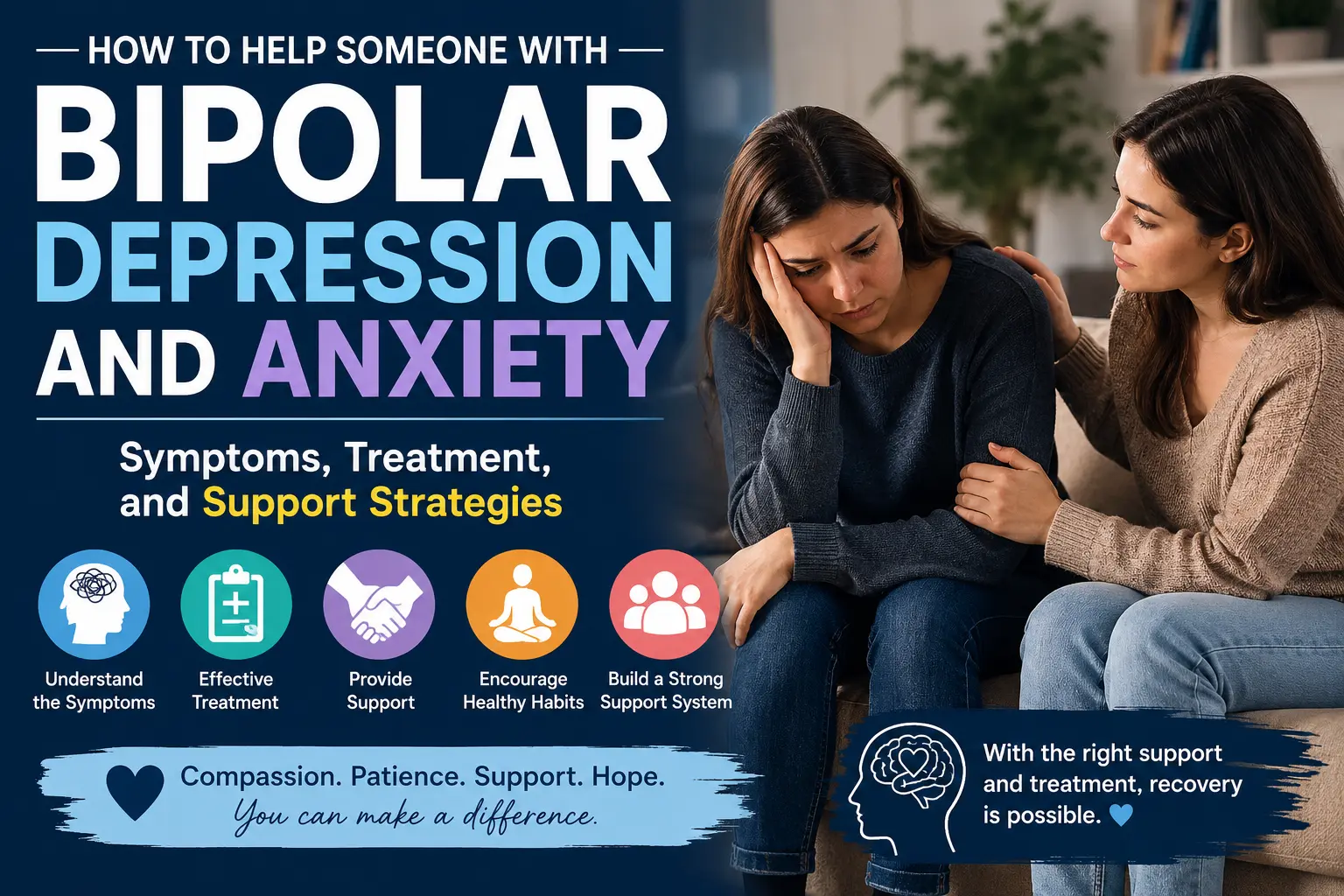 Watching someone you care about struggle with bipolar depression and anxiety can be heartbreaking. You may notice that they withdraw…
 In my practice as a clinical psychologist, I often observe that the difference between a patient who crumbles under pressure…
 We all have "up" days and "down" days. Perhaps you feel energized after a promotion or sluggish on a rainy…
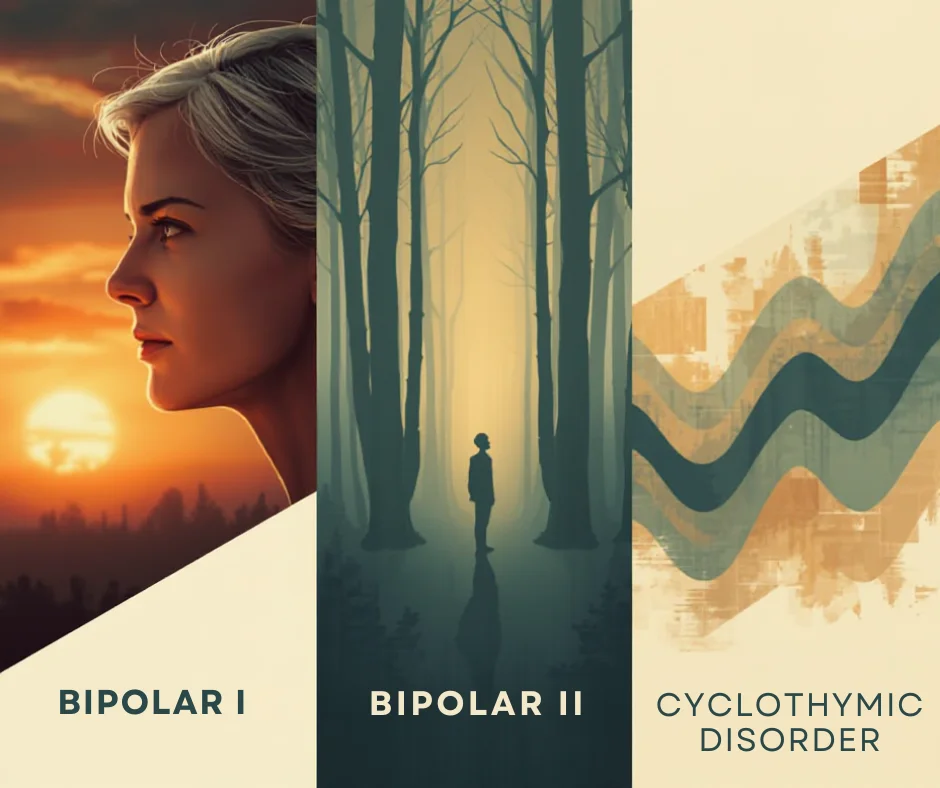 To define bipolar disorder accurately, we must look at it as a chronic mood dysregulation condition. In psychology and medicine,…
Are you looking for a Therapist?
Connect with qualified mental health professionals who understand
bipolar disorder, mood changes, and emotional challenges.
Private • Supportive • Confidential