
Alexithymia Meaning: Symptoms, Causes, Test & Treatment Explained

Have you ever been asked “How do you feel?” and found yourself staring blankly, truly unable to find an answer beyond “fine” or “I don’t know”? This is the core experience of alexithymia.
Alexithymia is a psychological trait characterized by difficulty identifying, understanding, and describing one’s own emotions.
In the fields of psychology and psychiatry, alexithymia is defined by four key characteristics:
- Difficulty identifying feelings and distinguishing between feelings and the bodily sensations of emotional arousal.
- Difficulty describing feelings to other people.
- Limited imaginative processes (a lack of fantasy or daydreaming).
- A stimulus-bound, externally oriented cognitive style (focusing on cold facts and external events rather than internal experiences).
It is important to note that alexithymia is not in the DSM-5-TR as a standalone diagnosis. Instead, clinicians view it as a “dimensional personality construct.” This means it exists on a spectrum; you don’t simply “have it” or “not have it”—rather, you have a certain degree of it.
Alexithymia Pronunciation
Before diving deeper into the symptoms, let’s clarify how to say it. The word can be a mouthful for those unfamiliar with psychological terminology.
The emphasis is on the third syllable (“THIGH”). Understanding the alexithymia meaning and pronunciation is often the first step for individuals seeking to explain their experience to friends, family, or medical professionals.
Is Alexithymia a Disorder or Mental Illness?
A common question is: Is alexithymia a mental illness? The answer is no. Alexithymia is not classified as a mental disorder or a disability in its own right. It is considered a personality trait. Much like introversion or neuroticism, it describes a way of processing the world.
Trait vs. Diagnosis
While it isn’t an illness, it is a significant “risk factor.” People with high levels of alexithymia are statistically more likely to develop conditions like:
- Major Depressive Disorder
- Anxiety Disorders
- Psychosomatic Illnesses (physical pain caused by unexpressed emotion)
- Substance Use Disorders
Think of alexithymia as a “background setting” of the brain. While it isn’t the “bug” in the software, it can make other “programs” (like emotional regulation) much harder to run.
What Are the Signs of Alexithymia?
Identifying the alexithymia meaning and symptoms involves looking at how a person processes internal data. It isn’t just about being “stoic” or “quiet”; it is a fundamental gap in the brain’s internal communication.
Common Signs Checklist
- Confusion between physical sensations and emotions: Thinking you are “sick” or “hungry” when you are actually anxious or sad.
- Difficulty describing feelings to others: Using vague terms like “bad,” “weird,” or “off” instead of specific emotions like “betrayed” or “lonely.”
- Lack of imaginative “inner world”: Rarely daydreaming or finding fiction/fantasy uninteresting.
- Externally focused thinking: Preferring to talk about what happened rather than how it felt.
- Limited facial expressions: Often appearing “flat” or “unreadable” to others.
Symptom Translation Table
| Symptom | What It Looks Like | Example |
| Interoceptive Confusion | Misinterpreting the body. | “My chest is tight; I must be having a heart attack” (instead of “I am stressed”). |
| Verbal Deficit | Lack of emotional vocabulary. | When asked how a breakup feels, saying “It was a logistical mess.” |
| Operative Thinking | Focusing only on facts/actions. | Discussing a funeral only in terms of the cost and the schedule of the service. |
| Social Distance | Appearing cold or detached. | Forgetting to offer comfort because the other person’s emotions aren’t “readable.” |
In my clinical practice, I often see alexithymia manifest as ‘unexplained’ physical symptoms. Patients come in with chronic stomach aches, headaches, or muscle tension that doctors can’t find a physical cause for.
What’s happening is that the brain is receiving an emotional signal (like grief or anger), but because the person lacks the ‘software’ to label that signal as an emotion, the body processes it as raw physical pain. We call this somatization. Learning the ‘meaning’ of these physical signals is often the breakthrough point in therapy.
What Does Alexithymia Feel Like?
From the outside, a person with alexithymia might look “unfeeling.” But from the inside, the experience is quite different.
Experiential Perspectives:
- Emotional Numbness: It isn’t that emotions are absent; they feel like they are happening behind a thick glass wall. You can see the shadows move, but you can’t tell what they are.
- The “Blank” Feeling: When someone asks “How do you feel?”, your mind literally goes to a white screen. There is no data available to retrieve.
- Emotional Overwhelm: Paradoxically, people with alexithymia can feel more overwhelmed. Because they can’t label an emotion (e.g., “I’m frustrated because I’m tired”), the emotion remains a giant, nameless cloud of “badness” that they can’t escape.
Alexithymia Examples in Daily Life
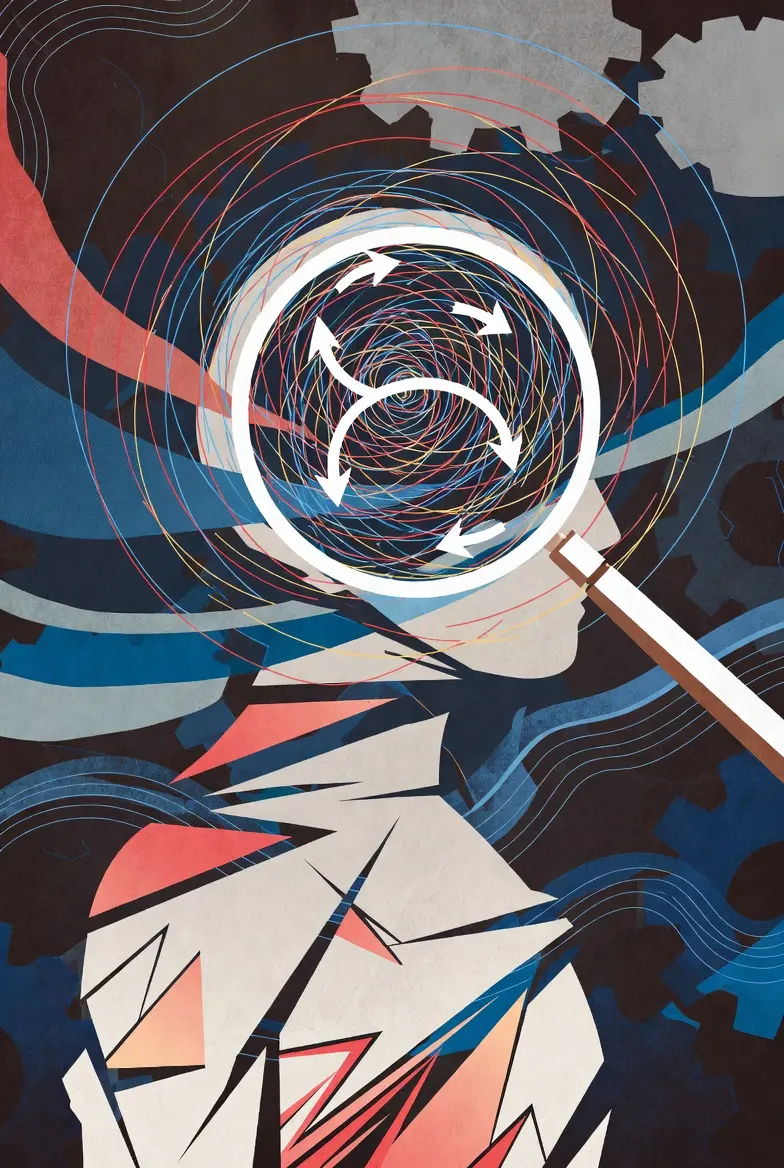
To understand the alexithymia definition in psychology, it helps to see it in action:
- Relationship Conflict: A partner asks, “Why are you mad?” The individual feels a knot in their stomach but says, “I’m not mad, my stomach just hurts,” leading to an argument about “lying” when the individual was being literal.
- Difficulty Grieving: After a loss, the person may focus entirely on the logistics of the estate. They might feel “tired” for months without realizing they are actually in deep mourning.
- Workplace Confusion: A boss gives critical feedback. The individual feels a surge of heat in their face (anger/shame) but interprets it as the room being too hot and opens a window, missing the social cue to apologize or explain.
- Delayed Reactions: Feeling “fine” during a traumatic event, only to have a massive, unexplained “meltdown” or physical illness three days later.
- Social “Scripting”: Using logic to guess how one should feel. “My friend’s dog died, so the logical emotion is sadness. I will say ‘I am sad’ because that is the correct social response.”
Can Alexithymia Feel Love?
One of the most painful myths is that people with alexithymia are “heartless” or “robotic.”
The Answer: Yes, absolutely. People with alexithymia experience love, deep attachment, and loyalty. However, they struggle to label and verbalize those feelings.
For someone with alexithymia, love is often expressed through actions (Acts of Service) rather than words (Words of Affirmation). They might not say “I love you” often, but they will fix your car, ensure you have your favorite snack, and remain fiercely loyal. Their love is a verb, not a noun.
Does Alexithymia Cry?
Yes. Alexithymia does not prevent the physical act of crying. However, the reason for the tears may be a mystery to the person crying. It is common for someone with high alexithymia to find themselves weeping and feel genuine confusion, asking, “Why is water coming out of my eyes?”
Alternatively, some individuals have “reduced emotional expressiveness,” where their brain’s dampening of emotional signals prevents the physical response entirely. Both ends of the spectrum are common.
Alexithymia and Autism
There is a significant link between alexithymia and autism. For a long time, researchers thought that “lack of empathy” or “emotional coldness” was a core part of autism. We now know that these traits are actually often due to co-occurring alexithymia.
- The Statistics: Estimated 40–65% of autistic individuals meet the criteria for alexithymia, compared to about 10% of the general population.
- The Distinction: Autism involves differences in social communication (understanding other people’s cues), while alexithymia involves differences in emotional awareness (understanding one’s own cues).
If you are autistic, understanding alexithymia can be a “lightbulb moment,” explaining why you might struggle to know you’re hungry, thirsty, or upset until you reach a point of “meltdown.”
In this second section, we transition from identifying the “what” to exploring the “why.” We will examine the biological and developmental roots of alexithymia, how to test for it, and the evidence-based pathways toward building emotional literacy.
Alexithymia Causes
Understanding the alexithymia cause is often a relief for those who feel they are “missing a part” of themselves. Research points to a combination of nature (how the brain is built) and nurture (how we were raised).
1. Biological & Neurological Factors
- The Insula Connection: The insula is the part of the brain responsible for “interoception”—the ability to feel what is happening inside your body (heartbeat, hunger, or the “flutter” of excitement). In many people with alexithymia, the insula shows reduced activity or connectivity.
- Interhemispheric Transfer: Some studies suggest a “communication breakdown” between the right hemisphere (which processes raw emotion) and the left hemisphere (which processes language). The feeling exists, but the message never reaches the “language center” to be labeled.
2. Developmental Factors (Early Life)
- Emotional Invalidation: If a child is told “You aren’t sad, you’re fine” or “Stop crying, there’s nothing to be upset about,” they may learn to stop looking inward for emotional data. Over time, the brain’s “emotional detection” software effectively uninstalls itself.
- Trauma: In cases of severe childhood trauma or PTSD, alexithymia can act as a survival mechanism. If the emotions are too painful to bear, the brain may “numb” its ability to identify any feelings at all to prevent a system overload.
3. Co-occurring Conditions
Alexithymia is rarely an “island.” It is frequently a passenger on other conditions:
- Depression: Can cause “emotional blunting.”
- Eating Disorders: Difficulty identifying hunger/fullness often overlaps with difficulty identifying emotions.
- Substance Use: People may use drugs or alcohol to “feel something” or to further numb nameless distress.
How Common Is Alexithymia?
If you feel alone in this, the numbers suggest otherwise.
- General Population: Estimated 10% to 13% of people. It is more commonly identified in men, though researchers debate if this is biological or a result of “boys don’t cry” socialization.
- Clinical Populations: The numbers spike significantly in specific groups:
- Autism: 40–65%
- Chronic Pain Patients: Up to 50%
- Post-Traumatic Stress Disorder: 40%
Alexithymia Test (Self-Screening)

While only a mental health professional can provide a formal clinical assessment, researchers use standardized tools to measure the degree of the trait.
The Toronto Alexithymia Scale (TAS-20)
The TAS-20 is the most widely used alexithymia test in clinical research. It measures three factors:
- Difficulty Identifying Feelings (DIF)
- Difficulty Describing Feelings (DDF)
- Externally-Oriented Thinking (EOT)
Self-Reflection Questions
Ask yourself these 5 questions. If you answer “Always” or “Often” to most, you may have high alexithymia:
- When I am upset, I don’t know if I am sad, frightened, or angry.
- I find it hard to find the right words for my feelings.
- I prefer to talk to people about their daily activities rather than their feelings.
- I prefer to let things happen rather than to understand why they happened.
- People tell me I should express my feelings more.
Note: These questions are for self-reflection and are not a substitute for a professional evaluation.
Alexithymia Treatment
The most important thing to know about alexithymia treatment is that it is not about “fixing” a broken brain—it is about building a skill set. Because the brain is “plastic” (neuroplasticity), you can create new pathways for emotional awareness.
1. Cognitive Behavioral Therapy (CBT)
CBT can help you identify the link between situations and physical reactions. A therapist might help you build an “Emotional Dictionary” to move from vague physical descriptions to specific emotional labels.
2. Interoceptive Awareness Training
This involves focusing on bodily sensations in a non-judgmental way.
- Exercise: “I feel a tightness in my throat. My heart is beating fast. In this context, that likely means I am feeling ‘anxious.’”
3. Mindfulness & Body Scans
Mindfulness teaches you to sit with a sensation without trying to push it away. By noticing that “blank” feeling, you begin to demystify it.
4. Art and Journaling
Since words are the struggle, using colors or music to represent an internal state can “bypass” the language deficit and allow for emotional processing.
Alexithymia Fact Sheet (Quick Summary)
- Is it a mental illness? No, it’s a personality trait.
- Can it be cured? It’s not a disease, but “emotional literacy” can be improved.
- Is it related to autism? Yes, there is a high overlap.
- Can I have a relationship? Yes, though it requires partners who understand your “action-based” love.
- What causes it? Biology, trauma, or developmental environment.
FAQ: Frequently Asked Questions
Is alexithymia a mental illness?
No. It is a personality construct or trait. However, it can make managing mental illnesses like depression or anxiety more difficult because the person cannot easily identify the source of their distress.
Can alexithymia be cured?
It is not a condition to be “cured,” but rather a trait to be managed. Through therapy and interoceptive training, many people significantly increase their ability to identify and verbalize their emotions.
Does alexithymia affect empathy?
It affects cognitive empathy (the ability to “read” someone’s feelings) but often doesn’t affect affective empathy (feeling distress when someone else is in pain). People with alexithymia care deeply; they just may not know how to label the feeling or what to do with it.
Can someone with alexithymia have relationships?
Yes. Successful relationships often involve clear communication about communication. Partners can learn to look for “action cues” (service-based love) rather than waiting for verbal emotional expressions.
Conclusion: Reclaiming Your Internal Voice
The alexithymia meaning is not that you are “empty”—it is that you are “untranslated.” Your emotions are present, valid, and affecting your life every day; they are simply speaking a language your conscious mind hasn’t learned yet.
By understanding that your “blankness” is a neurological or developmental trait, you can stop the cycle of shame. Whether through an alexithymia test, therapy, or simply learning to listen to your body’s physical signals, you can begin to build the bridge between your heart and your words.
Authoritative Clinical & Research References
- Frontiers in Psychology — “The Cognitive and Emotional Components of Alexithymia”
- Nature Reviews Psychology — “Interoception and Mental Health”
- Journal of Autism and Developmental Disorders — “Alexithymia, Not Autism, Predicts Poor Emotion Recognition”
- The Toronto Alexithymia Scale (TAS-20) Technical Manual
- Harvard Health Publishing — “The Emotional Blindness of Alexithymia”
Related Posts






Subscribe to Our Newsletter
Get mental health tips, updates, and resources delivered to your inbox.
MORE from Author
Read More In my practice as a clinical psychologist, I often observe that the difference between a patient who crumbles under pressure…
- We all have "up" days and "down" days. Perhaps you feel energized after a promotion or sluggish on a rainy…


 To define bipolar disorder accurately, we must look at it as a chronic mood dysregulation condition. In psychology and medicine,…
 To answer whether bipolar fits the bill, we first have to define what a neurodivergent person actually is. The term…
Are you looking for a Therapist?
Connect with qualified mental health professionals who understand
bipolar disorder, mood changes, and emotional challenges.
Private • Supportive • Confidential