
Am I bipolar? Learn 5 Factors Experts Use to Diagnose | Bipolar Lives


Am I bipolar? You may be asking yourself this because:
1. You have tested positive on a bipolar test.
2. You may have learned about bipolar symptoms such as alternating mood swings, from mania to depression, and thought “this is me”.
3. You may have been labeled “bipolar” by someone else or someone close to you has suggested it.
4. You may identify with one or more of the many famous people with bipolar disorder, again thinking “this is me” or “this explains
everything”.
5. You may have been diagnosed as such by a psychiatrist, your family doctor, or another medical expert.
6. You may have received some other diagnosis, for example Major Depressive Disorder, ADHD or Borderline Personality Disorder and you are finding that your medication and other treatment is not helping.
Regardless of your experience, you need an answer! Here is how The Bipolarity Index (a tool developed by Harvard researchers) can help you know not just “Am I Bipolar?”, but also “Just How Bipolar Am I?”.
Reminder
An excellent clue that you have the wrong diagnosis is if your medication is not alleviating your symptoms.
More and more clinicians who specialize in bipolar and other mood disorders believe this is a spectrum disorder, meaning it is not a
YES/NO answer, but a matter of degree. For example, you could have classic Bipolar I, the milder Bipolar II, or a softer form that does not
meet a clinical threshold or require medication to treat the symptoms.
What Is Bipolar Disorder?
If you are looking for an am i bipolar disorder quiz, it helps to first understand the clinical definition. Bipolar disorder is a chronic brain-based mood disorder. It causes extreme shifts in energy, activity levels, and the ability to carry out daily tasks.
These shifts are not just “mood swings.” Everyone has good and bad days. However, bipolar disorder involves distinct periods called “episodes.” During these times, your brain chemistry changes significantly. This affects your dopamine and serotonin levels.
Furthermore, we view this as a spectrum. It is not a simple “yes or no” condition. Some people have severe mania, while others have milder “hypomania.” Regardless of the type, it is a lifetime condition. But with the right care, it is highly manageable.
What Are 5 Signs of Bipolar Disorder?
Clinicians use specific criteria to answer the question, “am i bipolar?” If you are looking for what are 5 signs of bipolar, these are the primary indicators we look for during an exam.
1. Periods of Unusually High Energy or Euphoria
This is known as mania or hypomania. You might feel “on top of the world” without a clear reason. You feel powerful and invincible. This energy is often intense enough that others notice a change in your personality.
2. Decreased Need for Sleep
This is a major red flag. Most people feel exhausted after staying up all night. However, someone in a manic state can sleep for only two hours and feel completely refreshed. You might feel like you have an internal motor that won’t stop.
3. Racing Thoughts or Pressured Speech
Do you feel like your thoughts are moving faster than you can speak? You might jump from one idea to another very quickly. This is called “flight of ideas.” Others may find it hard to keep up with your conversation.
4. Impulsive or Risky Behavior
During a “high,” you might make choices you later regret. This often includes spending thousands of dollars or making sudden life changes. You may feel like nothing can go wrong, even when the risks are very high.
5. Episodes of Depression Lasting Days to Weeks
The “lows” are just as significant as the “highs.” You might feel empty, hopeless, or physically heavy. These episodes are not just sadness; they are a total loss of interest in things you once loved.
Your bipolar profile
Consider these two people who are both asking themselves “AM I BIPOLAR?” At one extreme is Person A with the following profile:
- Has manic episodes characterized by euphoria, grandiosity, or expansiveness.
- Developed their bipolar symptoms in their late teens at around age 19.
- In between mood episodes experiences full recovery and returns to normal self.
- Takes mood stabilizing medication and responded well with meds leading to a remission in bipolar symptoms after approximately 4 weeks.
- The person’s mother also has bipolar disorder.
The profile above seems to leave little doubt and we can be pretty sure that yes, Person A does indeed have bipolar disorder. Contrasts this “textbook” bipolar profile of Person A above with Person B:
- Mild hypomania but not full blown mania.
- Developed their symptoms in middle age at around age 47.
- Often depressed and also suffers from anxiety. Also often agitated and irritable.
- Has tried a few different antidepressants but so far no meds have helped.
- Has no relatives diagnosed with bipolar disorder but Dad is an alcoholic.
Does Person B also have bipolar disorder? It is certainly possible but is relatively unlikely. Why do I say this? These hypothetical profiles are based on the Bipolarity Index . . .
What Triggers Bipolar Episodes?

If you have a biological predisposition, certain events can “flip the switch” in your brain. Knowing what triggers bipolar episodes or what caused bipolar disorder is vital for long-term stability.
a. Stress and Sleep Deprivation
Sleep is the most important stabilizer for the brain. Missing sleep can trigger a manic episode almost immediately. Similarly, high-stress events like a new job or a breakup can disrupt your internal balance.
b. Substance Use
Alcohol and stimulants are common triggers. While alcohol might feel like it helps you sleep, it actually disrupts your REM cycle. Stimulants, including high doses of caffeine, can push a person toward a manic state.
c. Antidepressant Use
This is a frequent clinical finding. If a person with undiagnosed bipolar disorder takes a standard antidepressant (like an SSRI) without a mood stabilizer, it can trigger mania. If you felt “jittery” or “electric” on an antidepressant, tell your doctor.
Using the Bipolarity Index to answer “Am I Bipolar?”
The Bipolarity Index was developed by Harvard researchers and measures 5 distinctive dimensions of the illness:
1.The characteristics of your mood episodes, such as whether you have experienced full mania or (milder) hypomania?
2. Age of onset. (Bipolar usually manifests in the late teens or, almost as often, in the early 20s. It is much less frequent in old people or young children or “tweenies”.)
3. Course of illness: For example, do you follow the “typical”pattern of distinct episodes of mania and depression, as well as periods where you are well and “back to normal”?
4. Response to medications. Sometimes people complain that mood stabilizers do not work for them. However, if mood stabilizers are not working, it is statistically much more likely that you do not have bipolar disorder as opposed to having the more rare, treatment resistant kind.
5. Family history. This is an illness with a strong inherited component. If a parent or sibling has bipolar disorder, it is more likely you do as well. By the same token, absolutely no family history anywhere makes the diagnosis more unlikely.
You can score the Bipolarity Index yourself. A score of 60 or higher usually correlates with Bipolar I. The lower your score, the milder your degree of “bipolarity”. If you score under 10, the answer to AM I BIPOLAR is probably a NO!
Am I Bipolar or ADHD?
Searching for an am i bipolar or ADHD quiz is very common. Both conditions cause distractibility, impulsivity, and high energy. However, they are fundamentally different.
The Pattern of Symptoms
ADHD is a neurodevelopmental disorder. This means the symptoms are usually constant. You have likely struggled with focus since you were a child.
Bipolar disorder, however, is episodic. You might be perfectly focused for three months, then suddenly become hyperactive for two weeks. Then, you might crash into depression.
The Internal Driver
In ADHD, you are distracted because your brain struggles to filter information. In a manic episode of bipolar disorder, you are distracted because you have too much internal energy and grandiosity. A doctor will look at your history to see if the symptoms “come and go” or if they are always there.
Am I Bipolar 2? How Bipolar 1 and Bipolar 2 Differ
Many patients say, “I’ve never been hospitalized for mania, so I can’t be bipolar.” This is why understanding am i bipolar 2 is so important.
Bipolar I: Classic Mania
Bipolar I involves full manic episodes. These are severe and can last at least seven days. Often, these episodes require hospital care to keep the person safe. You might lose touch with reality or experience psychosis.
Bipolar II: Hypomania and Depression
Bipolar II is often more subtle. Instead of full mania, you experience “hypomania.” This is a lower-level “high” that lasts at least four days. You are very productive and social.
However, Bipolar II involves much deeper and longer periods of depression. Because the hypomania feels like a “good mood,” many people only seek help for the depression. This makes Bipolar II harder to diagnose but just as important to treat.
| Feature | Bipolar I | Bipolar II |
| Mania Type | Full Mania | Hypomania |
| Depression | Common | Required for Diagnosis |
| Psychosis | Possible during mania | Not during hypomania |
| Impact | Can be life-disrupting | Often “high-functioning” |
If you want to know more about this, you can read our guide on different types of bipolar.
Pros and cons of bipolar self screening tests
Anyone asking “Am I bipolar” can easily do a bipolar disorder self test to check their bipolar symptoms.
However, any preconceived notions you have about bipolar symptoms and your diagnosis can distort the results. This is why the checklist approach, as well as relying on self-reporting, can never yield a conclusive result.1
There is no physical test, such as a blood test for Bipolar Disorder. Also, there is no genetic testing for bipolar disorder. In other words, you cannot take a definitive, objective bipolar test, but must rely on experience and educated judgement instead.
What Is the “48-Hour Rule” for Bipolar Disorder?
If you have been researching, you may have found the question: “what is the 48 hour rule for bipolar people?“
This is not a rule found in the DSM-5. Instead, it is a practical “warning system” used by clinicians and patients. The rule suggests that if a major mood shift—either very high or very low—lasts for more than 48 hours, it is time to call your doctor.
Using the Rule as a Warning Sign
Everyone has a “bad day” or a “great day.” But for those on the bipolar spectrum, a 48-hour shift is often the “loading phase” of a full episode. By catching the shift in the first 48 hours, you and your doctor can adjust your sleep or medication. This can prevent a full-blown crisis before it starts.
Bipolar Disorder and DSM-5 — What Is Axis I?

You might encounter the term “What Disorders Are in Axis 1?” while reading older medical articles. This comes from the DSM-IV, the previous version of the psychiatric diagnostic manual.
DSM-IV vs. DSM-5 Context
In the old system, Axis I was for “clinical disorders” like Bipolar, Depression, and Schizophrenia. Axis II was for personality disorders and intellectual disabilities.
Today, the DSM-5 has moved away from this. We now recognize that mental health is more integrated. However, Bipolar remains a primary “mood disorder.” Understanding this history helps you see that doctors have long viewed bipolar as a biological condition, much like diabetes or asthma.Bipolar Disorder Timeline — Why “2 Weeks” Matters
Timing is the most important factor in a diagnosis. If you search for “bipolar disorder 2 weeks,” you are looking at the clinical threshold for depression.
- Depression: Symptoms must last at least two weeks and represent a change from previous functioning.
- Mania: Symptoms must last at least one week (or any duration if hospitalization is required).
- Hypomania: Symptoms must last at least four days in a row.
If your moods change five times in one day, it is less likely to be bipolar and more likely to be a different type of emotional dysregulation. Doctors use these specific timelines to ensure they aren’t mislabeling a temporary reaction to stress.
Moving beyond the bipolar test
Please do not think I am dismissing bipolar tests, especially the well-established tests compiled by reputable experts and confirmed through rigorous empirical scientific research.
I actually have several of these on this Bipolar Lives website, and encourage anyone who has ever asked themselves, “Am I bipolar?”, or who suspects a mood disorder in someone close to them, to take at least one, and probably two or three tests.
However, at the end of the day these are still just checklists based on self-reporting. They are guidelines that merely SCREEN for the POSSIBILITY, not definitive diagnostic tools, and CANNOT, in themselves, diagnose bipolar disorder in you or anyone else.
Anyone who scores positive on such a test needs to consult with an expert immediately. Preferably this would be a licensed mental health professional (e.g. a board certified expert psychiatrist, a psychologist) with extensive experience in bipolar and other mood disorders.
One reason for undergoing a diagnostic evaluation is to get treatment, such as a prescription for a mood stabilizing medication. However, getting medication is a secondary reason. The main reason is to CONFIRM THE DIAGNOSIS!
A skilled clinician will do much more than administer a paper and pencil checklist. As well as tests just like the bipolar tests we have just looked at, there needs to be a conversation. This will involve various techniques and elements, depending on the doctor.
All of them will probably ask about family history and your family members as bipolar disorder has a strong genetic component. EVERY expert should ask you about POSSIBLE, as well as diagnosed, bipolar family members.
Many professionals may ask you to bring along a trusted third person that knows you very well and over a long period of time. This helps to confirm certain bipolar symptoms, to fill in blanks, help you remember important info that your doctor discusses with you about the disorder, which is known as psychoeducation, and to help you by providing further perspective.
Another important technique in diagnosing bipolar is the Life Chart. Having the trusted third person present can be most useful in creating the Life Chart.
This chart is a diagram that starts at birth and records significant life events alongside a mood scale. In this way it is possible to get an overall picture of both mood episodes and other bipolar symptoms, and possible triggers for episodes of depression and mania.
Also, certain physical tests are required. Lab work and other tests will be needed to rule out diseases such as thyroid conditions (looks like bipolar and often co-occurs with bipolar disorder), diabetes, Lyme disease, and quite a few others.
My own bipolar diagnosis happened through pure chance. My psychiatrist and I both believed I had major depression and also acute anxiety. In passing I mentioned some shopping I had done on the weekend.
When my shrink discovered that I had spend over $5,000 (I was a full time grad student at the time and should have been living frugally) on exquisite European furniture for my cheap one bedroom student apartment, there was a diagnostic breakthrough.
This kind of irrational spending spree is a classic symptom of mania. It didn’t take long to uncover many other manic episodes and my diagnosis was finally accurate and helpful. I have never looked back!
Bipolar behavior
There are many dimensions to “being bipolar” and pop culture does not convey enough accurate info on the disorder for us to understand genuine bipolar symptoms.
First and foremost there are bipolar feelings and moods – and of course mood swings. There is also what we could call “bipolar thoughts”. And as those of us who have lived with bipolar for a while know, there is that pesky (sometimes ruinous) bipolar behavior. A reliable diagnosis requires a very careful balance of examining all three of these: feelings, thoughts, and bipolar behavior.
Although there is an inner experience of mood that is possibly the ultimate arbiter of “Am I Bipolar?”, focusing to some extent on potential bipolar behavior is inevitable because this is what is measurable and observable to other people – and what will create serious and destructive real world consequences if not addressed.
The main danger of misdiagnosis arises because bipolar behavior can closely resemble other mental health conditions. Researchers in Rhode Island discovered that many patients diagnosed as bipolar actually had borderline personality disorder instead. In fact, it appears to be becoming one of the most common misdiagnosis traps.
How to tell? Bipolar disorder is episodic, whereas borderline personality is a more pervasive and constant state.
After beginning treatment, Am I Bipolar? will answer itself in that if mood stabilizers make you “better” (i.e., they remove significantly reduce or even eliminate bipolar symptoms) then Bipolar Disorder is probably the underlying condition.2
However, consider that if the traditional bipolar disorder treatment of mood stabilizers does not help, then maybe the simple answer is “No, you are NOT bipolar!“
You need to track your moods with a mood chart to see if you have the highs and lows – that is both the manic swings and the depressive swings – that are the hallmark of this illness.
Or take our online test, and if you screen positive see a board certified or licensed expert on mood disorders.
Finally, make sure you get educated. This excellent summary from the University of Maryland will gives you an easy to understand and very accurate and insightful bipolar disorder overview.
Contraindications and Drug Interactions
As an MD, I must emphasize safety. Bipolar medications are powerful and can interact with other substances.
- Drug-Supplement Interactions: Be very careful with St. John’s Wort. Many people take it for depression. However, it can trigger mania in people with bipolar disorder.
- NSAIDs: Common painkillers like ibuprofen can raise lithium levels in your blood to dangerous levels.
- Alcohol: Alcohol is a central nervous system depressant. It can interfere with the effectiveness of your meds and worsen the “lows” of your cycle.
Who Should NOT Use These Treatments?
Pregnant women or people with kidney disease may need different treatment paths. Always disclose your full medical history to your psychiatrist before starting a new regimen.
When to See a Clinician Immediately
Self-screening is a great start, but it has limits. You should see a board-certified psychiatrist if:
- You are experiencing suicidal ideation or thoughts of self-harm.
- You are engaging in behavior that is destroying your life (spending, infidelity, or legal issues).
- You are experiencing psychosis (delusions or hallucinations).
- You have tried “natural” remedies or antidepressants and they have failed.
Frequently Asked Questions (FAQ)
Can I have bipolar and ADHD at the same time?
Yes. This is called “comorbidity.” It is quite common, but it makes treatment more complex. A doctor must stabilize the mood first before treating the ADHD.
Is there a blood test for bipolar disorder?
No. There is no biological “marker” in the blood for bipolar yet. Doctors use blood tests only to rule out other things, like thyroid issues or vitamin deficiencies.
Can bipolar disorder go away on its own?
Generally, no. It is a lifelong biological condition. However, with the right lifestyle and medical support, you can go years without an episode.
Why do I feel better after taking a “bipolar test free” online?
Finding a potential name for your struggle provides relief. It validates that your experience is real and that help is available.
Authoritative Clinical References
- National Institute of Mental Health (NIMH) – Bipolar Disorder Overview
- The Lancet – Bipolar Disorder (Seminar/Meta-Analysis)
- National Center for Biotechnology Information (NCBI) – The Bipolarity Index
- Mayo Clinic – Bipolar Disorder: Diagnosis & Treatment
Related Posts




Subscribe to Our Newsletter
Get mental health tips, updates, and resources delivered to your inbox.
MORE from Author
Read More ADHD and depression often occur together, and each makes the other harder to live with. Adults with ADHD are almost…
 We all have "up" days and "down" days. Perhaps you feel energized after a promotion or sluggish on a rainy…
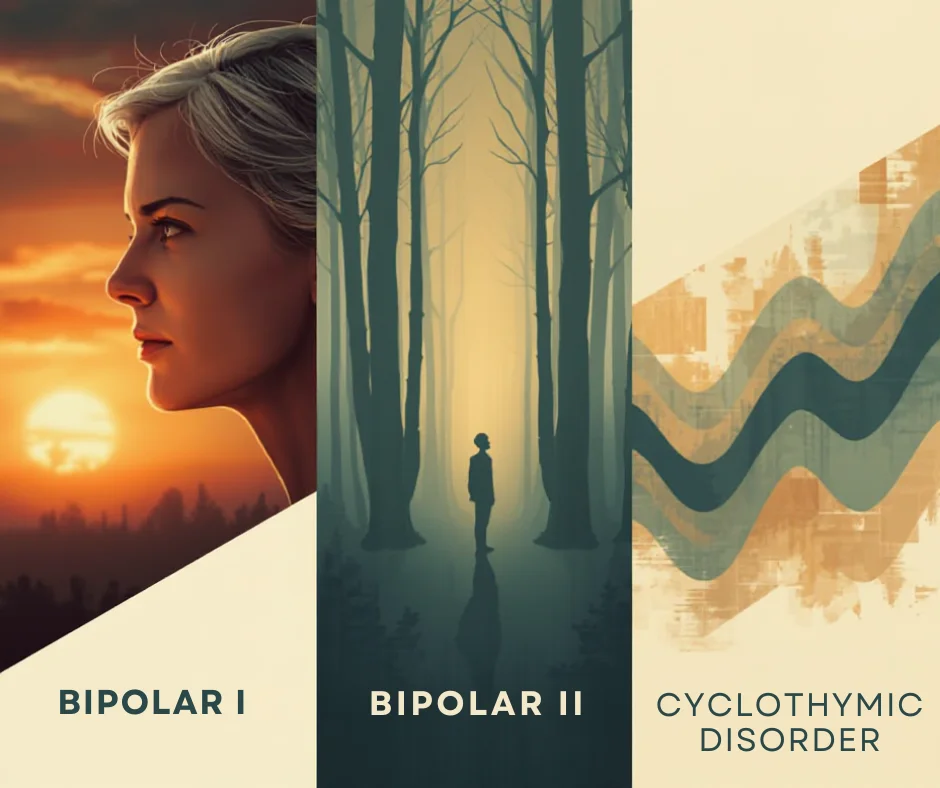 To define bipolar disorder accurately, we must look at it as a chronic mood dysregulation condition. In psychology and medicine,…
Are you looking for a Therapist?
Connect with qualified mental health professionals who understand
bipolar disorder, mood changes, and emotional challenges.
Private • Supportive • Confidential