
Bipolar Disorder Symptoms in Females: Signs, Tests, Triggers, and Treatment
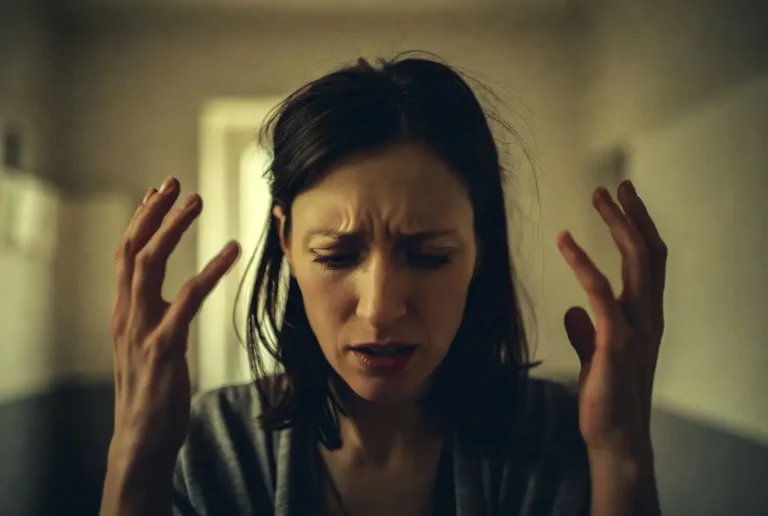
Bipolar disorder is a complex, lifelong mental health condition characterized by significant shifts in mood, energy, and activity levels. While the condition affects both men and women, research has increasingly shown that biological, social, and hormonal factors cause bipolar disorder symptoms in females to present in unique ways.
For many women, the journey to a correct diagnosis is long, often complicated by misdiagnosis as clinical depression or borderline personality disorder. Understanding the specific nuances of how this condition manifests in the female body and mind is critical for effective management and long-term stability.
This guide provides a comprehensive deep dive into the signs, diagnostic challenges, and modern treatment landscapes for women living with bipolar disorder.
What Is Bipolar Disorder?
Before exploring gender-specific nuances, we must define the core of the condition. Bipolar disorder is a brain disorder that causes unusual shifts in mood, ranging from extreme highs (mania or hypomania) to extreme lows (depression).
What Causes Bipolar Disorder?
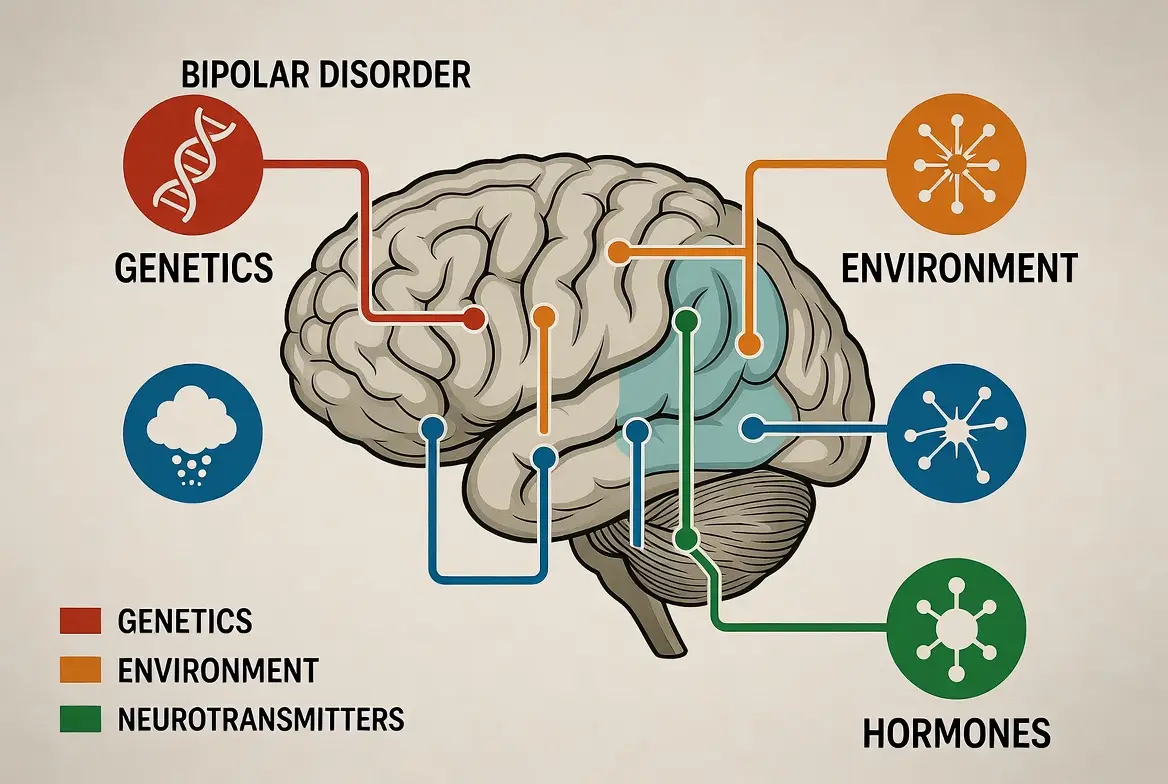
While the exact cause is unknown, scientists believe a combination of factors is responsible:
- Genetics: It tends to run in families, suggesting a hereditary link.
- Brain Structure: Differences in the size or activity of certain brain regions, like the prefrontal cortex and amygdala, play a role.
- Neurochemistry: Imbalances in neurotransmitters like dopamine, serotonin, and norepinephrine affect mood regulation.
What Are the 7 Types of Bipolar Disorder?
Clinical practice generally recognizes several variations, though the primary three are most common:
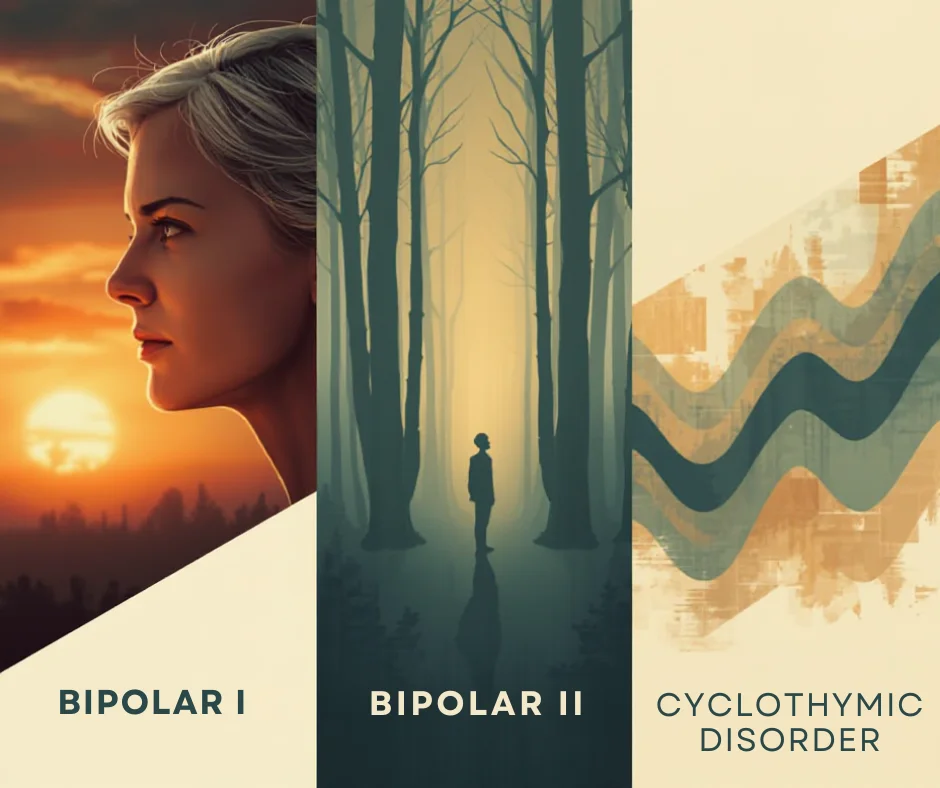
- Bipolar I Disorder: Defined by manic episodes that last at least 7 days or are severe enough to require immediate hospital care.
- Bipolar II Disorder: Defined by a pattern of depressive and hypomanic episodes (less severe than full mania).
- Cyclothymic Disorder: Periods of hypomanic and depressive symptoms lasting at least 2 years.
- Rapid Cycling: A specifier where a person experiences four or more mood episodes within a year.
- Mixed Features: Experiencing manic and depressive symptoms simultaneously.
- Other Specified Bipolar: Symptoms that don’t meet the full criteria but cause significant distress.
- Unspecified Bipolar: Used when a clinician cannot pinpoint the exact subtype.
How Bipolar Disorder Affects Females Differently
While the diagnostic criteria remain the same for everyone, bipolar symptoms in women are heavily influenced by the female endocrine system and social expectations.
Hormonal Influences
Women experience significant hormonal fluctuations throughout their lives—puberty, menstruation, pregnancy, and menopause. Estrogen and progesterone interact with the very neurotransmitters involved in bipolar disorder.
Consequently, women often report that their mood episodes correlate with their menstrual cycle or occur during postpartum periods.
Social and Emotional Factors
Women are often socialized to be “caretakers,” which can lead to a higher degree of internalized stigma. Instead of the outward aggression sometimes seen in male mania, women may experience “irritable mania” or high-functioning hypomania, where they over-commit to family and work responsibilities until they crash.
Why Women Are Often Misdiagnosed
Women are more likely to seek help during a depressive phase than a manic one. Because bipolar disorder symptoms in females are often depression-dominant, many are initially diagnosed with Unipolar Depression. It can take an average of ten years from the first symptom for a woman to receive a correct bipolar diagnosis.
Bipolar Disorder Symptoms in Females
To identify the condition, we must look at the four primary domains: emotional, behavioral, cognitive, and physical.
Emotional Symptoms
In women, emotional symptoms often lean toward “mixed states.” A woman might feel the high energy of mania but the despair of depression at the same time.
- Depressive Pole: Intense sadness, feelings of worthlessness, and anhedonia (loss of interest in hobbies).
- Manic Pole: Euphoria, but more commonly, intense irritability and “edginess.”
Behavioral Symptoms
Behavioral shifts are often the first things noticed by friends and family.
- Mania/Hypomania: Rapid speech, staying up all night to clean or work, impulsive spending, or increased sexual drive.
- Depression: Social withdrawal, neglecting personal hygiene, or “ghosting” friends.
Cognitive Symptoms
Bipolar disorder significantly impacts how a woman processes information.
- Racing Thoughts: The feeling that your mind is a “Ferrari with bicycle brakes.”
- Poor Judgment: An inability to foresee the consequences of risky behaviors.
- Brain Fog: Significant difficulty concentrating or making simple decisions during depressive phases.
Physical Symptoms
Physical manifestations are often overlooked but are key markers of the disorder.
- Changes in Appetite: Bipolar depression in women is often linked to overeating and weight gain, whereas mania may lead to forgetting to eat entirely.
- Sleep Disturbances: A “decreased need for sleep” (feeling rested after 3 hours) is a hallmark of mania.
10 Warning Signs of Bipolar Disorder in Females
For those looking for a quick reference, these 10 signs are frequently reported by women before or during an episode:
- Sudden bursts of high energy followed by days of total exhaustion.
- Irritability or “snappiness” that feels out of proportion to the situation.
- Periods of “hyper-productivity” where you start multiple new projects at once.
- Significant changes in sleep patterns (insomnia or sleeping 12+ hours).
- Rapid, “pressured” speech where others struggle to get a word in.
- Intense guilt or shame about things that happened during a high-energy phase.
- Impulsive financial decisions or “retail therapy” that lead to debt.
- Brain fog or feeling like your thoughts are moving through molasses.
- Increased sensitivity to light, sound, or touch.
- Recurrent thoughts of death or “not wanting to be here” during low periods.
Early Bipolar Disorder Symptoms in Females
Signs of bipolar disorder in girls and young women often emerge during late adolescence or the early twenties. Unfortunately, these are frequently dismissed as “teenage moodiness” or hormonal changes.
Early Red Flags
- Academic Fluctuations: A student who goes from straight A’s to failing grades and back again.
- Extreme Social Sensitivity: Deeply felt “rejection sensitivity” that leads to volatile friendships.
- Substance Experimentation: Using alcohol or marijuana to “quiet the mind” or cope with intense sadness.
- Disordered Eating: There is a high comorbidity between bipolar disorder and eating disorders in young women.
Early intervention is vital; the sooner a young woman understands her brain’s rhythm, the less “collateral damage” (to school, career, and relationships) the disorder causes.
Mild Bipolar Disorder Symptoms in Females
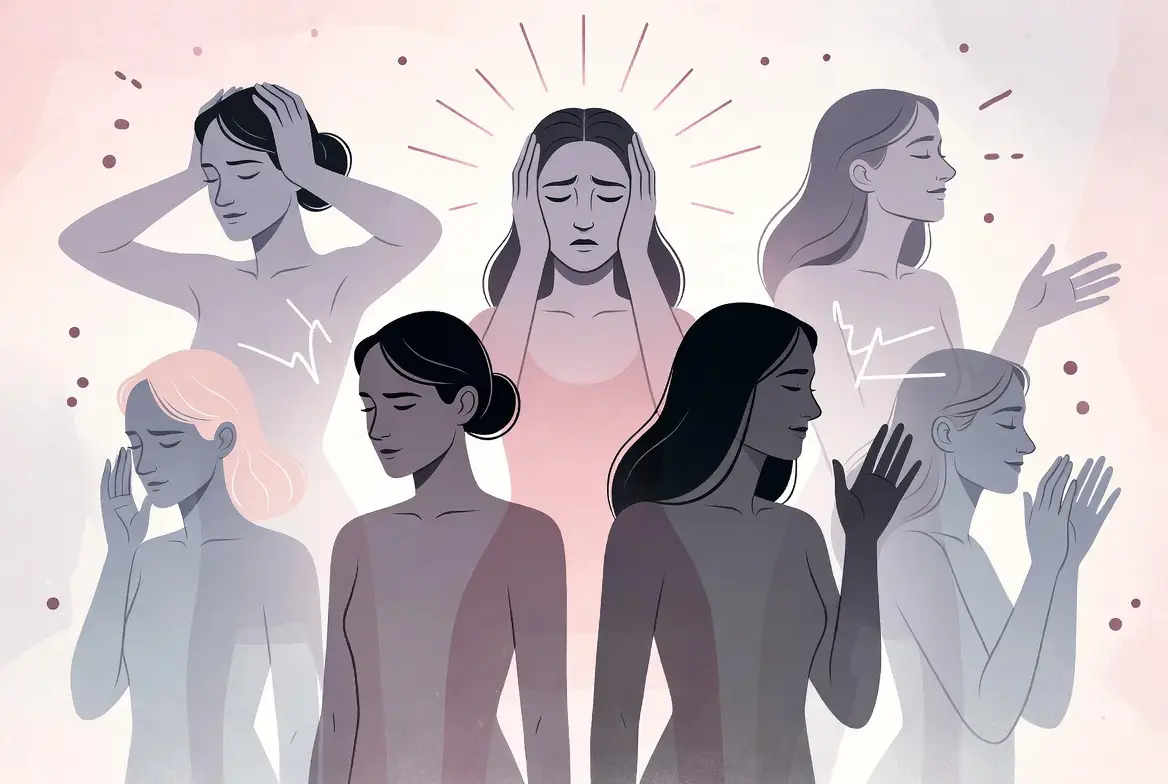
Not all bipolar disorder involves “theatrical” mania. Mild bipolar disorder symptoms in females—often categorized as Cyclothymia or high-functioning Bipolar II—can be the hardest to spot.
The “High-Functioning” Mask
A woman may appear very successful. Her hypomanic episodes might look like being a “super-mom” or a “workaholic.” She might be the one who organizes every event, stays late at the office, and exercises daily. However, the internal cost is a subsequent “hollow” feeling, where she feels like a fraud or is constantly teetering on the edge of a breakdown.
These subtle shifts are still part of the bipolar spectrum and deserve clinical attention.
Manic Bipolar Disorder Symptoms in Females
While men may exhibit more “boisterous” or aggressive mania, manic bipolar disorder symptoms in females often manifest as “agitated” or “irritable” mania.
Gender-Specific Presentation
In women, mania often involves:
- Hyper-Religiousness or Spirituality: A sudden, intense obsession with spiritual or philosophical ideas.
- Compulsive Organization: Cleaning the entire house at 4:00 AM or reorganizing every closet.
- Intense Anxiety: Many women experience mania as a state of extreme, vibration-like anxiety rather than euphoria.
Mania vs. Hypomania: If the episode results in a total break from reality (psychosis) or requires hospitalization, it is classified as Bipolar I mania. If it is high-energy but the person remains functional, it is Bipolar II hypomania.
Bipolar II Disorder Symptoms in Females
Bipolar II is statistically more common in women than in men. This subtype is defined by at least one hypomanic episode and at least one major depressive episode.
Depression-Dominant Patterns
In bipolar disorder 2, symptoms in females, the “lows” are much more frequent and longer-lasting than the “highs.” Women with Bipolar II may spend months in a state of “atypical depression”—feeling heavy-limbed, oversleeping, and craving carbohydrates—only to have a few days of feeling “normal” or “slightly buzzed,” which they often don’t recognize as a symptom.
Bipolar Disorder in Women Over 40 and Over 50
For women, the ages of 40 and 50 are often defined by the transition into perimenopause and menopause. This is a high-risk period for the escalation of bipolar symptoms in women due to the dramatic drop in estrogen.
Menopause-Related Symptom Changes
Estrogen has a “protective” effect on the brain, acting similarly to a mild antidepressant and mood stabilizer. When estrogen levels fluctuate and eventually plummet, a woman with bipolar disorder may experience:
- Increased Rapid Cycling: Moving between highs and lows much faster than in her 20s.
- Worsening Depression: Menopausal depression is often more resistant to standard treatments.
- Sleep Disruption: Hot flashes and night sweats can trigger manic episodes by disrupting the circadian rhythm.
Late Diagnosis
It is surprisingly common for women to be diagnosed for the first time in their 50s. Often, their symptoms were “masked” or manageable until the hormonal shift of menopause made the underlying bipolar disorder impossible to ignore.
Bipolar Disorder Symptoms in Females — Reddit & Real-Life Experiences
If you look for bipolar disorder symptoms in female Reddit threads, you will find a raw, uncurated look at the lived experience. These platforms offer “conversational evidence” that clinical textbooks often miss.
Lived Experiences
- The “Cleaning” Mania: Many women on Reddit describe “manic cleaning”—staying up until dawn, scrubbing baseboards with a toothbrush.
- The Post-Mania Shame: A recurring theme is the “vulnerability hangover,” where women feel intense guilt over things they said or money they spent during a hypomanic “high.”
- The “Masking” Fatigue: Women often discuss the exhaustion of trying to appear “normal” at work or during school runs while their internal world is collapsing.
Bipolar Disorder Test for Females
While only a psychiatrist can provide an official diagnosis, a bipolar disorder test or screening tool can help you decide if it’s time to see a professional.
Common Screening Tools
- MDQ (Mood Disorder Questionnaire): A 13-item checklist that asks about periods of high energy, racing thoughts, and impulsivity.
- The “Bipolarity Index”: A more complex tool used by clinicians that looks at family history, age of onset, and response to antidepressants.
If you find that your moods are interfering with your ability to work, maintain relationships, or stay safe, a “positive” result on a self-test is your signal to book a clinical evaluation.
What Triggers Bipolar Episodes in Women?
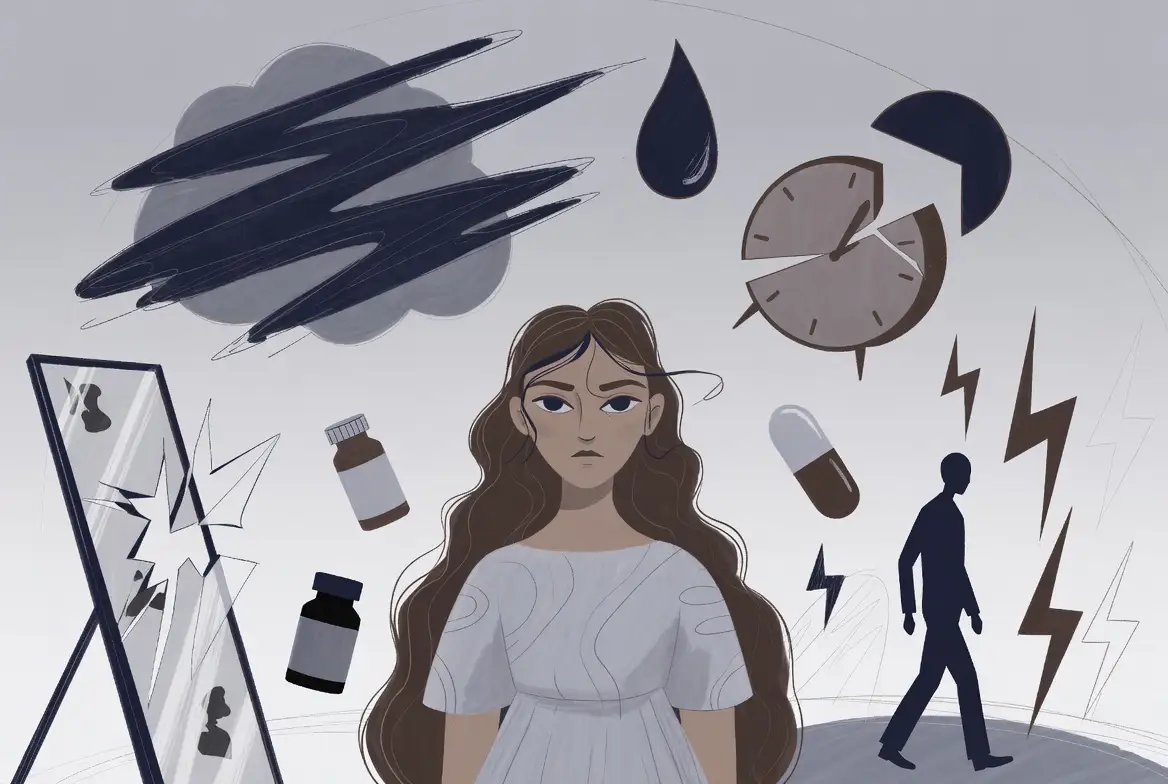
A trigger is an external or internal event that “flips the switch” from stability into a mood episode. Understanding what triggers bipolar episodes is the cornerstone of prevention.
- Sleep Deprivation: The #1 trigger. Even one night of missed sleep can trigger mania.
- Hormonal Shifts: Pregnancy, the postpartum period (the “Baby Blues” on steroids), and the week before menstruation (PMDD-like symptoms).
- Interpersonal Conflict: Because women are often socialized to value relational harmony, a major argument with a partner or friend can trigger a depressive crash.
- Medications: Certain steroids or even standard SSRI antidepressants (if taken without a mood stabilizer) can trigger a manic “switch.”
How a Person With Bipolar Thinks
To understand the disorder, one must understand the “logic” of the episode. How a person with bipolar tdisorder hinks is governed by their current mood state.
- In Mania: “I am invincible. Every idea I have is a billion-dollar idea. I don’t need sleep; I have too much to do.”
- In Depression: “I am a burden to my family. I have always been a failure, and I will always be a failure. There is no point in trying.”
How a Person With Bipolar Disorder Thinks in Relationships
In relationships, this can lead to attachment instability. During a high, a woman might be overwhelmingly affectionate and “soul-mate” focused. During a low, she may withdraw completely, leading her partner to feel abandoned. This is not a lack of love, but a shift in the brain’s ability to process connection.
Treatment for Bipolar Disorder in Females
Treatment for bipolar disorder is not “one size fits all,” especially for women who must account for reproductive health.
Medication Options
- Mood Stabilizers: Lithium remains the gold standard, though it requires blood monitoring.
- Anticonvulsants: Lamotrigine (Lamictal) is highly effective for bipolar depression and is often a first choice for women.
- Antipsychotics: Quetiapine or Aripiprazole can help stabilize “acute” mania and improve sleep.
Therapy Approaches
- CBT (Cognitive Behavioral Therapy): Helps identify and change the thought patterns that lead to episodes.
- IPSRT (Interpersonal and Social Rhythm Therapy): Focuses on stabilizing daily routines and sleep, which is critical for women.
Lifestyle Management
Stable sleep, a low-inflammatory diet, and avoiding alcohol are non-negotiable for long-term health.
How to Treat Bipolar Disorder Without Medication?
A common question is: How to treat bipolar disorder without medication? The Medical Consensus: Bipolar disorder is a biological “hardware” issue in the brain. While lifestyle changes (meditation, exercise, diet) are essential supporters, they are rarely enough to manage the disorder alone, especially Bipolar I. However, for “mild” cyclothymia, intensive lifestyle management may be the primary focus under strict medical supervision.
Frequently Asked Questions
Is there a difference between Bipolar Disorder and PMDD?
Yes, though they are frequently confused. Premenstrual Dysphoric Disorder (PMDD) involves severe depressive or irritable symptoms that occur only during the luteal phase (the week before your period) and disappear shortly after your period starts. Bipolar disorder symptoms in females, however, occur independently of the cycle, though the hormonal shifts of menstruation can “trigger” or worsen an existing bipolar episode. If your moods are strictly tied to your calendar, it may be PMDD; if they occur at any time but get worse before your period, it is likely bipolar disorder with a premenstrual exacerbation.
Can a woman be “high-functioning” while living with bipolar disorder?
Absolutely. Many women with mild bipolar disorder symptoms or Bipolar II are high achievers. This is often referred to as “high-functioning bipolar.” These women may use their hypomanic energy to excel in demanding careers or manage complex households. However, “high-functioning” does not mean “struggle-free.” The internal cost of maintaining the “mask” of stability can lead to profound burnout, physical illness, and a more severe depressive crash later on.
Why do antidepressants sometimes make bipolar symptoms worse?
This is a critical “red flag” for diagnosis. If a woman with undiagnosed bipolar disorder is prescribed a standard SSRI (like Prozac or Zoloft) for depression, it can trigger a “manic switch.” This results in sudden agitation, racing thoughts, or even a full manic episode. If you have ever felt “wired,” “jittery,” or “crazy” while taking an antidepressant, it is a significant indicator that your brain may be on the bipolar spectrum rather than having unipolar depression.
Do bipolar symptoms in women affect physical health?
Yes. Bipolar disorder is a systemic condition. Women often report comorbid physical issues such as:
- Thyroid Dysfunction: There is a high correlation between thyroid issues and bipolar disorder.
- Migraines: Women with bipolar disorder are statistically more likely to suffer from chronic migraines.
- Polycystic Ovary Syndrome (PCOS): Some medications used to treat bipolar disorder can impact insulin levels, and there is a documented link between PCOS and mood instability.
Can I have a healthy pregnancy while taking bipolar medication?
This is a conversation that must happen between you, your psychiatrist, and your OB/GYN. While some medications (like Valproate) are generally avoided during pregnancy due to birth defect risks, others (like Lithium or Lamotrigine) can often be managed safely. The risk of a “postpartum psychosis” or severe relapse if a woman stops her medication entirely is often higher than the risks associated with the medication itself. Never stop bipolar medication abruptly when you find out you are pregnant; consult your medical team immediately.
Is bipolar disorder in women hereditary?
There is a strong genetic component. If a first-degree relative (mother or sister) has bipolar disorder, your risk is significantly higher. However, genetics is not destiny. Environmental factors, childhood trauma, and chronic stress often act as the “on switch” for the genetic predisposition.
Conclusion
Recognizing bipolar disorder symptoms in females is about more than just identifying “moodiness.” It is about seeing the patterns—the rhythm of the highs and lows, the influence of the menstrual cycle, and the specific cognitive fog that characterizes the female experience of the disorder.
If you recognize these signs in yourself or a loved one, remember that a diagnosis is not a life sentence—it is a map. With the right combination of medication, therapy, and hormonal awareness, women with bipolar disorder can live stable, creative, and profoundly fulfilling lives.
Authoritative References
1. National Institute of Mental Health (NIMH) –Bipolar Disorder
2. Journal of Clinical Psychiatry – Bipolar Disorder in Women
3. Mayo Clinic –Bipolar Disorder Symptoms & Causes
4. Harvard Medical School (Harvard Health) – Women and Bipolar Disorder
5. International Society for Bipolar Disorders (ISBD) –Global Guidelines

Related Posts

Subscribe to Our Newsletter
Get mental health tips, updates, and resources delivered to your inbox.
MORE from Author
Read More In my practice as a clinical psychologist, I often observe that the difference between a patient who crumbles under pressure…
- We all have "up" days and "down" days. Perhaps you feel energized after a promotion or sluggish on a rainy…

 To define bipolar disorder accurately, we must look at it as a chronic mood dysregulation condition. In psychology and medicine,…
 To answer whether bipolar fits the bill, we first have to define what a neurodivergent person actually is. The term…
Are you looking for a Therapist?
Connect with qualified mental health professionals who understand
bipolar disorder, mood changes, and emotional challenges.
Private • Supportive • Confidential