
Bipolar Sleep: Why It Happens, How Much Sleep You Need, and What Actually Helps

In the study of clinical psychiatry, few metrics are as vital as a patient’s sleep log. For those living with bipolar disorder, sleep is not merely a biological necessity; it is the “canary in the coal mine.” It is the first thing to break before an episode and the most powerful lever we have to restore stability.
If you are navigating bipolar sleep issues, you already know the extremes. You may have experienced the terrifying “boundless energy” of a manic episode where sleep feels unnecessary, or the crushing, leaden weight of a depressive episode where fourteen hours of sleep still leaves you exhausted. Understanding how bipolar affects sleep is the first step in moving from being a victim of your biology to being a manager of it.
This comprehensive guide explores the biological connection between bipolar sleep problems, the exact number of hours needed for stability, and the evidence-based treatments—from medications to “Social Rhythm” therapies—that can help you reclaim your nights.
Why Sleep Is Central to Bipolar Disorder
The connection between bipolar sleep and mood is not accidental; it is a core biological feature of the illness. In a healthy brain, the “circadian pacemaker” (the suprachiasmatic nucleus) keeps our sleep, hunger, and hormones in sync with the rising and setting of the sun. In a person with bipolar disorder, this internal clock is “brittle.” It is easily disrupted by stress, travel, or even minor changes in light exposure.
Does bipolar affect sleep? Absolutely. In fact, many researchers now believe that bipolar disorder is fundamentally a “circadian rhythm disorder.” Bipolar sleep issues are bidirectional:
- Sleep as a Symptom: A change in sleep patterns is often the first clinical sign that a person is sliding into mania or depression.
- Sleep as a Trigger: Losing just a few hours of sleep can “unmask” a manic episode in a person who was otherwise stable.
By mastering your sleep, you aren’t just getting rest; you are performing a biological intervention that keeps your brain chemistry balanced.
What Does Bipolar Sleep Look Like?
When we ask, “what does bipolar sleep look like?”, we have to look at the two distinct poles of the disorder. Unlike “normal” insomnia, bipolar sleep disturbances are often tied to energy levels rather than just tiredness.
Sleep During Mania & Hypomania
The most famous (and dangerous) hallmark of mania is a decreased need for sleep. This is fundamentally different from insomnia. An insomniac wants to sleep but can’t; a manic person simply feels they don’t need to.
- Hypomania Sleep Patterns: You may find yourself waking up at 4:00 AM feeling completely refreshed, bursting with ideas, and ready to start a business or clean the entire house.
- Bipolar Can’t Sleep: As hypomania scales into full mania, the brain enters a state of hyper-arousal. Why bipolar people not sleep at this stage is due to an over-saturation of dopamine.
- How Long Can a Manic Person Go Without Sleep? In severe cases, a person in a manic state can go 3 to 5 days with zero sleep. This is a medical emergency, as prolonged sleep deprivation during mania can quickly trigger a “break” from reality (psychosis).
Sleep During Bipolar Depression
The opposite pole is characterized by hypersomnia, or excessive sleep.
- Bipolar Sleep Too Much: During a depressive crash, it is common to sleep 12 to 16 hours a day.
- Why Do Bipolar People Sleep So Much? It isn’t just about sadness; it is “leaden paralysis.” The body feels physically heavy, and the brain enters a state of hibernation to cope with the neurochemical depletion following a high.
- Sleep Inertia: Even after sleeping all day, the person often feels “un-refreshed,” a state known as sleep inertia, where the transition from sleep to wakefulness is painful and slow.
How Many Hours Should a Person With Bipolar Disorder Sleep?
One of the most frequent questions I hear in the clinic is: “How many hours should a bipolar person sleep?” While the “magic number” varies slightly from person to person, the clinical consensus is quite firm.
The Golden Range
Most adults with bipolar disorder function best on 7 to 9 hours of sleep. However, for those with this condition, consistency is more important than duration. Sleeping 5 hours one night and 12 hours the next is far more destabilizing than sleeping a consistent 6 hours every night.
Individual Variability
- Bipolar I: Often requires a more “aggressive” sleep schedule, as even one night of 4 hours of sleep can trigger mania.
- Bipolar II: Patients may struggle more with the “oversleeping” end of the spectrum and may need to use “morning light anchors” to prevent sliding into a depressive slump.
Clinical Angle: “Catch-up sleep” is a myth for the bipolar brain. If you miss sleep on a Friday, sleeping all day Saturday can actually worsen mood instability by throwing your circadian rhythm further out of alignment.
Why Sleep Problems Trigger Bipolar Episodes
Understanding how sleep affects bipolar disorder requires looking at the brain’s “wiring.” When you lose sleep, your brain’s “top-down” control (the prefrontal cortex) weakens, while the “emotional center” (the amygdala) becomes hyper-reactive.
The Manic “Ignition”
Bipolar sleep deprivation acts as a fuel for dopamine. When the brain is deprived of rest, it tries to compensate by increasing dopamine signaling. In a bipolar brain, this creates a “feedback loop”:
- Lack of sleep increases dopamine.
- High dopamine makes you feel energetic and “wired.”
- This energy prevents you from sleeping the next night.
- The cycle continues until a full manic episode is ignited.
Can Lack of Sleep Cause Bipolar Disorder?
To be clear: Lack of sleep does not cause bipolar disorder. Bipolar is a genetic, biological condition. However, sleep deprivation is the most potent environmental trigger for “unmasking” the illness in someone who is predisposed to it.
Common Bipolar Sleep Disorders & Conditions
Beyond the typical mania/depression cycles, many patients suffer from a specific bipolar sleep disorder that complicates their recovery.
- Delayed Sleep Phase Syndrome (DSPS): Many bipolar patients are “extreme night owls.” Their internal clock is shifted, making it impossible to fall asleep before 2:00 AM, which interferes with work and school.
- Bipolar Sleep Apnea: There is a significant overlap between bipolar and sleep apnea, often exacerbated by the weight gain associated with medications like Seroquel or Lithium. If you are snoring or waking up gasping, a sleep study is essential.
- Bipolar Sleep Paralysis and Talking: Due to the instability of REM cycles, some patients report higher instances of bipolar sleep paralysis (being awake but unable to move) or bipolar sleep talking and night terrors.
Sleep Hygiene for Bipolar Disorder
Standard sleep advice usually involves “limiting screen time” or “drinking chamomile tea.” However, for those with a mood disorder, sleep hygiene for bipolar patients must be much more rigorous. Because the bipolar brain has a “brittle” circadian rhythm, the goal is to create an environment that acts as a biological anchor.
The “Anchor” Wake Time
The most critical rule of bipolar sleep hygiene is a consistent wake time. You must get out of bed at the same time every single day—including weekends and holidays. This sets your “biological clock” for the next 24 hours.
Light Exposure Management
- Morning Light: Within 30 minutes of waking, expose yourself to bright light. This suppresses melatonin and signals the brain to start the day.
- Evening Darkness: Bipolar individuals are often hypersensitive to “blue light” (from phones and LEDs). In the two hours before bed, use amber-tinted glasses or dim the lights significantly to protect your natural melatonin production.
Temperature and Environment
The brain needs a drop in core body temperature to initiate deep sleep. Keep your bedroom between 60°F and 67°F (15°C–19°C).
Clinical Note: Why standard advice fails: While “trying harder to sleep” can cause performance anxiety in normal sleepers, for bipolar patients, it can actually lead to an agitated “mixed state.” If you cannot sleep after 20 minutes, get out of bed and do a low-stimulation activity in dim light.
Treating Insomnia in Bipolar Disorder
When behavioral changes aren’t enough, treating insomnia in bipolar disorder requires a careful pharmacological approach. Unlike treating standard insomnia, a doctor must ensure that the “sleep aid” doesn’t accidentally trigger a manic “flip.”
Medications for Bipolar Sleep
Many of the best medicine for bipolar symptoms are also powerful sedatives.
- Quetiapine (Seroquel): Often considered one of the best sleeping medications for bipolar disorder, this atypical antipsychotic is highly sedating at low doses (25mg–50mg).
- Lithium: While not a sedative, lithium for bipolar disorder stabilizes the circadian rhythm over time, making sleep more predictable.
- Benzodiazepines: (e.g., Lorazepam, Clonazepam) These are often used for short-term “crisis” management to stop a manic spiral by forcing sleep. However, they carry a risk of dependence.
- Z-hypnotics: (e.g., Ambien, Lunesta) These must be used with caution, as they can occasionally cause “sleep-walking” behaviors in bipolar patients.
Bipolar Disorder Treatment Options That Improve Sleep
Sleep is so central to the disorder that almost all bipolar disorder treatment options are evaluated by how they impact the sleep-wake cycle.
Mood Stabilizers
- Valproate (Depakote): Frequently used for “rapid cycling” where sleep is fragmented.
- Lamotrigine (Lamictal): Often used for bipolar 2 medication regimens. It is generally “weight-neutral” but can be slightly “activating,” so it is usually taken in the morning.
Psychotherapy Interventions
The gold standard for non-drug intervention is Interpersonal and Social Rhythm Therapy (IPSRT).
- What it is: A specialized psychotherapy for bipolar disorder that focuses on “social zeitgebers” (time-givers).
- How it works: It tracks five key areas: wake time, first contact with another person, start of work/school, dinner time, and sleep time. By keeping these five points stable, the mood usually follows.
Daily Routines That Prevent Bipolar Sleep Spirals
If you feel a “spiral” coming on—evidenced by can’t sleep at night or feeling “wired”—you need a “reset” routine. How to stop a bipolar spiral starts with your daily habits.
The “Safe” Daily Routine
- Morning Anchor: Wake up at 7:00 AM; 15 minutes of sunlight.
- Meal Timing: Eat breakfast and lunch at the same time daily. Large fluctuations in blood sugar can mimic the “jitteriness” of hypomania.
- Exercise Timing: Finish all vigorous exercise at least 4 hours before bed. Exercise raises core body temperature, which can block sleep.
- Travel Precautions: If traveling across time zones, consult your bipolar therapist or psychiatrist about using melatonin or temporary sedatives to force a “reset” to the new local time.
Is Life Harder for People With Bipolar Disorder?
It is a common question on forums: “is life harder for bipolar people?” Because of the “sleep debt” and the constant vigilance required to maintain a routine, it can certainly feel that way.
However, there is a “silver lining.” Many people with bipolar disorder find that once they master their sleep and routine, they become more disciplined and productive than the average person. Stability is not a boring “flat line”; it is the solid ground that allows you to build a life without the fear of it being knocked down by the next mood wave.
When to Seek Professional Help
Self-help only goes so far. You should find a bipolar specialist near me immediately if you experience the following “Red Flags”:
- The “Three-Day Rule”: If you have had zero sleep for 72 hours, you are at high risk for psychosis and need urgent medical intervention.
- Rapid Mood Shifts: If your lack of sleep is accompanied by “pressure of speech” (talking too fast for others to understand).
- Safety Concerns: If your sleep-deprived state is leading to thoughts of self-harm or risky financial/sexual decisions.
Bipolar Disorder Basics
For those still exploring a diagnosis, it’s important to understand where sleep fits into the broader diagnostic picture.
- What is the difference between bipolar 1 and 2? Bipolar 1 involves a “total loss” of the need for sleep (mania), while Bipolar 2 involves a “decreased” need for sleep (hypomania).
- Signs of bipolar disorder: Sleep is usually the first sign. Could you have bipolar disorder? Key symptoms to watch for include “feeling great on 3 hours of sleep” rather than “feeling tired on 3 hours of sleep.”
- History: In the past, these were listed under What Disorders Are in Axis 1? but are now viewed as a spectrum of mood disorders.
FAQ Section
Why do bipolar people sleep so much?
This is usually “bipolar depression.” The brain is attempting to recover from the neurochemical “overdraft” of a previous high or is responding to the metabolic effects of certain medications.
Can bipolar people function on little sleep?
During mania, they feel like they can. However, cognitively, they are often impaired. Long-term, no—lack of sleep eventually leads to a physical and mental “crash.”
Does sleep medication worsen bipolar disorder?
Generally, no, if used correctly. However, if a patient uses “activating” meds (like some antidepressants) to fix daytime fatigue, it can trigger mania.
Is oversleeping a sign of depression or medication side effects?
It can be both. If you feel “drugged” but your mood is good, it’s likely the medication. If you feel “hopeless” and can’t get out of bed, it’s likely the depression.
Primary Clinical & Research References
- National Institute of Mental Health (NIMH) – Bipolar Disorder & Circadian Rhythms
- The Lancet Psychiatry – Sleep and Circadian Rhythm Interventions in Bipolar Disorder
- International Society for Bipolar Disorders (ISBD) – Chronotherapy Task Force
- Sleep Foundation – Bipolar Disorder and Sleep
- Journal of Clinical Psychiatry – Management of Insomnia in Bipolar Patients
Related Posts
Subscribe to Our Newsletter
Get mental health tips, updates, and resources delivered to your inbox.
MORE from Author
Read More ADHD and depression often occur together, and each makes the other harder to live with. Adults with ADHD are almost…
 We all have "up" days and "down" days. Perhaps you feel energized after a promotion or sluggish on a rainy…
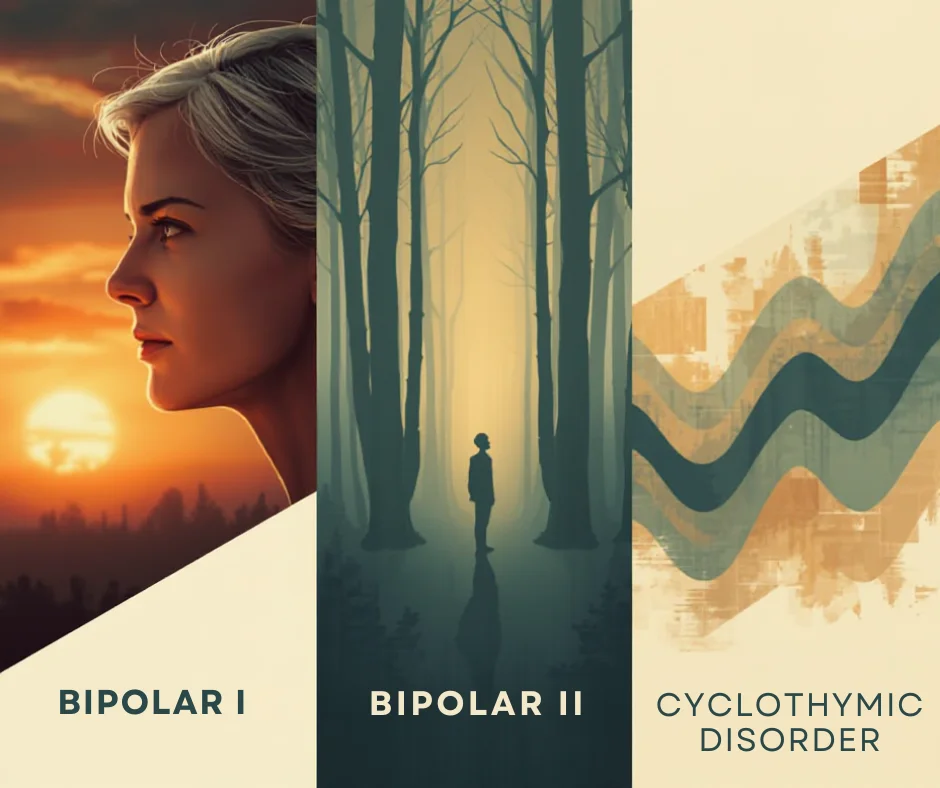 To define bipolar disorder accurately, we must look at it as a chronic mood dysregulation condition. In psychology and medicine,…
Are you looking for a Therapist?
Connect with qualified mental health professionals who understand
bipolar disorder, mood changes, and emotional challenges.
Private • Supportive • Confidential