
Gaslighting: Meaning, Examples, Types, Origins, and How to Respond
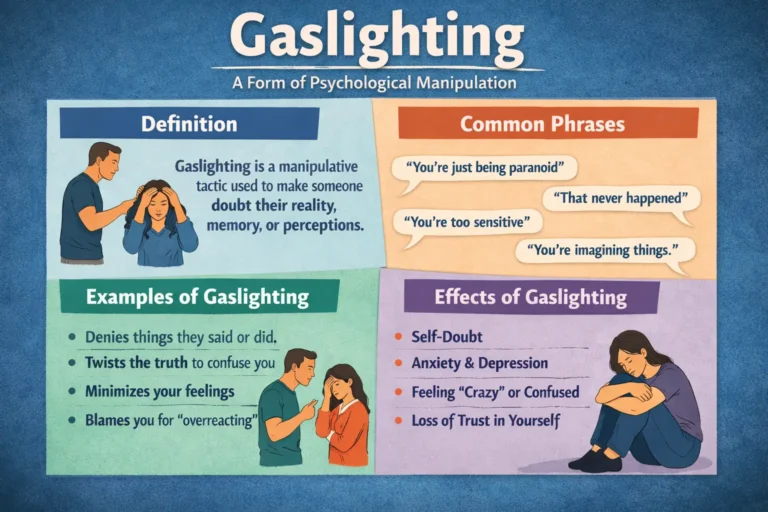
Psychological manipulation can be so subtle that it feels like a shadow—always present but impossible to grasp. Among these tactics, gaslighting stands out as one of the most destabilizing forms of emotional abuse. It is a slow, methodical erosion of an individual’s sense of reality, leaving them untethered from their own memories and perceptions.
In this comprehensive guide, we will explore the depths of gaslighting: from its cinematic origins to its modern-day clinical definitions. By understanding the mechanics of this behavior, the common phrases used by manipulators, and the psychological impact on the victim, you can begin to anchor yourself back in the truth. Whether you are seeking to define a confusing experience in a relationship or looking for practical ways to shut down a manipulator, this article provides the roadmap to reclaiming your reality.
What Is Gaslighting and Why It Matters
At its core, gaslighting is a form of psychological manipulation where a person or group makes someone question their own sanity, perception of reality, or memories. It is not a simple disagreement; it is a power dynamic. People who experience gaslighting often feel a profound sense of confusion, as if the ground is constantly shifting beneath their feet.
The reason gaslighting matters so much in contemporary psychology is its ability to bypass our natural defenses. Most of us trust our senses. However, when someone we love, respect, or work for consistently tells us that what we saw didn’t happen, or that what we feel is “crazy,” our self-confidence begins to fracture. Over time, the victim becomes increasingly dependent on the gaslighter for the “correct” version of the truth.
Understanding what gaslighting is is the first step toward emotional safety. By naming the behavior, you strip it of its invisibility. Awareness allows you to move from a state of reactive confusion to one of proactive protection, ensuring that your mental health and autonomy remain intact.
Gaslighting Meaning
When people ask for the gaslighting meaning, they are often looking for a way to describe an experience that feels “off” but is hard to pin down. In plain language, gaslighting is the act of manipulating someone into doubting their own perceptions.
The Psychology Framing
Psychologically, gaslighting is categorized as a form of emotional abuse. It involves a “gaslighter” (the perpetrator) and a “gaslightee” (the target). The gaslighter uses persistent denial, misdirection, contradiction, and lying to destabilize the target. Unlike a regular lie, which is meant to cover up a specific mistake, gaslighting is intended to make the target question their overall cognitive ability.
What Gaslighting Is Not
It is equally important to define gaslighting by what it isn’t. In recent years, the term has become a popular “buzzword,” sometimes leading to its misuse.
- It is not a simple disagreement: If two people remember a conversation differently, that is a memory gap or a difference of opinion.
- It is not being wrong: Someone telling you that you are incorrect about a fact is not gaslighting unless they are doing it to make you feel mentally unstable.
- It is not expressing an unpopular opinion: Disagreeing with your perspective is a part of healthy communication, provided it doesn’t involve the systemic deconstruction of your reality.
What Does Gaslighting Someone Mean?
To understand what gaslighting someone means, one must look at the intent and the power dynamic involved. Gaslighting is almost always about control. By making a person doubt themselves, the manipulator gains the upper hand in the relationship.
Intentional vs. Unconscious Behavior
While many gaslighters are calculated and intentional—often seen in domestic abuse or cult dynamics—some people gaslight unconsciously. This often stems from a defense mechanism where the individual simply cannot accept being wrong or being seen as the “bad guy.” To protect their own ego, they rewrite the narrative of a situation until they believe their own lie, and then they force that lie onto the other person.
The Power Imbalance
Gaslighting thrives where there is a power imbalance. This could be a boss and an employee, a parent and a child, or a partner who holds more financial or social sway. The victim often feels that they have too much to lose by challenging the manipulator, which further cements the cycle of self-doubt and emotional dependence.
Why Is It Called Gaslighting?
The gaslighting origin is one of the most fascinating etymologies in modern psychology. The term does not come from clinical research, but from the arts—specifically a 1938 stage play titled Gas Light by Patrick Hamilton.
The 1938 Play and the 1944 Movie
The story follows a man named Gregory who attempts to convince his wife, Paula, that she is going insane so he can steal her hidden jewels. One of his primary tactics involves dimming the gas-powered lights in their home. When Paula points out that the lights are flickering and fading, Gregory insists she is imagining things. He couples this with hiding objects and blaming her for losing them, effectively making her believe she has lost her mind.
Entry into Popular Culture
The 1944 film adaptation starring Ingrid Bergman became a classic, and the term began to circulate in psychological circles by the 1960s to describe the clinical phenomenon of reality-distorting abuse. Today, it remains a perfect metaphor because it captures the “slow burn” of the abuse—it isn’t a sudden explosion, but a gradual dimming of the victim’s inner light until they can no longer see the truth.
Is Gaslighting a Real Word? Dictionary & Popular Use
Many wonder is a word that carries official weight. The answer is a resounding yes. In 2022, Merriam-Webster named “gaslighting” its Word of the Year, noting a 1,740% increase in searches. It is officially recognized by the Oxford English Dictionary and the American Psychological Association (APA).
Clinical vs. Slang Usage
While it is a “real” word, its usage varies:
- Clinical/Legal: Used to describe patterns of coercive control and emotional abuse.
- Slang/Urban Dictionary: Often used more loosely to describe any form of lying or “messing with” someone’s head.
The danger of the term becoming “slang” is that it can dilute the severity of actual gaslighting. When we call every small lie “gaslighting,” we risk losing the precision needed to identify the systemic, life-altering abuse that the term was designed to describe.
Gaslighting Examples: Everyday Situations Explained
Understanding what an example of gaslighting is requires looking at specific behavioral patterns. It rarely looks like a villain in a movie; it often looks like a “helpful” partner or a “concerned” boss.
Denying the Evidence
The most common example of gaslighting is the flat-out denial of an event that occurred. Even if you have proof—a text message, a photo, or a recording—the gaslighter will say, “That was doctored,” “You’re taking that out of context,” or “I never sent that.”
Rewriting History
This involves the gaslighter adding or removing details from a shared memory to make themselves the hero or the victim. “I didn’t yell at you; I was speaking firmly because you were being aggressive. Don’t you remember how you started it?”
Minimizing and Trivializing
When you express hurt, the gaslighter invalidates your feelings. They might say you are “too sensitive” or that you are “making a big deal out of nothing.” By doing this, they train you to stop complaining, eventually leading you to stop even identifying your own pain.
10 Examples of Gaslighting
To help you identify this behavior quickly, here are 10 examples of gaslighting commonly found in toxic dynamics:
- The “You’re Crazy” Defense: Dismissing your concerns by suggesting you are mentally unstable or “losing it.”
- Blame-Shifting: Taking a mistake they made and twisting it until it becomes your fault.
- The “Good Intentions” Cloak: Claiming they only lied or manipulated you “out of love” or “for your own good.”
- Stonewalling: Refusing to listen or talk about an issue, making you feel like your reality doesn’t even deserve a response.
- Withholding Affection: Punishing you for “misremembering” things by becoming emotionally cold.
- Using Others as Weapons: Saying, “Everyone else thinks you’re acting weird lately,” to make you feel isolated.
- The Fake Apology: “I’m sorry you feel that I was mean, but I wasn’t.” (This puts the “fault” on your feelings, not their actions).
- The Memory Swap: Insisting they told you something they didn’t, making you feel forgetful or disorganized.
- Countering: Questioning your memory of an event with such intensity that you start to agree with their version just to stop the argument.
- The “Joke” Excuse: Saying something cruel and then telling you, “it was just a joke,” and that you “have no sense of humor” when you get upset.
What Are the 4 Types of Gaslighting?
While all gaslighting aims to distort the truth, it manifests in different ways depending on the manipulator’s goal. Understanding the 4 types of gaslighting helps you categorize the specific tactics being used against you.
- Denial-Based Gaslighting: This is the most direct form. The perpetrator simply denies that an event occurred or that a conversation took place. They may look you in the eye and say, “I never said that,” with such conviction that you begin to wonder if you dreamed the encounter.
- Reality Distortion (The “Double Down”): In this type, the gaslighter doesn’t just deny your reality; they replace it with a fake one. They might move objects in your house and tell you that you left them there, or tell you that a friend said something cruel about you when they actually didn’t. This is designed to make you feel like your senses are failing.
- Emotional Invalidation: Here, the focus is on your internal world. The gaslighter tells you that your feelings are “wrong,” “crazy,” or “excessive.” By constantly hearing that your emotional response is inappropriate, you eventually lose the ability to trust your own “gut feelings.”
- Projection and Blame Reversal: This involves the gaslighter taking their own negative traits or actions and accusing you of them. If they are being unfaithful, they will accuse you of cheating. If they are angry, they will claim you are the one who is out of control. This keeps you busy defending yourself, so you don’t have the energy to hold them accountable.
Gaslighting in Relationships: Romantic, Family, Work
Gaslighting is rarely a “one-size-fits-all” behavior; it adapts to the context of the relationship. Knowing what gaslighting means in a relationship depends on the specific power dynamic at play.
Romantic Partners
In romantic relationships, gaslighting often begins during the “devaluation” phase. It might start with small things—denying they forgot an anniversary—and escalate into isolating you from friends by claiming your loved ones “don’t actually like you.” The goal is to make the victim feel that the gaslighter is the only person they can trust.
Parents and Children
Gaslighting by a parent is particularly damaging because it occurs during a child’s formative years. A parent might deny a child’s childhood trauma (“That never happened, you were a happy kid”) or tell the child they are “too sensitive” when the parent is being abusive. This often leads to a lifetime of self-doubt.
Workplace Dynamics
In the office, gaslighting often looks like “moving the goalposts.” A manager might give you verbal instructions and then reprimand you for following them, claiming they never said such a thing. They may also exclude you from meetings and then tell you that you were “too busy” or “forgot” about the invite.
Narcissist Gaslighting: What Makes It Different?
While not all gaslighters are narcissists, narcissist gaslighting is a specific, potent subset of the behavior. For someone with Narcissistic Personality Disorder (NPD), gaslighting is a tool used to maintain their “False Self”—an image of perfection and superiority.
- Image Management: A narcissist will gaslight anyone who challenges their perceived perfection. If you point out a mistake, they will rewrite history to make the mistake disappear or make it your fault.
- The Cycle of Control: It follows a predictable pattern: Idealization (where they put you on a pedestal), Devaluation (where the gaslighting begins), and Discard (where they leave you once your self-esteem is destroyed).
- Lack of Empathy: Unlike an accidental gaslighter who might feel guilty once they realize they’ve hurt you, a narcissist views your confusion as a “win” because it means they are still in control.
How Gaslighting Affects a Person Psychologically
The long-term impact of what gaslighting does to a person is profound. It isn’t just a “bad mood”; it is a form of psychological trauma.
- Anxiety and Depression: The constant state of confusion keeps the nervous system in a “fight or flight” mode, leading to chronic anxiety.
- Loss of Confidence: When you can’t trust your own mind, you stop taking risks, making decisions, or believing in your own competence.
- Emotional Dependence: As the victim loses trust in themselves, they lean more heavily on the gaslighter to “interpret” the world for them, creating a dangerous cycle of dependency.
- PTSD Symptoms: Many survivors of intense gaslighting experience flashbacks, hypervigilance, and difficulty forming new, healthy relationships because they are waiting for the next “lie” to drop.
How to Respond to Gaslighting
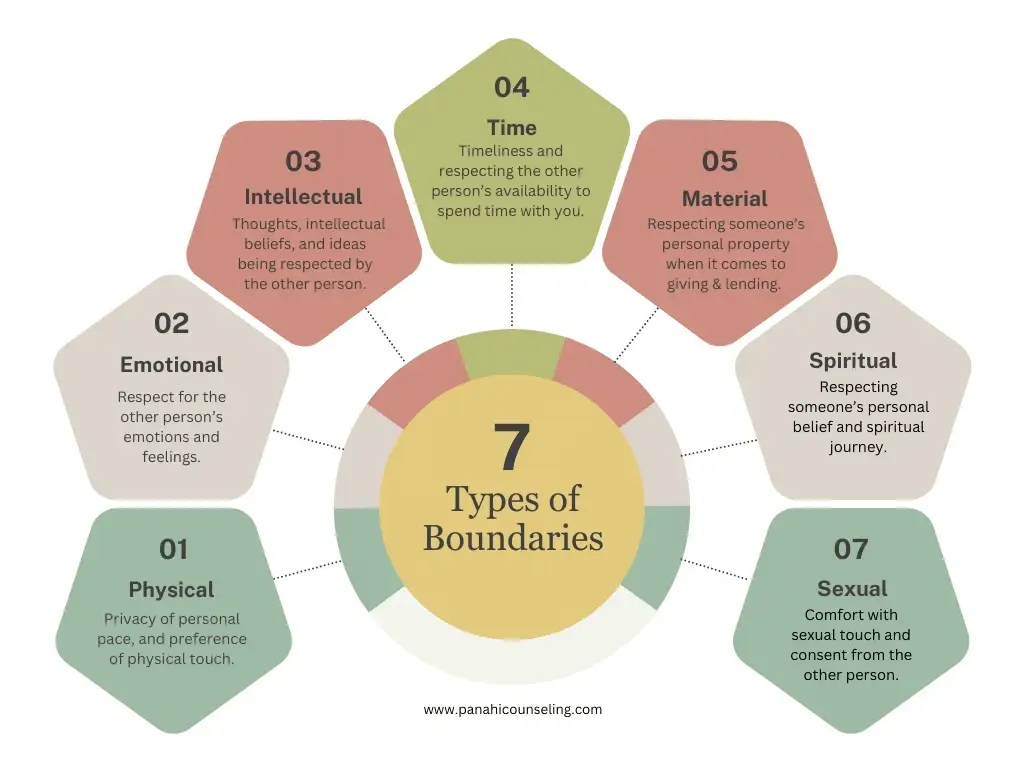
Learning how to respond to gaslighting requires a shift from “defending your truth” to “preserving your truth.”
Reality Anchoring
This is the practice of keeping an objective record of events. Journaling, saving emails, and taking screenshots are vital. When the gaslighter says, “That never happened,” you don’t have to show them the proof (which they will just deny anyway), but you can look at the proof yourself to stay grounded.
Set Hard Boundaries
Stop engaging in circular arguments. Once you realize gaslighting is happening, the conversation is no longer about finding the truth; it’s about control. You can say: “We remember this differently, and I’m not going to argue about it anymore.”
Seek Outside Validation
Gaslighting thrives in isolation. Talk to a trusted friend, a therapist, or a support group. Describing the situation to an objective third party can help you realize that you aren’t “crazy”—the situation is.
How to Shut Down a Gaslighter
Knowing how to shut down a gaslighter is about refusing to participate in the “reality war.” When you realize someone is trying to rewrite your history, the goal is not to convince them they are wrong—it is to end the interaction before your confidence is shaken.
Calm, Firm Statements
The most effective way to respond to gaslighting is by using “I” statements that center on your own perception without attacking theirs. This limits their ability to escalate the argument.
- Response: “I know what I saw, and I’m not open to debating my memory of it.”
- Response: “We clearly have different recollections of that conversation. Let’s move on to how we solve the current problem.”
- Response: “I’m not ‘too sensitive’; I’m expressing a boundary. If you can’t respect that, I’m walking away.”
Gaslighting in Popular Culture
While the 1944 film gave us the name, modern media has kept the concept of gaslighting in the public eye. Understanding these portrayals can help us spot the behavior in our own lives.
- The Origin Reference: In the movie Gaslight, the flickering lamps serve as a physical manifestation of the psychological “dimming” that happens to victims.
- Modern Media: Shows like The Girl on the Train or Big Little Lies often feature characters who are told their memories of trauma are false or that they are “unstable” to protect a perpetrator’s secrets.
- The Meme Problem: While gaslighting memes help raise awareness, they sometimes simplify the behavior to mean “lying.” This can be dangerous because it makes the actual, deep-rooted psychological abuse seem like a joke.
Frequently Asked Questions
What is gaslighting?
Gaslighting is a form of psychological manipulation where a person makes someone else question their own sanity, memory, or perception of reality.
What is an example of gaslighting?
An example is someone saying, “I never said that,” about a conversation you clearly remember having, or telling you that you are “imagining things” when you point out their bad behavior.
What are the 4 types of gaslighting?
The four common types include Outright Denial, Reality Distortion, Emotional Invalidation, and Projection/Blame Reversal.
How do I deal with gaslighting?
Start by documenting the truth (emails, texts, journals), seeking validation from a third party, and refusing to argue about the facts with the manipulator.
How do I shut down a gaslighter?
Use firm, neutral language like: “I know my truth, and I don’t need you to agree with it for it to be real.” Then, disengage from the conversation.
Conclusion
Gaslighting is a thief of the self. It steals your confidence, your peace of mind, and your ability to trust your own senses. However, the very fact that you are searching for the gaslighting meaning suggests that a part of you is already fighting back. Your intuition—that “gut feeling” that something is wrong—is your most powerful weapon.
Healing from gaslighting doesn’t happen overnight. It requires consistent reality anchoring, the support of people who truly see you, and often the professional guidance of a therapist. Remember: your memories are yours, your feelings are valid, and you do not need anyone else’s permission to believe in your own reality.
Authoritative References
1. American Psychological Association (APA): What Is Gaslighting?
2. Harvard Health: Recognizing and Overcoming Gaslighting
3. The National Domestic Violence Hotline: Identify Gaslighting
4. Newport Institute: The Psychological Stages of Gaslighting
5. Merriam-Webster: The Evolution of “Gaslighting.”



Subscribe to Our Newsletter
Get mental health tips, updates, and resources delivered to your inbox.
MORE from Author
Read More In my practice as a clinical psychologist, I often observe that the difference between a patient who crumbles under pressure…
- We all have "up" days and "down" days. Perhaps you feel energized after a promotion or sluggish on a rainy…


 To define bipolar disorder accurately, we must look at it as a chronic mood dysregulation condition. In psychology and medicine,…
 To answer whether bipolar fits the bill, we first have to define what a neurodivergent person actually is. The term…


Are you looking for a Therapist?
Connect with qualified mental health professionals who understand
bipolar disorder, mood changes, and emotional challenges.
Private • Supportive • Confidential