
Understanding the Interest Based Nervous System: ADHD, Autism, and Neurodivergent Motivation
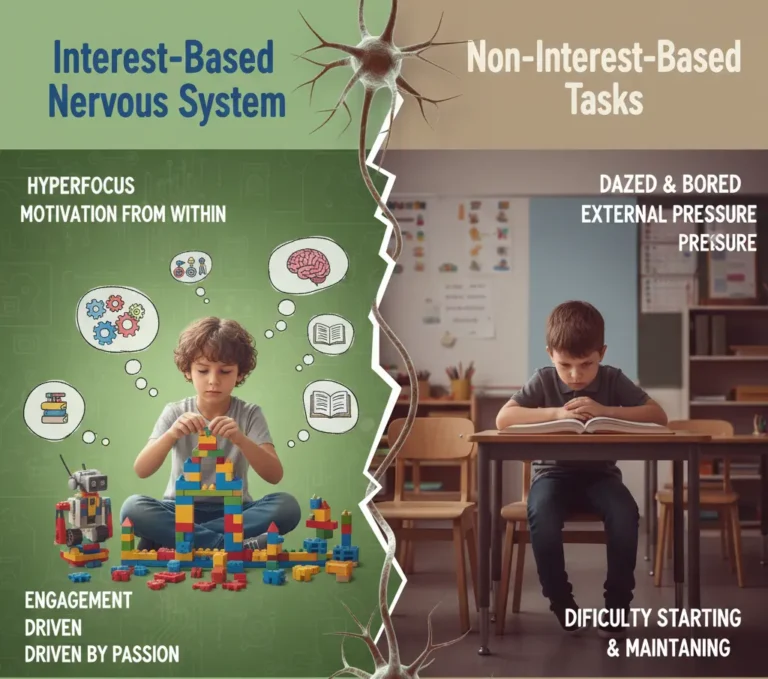
For decades, the traditional understanding of motivation has been built upon a singular pillar: importance. We are taught that if a task is important, we should be able to do it. If a deadline is looming, we should feel the “push” to start. If a consequence is severe, we should have the focus to avoid it. However, for individuals with ADHD, autism, and other neurodivergent profiles, this “Importance-Based” model often fails. It isn’t due to a lack of willpower, a character flaw, or a lack of intelligence. Rather, it is because their brains operate on a fundamentally different frequency: the Interest Based Nervous System (IBNS).
Coined by Dr. William Dodson, a pioneer in adult ADHD research, the concept of the Interest-Based Nervous System explains why neurodivergent individuals can spend twelve hours straight coding a new app or researching a niche historical event (Hyperfocus), yet struggle to spend ten minutes folding laundry or filling out a tax form.
What Is an Interest-Based Nervous System?
At its core, the Interest-Based Nervous System is a description of how the brain’s arousal and engagement mechanisms function. In a neurotypical brain, the reward circuitry is relatively “democratic.” It can assign value and focus to things that are objectively important (like paying bills) even if they are boring.
In contrast, the neurodivergent brain is more “aristocratic.” It requires a specific set of keys to unlock the gates of the prefrontal cortex—the area of the brain responsible for executive functions like planning, time management, and sustained attention.
Meaning and Origin: Dr. William Dodson’s Discovery
The term was popularized by Dr. William Dodson after decades of clinical observation. He noted that his ADHD patients didn’t have an “attention deficit”—they had an abundance of attention that they simply couldn’t direct at will. He realized that the ADHD nervous system is not regulated by:
- Importance (Does this matter?)
- Rewards (What do I get for doing this?)
- Consequences (What happens if I don’t do this?)
Instead, the ADHD brain is activated by Interest, Novelty, Challenge, and Urgency. Without one of these four “inciters,” the brain effectively stays in a low-power, “sleep” mode, regardless of how much the person wants to be productive.
Key Neurodivergent Perspective
Understanding the IBNS is revolutionary for neurodivergent people because it shifts the narrative from “moral failure” to “biological difference.” It explains why “just using a planner” doesn’t work. A planner highlights importance, but it doesn’t provide the interest or novelty required to jumpstart the neurodivergent brain.
Interest-Based vs. Importance-Based Nervous System
To understand how to navigate life as a neurodivergent person (or support one), we must distinguish between these two internal operating systems.
Core Differences and Practical Implications
| Feature | Interest-Based Nervous System | Importance-Based Nervous System |
| Primary Driver | Personal Passion, Novelty, Competition. | External Priority, Obligation, Value. |
| Response to Deadlines | Procrastination until “Urgency” creates focus. | Linear progress based on priority. |
| Attention Quality | All-or-Nothing (Hyperfocus vs. Boredom). | Sustained, moderate attention. |
| ADHD Relevance | Explains why traditional discipline fails. | Standard “neurotypical” adult model. |
| Executive Function | Activated by the task itself. | Activated by the importance of the task. |
Why This Distinction Matters for ADHD and Autism
If a parent tells an autistic child, “It’s important that you clean your room because we have guests coming,” they are speaking the language of the Importance-Based Nervous System. If the child has an IBNS, that sentence has almost no neurological “weight.” It doesn’t stimulate the dopamine required to initiate the task.
However, if that same parent says, “I bet you can’t find a way to organize your LEGO bricks by color in under ten minutes,” they have introduced Challenge, Novelty, and Interest. Suddenly, the brain “wakes up.” This isn’t manipulation; it’s an accommodation for a specific type of nervous system.
Interest-Based Nervous System in ADHD
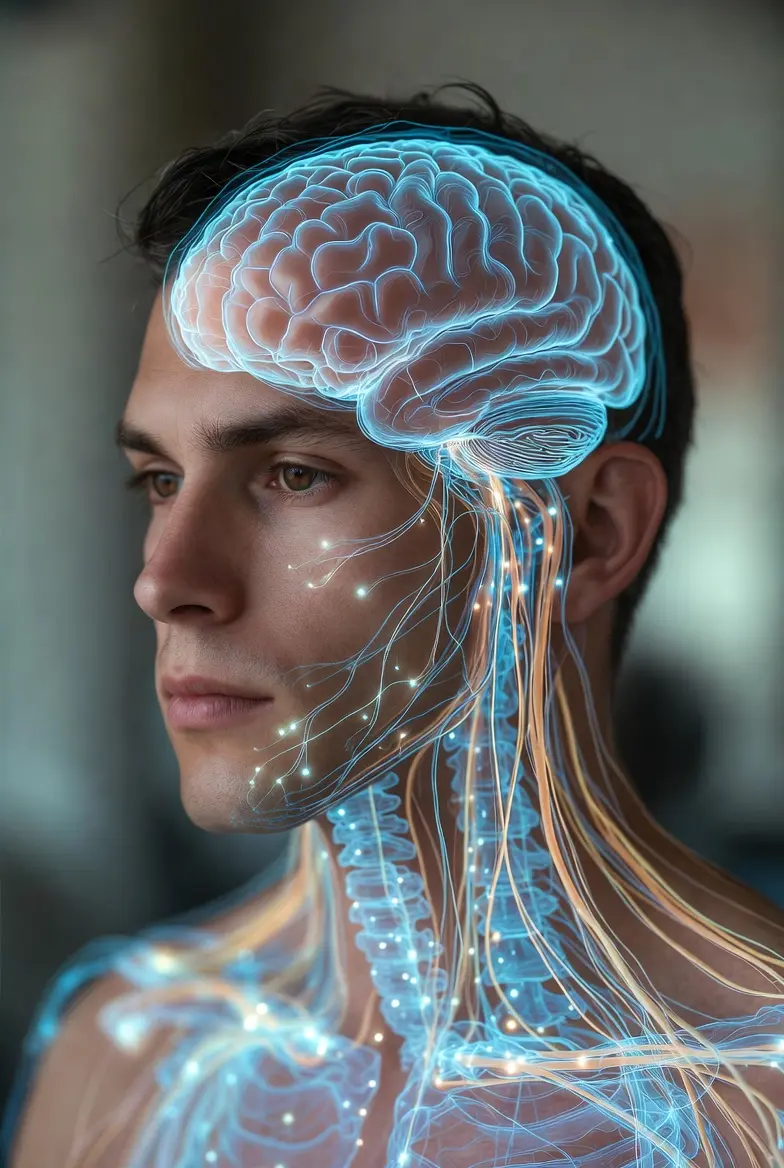
For those with ADHD, the IBNS is the defining feature of their daily lived experience. It is the reason behind the “Gifted Kid Burnout” trope—where a student excels in complex, interesting subjects but fails simple, repetitive ones.
Motivation and Executive Function: The Four Inciters
Dr. Dodson identified that there are only four ways to get an ADHD brain to engage. If a task doesn’t have one of these, it feels physically painful or impossible to start:
- Interest: Does the person find the topic fascinating?
- Novelty: Is it a new way of doing something? Is it a “shiny” new project?
- Challenge: Is there a sense of competition or a “quest” to be completed?
- Urgency: Is there a looming deadline that has finally become “now or never”?
Hyperfocus Explained
Hyperfocus is the “superpower” side of the Interest-Based Nervous System. When an ADHD brain finds something that checks all the boxes, it enters a state of deep, intense concentration. During hyperfocus, the brain’s filters disappear. The person may lose track of time, forget to eat, and achieve weeks’ worth of work in a single afternoon. While productive, it is also exhausting and can lead to dysregulation if not balanced.
ADHD Symptoms Linked to Dysregulated IBNS
When an IBNS brain is forced to live in an importance-based world without support, it often becomes dysregulated.
| Symptom | Real-World Example | Coping Strategy |
| Task Paralysis | Staring at a simple email for hours, unable to type. | Gamify: “I’ll give myself a point for every sentence.” |
| Chronic Procrastination | Only starting the term paper at 3:00 AM the night before. | Create artificial urgency or “body doubling.” |
| Dopamine Seeking | Constant phone checking or snacking when bored. | Use “fidget” tools or high-interest background noise. |
| Burnout | Intense hyperfocus followed by days of inability to move. | “Pacing” and scheduled breaks to break hyperfocus. |
The Interest-Based Nervous System is essentially a dopamine-delivery issue. In a neurotypical brain, the mere thought of ‘completing’ an important task releases enough dopamine to fuel the action. In the ADHD brain, the dopamine is only released by the process of being interested. This is why neurodivergent people aren’t ‘lazy’—they are literally waiting for the fuel to arrive so they can start the engine. Understanding this allows us to stop shaming and start ‘dopamine-hacking’ our environments.
Interest-Based Nervous System in Autism
While the term IBNS originated in the ADHD community, it is deeply relevant to the autistic experience, though it manifests slightly differently. In autism, the system is often tied to Monotropism—the tendency to focus mental resources on a small number of interests.
Hyperfocus vs. Special Interests
In ADHD, hyperfocus is often “broad but shallow”—the person may hyperfocus on a new hobby every week. In autism, the Interest-Based Nervous System is usually “narrow but deep.” These are often called Special Interests.
For an autistic person, a Special Interest isn’t just a hobby; it is a primary tool for nervous system regulation. Engaging with a Special Interest:
- Reduces anxiety.
- Provides a sense of order and predictability.
- Functions as the primary “engine” for learning other skills.
Supporting Neurodivergent Learners and Employees
In an educational or work setting, the best way to support an autistic person is to link “uninteresting” tasks to their special interests. If an autistic student loves trains but hates math, teaching multiplication through train schedules or track lengths can engage their IBNS in a way that standard worksheets never will.
Scientific Foundations: Structure and Function of the Nervous System
To understand why “interest” can have such a profound effect, we have to look at the anatomy of the human nervous system. Motivation isn’t just “in the mind”; it is a physiological process involving nerves, neurotransmitters, and organs.
Two Main Parts of the Nervous System
The nervous system is the body’s command center. It consists of:
- The Central Nervous System (CNS): The brain and spinal cord. This is where the IBNS “decides” what is interesting.
- The Peripheral Nervous System (PNS): All the nerves that branch off. This is how the brain sends the “go” signal to your muscles.
Divisions Relevant to IBNS: The Autonomic System
The Autonomic Nervous System (ANS) is particularly relevant to neurodivergence because it controls our involuntary responses. It is split into two “gears”:
- Sympathetic Nervous System: The “Fight or Flight” system. In ADHD/Autism, this system is often over-active. When an neurodivergent person is forced to do a “boring” task, the brain perceives it as a threat, triggering stress.
- Parasympathetic Nervous System: The “Rest and Digest” system. This is what we try to activate through “interest.” When we are engaged in something we love, our heart rate stabilizes and our brain enters a state of “flow.”
Involuntary vs. Voluntary: The “Willpower” Myth
Most people think motivation is voluntary (something we choose). However, the Interest-Based Nervous System demonstrates that for many, engagement is largely involuntary. You cannot “choose” to be interested in something any more than you can “choose” to have your pupils dilate in the dark.
In this second section, we explore how a nervous system built for interest can fall out of balance, the tools available for self-assessment, and the practical “dopamine-hacking” strategies used by the neurodivergent community to thrive in an importance-based world.
Dysregulated Nervous System – Symptoms & Signs
When a person with an Interest-Based Nervous System is consistently forced to operate in an environment that ignores their biological needs—such as a rigid corporate office or a traditional classroom—the nervous system can become dysregulated. This is not just “stress”; it is a physiological state where the body’s ability to maintain homeostasis (internal balance) breaks down.
How IBNS Dysregulation Manifests
Because the IBNS relies on high-stimulation “inciters” (Interest, Novelty, Challenge, Urgency) to function, a lack of these can lead to a “brownout” of the prefrontal cortex.
- Task Paralysis: The sensation of being “locked” in your body. You know you need to move, but the brain hasn’t sent the chemical “go” signal.
- Emotional Lability: Sudden mood swings. When the brain is under-stimulated, it may create “conflict” or “drama” just to get an adrenaline spike to help it focus.
- Sensory Overload: When the nervous system is tired from trying to force focus, it loses its ability to filter out background noise, light, or touch.
Related Nervous System Concepts
To understand dysregulation, we must look at the Autonomic Nervous System (ANS). The ANS manages the “visceral” or “vegetative” functions of the body—things that happen without us thinking about them.
- Sympathetic Activity: This is the “gas pedal.” In a dysregulated IBNS, the sympathetic system may be constantly “revving” due to the anxiety of unfinished tasks (Urgency).
- Parasympathetic Activity: This is the “brake.” Neurodivergent individuals often struggle to “downshift,” leading to insomnia or the “tired but wired” feeling.
- Homeostasis: The state of steady internal physical and chemical conditions. An IBNS brain often exists in a state of “all-or-nothing” rather than a steady middle ground.
Assessment Tools & Self-Tests
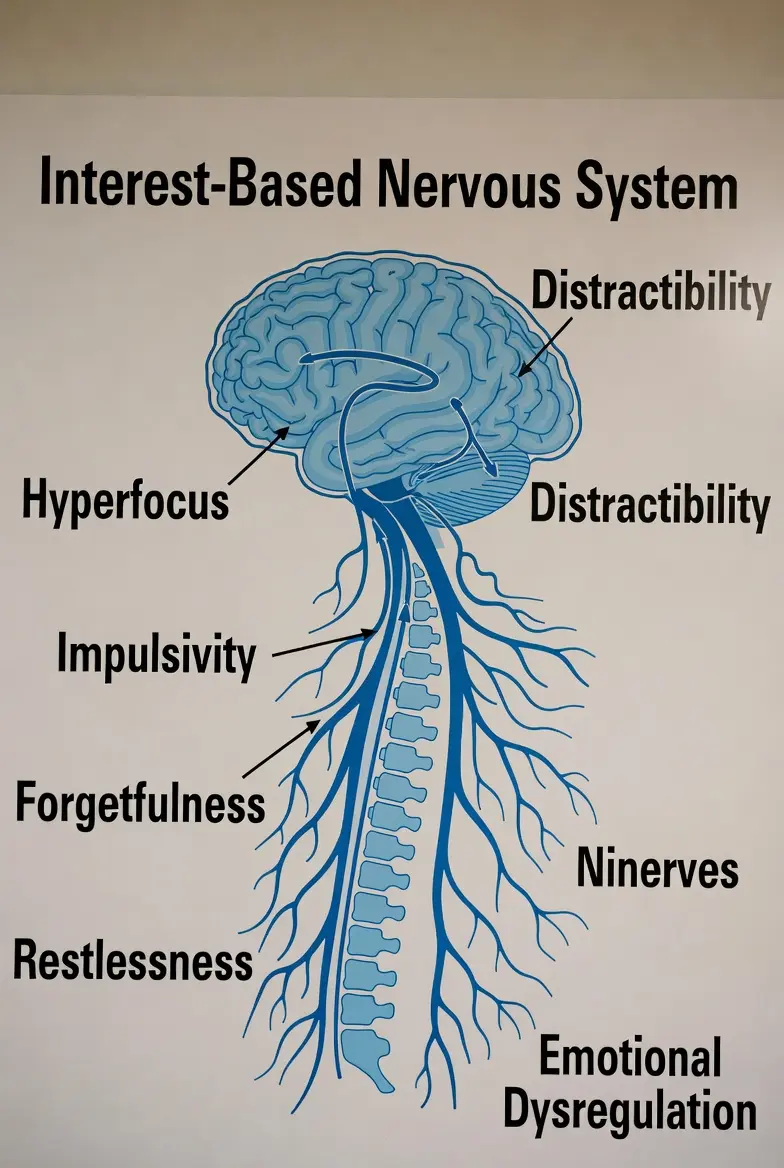
Because “Interest-Based Nervous System” is a clinical description of a trait rather than a standalone diagnosis in the DSM-5, there is no single blood test or brain scan to confirm it. However, several tools and resources help individuals identify if this is their primary operating system.
Interest-Based Nervous System Tests & PDFs
Most clinicians use qualitative assessments. You can evaluate your own system by asking these four questions:
- The Instant-On Test: Can I focus intensely on something I love even if I am exhausted, yet fail to focus on something “important” even when I am well-rested?
- The Deadline Test: Do I find it virtually impossible to start a task until the very last minute, at which point I become a “super-performer”?
- The Novelty Test: Does my productivity skyrocket when I start a new project, only to plummet once the “newness” wears off?
- The Physical Pain of Boredom: Does doing repetitive or “boring” tasks feel like physical discomfort or a “brain fog” that I cannot think through?
Reddit Discussion Summaries: Community Insights
Platforms like Reddit (r/ADHD and r/Autism) are treasure troves of anecdotal evidence regarding the IBNS.
- The “Wall of Awful”: A popular community term for the emotional barrier that forms around boring tasks.
- Body Doubling: A common Reddit-endorsed strategy where having another person in the room (even if they aren’t helping) provides enough “social interest” to keep the IBNS engaged.
- The “Dopamenu”: A concept where individuals create a PDF or list of “dopamine-rich” activities to turn to when their nervous system feels under-stimulated.
Treatment & Support Strategies
The “treatment” for an Interest-Based Nervous System isn’t to change it into an importance-based one—that is biologically impossible. Instead, the goal is to bridge the gap between the two systems.
Behavioral Approaches: Working With the Brain
- Gamification: Turning tasks into a “Challenge.” Apps like Habitica turn to-do lists into a role-playing game, providing the “Challenge” and “Novelty” the IBNS craves.
- Task Chunking & The 10-Minute Rule: Breaking a massive, “important” project into tiny, 2-minute “Novelty” chunks.
- Scheduling Based on Interest: Instead of doing the “most important” thing first (which can lead to paralysis), start with the “most interesting” thing to get the dopamine flowing, then “coast” into the harder tasks.
Lifestyle Interventions
- Dopamine-Supporting Nutrition: Diets high in protein (which provides the amino acid tyrosine, a precursor to dopamine) can help maintain a baseline for the IBNS.
- Movement as Medicine: Exercise provides an immediate spike in dopamine and norepinephrine, which can act as a “primer” for the nervous system before a boring task.
- Sleep Hygiene: A tired nervous system is a more dysregulated one. For the IBNS, sleep often requires “low-dopamine” wind-down routines to prevent the brain from seeking “just one more interesting thing” at 2:00 AM.
Professional Guidance
- Occupational Therapy (OT): OTs are experts at “Sensory Diets” and environmental modifications that help an IBNS function in an Importance-Based world.
- Executive Function Coaching: Unlike traditional therapy, coaching focuses on the “how”—building systems that use Interest and Novelty to get things done.
- CBT (Cognitive Behavioral Therapy): Helpful for dealing with the shame associated with having an IBNS, though it doesn’t “fix” the underlying neurological trait.
FAQs
What is an example of an interest-based nervous system?
An example is a student who cannot sit still in a 30-minute history lecture (Importance) but can sit for 6 hours straight teaching themselves how to edit complex video effects on their computer (Interest/Challenge).
What are the 4 core traits of ADHD related to IBNS?
According to Dr. Dodson, the four “inciters” are: Interest, Novelty, Challenge, and Urgency. These are the only four keys that consistently unlock ADHD focus.
Is it a nervous breakdown?
No. While “nervous breakdown” is a non-clinical term for an emotional crisis, IBNS dysregulation is a chronic state of neurological mismatch. However, prolonged dysregulation can lead to burnout, which feels similar to a crisis.
How does the nervous system maintain homeostasis?
The Autonomic Nervous System uses the sympathetic and parasympathetic branches to balance arousal. For those with an IBNS, this balance is harder to maintain because “interest” causes high arousal, and “boredom” causes abnormally low arousal.
Final Takeaway
Having an Interest-Based Nervous System is like having a Ferrari engine with a bicycle’s fuel tank. You are capable of incredible speed and power, but you can’t run on standard “importance” fuel. By stopping the struggle to be “important-based” and embracing the “interest-based” reality, neurodivergent individuals can unlock their full, hyper-focused potential.
To provide a solid scientific foundation for the concept of the Interest-Based Nervous System (IBNS), the following authoritative references have been selected. These sources bridge the gap between clinical observation, neurobiology, and neurodivergent advocacy.
Authoritative Clinical & Research References

Related Posts






Subscribe to Our Newsletter
Get mental health tips, updates, and resources delivered to your inbox.
MORE from Author
Read More In my practice as a clinical psychologist, I often observe that the difference between a patient who crumbles under pressure…
- We all have "up" days and "down" days. Perhaps you feel energized after a promotion or sluggish on a rainy…


 To define bipolar disorder accurately, we must look at it as a chronic mood dysregulation condition. In psychology and medicine,…
 To answer whether bipolar fits the bill, we first have to define what a neurodivergent person actually is. The term…
Are you looking for a Therapist?
Connect with qualified mental health professionals who understand
bipolar disorder, mood changes, and emotional challenges.
Private • Supportive • Confidential