
Is Borderline Personality Disorder Genetic, Curable, or Inherited?

Medically reviewed by Laura Athey Updated Date: February 18, 2026
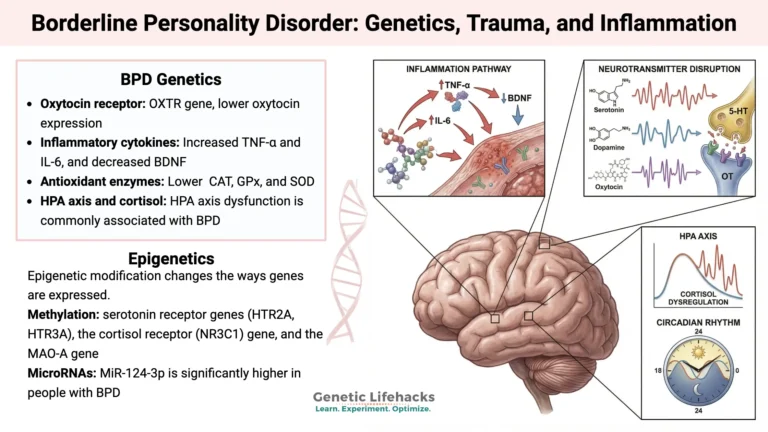
When an individual receives a diagnosis of Borderline Personality Disorder (BPD) or when a family member begins to recognize the patterns of emotional instability in a loved one, the questions that follow are often heavy with anxiety. Many wonder if borderline personality disorder is genetic. Others fear the long-term prognosis, asking with a mix of desperation and hope, ” Is borderline personality disorder curable?
These questions are not merely academic; they are deeply personal. They touch on our fears of heredity, our guilt as parents, and our hope for a stable future. Historically, BPD was shrouded in stigma and viewed as a “difficult” or even “untreatable” condition. However, modern neuroscience and longitudinal studies have revolutionized our understanding. We now know that BPD is a complex, multifaceted condition where biology and environment dance together. This guide separates myths from evidence, providing a comprehensive look at the origins, nature, and prognosis of BPD.
What Is Borderline Personality Disorder?
To discuss whether the disorder is inherited, we must first define what we are actually measuring. Borderline personality disorder is a mental health condition characterized by a pervasive pattern of instability in emotions, self-image, and interpersonal relationships.
According to the DSM-5, the condition is defined by several core borderline personality disorder symptoms:
- Emotional Dysregulation: Intense, rapid-fire mood swings that can last from a few hours to a few days.
- Identity Disturbance: A fragmented or unstable sense of self, often leading to sudden changes in career goals, values, or friendships.
- Relationship Instability: A pattern of “splitting,” where people are viewed as either “all good” or “all bad” (idealization and devaluation).
- Impulsivity: Engaging in potentially self-damaging behaviors, such as reckless spending, substance use, or binge eating.
- Fear of Abandonment: Frantic efforts to avoid real or imagined rejection.
A common concern is: Is borderline personality disorder dangerous? While BPD is associated with a higher risk of self-harm and suicidal ideation, it is important to clarify that individuals with BPD are statistically more likely to be victims of violence than perpetrators. The “danger” is primarily an internal emotional crisis that requires clinical intervention, not a threat to society.
Is Borderline Personality Disorder Genetic? What Research Shows
The most common question families ask is: Is borderline personality disorder genetic? Or is BPD hereditary? The short answer is yes—but with significant nuances.
Heritability Estimates
Large-scale twin studies (comparing identical twins who share 100% of their DNA with fraternal twins who share 50%) suggest that BPD has a heritability rate of approximately 35% to 60%. This means that roughly half of the variation in why some people develop BPD, and others do not, can be attributed to genetic factors.
There is No “BPD Gene”
It is a common misconception that there is a single “broken” gene passed from parent to child. Instead, what is likely inherited is a genetic vulnerability or a specific temperament. You might inherit a highly sensitive nervous system or a predisposition toward “negative affectivity” (the tendency to experience intense negative emotions).
Inherited Traits vs. Inherited Disorders
Science makes a clear distinction between inheriting the disorder and inheriting the building blocks. You may be genetically passed down a “thin emotional skin,” but whether that skin develops into BPD depends heavily on the environment in which you grow up. Genetic vulnerability is the “loaded gun,” but environment is often the “trigger.”
Is Borderline Personality Disorder Genetic or Learned? (Nature vs. Nurture)
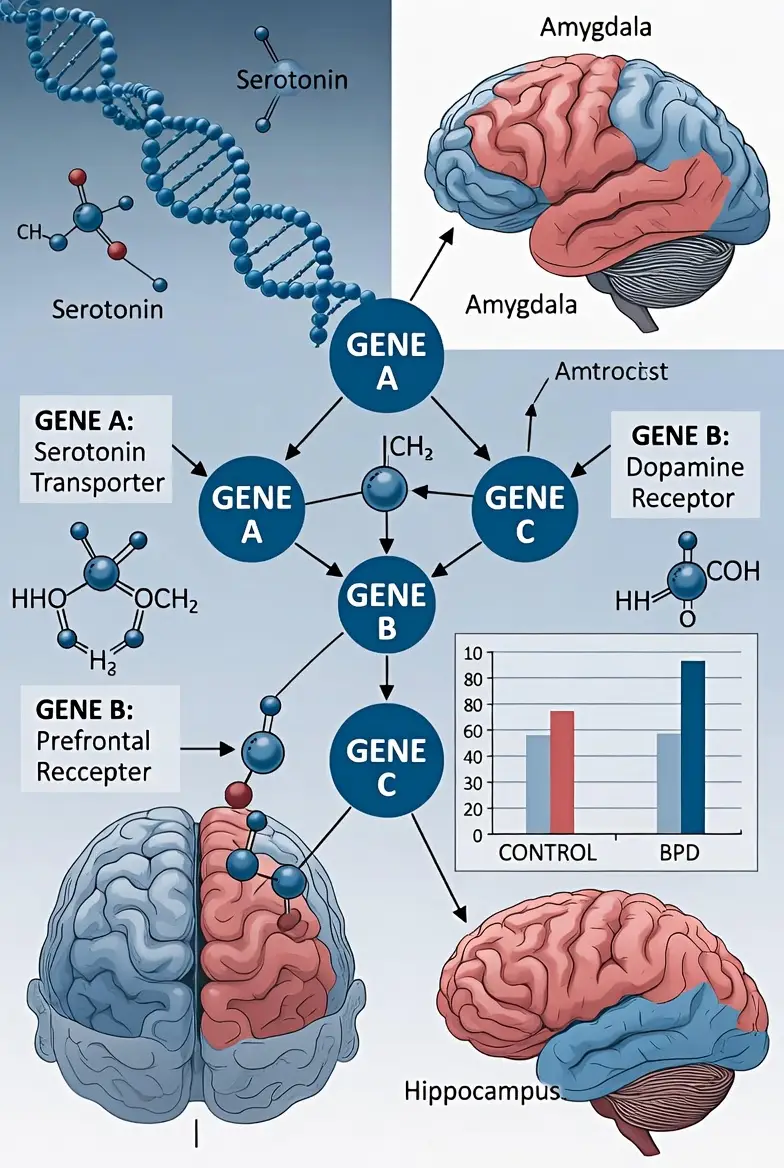
When people ask whether borderline personality disorder is genetic or learned, they are touching on the classic Nature vs. Nurture debate. Modern psychology uses the Biosocial Model to explain this interaction.
The Biosocial Interaction
BPD is rarely just one or the other; it is almost always both.
- The Biological Side: An individual is born with high emotional sensitivity and a slow return to a calm state after being upset.
- The Environmental Side: This sensitive child is raised in an “invalidating environment.” This can include childhood trauma, neglect, or simply a family dynamic where the child’s emotional expressions are punished, ignored, or mocked.
Is borderline personality disorder genetic or environmental? It is the collision of the two. In an invalidating environment, the sensitive child never learns how to label or regulate their intense feelings. Instead, they learn that they must escalate their emotions to be heard, or shut them down entirely, leading to the “explosions” and “numbness” seen in BPD.
Is BPD Inherited From Mother or Father?
A particularly painful question for parents is: Is BPD inherited from the mother or the father? This question is often rooted in a desire to assign blame or understand a family “curse.”
No Gender-Linked Inheritance
There is currently no evidence to suggest that BPD is more likely to be inherited from one parent over the other. Genetics do not care about the gender of the parent; they only care about the traits being passed down.
The Role of Modeling and Intergenerational Trauma
While the genetic component is neutral, the borderline personality disorder that occurs in families can sometimes be “learned” through a process called modeling. If a parent (mother or father) has untreated BPD, they may struggle to provide the stable, validating environment a sensitive child needs.
Furthermore, intergenerational trauma—where trauma is passed down through parenting styles and stress responses—can make the disorder appear “hereditary” even when it is primarily environmental. It is vital to approach this section with compassion: parents with BPD often love their children deeply but lack the self-regulation tools to manage the household’s emotional temperature.
Is Bipolar Disorder Genetic—and Is It the Same as BPD?
Because of the overlapping symptom of “mood swings,” people frequently ask: Is bipolar disorder genetic—and is it the same as BPD? Genetic Comparison Both conditions have a strong genetic component, but Bipolar Disorder actually has a much higher heritability rate (often cited at 80% or higher) than BPD. While they can co-occur, they are distinct conditions.
Mood Episodes vs. Emotional Reactivity
- Bipolar Disorder: Primarily a chemical/biological “clock” issue. Moods (mania and depression) usually last weeks or months and may happen without a specific external trigger.
- BPD: Primarily an “emotional thermostat” issue. Moods switch rapidly (sometimes multiple times a day) and are almost always triggered by an interpersonal event, such as a perceived rejection or an argument.
Is borderline personality disorder the same as bipolar? No. They require different medications and different therapeutic approaches. Misdiagnosis is common, but getting the right “genetic” context for each is crucial for effective treatment.
Is Borderline Personality Disorder Common?
Understanding the prevalence of the disorder helps reduce the sense of isolation many feel. To the question is borderline personality disorder is common, the data suggests it is more frequent than many realize.
- General Population: BPD affects approximately 1.6% to 5.9% of the general population.
- Clinical Settings: Because of the high level of distress it causes, BPD is much more common in mental health facilities, representing about 10% of outpatients and 20% of psychiatric inpatients.
- Gender Differences: Historically, BPD was diagnosed more in women (a 3:1 ratio). However, recent research suggests the disorder may be equally common in men, but men are often misdiagnosed with PTSD, ADHD, or Antisocial Personality Disorder due to gender bias in clinical assessment.
Borderline Personality Disorder Symptoms: Full Breakdown
The borderline personality disorder symptoms are often categorized into four “dimensions” to help clinicians and patients understand the complexity of the diagnosis.
1. Emotional Symptoms
- Affective Instability: Intense episodic dysphoria, irritability, or anxiety usually lasting a few hours and only rarely more than a few days.
- Chronic Emptiness: A persistent feeling of being “hollow” or “void,” which can lead to desperate attempts to fill the gap with external stimulation.
2. Behavioral Symptoms
- Impulsivity: Self-damaging actions in at least two areas (spending, sex, substance abuse, reckless driving, binge eating).
- Self-Harm: Recurrent suicidal behavior, gestures, threats, or self-mutilating behavior (often used as a physical “release” for emotional pain).
3. Relationship Symptoms
- Fear of Abandonment: Frantic efforts to avoid real or imagined rejection.
- Unstable Relationships: A pattern of “love-hate” dynamics where a partner is idealized one moment and devalued the next.
4. Cognitive Symptoms
- Identity Disturbance: Markedly and persistently unstable self-image.
- Paranoia or Dissociation: Transient, stress-related paranoid ideation or severe “out of body” feelings when under extreme pressure.
What Triggers a Person With Borderline Personality Disorder?
Knowing what triggers a person with borderline personality disorder is essential for both the individual and their loved ones. Because the amygdala (the brain’s emotional center) is hyper-reactive, “small” events can trigger “massive” responses.
- Perceived Rejection: A partner being 10 minutes late for dinner or a friend not replying to a text immediately.
- Separations: Even temporary separations, like a therapist going on vacation or a partner going on a business trip.
- Emotional Invalidation: Being told “it’s not a big deal” or “you’re overreacting” when they are in pain.
- Transitions: Major life changes, even positive ones, can trigger a fear that the current stability will be lost.
Is Borderline Personality Disorder Dangerous?
This is a sensitive topic often fueled by media sensationalism. Is borderline personality disorder dangerous? * To Self: The statistical danger is largely directed inward. Approximately 70% to 75% of individuals with BPD will attempt self-harm at least once, and the suicide completion rate is around 8% to 10%. This makes BPD a high-priority condition for clinical safety, but not a “menace” to society.
- To Others: While individuals with BPD may experience intense anger or “borderline rage,” this usually manifests as verbal outbursts or emotional volatility. Physical violence toward others is not a core diagnostic feature and is often less common than in the general population when accounting for co-occurring substance use.
Treatment reduces these risks dramatically. Once an individual learns distress tolerance skills, the “danger” levels drop toward baseline.
Is Borderline Personality Disorder Curable?
The most hopeful shift in modern psychiatry concerns the question: Is borderline personality disorder curable?
The Concept of Remission
In the traditional medical sense (like an infection), BPD is not “curable” because personality is part of who you are. However, it is highly treatable and has one of the best recovery rates of any personality disorder.
- Remission Statistics: Research shows that after 10 years of treatment, up to 86% of people no longer meet the diagnostic criteria for BPD.
- Recovery: While you may always be a “highly sensitive person,” the debilitating symptoms—the self-harm, the frantic abandonment fears, and the impulsivity—can “go into remission,” allowing you to live a stable, happy life.
Borderline Personality Disorder Treatments That Work
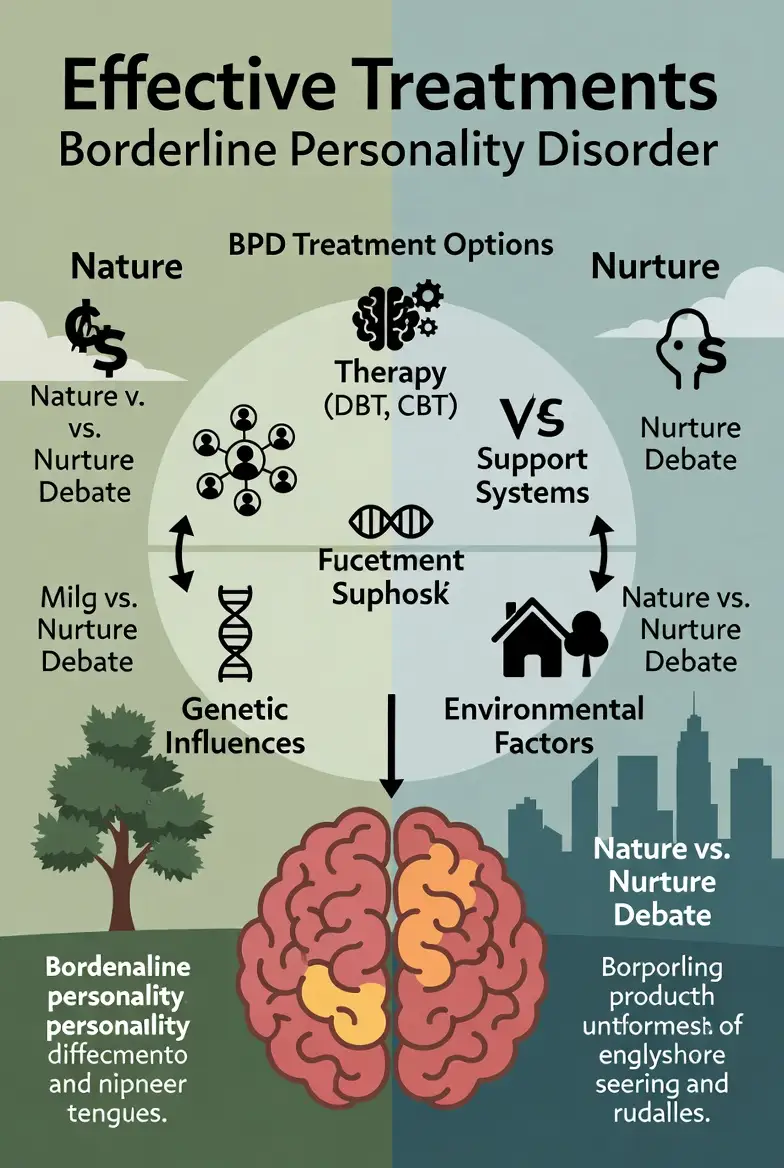
If you are seeking borderline personality disorder treatments, the gold standard is specialized psychotherapy.
1. Dialectical Behavior Therapy (DBT)
Created by Dr. Marsha Linehan, DBT focuses on the balance between “acceptance” and “change.” It teaches four specific skill sets: Mindfulness, Distress Tolerance, Emotion Regulation, and Interpersonal Effectiveness.
2. Mentalization-Based Therapy (MBT)
This therapy helps patients “mentalize”—or understand what is going on in their own minds and the minds of others—reducing the tendency to misinterpret social cues as rejection.
3. Schema Therapy
Combines elements of CBT and psychoanalysis to address deep-seated “schemas” (patterns) formed in childhood, such as the “Abandonment Schema” or the “Mistrust Schema.”
4. Medication
There is no FDA-approved medication for BPD itself. However, medications like mood stabilizers, antidepressants, or low-dose antipsychotics are often used to manage specific “clusters” of symptoms, such as severe anxiety or explosive anger.
Can Someone With Borderline Personality Disorder Be “Normal”?
A question often whispered in therapy rooms is: Can someone with borderline personality disorder be normal? The answer depends entirely on how you define “normal.”
If “normal” means never feeling intense emotions or never experiencing a moment of insecurity, then very few people—with or without BPD—attain that standard. However, if “normal” means having a stable job, maintaining long-term romantic relationships, and experiencing a baseline of internal peace, then the answer is a resounding yes.
Recovery in BPD is often described as “moving from a life of quiet desperation to a life worth living.” Through treatment, individuals learn to channel their high emotional sensitivity into deep empathy and creativity. They don’t lose their personality; they gain the “brakes” necessary to navigate it. Many people you encounter daily—teachers, doctors, artists, and parents—live in successful remission from BPD.
Does BPD Qualify as a Disability?
The question of whether BPD qualifies as a disability is important for workplace protections and financial support.
- ADA Protections: In the United States, BPD is recognized under the Americans with Disabilities Act (ADA). This means employers are required to provide “reasonable accommodations,” such as flexible scheduling for therapy appointments or a quiet workspace, provided the employee can still perform the essential functions of the job.
- Social Security (SSI/SSDI): BPD can qualify an individual for disability benefits, but the bar is high. One must prove “functional impairment”—meaning the symptoms are so severe that they prevent any gainful employment for at least 12 months.
- Workplace Reality: Many people with BPD work full-time. The “disability” aspect usually applies during acute crises or before an individual has accessed effective treatment like DBT.
What Is the Life Expectancy of a Person With Borderline Personality Disorder?
This is perhaps the most difficult question to address, but it is one that many researchers have studied: What is the life expectancy of a person with borderline personality disorder?
Historically, the life expectancy for those with BPD has been cited as lower than that of the general population, primarily due to two factors:
- Suicide Risk: As previously mentioned, the completed suicide rate is approximately 8% to 10%.
- Chronic Health Issues: The “allostatic load” (the wear and tear on the body from chronic stress) can lead to higher rates of cardiovascular disease, obesity, and diabetes.
The Crucial Caveat: These statistics are largely based on untreated populations. Recent data show that individuals who engage in long-term therapy and manage their impulsivity have a life expectancy that mirrors the general population. Recovery doesn’t just improve the quality of life; it literally extends it.
Borderline Personality Disorder Test: Diagnosis vs. Online Quizzes
If you are concerned about your symptoms, you may have searched for a borderline personality disorder test. It is vital to understand the hierarchy of these assessments.
- Online Quizzes: These are “screeners.” They can tell you if your symptoms align with BPD, but they cannot diagnose you. They often lack the nuance to distinguish BPD from PTSD or Bipolar Disorder.
- Clinical Assessment: A professional borderline personality disorder test involves a structured clinical interview (like the SCID-5). A clinician looks at your history, the duration of your symptoms, and your “affect” (how you express emotion) during the interview.
If an online test suggests you have BPD, do not panic. Take those results to a licensed professional for a comprehensive evaluation.
Frequently Asked Questions
Is BPD genetic or environmental?
It is both. Science supports the “Biosocial Model,” where a biological vulnerability (genetics) meets an invalidating environment (nurture).
Is borderline personality disorder hereditary?
Yes, it has a heritability rate of about 40% to 60%, but you inherit the temperament (sensitivity), not necessarily the full disorder.
Is BPD inherited from the mother or the father?
There is no evidence that it is linked to one specific parent. It can be passed down from either side through DNA or through modeled behavior.
Is BPD curable?
It is not “curable” like a cold, but it is highly “remittable.” Most people who seek treatment eventually no longer meet the criteria for the diagnosis.
Is BPD the same as bipolar disorder?
No. Bipolar is a mood disorder (biological cycles); BPD is a personality disorder (interpersonal reactivity).
Is BPD dangerous?
The risk is primarily toward the self (self-harm). With treatment, individuals with BPD are no more “dangerous” than the average person.
Conclusion
The journey of understanding borderline personality disorder causes—from genetics to environment—leads to one ultimate truth: Genetics are not destiny. While you may have been born with a more sensitive emotional “tuning fork,” and while your upbringing may have lacked the validation you needed, neither of these things determines your endpoint.
BPD is common, it is understandable, and most importantly, it is manageable. The “heredity” of the disorder does not mean you are “born broken”; it means you were born with a specific set of needs that require specific skills to manage. Whether you are a patient or a loved one, know that BPD is one of the most hopeful diagnoses in mental health because we finally have the tools to help people build a life that feels safe, stable, and deeply meaningful.
Authoritative References
1. National Institute of Mental Health (NIMH) –BPD Research and Causes
2. McLean Hospital – BPD Success and Recovery Research
3. National Education Alliance for Borderline Personality Disorder (NEA.BPD)
4. Behavioral Tech – The Linehan Institute
5. American Psychiatric Association (APA) – Understanding BPD and Genetics

Related Posts


Subscribe to Our Newsletter
Get mental health tips, updates, and resources delivered to your inbox.
MORE from Author
Read More Watching someone you care about struggle with bipolar depression and anxiety can be heartbreaking. You may notice that they withdraw…
 In my practice as a clinical psychologist, I often observe that the difference between a patient who crumbles under pressure…
 We all have "up" days and "down" days. Perhaps you feel energized after a promotion or sluggish on a rainy…
 To define bipolar disorder accurately, we must look at it as a chronic mood dysregulation condition. In psychology and medicine,…
Are you looking for a Therapist?
Connect with qualified mental health professionals who understand
bipolar disorder, mood changes, and emotional challenges.
Private • Supportive • Confidential