
How Long Does Bipolar Depression Last?

Medically reviewed by Carolina Estevez, Psy.D Updated Date: January 27, 2026

If you are currently in the grip of a “down” cycle, the most pressing question on your mind is likely: how long does bipolar depression last? Unlike the common cold, which has a predictable seven-to-ten-day recovery period, mental health episodes operate on a much more fluid and individual basis.
The short answer is that a bipolar depressive episode typically lasts between several weeks to several months. Research suggests that without clinical intervention, the average duration can stretch significantly longer than the manic or hypomanic “highs” that define the other side of the disorder. However, there is no single, universal timeline. The duration of your episode is influenced by your specific bipolar subtype (Bipolar I vs. Bipolar II), your treatment history, biological factors, and environmental stressors.
It is important to understand that while online forums may provide a wide range of anecdotes, these “real-world” timelines often represent the extremes. This article will break down the clinical averages, the science of episode duration, and how modern treatment can effectively shorten the “floor” of your depression.
What Is a Bipolar Depression Episode?

To understand how long a bipolar depression episode lasts, we must first define what qualifies as an “episode” in a clinical setting. Mental health professionals use the Diagnostic and Statistical Manual of Mental Disorders (DSM-5) to distinguish between a “bad few days” and a clinical depressive episode.
The Diagnostic Threshold
A bipolar depressive episode is not just a period of sadness. It is a sustained period of at least two weeks where an individual experiences a depressed mood or a loss of interest or pleasure in nearly all activities. This state must be accompanied by at least four other symptoms, such as:
- Significant weight change or appetite disturbance.
- Sleep issues (either insomnia or sleeping too much).
- Psychomotor agitation or retardation (feeling physically “heavy” or “slow”).
- Fatigue or loss of energy.
- Feelings of worthlessness or excessive guilt.
- Diminished ability to think or concentrate.
- Recurrent thoughts of death.
Episode Start and End Markers
Clinically, the episode “starts” when these symptoms begin to interfere with daily functioning. The episode is considered to “end” when a person enters a state of euthymia (a stable, baseline mood) or switches into a manic or hypomanic state. Because the transition out of depression can be gradual, it can sometimes be difficult for patients to identify the exact moment they have recovered.
Average Length of Bipolar Depression Episodes
When looking at the average length of depressive episode data, researchers find a significant gap between treated and untreated individuals.
Untreated vs. Treated Timelines
Historically, before the widespread use of mood stabilizers and modern antipsychotics, an untreated depressive episode in bipolar disorder would often last between 6 and 12 months. In some cases, these episodes could persist for over a year, a state known as “chronic depression” within the bipolar spectrum.
With modern psychiatric intervention, the timeline changes drastically. For many, an episode can be “broken” or significantly lightened within 6 to 12 weeks. However, even with the best medication, the “residual” symptoms—such as low motivation or cognitive fog—may linger for several more months as the brain’s chemistry stabilizes.
Why Bipolar Depression Often Lasts Longer Than Mania
It is a cruel irony of the disorder that the “lows” are almost always longer than the “highs.” While a manic episode might last for a few weeks or even just a few days (in the case of hypomania), the depressive “crash” that follows is usually much more enduring. This is partly due to the biological “burnout” that occurs after the high-energy state of mania, leaving the brain’s neurotransmitter systems depleted and in need of a long recovery period.
How Long Does Bipolar Depression Last With Treatment?
The primary goal of psychiatric care is to “shorten the floor” of the depression. If you are wondering how long bipolar depression lasts with treatment, the answer depends heavily on finding the right combination of medication and therapy.
Medication Timelines
Most medications used for bipolar depression, such as mood stabilizers (Lithium, Lamotrigine) or atypical antipsychotics (Quetiapine, Lurasidone), do not work overnight.
- Initial Response: You may start to feel a slight lift in energy or sleep quality within 1 to 2 weeks.
- Full Therapeutic Effect: It usually takes 4 to 8 weeks of consistent dosing to determine if a medication is effectively ending the depressive episode.
The Role of Therapy in Duration
Psychotherapy—specifically Cognitive Behavioral Therapy (CBT) and Interpersonal and Social Rhythm Therapy (IPSRT)—plays a vital role in shortening episodes. By helping patients maintain a strict “social rhythm” (consistent sleep, meal, and exercise times), therapy helps stabilize the body’s internal clock, which is often broken during depression. This stabilization can prevent the episode from dragging on due to poor lifestyle habits that naturally occur when one is depressed.
Bipolar I vs. Bipolar II — How Long Does Depression Last?
The type of bipolar disorder you have significantly dictates the “shape” and duration of your depressive periods. When comparing bipolar 1 vs bipolar 2 depression, the data show distinct patterns.
How Long Does Bipolar 1 Depression Last?
In Bipolar I, the focus of the diagnosis is often the manic episode. However, Bipolar I depression is usually intense and “episodic.” While these individuals may have fewer depressive episodes over their lifetime than those with Type II, their “crashes” can be deeper and more physically debilitating. A typical Bipolar I depressive episode may last 3 to 6 months if left untreated, often following a period of intense mania.
How Long Does Bipolar 2 Depression Last?
Bipolar II is frequently characterized as the “depressive-dominant” form of the disorder. For those with Bipolar II, depression is the primary struggle.
- Frequency: They experience much more frequent episodes.
- Duration: How long does depression last in bipolar 2? Research suggests that Bipolar II depression is often more chronic and harder to treat than Bipolar I. Episodes can last 6 months or longer, and individuals may spend up to 40 times more time in depression than in hypomania.
Because the “highs” (hypomania) in Bipolar II are often pleasant and productive, they are frequently missed, leading these individuals to be misdiagnosed with standard depression for years.
Bipolar Depression vs Major Depressive Disorder Episode Length

A frequent point of confusion for patients is the difference between a major depressive disorder episode and a bipolar depression. While they may share the same symptoms, the temporal patterns differ significantly.
Typical MDD Episode Length
In Major Depressive Disorder (MDD), also known as unipolar depression, a single episode typically lasts between six and nine months if untreated. While MDD can be recurrent, many individuals experience long intervals of several years between episodes.
Why Bipolar Depression Differs
When asking how long depressive episodes last in bipolar disorder, the answer is often influenced by “cycling.” Bipolar episodes tend to recur more frequently than unipolar ones. Furthermore, while an MDD episode might gradually lift, a bipolar depressive episode can end abruptly by “switching” into mania or hypomania—a phenomenon rarely seen in unipolar depression. This makes the “end” of a bipolar episode feel more like a sudden change in state rather than a slow recovery.
Can Bipolar Depression Come in Waves?
If you feel like your symptoms fluctuate from day to day, you might wonder: Can depression come in waves? The answer is yes, and this is particularly common in the bipolar spectrum.
Mood Cycling and Waves
Bipolar disorder is rarely a static experience. You may experience “micro-waves” where you feel slightly better for a few days, leading you to believe the episode is over, only to “crash” again shortly after. This is often referred to as mood lability.
Partial Remission
Sometimes, the episode doesn’t end completely but moves into a state of “partial remission.” In this phase, the most severe symptoms (like suicidal ideation) disappear, but the depressive mood lasts in a milder form, such as low motivation or social withdrawal. Understanding these waves is crucial because it helps patients realize that a “bad day” does not necessarily mean they are starting a brand-new episode from scratch.
What Can Trigger a Depressive Episode in Bipolar Disorder?
Understanding the duration of an episode often requires looking at what started it. If a trigger remains present in your life, it can significantly extend the time it takes to recover.
Common Triggers
- Stressful Life Events: Job loss, bereavement, or relationship endings are the most common catalysts.
- Sleep Disruption: In the bipolar brain, sleep is the primary regulator of mood. Even one or two nights of poor sleep can trigger a depressive episode or a manic one.
- Medication Non-compliance: Suddenly stopping mood stabilizers often leads to a “rebound” depressive episode that is frequently more severe than the original state.
- Seasonal Changes: Many people with bipolar disorder experience a seasonal pattern, where depression consistently hits during the autumn or winter months as daylight decreases.
Can a Depressive Episode Last Only a Few Days?

Some people experience very brief, intense periods of low mood and wonder how long a depressed period lasts at its shortest.
The Two-Week Rule
As per the DSM-5, a “major depressive episode” must last at least two weeks. If your low mood lasts only two or three days, clinicians might refer to this as a “mood dip” or “brief depressive reaction.”
Ultra-Rapid Cycling
However, there is an exception. In some cases of “ultra-rapid cycling,” a person may cycle through moods every few days. While these don’t always meet the full diagnostic criteria for an “episode,” they are still clinically significant. If you are asking, can a depressive episode last 2 days, the answer is that while it might not be a “Major Depressive Episode” by book definition, it is a symptom of mood instability that requires professional attention.
Bipolar Depression vs Other Conditions (Duration Comparison)
To get a full picture of how long depressive episodes last, it helps to compare bipolar disorder to other conditions that involve emotional volatility.
Bipolar vs. BPD (Borderline Personality Disorder)
A major distinction lies in how long depressive episodes last in BPD. In BPD, mood shifts are often extremely short-lived, triggered by interpersonal conflicts, and can resolve within hours. In contrast, bipolar depression is an “autonomous” state that typically persists regardless of external circumstances for weeks or months.
Minor Depression
When looking at how long minor depressive episodes last, these are typically defined by having fewer symptoms than major depression. They may last for a similar duration (weeks or months), but do not carry the same level of functional impairment or the risk of “switching” into mania.
Real-World Experiences — Why Reddit Answers Vary So Much
When searching for how long does bipolar depression last reddit, you will find thousands of stories that seem to contradict the clinical textbooks. Some users report episodes lasting years, while others claim to bounce back in a week.
The Role of Survivorship Bias
On platforms like Reddit, you are more likely to encounter “extreme” cases. People who are managing their disorder well and experiencing typical 6-to-8-week episodes are often less likely to post than those experiencing “treatment-resistant” depression that has lasted for eighteen months. This creates a skewed perception of the “average” experience.
Why Individual Timelines Differ
Real-world experiences vary because of comorbidities. A person on Reddit might be struggling with bipolar depression plus a substance use disorder or an undiagnosed thyroid issue. These factors can “lock” a depressive episode in place, making it last significantly longer than the clinical average. While these stories provide community and empathy, they should not be used to predict your own medical timeline.
The Biological “Shadow” of Mood Episodes

One reason bipolar depression lasts for significant periods is the concept of neurobiological “scarring” (often called kindling). Each time the brain undergoes a mood shift, the neural pathways involved become more sensitized.
- Recovery Lag: Even after the “sadness” lifts, a biological shadow remains. Research indicates that the brain’s inflammatory markers remain elevated for several weeks after the emotional symptoms resolve. This is why many patients feel “stable but fragile” for a month or two following an acute episode.
- The Circadian Anchor: The length of an episode is heavily tied to the suprachiasmatic nucleus (the brain’s internal clock). If this clock is “desynchronized,” the depressive episode will persist. This explains why international travel or daylight savings transitions can unpredictably extend the length of a “low.”
Clinical Predictors of Episode Length
Psychiatrists use specific markers to estimate how long a patient might remain in the depressive pole. These factors go beyond the simple diagnosis of Bipolar I or II.
1. The “Polarity” of the First Episode
Statistically, if an individual’s very first lifetime mood episode was depressive rather than manic, their future depressive episodes are likely to be longer and more resistant to standard treatments. This “depressive-first” onset often signals a more chronic course of the illness.
2. Comorbid “Anxious Distress”.
When a depressive episode includes high levels of anxiety (racing heart, tension, fear of losing control), the duration of the episode increases by an average of 30% to 50%. Anxiety acts as a “stabilizer” for the depression, making it harder for the mood to shift back to a neutral baseline.
3. Psychomotor Status
- Retarded Depression: Characterized by physical slowness and leaden paralysis. These episodes tend to be longer but respond more predictably to medication.
- Agitated Depression: Characterized by restlessness and “crawling skin.” These episodes are often shorter but carry a much higher risk of “switching” into a dangerous mixed state.
The Recovery Gap: Mood vs. Cognition
A detail often missed in basic guides is that symptom resolution (no longer feeling sad) and functional recovery (being able to work and focus) do not happen at the same time.
| Phase | Duration | What Happens |
| Acute Phase | 2–12 Weeks | The “heavy” sadness begins to lift; sleep stabilizes. |
| Continuation Phase | 4–9 Months | Mood is stable, but memory, focus, and “brain fog” persist. |
| Maintenance Phase | Indefinite | The person returns to full functional capacity. |
Why “Treatment-Resistant” Episodes Persist
If an episode exceeds the 12-month mark, it is classified as chronic or treatment-resistant. This prolonged duration is rarely about a “lack of effort” and is usually due to:
- Subclinical Hypothyroidism: Even a slight sluggishness in the thyroid (not enough to show up on standard “healthy” blood tests) can trap a person in bipolar depression indefinitely.
- Neuroplasticity Issues: The brain’s ability to “re-wire” itself out of the depression may be slowed. In 2026, treatments like Ketamine or specialized neurofeedback are used specifically to jump-start this process when episodes last too long.
Patterns of Remission: The “Switch”
In bipolar disorder, the end of a depressive episode can happen in three distinct ways, each with a different timeline:
- Gradual Taper: The mood slowly climbs back to normal over 4–6 weeks. This is the most stable form of recovery.
- The “Bounce”: A person feels 100% better overnight. While this feels great, it often signals an impending “overshoot” into mania.
- The Mixed Exit: The depression lifts, but is replaced by irritability and agitation. This “mixed” period can last for 2–3 weeks and is often the most difficult part of the cycle to navigate.
Recovery Timeline — How Long Does It Take to Feel Normal Again?
One of the most frustrating parts of the disorder is the “tail” of the episode. Even when the worst of the sadness is gone, you may still ask: how long does it take to recover from depression and anxiety completely?
Symptom Resolution vs. Functional Recovery
There is a difference between no longer meeting the criteria for a depressive episode and actually “feeling like yourself” again.
- The First 2 Weeks of Recovery: Usually involves the return of physical energy. You may find it easier to get out of bed, but your mood may still feel “gray.”
- Months 1–3: This is often when cognitive function returns. You begin to find your “spark” again, and the depressive mood lasts less and less each day.
- The Long Tail: It can take several months of euthymia (stable mood) for the brain to fully repair the “anxiety” that often lingers after a major episode. This is why doctors emphasize continuing medication even after you feel “normal.”
Frequently Asked Questions
To wrap up this comprehensive guide, we have compiled the most frequent questions regarding the timing and patterns of bipolar cycles.
How long does bipolar depression last?
On average, an episode lasts between several weeks and 6 months. With effective treatment (mood stabilizers and therapy), many people see a significant lift in symptoms within 6 to 12 weeks.
How long does bipolar 1 depression last?
Bipolar 1 depression is often intense and can last 3 to 6 months if untreated. It frequently follows a major manic episode.
How long does bipolar 2 depression last?
Bipolar 2 depression is typically more chronic. Episodes often last over 6 months and recur more frequently than in Bipolar 1.
Can bipolar depression last for years?
Yes, in cases of “treatment-resistant” bipolar disorder, an episode can last a year or more. However, this is usually a sign that the current medication protocol needs to be adjusted.
Can depression come in waves?
Absolutely. It is common to have “good days” in the middle of a depressive episode. These are often fluctuations in the brain’s chemistry rather than a sign that the episode is officially over.
How long does a depressive episode last with treatment?
With the right medication, you may notice changes in sleep and energy within 2 weeks, but a full reduction in depressive symptoms usually takes 4 to 8 weeks.
Conclusion
Understanding how long bipolar depression lasts is a vital part of managing the disorder. While the clinical data points to a range of several weeks to six months for an average episode, the most important takeaway is that these periods are finite. Bipolar disorder is defined by its cycles, and just as the “lows” eventually arrive, they also eventually lift.
By recognizing the differences between Bipolar 1 vs. Bipolar 2 depression lengths and identifying your personal triggers—such as sleep disruption or high stress—you can begin to take an active role in your recovery. Remember that bipolar depression lasts with treatment, lasts significantly shorter, and is less severe than untreated episodes. Modern psychiatry offers a robust toolkit of mood stabilizers, therapy, and lifestyle protocols designed specifically to pull you out of the “gray” and back into a stable, functional life.
If you are currently in the midst of an episode that feels like it will never end, reach out to a mental health professional. You do not have to wait out the clock alone. With the right support, the “waves” of depression become manageable, and the periods of stability become your new normal.
The most important thing to remember is that bipolar depression is an episodic condition, not a permanent state. While the question of how long bipolar depression lasts has a clinical answer (weeks to months), your personal timeline is a work in progress that you and your doctor control.
Authoritative Reference Sources
- National Institute of Mental Health (NIMH):Bipolar Disorder Overview
- American Psychiatric Association:Diagnostic and Statistical Manual of Mental Disorders (DSM-5)
- Mayo Clinic:Bipolar Disorder Symptoms & Causes
- Journal of Clinical Psychiatry:Studies on Episode Duration and Recurrence in Bipolar Spectrum Disorders
- Depression and Bipolar Support Alliance (DBSA): Managing Mood Episodes

Related Posts


Subscribe to Our Newsletter
Get mental health tips, updates, and resources delivered to your inbox.
MORE from Author
Read More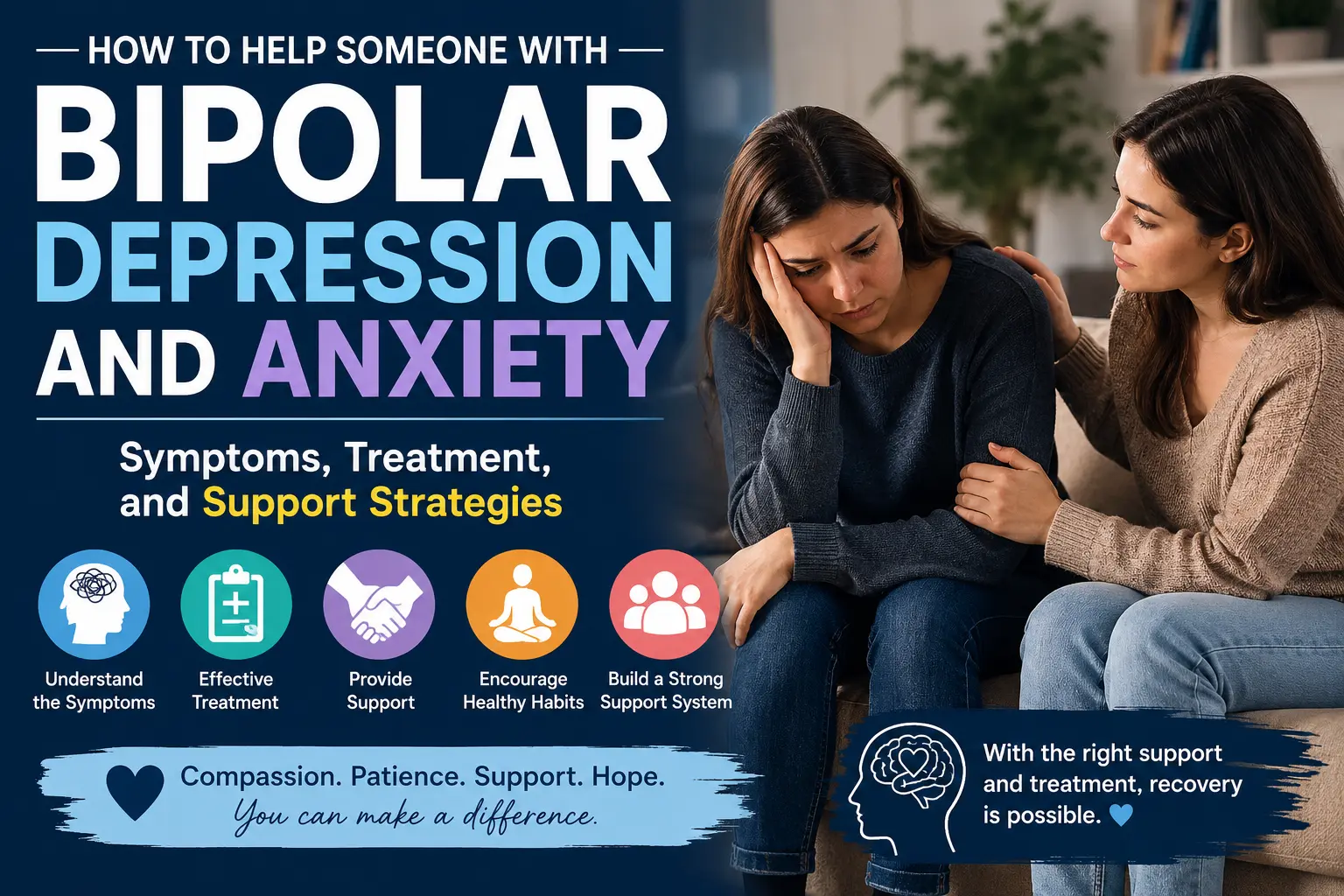 Watching someone you care about struggle with bipolar depression and anxiety can be heartbreaking. You may notice that they withdraw…
 In my practice as a clinical psychologist, I often observe that the difference between a patient who crumbles under pressure…
 We all have "up" days and "down" days. Perhaps you feel energized after a promotion or sluggish on a rainy…
 To define bipolar disorder accurately, we must look at it as a chronic mood dysregulation condition. In psychology and medicine,…
Are you looking for a Therapist?
Connect with qualified mental health professionals who understand
bipolar disorder, mood changes, and emotional challenges.
Private • Supportive • Confidential